Category: John (Page 9 of 30)

Body of Christ: First Part

In the beginning, in the dark and the chaos, God spoke powerful words and created the heavens and the earth. From the top of a smoking and shaking mountain in the desert, God spoke powerful words and raised up a holy nation. Through his mighty prophets in Israel and Judah, our God spoke powerful words of forgiveness and mercy, commitment and comfort, truth and grace. But God’s words were not enough. Words are never enough. So God’s Word became flesh. God’s Word became a body.

“The Word became flesh and made his dwelling among us. We have seen his glory, the glory of the One and Only, who came from the Father, full of grace and truth.” ~John 1:14

The holy Son of God has a body. We know Jesus has a body — a real, physical body. Jesus ate and drank, he wept and slept, walked and talked, worked and played. He bled real blood. He suffered excruciating pain. And he died an agonizing death. He was dead. His body was killed.

And when God’s Holy Spirit raised Jesus from the grave, he raised him to life in a resurrection body — a real, physical body. Our risen Lord in his real, resurrection body was recognized by everyone who knew him. He ate and drank with his followers whether he was invited to or not. He walked and talked with them, taught them, and argued with them. It was Jesus’ real, physical, flesh-and-blood, resurrection body that proved he was really risen. It was remarkable.

Now, here’s something even more remarkable: our ascended Lord who is reigning right now and forever at the right hand of the Father in heaven continues to have a body here on this earth. Jesus still insists on being flesh-and-blood present in this world. He keeps showing up as a recognizable personality. But now he in an even stranger bodily form than his resurrected post-Easter body.

It’s the Church. It’s us. We are the Body of Christ.

Through us, together, by his Church, our Lord Jesus wraps his real, tangible, physical, concrete, flesh-and-blood presence around the whole world. Today the Body of Christ lives and breathes and moves and acts in Jerusalem, Judea, Samaria, and to the ends of the earth, even to the panhandle of Texas! That’s us. The Church.

And some well-meaning people say Jesus never intended to establish the Church. They say Jesus was a holy man, they even say he was the Son of God and the Savior of the World. But he never wanted to start a church. Baloney! That was the plan all along, from the very beginning of the story of Jesus. Jesus started the Church when he called together that first group, that body of twelve disciples. The Jesus movement was always a corporate, social movement; it was never just a collection of religious individuals. The Church was always meant to be the Body of Jesus.

“The body is a unit, though it is made up of many parts; and though all its parts are many, they form one body. So it is with Christ.” ~1 Corinthians 12:12

The Bible is not saying that the Church has lots of different members and we’re all supposed to work together. It says Christ has different parts of his body and we’re it! We are his body, not because we all agree with each other about everything, not even because we all like one another. We are his body because we have one Lord and that one Lord is totally committed to always being physically present and flesh-and-blood active in his world.

We are the mouth and eyes and ears and hands and feet of Jesus. We are his body on earth. And if anybody’s going to meet Jesus in this world, they’re going to meet him through the Church, the Body of Christ.

Peace,

Allan

Belong To God

“Now that you know God — or rather are known by God…” ~Galatians 4:9

This short, jam-packed phrase come in the context of our adoption by God as his sons and daughters. We are children of God through faith in Christ Jesus. We are one in Christ Jesus. We are Abraham’s seed, we’re heirs according to the promise, we have rights as God’s children, we have the gift of God’s Spirit, we have an intimate relationship with God as our ‘Abba’ Father. To be known by God is to belong to God.

“God’s solid foundation stands firm, sealed with this inscription: ‘The Lord knows those who are his.'” ~2 Timothy 2:19

Paul is quoting from the Old Testament here, from somewhere in Numbers, I think. The foundation of who we are in Christ is solid, it’s rock, it’s forever. The seal is about ownership, who owns us, who we belong to. The seal and the foundation mean that God is enough to sustain us no matter how bad things get. No matter the destructive forces attacking us, no matter the evil that threatens to overwhelm us, God knows you and you belong to him.

Jesus says the same thing in the fourth Gospel:

“My sheep listen to my voice; I know them… I give them eternal life, and they shall never perish; no one can snatch them out of my hand. My Father, who has given them to me, is greater than all; no one can snatch them out of my Father’s hand.” ~John 10:27-29

During World War I, the British were trying to figure out how to designate the remains of soldiers they couldn’t identify. Rudyard Kipling suggested that every grave of an unidentified British soldier be marked with the words “Known Unto God.” For those of us in Christ, for all who are connected to Jesus by baptism, that is a message of hope and assurance that we are known by God and given a value and a security that not even death can take away.

Peace,

Allan

It’s Already Started

“I will ask the Father, and he will give you another Counselor to be with you forever — the Spirit of Truth.  The world cannot accept him, because it neither sees him nor knows him. But you know him, for he lives with you and will be in you.” ~ John 14:16-17

“When he comes, he will expose the guilt of the world in regard to sin and righteousness and judgment; in regard to sin, because people do not believe in me; in regard to righteousness, because I am going to the Father, where you can see me no longer; and in regard to judgment, because the prince of this world now stands condemned… When he, the Spirit of Truth, comes, he will guide you into all truth… He will bring glory to me by taking from what is mine and making it known to you. All that belongs to the Father is mine. That is why I said the Spirit will take from what is mine and make it known to you.” ~ John 16:7-15

Jesus says the Holy Spirit will be at work convincing men and women, exposing what’s wrong in the world and drawing all people to God. The Holy Spirit is being sent to convince people of their sin and compel men and women to seek righteousness and avoid judgment. The Holy Spirit is going to be working hard on people all around you. And this same Spirit will live inside you and he will empower you like you can’t believe. Everything I know from the Father, you’re also going to know. You’ll see. It’ll blow your doors off. Trust me.

When Christians talk in Acts — when they witness and declare and proclaim — it’s always in response to something God is already doing. Look what God is doing; we’ve got to tell somebody! Look what God has done; we need to let other people know!

One of my problems is that when I talk, I’m usually trying to start something. Whether I’m preaching on Sunday morning or talking to people at Toot N Totem or praying with people at the League House, I’m trying to use just the right words to say just the right thing to get something started. I forget that every word out of my mouth is just a response to what God’s already started long before I ever showed up. I forget that there’s not one single person I talk to about Jesus that God’s Spirit hasn’t already been working on.

God’s on this — way ahead of me. When he puts somebody in my path, the absolute fact is that he’s been convincing them and drawing them and preparing them for a while now. I don’t have to start anything; God’s in the big middle of it and he would be thrilled if I’d just jump in and share the fun.

This is God’s plan, this is how it works. We need to trust it. We need to trust the way God desires to spread the Good News and expand his Kingdom and save people.

That person you see every day? You’ve wanted to invite him to church, you’ve wanted to ask if you can pray for her, you’ve wanted to talk to him about forgiveness and salvation and peace. You haven’t asked the question or initiated the conversation because you don’t know how to start it. You don’t have to start anything. It’s already started.

Peace,

Allan

Word and Table

“They devoted themselves to the apostles’ teaching and to the fellowship, to the breaking of bread and to prayer.” ~Acts 2:42

The Greek word koinonea means fellowship. Communion. Sharing. Having things in common. Luke describes it in the above verse as eating together and praying together. That’s what makes a Christian assembly, those are the worship habits: Teaching and Fellowship. Scripture and Communion. Word and Table. That’s the time and place where everybody ministers together, everybody participates, everybody’s heard, everybody shares. God meets us, Jesus is present with us, and the Holy Spirit shapes us in our regular gatherings around Word and Table.

That two-thousand-year-old pattern, I believe, is based on the habits of Jesus during his ministry.

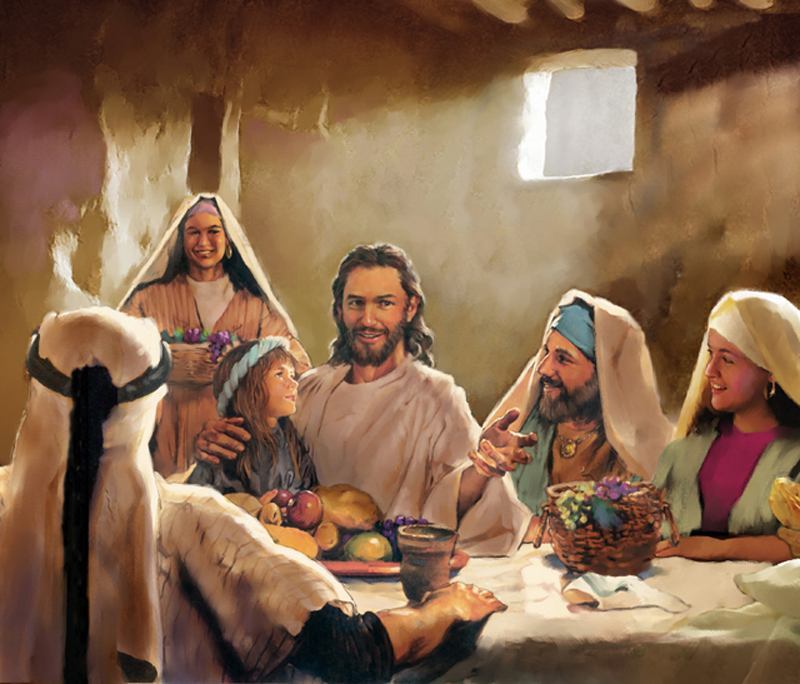
When Jesus taught, he generally did it in the context of a meal. He opened up the Scriptures and ministered to others around a common table. The Word is proclaimed and then the reality of the Word is practiced and experienced around the meal.

In Luke 14, Jesus is eating a Sabbath meal at the home of a prominent Pharisee and, as we would expect, he starts teaching: “When you give a luncheon or dinner, do not invite your friends, your brothers or relatives, or your rich neighbors; if you do, they may invite you back and so you will be repaid. But when you give a banquet, invite the poor, the crippled, the lame, the blind, and you will be blessed. Although they cannot repay you, you will be repaid at the resurrection of the righteous.”

At the banquet at Levi’s house, Jesus gives us the Word: “I have come to call not the righteous, but sinners to repentance.” And he’s sitting around a table with tax collectors and prostitutes. The Table is the tangible experience of the Word.

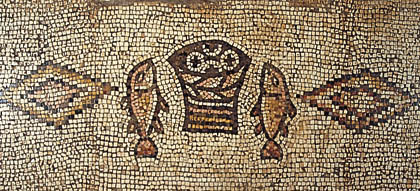
With five-thousand hungry people in the wilderness, Jesus tells his apostles, “You give them something to eat. You engage the mission. You participate in serving others.” And then he empowers them to do just that. Then they all ate together, as much as they wanted.

At Zacchaeus’ house, the Word, the teaching: “The Son of Man came to seek and save the lost!” And around the meal, the hospitality and community of the Table: “Salvation has come to this house! This man is a son of Abraham!”

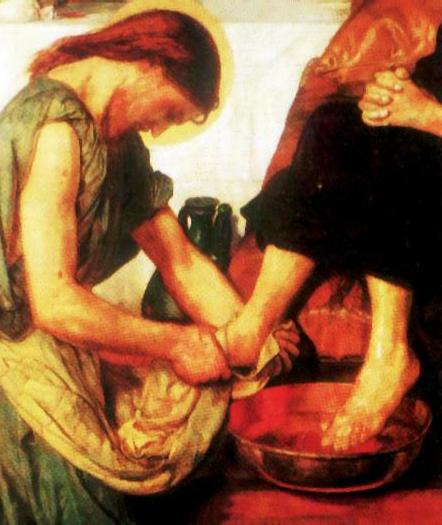
In John 13, on that last night before he was crucified, Jesus shared a meal with his disciples. And some teaching. The evening meal was being served, the Bible says, and Jesus got up and washed everyone’s feet. A tremendous act of humble service. Jesus made himself the least important person in the room in order to serve others.

“Do you understand what I have done for you? You call me ‘Teacher’ and ‘Lord,’ and rightly so for that is what I am. Now that I, your Lord and Teacher, have washed your feet, you also should wash one another’s feet. I have set you an example that you should do as I have done for you.”

Our habits together around Word and Table shape how we think and act. It shapes us into a people who think and act like our Lord. Jesus gets up from the table during the meal to say to each of his followers to say, “I am your servant.” And he tells us to do the same for each other.

Some of us view our worship gatherings as a legal duty and everything has to be done exactly right. Some of us see our worship assemblies as an experience; it’s all about how it makes me feel, so there aren’t really any rules to follow. Some of us have grown up with no real understanding about community worship, so we don’t really think about it at all.

Our worship assemblies are the time and place where our living God meets us, where we all meet in the presence of God together. We are gathered by God’s Spirit around the Word. The Word of God reminds us who God is and what he’s doing and who we are and to whom we belong. The Word has to the power to teach us, train us, and transform us to continue the Kingdom work Jesus has already begun. The Word reorients us away from the shadows of this world’s fading kingdoms and toward the eternal realities of the Kingdom that has come and is coming.

And we experience those realities around the Table. The Holy Spirit brings us together around a meal where we actually experience God’s mercy, acceptance, wholeness, equality, compassion, and peace.

But we can get so wrapped up and bogged down in the details of our worship practices and the finer points of our traditions and our methods, that we don’t give much thought at all to the main point of our assemblies. We worry about how we do church and what we can and cannot do in church, forgetting this a Holy Spirit endeavor. All of this takes place in and by the Spirit.

We worship God in Spirit. It’s the Holy Spirit who mediates God’s grace and the presence of Christ to us around Word and Table. God gathers us together. God initiates and enables our praise. God eats with us, the Holy Spirit prays with us and for us with groans we can never comprehend, Jesus intercedes for us. God gives us the words to say in our worship. God speaks to us through his Word and then places that Word into each heart in exactly the way he wants it to go. We are brought together in the presence of God and he’s the One doing everything!

We should relax about our rules and stop worrying about our methods and submit to what God’s Spirit wants to do. Instead of fretting about how we do church or how somebody else does church, we should pay more attention to how God does church.

Peace,

Allan


His Presence is the Proof: Part 1

I’ll suggest that the Church’s weekly communion meal is shaped at least as much, if not more so, by the resurrection meals of Jesus on that first Easter Sunday than by the Last Supper in the upper room. It’s the Resurrection Day meals that most inform the Church’s Lord’s Supper and give it its meaning. One of the main reasons is that the disciples first encountered the risen and living Lord at those meals.

The very day he walked out of the grave, Jesus made it a point to be present with his followers at the main evening meal. He showed up at mealtime.

In Mark 16, we’re told “Jesus appeared to the Eleven as they were eating.” They risen Lord is physically present with them at the table. Luke 24 says “Jesus himself stood among them.” They offered him some fish and “he ate it in their presence.” The Gospel of John is describing this same scene when it says “Jesus came and stood among them.”

Jesus is present with his followers at the Sunday meal. He is here. He is with us at the table, eating and drinking with us on the other side of the salvation work he came to do. On the other side of his death and resurrection, Jesus is present with his people at the meal.

And his physical presence provides the proof of God’s promises. It’s the proof the disciples need to know for sure that Jesus really is alive and that God is really doing everything he says he’s going to do.

In John, Jesus shows them his hands and his side. “The disciples were overjoyed when they saw the Lord.” Thomas runs his fingers along the Savior’s wounds, he touches Jesus’ scars. Jesus says, “Stop doubting and believe!” And Thomas does: “My Lord and my God!” In Mark, the disciples don’t believe the reports of Jesus’ resurrection. Twice it says they did not believe — they didn’t believe Mary and they didn’t believe the two disciples who Jesus in the country. But after the supper with the risen Lord, they do believe. The dinner provided the proof. Everything changed. “And the disciples went out and preached everywhere.”

In Luke 24, the disciples thought the resurrected Lord was a ghost or a spirit. They thought Jesus was still dead. Jesus says, “No, it’s me! Look at my hands and my feet! It is I, myself! Touch me and see! A ghost doesn’t have flesh and bones!”

“Look,” Jesus says, “I’ll prove it. Give me some of that fish.” And he ate it in their presence. And the disciples went from startled and frightened to joy and amazement. Their minds were opened, it says, and they understood everything.

It’s very easy to see why these resurrection meals carry so much weight. The risen Lord is present, he’s actually with us around the table. And it proves everything. This is not a dream or a vision, he is not a ghost or a spirit, this is not group hypnosis or wishful thinking. When Jesus appears on Sunday to eat with his followers, the realities are revealed. In Acts 10, Peter is preaching about the resurrection of Jesus. How do you know it’s real, Peter? Where’s your proof? Peter says, “We ate and drank with him after he rose from the dead!”

Yeah, the resurrection meals are loaded.

But the ultimate expression of the deep significance of these Lord’s Day suppers is found in Luke 24:13-35. This is the account of the very first of these resurrection meals, the first meal Jesus shared with his followers the day he walked out of the grave.

I’ll be breaking it down in this space over the next couple of days. In the meantime, you might read the text. You’re already familiar with this great story.

Peace,

Allan

Working Every Day

My brilliant brother Keith Stanglin has written a provocative post for the Christian Studies blog at Austin Graduate School of Theology on “Sexual Harassment and Hollywood’s Double Standard.” He expertly exposes the hypocrisy of an industry that sells sex as nothing more than a bodily function, a pleasurable thing to do with another person — sex whenever and with whomever you will — but then “occasionally wants to maintain that sex is an intimate matter, not for public consumption, not for objectification or merely for someone else’s pleasure.” He makes the point in this post that the entertainment industry’s very public outcry against the bad sexual behavior is counter to Hollywood’s core message and actually belongs to the mindset of a Christian worldview. The message characterized by #metoo and timesup and punctuated by black dresses at the Golden Globes is hard to arrive at without a Christian understanding of God and humans and sex. So, the whole thing is confused and it’s confusing. And, in Keith’s estimation, nothing will change in Hollywood or popular culture or in American society unless there’s some kind of honest evaluation of and commitment to the Christian ethic. In other words, don’t hold your breath. But do read his post.

~~~~~~~~~~~~~~~~~~~~~~~~~~~~~~

Our God is putting people in front of you every day. He’s bringing people right into your presence all the time.  God is always at work, constantly drawing people to himself. And we get to decide each time whether to lean in or step back. You get to decide whether to say ‘yes’ or to ignore it.

How many times did Moses balk? For some reason, he thought he had to be somebody important for God to use him. Think about Joseph: his brothers hated him, they sold him into slavery, he winds up in the governor’s house, he gets thrown in prison, then he becomes second-in-command in the Egyptian Empire. At the end of the story Joseph says twice that God put him where he was in order to save many lives. That’s the reason God chose Moses, to save many lives. The same goes for Jonah and Esther and Samuel and Deborah and Peter and Paul. And you, too.

You were chosen by God in Christ for the saving of many lives. God is always working to save lives. And he usually uses the least likely people to do it.

In John 5, Jesus says, “My Father is at work every day and I, too, am working.” Don’t you love that?

“My Father is at work every day and I, too, am working.” Oh, I want that to be my attitude. I want to be taken over by that thought. Don’t you?

“My Father is at work every day and I, too, am working.” That’s Jesus. That’s the One who came, in his own words, not to be served, but to serve and to give his life to save many lives.

And on that last night before he willingly walked to the cross, just hours before his death that would take away the sin of the world and reconcile all of creation back to the Creator, he looked his followers in the eye and said, “Remember, you didn’t choose me; I chose you and appointed you to go and bear fruit — fruit that will last!”

May our eyes be open and our hearts in tune with what God has planned for us in 2018. May we embrace his vision and throw ourselves into his mission with everything we’ve got, to his eternal glory and praise!

Peace,

Allan

« Older posts Newer posts »