Category: Christ & Culture (Page 26 of 45)

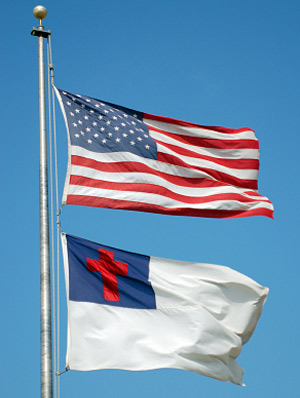
Life in a Theocracy

I got sidetracked the past two weeks by what we’re preaching at Central from the first chapter of Philippians that I just had to write about. Allow me now to return for the rest of this week to a couple of more personal observations and thoughts from “Approaching the End: Eschatological Reflections on Church, Politics, and Life” by Stanley Hauerwas.

“Jesus is Lord” is more than just someone’s opinion. It’s more than a claim or a belief. It’s even more than the Christian confession. “Jesus is Lord” is actually a strong political statement that demands allegiance. It is a pledge to another reality, the ultimate reality that not everyone can see.  To say “Jesus is Lord” is to say “Caesar is not.” To claim that “Jesus is Lord” is to claim that he alone rules the world right now today. And to live like it.

The reality of Christ’s lordship, of his rule and authority, is experienced and expressed by the Church. This rule is hidden from most of the world right now. But the Church knows. We know. We submit to the rule of Christ Jesus. We follow in his prescribed “way.” We seek to love and to serve in the name and manner of our King, completely counter to the way the kings of the earth rule and lead. We are convinced beyond any doubt that Christ Jesus has already conquered the world and that he alone will determine the end of history. So we do things the way Jesus does things. He reveals himself and his rule through us.

In contemplating the practical implications of this Christian view of reality, Hauerwas draws on John Howard Yoder. To be a Christian is to subscribe to a particular political view and adhere to specific political behaviors. It’s all politics. The Church is the existence of a people who refuse to acknowledge the claims of worldly rulers to be kings. Therefore, because the Lord triumphed on the cross, his followers refuse to use the violence and force of earthly rulers to achieve what are allegedly good ends.

We are Theocrats. We live in a Theocracy. And it determines what we believe and how we act.

Christian politics are

“based on the confidence that God uses the power structures of this world in spite of themselves for God’s purposes. Christ carries out the purposes of the One who is sovereign by ruling over the rebellious structures of the universe. That rule is hidden but made visible through the servant church. The place of the church in the history of the universe is the place where Christ’s lordship is operative. This is where it is clear that he rules, as well as the kind of rule he exercises. He is the suffering servant whose rule is decisively revealed on a cross. The church makes history not through domination but through being the servant of the crucified Lord.”

Now quoting Yoder from his “The Politics of Jesus”:

“The cross and not the sword, suffering and not brute power determine the meaning of history. The key to the obedience of God’s people is not their effectiveness, but their patience (John 13:10). The triumph of the right is assured not by the might that comes to the aid of the right, which is of course the justification of the use of violence and other kinds of power in every human conflict. The relationship between the obedience of God’s people and the triumph of God’s cause is not a relationship of cause and effect but cross and resurrection.”

How do we recapture this way of political thinking today?

We Christians in the West are so “Constantinianized” (I think I just made that word up) that we don’t see God’s Kingdom anymore as opposed to the kingdoms of the world. We no longer understand that Christ’s rule works just the opposite of the rule of earthly presidents and kings. The Church is so domesticated that instead of seeing Christ’s rule working to overthrow and ultimately conquer the rule of every monarchy, democracy, and dictatorship on the planet, and praying for it, we see the Church and the nation’s government working together. We’ve gone so far as to equate their methods and their goals, the ways and means of both the state and Jesus, and to hold both rulers and manner of ruling in equal regard. Living as a Christian doesn’t mean exploring what makes us faithful followers of Jesus as much as it means developing an ethic that might work for everybody.

Yikes.

How do we live in and under the rule of Christ? Well, we’ve got to decide once and for all that obligations to a particular state or nation, devotion to a specific society or economic system, cannot compromise or supersede our commitments to the Lord. Paul and Jason and the disciples in Thessalonica were arrested for “defying Caesar’s decrees,” claiming that “there is another king, one called Jesus” (Acts 17:7).

Yes, there is another king. His name is Jesus. And he is Lord.

Peace,

Allan

A More Faithful Church

“I have little use for purity, but I do pray for a more faithful church. A more faithful church would, I suspect, make being a Christian more difficult but also more interesting.” ~Stanley Hauerwas, Approaching the End

One of the many reasons I read Stanley Hauerwas is that he is widely recognized as the greatest theologian in America. Another reason is that he’s from Pleasant Grove, my old neighborhood in the southeast corner of Dallas. The main reason I read Hauerwas is that he writes so eloquently and inspirationally about the role of Christ’s Church in the world. He consistently points to the holy mission of God’s people and paints with bold color and lofty strokes a picture of what Christians worshiping and working and living together should look like today. I’ve just finished reading Hauerwas’ latest book, Approaching the End: Eschatological Reflections on Church, Politics, and Life.” And I’m anxious to share some of it with you.

The church in the U. S. today, according to Hauerwas and just about anybody paying attention, is in a “buyer’s market.” It’s in survival mode. It’s approaching the end. And so a whole lot of them are more concerned with staying alive and viable, by their own definitions, than with pursuing the mission of God. Some of these churches are already dead. They’ve been dead for a long time. But we don’t recognize them as dead because they still appear to be in business. The problem, though, is that their business may only be accidentally related to Christianity.

“The general societal approval and support the church has enjoyed particularly in America is coming to an end. Of course one of the costs Christians have paid for the social and political status they have enjoyed is not to take their Christian identity so seriously that they might destabilize the social order by, for example, challenging the presumption that war is a necessity if democracies are to survive. Thus I am long on record as thinking the loss of Christendom to be a ‘good thing.'”

I, too, have believed for a while now that the loss of Christendom — the culture actually propping up the church and supporting its values, Christianity seen as routine and normal by society, the church depending on the Empire to help it with its mission — to be a good thing. All this coddling by the culture has made us soft. (Now this is me, not Hauerwas.) At some point, whether it’s over ordaining homosexual ministers, protesting against federally funded violence and murder, or protecting the poor, the church is going to discover that we are not friends with the culture. And the church will be shocked. What we’ll learn is that we were never intended to be friends with the culture; we’re intended by God in Christ to convert the culture, not conform to it.

Now, when that day comes, I don’t think we’ll be arrested or jailed or beaten or shot. No, the government will first threaten our tax-exempt status.

And then we’ll all have decisions to make.

Some of our churches will bow to the dollar and pay homage to the Empire to protect the tax-exempt status. After all, they have never known a church to pay taxes to Caesar, they’ve never known a church not in cahoots with the nation, and their imagination to be a church free from the government’s control has been terminally damaged. But some of our churches will be more faithful. Some of our churches will proclaim the Christian confession that “Jesus is Lord,” not Caesar, and actually become the alternative society that our Lord established at the empty garden tomb.

It’ll be difficult. Less money for our programs. Less status for our platforms. Less community support for our evangelism. It’ll be difficult. But a whole lot more interesting. Being the political movement we were always meant to be, the more faithful counter-society, will be very interesting.

“Jesus was not successful. Jesus did not promise his followers that if they did things right, they would conquer with time. The non-coerciveness of agape includes renouncing the promise of power; it includes renouncing the mechanical model of how to move history. Yet that acknowledgement does not mean simple despair or unconcern. It rather means a promise of victory, the paradigm of which is the Resurrection.”

Hauerwas gets in trouble for saying that the first order of business for the church is not to make the world just, but to make the world the world. But he’s right. How will the world ever know it needs saving, that it needs forgiveness and healing and reconciliation, how will the world ever know that it desperately needs Christ Jesus unless the Church shows it something totally different and new? And faithful? And interesting?

Peace,

Allan

Great Power for Us

“…his incomparably great power for us who believe. That power is like the working of his mighty strength, which he exerted in Christ when he raised him from the dead and seated him at his right hand in the heavenly realms, far above all rule and authority, power and dominion, and every title that can be given, not only in the present age but also in the one to come. And God placed all things under his feet and appointed him to be head over everything for the church, which is his body, the fullness of him who fills everything in every way.” ~Ephesians 1:19-23

Scripture goes out of its way, the apostle Paul goes to great lengths, to explain to us disciples just how much power we have in Christ Jesus, our risen and coming Lord. Christianity is a religion about power. Eternal power. Dynamic power. Powerful power. It’s like Paul pulls out his college Thesaurus, the one his parents gave him that weekend he was accepted into Gamaliel’s school, and conjures up every possible word for power — rule, authority, power, dominion, title — and says Christ is more powerful than all of it. Come on, Paul seems to be saying, just try to think of the most powerful thing in the universe. Now multiply that by ten billion. And Christ is still more powerful! Every power that’s ever been and ever will be, every title that’s ever been given and ever will be, every government, every political structure, every economic system, every industrial complex, every biological reality, every financial authority, every historical rule, Christ dominates it! Every single power that has ever existed and will ever come about, real or imagined, human or spiritual, temporal or eternal — – they are all subject to our Lord!

And we don’t get it. If we do, it seems to be only in the logical, cerebral sense, not in the practical application sense.

No wonder this is the focus of Paul’s great prayer that opens up his letter to the churches around Ephesus. I want you to know this power, Paul prays. I want you to understand it, to grasp it, to really own the mind-blowing truth that the exact same Holy Spirit power that brought Jesus out the grave to reign at the right hand of God is the exact same power we all have in us and at our disposal as his disciples.

The New Testament doesn’t really go into deep discussions about the powers and power structures of the world except to remind us that they are all in subjection to our King. Paul doesn’t seem worried about the powers at all. He shows little interest in them, other than to say, “They’re all defeated in Christ Jesus!” Sometimes he mentions that the victory was won at the cross. Other times he claims it happened on that Sunday morning at the garden tomb. But he doesn’t overly concern himself with what’s happening in Rome or in the local city hall. Christ reigns! Jesus is Lord!

So, if this is true…

(and it is!)

Jesus is the winner. And if we’re in Christ, we don’t need to worry about the powers. We don’t worry about what’s happening in Austin or Washington D.C. or Moscow. We don’t worry about what’s happening in Afghanistan or Iran or in downtown Amarillo. Those powers have already all been defeated, they just don’t know it yet.

And if, as Paul writes, the church really is the fullness of Christ, then we don’t have to worry that we’re missing out on something. We don’t have to concern ourselves with other disciplines or traditions from the other side of the globe, with formulas or superstitions from down the street, or with secret knowledge or unrevealed mysteries from another realm. We’re not missing anything. In Christ Jesus, we have everything!

No wonder Paul prays that we would grasp it.

“I pray that the eyes of your heart may be enlightened in order that you may know…!” ~Ephesians 1:18

Now, what would happen if we really believed all that? The gates of hell tremble at the thought.

Peace,

Allan

Sinners Behaving Politically

I’m returning one more time to the interview in Christian Century with Jennifer McBride, the author of a soon-to-be-released book on the role of God’s Church in the world. The book is called “The Church for the World: A Theology of Public Witness.” McBride tackles the question of the Church’s grand mission and the misunderstandings about the methods for achieving the divine task. It seems to be mainly about rejecting the ways of the world and embracing the ways of our Lord.

Toward the end of the interview, David Heim asks McBride her views on the American church’s involvement in state and national politics. Some critics have pointed out recently that the Church has lost its Christian witness to our culture because our increasing identity as a political movement or a political organization affiliated with one particular party is turning off a lot of people. I, for one, would agree with a lot of that criticism. I always cringe when Christians are all lumped in together with a certain political group whose views and methods might actually contradict the clear teachings of Scripture. As would be expected by now, McBride says she’s not so much concerned with the Church having a political voice, but with how the Church exercises that voice:

“Christian faith is inherently public or political because it concerns how we order our lives in relation to the good of others — in relation to neighbors, strangers, and enemies. Discipleship is about following Jesus, who embodies the reign of God; it is about living into God’s social order ‘on earth as it is in heaven.'”

Part of the problem, according to McBride, is that our churches are too preoccupied with the Sunday morning worship hour instead of how they are engaging those around them with the Gospel. “The identity and function of congregations,” she says, “traditionally revolves around what seems to me to be a narrow understanding of worship, the worship itself or a particular worship style.” A church full of continuously confessing and repenting sinners will, instead, take more seriously its identity and mission as the Body of Christ in the world.

And, she brings up Bonhoeffer again. McBride points to Bonhoeffer’s understanding that the Gospel of Jesus is to be lived out in our communities in concrete ways. Christology and Ecclesiology should not be abstract or unapproachable to the average Christian. But at the same time, a lot of social justice efforts and political movements completely ignore the rich resources of thinking theologically about the Church’s role in the world as the embodiment of Christ Jesus and the proclamation of his Kingdom come. That flattens our Christian faith and reduces feeding the poor and digging wells to nothing more than good deeds. When the faith of the Church is narrowed down to merely ethics like this, it is violently stripped of its power to transform lives.

Yes, the Church is a political organization. But its polity is modeled on the Kingdom of God, its citizens belong to heaven, and its Lord is King Jesus. Yes, we engage the world and its own political beliefs and systems and practices. But we do it in ways that reflect our Lord’s life and his direction for ours. We don’t hate or insult or do anything by force; we love and encourage and humbly invite. But, we do engage. We do act. We do care.

As McBride says in her book, true Christianity “encourages and fosters love for this life in all its complexity. Christians cannot offer a redemptive public witness if they don’t genuinely love living in this world with all its joy and sorrow.” To quote Bonhoeffer one last time: “It is only when one loves life and the earth so much that without them everything seems to be over that one may believe in the resurrection and the new world.”

Peace,

Allan

The Witness of Sinners

I’m returning today to the interview in Christian Century with Jennifer McBride, the author of a soon-to-be-released book on the role of God’s Church in the world. The book is called “The Church for the World: A Theology of Public Witness.” McBride tackles the question of the Church’s grand mission and the misunderstandings about the methods for achieving the divine task. To me, her theology is all about rejecting the ways of the world and embracing the ways of our Lord. It’s not unlike Eugene Peterson’s “The Jesus Way,” which has had a significant influence on my own thinking and growing.

About a third of the way into the article, David Heim asks McBride why the cross of Christ and Christ’s sufferings for sinners, while at the very core of the Church’s faith and theology, is not a part of the Church’s witness. Her reply:

“In white North American Christianity, the cross tends to function as a symbol for Jesus taking on my individual sin and forgiving me. It refers, in other words, to a central claim in a doctrinal system rather than to a way of life, a way of being in the world based on conformation to the incarnate and crucified Christ.

Dietrich Bonhoeffer said that witness to Christ is conformation to Christ; it is the Church taking the shape of Jesus in public life. Bonhoeffer takes literally Paul’s claim that the Church is “the body of Christ — the physical manifestation of Jesus in the world — so in order to witness to Christ faithfully, the Church must mirror Jesus’ own public presence.

When we examine Jesus’ public presence we see that his whole way of being in the world was marked by the cross; he took “the form of a sinner” in his life and in his death in order to be in solidarity with fellow human beings. It is by being in solidarity with sinners that Jesus brings about reconciliation. This is not a picture of Jesus that churches often emphasize.”

(I knew I liked her for some reason. I think this book probably borrows heavily from Bonhoeffer.)

If Jesus redeems the world in the form of a sinner, then the Church must join God in this reconciliation ministry by taking that same form. We are not standard-bearers of a superior morality, we are sinners. All of us. We are not this world’s judges, we are sinners. All of us. Somewhere over the past 50 years or so, the Church began to understand faithful Christian witness as duking it out with the world over morality. This seems to be the exact opposite of the ways of our Christ. Jesus never presented himself as a perfect human being. He took the form of a condemned sinner.

Yes, I believe individual Christians and God’s Church as a whole should have and take strong positions on abortion and war and food stamps and immigration. But it’s our disposition as sinners, it’s our humility and grace as sinners, that should inform and give shape to those positions. It’s our commitment to Christ-likeness that should run through our attempts to promote those positions.

McBride argues for an abiding spirit of confession and repentance:

“By confession of sin, I mean a pattern of speaking that acknowledges Christians’ inherent entanglement with society’s structural sin and our complicity in specific injustice. By repentance, I mean concrete social and political activity that arises from the church community taking responsibility for that sin.

Political activity that stems from a felt need to repent is my answer to the question of how a witness can be at once bold and humble. It is bold because it takes a stand on particular issues affecting the welfare of other human beings. It is humble because it points fingers away from others and toward itself.”

This increasingly anti-institution, anti-authority, and anti-religion age is turned off by most displays of authority, superiority, and judgment. Well, duh! I think the world has always been mostly turned off by those things. No wonder the Church is struggling right now to captivate the unsaved with Christ’s salvation. We’re not giving them the meek and lowly Christ; we’re giving them some kind of pushy know-it-all who stands above the world instead of with it.

We are a people in need of constant conversion, in need of daily, if not hourly, change. Engaging the world as redeemed sinners, very much aware and open about our sinfulness, seems to be a much better way to go.

Peace,

Allan

In Solidarity with Sinners

Most disciples of Jesus would profess that churches are called to make a public witness to Christian faith. But it seems that more and more of us disagree with what that witness should look like and how it should function. What does it mean for the Church to testify to the truth of Christ Jesus?

I’ve recently come across a review of a yet-to-be-released work by Jennifer McBride called The Church for the World: A Theology of Public Witness. McBride is a theologian and author who teaches at Wartburg College in Iowa. The review and an accompanying interview with McBride are in the December issue of Christian Century. But — D’oh! — I can’t link you to them because the articles are only available online if you’re a subscriber. I’m intrigued by the interview, written and conducted by David Heim. And I’d like to spend this space this week breaking it down. Yes, I’ve ordered the book. So, there may be more of this coming in a couple of weeks.

In response to Heim’s first question, asking the author to elaborate on an assertion that Christian public witness has gone bad in the United States, McBride says:

“The main problem is that Christian presence in public life tends to be triumphalistic. The purpose of Christian witness is to point to Jesus and the reign of God he embodies, but a triumphal presence actually contradicts Jesus’ way of being in the world as depicted in the Gospels.

The triumphal character of Christian witness has contributed a good deal to how polarized our society and churches have become. Christians so thoroughly disagree about war, sexuality, ecological care, immigration and other issues that we wind up on opposing sides of the political spectrum. This is cause for great concern, because partisan politics ends up defining what is Christian; it shapes the way we think and speak about public issues.”

I’ve wondered a lot about this in the past dozen years or so. The Church that I see and experience in the heart of the Bible Belt in the Southwest United States has become so politically juiced that it’s become difficult to think or speak theologically if one Christian’s understandings of Gospel oppose another Christian’s understandings of country or patriotism. Have you noticed? Some Christians will unapologetically claim that one cannot be a true disciple of Christ if she belongs to a certain political party or adheres to a certain political belief. Farther along, and worse, in my judgment, is the way the Church’s identity has been compromised by our embracing the world’s politics. We have become so entangled in the sheets and blankets of the dirty bedrooms of American politics that we are labeled as “right wing” or “conservative” or “Republican” by outsiders we’re trying to convert to Christ. Non-Christians are attaching to the Church the same corruption, deceit, ethics, and behaviors that characterize the worst kinds of politicians. “Tea Party” and “Christian” are becoming synonymous in our culture. And we have only ourselves to blame.

Who do we think we are, seeking or claiming some kind of privileged status in the government or in American society at large? What makes us believe it’s good to force others — by boycott, insult, petition, million-dollar campaigns, attack ads, holier-than-thou attitudes, pamphlets, protests — to live by the same standards we profess as Christians? Why are we so surprised that the more the Church gets caught up in this world’s politics, the more noise we make about legislation and ethics, the louder we claim to have all the answers for how everybody in the world should live, the less and less interested the world is in Christians? Is it really any wonder that society is hostile to us?

You’ve noticed, right? Generally speaking, Christians are now portrayed by the media and understood by the culture as angry, anti-abortion, anti-homosexual, shove-it-down-your-throat, power-hungry, politicos. It wasn’t too long ago we were merely thought to be irrelevant. Too nice. Too naive. Now it’s become just the opposite. Pay attention to our general attitudes. Notice the worldly lengths to which we’ll go in order to get our way. Christian prayer has to be mandated in the public schools, but not Muslim prayer. Christian marriage has to be recognized as legal, but not homosexual marriage. The Ten Commandments must be displayed on the courthouse wall, but not the tenets of Buddha. Christian churches should be exempt from local and state taxes, but not a mosque. Really? Should the Church of Jesus Christ be seeking or claiming some kind of privileged status in government? Should Christians receive more and better benefits from the world’s governments than anybody else? On what basis? At what cost?

We are setting ourselves over and above others, claiming by our words and actions to know more and to be better than everybody else, in direct contradiction to the way our Lord lives on earth. More from McBride:

“We tend to think that as the sinless one, Jesus distinguished himself from sinners by setting himself up as a model of ethical perfection. But Jesus was in solidarity with sinners in at least three main ways that define his person and work.

First, as God incarnate, he assumed sinful flesh, as Paul says in Romans 8:3. He took on human nature’s damaged state and through his body became intimately acquainted with the complexity and messiness of fallen existence.

Second, he begins his public ministry by being baptized with sinners in response to John the Baptist’s call to repent and in this way ‘numbers himself with the transgressors’ (to use Isaiah’s language about the suffering servant).

Third, and finally, refusing to be called good (Mark 10:18), he instead accepts responsibility for sin as a convicted criminal on the cross. Throughout his ministry Jesus denies any claim about his own moral righteousness and instead actively accepts responsibility for the world’s sin and suffers on the cross out of love for fellow human beings.”

What would it look like for the Church to be in solidarity with sinners? To identify with sinners? To be one with sinners? To recognize every day our own sinfulness in the presence of sinners? To sympathize with, to minister with, to be seen with, to learn with, to walk alongside sinners? What would that look like? How would that improve our Christian witness? In what ways would it transform us more into the image of our Lord? How might it change the world?

Seems to me, it’s got a much greater chance of making an impression than another angry ad or fiery Facebook post.

Peace,

Allan

« Older posts Newer posts »