Author: Allan (Page 296 of 492)

Around the Table: Part 9b

The most destructive shift for the Lord’s Supper — from celebratory feast to solemn snack — occurred in large part as a result of the legalization and official recognition by the Roman government of Christianity as a legitimate religion. Once Emperor Constantine recognized Christianity in 313 AD, made it official seven years later, and then made it mandatory throughout the empire in 321 AD, the marriage of church and state was on. In a hurry. And the form of the Lord’s Meal, which largely shapes the meaning and message of the Lord’s Meal, took one of the biggest hits.

The first and most dramatic thing that happened was that churches began to meet on Sundays in official state buildings, big meeting halls and large auditoriums, instead of private homes. People of the empire were forced to be Christians, compelled by law to worship Jesus as Lord, so these bigger buildings not only served to legitimize Christianity, they were the only venues able to accommodate the larger numbers of worshipers. As Kierkegaard famously said, “When everybody’s a Christian, no body’s a Christian.” And this was true in the 4th and 5th centuries. Augustine, writing at the end of the 4th century, claimed that only five-percent of those worshiping on Sunday were actually part of God’s true church. The new church buildings were full of nominal converts at best, outright unrepentant pagan sinners at most. John Chrysostom wrote about these worship services in the 360s:

“They pushed and pulled one another in an unruly manner during the services; they gossiped with one another; young people engaged in various kinds of mischief; and pickpockets preyed upon the crowd.”

Keep in mind, all Christian gatherings to this point, for more than 300 years, had included a full meal Lord’s Supper as the main event. With bigger crowds of barely converted Christians in state buildings instead of houses, this was becoming increasingly difficult to pull off. When they were able to stage the meal, abuses around the table became the norm. The problems with the Lord’s Dinner in 1 Corinthians — drunkenness, not sharing, divisions among classes — were getting out of hand here three centuries later. Attempts to correct those abuses eventually led to an official church ban on meals and tables in the church buildings. The Council of Laodicea, in 363 AD, made it official: no tables and no meals in the church buildings. The Trullen Council of 692 AD repeated the meal and table prohibitions of Laodicea, so that by the end of the 8th century, the full meal was no longer a part of any Lord’s Supper celebrations.

Consider for a moment the impact of the new innovation of the church building. When Christianity was legalized and mandated, the Church moved from meeting in small, intimate groups in one another’s homes to meeting in larger, impersonal groups in big auditoriums. The setting changed dramatically from a family fellowship around a kitchen table to a ceremony in a Roman state house. Instead of informal visiting and sharing around a table, Christians now sat in rows, looking at the backs of one another’s heads, and listening to a single speaker. Keep in mind, these were nominal converts. The Church was no longer an exclusive group of committed disciples. Not very many had experienced a true conversion. Most had an incomplete understanding of what it meant to be a Christian. Church leaders were unsure of how to handle it. Scholars and historians call it the Constantinian Shift. I refer to it as the Communion Killer.

The most damaging thing that occurred during this time is the shift from a celebratory fellowship meal in a resurrection context to a solemn and individualistic ceremony in a crucifixion context. This is the point in history during which the meal changed from a table event to an altar event.

Since these new Constantinian Christians were not completely committed to the faith, since the numbers of people in the assemblies were growing larger and their lives were increasingly at odds with the faith, church leaders resorted to attempting to scare these Christians straight. And they used the Lord’s Supper to do it. It’s during the late 4th and early 5th centuries when the doctrine of transubstantiation is developed: the bread and the wine actually turn into the literal flesh and blood of Jesus at the saying of the magic words of institution. If one is living his life in a way that doesn’t measure up, and then dares to ingest the holy body and blood of Jesus, he is eating and drinking himself straight into hell. 1 Corinthians 11:27-32 no longer meant that we are to share the supper with sacrificial and servant hearts, treating one another as brother and sister, honoring Jesus as the one who unites us forever. It meant look at your own life, examine your heart, see if you’re living the way you ought to be living Monday through Saturday, and then determine before you participate in this ceremony if you’re worthy. Those who were stealing from their customers or cheating on their husbands or struggling with pride or greed were eating their own damnation when they dared to approach the holy bread and cup. It’s during this time we see the communion instructions and, especially, communion prayers intentionally worded to scare the people into better lives.

In his written communion prayers in 350 AD, Basil made frequent use of the words “sinners,” “unworthy,” and “wretched.” Near the end of the 4th century, Cyril of Jerusalem wrote lengthy and complicated instructions on how to handle the bread and the cup, “careful not to drop a particle of it, for to lose any of it is clearly like losing part of your own body.” At the same time, Chrysostom referred to the communion ceremony as “that dreadful and fearful moment when the mysteries are accomplished at the terrible and awful table.” He demanded that Christians live their lives in a constant state of “purity of soul,” adding, “With this [purity of soul] approach the table at all times; without it, never!” In a communion prayer written in 380 AD, James encourages disciples of Jesus to “keep silence, and with fear and trembling stand; ponder nothing earthly minded…”

The communion meal was changing into a scary reflection of the crucifixion of Jesus. Over time, it actually shifted into a re-sacrifice, a re-crucifixion of Jesus. More pomp and circumstance was added to the ceremony, including a parade of priests and clergy who walked the bread and cup down the main aisle toward the table to symbolize Jesus marching to the cross. The white cloths used to cover the elements symbolized the burial cloths that covered Jesus’ bleeding and mangled body. The physical presence of Christ in the bread and the cup, the re-sacrifice of Jesus on the cross every Sunday was an awesome and fearful thing indeed. It evoked feelings of guilt and remorse, exactly what the priests were going for.

I don’t question the pure intent of the church leaders during this time. They were doing, I’m convinced, what they honestly believed needed to be done in order to faithfully express and live out the Gospel in their time. But, wow, did this profoundly change the form and the meaning and the message of the table of the Lord! It changed everything! And now, 1,600 years later, we’re still suffering the effects. By the end of the seventh century, eating and drinking with joy in the presence of a forgiving God and with his people, all blessed together by the gift of our loving God’s righteousness, celebrating an eternal relationship of acceptance and unity with our Father and his children, was no longer the focus of the communion words and prayers on Sundays. Communion was no longer interactive, it was silent. It wasn’t celebrative, it was solemn. It had been communal, but now it was individual. It was intended to deliver joy, but now it was bringing sorrow. Instead of thanksgiving, the mood became one of remorse. The original intent of the Lord’s Supper was fellowship, but it shifted to contemplation. Communion was practiced expressively in the Bible, but now it was an exercise in introspection. And instead of being focused on the Resurrection as the first century Christians were, the focus was on death.

It was an awesome and fearful thing. In fact, it was so awesome and so fearful, most Christians stopped participating.

Peace,

Allan
Around the Table: Part 9

“The Christian order of worship was built up from the Jewish synagogue service of Scripture teaching and prayer with the addition of the distinctively Christian rite of the Lord’s Supper. The latter, too, has antecedents in the Jewish Passover meal and table prayers. The meal became a part of the community assembly of Christians… For many of the Christians, the central point of their Christian experience was this common meal.” ~Everett Ferguson, Early Christians Speak, 1981

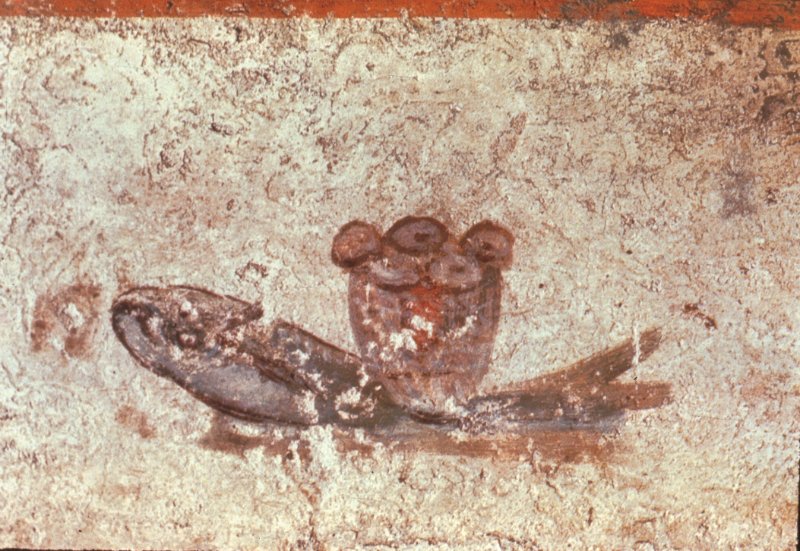
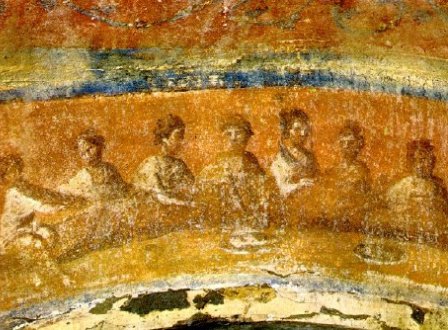
Most Bible scholars and careful readers of the texts are unyielding in their convictions that the Lord’s Supper was celebrated in the context of a full meal for the first 300+ years of Christianity. We’ve explored the Biblical witness at length in previous posts. But the post-biblical accounts of early Christian worship only support the earlier writings. Christian communion was established in and shaped by the experience of a common meal. In fact, as argued in this space previously, outside of a common meal the Lord’s Supper loses much of its original function as a practical sign of mutual acceptance and relationship, as a tangible practice of fellowship and unity.

In his instructions “concerning the Eucharist,” the author of Didache, written near the turn of that second century, advises: “After you are filled (or after you have had enough), give thanks in this way…” One of the prayers mentioned in this passage acknowledges God as the one who “gave food and drink to human beings for their refreshment.” Ferguson says:

“The Eucharist in the Didache (we accept this as an account of the Lord’s Supper) appears to be set in the context of a social meal. This was the usual setting in the early days of the church… The disorders at Corinth were occasioned by the circumstances of a common meal.” ~Early Christians Speak

Consider these other early post-biblical accounts of the Lord’s Meal:

“We take the sacrament of the Eucharist, which was commanded by the Lord at meal time and for all alike, in congregations before daybreak.” ~Tertullian, On the Crown (3.3) 190 AD

“…when they sang in alternate verses a hymn to Christ, as to a god, and bound themselves by a solemn oath… after which it was their custom to separate, and then reassemble to partake of food — but food of an ordinary and innocent kind.” ~Pliny, Letters (10.6) addressed to the Emperor Trajan, 112 AD

“Since it is a religious duty, it permits nothing vile, nothing immodest. We do not recline at the table before prayer to God is first tasted. We eat the amount that satisfies the hungry; we drink as much as is beneficial to the modest. We satisfy ourselves…” ~Justin, Apology I, 67, 151 AD

“Let each of those of you who are present take a cup and give thanks and drink, and so take your meal being purified in this way… But when you eat and drink do it in good order and not unto drunkenness, and not so that any one may mock you.” ~Hipploytus, Apostolic Tradition (25) 230 AD

In reviewing these primary source documents, two things are clear: 1) the Lord’s Supper was practiced and understood as a full meal eaten with a community of disciples, and  2) there was much more diversity than uniformity in the ways those meals were celebrated. There were no set liturgies, no standard forms. It was a meal that in structure and frequency reflected the particular place and time in which it was enjoyed. Another thing that becomes clear in writings from the fourth century and later is that, for a variety of reasons, the meal itself began to be scaled down. Also, the bread and cup rituals began to be separated from the meal into two different ceremonies. You can even find in Cyprian and Tertullian as early as the middle of the third century a Eucharist service of bread and wine on Sunday mornings and an Agape Meal, or Love Feast, with the church together on Sunday evenings.

Again, there are many reasons for this significant shift. Just as in Paul’s letter to the Corinthians and Jude’s short note in the New Testament, there were abuses around the table that needed correcting during those first centuries. Counter to the New Testament’s instructions, instead of correcting the abuses, a lot of churches simply did away with the meals altogether. Periodic curfews and bans imposed by the Roman government disrupted the normal meeting routines of the Christians. Persecution halted some of the bigger social meals. A lot of the meals were stopped altogether because of the social and government pressure placed on those who attended them. Early Christians were charged with cannibalism for claiming to eat and drink “flesh and blood.” They suffered suspicion of incest because of their language (“brothers and sisters”) and their bizarre practices (“holy kiss” and “kiss of peace”). The dinners were viewed by most outsiders as an attack of the social structures of the Roman Empire. The mixing of classes and genders was a threat to the civil structures of the day and were seen as disruptive to society. It was certainly easier for the Christians to just stop eating together. So, even then, culture influenced the church in damaging ways. Full meal communion services are mentioned in Christian writings as late as the seventh century. But they inarguably fell from prominence and ceased being the norm after the 300s.

Naturally, there is a world of difference between fellowshipping around a full common meal at somebody’s house and hurriedly rushing through a ritualistic ceremony at a church building on the way to work. Losing the full meal context and practice of the Lord’s Supper was a damaging shift. Much of the symbolism of the table was lost. The easy and informal mood of the celebration was replaced by a more structured and formal ceremony. What else do we lose when the Lord’s Meal is a crumb and a sip instead of “eating to your fill?” How does the method of the meal become the message? By that I mean what is communicated differently? What gets left out? It’s no little thing that, for centuries now, God’s Church has opted out of the full meal in exchange for a ceremonial snack. What makes it more destructive to our Christian practice and Christian message is the mood and atmosphere of our solemn snack. I’ll explore that development in a post tomorrow.

Peace,

Allan

Valerie: Legal Adult

I looked at Carrie-Anne and said, “Valerie’s legally an adult today.”

Carrie-Anne replied, “What does that mean?”

Yeah, what does that mean? Valerie, our precious “Little Middle” daughter, turns seventeen today, the legal age of adulthood here in the Great Republic of Texas. What does that mean?

It means we have two adult children now. It means I’m getting older and older and older. It means I’m noticing more and more now that time is short. Whoa, time is short.

It means Valerie is driving my twelve-year-old Ford Ranger, outfitted now with a pink zebra striped steering wheel cover. It means she’s spending her afternoons teaching pre-Kindergardeners at our local elementary schools as part of her IPET program at Amarillo High. It means she’s got just one more year until graduation. It means she’s not here at the house as much as she used to be — she’s out with B.J. or out with girlfriends or out doing fun stuff with church friends. It means she’s out, out, out a lot. It means she can wear her mom’s clothes. It means she’s climbing up mountains on Trek, skiing down mountains on vacation, flying down zip lines at camp, and serving less fortunate people in foreign countries in the name of Jesus. And she doesn’t need me there to help her.

It means she doesn’t sleep with stuffed animals anymore. She doesn’t watch the Disney channel. She doesn’t get Barbie pajamas for Christmas anymore and she doesn’t beg and beg and beg for anymore hamsters. She has stopped collecting Beanie Babies. Chuck E. Cheese is no longer her favorite restaurant. And she doesn’t giggle anymore when I mess up her hair.

It also means I can see more clearly than ever her Lord being formed in her. I can see more and more often Jesus’ sacrificial and servant heart reflected in her selfless acts of compassion and concern for others. I see his joy in the hearty laughter she shares with her friends. I see his peace when she handles teenage drama and issues with a more even keel. And I see his grace in the way she ministers to all those little kids.

Our “Little Middle” isn’t little anymore. Yeah, she still sings at the top of her lungs in the shower, regardless of what time it might be. She still doesn’t know how to clean up her room or hang up her clothes. She still wrinkles up her nose and refuses to eat almost anything other than grilled cheese or pizza. She still spends hours decorating her fingernails and toenails with bright colors and intricate designs. She still draws and colors and colors and draws on anything that’s not nailed down. And she still melts and says, “Awww…” when she sees a puppy.

Happy Birthday, Valerie. I’m so proud of you and of what our God is shaping in you. You are a beautiful, talented, funny, super-smart, wonderful daughter of God. Thank you for still wanting me to take you out to lunch. I love you.

Dad

Lord Forbid!

I have been intrigued the past couple of weeks with David’s decision, as recorded in 1 Samuel 24, to NOT kill Saul in that dark cave at En Gedi. It’s so uncharacteristic of David. It goes totally against David’s nature to NOT kill Saul. As a boy, David was killing lions and bears to protect his father’s herds. He began his military career by killing Goliath. He killed 200 Philistines for the right to marry Michal. He routed the Philistines at Keilah. He massacred more Philistines at Baal Perazim. He slaughtered them in the valley of Rephaim. And not just Philistines. David killed more than his share of Geshurites and Girizites, Amalakites and Kenites, Moabites, Edomites, and Ammonites, Stalagtites and Gigabytes — all kinds of -ites and -tites. David has killed his tens of thousands, remember? They wrote a song about it and it went straight to the top of the charts!

David was a killer. And he didn’t kill Saul. Saul is the one man out of the tens of thousands David had the most motivation and the most reason to kill. Saul was chasing David like a pig through the canyons and wadis of the Judean Desert. But David let him go. Why?

“The Lord forbid that I should do such a thing to my master, the Lord’s anointed.” ~1 Samuel 24:6

David’s men see their ruthless enemy in a humiliating and vulnerable position, totally helpless right in front of them. But David sees the magnificent — flawed, yes; sinful, yes — wonderful king anointed by God. And David submitted to him. David turns this course and crude scene in a dark cave in the wilderness into a beautiful act of faith and worship to the Lord. He made it a sacred moment. Complete surrender to God. Total faith in the protection and provision of his Lord, no matter what.

If David doubted for a second that God was protecting him, he would have killed Saul. If David had been concerned about his own reputation, he would have killed Saul. If pride were motivating David, if he were moved by his own instinct of right and wrong and timing and personal safety, if he were compelled by the world’s sense of justice and revenge and power and fairness, he would have slashed Saul’s throat right there on the spot. But David is purely motivated by his genuine trust and faith and devotion to God. The idea of taking Saul’s life is unthinkable. He regrets even cutting his robe. Not because of Saul, but because of God.

David shows us in this cave at En Gedi that trusting God is much more than just going to church and writing a check and watching your language. Faith in the Lord to protect and provide is a faith that the Lord will protect and provide in every single situation. It’s knowing that God is in charge, not us. Jonathan had told David previously that this Kingdom thing is going to work out. David professed that same faith, and he acted on it. His faith in the Lord controlled David’s thoughts and actions. David refused to take part in a bloody and violent solution to his problems, even though his very best friends were telling him it was God’s will. Yeah, the Kingdom was falling apart. Yes, David was being treated unfairly. But Saul was the Lord’s anointed. Period. And David was going to let the Lord take care of it.

You know, we’re living in a world today that none of us has ever lived in before. As disciples of Jesus here in the West, the threats to our comfort and security are as bad as they’ve ever been. And it’s getting worse. As culture and society line up to oppose our Lord and his Kingdom, we’re tempted to take matters into our own hands with the violent and bloody methods of the world. We’ll sometimes confront people of different lifestyles with a face-to-face verbal assault. In David’s words: Lord forbid. We’ll slash the throats of lawmakers and government officials with angry letters and insulting emails. Lord forbid. Young people who think differently, older people who act differently, foreign people who dress differently, people who vote differently, people who believe differently — we’ll cut out their kidneys with an accusing finger in their face, we’ll take out their knees with our harsh words and bitter complaints, we’ll rip out their hearts with our bumper stickers and boycotts and petitions. Lord forbid.

We live in a spiritual landscape that’s every bit as hostile and threatening, dangerous and deadly, as the cliffs and caves of the Judean Desert. Just like David, suffering from thirst and mortal danger, we too face death and destruction. Sometimes it feels like we’re running for our lives. But our help comes from the Lord. It’s only in God through Christ where we find true, ultimate safety and security, salvation and hope.

This Kingdom thing is going to work out. God’s perfect time frame. God’s perfect plan. God’s perfect ways.

Peace,

Allan

Doing Things We’ve Never Done

We’re in a battle. God’s Church is locked in a war right now with the prevailing culture and the shifting world view. Today in the West, right now in this country where God has placed us, the prevailing culture and the world view is aligned against our Lord and his Kingdom. And it can be intimidating. We don’t live in the same world we lived in twenty or thirty years ago:

Post Modernism – We can no longer ignore or deny that the dominant world view in the United States today is post modern. The culture argues that there is no absolute truth. Nothing is inherently right or wrong, nothing is fixed as eternally correct or false. Men and women my age and younger  see almost everything today as a personal choice, a matter of individual freedom. You find peace and happiness your way and I’ll find peace and happiness my way and nobody has to get upset. Nobody has to preach to anybody. I’m doing what’s right for me; you do what’s right for you. “Yeah, but the Bible says…” Don’t quote the Bible to me! “Well, history would show…” Don’t talk about the past! Anti-institutional. Anti-authority. Anti-oppressive-religion. Don’t judge me. Don’t tell me. Don’t make me. In today’s society, the religion is individualism, the prized virtue is tolerance, and the controlling creed is “Whatever!”

And you feel it. You sense it. If you’re paying attention at all, you experience it every day.

Post Christendom – The culture in the U. S. no longer supports the Church. Today’s society doesn’t prop us up anymore. Remember prohibition? Blue laws? Prime time family hour on TV? No homework on Wednesday nights? No youth sports events on Sundays? Those helps for the church are a thing of the past. The media has an agenda, and it’s not neutral. The culture is on an around-the-clock mission to shape us, not into the image of Christ. You can’t turn on your computer, you can’t buy a loaf of bread at Walmart, you can’t go to a high school basketball game, without it being shoved in your face. Realize the only network television show on the air today that portrays drinking and gambling and materialism as bad, illicit and extra-marital sex as evil, and going to church and being honest and living right as good is The Simpsons!

Guess what? We’re on our own nowadays.

Post Denominationalism – Brand loyalty to a particular kind of church is gone today. Just because your grandparents and your parents and your spouse were all born and raised in the Churches of Christ doesn’t mean that your son won’t go to a Baptist university and meet a Presbyterian girl at a Christian concert at a community church, get married in a Lutheran chapel and raise their kids as Methodists. That kind of thing is happening all the time. You know it. Something like it has already happened in your own family.

We live in a world today we’ve never lived in before. None of us. It’s different. It looks like and it can feel like the odds are stacked against us. It’s threatening. Disorienting. We’re not sure how to tackle it. It’s all so new and it’s changing so stinking fast.

“Make the most of every opportunity, because the days are evil.” ~Ephesians 5:16

We have to do things we’ve never done for the sake of a world in which we’ve never lived. We can view the things in our society and culture that stand against God’s Kingdom today as frightening enemies or as exciting opportunities. We can shrink in the threatening presence of so much rapid change or we can rise to meet the exciting challenges head on. If we’re living in a brand new world, we must adapt and be flexible with doing brand new things.

Post Modern? Yeah, nobody’s interested in absolute truth anymore. Here at Central, we said “phooey!” to that last October and the Lord rained down over $353,000 in foreign missions money! Post Christendom? Yeah, nobody wants to go to church anymore. Last summer, we said “fine!” and we canceled church. For eight Wednesday nights in a row we canceled all our worship and classes and took church to the people, blessing our neighbors and our community with the love and grace of God. Post Denominationalism? Yeah, the lines are blurry. So, this past year we’ve partnered with the other churches in downtown Amarillo. We’re working and worshiping with them, serving and helping with them, combining our prayers and resources, consolidating our Kingdom energies, for the sake of our city.

We’re doing things we’ve never done for the sake of a world in which we’ve never lived.

We can’t compete anymore with the giant influence of the culture. We can’t win against the enormous scope of entertainment options. We can’t defeat the monster of technology and the almost militant individualism it nurtures. But that’s OK. That’s actually good news if we’ll just admit it. The truth is that not one single thing for the Kingdom of God is going to be won in your city with bigger programs, bigger buildings, bigger budgets, more manpower, or better technology. Instead, we should be laser-focused on raising up and encouraging the leaders in our congregations who see the tremendous potential in this new world and are excited about the Kingdom possibilities. When they propose doing something different in an effort to reach the community for Christ, don’t say, “Well, we’ve never done that before!” Remember, we’ve never lived here before.

Peace,

Allan

Bruised, Hurting, and Dirty

“I prefer a church which is bruised, hurting, and dirty because it has been out on the streets, rather than a church which is unhealthy from being confined and from clinging to its own security.”

~Pope Francis, from Evangelii Gaudium

« Older posts Newer posts »