Author: Allan (Page 295 of 492)

Because the Lord

In one of the last stories about David before he is crowned King of Judah in Hebron, he and his nephew, Abishai, walk through the middle of three thousand of Israel’s mightiest soldiers to find Saul sound asleep on the ground. David and Abishai make it past all the guards, all the men, all the horse and chariots, all the spears and swords, right into the very center of the army’s camp, right next to Saul’s sleeping bag. These two are standing by Saul’s head and having an argument about what to do. Abishai’s adrenaline is rushing and he’s ready to kill the enemy king. David is holding his young nephew back and waxing theological about what God is and isn’t doing this night. So they eventually decide to grab Saul’s spear and water jug and leave camp the way they came in.

“No one saw or knew about it, nor did anyone wake up.” ~1 Samuel 26:12

How is that possible? I’m a fairly heavy sleeper; I can sleep through almost anything. But I know what it’s like to sleep on high alert. When two little girls are throwing up and the other one has a fever, you go to bed on high alert. In the dead middle of the night the least little sound from the other end of the house causes both Carrie-Anne and me to jump straight out of bed and grab the mop! Recently, we’re going to bed more and more often with one or two of our girls still out on the town. We go to sleep knowing they’ll be home in a couple of hours. And I promise I can hear Whitney exit Bell Street three miles from our house! I’m wide awake before the garage door opens!

The king and his bodyguard and three thousand trained soldiers. How did not one single person wake up and catch David?

“Because the Lord had put them into a deep sleep.” ~1 Samuel 26:12

Because the Lord.

God causes three thousand men to fall into a deep sleep so David and Abishai can slip into camp, discuss what they’re going to do, take the royal spear and canteen, and get away undetected. Do David and Abishai think it’s because of their own skills they’re able to get away with this? Are they aware at all of the miraculous nature of what just happened? The writer is very clear: God is personally involved in protecting and defending David and keeping him safe. But I don’t think David knows all the details of God’s involvement like the writer and reader do. Yes, David is growing in confidence that God is working to bring Saul’s reign to an end and put David on Israel’s throne. But the comment about the deep sleep is between the author and the reader. Yes, David is more convinced than ever about the truth of God’s activity in his life, but he’s unaware of the specifics.

Get the picture: David is working his way here in the dark, on the run, under attack, picking his way through the nitty and gritty details of the task at hand, and not fully aware of the very specific way God is intervening to help him and make sure the mission is accomplished.

Same with us: We walk through this life in this place where God has put us, doing his will, sometimes under attack, occasionally on the run, trusting God to provide, putting faith in God to deliver, totally convinced that God loves us and he’s involved in our lives, but not fully aware of the specifics.

Because the Lord.

I am breathing today because the Lord. You are where you are right now because the Lord. I am typing this post because the Lord. You are reading this at home or at work or in traffic because the Lord. I can show patience and restraint because the Lord. I can show compassion, I can demonstrate love because the Lord. I don’t worry about enemies or the economy or the elections because the Lord. I am fully protected against any one or any thing that could ever do me harm because the Lord. My sins are forgiven, my future is certain, my past is redeemed, and my destiny is decided because the Lord.

Peace,

Allan

Flesh and Blood

“For our struggle is not against flesh and blood, but against the rulers, against the authorities, against the powers of this dark world and against the spiritual forces of evil in the heavenly realms.” ~Ephesians 6:12

To me, flesh and blood means people. Flesh and blood is a person. It’s a man or a woman. Skin and corpuscles. Tissue and cells. Epidermis and marrow. Mortal. Humankind. People.

Our struggle is not against people.

Our struggle is not against people across the street, people in other countries, or people in other churches. Our battle is not against preachers or politicians or pundits. Our fight is not against family members, our employers, or our persecutors. It’s not against actors, authors, or athletes. It’s not against political parties or social organizations or even your country’s enemies. Our struggle is not against our elders or ministers or the people who sit three pews over.

Our struggle is not against people.

Our struggle is against Satan and the demons of hell. Our battle is against the kingdom of darkness. Our common enemy is the prince of liars who convinces us to fight against one another while he advances unchecked against our families and our churches and the rest of God’s magnificent creation.

Taking our stand against the devil’s schemes means refusing to struggle against people. It means declining to engage in division. It means we never fight each other or our neighbors. It means having no enemies other than the enemies of Christ Jesus, our risen and coming Lord.

Grace & Peace,

Allan

It’s Not a Switch

I’m amused by the opening scene in The Simpsons movie. (Actually, I’m amused by every scene in The Simpsons movie. But the opening scene serves as a great beginning to this particular post.) The Simpsons are arriving late for church. They screech into the parking lot just as Reverend Lovejoy is welcoming the congregation to the service. And all the people inside can hear Homer loudly and clearly as he complains on his way from the car to the church door: “I don’t know why we have to come to church. Why can’t we just live our lives the way we want to and then pray really hard on our death beds like everybody else?”

Are you nurturing your relationship with God? Are you intentionally, today, right now, paying attention to your walk with Jesus? While things are going so well for you right now, are you praying? Are you listening? Are you reading and meditating? Are you today seeking our Lord and his holy will?

Our God is not a vending machine. Our Lord is not leaning up against a wall somewhere just waiting for you to come by and push in the right combination of coins or words so he can give you exactly what you want when you want it. He’s not a Magic 8-Ball that you put up on a shelf in the corner and take down and dust off and consult when you get into a bind. When it comes to your relationship with God, you don’t just flip a switch.

Being a man or woman of God doesn’t happen occasionally. It doesn’t happen automatically. Being a disciple of Jesus doesn’t happen accidentally. And it certainly never happens at your convenience.

Think about football players or any big-time athletes. You can’t just show up for the game without being prepared. Can you imagine? If you never practice, if you never lift weights, if you never condition, if you miss all the team meetings, you won’t be able to play when the whistle blows. They won’t even let you on the field. Ask any coach: If you don’t practice, you don’t play. In order to be ready for that big moment, you have to prepare your mind, you have to prepare your body, you have to practice, you have to study.

We encourage that, right? We praise it! In sports, in academics, in business, in music; we admire it.

Drew Brees is the first one on the practice field every day and the last one to leave. We celebrate that kind of dedication. Van Cliburne practiced the piano eight, nine, ten, twelve hours a day every single day of his life. We praise that kind of sacrifice. The successful CEO of the big corporation goes to all the seminars and conferences. He keeps a cot in his office because he works so many late nights. We admire that kind of commitment. The strong politician knows his constituents and spends valuable time with the voters. We confirm that, yes, that’s the way to live. We all acknowledge that, yeah, that’s the very best way to go through life. It’s the only way to handle the really important things in life. We encourage that kind of dedication, we celebrate that kind of sacrifice, we watch movies and sing songs about that kind of commitment.

But we act like it doesn’t matter in following Christ.

We have fooled ourselves into thinking that we can live every single day just like every other person in the world and then, when the crisis comes, we can act like Jesus. And when we fall flat, we wonder why God let us down.

You don’t just flip a switch.

We’re establishing the pattern every day. Living our lives every day, we’re setting the course. Where do you seek guidance? What gives you comfort? Where is the source of your strength? Are you seeking God? Or not? You can’t wait until the crisis comes to answer those questions. You practice it every moment of every day and, when the crisis comes, by God’s grace, it’s already your instinct. It’s already your second nature.

Peace,

Allan

4 Amarillo Video

Scattershooting while wondering whatever happened to Tom Henke…

The video from our “4 Amarillo” Thanksgiving Service at First Baptist back on November 24 is finally up and running now on our Central church website. To see the 67-minute service, from Burt Palmer’s welcome (“Take a moment to greet your neighbor because this is what heaven is going to look like!”) to the acappella singing of “The Lord Bless You and Keep You” at the close, just click here. Burt’s welcome comes at the 6:30 mark after the opening hymn. At the 11:25 mark, you can watch me jump off my seat in the front row to attend to Chloe. The cameras missed her nearly blacking out and stumbling off the stage, almost nailing the piano and taking out the strings section on her way to a stair well at the side of the room. She was OK. But we keep bringing it up at small group. You can watch Kevin lead the 130-member combined choir and the rest of the congregation in “Mighty to Save” at the 12:30 mark. And, yeah, as always, he finished it strong. Really strong. My sermon, “So the World May Believe” starts at the 34:50 point. Burt totally takes things over and freaks out all four worship leaders at 62:00. And we sing “The Lord Bless You and Keep You” at 65:00 . And, by the way, you Central folks will be shocked at how many times you’re going to see yourself. First Baptist has half a dozen cameras just on the crowd. They did a great job recording and editing this thing.

Whoa, what a night. More than 1,100 in the room on a freezing cold evening with snow and ice and on the streets. It was significant. It was historic. It mattered. And, just like our Lord promised, people have noticed. It’s funny, our churches have tried for centuries in a variety of ways and with varying levels of success to evangelize the world and expand the Kingdom. The only thing we’ve never tried is the one thing our Lord promises will work. Unity. Christian unity. Putting aside our minor differences and celebrating the countless things we share in common in Christ. The city of Amarillo is noticing. Christ is being preached in word and deed and our Father is receiving the glory. Amen.

~~~~~~~~~~~~

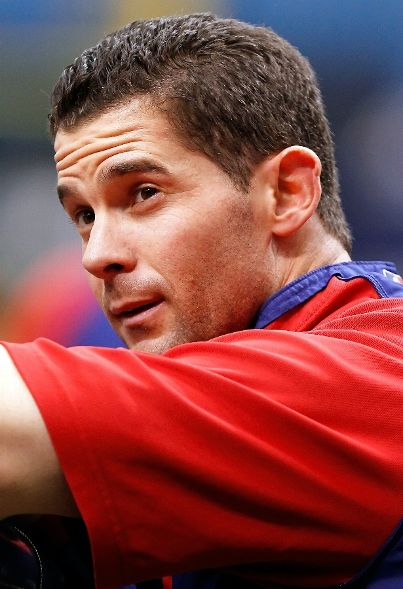
One of the classiest professional baseball players I ever had the privilege to know and to cover, Michael Young, has retired from baseball. After fourteen years in the major leagues, thirteen of them with the Texas Rangers, Young is calling it quits. He hung ’em up today at the Ballpark in Arlington with a .300 career batting average, 2,375 hits, seven All Star appearances, and one Gold Glove. He is the all-time — ALL-TIME!!! — Rangers franchise leaders in games played, hits, doubles, triples, and runs scored. He never went to the disabled list one time in his career. He was arguably the most consistent player in baseball during the past 14 years. And one of the all-time nicest guys.

Click here to read Sports Illustrated’s excellent article about Young’s career achievements. Click here to read Evan Grant’s article about Young always being a Texas Ranger. Click here to Richard Durrett’s outstanding piece on Young’s leadership in the Rangers clubhouse.

When I first began covering the Rangers as a reporter and then Sports Director at KRLD in 2001, Michael Young was the quiet, unassuming newbie, willing to play wherever and whenever it could help the team. I worried when A-Rod was assigned two lockers in that corner of the clubhouse right next to Young. I worried when Rodriguez and Young would sit quietly in that corner after every single game, win or lose, and talk together for ten or fifteen minutes before they would speak to any of us reporters. I would think to myself, “Please, don’t let A-Rod rub off on Michael!”

No way.

Young quickly developed into the leader of the Rangers franchise and stayed that way to the very end. Not one arrogant or self-serving bone in his body. Never. He always took responsibility for miscues in the field and always deflected praise when things were going really well. He would talk to us and answer our lame questions after 11-3 losses and after four-game sweeps of the Yankees. He was always there. Always good. Always right.

Congratulations to Michael Young on a great career. And thanks to Michael Young for doing everything the right way.

~~~~~~~~~~~~~~~~~~~~

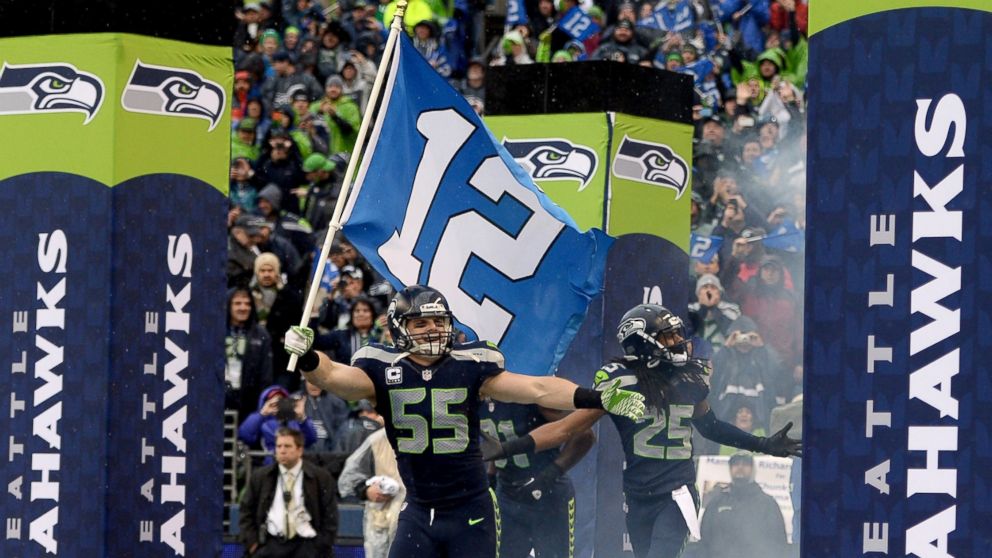
For your pre-Super Bowl reading, I highly recommend this interesting and insightful article by Kate Hairopoulos of the Dallas Morning News regarding the use of the term “12th Man” by the Seattle Seahawks. The Seahawks are only able to use the term, which has long been trademarked by Texas A&M, by means of an exclusive licensing agreement with the Aggies. In the agreement, consumated by a $100,000 payment to A&M and maintained by a $5,000 annual fee to the school, the Seahawks and the NFL acknowledge the rightful ownership of the term by Texas A&M. And the Aggies hold full decision-making control over how the Seahawks can and cannot use it. Kate’s column outlines all the do’s and don’t’s of the deal, including some of the ways Texas A&M polices the arrangement. Apparently, the deal expires in 2016 and, with the Seattle franchise doing quite well for themselves, the Aggies are already devising ways to benefit even more.

Peace,

Allan

Around the Table: Part 9c

The destructive shift in the Church’s communion meal — from celebratory feast to solemn service — reached the lowest point of its departure from the Scriptural witness and the faithful practice of the earliest Christians during the Middle Ages. The move from table to altar, from a celebration of Christ’s resurrection and reign to an introspective and remorseful remembrance of the crucifixion, was well underway. Prayers and rituals designed by church officials to scare nominal Christians into better living were certainly having an impact. Priests and bishops pounded church members with the notion that unfaithful living during the week prohibited one from eating and drinking the body and blood of Christ on Sunday. To partake of the communion bread and cup in this “unworthy” manner would result in eternal damnation. So you must straighten up if you’re going to do communion.

Oops. Church officials never considered that church goers might just stop doing communion.

Over the years, people just stopped going forward for the bread and cup. It was too scary, too risky, too dangerous. Go to hell if I’m not worthy of the communion? Well, how was one to know? Who’s truly worthy? I think I’ve been good all week, but what if I’ve missed something? So people began to just stay in their seats during communion time, turning the interactive participatory feast into mainly a spectator event.

The doctrine of transubstantiation, the belief that the bread and the wine actually turn into the literal and actual body and blood of Jesus at the words of sanctification, had done a real number on communion. Consider the progression of thought and practice during the middle ages:

Instead of a festive table, communion had become the solemn altar where Jesus was re-sacrificed every Sunday. Cyril of Jerusalem’s communion prayers contained the words, “We offer Christ who has been slain for our sins.” Gregory Nazianzus wrote communion instructions to his church, reminding his parishioners “we sacrifice the Master’s body with bloodless knife.”

Special unleavened bread was introduced in the 900s. Instead of common table bread that had been used by the Church for nearly a millennium, priests and bishops needed the elements to be more ritualistic, more distinctive than what one would find in their own pantries. So they began using a pure, white wafer of unleavened bread, specially baked by sanctified hands, to symbolize the pure and incorruptible priestly sacrifice. This made the bread more mysterious, more sanctified. And it caused the ceremony to be even more connected to that last supper Jesus ate the night before his death.

Eventually, the cup itself was taken from the people. Spilling the actual blood of Jesus would be an unforgivable offense; only the ordained priests could be trusted with such a precious responsibility. So communion became the swallowing of a thin, flavorless wafer and nothing with which to wash it down. The priests were the only ones drinking the wine in more and more elaborate ceremonial style. These elements contained power. They had to be treated with reverence and awe. The bread and the wine were said to confer blessing, to heal disease, to protect from evil. Only the clergy could handle it. As a result, fewer people were coming forward for any of it at all.

By the Lateran Council of 1215, the Church was officially recommending that Christians partake of communion once a year. On the other 51 Sundays, people were encouraged to pray their own individual prayers during the ceremony. Prayer beads and prayer books were introduced to keep the laity occupied while the clergy did their thing with communion down front. The Lord’s Supper became more and more personal. It was private, just between you and God while the priests did the eating and drinking on behalf of the church. With all the robes and banners and magic words and smoke, the emphasis was much more on the adoration of Christ, instead of communion with Christ.

Few have seriously attempted to renew the original table aspect of the communion feast. It’s not an easy thing to do. In order to change what had evolved (or devolved) over the course of a thousand years means taking a highly critical stance against Church tradition. And it requires a strong restoration impulse, a deep desire to go back to what was original and unblemished. But by the mid 1400s, several reformers had said, “Enough is enough!”

Peace,

Allan

« Older posts Newer posts »