Page 470 of 493

Ask Not What Small Groups Can Do For You…

“My command is this: Love each other as I have loved you.” ~John 15:12

 Jesus left everything. Jesus considered the glory he had with the Father in heaven nothing. Jesus came to earth to suffer; to be deserted by family and friends; to be ultimately, for a while, even forsaken by God; to be tortured; to be killed like a criminal for you. As lousy as you are. And for me. As lousy as I am.

That’s how the Christ loves us.

And his command—not his suggestion, not his recommendation, not something he said that only makes sense in his culture at his place in time—is that we love each other in the exact same way. John 15:12 and all the other commands to love just like Jesus in that last part of John are not a gray area of debate.

So the question is: are you loving like Jesus? Can you, will you, die for each other?

And we say we’re not called to die. Not in this country. Not in this age. If we were in a different country or living in a different time, maybe I could. But, thankfully, I don’t have to worry about it. Living in America in the 21st century, that’s a concept I don’t even have to consider.

Wrong answer.

“If you have any encouragement from being united with Christ, if any comfort from his love, if any fellowship with the Spirit, if any tenderness and compassion, then make my joy complete by being like-minded, having the same love, being one in spirit and purpose. Do nothing out of selfish ambition or vain conceit, but in humility consider others better than yourselves. Each of you should look not only to your own interests, but also to the interests of others. Your attitude should be the same as Christ Jesus.”  ~Philippians 2:1-5

Paul goes on to quote from the ancient church hymn that Jesus took on the role, the very nature, of a servant and humbled himself by dying on the cross.

And this is exactly how we die for our brothers and sisters. This is precisely how we die for each other. We die to ourselves. We kill off selfish ambition. We put to death vain conceit. We crucify our own interests. We suffocate those parts of us for each other. Like Jesus in the upper room the night he was betrayed, we have to continually find ways of making ourselves the least important person in the group.

Sign-ups begin this Sunday morning at Legacy as we continue our move from a church that does small groups to a Small Groups Church. And I would ask that we each consider our parts in small groups as our ministries of service to God’s people in the Kingdom. Let’s not choose our groups based on our own needs. Let’s not sign-up according to comfort zones and best friends. Let’s sign-up with hearts of service and ministry for others. How can I serve people? How can I love people? How can I reach lonely and struggling and hurting people with the mercy and grace of Christ? What can I do to put the needs of others over my own? As Peter would say, “To this we were called…”

Jesus did it. And he had more to give up than all of us combined.

~~~~~~~~~~~~~~~~~~~~~~~~~~~~~~~~~~~~~~~~~~~~~~~~~~~~~~~~~~~~~~~~~~~~~~~~~~~~~~~~~~~~~~

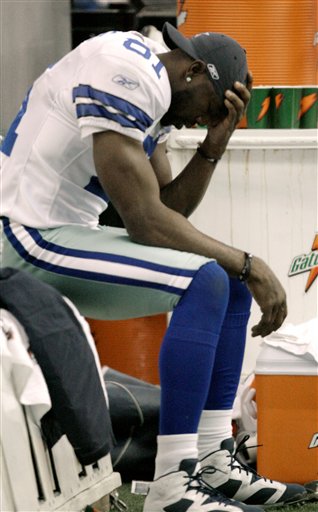
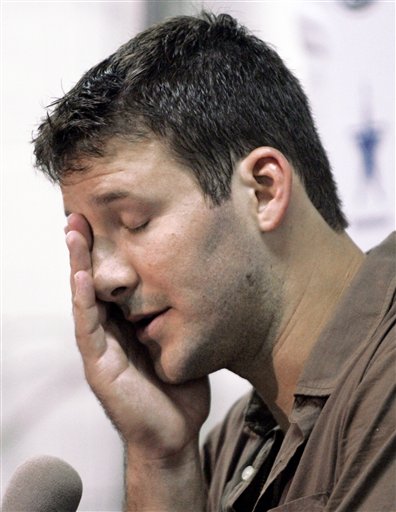
The Legacy teens are playing the Legacy family guys in a flag-football extravaganza tomorrow morning at 10:00 on the soccer field north of the building. I’ve always felt like I was a little too old to be in that Sunday morning Young Families Class. But Vic’s presence in there has always comforted me. However, it may be proven tomorrow morning that I really don’t belong with these guys who are ten years younger. By agreeing to play in the game, I’m afraid my brain has written a check my broken down body can’t cash. Like Jon Kitna maybe.

When we moved here this past summer I promised myself I was going to see lots of DFW high school football. And I’ve not seen a single game since the DC debacle at FWC in September. But I’m taking care of that tomorrow by taking in a playoff double-header at Texas Stadium. Hebron’s Hawks are tangling with Abilene, the team that knocked Southlake Carrol out last weekend. My great friend, Billy Whiteley, is the head athletics trainer for Hebron, and I’m anxious to see if they can recapture that state championship magic from two years ago. The second game features Trinity’s Trojans against Arlington Bowie. Lots of our Legacy kids here go to Trinity and so I’ll have a rooting interest in both games. But I refuse to do the Haka. Hocca? Hawka?

Peace,

Allan

Of Cranes and Beams…

BeamsArriveThe 90-foot steel beams rolled in from Sherman at about 10:30 this morning and they were both in place on the north and south sides of our new worship center by 2:00. This first group of pictures below are of the first beam being lifted and then lowered into place by the larger-than-life crane and secured by workers on the north side. As always, click on the photo for the full size:

Beam#1 Beam#1Again Crane&Beam ViewFromNorth NorthSide WelderWelding

These are pictures of the second beam being installed on the south side:

BeamTwo BeamTwoAgain CraneFromSouth

And while the huge crane was a huge hit around here today, our favorite crain is always right here:

JackieCrain

Anything Else Comes From the Devil

“Simply let your ‘Yes’ be ‘Yes,’ and your ‘No,’ ‘No’; anything beyond this comes from the evil one.”   ~Matthew 5:37

The religious leaders of Jesus’ day had been interpreting the Scriptures’ use of oaths to mean that anything sworn to by the name of God was binding. Promises made by swearing to less sacred things—heaven, earth, Jerusalem—were not as binding. And these loopholes devalued the oath, devalued the word of man.

The existence of oaths is proof that there are lies. Oaths were given to safeguard against lies. But the religious culture of the day was such that oaths were also being used to facilitate lying, to hide dishonesty. It reminds me of the way we acted as kids. We were always able to get out of an “I promise” by confessing that we had our fingers crossed. A one dollar wager on the outcome of a race or a free-throw contest was negated by exclaiming, “We didn’t shake on it!”

Technicalities. Hiding behind our oaths.

By the time Jesus addressed this attitude—these external applications and false practices of the Pharisees and teachers of the Law—in the Sermon on the Mount, some religious groups were already demanding a return to the true intent and spirit of the Law on oaths. Jesus taught that all oaths were wrong. The Essenes were teaching the same thing. Josephus writes this about the Essenes:

“Any word of theirs has more force than an oath; vowing they avoid, regarding it as worse than perjury, for they say that one who is not believed without an appeal to God stands condemned already.” (Antiquities of the Jews, 2:135)

Jesus, and the Essenes, teach that we should be people of such integrity and character and truthfulness of heart that everything we say is absolutely believable and dependable. No doubts. My word should be as trustworthy as a signed contract or notarized legal document. The idea is that every single word we speak is always spoken in the presence of God and so falls under God’s judgment. And since we always speak the truth, there’s no need for an oath. The oath only throws doubt on all our other statements. It’s not necessary. Anything other than a ‘yes’ or a ‘no,’ according to Jesus, comes from the devil. Because anything other than a ‘yes’ or a ‘no’ implies that you’re trying to hide something or deceive someone or lie.

Of course, all of God’s Law and all of Jesus’ teachings have to do with relationships—relationships with each other, with our community, and with our God. And these teachings on truth and honesty and dependability all strongly relate to everything else in Scripture. Untruthfulness and dishonesty destroy relationships. They wreck fellowship. But if we’re a people of complete honesty and total truthfulness, we’re all liberated to trust each other freely without any complications or second-guessing or looking over our shoulders or suspicion or speculating about hidden agendas. And that fosters true community. Wholeness. Peace.

~~~~~~~~~~~~~~~~~~~~~~~~~~~~~~~~~~~~~~~~~~~~~~~~~~~~~~~~~~~~~~~~~~~~~~~~~~~~~~~~~~~~~~

There’s a HUGE crane out here this morning, get ready in a couple of hours to set all the 90-foot steel beams on the worship center. Super cool. I’ll post some pictures this afternoon.

Peace,

Allan

The Two-Way Way

We are very familiar with the concept of Jesus as “The Way.” Jesus is the Way to God. He is the Way to Heaven. He is the Way to peace and forgiveness and wholeness. He is the Way to eternal life. As disciples of Jesus we walk in his Way, the Way. We recognize all this. We understand it. We get it.

But do we also see that Jesus is God’s Way to us?

It’s a two-way Way.

And I appreciate the Christmas season because it reminds us — it forces us — to reflect again on the Incarnation of the Christ. The way we come to God is the same way God comes to us. God comes to us in his Son, Jesus. Eugene Peterson, in his latest book The Jesus Way, writes:

“God comes to us in Jesus speaking the words of salvation, healing our infirmities, promising the Holy Spirit, teaching us how to live in the Kingdom of God. It is in and through this same Jesus that we pray to and believe, hear and obey, love and praise God. Jesus is the way God comes to us. Jesus is the way we come to God. The way up and the way down is the same way.”

We often ask, and rightly so, what would Jesus do? But at the same time, we should also ask what is God doing? Jesus is God in action. Jesus is God speaking. Jesus is God touching lepers. Jesus is God forgiving a condemned and dying criminal on a cross and an adulterous woman threatened by men holding rocks. Jesus is God blessing children. Jesus is God giving sight to Bartimaeus and life to Lazarus. Jesus is God restoring peace to the demon-possessed. Jesus is God feeding the hungry. Jesus is God calling down judgment on religious posturing. Jesus is God weeping over the city.

Walking in the Way requires doing what Jesus did—love, service, sacrifice. But it also means jumping in to join what God is doing—saving, redeeming, reconciling, forgiving.

Jesus is the Way. The two-way Way.

Peace,

Allan

All Sorts of Possibilities

ScrewTapeThe Screwtape Letters, a collection of theologically profound and provocative messages between a senior tempter and his protege in Satan’s service, is valuable to me in many, many ways. I suppose the main reason it is my favorite book and the overarching reason I find myself reading it from cover to cover every couple of years is that it reminds me in hard-hitting ways of the cosmic battle between God and evil. I can’t see it. But it’s going on all around me. And I can’t be too aware of it. C. S. Lewis’ book helps to focus my thoughts and my direction on the dramatic difference between appearance and reality, between the temporary and the eternal.

In discussing his patient’s response to the war, Screwtape advises his nephew/apprentice devil to give him a full account “so that we can consider whether you are likely to do more good by making him an extreme patriot or an ardent pacifist. There are all sorts of possibilities.”

The devil is in the extremes. He does his best work in the extremes. Extreme views and extreme beliefs and actions, as they relate to our world and to our fellow man, tend to shut out our neighbors and judge those who don’t share our views. Extremes tend to leave no room for mercy and grace.

Our call to discipleship is an extreme one. Following Jesus requires extreme decisions and extreme changes. As God’s children we should be radically different from the ones around us. And we’re called by the teachings of our Lord to take extreme action to get rid of the sin in our lives.

But let’s treat our extremes with caution. Let’s make certain our friends and neighbors, our brothers and sisters, the widow, the orphan, and the stranger in the gate are not excluded. Let’s never crowd out mercy and grace and love.

~~~~~~~~~~~~~~~~~~~~~~~~~~~~~~~~~~~~~~~~~~~~~~~~~~~~~~~~~~~~~~~~~~~~~~~~~~~~~~~~~~~~~~

PatriotsAre you rooting for or against the Patriots to go 16-0? I want to know. And don’t just tell me “for” or “against.” Tell me why.

After last night’s game, the second in a row in which New England’s inferior opponent blew a late lead by collapsing on both sides of the ball, the Patriots were all the talk here at the building early this morning. Some are rooting for the Pats to do it because it’s neat to see that history being made. Some were rooting for the Pats to do it until Tom Brady shot his mouth off a couple of weeks ago about their glee in blowing people out. One of the many Cowboys fans here wants New England to lose just so they won’t have a better record than Dallas.

Where are you on this deal?

I’ve always admired Robert Kraft as an owner. When Terry Glenn was a rookie wide-receiver for the Patriots he received a ticket for speeding. And Kraft, as I’ve heard the story told, called Glenn into his office and told him that his players did not get tickets for anything. He fined him and told him it would be worse if it ever happened again. In a culture in which our professional athletes are celebrated as righteous role models, even when they plead guilty to obstruction of justice and lying to police in a double-murder investigation (see: Ravens MLB & Pro-Bowl, MVP, Madden cover, etc.,), that was refreshing.

But Bill Belichick. There’s something about him I don’t like. There’s something very Bill Parcells-ish and Bobby Knight-ish I don’t like about him.

But isn’t it also our tendency as Americans to root for the underdog? We love to see David take down Goliath. I despise the Ravens because of everything Ray Lewis stands for. But I surely wanted them to win last night.

Where are you on all this? Why?

The Pats may be 15-0, coming off a pasting of the 0-15 Dolphins, when they face the New York Giants in the regular season finale. Saturday night. On the NFL Network. History will be made. Those on both sides of the fence will be stoked. Casual fans and those indifferent to the plight of the Patriots will be interested. They’ll hype it for weeks. In fact, it’s already begun.

And it’ll be on the NFL Network, unavailable to almost 2/3 of our country.

Peace,

Allan

In The Garden

GardenOfGethsemaneRemember Mel Gibson’s movie, The Passion? Powerful film. When that movie came out three or four years ago, a lot of the debate centered around the question of just how faithful it was to the Gospels. True, there was a lot of artistic license flexed by the movie makers. But I feel that most, if not all, of it was theologically sound.

Remember the garden scene? In that movie, Jesus was not praying alone under the olive trees at Gethsemane. Not totally. The snake was OliveTreesAtGardenOfGethsemanethere. The serpent of old, the devil, was slithering around the garden while Jesus was asking God to take away the cup of suffering and the task of the cross. And the mood isn’t so somber and tragic when you see the snake. Suddenly the scene is injected with vigor and power as we realize the cosmic battle that’s taking place in this olive grove. And the scene climaxes with Jesus simultaneously saying, “Not my will, but yours be done,” and standing up and crushing the head of the serpent with his foot.

What was really happening in the garden? The night Jesus was betrayed and the whole plan was beginning to unfold, what was really going on?

Crushing the head of the snake is a clear reference back to Genesis 3:15, a verse the Church has held forever as a messianic prophesy of God’s ultimate defeat of Satan.

But it takes us back to that very first garden, the Garden of Eden. In that first garden the first Adam, the first man, fails his God. Not only is he not talking to his Father, he’s ultimately listening to the devil. Adam, rejecting the will of God, looks upon the tree and disobeys. As a result, God removes man from the garden. And even though he lives a very long time, Adam ultimately dies because sin and death have now entered the world.

Now at Gethsemane we see the second Adam, the last Adam, Jesus. He, too, is in a garden. He’s in a garden and contemplating a tree: the tree of crucifixion right before him. And Satan was there, too. He was there at the beginning of Jesus’ ministry, don’t you think he was there at the end? I can hear him.

“Save yourself! You don’t have to do this! You’re the Son of God! Call down your angels! Make yourself King!”

He’d said it all before.

But unlike the first Adam, this second Adam is listening to his Father, not the devil. He obeys the will of his God who tells him he must partake of the tree. And as a result, Jesus is removed from the garden; not by God, but by man. Jesus dies within 24 hours. But ultimately his life returns anew because salvation and reconciliation and everlasting life have now entered the world.

Through his decision he agonizingly confirms again in the garden, Jesus forever becomes our path back to our Father’s garden, the one we were removed from so long ago. Praise God for the Savior’s love. And for his obedience to our God’s will.

~~~~~~~~~~~~~~~~~~~~~~~~~~~~~~~~~~~~~~~~~~~~~~~~~~~~~~~~~~~~~~~~~~~~~~~~~~~~~~~~~~~~~~

He proudly wears his Marion Barber jersey to church functions. His sweet daughter is an answer to my family’s prayers. He’s an open and honest man with a unique perspective. My conversations with him, in person and via email, about our God and his church or football, always stretch me and give me appreciated insight. And now Mel Williams has joined the blogging community. Check out Mel’s brand new blog, Simple Man Walking, by clicking here.

Peace,

Allan

« Older posts Newer posts »