Category: Worship (Page 8 of 27)

I Worship the Lord

“I worship the Lord, the God of Heaven, who made the sea and the land.” ~Jonah 1:9

I imagine that when Jonah paid his fare and collected his ticket and boarded that ship to Tarshish, he never dreamed of talking to the boat’s crew about God. They would never listen. If he asked them to respond to his God, they would just say “no.” These kinds of people — these pagan sailors with their different gods and values, different cultures and beliefs and lifestyles — are not interested in the Lord.

But in the middle of that violent storm, as the wind and the waves grow increasingly stronger and the ship begins to break up, the sailors begin to fear for their lives. They’re drawing straws, casting lots, trying to figure out who or what is to blame for this great trouble. And Jonah, in the middle of the storm, in the middle of the turmoil and fear and noise and anxiety and panic — he answers their questions with a confession.

“I worship the Lord, the God of Heaven, who made the sea and the land.”

And that’s all it took.

Jonah confesses the Lord. The sailors reluctantly acted on Jonah’s instructions by throwing him overboard. And they begin calling on the name of the Lord. Praying to God. Begging God for forgiveness. And when the storm goes away and the seas grow calm, they greatly fear the Lord. They revere the Lord. They’re in awe. And they’re moved. They offer sacrifices to God and they make vows. They make commitments to him right there on the spot.

Jonah confessed the Lord to these pagan sailors. The sailors saw the great power of God. They experienced the merciful salvation of God. And their lives were changed.

This part of the story tells me that the world we live in is not closed to our faithful witness. Even if it’s a weak witness.

Hey, this world is in a crisis. This world is desperate. It’s hopeless. It’s grasping at straws, rolling the dice, shaking the magic 8-ball, grasping for truth, dying for something solid to believe in, anxious for something stable to hold on to. And so many people we run in to are wide open to the truth of our God. If we’ll just confess it in front of them.

The sailors were not looking for this witness. They weren’t looking for Jonah’s statement of faith. They weren’t looking for the Creator of Heaven and Earth. They didn’t know what they were looking for. But through Jonah’s witness — as weak as it was — they encountered our God and experienced his salvation. They acknowledged their helplessness in rowing against the storm on their own. They believed in God and his Word and they acted on it. And they worshiped him in reverence and in awe.

Your witness may be weak. But your God is strong. Your testimony may not be much more than “I worship the Lord.” But your God is ready to use that testimony to change the lives of the people around you.

Peace,

Allan

Christ is Preached and I Rejoice

While Paul is in jail in Rome, there are other Christian preachers there in the city piling on. They’re preaching Christ out of “envy and rivalry.” Their motivations are all wrong. They’re involved in power plays and intentionally trying to hurt Paul and discredit him in the eyes of the church and in the city. It’s selfish. It’s insincere. But Paul writes to the concerned brothers and sisters in Philippi that it doesn’t really matter.

“What does it matter? The important thing is that in every way, whether from false motives or true, Christ is preached. And because of this I rejoice.” ~Philippians 1:18

What a wonderful perspective! At the end of the day, after all their efforts to oppose Paul, they’ve only succeeded in doing the one thing that to Paul matters the most: they’re preaching Christ!

Paul’s not concerned about identifying this group. In fact, it’s impossible to know who he’s talking about because, to Paul, it’s not important. These other preachers are mean and selfish and they’re using Paul’s chains to promote themselves. But they’re doctrinally orthodox. They’re preaching Christ and him crucified for the forgiveness of sins. So Paul’s attitude is that it doesn’t matter. Christ is preached. Period. And I rejoice.

If we’re all going to grow more into the image of Jesus, if we’re really going to partner with our God in Christ’s mission for the world, we’re going to have to come to grips with the fact that God’s salvation work is bigger than us and what we’re doing. His work to redeem the world is bigger than the Churches of Christ. He’s using us, no question, praise God. He’s using Churches of Christ to some wonderful things for the Kingdom, no doubt, amen. But he’s using all kinds of people in all kinds of ways in all kinds of churches in all kinds of places to reconcile all of creation back to himself!

This is the part of Paul’s perspective that we both admire and, honestly, have a very difficult time practicing. And, I suppose, we’re in good company. When John and the apostles came running to Jesus in Luke 9, they were very exclusive and sectarian in their understandings about who God was using to do his will and who he wasn’t.

“‘Master,’ said John, ‘we saw a man driving out demons in your name and we tried to stop him because he is not one of us!'” ~Luke 9:49

Jesus’ reply to his disciples was something like, “Don’t! Don’t stop him! Just because he’s not with you doesn’t mean he’s not with me!”

When our identity is in Christ, and not in our own particular brands or preferred practices, we won’t complain or argue or bicker about Christians who don’t do things the way we do things. We don’t talk bad about them. We don’t question their motives or their sincerity. We don’t look down on them in any way.

We rejoice. We rejoice because, hey, look, here’s another group boldly proclaiming the life, death, and resurrection of our Lord!

Christ is preached. And I rejoice.

Somebody ought to put that on a T-shirt.

Peace,

Allan

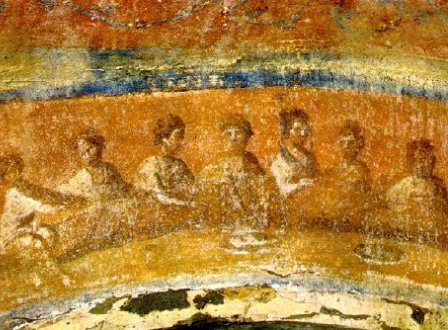
Around the Table: Part 8

“When you come together, it is not the Lord’s Supper you eat, for as you eat, each of you goes ahead without waiting for anybody else. One remains hungry, another gets drunk… When you come together to eat, wait for each other.” ~1 Corinthians 11:20-21, 33

Paul’s instructions/corrections to the Corinthians regarding the communion meal are the earliest and oldest written accounts in existence about the Lord’s Supper. What we find is not an elaborate or systematic blueprint of the church’s meal; we have a narrow and focused response to a very particular and localized problem. However, in this response in 1 Corinthians 10 and 11, we find Paul’s very clear Lord’s Supper theology that informs and instructs the Lord’s Meal today: the church’s supper should be shared as a communal act that breaks down barriers between people and proclaims and promotes Christian unity. That’s what the meal is all about. But that’s not what’s happening at this church in Corinth.

The main overarching problem in Corinth is division within the church. Paul acknowledges the issue right out of the gate. He appeals to them in the name of Jesus to “agree with one another so that there may be no divisions among you and that you may be perfectly united in mind and thought” (1 Corinthians 1:10ff). The same exhortations appear again in chapter three where Paul points out their jealousy and arguing and pleads with them to stop. Elsewhere, it appears that these Christians were taking pride in their spiritual gifts, exalting some gifts over others, differentiating and dividing along lines of giftedness. And those decidedly anti-Christians attitudes were being expressed and manifested on the Lord’s Day at the table.

The Problem: Not Waiting for Others (11:21, 33)

Paul tells them they’re gathering for the Lord’s Supper, they’re calling it the Lord’s Supper, they’re saying all the right prayers and repeating all the right rituals, but it’s definitely not the Lord’s Supper. “You’re each eating your own supper,” he says. Why? Because you’re not sharing. You’re not waiting. You’re thinking only of yourself. You’re showing no regard for your own brothers and sisters who are going hungry while you’re stuffing your face and getting drunk. The problem is not that they were eating a full meal — the Lord’s Supper had always been a full meal (dipenon) and would be a full meal for another couple of centuries — it was that they weren’t sharing. This meal wasn’t about Christian unity, it was about taking care of one’s own needs over those of another. This, of course, is in direct violation of the way of Jesus. The rich homeowners were eating and drinking while the working class members of the church were getting nothing at all. This meal was being shaped by the culture instead of the Christ. The Gospel of Jesus is intended to break down barriers, to destroy division, and unite all people in his salvation blood. Instead, around this Corinthian table, poor people were being humiliated in the corner while rich people were gorging themselves in the main dining room. Even if they had no idea what the Lord’s Supper was about, common courtesy demands they refrain from getting fat and drunk while others are going hungry. Instead, they were making a mockery of the Gospel by their selfish behavior.

The Corrective: Pointing to Jesus (11:23-24)

Paul tells the Corinthians he cannot praise them for their awful behavior at the table. Their manners need correcting. So, he reminds them about their Lord. He reminds them that Jesus, “on the night he was betrayed,” gave up his very body and blood for the sake of others. The meal, Paul says, remembers the self-giving nature of our Savior. Our covenant with God, he recalls for these Christians, is based on sacrifice and service. It’s ratified by death. Around the table, we proclaim with one another that death and resurrection. Our actions at the table with one another must reflect and express that same sacrificial and servant-hearted nature of our Lord “until he comes.”

The Instructions: Wait for Each Other (11:33-34)

Paul does not discourage the eating of the meal. He does not command them to stop eating and drinking at the Lord’s Supper. Instead, he tells them how to eat and drink together around the Lord’s table. This follows his obvious pattern in correcting other abuses in the Corinthian congregation. He doesn’t tell them to stop speaking in tongues; he says, “When you speak in tongues, do it this way.” He doesn’t tell the disruptive women to stop praying; he says, “When the women pray, do it this way.” He doesn’t tell them not to eat meals at their Lord’s Day gatherings; he says, “When you come together to eat, do it this way.” Wait for each other. Eat and drink together. Share with one another. Consider the needs of others more important than your own. Now, if you’re unable to wait, if you’re incapable of restraining yourself, if you just can’t help it, go ahead and “eat at home so that when you meet together it may not result in judgment” (1 Corinthians 11:34). Don’t stop eating the Lord’s Supper. Eat it together, Paul says, in a way that honors the forever-giving nature and way of our risen and coming Lord.

Conclusions: Communal Intent of the Meal

Over the past 1,300 or so years, culture has turned the Lord’s Meal into a time of silent, individualistic piety. The Supper is restricted to the recesses of each individual’s mind and personal thoughts. In Corinth, the communion meal was restricted to class and socio-economic status. Today, it’s mainly a private affair. We have turned a celebratory meal designed by our God to proclaim and express unity and community and salvation into an individual ritually swallowing a crumb and drinking a sip while silently staring at the floor. I’m not completely certain how we recover the communal aspect of the church’s meal while worshiping in an auditorium with several hundred people, but we must try. Maybe we could use bigger portions of bread and more juice in bigger cups. Maybe we could all hold the cracker bits and tiny cups and wait for each other to eat and drink at the same time. Maybe we should enjoy a time of welcome and hospitality — a time to “shake hands and be friendly” — leading up to our time at the table. Singing together during the meal. Reading Scripture together during the meal. Instructing our churches to share with one another in the pews our favorite words of Jesus, our favorite deeds of our Lord, our favorite passage of Scripture, or our favorite song during the meal. Truthfully, there is more communion happening while passing a hot dog to a stranger at a football game than in most communion services in our churches on Sunday mornings. The form is the function; the medium is the message. It’s important that we recover the communal aspect of the Lord’s Supper.

The Lord’s Supper is serious. Not because it’s quiet time or meditation time or a time to solemnly reflect on Jesus’ death. It’s serious because the communion meal bears witness to the Gospel. It reflects and expresses the good news of salvation from God in the sacrificial death and powerful resurrection and eternal reign of the Christ. Judgment will come to those who deny the Gospel message and its values around the table (1 Corinthians 11:27-29). My advice would be to make sure communion is not about you. Make sure it’s about the people around you.

Peace,

Allan

Songs that Soothe

“Whenever the [tormenting] spirit from God came upon Saul, David would take his harp and play. Then relief would come to Saul; he would feel better, and the evil spirit would leave him.” ~1 Samuel 16:23

I’m particularly curious about what kinds of songs David played and sang for King Saul that brought him so much comfort and peace. As the writer of so many corporate psalms and congregational hymns, I’m convinced that David sang familiar temple songs for the king, songs both he and Saul would have recognized and known. Those old familiar hymns seem to be the ones that bring us the most comfort. Personally, a song like Be With Me, Lord has powers to calm me down, to re-orient my hectic life, to re-order my confused priorities:

Be with me, Lord — I cannot live without Thee, I dare not try to take one step alone,
I cannot bear the loads of life unaided, I need thy strength to lean myself upon.
Be with me, Lord, and then if dangers threaten, if storms of trial burst above my head,
If lashing seas leap everywhere about me, they cannot harm, or make my heart afraid.

Every phrase of this old song is intended to comfort, to soothe, to calm the troubled soul. Every stanza is meant by the writer and sung by the singer to restore belief, to strengthen faith, to increase confidence in the face of distress. It reminds me that I’m not alone, that even when God is not visible or not easily recognized as present, he has never abandoned me. He will never leave me. “A constant sense of thy abiding presence.” What a song.

In our Bible class this past Sunday we browsed through the song books together and remembered the songs that speak so powerfully to us in times of stress and despair. We shared our favorites with one another and told the personal stories that go along with each song and each specific set of circumstances. “Sweet Hour of Prayer.” “As the Deer.” “A Wonderful Savior.” “It is Well.” “Because He Lives.” “As the Mountains Surround Jerusalem.”

I wonder generally about the power of music and its deep connection with our God’s Holy Spirit. By playing and singing these soothing songs, David brought great peace and comfort to Saul. Most English translations of the above verse from 1 Samuel say the king was “refreshed” or “relieved” by the music. But the meaning of the original Hebrew wording is that God’s Spirit actually returned to Saul while David was singing. The tormenting spirit would leave and the Spirit of God would return. Through his music, David becomes a mediator of God’s Spirit; David brings life to Saul — Holy Spirit life — in his songs. In our Scriptures, spiritual music and the Holy Spirit are deeply connected:

“Be filled with the Spirit. Speak to one another with psalms, hymns, and spiritual songs. Sing and make music in your heart to the Lord.” ~Ephesians 5:18-19

It was good to flip through the song books together on Sunday and to be reminded of all those hymns that have brought us so much comfort through the years. These songs mediate the presence of God, they have the power to give life.

What’s the one song that has brought you the most comfort, the song that has soothed you during times of trial? I think my two are “Be With Me, Lord” and “It Is Well.” How about you?

Peace,

Allan

Mood Matters

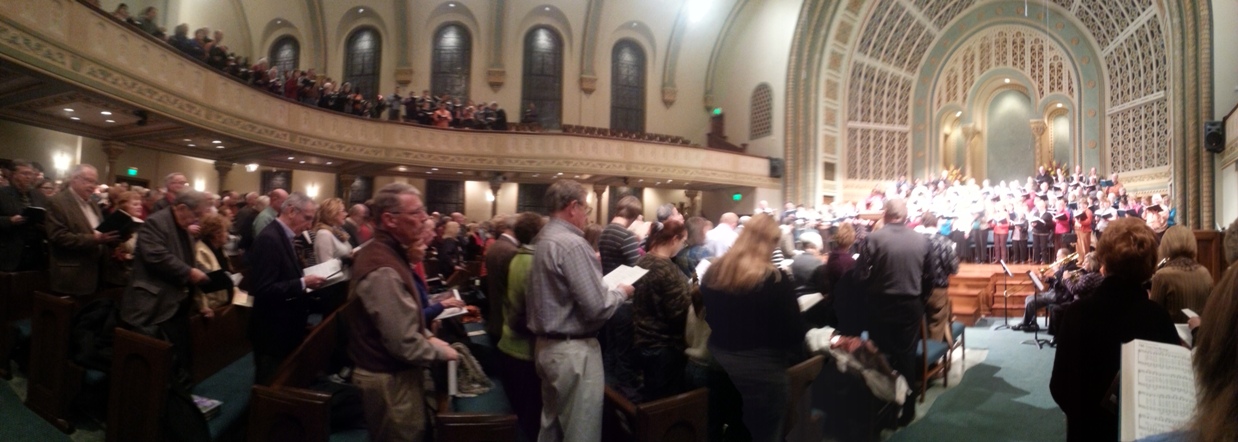
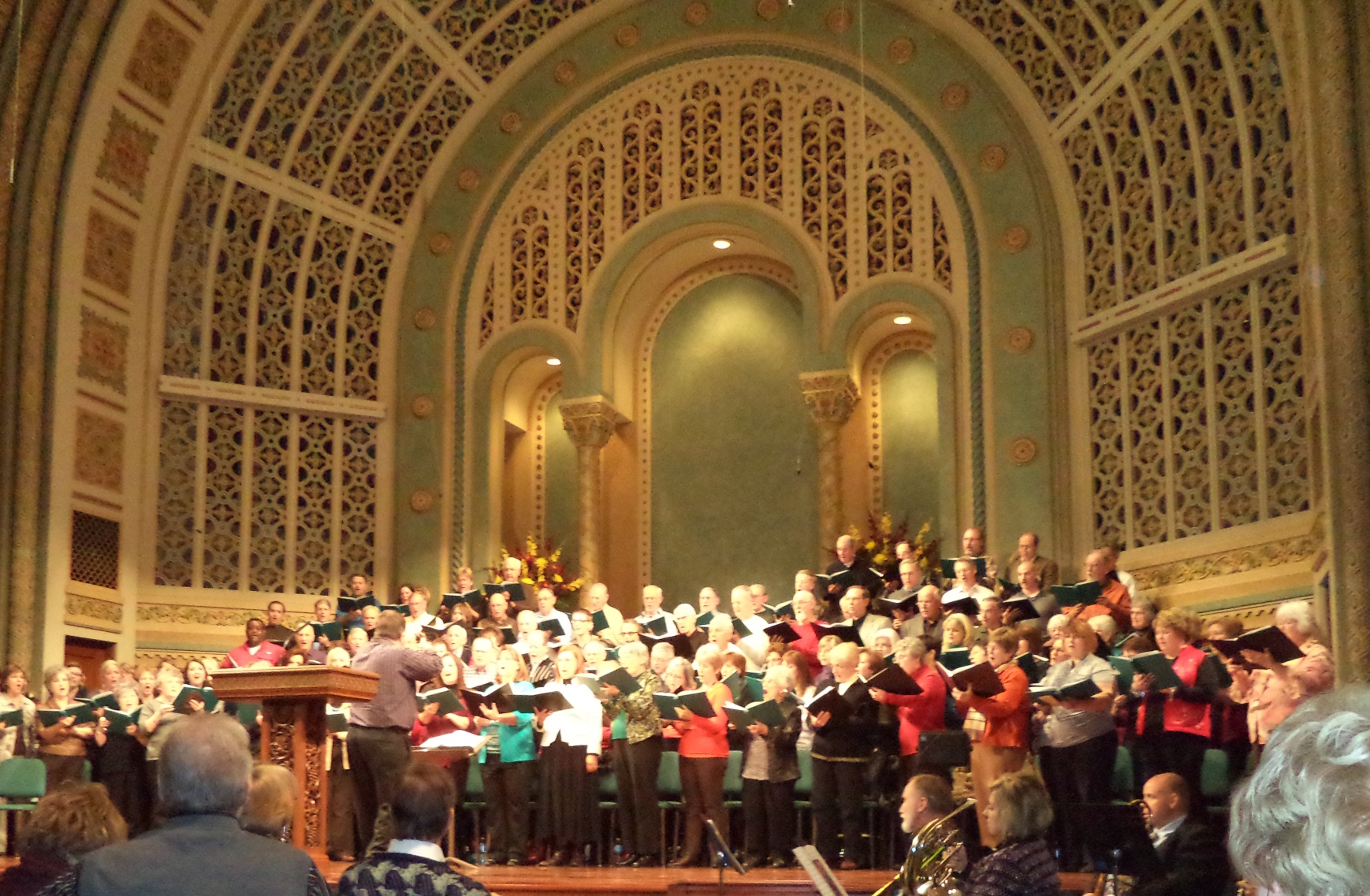
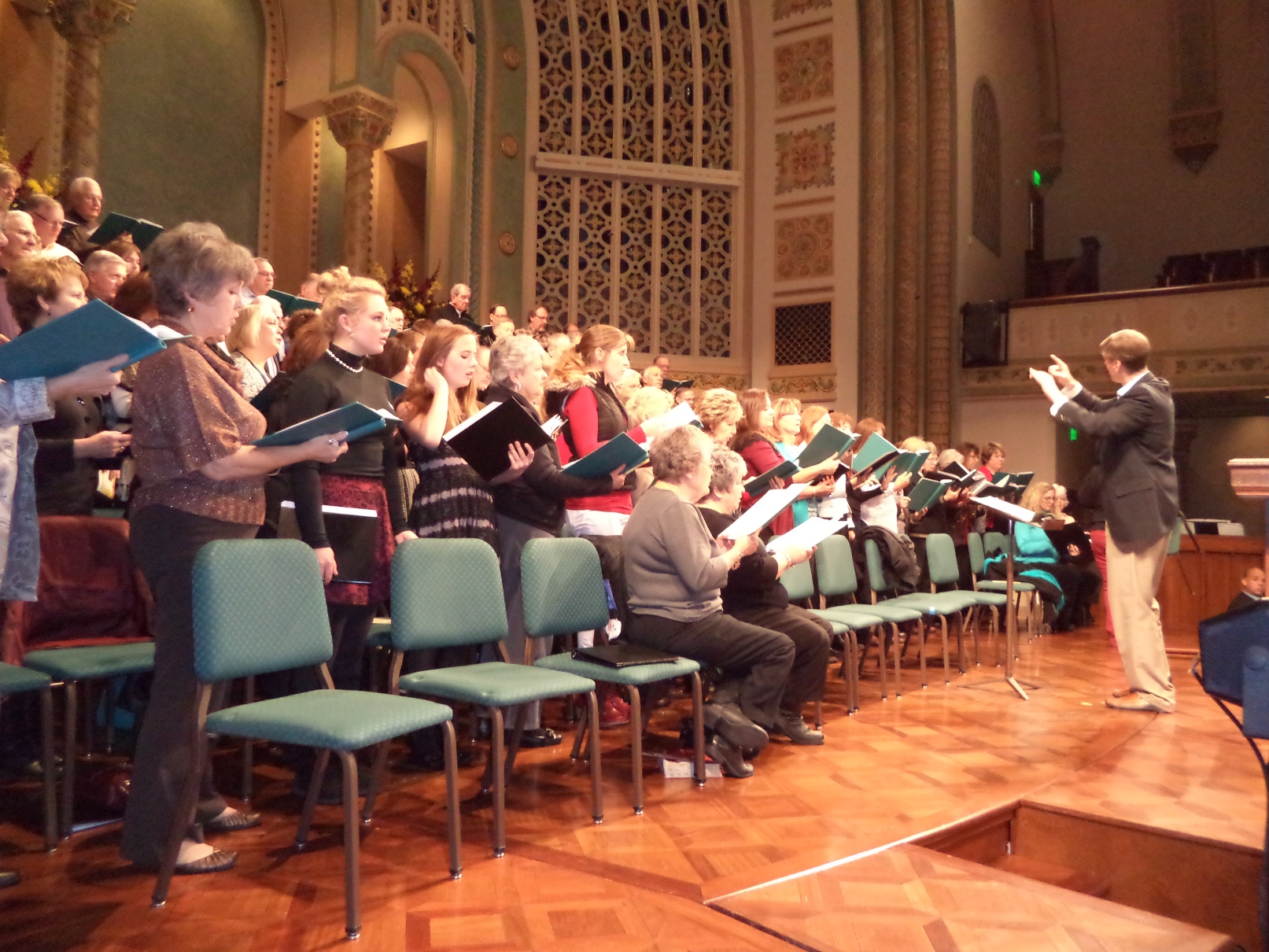
Indulge me one final word or two today as I continue to reflect on the first “4 Amarillo” Thanksgiving service last Sunday night at First Baptist. It’s been eight days now since that historic evening and I’m still receiving at least two or three texts, emails, cards, and calls about it per day. It seems that even through the short work week, the Thanksgiving holiday weekend, hectic trips to the mall, and Auburn’s 109-yard return, you are still processing it, too. Allow me to address the mood of the worshipers in the building that night and how I believe it profoundly impacted not only what happened during that hour but how it has significantly framed the conversations since.

I’ve heard from more than a few of you who believe the sermon I preached during that service was the best sermon I’ve ever preached in my life. Some of you have only heard me preach a couple of dozen times, but others of you have listened to me about a hundred times. My best sermon ever? And you don’t stop there. You’ve been telling me for a week now that the singing that night was the most beautiful singing you’ve ever heard. Really? The responsive readings, the Scripture readings, the prayers, the fellowship — it was all so moving, so awesome, so inspirational, so perfect. I’ve been reading this and listening to this for seven straight days. Best ever? Really?

Yes, I’ll give you the fact that, maybe especially for us Church of Christ-ers, the evening was highly significant. A watershed event. As some of you have written, it truly was “a defining moment,” “a sea-change for us,” “the beginning of something very different and very good.” I acknowledge all of that. Yeah, it was big.

But I’m convinced that the mood of the worshipers had a whole lot to do with it.

The truth is that every single person in that room — Howie reports 1,150 in attendance; that’s a preacher’s count, a Baptist preacher’s count! — wanted to be there. Everybody there had to put forth a greater than average effort to get there. The roads were slicked over with snow and ice. It was cold. It was dark. None of us have regular Sunday evening assemblies anymore. And the Cowboys-Giants game was still going on. Nobody was there because they felt some kind of a grudging obligation. Everybody in the room really wanted to be there.

In addition, every single person there was anticipating something really special happening. We all entered the worship center expecting to be moved, expecting to feel the presence of God, expecting to be inspired. After all, we had been praying about this night for months. We all knew that we were taking some risks in bringing four different denominations together for a worship assembly, but we were all convinced that it was God’s holy will. We anticipated that he would bless us richly as we worshiped him together.

We had gathered with a purpose. We were — each of us and all together — on a mission, even. We were coming together for the sake of an unbelieving world, expecting to be profoundly blessed, expecting God to reveal himself to us in significant ways. I’m of the belief that preparation and attitude have a whole lot to do with corporate worship.

I’m afraid that when most of us gather in our church buildings on Sunday morning, there hasn’t been a whole lot of prep time. Our hearts and our minds haven’t been focused on the coming encounter with God and communion with his people. We probably haven’t prayed much about it. And most Sunday mornings, I’m not sure we’re expecting much to happen. Some of that may be the fault of an unimaginative preacher or a lazy worship committee. Maybe. But a lot of it has to do with every man, woman, and child in the pews. If we don’t expect it, we might miss it even if it happens right in front of our faces. If we’re intently looking for it, searching for it, anticipating it, expecting it, then the smallest little glimpse of glory will slam us to our knees in joyful praise. Preparation and attitude matter.

I think it would be impossible to try to plan 52 straight Sundays of special events. We couldn’t come up with 52 different ways to pray, observe the meal, illustrate the sermon, or arrange the music to provoke the kind of energy and anticipation we all experienced that night at First Baptist. I’m not sure we’d even want to try; that kind of thing can quickly turn into an idol or a spectator-only affair. But I do believe we can do much better at entering the worship center on Sundays expecting to hear a powerful word from God. Anticipating God revealing himself to us in a new and exciting way. Expecting something really great to happen. Having spent time in prayer, preparing our hearts and our minds to encounter our Father and his people in significant and eternal ways.

It mattered for the “4 Amarillo” Thanksgiving service. The mood in the room had a lot to do with the success of the evening. It matters this coming Sunday morning at your church, too. It matters a lot.

Peace,

Allan

4 Taste of Glory Divine

The more I read and study Scripture and assimilate those holy words into my soul, the more I explore and discover about the unfathomable love and grace of our Father, the more I preach and teach and sing and pray about our King and his eternal Kingdom, the scope of which pushes our imagination to its very limits, the more I’m convinced that denominational lines that divide his Holy Church must sicken our God. Our King who prayed for our Christian unity the very night he was betrayed, our Christ who destroyed all the barriers between God and mankind and between all men and women when he died on the cross, our God who spoke through the prophets and his servant Jesus to foretell the great banquet feast when “every tribe and language and people and nation” will be gathered together on that last day, our Lord who is reconciling all people to himself and has ordained us all as his ministers of that reconciliation, must be nauseated at the historic line-drawing and fellowship-testing and debating and dividing that have characterized us as his children.

What a refreshing wind of Holy Spirit life we experienced together Sunday night at the first “4 Amarillo” Thanksgiving service! What an unflinchingly strong statement about our four churches’ refusal to be divided by insignificant issues, preferred practices, or pet peeves! What an undeniable witness to our city of the unifying will and power of the Prince of Peace who transcends all of whatever differences may keep us apart! What a foretaste of glory divine! What a spectacular preview of what is to come on that day of glory!

Boy, was Sunday night significant. Highly significant.
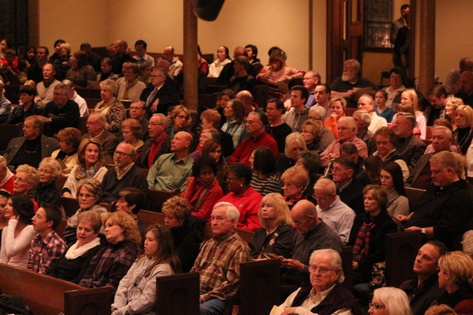
Yes, I know, for years now we have worshiped with other kinds of Christians in a variety of settings. I’m sure you have, too. At retreats and conferences, youth rallies and Bible camps, before and after service projects. No doubt we’ve all prayed and read Scripture together around sick beds in hospitals and at funerals of loved ones without checking who’s in what denomination. We’ve crossed denominational lines to sing and pray together for a long time now. But there is something different about that ‘sacred hour” in our worship centers on Sunday. If you think about it, generally it’s what happens during that worship hour that divides us. The ways we sing and pray, the particular methods we use to baptize and commune — this is generally where we debate and put up walls, where we draw our lines of fellowship.
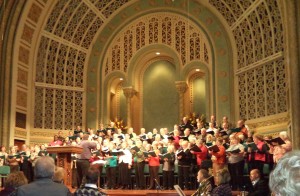
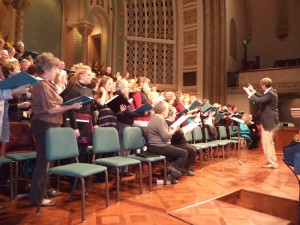


Most of us have always been able to worship God with Christians from other denominations at a wedding or a patriotic gathering or down at the homeless shelter. But Sundays in our buildings are different. Theologically, of course, that’s a bunch of hooey. Practically, though? Like it or not, it’s true. Sundays in our worship centers are different. It’s that last piece of turf we’ve never surrendered to the grace of God. It’s the one thing we hold on to in order to protect what distinguishes us from other Christians, instead of emphasizing the countless ways we are just alike. Sunday is different. And if we’re truly going to embrace the will of our Christ as expressed so clearly in his prayer for unity, if we’re going to practice what Jesus says so plainly is a foremost  method of reaching a lost and dying world, we’re going to have to express our one-ness with all his followers in worship.
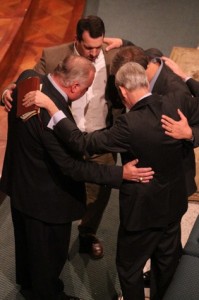
We did it Sunday night. Presbyterians and Baptists, Methodists and us CofC’ers. For almost 75-minutes on a freezing cold night in Amarillo, we did it. Our God was praised. His people were edified. And the city is taking notice.

Again, I may take another post or two to sort it all out. There’s a chance we could do a lot of processing together in the comments section of the blog. That would probably be preferable. But in an effort to continue the post-service debriefing that’s been happening around here since about 7:15 Sunday night, allow me to share just a couple of the more than 50-emails and texts I’ve received from our own Central members in the past 48 hours. I won’t attach their names to the comments, because I haven’t asked any of them for permission. But here’s a sample:

“God has used this to set me free from the bonds of the old confused thinking I grew up with… like, why do we think we (CofC’ers) are the only ones following God’s ways, when my friends and family worshiped differently, but all seemed OK with me, from what I was taught, and more importantly the Christian example they gave me??? Last night all I could do was praise God and thank him for what he is doing. I will say, it has been a long time coming!!! Thank you!”

“I cannot seem to articulate the warm, emotional experience that we had. It took my family 1.5 hours to drive in due to the ice, but we were not going to miss this historic restoration act! Yesterday was so effective in helping me to emotionally release so much of my legalistic baggage from my true, old school Church of Christ rearing in the late ’60s and ’70s.”

“What a night! What a special gift for the four churches to move forward and grow together. The powerful theme of unity and oneness in Christ came through loud and clear. You reminded of Ronald Reagan’s famous theme for ending the cold war, ‘Tear down this wall!’ Tonight, there was NO wall! We were all one in spirit!”

“Thanks so much for articulating our feelings so well.”

“I cannot wait until we all worship together again. I think this is the beginning of something really big — I can just feel it!”

“Tonight was a great blessing to many. I hope it felt as good as you hoped and dreamed it would.”

For more than ten years now I have been praying that someday my children would be able to worship our God together with Christians from other denominations on a Sunday. I’ve begged God that, whether my children are my age and have kids of their own or whether they are old and gray, they will get to experience on earth the kind of unity with other disciples that we’re going to experience in eternity. To realize over the past year that it might actually become a reality in my lifetime, that I might actually get to experience it myself with my wife and kids, has been a tremendous blessing. To actually be the one preaching when the dream came true was an unexpected honor I did not deserve nor will ever forget. It was far better than I had ever hoped.

To those of you who were there Sunday night, I would encourage you to share your thoughts and feelings by clicking on the “comments” at the top of this post. To those of you who were not there, whether you live in Amarillo or somewhere else in the world, I’d like to get your reactions, too.

I’ll write tomorrow about the sermon, about preaching it in that historic setting, and about the spirit of the room on that incredible night. Then, depending on how things go this weekend, I’ll try to find time before Sunday to reflect on our morning service here at Central with Howard Griffin from First Presbyterian.

I don’t know where this is headed. I’m not sure what this turns into over the coming months and years. But I do know it’s significant. It’s important. In our post-modern, post-Christendom, post-denominational world, it’s more important than ever. And I’m so eternally grateful to belong to a church that is determined to jump into these kinds of expressions of faith and grace like Central.

Peace,

Allan

« Older posts Newer posts »