Category: Matthew (Page 14 of 24)

Around the Table: Part 3

Good morning, Lon.

Alert all the local and regional safety agencies. Sound the alarm and post the warnings. The state of Texas has granted Valerie a driver license. On Friday morning, our Little Middle parallel parked like a champ and then aced the driving test, nailing it with a 96. So, consider carefully this advice: be extra cautious around the southwest part of town and, in the early evenings. between here and Canyon.

Congratulations, Valerie. Now, can you run to the store and get some bread and more Diet Dr Pepper?

~~~~~~~~~~~~~~~~~~~~~

After two weeks of intense Old Testament study concerning the covenant between God and man, the history and nature of covenant meals, the fellowship sacrifices and meals, the presence of God at those meals, and the great joy commanded and experienced around those tables, our Wednesday night Bible class in Sneed Hall has crossed the threshold into the New Testament and the ministry meals of our Lord Jesus. It’s a class on the Lord’s Supper, yet I think most everyone is surprised at how much we explored before we ever got to the Gospels. Well, we had to.

God comes to us in the person of Jesus as a fulfillment of the covenant: “I will make my dwelling place with you; you will be my people and I will be your God.” Emmanuel means “God with us.” And that’s just what/who Jesus is: God with us. God in Christ comes here to dwell among us (“The Word became flesh and made his dwelling among us…” John 1:14). He came to earth to reveal himself to us in Jesus (“Anyone who has seen me has seen the Father.” John 14:9). And God put on our flesh and came to this planet in order to eat and drink with us, to commune with us, around a table.

“I confer on you a Kingdom, just as my Father conferred one on me, so that you may eat and drink at my table in my Kingdom.” ~Luke 22:29-30

“Many will come from the east and the west and will take their places at the feast with Abraham, Isaac, and Jacob in the Kingdom of Heaven.” ~Matthew 8:11

“The Kingdom of Heaven is like a king who prepared a wedding banquet…” ~Matthew 22:2

You don’t have to read too far in the Gospels and you don’t have to pay too close attention to see that meals, eating and drinking with people, are the focal point of Jesus’ ministry. Jesus eats with his disciples and with his enemies, with the “righteous” and the “sinners,” with crowds of Jews and crowds of Gentiles, with tax collectors and prostitutes, with Mary and Martha and teachers of the Law. Jesus ate and drank with everybody. He was eating and drinking all the time, so much so that he was accused on several occasions of being a drunkard and a glutton.

And in all these Jesus stories, the meals are critically important. They reveal great truths about what God is doing through Jesus in the world. The meals teach lessons about what it means to live as citizens in God’s Kingdom. They express forgiveness and healing, they celebrate restoration and fellowship.

Jesus is eating with Levi and the other tax collectors, showing us in visible ways that the invitation to enjoy fellowship with God is open to all. He’s criticized for his choice in dinner companions and answers by proclaiming that “It is not the healthy who need a doctor, but the sick. I have not come to call the righteous, but sinners!” (Luke 5:31) You get the same thing with Zacchaeus. “The Son of Man came to seek and to save what was lost.” (Luke 19:10)

Jesus forgives the sins of the prostitute at the dinner at the Pharisee’s house in Luke 7. He teaches on hypocrisy and taking care of the poor during the meal with the Pharisees and teachers in Luke 11. At the supper with the Pharisee in Luke 14, our Lord declares again that he’s here to eat with everybody: “Bring in the poor, the crippled, the blind, and the lame!” (Luke 14:21)

Aside from the last dinner with his disciples and the post-resurrection meals, the most important meals during Jesus’ ministry came at the feeding of the multitudes. All four Gospels go to great lengths to report on the miraculous feedings of the five thousand Jews and the four thousand Gentiles. The imagery is unmistakably Messianic. Here’s this great prophet of God providing food for God’s people in the desert. They eat until they are full. Baskets of leftovers are collected. This fulfills Moses. This fulfills prophesy. This is the Anointed One, the Christ!
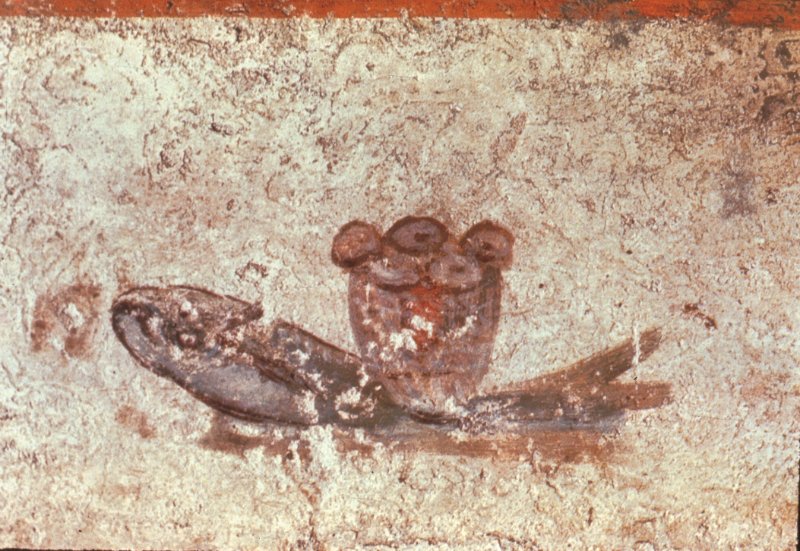
The early church made a pretty big deal about the feeding of the multitudes. The first churches ate their communion meals in the context of these feedings and the truths those stories revealed. It’s why the earliest communion art we have contains images of fish with the bread and the wine. The connections were made not just by the common themes and the prophesies, but by the deliberate wording the New Testament writers used to relate these important meals. They tied the church’s meals to the last supper, the post-resurrection dinners, and the feedings of the crowds with the four-fold liturgy of “take, bless, break, and give.”

In every account of these miraculous feedings, Jesus is said to “take” the bread, “bless” it, “break” it, and then “give” it to the disciples. Look it up; it’s in every passage (Luke 9:16, Matthew 14:19, Mark 6:41, Mark 8:6, Matthew 15:36). The same language is even used for the fish in John 6:11. Interestingly, the exact same formula is used in the Last Supper accounts. Jesus takes, breaks, blesses, and gives (Luke 22:19, Mark 14:22, Matthew 26:26). The same four words are used in the same order in the stories of Jesus’ post-resurrection meals, too, tying together all the meals Jesus ate during his ministry to the meals the church was sharing together at the time the stories were recorded. Everything that was going on in those meals — the teachings, the revealed truths, the fellowship and thanksgiving, the invitation and celebration, the anticipation of the final heavenly feast — is also going on today in our church’s meals.

They are all Kingdom meals. The feedings of the crowds, the last dinner, the post-resurrection suppers — they are all Kingdom meals, eaten in community, in the presence of the Lord, with great joy. They each anticipate the fullness of the Messianic banquet in the new heaven and new earth. They’re each characterized by joyful celebration and an abundance of food. To eat with Jesus (God) is to experience and celebrate redemption and acceptance. All the meals proclaim that the Day of great joy for all the people has dawned.

With this understanding, how in the world would the first Christians eat the “Lord’s Supper” in a quiet, somber, individualistic way? How would they imitate or recreate the Lord’s meal with little crumbs of cracker and tiny sips of juice?

Of course, they didn’t.  But, we’re getting ahead of ourselves a bit.

Peace,

Allan

Quick Theology Check

All right, let’s get some theology straight here. Our church is in the middle of this “Gifted 2 Go” project and it’s important that we be somewhat clear regarding the reasons we do things. Our motivations and expectations for what we do should always be guided by the Gospel of Christ. And we should all be at least close to the same understandings about what that is.

If we don’t guard ourselves, we can very easily be confused into thinking that the Bible is mainly about what we’re supposed to be doing instead of Scripture being mainly about revealing to us a picture of our God. That makes a huge difference in the way we view and apply the Bible and in our own motivations for doing good.

Jesus taught that we should turn the other cheek. Yes. But Jesus never said turning the other cheek toward someone who hits you is a useful and efficient method for bringing out the best in that person. Turning the other cheek, giving up your coat, walking two miles instead of one — it’s not taught by our Lord because it works. Let’s be honest, it usually doesn’t. It’s taught because this is the way our God is. God is kind to the selfish and ungrateful. He is merciful and loving to his enemies. As we in Amarillo can testify this week, our Father brings his rains equally on the just and the unjust.

Doing good to others is not a strategy for getting what we want. Instead, doing good to others is the only way to live since, in Jesus, we clearly see what God wants. We seek reconciliation and relationship with our neighbor, not because it makes us feel good, but because reconciliation and relationship is what God is doing in the world right now through Christ.

So, tonight we’re baking and delivering cookies to our neighbors. We’re changing the oil in their cars, washing their pick-ups, and helping them with their laundry. Not because it’ll work. Not because it’ll make us feel good about ourselves. Not because it’ll cause our church to grow or give Central great publicity. We serve our neighbors because this is who God is.

Peace,

Allan

4 Amarillo

Four guys walk into a bar: a Baptist, a Methodist, a Church of Christ, and a Presbyterian… that’s a joke.

Four sets of ministers and elders walk into a church building to pray: Baptist, Methodist, Church of Christ, and Presbyterian… that’s not a joke. It’s the holy will of our God and a magnificent witness to our city of the power of Jesus! And it’s happening this evening!

“I pray also for those who will believe in me through [the apostles’] message, that all of them may be one, Father, just as you are in me and I am in you. May they also be in us so that the world may believe that you have sent me. I have given them the glory that you gave me, that they may be one as we are one. I in them and you in me. May they be brought to complete unity to let the world know that you sent me and have loved them even as you have loved me.” ~John 17:20-23

We believe that it is God’s will that all his children, all disciples of his Son, be reconciled. We think God’s great desire is for all Christians to be brought together as a powerful witness to the world of his love and peace. You know, this is in our Church of Christ DNA. It was established in the opening lines of Thomas Campbell’s Declaration and Address, the charter document for our Restoration Movement, written in August 1809:

“That it is the grand design and native tendency of our holy religion to reconcile and unite men to God and to each other in truth and love to the glory of God and their own present and eternal good will not, we presume, be denied by any of the genuine subjects of Christianity.”

The whole document is about reconciliation, the kind of reconciliation that drives God’s eternal plans. The very ministry of reconciliation he’s given those of us who profess our faith in him. The words in the document are bold and aggressive. And they ring with undeniable beauty and truth. They call for a swift end to all divisions among those who follow Jesus:

“Has the Captain of Salvation sounded a desist from pursuing this deadly enemy that is sheathing its sword in the very bowels of Christ’s Church, rending and mangling his mystical body to pieces? Has he said to his servants, ‘Let it alone?’ If not, where is the warrant for a  cessation of endeavors to have it removed?”

Campbell claims that tearing down the walls and uniting with all our brothers and sisters in Christ is a matter of universal right, a duty belonging to every citizen of Zion. And while the work will be difficult and the opposition will come mainly from within the church establishment, Campbell says it is God’s will. It is the Church’s will. It is the will of those who’ve gone before us:

“Both the mighty and the many are with us. The Lord himself, and all that are truly his people, are declaredly on our side. The prayers of all the churches, nay, the prayers of Christ himself, and of all that have ascended to his heavenly Kingdom, are with us.”

I thank God for the Campbells and the Stones and the other giants of the faith who latched on to God’s holy will as revealed to us in Scripture and would. not. let. go. I thank God for the ecumenical spirit of the Central Church of Christ toward our brothers and sisters in other Christian churches in our city. I’m grateful for the willingness here — the eagerness! — to unite with other Christ-followers.

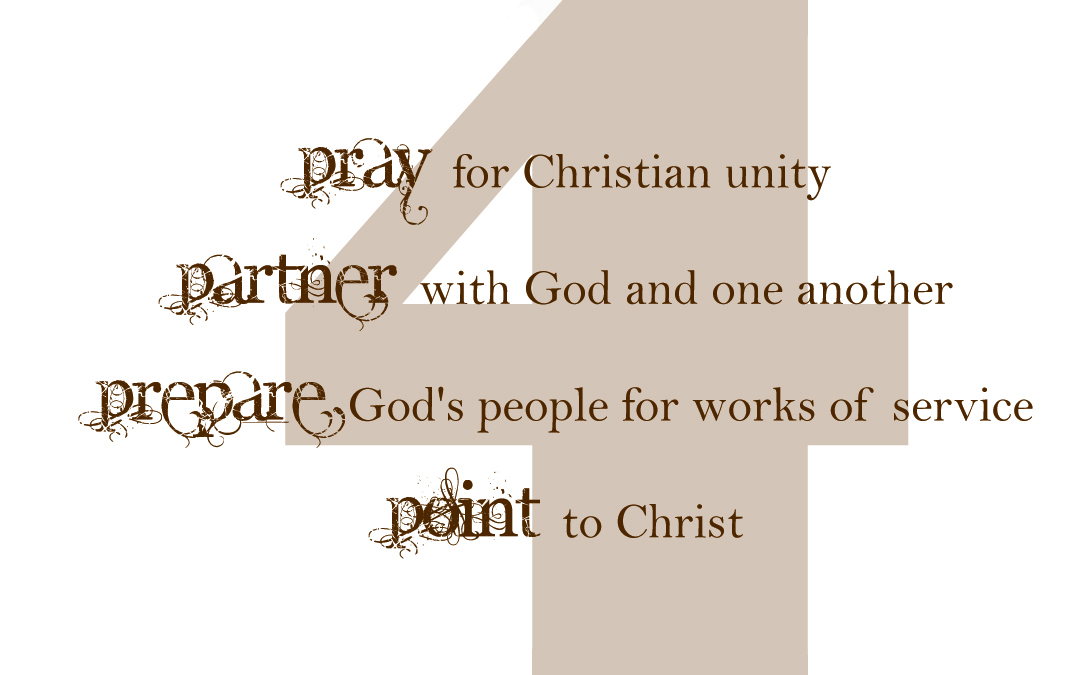
This evening, the Central elders and ministers are meeting at Polk Street Methodist Church with their elders and ministers and with the elders and ministers from First Baptist and First Presbyterian to spend one-and-a-half hours together in prayer. We are forming an alliance, a partnership. We’re calling it “4 Amarillo.” It’s a hopefully obvious play on words. Four churches breaking down our walls, putting aside our differences to unite for the sake of our city.

We’re not 100% sure what this looks like yet. This August, we want to join together to serve our downtown area elementary schools. We’d like to serve and worship together during the Thanksgiving and Easter holidays. We’re going to swap pulpits with one another. We’re thinking we’d like to build some Habitat for Humanity houses together.

We do believe that this partnership between denominations will be a powerful witness to our city that Jesus really is the Prince of Peace, that he really does possess the power to reconcile and unite. Jesus says in the middle of Matthew 18 that if two or three people will come together and agree on anything, he’ll show up just to see that! And we believe he will.

Whatever good comes from this alliance, we know it must begin in prayer. So that’s what we’re doing tonight at Polk Street Methodist. We’re going to pray. We’re going to commit to one another — all four churches — as brothers and sisters in Christ. We’re going to pledge in prayer that we will not be competitive, that we will not be territorial, that we will see our downtown area as the part of the Kingdom of God we’ve been given to serve together. And we’re going to submit the whole thing to our God. In prayer, we’re going to give our partnership, our efforts, our projects, all of it to our merciful Father for his purposes and to his eternal glory and praise.

It starts tonight. I have only hopes and dreams of where it might be going. But it starts tonight.

Peace,

Allan

God’s Gutsy Love

“Love the Lord your God with all your heart and with all your soul and with all your mind. This is the first and greatest commandment. And the second is like it: Love your neighbor as yourself. All the Law and the Prophets hang on these two commandments.” ~Matthew 22:37-40

Love is the beginning and the end of our righteous relationship with God — and everything in the middle. Love pushes us. It moves us. It defines us. Love is what Scripture says binds everything we do together in perfect unity. We must place unconditional, God-ordained love in the supreme position of our hearts and minds and in our churches.

God’s love for us depends completely upon his character, not ours. Everyone stands before our God equally. No human being can ever do anything to earn God’s love. The fact that we are sinners is woefully inescapable. The fact that God still loves us anyway is amazingly wonderful. And we respond to that matchless grace and undeniable love by loving him back and by loving all people the way he does.

And that doesn’t mean surface relationships. It doesn’t mean love at arm’s length. It doesn’t mean love all people, OK, but don’t get too involved in their lives. It does mean imitating God’s gutsy love, his all-in love, a love so full and so complete that it compelled Christ to suffer and die to show us.

May we be a people who receive one another as Christ receives us, who forgive others as we’ve been forgiven by God, and who love God and others as fearlessly and unconditionally as he loves us.

Peace,

Allan

From the Lips of Children

“He called a little child and had him stand among them. And he said, ‘I tell you the truth, unless you change and become like little children, you will never enter the Kingdom of Heaven.'” ~Matthew 18:2-3

“Jesus said, ‘Let the little children come to me and do not hinder them, for the Kingdom of Heaven belongs to such as these.'” ~Matthew 19:14

Why does Jesus hold up little children as the model citizens of the Kingdom? What is it about little children we’re supposed to imitate? What are we supposed to learn? What are we supposed to change? Unless you change and become like little children — forget about being the greatest in the Kingdom — you won’t even get in! What are we supposed to change?

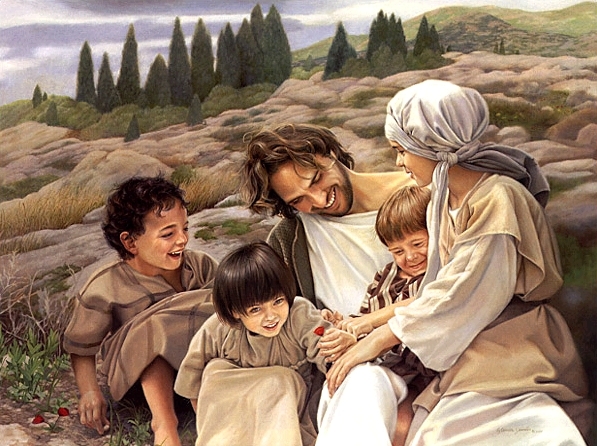
Jesus wants to teach us through little children. Jesus wants to use little kids to show us how to live, how to act, how to trust, how to have faith. He wants to show us through the children how to enjoy all of creation, how to play, how to chill out.

Little kids know God. Little children see Jesus.

In Matthew 21 it was the children who recognized Jesus as the promised Messiah. They knew it. They saw it. And they were shouting it and singing it at the tops of their voices. The religious leaders, in their irritation, approached Jesus and demanded an explanation. Do you hear what these kids are saying? Do you hear what these children are claiming? And Jesus says, “Duh!” (That’s the Message translation.) Jesus says, in essence, “What did you expect? Don’t you know Psalm 8? From the lips of children and infants you have ordained praise!”

Our kids will show us God. If we’ll only take the time to pay attention, our children will reveal Jesus to us.

We tried doing that together during our communion time this past Sunday. We had all the children stand up and raise their hands and then asked all our people to get out of their own seats to get close to a little child. Spend communion time this morning with a little kid. As we share the bread and the cup, as we remember Jesus, let’s listen to our kids. Maybe we’ll learn something from the children this morning. Maybe the kids will show us Jesus in a way we’ve never seen him before. Maybe our God will teach us something this morning he’s always wanted to teach us, but we’ve never slowed down to be with a little child long enough for it to happen. We suggested that our people ask the children a couple of questions during the Lord’s Meal: What is your favorite thing that Jesus ever did? What is your favorite thing that Jesus ever said?

Show us Jesus, kids. Lord, reveal yourself to us through the lips of these children.

I got up and walked a section over to sit right between Chloe and Creede, a brother and sister, kinda new to our congregation, whose dad was out of town on business. Perfect. Their mom and grandmother joined us. Excellent.

Creede is fourteen. All boy, through and through. The coolest thing Jesus ever did? Turning over the tables in the temple, obviously. Yes! His favorite thing Jesus ever said? Creede gave us his favorite Bible verse: I can do all things through Christ who strengthens me. Strength. Power. Might. Control. Yeah, that’s our Jesus. Sometimes I forget how strong our Lord is. Our culture wants us to believe Jesus was some skinny, pasty, white, wimp of a guy. A nerd. Oh, no. Not our King. He’s tough. That’s the Christ of my little brother, Creede. Thank you, God, for reminding me.

Chloe is eleven. All little girl, sugar and spice and everything nice, through and through. The greatest thing Jesus ever did? Healing the blind, making those blind people happy. Her favorite Bible verse? The joy of the Lord in Nehemiah 8:10. Yes! Our Lord is a Lord of happiness and joy, of laughter and glee. Sometimes I forget how happy Jesus was and how he filled everyone who met him with such joy. He left a trail of joy behind him everywhere he went. Our culture wants us to believe Jesus was some sour guy, somber and serious, bent on making us miserable with rule-following and sin-counting. No, that is not the Jesus of the Gospels. That is not the Jesus of the apostles. Our Christ came to give us life, abundant and to the full. That’s the Christ of my little sister, Chloe. Thank you, God for reminding me.

You might try it at your own church sometime. Spend communion time with the kids, talking to the kids, listening to them. Maybe God will reveal to you during the meal, through the children, something you need to see and learn. It’s an exercise that might make us more like Christ. And it might eternally impact the kids.

Peace,

Allan

Heart of a Disciple: A Question

(This is the first of a short, four-part series.)

Peter, Andrew, James, and John leave their boats and their nets and they follow Jesus. He calls, they jump. Matthew left his tax booth, left everything, Luke says, to follow Jesus. Philip and Nathaniel. All twelve of them drop everything, they radically reverse their lives, and begin to follow Jesus.

And these twelve apostles are true talmidim. Disciples. Real disciples. They don’t just want to know what their teacher knew. They aren’t in it to please their parents or fulfill the expectations of their society. No, this is for real. They have a passionate desire to be exactly like their rabbi. They are driven to do and think and speak and act exactly like their teacher. That’s the Twelve. In all their immaturity and stubborness, selfishness and pride, self-deceit and sin, they want nothing more than to be exactly like Jesus. What he says, they do; where he goes, they go.

It didn’t work that way with everybody.

The Son of God tells the young man in Matthew 19, “Come, follow me.” But the man refused. Instead, he went away sad. In Matthew 8, “Follow me!” and another refusal. Luke 9: “Follow me. Follow me. Follow me.” Three times. Three different people. Three more refusals. Several of Jesus’ disciples bail in John 6.

Jesus preached to the multitudes. He fed the large crowds. He taught in the synagogues. He was a well-known and well-respected rabbi. He was called “rabbi” by Pharisees and Saducees, Romans and Phoenecians. Why didn’t everybody become a disciple? Why did some keep asking for signs even after witnessing miraculous healings and spectacular feedings? If Philip and Nathaniel can take the Law and the Prophets, put two and two together, and recognize Jesus for who he is, why couldn’t the educated Scribes and dedicated teachers? All these potential students, all these potential disciples. What is it about the Twelve that made them different? These twelve young men, whose names we know, the fathers of our faith, the foundation stones of God’s Church, the ones our children sing about — what is it about them that sets them apart from all the rest?

What is it about you? What makes you such a faithful disciple of Jesus? What sets you apart from those who aren’t following our rabbi? What about the most faithful disciples of Jesus you know? What makes them different from everybody else? Whatever it is, it seems you’d want to cultivate that, right?

Peace,

Allan


« Older posts Newer posts »