Category: Matthew (Page 13 of 24)

Delight in the Law of the Lord

“Blessed is the man who does not walk in the counsel of the wicked
or stand in the way of sinners
or sit in the seat of mockers.
But his delight is in the law of the Lord,
and on his law he meditates day and night…
For the Lord watches over the way of the righteous,
but the way of the wicked will perish.”
~Psalm 1

The first psalm asserts that how one responds to Scripture, how a person responds to the revelation of God in Torah, will determine that person’s ultimate destiny. When it comes to the Law of the Lord there are two choices, two paths. Moses gives us two paths in his farewell sermon on the mountain and says, “Choose life.” Jesus gives us two paths in his sermon on the mountain and says, “Choose the straight and narrow.” And the psalmist does a similar thing.

By using both positive and negative examples, the psalm encourages us to adopt the fruitful and satisfying life that’s characterized by complete immersion in God and his Word. So immersed in the Word of God, so focuses on the Law of the Lord, that it shapes and dominates your worldview. This is the way of the righteous. And God watches those who walk in that way. By contrast, the one who does not delight in the Law of the Lord is shaped by the counsel of the wicked. He is formed in the way of sinners. Those who walk in this way will perish.

It’s a choice.

God speaks. God reveals. He calls. God makes his holy character and perfect will known through Torah, and what we do with that word is everything. It’s the difference between growing as a fruitful tree and fading away as useless chaff. It’s the difference between well-watered and well-nourished stability and dry, dusty, windblown impermanence. Two choices: the way of the righteous that God oversees and the way of wickedness that leads to destruction. It’s the wise man and the foolish man building their houses in Matthew 7. The only difference between the two men is attention to and obedience to the teachings of Jesus, hearing the Word of the Lord and putting it into practice.

Our God does not reveal himself to be catalogued and studied; he reveals himself to be followed. Our God does not speak to be heard; he speaks to be obeyed.

You ask your daughter to fold the clean towels and put them away in the cabinet (this is purely a hypothetical situation). You come back in twenty minutes and the towels are still in a wad on the couch and the same daughter is sitting in the same spot watching the same TV, only now she’s eating a Pop Tart. And you say to your daughter, “Did you hear me?!?” By that, you don’t mean, “Did the sound waves caused by the vibrations in my tongue and throat penetrate your ear canals to be carried to your brain where they are deciphered into understandable language?” When you say, “Did you hear me?” you’re actually saying, “Why didn’t you obey me?”

To delight in the Law of the Lord, to meditate on it day and night, is to do it. Hearing is doing. Faith is acting.

The Word of God is powerful. It changes lives. It alters destinies. In 1 Thessalonians, Paul acknowledges the Word of God that “is at work in you.” In 2 Timothy, he claims that Scripture equips a man for every good work. Not doctrinal perfection. Not knowledge about facts and patterns. Paul says it leads to action. Hearing is doing. The righteous one delights in the Law of the Lord and meditates on it day and night not to know more. To become more. We don’t learn or study Scripture as much as we ingest it. We assimilate it. We take it into our lives in such a way that it becomes a part of us and it metabolizes into this fruit: acts of love, cups of cold water, prison and hospital visits, cakes baked, groceries delivered, comfort and encouragement, evangelism and justice.

When Samuel was confronted with God’s voice, he replied, “Speak, for your servant is listening.” James says to not just hear the Word, but to do it.

“I desire to do your will, O my God; your law is within my heart.” ~Psalm 40:8

Peace,

Allan
Speaking Community

With great power the apostles continued to testify to the Resurrection of the Lord Jesus!” ~Acts 4:33

In Matthew 28, Jesus meets the women outside the empty tomb and says, “Go and tell my brothers!” Scripture says the women “ran to tell the disciples.” In Mark 16, the angel inside the tomb says, “Go and tell!” The risen Lord eats with his disciples that night and says, “Go into all the world and preach the good news to all creation!” Verse 20 says, “The disciples went out and preached everywhere, and the Lord worked with them.” Same thing in Luke 24. “When they came back from the tomb, they told all these things to the Eleven and to all the others.” When the two disciples met Jesus on the road to Emmaus, “they told what had happened.” While Jesus shares a meal with his followers that night he says, “The Christ will suffer and rise from the dead on the third day, and repentance and forgiveness of sins will be preached in his name to all nations.”

Sure enough, the resurrection community can’t keep their mouths shut. In the earliest days of the Church, according to Acts, everybody was talking. Peter and John get thrown in jail for talking about the resurrection and protest to the authorities, “We cannot help speaking about what we have seen and heard!”

When we are truly raised with Christ to walk in newness of eternal life, when we are formed and shaped by the Resurrection of Jesus, how are we not going to talk about it? The Resurrection community proclaims the good news of the resurrection and reign and return of our Lord. We can’t help it.

I would add that followers of Jesus are all about life, not death; we’re a people of hope, not despair; we’re a community of light, not darkness. And when we speak, our words should give resurrection life to others. Our speech should breathe new life into others.

In Colossians, Paul is talking about formation by resurrection when he says, “Let your conversation be always full of grace.” We’re told in Ephesians 4 to speak the truth in love. In Acts 20, we’re told that everywhere Paul went he spoke words of encouragement.

All the words that come out of our mouths should be words that restore and renew, never words that tear down or destroy. When we speak, our words should point others to the resurrection life that’s forming us.

Peace,

Allan

Good Reminders

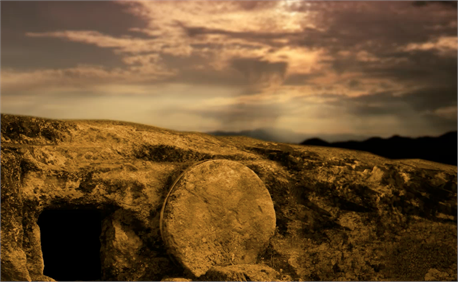
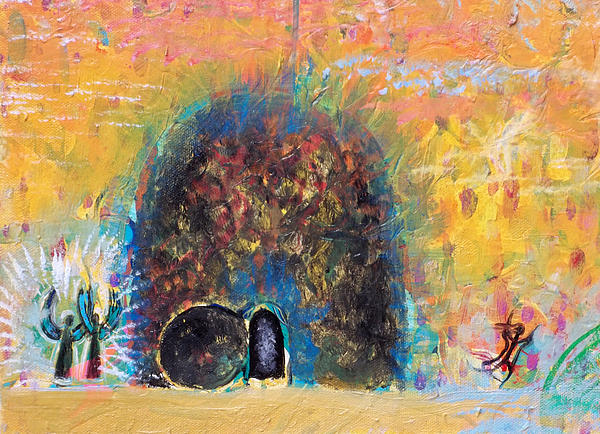
The Gospel accounts of the resurrection of Jesus tell us that those who experienced the empty tomb up close and personal responded with wonder and amazement. Matthew says the women at the dug-out tomb were afraid. Mark says they were alarmed or astonished. The women are also described as bewildered and trembling. Other translations say they were stunned. The women in Luke’s version were “wondering” about the empty tomb. After Peter looks inside the empty grave, he, too, is said to be in wonder. With each of the Easter stories, the sense of resurrection wonder or mystery is building. It accumulates. So far, not one person who witnessed the empty tomb has been able to make sense of it. Not even those who encountered the risen Lord have it figured out.

And these are good reminders for us today.

The Resurrection confused everybody. At the time it happened, nobody could explain it. It’s obvious that those closest to the event had no idea what had happened or why. And that’s a good reminder for us. That we don’t always have God’s plan figured out. We don’t always know what God is doing. Or when he’s doing it. Or why. And that disorients us. But it’s OK.

Nobody had prepared for the Resurrection. Those women were going to the tomb that morning with burial spices to anoint a dead body. They weren’t bringing Jesus a fresh set of clothes and a toothbrush. When he shows up for dinner with the disciples that evening, they have to scramble to find a chair and an extra place setting. Peter’s wife pulls her husband aside and says, “You didn’t tell me your boss was coming!” Of course not; he didn’t know! None of them had prepared. And that’s a good reminder for us. We’re all beginners in this resurrection business. There aren’t any experts. We don’t control what God is doing. And that unsettles us. But it’s OK.

In the Resurrection stories, the marginal people are the main players. It’s the women. In this patriarchal society, these women had no rights, no status, no standing in the community. Especially Mary Magdalene. She had been possessed by seven demons before she met Jesus which might mean she had been living a reprehensibly horrible moral life or perhaps she was mentally ill. Either way, this lady lived on the edges of her community. She didn’t fit in. But she’s the only name we read in all four Gospel accounts of the Resurrection. And that’s a good reminder for us. That we don’t ever judge or rule out anybody we think might be beyond the reach of Resurrection. More than likely, it’ll be the ones we least expect who wind up at the very front of what God’s doing. And that surprises us. But it’s OK.

Some of the most exciting words in all of Scripture are when God says, “Behold! I am doing a new thing!” God is always doing new things. And it’s exciting. Right now, today, our God is doing new things in your church, new things in your city, new things — maybe unforeseen things — between people in different Christian denominations. God is speaking in new ways. He’s moving in new ways. He’s drawing men and women to himself in brand new and surprising ways. Things are changing.

And that can be disorienting. Unsettling. Scary. Because we don’t do well with change. We’re not always real good with new. But we have the Spirit of our risen Lord within us. Christ Jesus inside us gives us the power and the peace to embrace the mystery and the wonder of what God is doing; to not just accept it with our heads, but to jump into it with our hearts; to let God in Christ have his way with us; to fully submit to what we may not fully understand. Not just to be OK with it, but to rejoice in it.

Peace,

Allan

Power Instead of Love

Scattershooting while wondering whatever happened to Bruce Huther…

~~~~~~~~~~

Randy Harris says preaching a sermon is like landing an airplane: anytime you can walk away from it, it was good! Well, I had one of those really shaky moments on Sunday when a carefully prepared and meticulously rehearsed line came out wrong and, maybe, distracted from what I was trying to communicate.

In our look at the third desert temptation of Jesus in Matthew 4, I was going with the angle suggested by both Henri Nouwen and Eugene Peterson, that Jesus was being tempted to use impersonal power and force to rule the kingdoms of the world and their splendor instead of relational love and ministry. Power is the shortcut to love. Power is easy; love is hard. It’s easier to be God than to love God. It’s easier to control people than to love people. It’s easier to own the world than to love the world. Yeah, I was on a roll. But about a third of the way into the lesson, this is what came out of my mouth:

“Every single Christian believer has an important voice and a vital presence in the way this country is run and the way our culture is shaped. Yes, it’s critical for the redemption of creation. The world must see God’s children and know where we’re coming from and where we’re going. Yes. But, listen, we are deceived by the devil if we believe for one minute we can act or think or speak in ways that are contrary to or opposed to the ways Jesus acted and thinked and…”

And then I was stopped dead in my tracks. Thinked? Did I really just say “thinked?” I heard the giggles. I acknowledged the silly mistake with a crooked grin. “Thought!” I said. “The way Jesus acted and thought and spoke.” I confessed that I had worked for nearly two weeks on that line but had just butchered it. And we laughed. And then I continued preaching.

I had just about gotten over it when we walked into Rosa’s for lunch with what seemed like half our congregation. There at one of the biggest tables in the center of the restaurant was the Granado clan. All of them. When I walked over to say “hi” like all the good preachers do, Lonnie looked at me and said, “I thinked you might come to Rosa’s today!”

Nice.

Valerie’s boyfriend made a wisecrack in Richard and Lori’s driveway Sunday night after small group. Something about he thinked it was time to go.

Thank you.

Now Valerie’s grounded for four months.

~~~~~~~~~~~

I’ve had a few requests for more information regarding the book I read from right after I destroyed that excellent line Sunday. It’s called “In the Name of Jesus,” written by Henri Nouwen, a Catholic priest and author who wrote a whole bunch of books on Christian leadership and discipleship based on the life and teachings of Jesus. “In the Name of Jesus” is a treatise on the desert temptations of Christ. And it’s excellent. It will challenge your views of Christ and culture and it’ll call you to a deeper following of our Lord. It’s a really short book, but, as with most of Nouwen’s works, every paragraph is packed with holy insight. As I told our congregation Sunday, you can read it in an afternoon and it’ll change your life.

~~~~~~~~~~~~~

Please, please, please take two minutes to watch this video. Then, take another couple of minutes to let the shame and guilt wash completely over you. Don’t deny it. Don’t say the video is exaggerated or unrealistic. If that’s your reaction, I would point to that as proof that you’re spending way too much time looking at your phone and not being present in or paying attention to the place God’s put you. Then, please make a vow to leave your cell phone in your car when you meet friends for meals. Make a promise to never, ever take a cell phone into a business meeting or worship service. And resolve to never again take it out of your pocket and look at the screen unless the thing actually rings or buzzes. We know these phones are turning us in to a society of grunting morons. But we seem so thrilled about it.

Peace,

Allan

On Earth As It Is In Heaven

Jesus prays to our Father, “Your Kingdom come, your will be done on earth as it is in heaven.” Jesus preaches the Kingdom of God. Jesus declares the coming of the Kingdom of God. He proclaims, “It is at hand!” It’s here! The Kingdom! Look at it!

Jesus brings the Kingdom to earth. He does God’s will on earth just as it is in heaven.

Jesus casts out demons because there are no demons in heaven.
Jesus heals because there is no sickness in heaven.
Jesus comforts because there are no tears in heaven.
Jesus feeds because there is no hunger or thirst in heaven.
Jesus raises the dead because there is no death in heaven.

“Your will be done on earth as it is in heaven.”

Are you praying this prayer? Jesus said it was a good idea to pray this prayer, to ask God to please do his will on earth just like it’s done in heaven. Are you bringing the Kingdom of God to your part of the earth? Are you obeying his will like the rocks and the trees and the oceans and the animals obey his will?

There is no revenge in heaven. There is no hate in heaven. There are no arguments in heaven. There are no disagreements in heaven. No suspicion. No politics. No war. No division of any kind. No violence, verbal or physical. No mistrust. No gossip. No complaining. You won’t find any of those things in heaven.

Is the will of God being obeyed in your church just like it is in heaven? In your elders’ meetings? In your congregational committees? In your marriage? In your family around your dinner table at night? Are you bringing the Kingdom of God to your work place? To your school? To the Little League team you’re coaching or the civic club to which you belong?

If God has completely eradicated selfish behavior and gamesmanship and competition in heaven, if that is his holy will, why would you insist on bringing any of that into his Church? Or putting up with it?

The rivers and mountains and squirrels and fish all obey God’s will on earth just as it is in heaven. What’s wrong with us?

Peace,

Allan

Around the Table: Part 5

“Obey these instructions as a lasting ordinance for you and your descendants. When you enter the land that the Lord will give you as he promised, observe this ceremony. And when your children ask you, ‘What does this ceremony mean to you?’ then tell them, ‘It is the Passover sacrifice to the Lord, who passed over the houses of the Israelites in Egypt and spared our homes when he struck down the Egyptians.'” ~Exodus 12:24-27

The final dinner Jesus shared with his disciples on the night of his betrayal was a Passover meal. The synoptic gospels all make the explicit claim that this was the Passover. Jesus made preparations and gathered his disciples to “eat the Passover.” Since this last supper has become for the majority of Christians the be-all, end-all paradigm for our own beliefs and practices regarding the Lord’s Supper (for right or wrong), it makes sense to study carefully the Passover context of that last night. I’ve had church leaders on more than one occasion point to the gospel accounts of this last meal to justify their order that we not sing any songs during the Lord’s Supper. After all, the logic goes, the Bible says they sang a song after the meal, not during. Of course, if we’re to follow that logic to its conclusion, we’d be sharing the Lord’s Supper only on Thursdays. Upstairs.

So, yes, let’s look at the Passover context of what was happening around the table on that last night.

As we’ve already noticed in this series, the Jewish Passover meal — all covenant and/or community and/or sacrificial meals for that matter — is a communal celebratory event. As an expression of salvation, it was yet another community meal celebrated following a sacrifice. The Passover, in particular, was a joyous celebration of God’s deliverance of his people from slavery in Egypt.

“Celebrate it as a festival to the Lord — a lasting ordinance!” ~Exodus 12:14

“Celebrate this day as a lasting ordinance for the generations to come.” ~Exodus 12:17

“I am going to celebrate the Passover with my disciples.” ~ Matthew 26:18

The Passover Supper also was a remembrance of that deliverance. By remembrance, we don’t mean a merely intellectual act or emotional recollection. This is a faithful action, a rehearsal, a participation in that deliverance. The Passover liturgies from the Hebrew Scriptures and the Jewish writings from the first century all contain actions and language that help the people around the table to identify with the historic salvation event as if they were present in Egypt and at the Red Sea.

“Celebrate the Passover of the Lord your God because in the month of Abib he brought you out of Egypt.” ~Deuteronomy 16:1

“…so that all the days of your life you may remember the time of your departure from Egypt.” ~Deuteronomy 16:3

“…because you left Egypt in haste.” ~Deuteronomy 16:3

“We cried out to the Lord… the Lord brought us out of Egypt with a mighty hand and an outstretched arm.” ~ Deuteronomy 26:7-8

“Each should celebrate as one who has gone out of Egypt.” ~ Mishna

We also know that as Jesus and his disciples gathered on that last night, their supper together was marked by great joy, praise, and thanksgiving. This was not a dirge or a funeral meal; expressions of joy at this supper were the command of God.

“…with great rejoicing… singing… praise.” ~ 2 Chronicles 30:21-27

“…celebrated with joy… Lord had filled them with joy.” ~ Ezra 6:22

“…your times of rejoicing, your appointed feasts.” ~ Numbers 10:10

The Passover was also established as an anticipation event. Children of God ate the meal together looking forward to that day when they would be eating it in a much better place, in wonderfully better circumstances. They eat and drink with an eye to the future, focused on an upcoming meal that will surpass the one they share today.

“When you enter the land that the Lord will give you as he promised, observe this ceremony.” ~ Exodus 12:25

If we’re really out to imitate every detail of that Last Supper at our communion times together on Sunday mornings — again, for right or wrong — then why don’t we? As good law-keeping Jews, Jesus and his disciples would have been in a festive spirit that night and engaged all the elements of the evening with great joy. The meal was marked by group identity and interaction. It was a present participation in the past events of God’s salvation. They were singing the psalms, specifically Psalms 113-118, before, during, and after the supper.

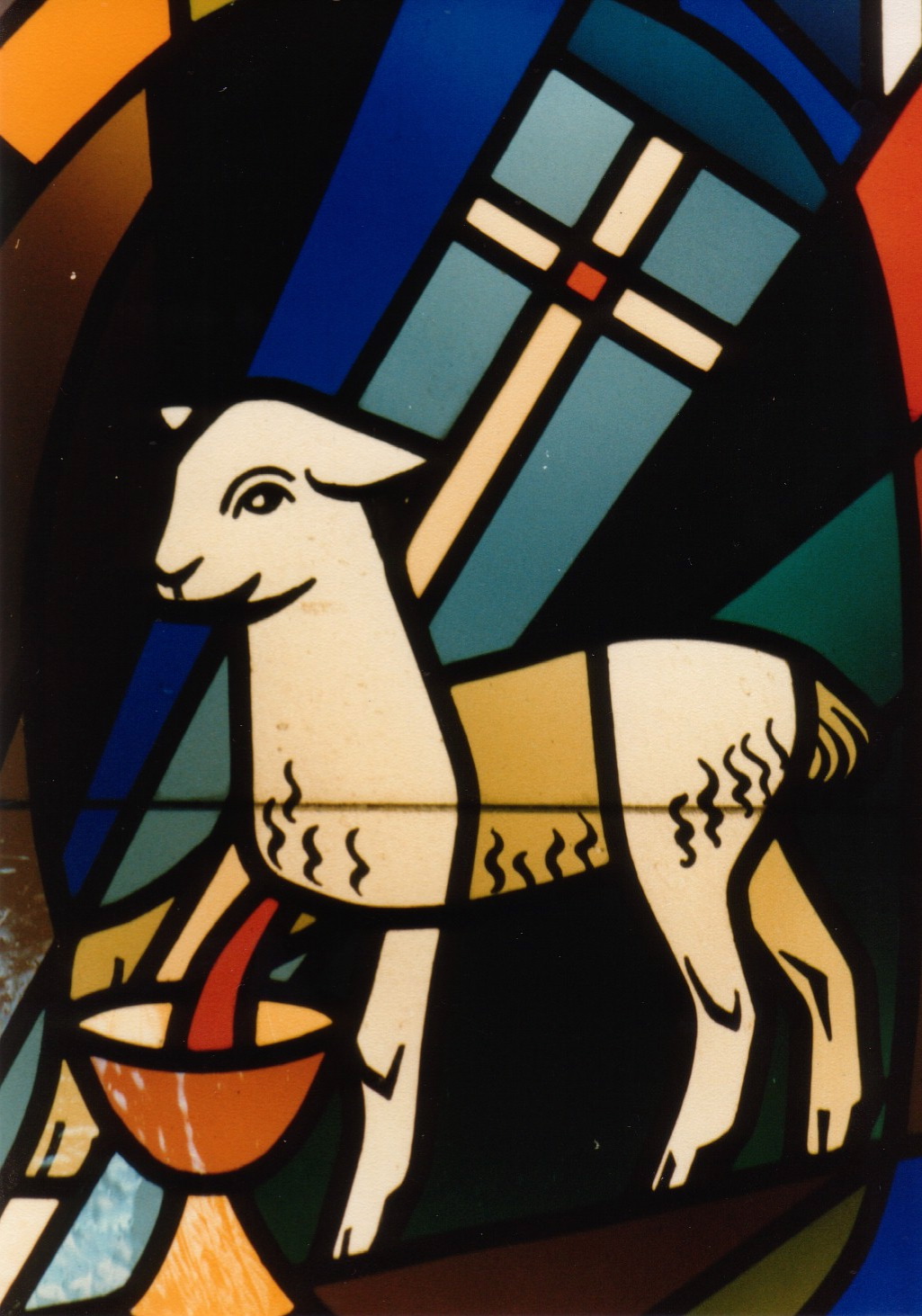
I would recommend singing songs of salvation, songs of praise for God’s mighty acts, before, during, and after our communion meals together. I would suggest swapping salvation stories around the table. I once was ______, but now I’m ________. Ask each other the questions: from what have we been delivered? From what to what have we passed? Who took our place that day? Do it together in the aisles or along the walls in your worship center. Huddle up around your pews. Allow the children to ask the questions: Why do we do this? And then share the story: because the Lord our God delivered us by the Passover Lamb. And then hug each other and sing another song.

Peace,

Allan

« Older posts Newer posts »