Category: John (Page 19 of 31)

Our Lord’s Will

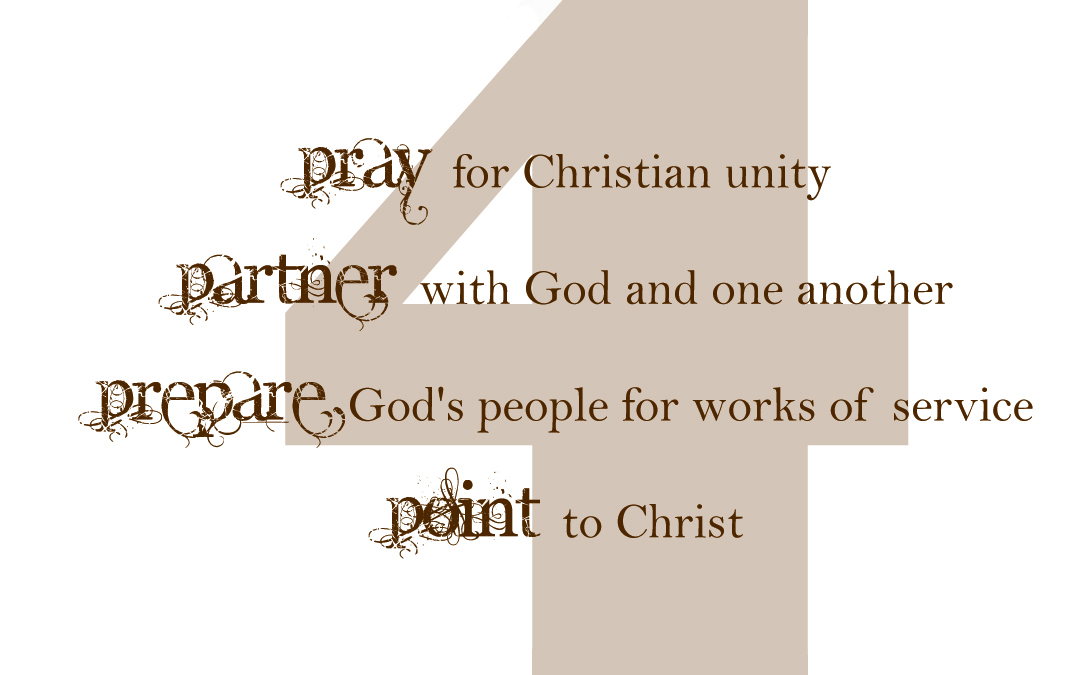
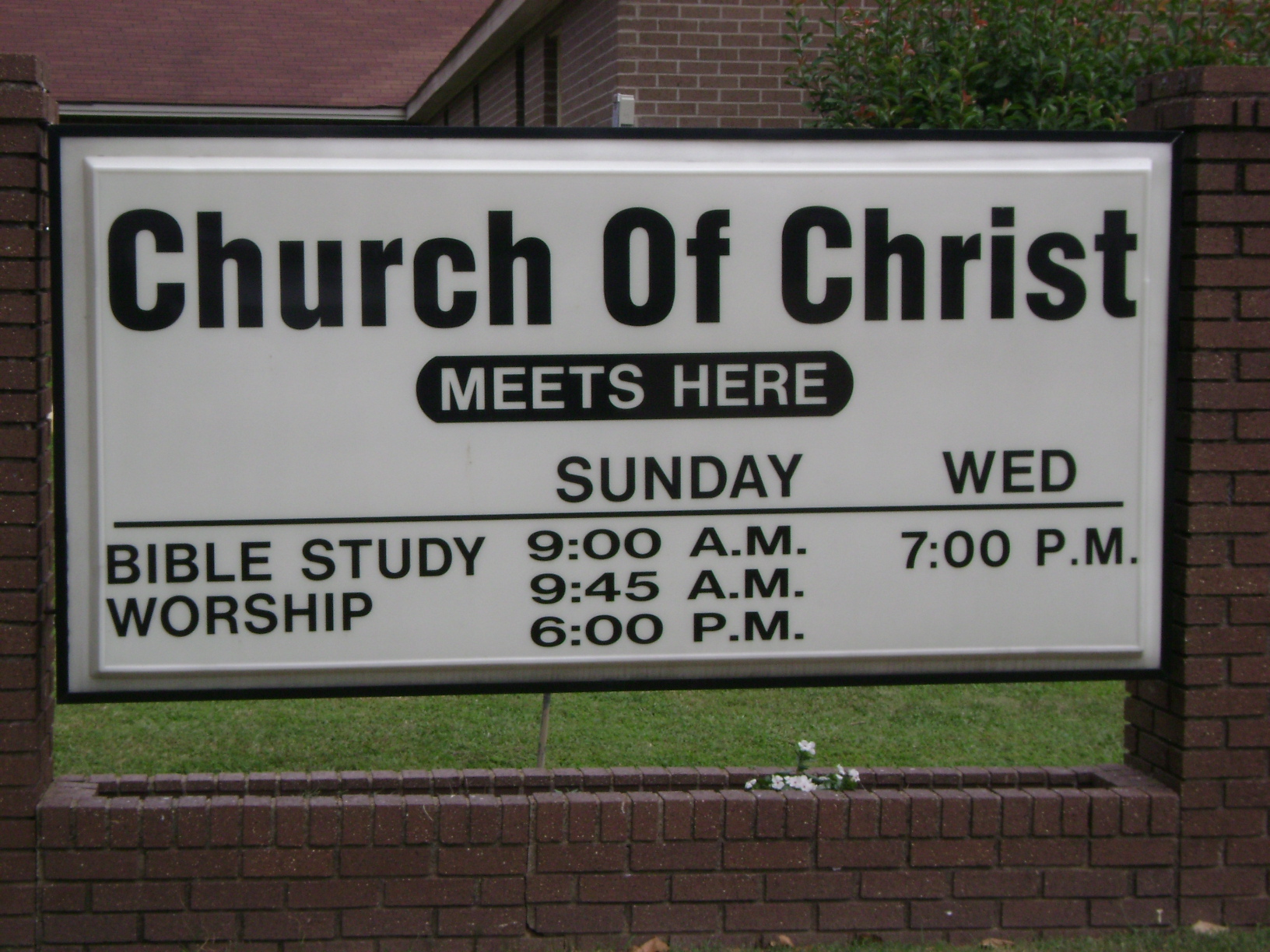
Burt Palmer, the “Sheep Dog,” the warm, funny, out-going, self-deprecating senior pastor at Polk Street Methodist Church has said it a few times recently and repeated it again in front of sixty-five other elders and ministers at last night’s 4 Amarillo prayer meeting: “I can’t believe it’s the Church of Christ guy who’s pushing this ecumenical partnership.” Howard Griffin, the straight-laced, forward-thinking, super-organized, community-minded senior pastor at First Presbyterian Church has told me that when he tells his people about our 4 Amarillo plans, their reaction is something along the lines of, “Are you sure the Church of Christ wants to be involved in this?” Howie Batson, the most senior of all us senior pastors downtown, the long-time and much-loved, brilliant and soft-spoken, pastoral-face-of-the-city senior pastor at First Baptist Church whispered to me at breakfast yesterday and again after last night’s meeting, “You know, you’re going to get some push back from the other Churches of Christ in town.”

Yeah, some of it’s funny. Some of it’s sad. None of it surprises me. But, this is just the right thing to do. It’s right and it’s good; it’s very good. Because we know for a fact that the unity of all God’s children as a testimony to his power is the will of our Lord Jesus. Good gravy, it’s the last thing he prayed for on his way to the cross.

“…that all of them may be one, Father, just as you are in me and I am in you. May they also be in us so that the world may believe… May they be brought to complete unity to let the world know that you sent me.” ~John 17:20-23

We know that last night’s prayer meeting and our long-term plans to join forces in worship and service for the sake of our city is pleasing to our Father. We can be certain of that. How many biblical passages about the Body of Christ, how many Scriptures about Christian unity, how many references to fellowship and brotherly love do you want me to cite?

There were twelve tables in that room last night with six to eight ministers and elders from the four churches at each one. Well, that’s not entirely true. The table that was positioned at the very front center of the room was empty, drawing attention to yet another thing we all have in common: nobody sits down front. I sat at a table with Jim and Mickye from First Baptist, Callie and Kim from Polk Street, and our own Matthew Blake. We read Scripture together and we prayed. We discussed together what each of our churches are already doing in Amarillo (a ton, as it turns out; praise God!) and dreamed out loud about what God might do through us in the future. As we prayed around our table, I couldn’t help but hear Leon praying for unity two tables over. I heard Steve Rogers behind me at his table, talking to God about his Holy Spirit. During our discussions I could hear Greg laughing a couple of tables to my right. I watched Steve and Larry introduce themselves to about forty different people. I was so proud of our guys last night, so proud of their eager participation and leadership in this great cause.
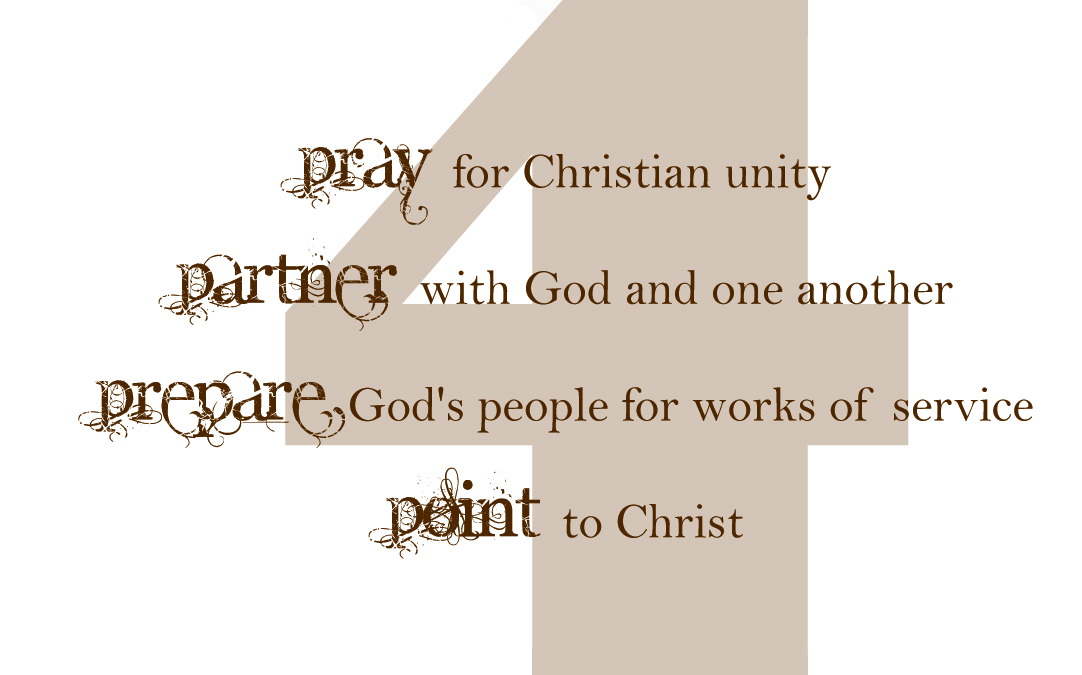
Burt led us in a time of meditation and prayer from Ephesians 4:3-6, reminding us that there is just one body, one Spirit, one Lord, one faith, and, while we use different amounts of water, just one baptism, We recognized together in prayer that we are called to be a unified people of God. We acknowledged that God is the Father of us all. And we pledged to commit to one another as brothers and sisters in Christ.

Howard led us in a time of brain-storming together about ways we could partner with one another for the benefit of others. If somebody comes to Polk Street looking for food, Polk Street’s not going to start a big food pantry, they’re going to send them to Central. If somebody comes to Central looking for an ESL class, we’re not going to start one, we’re going to send them to First Baptist. If First Baptist needs two more guys to accompany their trailer of supplies to tornado victims in Moore, they’ll call us or First Presbyterian to see if anybody wants to go. People at First Baptist who want to do prison ministry should partner with the programs already in place at Polk Street. People at Polk Street who want to work at Martha’s Home should partner with what Central is already doing instead of trying to reinvent another program. Why not?

I outlined our plans for the next twelve months to serve our city together in the name of Jesus: serving our downtown-area elementary schools, serving and worshiping together during Thanksgiving and Easter, building the Habitat for Humanity houses next summer. In the context of Ephesians 4:11-13, we thanked our God for the works he’s about to put in front of us. We recognized that, according to Scripture, these works of service lead to unity and to increased Christ-likeness. And we begged God to give us those works, to raise up the leaders within our four churches, and to prepare our city to be turned upside down for our risen Savior.

Howie brought it home with an inspiring story about a young girl he presented a Bible to more than a decade ago at one of their summer Bible schools. This young child, who was being starved and abused in her home at the time, has grown into a wonderful Christian young lady who’s written and published a book about her experiences. Howie reminded us that you never know at the time how our God is using our efforts to serve others. And he encouraged us to embrace these new efforts in our downtown neighborhoods with trust that our Father is going to blow us away with his grace and power. We read from Jesus’ prayer for Christian unity for the sake of the world in John 17, and then pledged to God to follow his lead. We asked God to take us to places we’ve never been before in sacrifice and service for others. And we gave our partnership and our plans, our projects and programs, to him in prayer.

I believe that Satan, the Accuser, has already noticed. I believe that when Burt stood up last night to kick off our meeting, Satan also stood up at the same time and said, “They’re doing what?!?” I believe that, after last night, hell is trembling. And I believe heaven is rejoicing. I believe that last night our Father said, “Finally!” And then he elbowed a couple of his angels and said, “Now, watch this!”

We are acknowledging that Jesus has the power to change everything, to fix everything, to make everything right. And we’re showing Amarillo what it looks like by our sacrifice and service, by our re-organized priorities, by our Christian unity, and by our lives.

Peace,

Allan
4 Amarillo

Four guys walk into a bar: a Baptist, a Methodist, a Church of Christ, and a Presbyterian… that’s a joke.

Four sets of ministers and elders walk into a church building to pray: Baptist, Methodist, Church of Christ, and Presbyterian… that’s not a joke. It’s the holy will of our God and a magnificent witness to our city of the power of Jesus! And it’s happening this evening!

“I pray also for those who will believe in me through [the apostles’] message, that all of them may be one, Father, just as you are in me and I am in you. May they also be in us so that the world may believe that you have sent me. I have given them the glory that you gave me, that they may be one as we are one. I in them and you in me. May they be brought to complete unity to let the world know that you sent me and have loved them even as you have loved me.” ~John 17:20-23

We believe that it is God’s will that all his children, all disciples of his Son, be reconciled. We think God’s great desire is for all Christians to be brought together as a powerful witness to the world of his love and peace. You know, this is in our Church of Christ DNA. It was established in the opening lines of Thomas Campbell’s Declaration and Address, the charter document for our Restoration Movement, written in August 1809:

“That it is the grand design and native tendency of our holy religion to reconcile and unite men to God and to each other in truth and love to the glory of God and their own present and eternal good will not, we presume, be denied by any of the genuine subjects of Christianity.”

The whole document is about reconciliation, the kind of reconciliation that drives God’s eternal plans. The very ministry of reconciliation he’s given those of us who profess our faith in him. The words in the document are bold and aggressive. And they ring with undeniable beauty and truth. They call for a swift end to all divisions among those who follow Jesus:

“Has the Captain of Salvation sounded a desist from pursuing this deadly enemy that is sheathing its sword in the very bowels of Christ’s Church, rending and mangling his mystical body to pieces? Has he said to his servants, ‘Let it alone?’ If not, where is the warrant for a  cessation of endeavors to have it removed?”

Campbell claims that tearing down the walls and uniting with all our brothers and sisters in Christ is a matter of universal right, a duty belonging to every citizen of Zion. And while the work will be difficult and the opposition will come mainly from within the church establishment, Campbell says it is God’s will. It is the Church’s will. It is the will of those who’ve gone before us:

“Both the mighty and the many are with us. The Lord himself, and all that are truly his people, are declaredly on our side. The prayers of all the churches, nay, the prayers of Christ himself, and of all that have ascended to his heavenly Kingdom, are with us.”

I thank God for the Campbells and the Stones and the other giants of the faith who latched on to God’s holy will as revealed to us in Scripture and would. not. let. go. I thank God for the ecumenical spirit of the Central Church of Christ toward our brothers and sisters in other Christian churches in our city. I’m grateful for the willingness here — the eagerness! — to unite with other Christ-followers.

This evening, the Central elders and ministers are meeting at Polk Street Methodist Church with their elders and ministers and with the elders and ministers from First Baptist and First Presbyterian to spend one-and-a-half hours together in prayer. We are forming an alliance, a partnership. We’re calling it “4 Amarillo.” It’s a hopefully obvious play on words. Four churches breaking down our walls, putting aside our differences to unite for the sake of our city.

We’re not 100% sure what this looks like yet. This August, we want to join together to serve our downtown area elementary schools. We’d like to serve and worship together during the Thanksgiving and Easter holidays. We’re going to swap pulpits with one another. We’re thinking we’d like to build some Habitat for Humanity houses together.

We do believe that this partnership between denominations will be a powerful witness to our city that Jesus really is the Prince of Peace, that he really does possess the power to reconcile and unite. Jesus says in the middle of Matthew 18 that if two or three people will come together and agree on anything, he’ll show up just to see that! And we believe he will.

Whatever good comes from this alliance, we know it must begin in prayer. So that’s what we’re doing tonight at Polk Street Methodist. We’re going to pray. We’re going to commit to one another — all four churches — as brothers and sisters in Christ. We’re going to pledge in prayer that we will not be competitive, that we will not be territorial, that we will see our downtown area as the part of the Kingdom of God we’ve been given to serve together. And we’re going to submit the whole thing to our God. In prayer, we’re going to give our partnership, our efforts, our projects, all of it to our merciful Father for his purposes and to his eternal glory and praise.

It starts tonight. I have only hopes and dreams of where it might be going. But it starts tonight.

Peace,

Allan

If Stone and Campbell Could Do It…

In an effort to raise our “spiritual historical consciousness,” we’re studying Foster and Holloway’s Renewing God’s People in our Sunday morning Bible classes here at Central. As a church family, we’re acknowledging that Churches of Christ have a particular history, that we’ve been shaped by cultural and historical ideas and events, and that some of the things that have marked us as a faith tradition are really wonderful and some things are a little less than wonderful. My hope is that, through the course of this study, we’ll come to realize that our beliefs and practices are continually informed and molded by the culture. Through that realization, I hope, we’ll better see that some of the things we believe are sacred really aren’t and that some of the successful ways and means of the past aren’t necessarily the way to be church or impact a community in the present. And, I pray, we’ll commit to re-claiming the very best parts of our American Restoration Movement heritage and expressing them again in faithful ways.

The most beautiful thing about the Restoration Movement and Churches of Christ is that we were founded on the Christian principle of unity. The unity of all believers is a key biblical doctrine and it was the driving force behind our movement. So much so that, despite their massive differences of theology and opinion, Barton Stone’s and Alexander Campbell’s churches united on January 1, 1832.

Consider for a moment their immense differences:

While Campbell held to the Trinitarian concept of God as one divine deity living in community as three distinct persons, Stone didn’t see it that way. He believed doctrine of the Trinity couldn’t be found in Scripture, that it belonged to the creeds from which they were trying to distance. Because of that, Stone saw Jesus as the “son” of God, but not truly God himself. Yes, Jesus is our Savior, Stone argued, and he is exalted at the right hand of the Father, but he’s not God himself. Campbell disagreed, holding to the more traditional doctrine that Jesus is God himself in the flesh.

Concerning the Holy Spirit, Stone believed God’s active and continuous work in the world was done through his Spirit. The Spirit is active in the Church, he is active in the hearts and minds of God’s people, he is active and working in all of creation for the sake of the Kingdom. On the other hand, Campbell believed that the Holy Spirit inspired the writing of the Scriptures, and then pretty much ceased operating outside of them. Campbell taught that the Spirit only spoke to man, only worked on man, only compelled and shaped man, through the reading of the Word. Therefore, Campbell believed that the visible signs of the Spirit — speaking in tongues, healings, prophesying, etc., — had ceased, whereas Stone most certainly did not.

As for mankind, Stone leaned a little Calvinistic in his belief that man was unregenerate and stained with sin at birth. Stone taught that the Holy Spirit of God is the one who convicts and converts men and women to Christ. Campbell, of course, preached and wrote that God had given man a brain and good common sense and that, when reading the Bible with an open heart and open mind, one would make the right decisions about salvation through Jesus. Campbell saw humankind in a really optimistic kind of way: with our brains and hard work, people are getting better and better and America is the Promised Land where we’re going to restore the divine ancient order. Stone: not so much. He believed humans were getting worse, not better, and that only God’s Spirit could turn a man to heaven.

Stone saw salvation as the work of God’s Holy Spirit transforming men and women into the image of Jesus. Campbell saw salvation in terms of knowledge and intellectual assent. He stressed the atonement aspects of the cross, more as an economic transaction that paid for our sins. Stone concentrated his doctrines of salvation on the love and grace of a merciful Father. Stone’s churches placed a greater emphasis on an ordained ministry while Campbell maintained that all Christians were ordained ministers of the Church. Campbell wouldn’t allow anyone in his churches who hadn’t been baptized. Stone believed baptism was essential, but he’d allow unbaptized men and women to join his churches, saying that they were all just in different places on the road to understanding. Campbell’s churches celebrated the Lord’s Supper every Sunday, Stone’s much more infrequently. Stone was a pre-millennialist, Campbell a post-millennialist.

That’s a lot of differences.

In the seven classic categories of Christian theology, Stone and Campbell disagreed on all seven. And these are big issues. We’re not talking about order of worship or women’s roles, we’re talking about the very nature of God, the salvation role of Jesus, the importance of baptism and communion, church leadership structures, and the role of the Holy Spirit.

Yet, both of these men and their dozens of churches understood that Christian unity is the holy will of God; that breaking down denominational barriers and coming together in the name of Jesus is a true expression of the Gospel; and that divisions and separations among denominations is an evil distortion of the Gospel, an insult to Christ, and sends the worst kind of message to an unbelieving world.

And they did it.

It was difficult, extremely difficult. There were bumps along the way and hurdles to overcome. But for about 65-70 years, they did it. Together.

They made the decision that what they shared in common in Christ was far more important than anything on which they might differ. They believed it was truly God’s will and best communicated to the world what God was doing in Christ. To borrow from Foster:

“Christian unity may not always mean a physical merger of congregations or movements. But when Christians are convinced of the importance of unity and are willing to put up with each others’ peculiarities in the knowledge that all are committed to knowing and doing God’s will expressed in Scripture, the kind of unity seen in our Stone and Campbell history may be the best and fullest kind there is.”

So, the question today: Is sacrificing and working for visible expressions of the unity of God’s Church as important to us today as it was to Stone and Campbell? How important is it in shaping our congregations more into the image of Christ? How important is it to testifying to the power of Jesus in our city? How far would you or your church be willing to go to make the attempt?

All of Scripture points to God’s people as being one. God’s Church is his one chosen people around his one common table. We know we’re going to be one and eternally united in heaven. What are you and your church doing to lean into that right now so that’s God will is done here just as it is there?

Peace,

Allan

Religious Freedom: Part Two

In our Sunday morning Bible classes here at Central, we’re studying the history of our Churches of Christ within what is called the American Restoration Movement. The hope and prayer is that we, in the words of Doug Foster, “raise our historical spiritual consciousness,” that we come to understand how our distinctive faith and doctrines and practices have been shaped by particular history and culture in order to better grasp the founding vision of our movement and make a deliberate turn back to the best parts. And if you’ve made it past those two sentences to this one, congratulations. Sorry about that.

We’re using Foster’s book, Renewing God’s People, to guide our study and discussions. I’m sharing the fruits of our study and openly processing some of it in this space. You might look at yesterday’s post if this one’s going to make sense.

It was during the prolific exercising of “religious freedom” in the colonial days of the American frontier when the call for “restoration” became a popular cry among Christians. The denominationalism of the day couldn’t be good for the spread of the Gospel. The constant dividing and splitting and planting and branching probably wasn’t communicating the truth of unity in Christ. There seemed to be no end to the numbers of new churches and new forms of Christianity that were being established in the States based on somebody’s new or different interpretation of the Scriptures. Finally, a few church leaders began questioning whether new churches and new denominations, the exercise of this nationalistic and democratic and individualistic religious freedom, was actually harming their Christian witness. Some religious leaders went so far as to say this denominationalism was a direct affront to the prayer of our Lord in John 17 in which Jesus prays for unity among all believers “so the world may believe.” Denominationalism, in their view, was in fact a sin.

James O’Kelly (1735-1826) was one of these guys. A Methodist preacher in North Carolina and Virginia, O’Kelly openly questioned the power and authority of the bishops in the Methodist church, particularly the two in Baltimore. He balked at the whole bishop system, arguing that each Christian congregation should act democratically, like a republic, to govern its own affairs. His motto was “Bible government, Christian equality, and the Christian name!” In 1793, he formed the “Republican Methodists.” Then he went even farther the next year, dropping the name “Methodists” alltogether. We are only Christians, he said, “Christian” is the only name for disciples of Jesus.

In that same year, 1794, O’Kelly published his Cardinal Principles of the Christian Church:

~ The Lord Jesus Christ is the only Head of the Church

~ The name Christian should be used to the exclusion of all party and sectarian names

~ The Holy Bible is our only creed, and a sufficient rule of faith and practice

~ Christian character is the only test of church fellowship and membership

~ The right of private judgment and liberty of conscience are the privilege and duty of all

~ The union of all followers of Christ to the end that the world may believe

What do you think about those six rules? Is this a fairly decent summary of standards and practices for a Christian church based on the Gospel of Jesus? What would you add to a list like this? What would you subtract? Could a church or a group of churches even function with this type of charter? Could a group of churches — Churches of Christ, maybe — function this way today?

O’Kelly’s churches grew to about ten thousand members in North Carolina and Virginia. They eventually adopted believer’s baptism by immersion as their standard practice and taught that the unity of all Christians is God’s plan for redeeming the world.

At the same time, a group of Baptists in Vermont led by Abner Jones (1772-1841) and another group of Baptists in New Hampshire led by Elias Smith (1769-1846) began to independently proclaim a non-creedal Christianity. They  denounced Calvinism and took the name “Christian” as the only acceptable label for disciples of Jesus. These two, again independently of one another, established at least fourteen churches in the early 1800s.

Funny, huh? Barton Stone and Alexander Campbell weren’t the first ones or the only ones with these kind of ideas. The idea of “restoration,” stripping away what is new and unnecessary to get back to something in its pure and original condition, actually was fairly popular at the turn of the 19th century.  It was being preached and practiced by many. And Jesus’ prayer for unity in John 17 was driving it.

“…that all of them may be one, Father, just as you are in me and I am in you. May they also be in us so that the world may believe that you have sent me. I have given them the glory that you gave me, that they may be one as we are one: I in them and you in me. May they be brought to complete unity to let the world know that you sent me and have loved them even as you have loved me.” ~John 17:20-23

Peace,

Allan

Heart of a Disciple: Trust

Another of the qualities that separated the Twelve from everybody else who interacted with Jesus during his ministry here was their great capacity to trust. They trusted Jesus completely. Entirely. Unflinchingly.

I’m ashamed to admit that more than a couple of times in my life I’ve been sucked into the buy 14 CDs for a penny scam. It took several times, but I don’t trust those kinds of offers anymore. We don’t trust Joe Isuzu. We have a hard time trusting politicians, lawyers, and used car salesmen. And preachers. Cynicism and skeptism are second nature to us.

But Jesus is no used car salesman. He doesn’t ask you to follow him so he can take what’s yours and make it his. He seeks you out to save you, to enjoin you in an eternal relationship. But Jesus still didn’t inspire awe and faith in everyone who saw him or heard him teach. Not everyone decided to follow him. Not everyone believed him. It takes a trusting heart to be moved by Jesus.

The apostles left everything. They left homes and family and jobs and security and comfort for rejection and ridicule and uncertainty and suffering. They followed him all the way to Jerusalem, knowing they were heading straight for trouble.

Jesus says, “Trust me.”

“All authority in heaven and earth has been given to me,” he says. “Trust me.”

The apostles deemed Jesus trustworthy. Is he? Is Jesus as trustworthy as he claims to be?

Look back over your own life, your own experiences with him. Every single time he’s warned you that some action would be harmful to you by calling it “sin,” he’s been exactly right. Every time. Every time his teachings directed you to make the better and tougher choice, he’s been right. Every time. When he promises to take care of you, he’s always right. He’s never been wrong. Sometimes it takes a while, sometimes years, to see it and understand it. But his track record is spotless. It’s perfect. Because his motivation — pure love — is perfect.

Jesus says, “Trust me.”

Do you?

~~~~~~~~~~~~~~~~~~~~~~~~

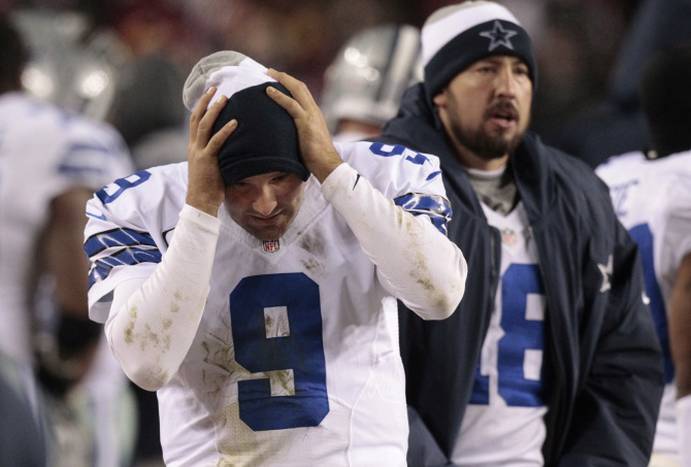
The Dallas Cowboys are done before New Year’s Eve. Again. They finish the season at 8-8. Again. They lose in a win-and-get-in finale. Again. Tony Romo throws a critical late-game interception. Again. It’s the same old story for these same old Cowboys who are 128-128 since 1997.

For the third time in the past five years, the Cowboys lost the last game of the regular season when a victory would have put them in the playoffs. For the sixth time in seven tries, Tony Romo lost a do-or-die elimination football game, throwing as many picks last night as he had in the past two months. The Cowboys still have but one lousy playoff win in the past 16 years. And counting…

I feel for Jason Garrett. As a head coach, the guy’s never taken any team to the playoffs, on any stage, at any level. So I’m not sure how qualified he is to be coaching the Cowboys. His repeated mismanagement of game situations late in the 2nd and 4th quarters is troubling. But I feel for him. I don’t think he’s being given a completely fair opportunity here. He’s saddled by his GM with a defensive coordinator who couldn’t possibly be more different than him in personality and style. (Not to mention, Rob Ryan also has never taken a defense to the playoffs on any stage, at any level.) Jerry Wayne’s personnel moves on the offensive line have doomed Garrett’s offense for the past three seasons. And his loyalty to Romo has crippled this team’s present and jeopardized it’s future.

Injuries this year are a legitimate factor for the Cowboys. But not any more so than they are for all the other teams in the NFL in December. DeMarcus Ware hobbling around last night without his right arm would have been inspirational had he actually made any plays. He didn’t need to be out there. The news this morning that he’ll have surgery this week on his shoulder and elbow tells us how badly he is hurt. Not having five or six defensive starters they had in early October wasn’t helpful, no. Losing receivers Austin and Bryant and Harris late last night wasn’t ideal.

But then, their absences had nothing to do with that late Romo interception.

The Cowboys were in a position to sneak into the playoffs. Again. Momentum was with the Cowboys late in the fourth quarter. Again. And Romo threw the pick. Again.

Pretty soon, Garrett’s going to lose this team. They stay at .500 season after season. They remain near the top of the list of most penalized teams in the league. They keep missing the playoffs. I don’t know how much longer these guys are going to buy what Garrett’s selling. But, again, I’m not convinced it’s his fault.

The one constant here is Jerry Wayne. The owner and GM seemed angry after the game last night. He refused to talk about coaches or player personnel. He said only that they needed to make some changes in the way they’re doing things. The last time Jerry Wayne took a close look in the mirror and saw incompetence, he hired Bill Parcells. That’s not going to happen this offseason. Maybe one more year of .500 ball and mistakes and missed opportunities and watching other teams play in the postseason. Maybe one more year.

Peace,

Allan

Heart of a Disciple: Humility

We’re considering the qualities that were found in Jesus’ twelve disciples that distinguished them from the rest of the people who saw and heard the Lord, who witnessed and experienced his teachings and miracles, his truth and grace. What made them different?

The most obvious characteristic in the Twelve, but lacking in all the others is humility. Most of the people who came in contact with Jesus had their own agendas. They were trying to use him for their own purposes or they just wanted him to approve or rubber-stamp some belief or practice they were already doing. Plenty of people are coming to Jesus during his ministry. But their minds are closed before they get to him.

The kind of student on which Jesus insists has an open heart and a genuine willingness to listen. Our Lord calls the kind of student who allows his teachings to reshape that student’s priorities and transform his worldview.

Sometimes the apostles didn’t like what Jesus said, but they were always humble about it. They never walked away. Even when they were baffled by his teaching — it seems like on every other page of the Gospels — they still understood that the teaching was special and that Jesus was a special kind of teacher. That’s why, in John 6, when everybody is leaving Jesus, when Jesus’ teachings were difficult to understand and follow, they remained humble in their response. Even when they didn’t get it either, the Twelve responded to Jesus with, “Lord, to whom shall we go? You have the words of eternal life. We believe and know that you are the holy one of God.”

They were simple. They were honest. And they were humble. Sometimes they seem stupid. Sometimes weak. Sometimes ignorant. They certainly come across in the Gospels as the duh-ciples. But they were always invested. Always committed. Of all the peopel Jesus taught, the apostles are the ones who are still there after the tricky parables, asking what they mean. Wanting to know. Wanting to learn.

Lots of people asked Jesus questions to trick him or trap him. But the apostles asked him questions because they truly wanted to know the answers and follow the teachings. Sometimes we come to Jesus’ teachings in Scripture looking for him to validate or affirm what we think we already know. If Jesus doesn’t uphold our view of divorce and remarriage, if the Lord doesn’t support what we believe or practice regarding worship or relationships or forgiveness, we’ll keep looking for other teachings. And if we can’t find them, we ignore Jesus altogether. We hang on with a white-knuckle death grip to his words that uphold what we believe, but relegate to the trash heap his words that challenge us or stretch us beyond what we’ve always known. That is the opposite of the humble heart Jesus requires in a disciple.

Of course, they learned that humility and honesty from Jesus himself. Jesus said, “Learn from me, for I am gentle and humble in heart.” He came, in his own words, not to be served, but to serve, and to give his very life for others. If we’re really going to learn from him, if we’re really going to allow his Lordship over us to shape us into his holy image, we have to exhibit a similar humility that bows before Jesus with an open heart and a confessing spirit.

Peace,

Allan

« Older posts Newer posts »