Category: John (Page 15 of 30)

Maundy Thursday

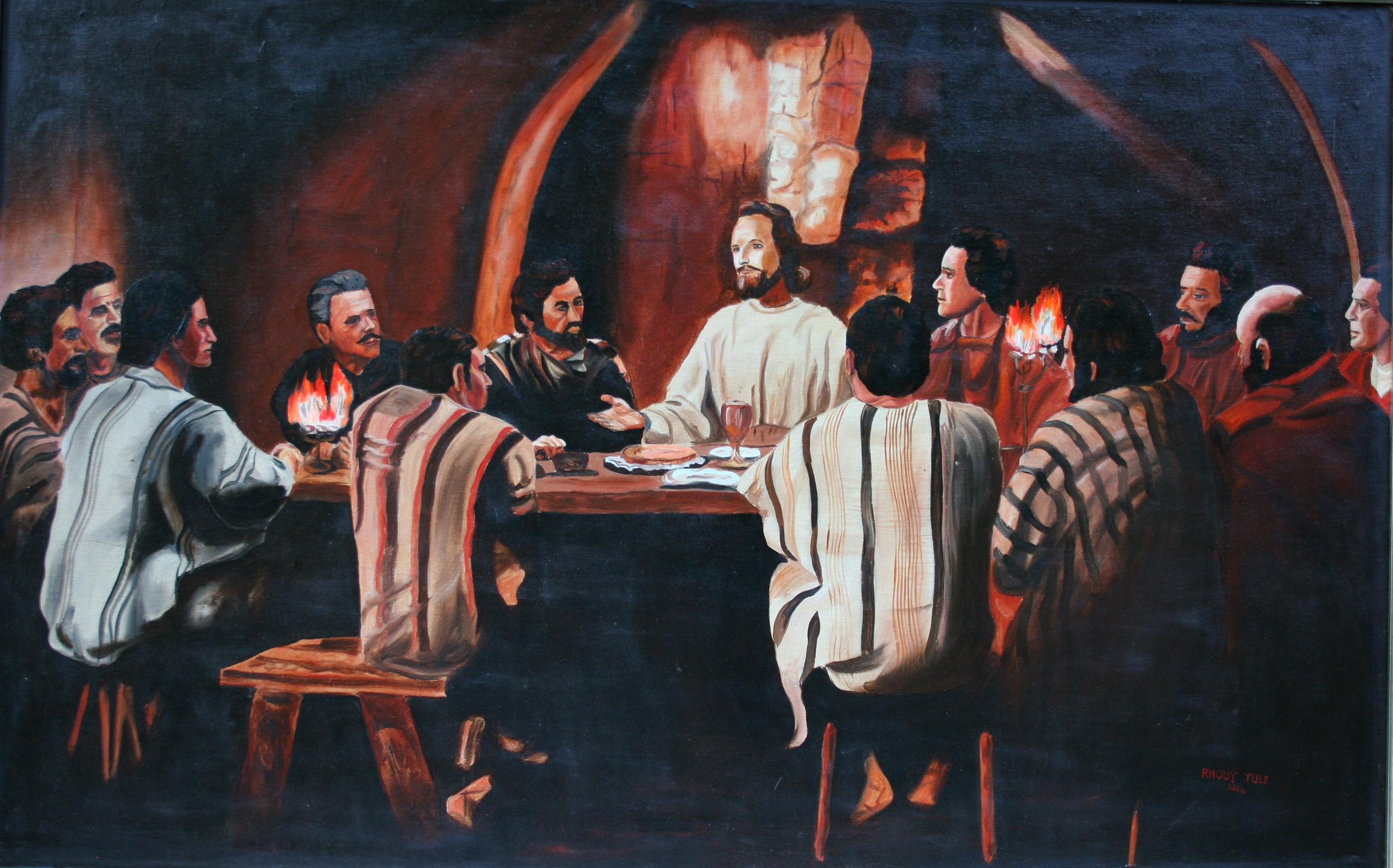
On this fifth day of Holy Week, the “4 Amarillo” churches are assembling together at Polk Street United Methodist Church this evening for a traditional Maundy Thursday service. “Maundy” comes from an old French word (mande) and a Latin term (mandatum) that mean “command,” and point to Jesus’ words around the table with his disciples on that night he was betrayed: “A new command I give you: Love one another. As I have loved you, so you must love one another.”  Tonight we are reminded of the sacrificial and self-giving love demonstrated by our Lord as he washed the feet of his followers. We’re reminded of his faithfulness and obedience as he went willingly to his death that very night. And we’re inspired to imitate our Savior in living lives of service to others, considering their needs more important than our own.

And they’ve asked me to preach it again.

Still not sure why. It probably has something to do with the fact that Howie and Howard and Burt all have Good Friday services and multiple Easter Sunday services they’re preaching this weekend. And I don’t. So I get the Maundy Thursday gig.

Regardless, I’m very, very honored and excited to do it. This is a communion service. And there’s nothing more distinctly Christian we can do than to share the Lord’s Meal with a bunch of different disciples from a bunch of different denominations and backgrounds and interpretations. Christ died to destroy all the things that separate us from God and from one another. He died to tear down the walls, to annihilate the barriers, to rip the veil in two from top to bottom so that we all have equal access to the Creator of Heaven and Earth and all his people. So that we can all eat and drink together in his everlasting face-to-face presence. That’s why he died. And the only thing that keeps us from enjoying little slivers of that eternal feast here in this life is our refusal to love one another as Christ loved us.

Our own prejudices. Man-made lines of distinction. Our own arrogance and pride. Our unwillingness to practice the same love and acceptance and forgiveness and grace to other Christians that God in Christ showed and continues to show to us — that’s the only thing that keeps all God’s churches from expressing and practicing the kind of unity that would flat-out change the world.

I am grateful to belong to a faith community that understands this. I praise God that the leadership of our four downtown churches is pushing us to do more together, not less. And I cherish my partnership and friendship with Burt, Howard, and Howie. I pray that our Maundy Thursday gathering tonight encourages our churches, that it testifies boldly to the transforming work of Christ Jesus, and that it results in praise and glory to God.

Peace,

Allan


Mad About Miracles

We should be reminded that not everybody was amazed when Jesus performed miracles. The crowds and religious leaders and a lot of the people following Jesus around didn’t always cheer when somebody got healed. When Jesus spits in the dirt and heals a blind man, it leads to an official investigation: depositions, court orders, arrest warrants. When the authorities asked the healed man’s parents to testify, they threw their son under the bus. And then he got thrown out of the synagogue.

Why would Jesus’ miracles make some people mad?

Remember, Jesus’ miracles were not proofs of his Messiah-ship. They were not intended to lead people to faith. If they were, then many of his miracles were miserable failures. A lot of them led to mean accusations, stubborn denials, and murder plots.

Jesus’ miracles are “signs.” They are pointing us toward something bigger, something beyond, something eternal. They show us that we are not in control of who gets healed and who doesn’t, who will respond to the love of God and who won’t. God in Christ is fixing things back to their original pre-sin condition, whether religious people approve of it or not.

Wasn’t it that lack of control that ticked off the church people?

The religious leaders wanted to decide who got healed and on what day of the week. Jesus never asked them first if it was OK. He just caused the lame to walk, the deaf to hear, and the blind to see. He just raised folks from the dead. Those who were amazed praised the God of Israel. Those who were enraged conspired to control our Lord by killing him.

Jesus’ miracles were an exertion of the power and authority of God over the power and authority of sin and Satan and death. And, um… humans. Even religious humans. We’re good with that, right?

Peace,

Allan

It’s About Today

“Today this Scripture is fulfilled.” ~Luke 4:21

The good news of the Gospel is not just helpful advice or even truthful statements. Scripture is all about what God is doing right now. Right here. Today. I think Jesus’ sermon in that synagogue in Nazareth really hits home when he says “Today! Today this Scripture is fulfilled!”

It’s one thing to say God will move. God will act. God will save. It’s quite another thing to say God is moving today! God is acting right now today! God is saving right here today!

Today!

That’s exciting. It’s immediate. It’s right now, in your face, all around you, in your space, and it demands a response. Look at it. God is speaking, he is doing, he is disrupting things, he is changing people, he is saving men and women, he is renewing the world! Today!

Do you read the Scriptures the way Jesus and his disciples read them? Do you look in the Bible for what God did back then or for what it says God is doing today? It’s all about today. Do you see his potential in your today? Do you feel his possibility in today? Do you know what he is doing in you and through you right now today?

Take a minute today and read a psalm or two out loud. Real loud. Pray a passage from Matthew 5-7 or John 17 or Ephesians 1-2 out loud. Real loud. Ask God to speak to you. Ask him to show you. Now praise him. Give him thanksgiving and honor. He is not distant or aloof. Our God is not uncaring or inactive, hesitant or restrained. He is gloriously at work right now today!

Peace,

Allan

4 Amarillo at ACU Summit

The early church astonished the world because of the way these dedicated disciples of Jesus refused to be identified by the social barriers of the day. The church astonished the world because it encouraged Jews and Gentiles to meet and eat together. It encouraged men and women to both worship and serve in the same houses. It gave slaves and masters, rich and poor, the well-connected and the barely-functioning the same seats at the same table, the same status in the same living Body of our Lord.

4 Amarillo, I suppose, is sort of doing the same thing. Presbyterians and Baptists worshiping and working together generates big news. The Church of Christ cooperating with anybody on anything seems to elicit surprised gasps of shock. So, I think, that’s how I wound up presenting three class sessions at this year’s ACU Summit. What we’re doing together in our little city is apparently fairly big news. And I’m so honored and blessed to be doing this.

This morning I laid out the theology for Christian unity among different denominations and traditions from our Lord’s beautiful — and loaded! — prayer in John 17, bolstered by Paul’s arguments in Romans 14-15 and Ephesians 4. Wednesday morning, I’ll wrap up the series by looking at how a commitment to this kind of unity is good for your church and the people in your church and how it probably would fit right in with most of the things your church is already doing anyway. But tomorrow, I’m especially looking forward to having all three of my co-downtown pastors join me here at ACU for a panel discussion regarding the origins of our 4 Amarillo partnership and the impact it’s having on our community for the sake of God’s Kingdom.

Howard, Burt, Howie, and I will discuss how this whole thing started long before any of us arrived on the scene, how God brought us four together to form an unshakable alliance of friends and partners in the Gospel, how we first presented the idea of 4 Amarillo to our four churches and church leadership groups, and the many ways God is using this cooperative effort to reach the downtown Amarillo area with his good news of salvation through Jesus Christ. The other three guys will spend a little time at the end telling all us CofCers everything we need to know about their churches and their people if we have any hopes of engaging them in any cooperative worship and/or ministry together. And then we’ll stay for audience participation and Q & A for as long as anybody wants to keep talking.

This morning’s session went well. The room was packed to the walls, a few people were forced to sit and listen from out in the hallway, everyone seemed to be tracking with the theology, the logic, and the heart of what we’re doing with 4 Amarillo, and the conversations afterward were rich with curiosity and grace. A lot of grace.

I’m very grateful that my friends in downtown Amarillo would agree to drive down to Abilene to do this with me. They don’t have a clue as to what we’re dealing with in the Churches of Christ as far as our rigid sectarian past and, sadly, still in a lot of cases, our present. Wait. Maybe Howie gets it. Every now and then when I’m making some apology about our CofC history, the long-time pastor of First Baptist Amarillo leans in to me and says, “Allan, you guys aren’t the only ones.”

Grace. See, grace is the only way you were accepted by God as his child. Grace is the only thing that makes your relationship with God possible. Grace. And it’s the very thing that’s demanded of us to extend to others. Grace.

May our God be glorified through these sessions this week at ACU Summit. May he be given all the glory and praise. And may our cooperative efforts, our Christian unity, be used by him as he works to redeem all of creation back to himself.

Peace,

Allan


Outnumbered

Do you ever feel like it’s you against the world? I mean the whole world; every single person in the world is against you. Do you ever feel like that?

I think Scripture teaches that men and women of God are going to have those feelings quite often. It’s stated very matter-of-factly in the Bible. If you’re walking in the light as a child of God, it’s going to seem sometimes like you’re all by yourself.

The writer of Daniel sets up the story of the fiery furnace in a particular way that illustrates the entire world as standing opposed to Shadrach, Meshach, and Abednego. Daniel 3:2 tells us that all the “satraps, prefects, governors, advisers, treasurers, judges, magistrates, and all the other provincial officials” were summoned to the dedication of the king’s giant image of gold. Then in the very next verse, the writer reminds us that all the “satraps, prefects, governors, advisers, treasurers, judges, magistrates, and all the other provincial officials” assembled for the statue’s dedication. In verse four, the herald addresses “nations and men of every language.” Same thing in verse seven, “peoples and nations and men of every language.” They all fell down and worshiped this idol.

They all worshiped the idol, the king. The whole world. All the government. All the officials. All the important people. All the people of prestige and status. All the educated people. All the well-trained and successful people. All the people in charge. Every nation, every language — they are all represented here. The writer of Scripture says the whole world ignored the commands of God and bowed down before the statue.

Everybody except these three young boys who told the king, “The God we serve is able to save us, and he will rescue us from your hand, O king. But even if he does not, we want you to know, O king, that we will not serve your gods or worship the image of gold” (Daniel 3:17-18).

Once the three men are delivered by God, it’s interesting to me that the “satraps, prefects, governors, and royal advisors” gathered around the furnace and were commanded by the king to praise the God of Israel (Daniel 3:27-28) and that “people of every nation or language” were also warned to speak well of our God (Daniel 3:29).

The story reminds me that some day every knee will bow and every tongue will confess the Lordship of our God in Christ. It’s going to happen. This world that stands opposed to you will recognize our God some day. You’re on the right team. You serve the Almighty God. He will rescue you. And you will be rewarded for your faithfulness to him.

In the words of the true and reigning King of the Universe, “In this world you will have trouble. But take heart! I have overcome the world!”

Peace,

Allan

Citizenship

“Our citizenship is in heaven.” ~Philippians 3:20

The city of Philippi was a Roman colony. It was 550 miles east of Rome, across the sea and in a different world in many respects. But because it was a Roman colony, the citizens of the Philippi region were citizens of Rome. Their official citizenship was in Rome. And they were very proud of that citizenship. So they dressed like Romans. They built their buildings and set up their city administration like Romans. They spoke Latin like Romans; they worshiped the emperor like Romans. They lived in Philippi, but they never considered themselves Philippians — they were Romans. They lived in Macedonia on the Aegean Sea — but their citizenship was in Rome.

When Paul and Silas were in Philippi in Acts 16, the owners of the slave girl accused the missionaries of “advocating customs unlawful for us Romans to accept or practice.” What did they mean “us Romans?” Don’t they know they live in Philippi? Yes, they live in Philippi, but their citizenship is in Rome. Philippi is a Roman outpost. It’s an island of one culture in the middle of another. It’s a city of people holding on to and promoting customs and traditions and practices and even a language that is unfamiliar to its surroundings.

My family and I lived in Memphis, Tennessee for almost a year in 1998. We bought a house in Memphis and Carrie-Anne and I both worked in Memphis. Whitney went to Memphis public school. But I refused to get a Tennessee drivers license. I didn’t get a Tennessee license plate. I flew the Texas flag from our front porch and in my office at work. I wore Dallas Mavericks t-shirts, I listened to Stevie Ray Vaughn everyday, and I absolutely never, ever put cole slaw on top of my barbecue sandwich! I was living in Tennessee, but my citizenship was in Texas.
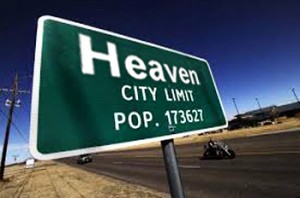
The same thing is happening with the folks receiving this letter from Paul. The apostle writes to the Christians in Philippi and he says, “Our citizenship is in heaven.” You don’t belong to Philippi or to Rome; our citizenship is in heaven.

Here on earth, we are a colony of heavenly citizens. God’s Church is an outpost. It’s an island of one culture in the middle of another. God’s Church is a city of people holding on to and promoting customs and traditions and practices and a language unfamiliar to our surroundings.

And it sets us apart. It makes us different.

In Acts 21, Paul is accused of teaching “all men everywhere against our people and our law and this place.” When given the chance to defend himself, Paul claims that as a citizen of heaven, as a subject of Christ, he “had fulfilled his duty.” The Christians in Thessalonica are arrested in Acts 17 and charged with “defying Caesar’s decrees, saying that there is another king, one called Jesus.” Our Lord is standing in chains before the Roman governor in John 18 when he says, “My Kingdom is not of this world. If it were, my servants would fight… my Kingdom is from another place.”

To confess that Jesus is Lord is to say that Caesar is not. And that makes us different. To claim citizenship in heaven is to declare our allegiance first and foremost to God’s Kingdom, not the Empire. And that sets us apart.

Jesus did not bring a new teaching or a new ethic; Jesus brings a brand new reality. Jesus didn’t give us new ideas about God and humanity and the world; he gives us an invitation to join up, to become part of a movement, a new people that is not of this world. We see something the world doesn’t see; we understand something the world cannot comprehend. We live in and are part of the reality of the eternal power and reign of God in Christ. So we are strangers and aliens in this world because we get it, and nobody else does. We understand that God rules the world, not congressmen and presidents or governors and generals.

We need to slow down and look around and get a handle on what’s really going on. We need to see what’s really happening. That’s hard to do because we’re surrounded by all the unreality. With 24 hour news networks and around the clock talk radio and more ads and campaigns and debates and emails and bumper stickers than any of us can fathom, it’s easy to get caught up in it. If we’re not careful, we can actually start to believe that the Empire and its politics and our role in all that is pretty important. Until we step back and look at it with a heavenly perspective.

The Gospel of Jesus places all of us into an eternal and international community of those who follow the Savior. We live under the rule of our Christ. So our loyalties go far beyond any national thought or national pride. Our allegiance rises high above any national agenda. Our conduct will be different from the world’s because our citizenship is in heaven.

I was nine years old in the summer of 1975 when my dad packed up the blue Chevrolet Impala and took our family of five at the time and my grandmother up to Niagara Falls. Yes, we drove it; lots of ham sandwiches. After a long day of sightseeing in Ontario, I remember vividly ordering hamburgers at a little diner. I can still see the black and white tile on the floor and the pattern and colors of the fabric on the cushions of the booths. We ordered our meals and sat down together in the crowded diner. And after just a minute or two, a lady sitting at the table next to us leaned in toward us and said, “What part of Texas are you from?”

She hadn’t seen our license plates. We weren’t talking about home. None of us was wearing Dallas Cowboys t-shirts or anything that would have overtly given away where we lived. She said she could just tell by the way we talked and the way we acted that we were from Texas.

I remember being kind of proud about that. I think maybe I’m still a little proud about that.

When’s the last time you sat down at a restaurant and someone leaned over and said, “What part of heaven are you from?”

Wherever we go and whatever we do, we ought to stick out as people who live somewhere else. We are a people with customs and practices and a language different from the rest of the world. Our citizenship is in heaven. And it should be obvious.

Peace,

Allan

« Older posts Newer posts »