Category: John (Page 13 of 31)

Maundy Means Commands

JesusWashingFeetToday is Maundy Thursday, the day Christians all over the world remember the events of the night our Lord Jesus was betrayed by his disciples. Yeah, remember, it wasn’t just Judas who betrayed Jesus; he was just the only one who got paid. They all fled that night when things got hairy. They all abandoned Jesus (Well, the guys did. According to the Gospels, the women were the only ones who did not flee the scene. They stood by their man, as it were, through the trials, the suffering, the crucifixion, and the burial).

The word “Maundy” is from a Latin word that means “commands.” That word has been used by Christians to describe that last night for centuries because Jesus gave his followers several commands during that last meal:

“Now that I, your Lord and Teacher, have washed your feet, you also should wash one another’s feet. I have set you an example that you should do as I have done for you.” ~John 13:14-15

“A new command I give you: Love one another. As I have loved you, so you must love one another.” ~John 13:34

“My command is this: Love each other as I have loved you.” ~John 15:12

Today is a day of solemn remembrance. Easter Sunday — I can’t wait for Easter, I love Easter, Resurrection! — is a day for exuberant celebration. But Maundy Thursday is for individual and corporate reflection. Inspection. Introspection. How have I betrayed my Lord? Am I keeping his commands? In what ways do I continually deny my Savior?

He told his disciples that night around the table to remain in his love, to obey his commands. At a meal together, he asked them to obey his commands just as he had obeyed the commands of the Father. And then he says it: My command is that you love each other as I have loved you. You’re my friends, he says, if you do what I command (John 15:9-14).

Are we obeying his primary command to love each other? Are we showing Christ Jesus’ sacrificial, servant-hearted, selfless love to other followers? Or do we betray our Lord and disobey his command by judging other disciples and withdrawing from other followers? Are we loving and serving all Christians as Jesus commanded, as he prayed to our Father on that dark night we would, or do we only love and serve Christians who think and behave exactly like we do? Do we reject Jesus’ command by criticizing other churches, even condemning them, because we have different understandings or different practices?
Print

Here at Central, we’re trying to love all Christians in Amarillo the way Jesus showed us during that last meal on that Thursday night. We’re trying to be sacrificial. We’re trying to be servants. We’re trying to come closer together with other Christians. We’re trying to erase the man-made lines of distinction and focus on the many, many things we all have in common in our Lord Jesus. No judgments. No criticisms. More grace. More forgiveness. More service. More love. We’re not perfect at this yet; nobody’s arrived. But we’re trying.

Tonight, our church family joins with our brothers and sisters at First Baptist, First Presbyterian, and Polk Street Methodist for a time of worship and communion with each other and with our risen and coming Lord. We’re going to reflect together. We’re going to inspect our lives together. We’re going to eat and drink together. And we’re going to commit to the Maundy Thursday spirit of paying attention to Jesus’ commands. And obeying them.

Peace,

Allan

Flesh and Blood

“The Word became flesh and blood and moved into the neighborhood.” ~John 1:14 (MSG)

JesusDisciplesFeet
God doesn’t wave a magic wand and cast a spell on the earth to restore it to its original condition. He doesn’t judge the world as beyond salvation and destroy everything. God comes to us. That’s his answer. That’s our God’s strategy. He enters our humanity with us, he puts on our skin and bones and blood, and participates in our problems. Immanuel. God with us. Jesus joins our mess.

This is how God works in the world. He takes on our humanness. He became one of us. The Son of God not only died for our sins as a human, he lived here as a human, too! He got hungry and tired with us. He laughed and cried with us. He bled. He sweated. He experienced joy and pain with us. He got surprised and he got frustrated. He was tempted. He struggled. He was betrayed by his best friends. He had to make hard decisions. He lost loved ones. He became one of us with us. This is God’s strategy.

Entering. Sharing. Engaging. Participating. All in.

That’s very, very different from Hinduism, Buddhism, and Islam. All the other world’s religions worship a god who stays in the heavens, who has removed himself from creation and demands that his people come to him. People are required to find secret knowledge and spiritual codes and work and strive and struggle to get to these gods. But our God comes to us. He comes here to us.

JesusHealsBlindIt’s important for us to know that Jesus is both 100% God and 100% man. I can’t explain it all, I certainly don’t understand it all. But the Scriptures declare it, the Apostles’ Creed affirms it, and Jesus’ life on earth proves it. He is both God and man. And this is critical to our Christian faith.

If Jesus wasn’t a man, then he didn’t really enter our mess. He came here, yes, but he remained above all the dirt. He didn’t really enter or share or participate in the ugliness of what is our situation. He wasn’t human, he was God! It was easy!

And if Jesus wasn’t God, then he didn’t really sacrifice anything to come to us. He didn’t risk anything. He didn’t really put anything on the line. And it didn’t really make an eternal difference. It didn’t matter in the long run. He wasn’t God, he was human! He was born here, he didn’t have a choice. And then he died. It was unfortunate, that’s all.

No.

Jesus the Messiah, the Alpha and the Omega, the Creator and Lord of Heaven and Earth, equal with God the Father from before the beginning of time, left his home in glory and put on our skin and bones in order to enter our mess. He entered your mess. He did. Jesus Christ entered your situation, he shared in your experiences, he carried all your burdens, he participated in your problems. He got very intimately involved in your situation at a tremendous personal cost. That’s the Gospel! Praise God!

Christ Jesus put on our flesh and lived with us. He entered the fray. And so we disciples of Christ today enter the fray with our money and time and resources and energy and talents and houses and everything we’ve got. By the power of the Holy Spirit, Christians shine light into darkness, we bring life out of death. We join in the problems. We jump into the ugliness. That’s why so many hospitals are named Methodist and Presbyterian and Baptist-St. Anthony’s — because Christians have been entering the mess and sharing and carrying and engaging and participating since that very first Easter Sunday.

It’s obvious that this is the way of our Lord. God’s Church is not called to just hang on until the uncleanness is destroyed. We’re not called to just pray about the mess so God can take care of it. And we surely don’t lock ourselves up in a gated monastery and ignore the problems. We enter it. We engage it. Heaven and earth, God and humans, present together in the redemption and restoration of the world.

Peace,

Allan

The Counter Cultural Way

JesusPraysInPainThe Word of God confronts us with two ways. The Law and the Prophets, the Psalms and Proverbs, the Gospels and Letters all present us with the choice of two ways. It’s not where you’re going to live or what career you’re going to pursue or who you’re going to marry or where you’re going to eat. The choice given us in Scripture certainly encompasses and impacts all the daily choices we make while we live in those places with the people we marry and in the work we do and while we’re eating lunch. But there’s only one choice in the Bible: the way of life of the way of death; the way of blessing or the way of curses; the way of God or the way of the devil.

Jesus says, “I am the Way.” I am the Way to God and I’m also the way God comes to you. I’m a two-way Way. And so we choose Jesus. And when we choose Jesus, what is it specifically that we’ve chosen? What are we signing up for when we say “Yes” to Jesus?

Well, the Gospels tell us plainly that Jesus’ Way is counter cultural. Popularity and power mean just about everything in our society, but popularity and power mean absolutely nothing to our Lord. In the Gospels, it looks like Herod has the power. The governing officials in the Roman Empire have all the power. So the Roman soldiers. The religious leaders have a lot of power. The chief priests and teachers of the Law and the Sanhedrin wield plenty of power. And all of these people and groups seem to have their way with Jesus. Jesus is the lowly servant who’s despised and rejected, beaten and crucified. Cursed by God and man.

But remember the centurion clearly sees the truth when he sees how Jesus dies: “Surely this man was the Son of God.”

Jesus’ way is upside down. It’s counter cultural. Our default, though, is the pursue the ways of the world. As disciples of Jesus individually and as churches of God collectively, we’re not very careful with this. Without even thinking about it, we embrace and adopt the ways of the culture. We imitate the ways used by powerful people who run large companies and corporations, high profile people who lead political parties and nations. By threat and force and power; with money and might; by out-yelling and out-insulting others; by demonizing those who disagree with us; by walling ourselves off from anyone who may do us harm. And we don’t even consider that those ways are totally at odds with the way of Jesus.

We see accomplished men who’ve achieved great success by using these worldly methods and we make them elders of the church. We make these guys preachers of the Word. Whatever the culture decides is exciting and successful and influential, whatever gets things done, whatever will gather a crowd.

We usually have to take four or five different looks at guys whose main character traits are gentleness and humility before we consider them for leadership roles — if we even look at those kinds of guys at all. Shouldn’t the man who lives only to serve others be moved to the top of the list? Shouldn’t the guys who consider the needs of others more important than their own, the guys who refuse to advance their own agenda, the guys who you’ve never heard say one bad thing about anybody else, shouldn’t they be the frontrunners for leadership positions in our congregations? Shouldn’t they be the ones to set the tone in our churches?

Peace,

Allan

Apostles’ Creed

We-Believe-Logo“This is eternal life: that they may know you, the only true God, and Jesus Christ, whom you have sent.” ~John 17:3

In today’s postmodern world in which the accepted truth is that there is no truth at all, we can’t take for granted anymore the articles of the Christian faith. Biblical literacy is low. Doctrinal literacy is low. There is a tremendous need for the Church to refocus the center of our faith, to get a better grip on our true identity as Christ-followers. We’ve got to get clear on our core. It occurs to me that the best way to keep from being blown by every wind of doctrine is to have a doctrine.

So, yesterday here at Central, we began a year-long exploration of the ancient Apostles’ Creed.

I know, I know; I know what you’re thinking. We don’t do creeds in the Church of Christ. In our faith tradition it’s always been, “No creed but Christ!” That, ironically, is one of our better known creeds. We have traditionally rejected human creeds because “We call Bible things by Bible names and do Bible things in Bible ways.” Again, that’s one of our hardest held creeds. Funny, huh?

All individuals and communities function from a center of belief and practice. These core beliefs that inform and guide a group’s values and behavior can usually be summed up in a short statement: a creed. A statement of belief. Whether they’re written down or not, everybody’s got them. Democrats and Republicans have their creeds. So do Cowboys fans and Hindus, labor unions and college sororities, civic clubs and sovereign nations. Christians aren’t the only ones with creeds — everyone’s got creeds.

And I think Christians wanting to summarize and write down and memorize the specifics of the faith can be clearly seen in the Scriptures. The apostle Paul is very particular about what Christians need to believe and how they need to believe it.
“If you confess with your mouth, ‘Jesus is Lord,’ and believe in your heart that God raised him from the dead, you will be saved.” ~Romans 10:9

Several places in 1 John make it clear that being a Christian doesn’t just mean believing in Jesus, but believing certain things about Jesus. If you deny that Jesus is the prophesied Jewish Messiah, then you’re denying God. You’re a heretic or, as the passage says, an anti-Christ (1 John 2:22). You have to believe that Jesus came to earth in the flesh and blood of a human being or you don’t have God; you don’t have his Spirit (1 John 4:2-3). There are summaries of the faith throughout the pages of the Bible in Deuteronomy 6, Ephesians 4, 1 Corinthians 15, and 1 Timothy 6 to name a few. These statements clarify the truth and sweep away any false beliefs. Believing the right things in right ways is important. Scripture is very serious about rebuking false teachings and holding to the “pattern of sound teaching.”

The Apostles’ Creed is one of these ancient summaries. Outside of the Bible, it’s the earliest known version of a summary statement of the Christian faith. It goes all the way back to the late second century when candidates for baptism were asked to publically confess their core beliefs on the way into the water. Hippolytus writes the words down in 215 AD as if the Church has been reciting them for years. So, it’s old: really, really old. Technically, it’s older than the New Testament canon. Yes, the New Testament gospels and letters had already been written when the Church adopted the Apostles’ Creed. But the ink was still wet. In fact, the church councils used the Apostles’ Creed to help guide them as they were deciding which books belonged in the New Testament and which ones didn’t. After all, the creed had been faithfully recited by the Church for more than a hundred years at that point. So it played a major role in the canonical process.

Now, I’m not actually preaching the Apostles’ Creed. We’re using the creed as a guide while we preach the Bible. The Apostles’ Creed is not the authority. It has no authority in and of itself. It’s like the moon. The moon is awesome to look at. The moon is beautiful and inspiring, we write songs and poems about the moon. The moon doesn’t have any light in and of itself. But it tells me there’s a light out there.

The Apostles’ Creed reflects the light of the Word of God: the written Word, the Scriptures, and the incarnate Word, Jesus Christ.

It’s ancient. It’s good. And it’s strong. It affirms the unshakable beliefs of the Christian faith: only one God, the divinity of Jesus, the birth, death, and resurrection of Christ, the coming judgment, the Holy Spirit, the one Church, the forgiveness of sins, and eternal life. It’s timeless. It’s withstood all the tests. We’re memorizing it and reciting it in our families and in our assemblies. And it’s going to be good for us.

Peace,

Allan

Incarnation Revelation

JesusBirthThe Incarnation is a remarkable and powerful thing: God chose to come into this world the same way all of us come into the world — through the pain and water and blood of human birth. Just like you and me, God was born. God came here as a baby. The Gospel of John says the Word — the creative Word of God, the creation power of God — became flesh and made his dwelling among us.

God with us. Immanuel. He came to us. God came here to live with and to bless his creation. And it’s not just a beautiful idea or an abstract theological truth. It really happened on that clear starry night in Bethlehem.

But what do we do with this? We rejoice and we express thanksgiving, yes. We join heaven and earth in praise and worship, absolutely. But we don’t really understand it. God Almighty, the Creator of Heaven and Earth, coming to this world as a helpless baby — that blows our minds. We don’t really have a category for that.

So, usually, we kind of chop Jesus up. Fully human and fully God, we don’t know what that means. So we say everything in the Bible about Jesus’ weakness and pain and suffering points to his humanity, and everything in Scripture about his wisdom and power and authority points to his divinity. But if that’s the case, the coming of Jesus doesn’t really tell us anything new. It’s nothing to sing about. We don’t need Jesus to tell us that God is big and powerful and strong and that human beings are little and weak and powerless. We already know that. We already believe the relationship between God and humans is about above and below, about superior to inferior, about master to servant. We already believe that.

Well, that’s not what the baby Jesus is about. Immanuel, God with us, is about the shocking reversal of everything we believe about heaven and earth. It’s not about big God and little humans. It’s not about the Creator asserting his divine greatness and power in contrast to human weakness. This is about God becoming weak and powerless so that humans can become affirmed and exalted. It’s about God lowering himself so his creation can be lifted up.

Irenaeus, in the second century, wrote: “Jesus Christ in his infinite love has become what we are in order that he may make us entirely what he is.”

Jesus prays to his Father the night before his death, “I have given them the same glory that you gave me!”

JesusBabyAdorationGod did not create heaven and earth to get joy or to receive love. He created in order to share his joy and love. Yes, all of creation is an explosion of God’ glory. All of heaven and nature point us to God’s goodness and beauty, his power and love. But he didn’t do it so we would believe in him. He doesn’t do it for our inspiration or spirituality. He does it because he wants to share his joy and love.

So he comes to us in Jesus. He joins us as a baby. He shows us in the birth of the Christ that his Kingdom is not founded on bloodlines or race or nationality or money. His nature is not about power or strength or violence or war. God’s character, what he’s all about, is grace. He and his Kingdom come to us as a gift of his amazing grace.

“He came to that which was his own… To all who received him, to those who believed in his name, he gave the right to become children of God — children born not of natural descent, nor of human decision, or a husband’s will, but born of God.” ~John 1:11-13

We’re not born into the Kingdom like we have some special birthright or like we’re entitled in some way. We’re adopted into the Kingdom. We are given our eternal rights and blessings by grace. It’s a gift. Jesus was the Son of Mary by faith, yes, and by water and blood. But first, he was her son by divine grace.

“The Word became flesh and made his dwelling among us. We have seen his glory, the glory of the One and Only, who came from the Father, full of grace and truth.” ~John 1:14

The King of the World has come. And he’s not like any king this world has ever seen. What sets him apart from other kings and what sets his subjects apart from other people is not his strength, but his weakness like us; not his majestic power, but his suffering with us; not his eternal authority and rule, but his obedience and suffering for us.

Joy to the world, the Lord is come! Let earth receive her King! Let every heart prepare him room, and heaven and nature sing!

Peace,

Allan

Forgiveness is the Only Way

SinfulWomanForgiven3There are more than 50 words in the Bible for sin: debt, evil, wickedness, trespass, unrighteousness, guilt, transgression, disobedience, rebellion, etc., But exposing the sin and naming the sin is not what matters. Keeping score is not the Gospel. Witch-hunting is not the Gospel. Shaming people is not the Gospel. Forgiving sin — that’s the Gospel. Because it’s the only thing that works.

Our Lord teaches us to pray: “Forgive us our sins as we forgive those who sin against us.”

We are faced with lots of sin, sin everywhere — personal sin, family sin, institutional sin. But Jesus doesn’t tell us to get a mop and a bucket and a brush so he can show us how to scrub the sin from our lives and the lives of our children and spouses and neighbors. He doesn’t tell us how to hook up a power hose so we can blast away all the corruption in government, all the sacrilege in our churches, and all the unbelief in our schools. Jesus tells us to pray: “Forgive us as we forgive.”

Our God deals with sin. He deals with sin decisively. Head-on. Effectively. It’s not like getting rid of a germ: “Here’s a shot, take these two pills, and call me in the morning.” It’s not like getting rid of mice in the attic: “Set out these traps, put out this poison, then Whack! Whack! Whack! All the sin is gone!” And God doesn’t deal with sin by amputation, like it’s gangrene on a diseased leg: “We’re going to chop it off. It’s really going to hurt. You’re going to have a severe limp the rest of your life. But, hey, there’s no sin!”

God deals with sin by forgiving us.

If something’s going to be done about sin, it’s not going to be with laws and commands and rules. Do we think what’s wrong with this world is something we can fix on our own? We can’t. Do we think there are judicial or governmental or educational or psychological ways to deal with sin? There aren’t.

Forgiveness is the only way.

“As God’s chosen people, holy and dearly loved, clothe yourselves with compassion, kindness, humility, gentleness, and patience. Bear with each other and forgive whatever grievances you may have against one another. Forgive as the Lord forgave you.” ~Colossians 3:12-13

Forgiveness is the only way to deal with sin. It does not settle all the questions of blame and fairness. In fact, it purposefully avoids those questions. What forgiveness does is allow a relationship to start over. Forgiveness brings people back together. It begins a good thing anew.

But a lot of us live in a logjam between forgiveness and justice. When somebody does me wrong, I can think of a million reasons not to forgive. He needs to learn a lesson. I don’t want to encourage her irresponsible behavior. She needs to learn that actions have consequences. I was the one wronged – he needs to make the first move. How can I forgive if she’s not even sorry?

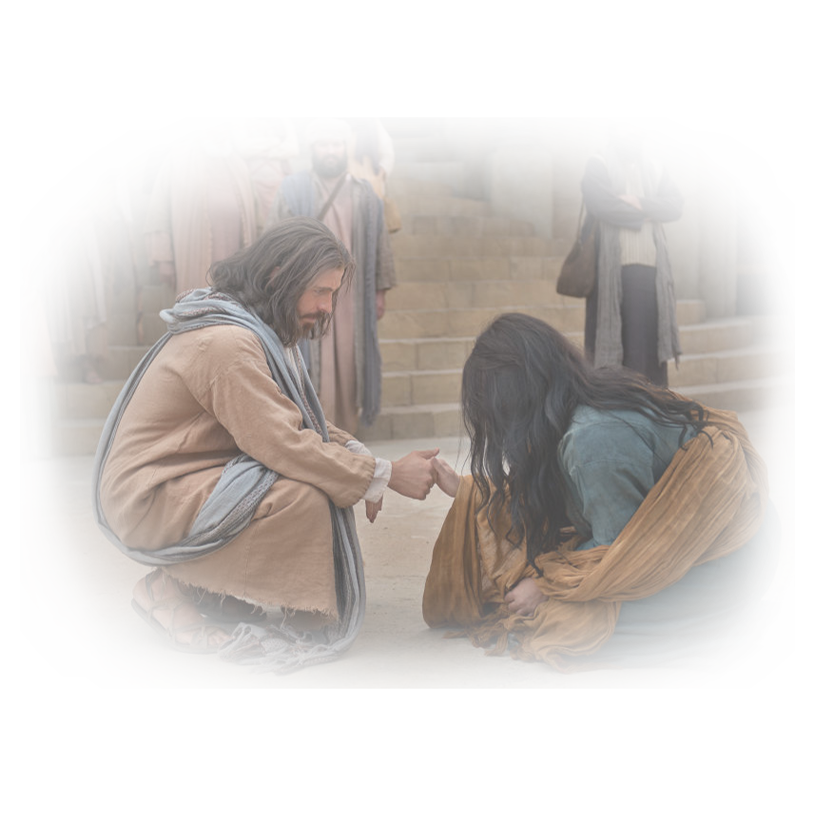
Remember the woman in John 8 who was caught in the act of adultery? They bring her to Jesus and throw her down at his feet. The Law says she should be stoned. But Jesus says, “Hey, whoever has never sinned can throw the first rock at her.” The young look to the old. The old look to their hearts. And they drop their rocks and walk away.

Jesus and the woman are left alone. The Lord stands up and looks around.

“Where is everybody? Has no one judged you guilty?”

“No one, sir,” she answers.

“I also don’t judge you guilty.”

If you ever wonder how God reacts when you fail, take those words and frame them. Hang them on your wall. Read those words of the Christ. Drink from them. Take them into your soul. “I don’t judge you guilty.”

When we sin against God, that creates a barrier. But forgives us and removes that barrier. God gives up his holy right to get even. Instead, he bears the cost of our sin in his own body. The sin is gone, the price is paid, and the relationship is restored. God made him who had no sin to be sin for us. You can’t get any more plain than that.

Justice is not the best or last word. In all matters of wrongdoing, in all matters of sin, in all that is wrong with the world and with us, in all that is wrong with our enemies and our friends, forgiveness is the best and last word. And forgiveness must be our first response to every person who hurts us or sins against us. We’ve got plenty of police officers and judges and juries and prosecuting attorneys to say, “You’re guilty!” Who’s going to say, “Father, forgive them?” If it’s not Christians, who’s going to say, “I don’t judge you guilty?” If not us, who’s going to say, “Your sins are forgiven?”

However important justice is — and it is very important — forgiveness is more important. Not soft sentimentality, but hard-edged Gospel. Not an apathetic shrug of the shoulders, but the white-hot flame of resurrection love forged in the furnace of the cross. Assuming that the criminal crucified next to Jesus was receiving a just sentence — he admitted it himself — forgiveness trumped justice that day. It always does.

Peace,

Allan

« Older posts Newer posts »