Category: Jesus (Page 35 of 61)

Around the Table: Part 6

“This is my blood of the covenant which is poured out for many.” ~Mark 14:24

There was a definite Passover context in the city, in the room, and around the table when Jesus celebrated the feast with his disciples on the night he was betrayed. Jesus and his closest followers had gathered to remember God’s great acts of redemption, specifically the deliverance of his people from bondage in Egypt. They gathered to sing the Psalms of divine rescue that recount those mighty deeds. They gathered to celebrate that past with great joy and to eagerly anticipate a future fulfillment when all of God’s people would be brought together around the banquet table in the Promised Land.

But Jesus takes this centuries-old covenant meal and gives it new meaning.

First, he ties it to the original covenant meal as recorded in Exodus 24 by quoting Moses. As Moses cleanses the people with the sprinkled blood, he says, “This is the blood of the covenant.” As Jesus shares this Passover meal with his disciples, he quotes Moses, but adds an all-important word to the well-rehearsed line, “This is my blood of the covenant.” Instead of the blood of the lamb(s) removing the sins of the people, the blood of Jesus, the perfect Lamb, will now be poured out for the forgiveness of all sin for all time. Jesus redefines the ultimate meaning of the meal. He is the sacrifice, he is the One being given as atonement for the sins of God’s people. Same covenant; different terms.

Secondly, he tells the disciples to “do this in remembrance of me (Luke 22:19).” Do what? Why, eat this meal, of course. The word “this” should not be understood as exclusively referring to the bread and/or the cup. Those are only two elements of what we know was always a full-blown, full-course celebratory meal. When the children are instructed in Exodus 12 and 13 to ask about the Passover feast — “What does this mean?” — the answer is a liturgical way to tell the story, to pass the faith on to the next generation: “I do this because of what the Lord did for me.” If Jesus and his apostles are good Jews — and they were — and if they were following the prescribed liturgy — and we have no reason to doubt otherwise — Jesus would be explaining the significance of the whole meal, the whole setting, all the elements from the bread to the vegetables to the lamb and the wine and dessert. And all the songs and prayers that went with it. Jesus was telling his disciples and us to eat the meal — the whole meal — in memory of him. At Passover, we remembered God’s redemption work in Egypt, at the Red Sea, and his faithfulness through the wilderness to the Promised Land. At this new covenant meal, we remember now the Gospel events regarding our Savior: his birth, life, teachings, healings, death, and resurrection.

Third, Jesus institutes the new way of understanding religious meals by pointing forward to the ultimate fulfillment around the wedding feast in heaven. The original instructions in Exodus 12 regarding the Passover include the command to observe the feast “when you enter the new land.” Built into the meal is an anticipation that this isn’t going to be the last time we do this. There will come a time when we do this in much better circumstances. Same with our communion meals today. Jesus, on that last night, apparently went out of his way to let his disciples know he would celebrate this meal with them again at the coming of the Kingdom of God. Next thing you know, there they are on Resurrection evening, eating and drinking with their Lord. And, there they are in Acts, eating and drinking together, by the power of the Spirit, with the risen Savior. While sharing the meal today, we understand this isn’t going to be the last time. In fact, we eagerly anticipate eating the supper with Jesus in the new heavens and the new earth with all the saints of all time.

So, there is certainly a past, present, and future element present every time we eat and drink together in remembrance of Jesus. We remember the earthly life and ministry of Jesus. We rejoice in the forgiveness and reconciliation achieved for us at the cross. We renew our end of the covenant, pledging anew our loyalty to Christ. We experience his presence at the table where he acts as host and servant. We celebrate the fellowship we enjoy with our Lord and with one another. And we look forward to that great eternal wedding feast on that one glorious day.

Same covenant. The promises of God didn’t change. He didn’t alter at all what he always promised us from the very beginning. The terms of the deal are what changed. Jesus is the difference. He has fulfilled all righteousness for us. And we celebrate with great joy every time we eat and drink with one another in his holy name.

Peace,

Allan

Short Cuts and Dead Ends

“Whoever claims to live in him must walk as Jesus did.” ~1 John 2:6

Have you ever cut through a parking lot in an effort to avoid a red light or a traffic jam, to reach your destination a little more quickly, only to find yourself at a dead end or farther away from your objective than you were when you began? It used to happen to me a lot. It still does occasionally. Carrie-Anne just smiles patiently in the seat next to me as I wind my way through a strip center parking lot looking for a way out.

The desert temptations of Jesus show us a picture of the devil, our Adversary, and his method for pushing us to take spiritual shortcuts. Satan is forever attempting to subvert our walk with God by offering us a shorter path, a quicker route. And they always turn into dead ends.

In response to those temptations — Satan uses our culture to lure us down the wrong path every hour of every day — we must rely on our Father and walk the difficult road with him. Anything we do independently of God and his way expresses a lack of connection, a lack of faith.

Jesus never rationalizes his way out of God’s will. He could very easily have thought that God did not want his Son to starve or suffer rejection or die, so why not turn those stones to warm, fluffy loaves of bread? Why not eschew the cross for a more politically relevant and efficient way to win the throne? Why not? The Kingdom was going to belong to him anyway, so what did it matter how it came into his hands? But our Lord never entertained an end-justifies-the-means viewpoint.

Our charge is to follow him, to follow his way, in making sure the shortcuts that inevitably present themselves to us do not in fact reflect a lack of faith. Or any rationalization to avoid Gods’ holy will and very, very different way.

Peace,

Allan

We Don’t Want This Man!

“A man of noble birth went to a distant country to have himself appointed king and then to return… But his subjects hated him and sent a delegation after him to say, ‘We don’t want this man to be our king!'” ~Luke 19:12-14

According to Luke, after he tells this story, Jesus is called “king” five times in Jerusalem. When he enters the holy city, all his disciples joyfully praise God, “Blessed is the king who comes in the name of the Lord!” And then four more times that last week in Jerusalem: twice at his trial before Pilate and twice more as he was hanging on the cross. Five times the people call Jesus ‘king,’ the first time in joyful acceptance, the last four times in murderous rebellion.

In no uncertain terms, the world declares, “We don’t want this man to be our king!”

We want to be our own kings. We want to be our own gods. The evidence is everywhere. And it’s irrefutable. From every continent and civilization, in every century and country, when it comes to kingship, God is not our ally. For some reason, we make Almighty God out to be a rival. We want to be our own gods. The snake promised us we could do it. He told Eve in the garden, you can be just like God. And we’ve been hard at it ever since.

We don’t want this man to be our King! The world proves over and over again by its actions that it doesn’t want God.

But God wants the world. That’s the good news. That’s great news! That’s the mind-blowing, history-altering news. God wants you. He wants the whole world. We are created by God for God. We are separated from God by our sin. And then God moves heaven and earth to win us back. He’s determined. He pursues us. He wants nothing as much as he wants a restored and righteous relationship with you. And he’ll stop at nothing to achieve it.

He is faithful to us even when we are unfaithful to him. He died for us — for you! — while we were rejecting him. What a king!

Peace,

Allan

Around the Table: Part 4

Have you ever wondered how the Church’s practice of the Lord’s Supper actually began? There’s no right or wrong answer to the question; the Scriptures don’t give us a time and a place or a lined-out history of communion practice among members of the early Church. But think about that just for a second. I believe the New Testament is full of communion references. I think we see Lord’s Supper practices both assumed and described in lots of places other than the obvious ones in 1 Corinthians and Acts. But how did it begin? Who organized the orchestrated the first official Lord’s Supper?

Consider that on Resurrection Day — Easter Sunday, the actual day of Christ’s coming back to life and walking out of that garden tomb — Jesus appears to his disciples and eats a meal with them. It’s the first time they see the risen Lord. At dinner time. Sunday night. And he joins them and eats with them. At dinner time. On Resurrection Day. Sunday night.

On Resurrection Day, Jesus sees his disciples for the first time and eats with them: “Jesus appeared to the Eleven as they were eating” (Mark 16:14), “They gave him a piece of broiled fish, and he took it and ate it in their presence” (Luke 24:41-43), and “On the evening of that first day of the week, when the disciples were together…” (John 20:19)

These disciples experienced the real presence of the resurrected Christ at meal time on Sunday: “Jesus appeared to the Eleven as they were eating” (Mark 16:14), “Jesus himself stood among them” (Luke 24:36), “Jesus came and stood among them” (John 20:19).

These disciples experienced the realities of the risen Lord at this Sunday evening supper; their eyes were opened and they understood. In Mark’s account, Jesus rebukes his disciples for not believing he’s been raised. But he speaks to them at the meal, he commands and commissions them to preach the good news, and they are empowered to preach “everywhere.” Luke tells us that the disciples look at the wounds in Jesus’ hands and feet during this dinner, they touch the Lord and eat with him, and they confirm that he is indeed not a spirit or a ghost. “Then he opened their minds so they could understand…” (Luke 24:45). Jesus teaches them at the table, commands and commissions them, empowers and reassures them. In the fourth Gospel, after seeing his hands and his side, the disciples “were overjoyed when they saw the Lord” (John 20:20). A very similar Resurrection Day meal experience occurred with the two disciples on the road to Emmaus (Luke24:13-35).

Remember, too, that Thomas was not there for that first post-resurrection meal with the Lord. He missed small groups that night. But he heard about what had happened (John 20:24) and made sure he was present for that next Sunday night (John 20:26). Thomas was there early for that next Sunday gathering. The Cowboys were down by four with six minutes to play, but Thomas still got there early. He pulled up to the driveway at 5:45, ready to go. And, sure enough, as the disciples were eating their meal on that second Sunday, the Lord showed up (John 20:26) and revealed himself to Thomas in the same ways he had opened the eyes of the other disciples the Sunday night before.

So, my question is this: What do you think happened on that third Sunday?

Again, there’s no right or wrong answer. There’s nothing in the Scriptures to tell us what happened on that next Sunday night. But my assumption is that the disciples got together for a meal, expecting to see Jesus. Again. Expecting to eat with Jesus. Again. Anticipating another wonderful dinner with their risen Lord with all the food and drink, fellowship and communion, teachings and commissionings that go with it. And it only makes sense that these dinners would continue every Sunday night with the hope of seeing the Christ. It makes sense that, early on, most disciples had heard the amazing stories about that Resurrection Day meals; they each knew somebody or knew of somebody who had eaten with Jesus on a Sunday after his resurrection. So those Sunday dinners became a very natural way to remember the Lord, to anticipate the Lord’s coming, to celebrate the resurrection of Jesus.

If this is true — nobody has been able to convince me otherwise; in fact, nobody’s even tried — this makes the Lord’s Supper of the early Church a resurrection meal, not a funeral meal. It’s a meal that remembers his resurrection, not his death. It’s a meal that celebrates eternal life, not one that memorializes a temporary demise. Most scholars agree:

“It appears likely that the idea of the Resurrection of Christ was associated, in the minds of the disciples, with the recollection of one or more meals taken with their Master during the period from Easter to Pentecost. And when later these same disciples met to eat together, the recollection of the other meals during which the Risen One appeared to them for the first time must naturally have been very vivid to them. We can now understand why the Christian community in the Apostolic Age celebrated its meals ‘with joy.’ The certainty of the resurrection was the essential religious motive of the primitive Lord’s Supper.” ~Oscar Cullmann, Essays on the Lord’s Supper, 1958.

“The first day of the week, as resurrection day and as the day that Jesus ate with his disciples, became designated as the day when disciples would gather weekly to break bread together.” ~John Mark Hicks, Come to the Table, 2002.

“By eating and drinking with the disciples between Easter and the Ascension, Jesus demonstrates at least three things: he has been raised bodily; he resumes full communion with people who have forsaken him and despaired of the salvation they hoped he would bring; and he equips them to be trustworthy witnesses to his resurrection and to new life, to the life that he has brought to sinners such as they are.” ~Markus Barth, Rediscovering the Lord’s Supper, 1988.

“The promise of Luke 22:16, 18 is fulfilled: Jesus is risen; he is alive and now abides with his people. Therefore, we come to the table in joy, because Jesus is risen. Nowhere is this joy celebrated more appropriately than when believers have fellowship at a meal. Throughout Luke and Acts, meals function as an expression of the joy of the Kingdom of God, where the Lordship of Jesus shines forth in clarity.” ~Allan McNicol, Preparing for the Lord’s Supper, 2007.

We share the Lord’s Supper on Sundays, not Fridays. At the table, our risen Lord joins us and eats with us as we celebrate his resurrection, not his death. We eat and drink with one another and with the Christ with gladness and joy, not sadness and grief. Sunday is resurrection day and the Lord’s Supper is a resurrection meal.

Now, how do we better practice this?

Peace,

Allan

Around the Table: Part 3

Good morning, Lon.

Alert all the local and regional safety agencies. Sound the alarm and post the warnings. The state of Texas has granted Valerie a driver license. On Friday morning, our Little Middle parallel parked like a champ and then aced the driving test, nailing it with a 96. So, consider carefully this advice: be extra cautious around the southwest part of town and, in the early evenings. between here and Canyon.

Congratulations, Valerie. Now, can you run to the store and get some bread and more Diet Dr Pepper?

~~~~~~~~~~~~~~~~~~~~~

After two weeks of intense Old Testament study concerning the covenant between God and man, the history and nature of covenant meals, the fellowship sacrifices and meals, the presence of God at those meals, and the great joy commanded and experienced around those tables, our Wednesday night Bible class in Sneed Hall has crossed the threshold into the New Testament and the ministry meals of our Lord Jesus. It’s a class on the Lord’s Supper, yet I think most everyone is surprised at how much we explored before we ever got to the Gospels. Well, we had to.

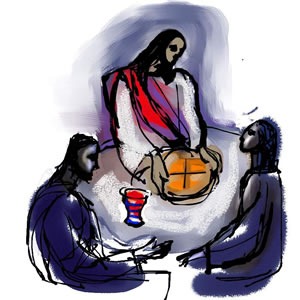
God comes to us in the person of Jesus as a fulfillment of the covenant: “I will make my dwelling place with you; you will be my people and I will be your God.” Emmanuel means “God with us.” And that’s just what/who Jesus is: God with us. God in Christ comes here to dwell among us (“The Word became flesh and made his dwelling among us…” John 1:14). He came to earth to reveal himself to us in Jesus (“Anyone who has seen me has seen the Father.” John 14:9). And God put on our flesh and came to this planet in order to eat and drink with us, to commune with us, around a table.

“I confer on you a Kingdom, just as my Father conferred one on me, so that you may eat and drink at my table in my Kingdom.” ~Luke 22:29-30

“Many will come from the east and the west and will take their places at the feast with Abraham, Isaac, and Jacob in the Kingdom of Heaven.” ~Matthew 8:11

“The Kingdom of Heaven is like a king who prepared a wedding banquet…” ~Matthew 22:2

You don’t have to read too far in the Gospels and you don’t have to pay too close attention to see that meals, eating and drinking with people, are the focal point of Jesus’ ministry. Jesus eats with his disciples and with his enemies, with the “righteous” and the “sinners,” with crowds of Jews and crowds of Gentiles, with tax collectors and prostitutes, with Mary and Martha and teachers of the Law. Jesus ate and drank with everybody. He was eating and drinking all the time, so much so that he was accused on several occasions of being a drunkard and a glutton.

And in all these Jesus stories, the meals are critically important. They reveal great truths about what God is doing through Jesus in the world. The meals teach lessons about what it means to live as citizens in God’s Kingdom. They express forgiveness and healing, they celebrate restoration and fellowship.

Jesus is eating with Levi and the other tax collectors, showing us in visible ways that the invitation to enjoy fellowship with God is open to all. He’s criticized for his choice in dinner companions and answers by proclaiming that “It is not the healthy who need a doctor, but the sick. I have not come to call the righteous, but sinners!” (Luke 5:31) You get the same thing with Zacchaeus. “The Son of Man came to seek and to save what was lost.” (Luke 19:10)

Jesus forgives the sins of the prostitute at the dinner at the Pharisee’s house in Luke 7. He teaches on hypocrisy and taking care of the poor during the meal with the Pharisees and teachers in Luke 11. At the supper with the Pharisee in Luke 14, our Lord declares again that he’s here to eat with everybody: “Bring in the poor, the crippled, the blind, and the lame!” (Luke 14:21)

Aside from the last dinner with his disciples and the post-resurrection meals, the most important meals during Jesus’ ministry came at the feeding of the multitudes. All four Gospels go to great lengths to report on the miraculous feedings of the five thousand Jews and the four thousand Gentiles. The imagery is unmistakably Messianic. Here’s this great prophet of God providing food for God’s people in the desert. They eat until they are full. Baskets of leftovers are collected. This fulfills Moses. This fulfills prophesy. This is the Anointed One, the Christ!

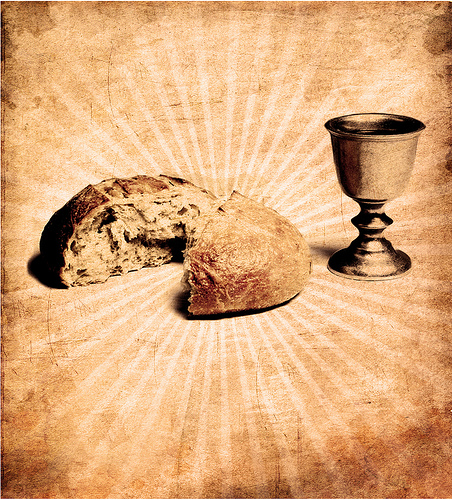
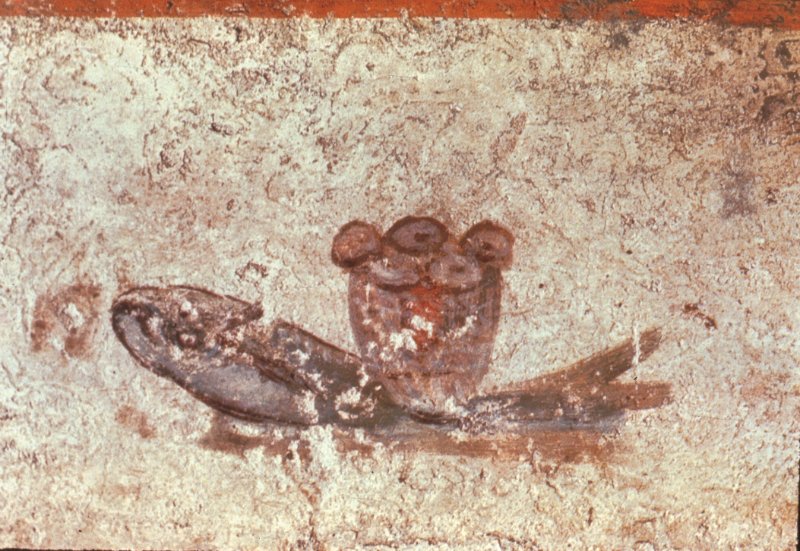
The early church made a pretty big deal about the feeding of the multitudes. The first churches ate their communion meals in the context of these feedings and the truths those stories revealed. It’s why the earliest communion art we have contains images of fish with the bread and the wine. The connections were made not just by the common themes and the prophesies, but by the deliberate wording the New Testament writers used to relate these important meals. They tied the church’s meals to the last supper, the post-resurrection dinners, and the feedings of the crowds with the four-fold liturgy of “take, bless, break, and give.”

In every account of these miraculous feedings, Jesus is said to “take” the bread, “bless” it, “break” it, and then “give” it to the disciples. Look it up; it’s in every passage (Luke 9:16, Matthew 14:19, Mark 6:41, Mark 8:6, Matthew 15:36). The same language is even used for the fish in John 6:11. Interestingly, the exact same formula is used in the Last Supper accounts. Jesus takes, breaks, blesses, and gives (Luke 22:19, Mark 14:22, Matthew 26:26). The same four words are used in the same order in the stories of Jesus’ post-resurrection meals, too, tying together all the meals Jesus ate during his ministry to the meals the church was sharing together at the time the stories were recorded. Everything that was going on in those meals — the teachings, the revealed truths, the fellowship and thanksgiving, the invitation and celebration, the anticipation of the final heavenly feast — is also going on today in our church’s meals.

They are all Kingdom meals. The feedings of the crowds, the last dinner, the post-resurrection suppers — they are all Kingdom meals, eaten in community, in the presence of the Lord, with great joy. They each anticipate the fullness of the Messianic banquet in the new heaven and new earth. They’re each characterized by joyful celebration and an abundance of food. To eat with Jesus (God) is to experience and celebrate redemption and acceptance. All the meals proclaim that the Day of great joy for all the people has dawned.

With this understanding, how in the world would the first Christians eat the “Lord’s Supper” in a quiet, somber, individualistic way? How would they imitate or recreate the Lord’s meal with little crumbs of cracker and tiny sips of juice?

Of course, they didn’t.  But, we’re getting ahead of ourselves a bit.

Peace,

Allan

Drawing a Line in the Sand

Among the many texts and emails I’ve received from my brothers and sisters here at Central following that sermon on Christian unity I preached two weeks ago, this one stood out:

“Hands down best CofC sermon I have ever heard in my 56 years of life on this earth!!! Two thumbs up!!!”

“You need to get out more often. Just kidding. I appreciate those kind words. The response has been tremendous. Now we’ve got to put it into action.”

“I’ve heard others try to preach that sermon and they’ve done pretty good at it but could never simplify it down and just spell it out like you did where there was no doubt left in anyone’s mind that grace covers all believers! Even the Methodists, Baptists, and Presbyterians!”

“Thanks, sister. You’re a blessing to me.”

“I’m glad you have gotten good response because, realistically, you drew a line in the sand for us as CofC people. You are right, we can enjoy that sermon, but now comes the hard part…living it.”

A line in the sand, huh? The intent of the build up to that sermon and that day and us as a church going forward is to erase the lines, to eradicate the barriers between Christian denominations. Of course, I know what this dear lady means. Drawing the line means we’ve said very clearly and very forcefully now that we understand our Lord’s holy will is for his people to worship and serve together, to fellowship with each other, to show love and esteem for one another in order to evangelize the world. And we intend to practice it. We intend to make it a part of who we are and how we think and behave.

From another email written by a Central member: “Thank you for that sermon this past Sunday. The term ‘sermon’ and ‘thank you’ seem so inadequate for such a powerful message. That is a message we should all hear. And often. Ever since our family moved to Central it has felt like a rock lifted off my shoulders in the sense that I was free of the baggage of years of animosity toward and from the Churches of Christ. I didn’t realize however that there was still a fair bit of baggage on my shoulders until I felt it being lifted Sunday morning. That fact that we can recognize and then work with other churches and Christians is such an unreal feeling… maybe a little like we’ll all feel together in heaven. I have said that I have never heard John 10:16 (at least the way I understand it) preached at a Church of Christ. Well, I have now! Grace for 14th and Monroe as well as those down the street? Hallelujah, preach on, brother!”

That email is just one of several I’ve received that express a sense of the powerful words of Jesus’ prayer lifting a weight from their shoulders. A lot of it seems to do with their own personal feelings and beliefs, which have been at odds with their understanding of traditional CofC beliefs and practices, being validated and encouraged from the pulpit on a Sunday morning by their elders and ministers. And, again, if some line in some sand was drawn, it’s about visibly and emphatically renouncing the long-time perception that we think we’re the only ones going to heaven.

Our elders are also receiving emails, of which this is a sample: “Thank you for having the courage in your leadership to take a position that embraces neighbor churches. You set the tone. You foster the culture and the atmosphere that allows and promotes a message like the one we heard Sunday. What a great feeling it is to look past our differences and work together with other Christians. I have told you before that I cannot express my appreciation enough for the impact Central and its staff has had on my family. Now, I want to thank you for the impact Central and its staff has had on me.”

I think the message from John 17 is liberating. I think it frees us to truly be the new people we were created to be at our baptisms. We are full of God’s Holy Spirit, we are re-created to experience all of life in brand new ways, we are united with all of God’s children and all followers of the Christ. Now, we’ve given our people permission — a mandate, even — to act like it. That’s why it feels so good, I think. Because we’re doing what we were created to do. We’re actually pursuing, for a change, what God really wants. That’s why it feels good.

Another way we empowered our congregation was by giving them an argument against those who disapprove fellowshipping other churches and Christians. Immediately following the sermon, one of our oldest members walked down front and confessed to me, “Allan, I’ve been struggling for the past several weeks with this partnership with these other churches because of baptism. My concern has always been about fellowshipping people who are baptized differently than us and for different reasons. You answered it for me. It’s God’s grace. The same grace he has for me, he has for all Christians.”

God’s grace covers all Christians. It covers practice and doctrine. It covers behavior and belief. How does anyone read the Scriptures and come to any other conclusion?

A couple of days ago I received a text from a good friend of mine in Fort Worth: “You are not thinking big enough with “4 Amarillo.” Your reach is much bigger than you think. Make it easy for people to donate who read the blog and get excited, yet aren’t in Amarillo.”

“But it’s a local thing. People who read the blog and get excited about it should pursue a similar path with their own churches, right?”

“In a more perfect world they would. There might be people who will write a check instead of work. While you may prefer they do it locally, if they want to give money to a very good cause, let them.”

One of our plans is to build several Habitat for Humanity houses together next summer. At some point, we may have to organize more officially in order to keep up with the money and other necessary things that go with big projects. So, yeah, there may be a way to donate to “4 Amarillo” later. For now, if you don’t live in our city, I urge you to begin laying the groundwork for similar demonstrations of Christian unity in your own place. Pray about it. Study it. Consider the evangelistic implications for the Kingdom of God. And then do it. It feels good, because it’s right.

If it will help, here’s a link to the audio of the sermon we preached on August 11. It’s called “The Time Has Come: That the World May Believe.” Click here to listen or to download.

One last email: “We’ve had 4+ inches of rain this past week. When I heard a group of farmers this morning wonder why we are getting so much now all of a sudden, I told them it’s because the Church of Christ, the Presbyterians, the Baptists, and the Methodists are finally working together!”

Peace,

Allan

« Older posts Newer posts »