Category: Jesus (Page 34 of 61)

In Solidarity with Sinners

Most disciples of Jesus would profess that churches are called to make a public witness to Christian faith. But it seems that more and more of us disagree with what that witness should look like and how it should function. What does it mean for the Church to testify to the truth of Christ Jesus?

I’ve recently come across a review of a yet-to-be-released work by Jennifer McBride called The Church for the World: A Theology of Public Witness. McBride is a theologian and author who teaches at Wartburg College in Iowa. The review and an accompanying interview with McBride are in the December issue of Christian Century. But — D’oh! — I can’t link you to them because the articles are only available online if you’re a subscriber. I’m intrigued by the interview, written and conducted by David Heim. And I’d like to spend this space this week breaking it down. Yes, I’ve ordered the book. So, there may be more of this coming in a couple of weeks.

In response to Heim’s first question, asking the author to elaborate on an assertion that Christian public witness has gone bad in the United States, McBride says:

“The main problem is that Christian presence in public life tends to be triumphalistic. The purpose of Christian witness is to point to Jesus and the reign of God he embodies, but a triumphal presence actually contradicts Jesus’ way of being in the world as depicted in the Gospels.

The triumphal character of Christian witness has contributed a good deal to how polarized our society and churches have become. Christians so thoroughly disagree about war, sexuality, ecological care, immigration and other issues that we wind up on opposing sides of the political spectrum. This is cause for great concern, because partisan politics ends up defining what is Christian; it shapes the way we think and speak about public issues.”

I’ve wondered a lot about this in the past dozen years or so. The Church that I see and experience in the heart of the Bible Belt in the Southwest United States has become so politically juiced that it’s become difficult to think or speak theologically if one Christian’s understandings of Gospel oppose another Christian’s understandings of country or patriotism. Have you noticed? Some Christians will unapologetically claim that one cannot be a true disciple of Christ if she belongs to a certain political party or adheres to a certain political belief. Farther along, and worse, in my judgment, is the way the Church’s identity has been compromised by our embracing the world’s politics. We have become so entangled in the sheets and blankets of the dirty bedrooms of American politics that we are labeled as “right wing” or “conservative” or “Republican” by outsiders we’re trying to convert to Christ. Non-Christians are attaching to the Church the same corruption, deceit, ethics, and behaviors that characterize the worst kinds of politicians. “Tea Party” and “Christian” are becoming synonymous in our culture. And we have only ourselves to blame.

Who do we think we are, seeking or claiming some kind of privileged status in the government or in American society at large? What makes us believe it’s good to force others — by boycott, insult, petition, million-dollar campaigns, attack ads, holier-than-thou attitudes, pamphlets, protests — to live by the same standards we profess as Christians? Why are we so surprised that the more the Church gets caught up in this world’s politics, the more noise we make about legislation and ethics, the louder we claim to have all the answers for how everybody in the world should live, the less and less interested the world is in Christians? Is it really any wonder that society is hostile to us?

You’ve noticed, right? Generally speaking, Christians are now portrayed by the media and understood by the culture as angry, anti-abortion, anti-homosexual, shove-it-down-your-throat, power-hungry, politicos. It wasn’t too long ago we were merely thought to be irrelevant. Too nice. Too naive. Now it’s become just the opposite. Pay attention to our general attitudes. Notice the worldly lengths to which we’ll go in order to get our way. Christian prayer has to be mandated in the public schools, but not Muslim prayer. Christian marriage has to be recognized as legal, but not homosexual marriage. The Ten Commandments must be displayed on the courthouse wall, but not the tenets of Buddha. Christian churches should be exempt from local and state taxes, but not a mosque. Really? Should the Church of Jesus Christ be seeking or claiming some kind of privileged status in government? Should Christians receive more and better benefits from the world’s governments than anybody else? On what basis? At what cost?

We are setting ourselves over and above others, claiming by our words and actions to know more and to be better than everybody else, in direct contradiction to the way our Lord lives on earth. More from McBride:

“We tend to think that as the sinless one, Jesus distinguished himself from sinners by setting himself up as a model of ethical perfection. But Jesus was in solidarity with sinners in at least three main ways that define his person and work.

First, as God incarnate, he assumed sinful flesh, as Paul says in Romans 8:3. He took on human nature’s damaged state and through his body became intimately acquainted with the complexity and messiness of fallen existence.

Second, he begins his public ministry by being baptized with sinners in response to John the Baptist’s call to repent and in this way ‘numbers himself with the transgressors’ (to use Isaiah’s language about the suffering servant).

Third, and finally, refusing to be called good (Mark 10:18), he instead accepts responsibility for sin as a convicted criminal on the cross. Throughout his ministry Jesus denies any claim about his own moral righteousness and instead actively accepts responsibility for the world’s sin and suffers on the cross out of love for fellow human beings.”

What would it look like for the Church to be in solidarity with sinners? To identify with sinners? To be one with sinners? To recognize every day our own sinfulness in the presence of sinners? To sympathize with, to minister with, to be seen with, to learn with, to walk alongside sinners? What would that look like? How would that improve our Christian witness? In what ways would it transform us more into the image of our Lord? How might it change the world?

Seems to me, it’s got a much greater chance of making an impression than another angry ad or fiery Facebook post.

Peace,

Allan
Jesus is Lord of All Things

“In him all things hold together.” ~Colossians 1:17

By bridging the gap between God and creation in himself, Christ Jesus unites the whole universe. This beautiful section of Colossians 1 states it over and over again by his repetition of the word for “all things:”

Colossians 1:15 – the first born over all creation
v.16 – by him all things were created
v.16 – all things were created by him
v.17 – he is before all things
v.17 – in him all things hold together
v.18 – in everything he might have the supremacy
v.20 – through him to reconcile all things

I think sometimes we’re inclined to emphasize Christ’s work in redemption and salvation too individualistically. That’s between her and Jesus. It only involves me and my Lord. That’s going to be up to God and him. This is about Jesus and me. You ask me how I know he lives? He lives within my heart. Yes, he does. Of course. But it’s bigger than that. The reign of Christ Jesus is never ever confined to my own existence or to the property lines of my church parking lot or to the national borders of my nation. It’s universal and eternal! Christ reigns supreme over all, over all things. The whole universe. The whole world in his loving hand.

These verses are a  celebration of human impossibilities that have become God’s possibilities: reconciliation, renewal, salvation, peace. We always want to assume that the status is quo, that things will and must remain the way they are. A lot of the time we can’t even imagine there’s a way to really improve much of anything. Paul’s words in Colossians 1 affirm to us that wonders have not ceased! Possibilities not dreamed of can happen! And hope is an authentic position to take!

Peace,

Allan

Peace Through His Blood

“God was pleased to have all his fullness dwell in him, and through him to reconcile to himself all things, whether things on earth or things in heaven, by making peace through his blood, shed on the cross.” ~Colossians 1:19-20

The creator and sustainer of the universe is our crucified Lord. We know our Savior as a human being. He became a man. Christ Jesus’ supremacy and lordship over all things is rooted in and finds its greatest expression in his salvation acts. His service. His sacrifice. His death. The head of the Church is the one who was shamefully crucified. And our Lord endured this, he obediently walked to the cross, not to judge or destroy, but to reconcile and renew. To make peace.

Jesus is proclaimed the eternal King of All when he takes up that cursed tree.

Shirley Guthrie wrote:

“He is not like a king who preserves his majesty and honor only by shutting himself up in the splendor of his palace, safely isolated from the misery of the poor peasants and the threat of his enemies outside the fortress. His majesty is a majesty of a love so great that he leaves the palace and the royal trappings to live among his subjects as one of them, sharing their condition even at the risk of vulnerability to the attack of his enemies. If we want to find this King, we will find him among the weak and lowly, his genuine majesty both revealed and hidden in his choosing to share their vulnerability, suffering, guilt, and powerlessness.”

God sends the creator of the universe not in fear and terror, but in gentleness and meekness. He sends him saving and persuading, not ordering and directing. Jesus comes to us calling, not commanding. Loving, not judging. And all of that is what saves us. His blessed birth, his wonderful life, his miraculous healings, his wise teachings, his compassionate care for others, his obedient suffering, his sacrificial death, his glorious resurrection, and his eternal exaltation — that is what saves us. It redeems us. It reconciles all of creation back to the one who created it and sustains it. And it’s beautiful.

He shared our life. He experienced our suffering. He bore our sin. Those of us who are members of Christ’s Body, the Church over which he is head, find our sins already canceled by his death. And we find the dominion of darkness and sin with all its power and authority already defeated.

“When you were dead in your sins and in the uncircumcision of your sinful nature, God made you alive with Christ. He forgave all our sins, having canceled the written code with its regulations, that was against us and that stood opposed to us; he took it away, nailing it to the cross. And having disarmed the powers and authorities, he made a public spectacle of them, triumphing over them by the cross.” ~Colossians 2:13-15

Peace,

Allan

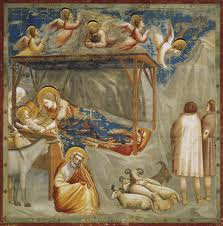
Christmas is Revolutionary

As children of God, we believe we are called to imitate God and to join him in doing the same kind of work he’s doing. So, at Christmas time we ask: What was God doing at that stable in Bethlehem? What does the birth of Jesus tell us about God’s great work? And how do we partner with him in doing that work?

In sending his Son to this sick and dying world, our Father is reaching out to people in need. He’s seeking people who are wounded. He’s treating them as equals. He’s coming alongside them, getting his hands dirty with them.

Christmas is revolutionary!

Through Jesus, God acts to lift the lowly, to feed the hungry, to heal the sick, to forgive the sinner. God, through his Son, turns chaos into peace, shines light into darkness, turns the lost into the saved, and changes the dead and hopeless into the eternally alive. God in Christ, having put on our earthly flesh, tears down barriers, destroys distinctions, and fixes what’s wrong. As children of God and disciples of his Christ, we’re called to the same purpose.

We’re called to join our God as partners in this incarnation work. We’re committed to seeking out people in need. We’re resolved to open our doors and our hearts to the lonely and distressed people in our communities who are dying for a word of grace from our King.

What happened among the animals and the shepherds that night is revolutionary. It turned the world upside down. And we’re called to no less today.

May God through Christ bless you richly during this special season with his everlasting joy and peace.

Allan

Thanksgiving 4 Sunday

“I have given them the glory that you gave me, that they may be one as we are one.” ~John 17:22

We’ve been given a profound intimacy with the Father and Son that changes all of human life. It’s a unity that encompasses the Father with the Son, all disciples with them both, and all disciples, in turn, with one another. This is the gift of Jesus’ prayer. It’s not what we have to do or maintain; it’s what God through Christ has already given us and continues to maintain through the power of his Holy Spirit. It’s just a matter of whether we recognize it or not.

This Sunday, we are set to gather in gratitude to give thanksgiving to our God for the gracious gift of this unity. We will acknowledge the fellowship we share with the other Christian congregations in downtown Amarillo on this day of worship and praise and thanksgiving. Together.

Our guest preacher here at Central on Sunday is Howard Griffin, my good friend and the senior pastor at First Presbyterian Church. As has become our custom on the Sunday before Thanksgiving, we will share a special time of communion around several tables in the worship center piled high with a wide assortment of breads, representing the divinely-ordained diversity in Christ’s Body, his Church. Then at 6:00 Sunday evening, all four churches are meeting at First Baptist for the first ever “4 Amarillo” Thanksgiving service.

As God’s children, unity is our nature. This is who we are: One with Christ and one with his followers everywhere. What that means is that there is very little, if anything, outside of denying Jesus as Lord in word or deed that can separate us. If that’s the case — and it is! — then our diversity and our differences are not just tolerated, they’re embraced and appreciated. Even celebrated. Thanksgiving seems like a perfect time for just such a celebration.

Peace,

Allan

On Earth As It Is In Heaven

Jesus prays to our Father, “Your Kingdom come, your will be done on earth as it is in heaven.” Jesus preaches the Kingdom of God. Jesus declares the coming of the Kingdom of God. He proclaims, “It is at hand!” It’s here! The Kingdom! Look at it!

Jesus brings the Kingdom to earth. He does God’s will on earth just as it is in heaven.

Jesus casts out demons because there are no demons in heaven.
Jesus heals because there is no sickness in heaven.
Jesus comforts because there are no tears in heaven.
Jesus feeds because there is no hunger or thirst in heaven.
Jesus raises the dead because there is no death in heaven.

“Your will be done on earth as it is in heaven.”

Are you praying this prayer? Jesus said it was a good idea to pray this prayer, to ask God to please do his will on earth just like it’s done in heaven. Are you bringing the Kingdom of God to your part of the earth? Are you obeying his will like the rocks and the trees and the oceans and the animals obey his will?

There is no revenge in heaven. There is no hate in heaven. There are no arguments in heaven. There are no disagreements in heaven. No suspicion. No politics. No war. No division of any kind. No violence, verbal or physical. No mistrust. No gossip. No complaining. You won’t find any of those things in heaven.

Is the will of God being obeyed in your church just like it is in heaven? In your elders’ meetings? In your congregational committees? In your marriage? In your family around your dinner table at night? Are you bringing the Kingdom of God to your work place? To your school? To the Little League team you’re coaching or the civic club to which you belong?

If God has completely eradicated selfish behavior and gamesmanship and competition in heaven, if that is his holy will, why would you insist on bringing any of that into his Church? Or putting up with it?

The rivers and mountains and squirrels and fish all obey God’s will on earth just as it is in heaven. What’s wrong with us?

Peace,

Allan

« Older posts Newer posts »