Category: Fellowship (Page 9 of 17)

Recover Our Unity Movement Heritage

Let me give you a couple of quick links here before we jump into today’s conversation.

Whitney’s old youth minister, Lance Parrish, sent me this link to a recent study that shows one-fifth of all third graders own cell phones. According to this report, 83-percent of all middle schoolers have mobile phones. And more than 90-percent of them have internet access. Most adults I know can’t handle unlimited mobile access to the internet. What makes us think a ten-year-old is ready? You can access Lance’s reactions to the report, especially as to how cell phones might negatively impact a teen’s dating habits and sexual development, by clicking here.

Greg Dowell has found an interesting study that claims couples who live together before marriage are much more likely to get a divorce than couples who don’t cohabit first. Seven-and-a-half-million unmarried couples are living together now in the United States, a massive 1,500-percent increase in just the past fifty years. And the National Marriage Project says, once these couples get married, these prior living arrangements are the major contributing factor in their divorces. Get the full story from the New York Times by clicking here.

~~~~~~~~~~~~~~
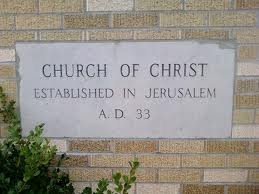
Chapter Four of Leroy Garrett’s “What Must the Church of Christ Do to Be Saved?” broadens his call for unity to include now all Christians of every stripe. In order to preserve our voice in the larger Christian world, in order to remain relevant, Garrett proposes that we openly acknowledge that we are one with all those who confess and have submitted to Jesus as Lord and are faithfully living their lives according to the Spirit of God. It’s who we are as Churches of Christ, as part of the rich Restoration Movement history. We are all about the unity of all Christians, breaking down the barriers that separate denominations, being united in our common Savior. It’s in our DNA. And if we’re going to have any kind of a serious impact in God’s Kingdom in the future, we’ve got to get back to those roots.

Recover our heritage as a unity movement.

Garrett uses some of the powerful mottos (not creeds! never creeds!) of the Stone-Campbell Movement to illustrate the urgency of his call for Christian unity. I especially appreciate his use of one of Thomas Campbell’s most beautiful lines in his 1809 Declaration and Address: “The Church of Christ upon earth is essentially, intentionally, and constitutionally one.”

[The Declaration and Address] is a call for unity of all God’s people. Campbell wrote those words in 1809, two years before he started his first congregation known as a “Church of Christ.” And yet he wrote of “the Church of Christ upon earth” as if it had already existed. This shows that he had no such mentality that Christ’s Church did not even exist and that he was about to “restore” it according to some recognizable New Testament pattern.

Campbell believed that the Church of Jesus Christ not only then existed but that “the gates of Hades” had not prevailed against it since the day of Pentecost when the Holy Spirit breathed it into existence. It was nonetheless in need of renewal or reformation, and that was his mission, especially in terms of restoring love, unity, and fellowship to the Church now tragically torn asunder by partyism.

In this insightful statement, capsuled in a single line, Thomas Campbell bequeaths to us the one important truth about the Church that we must recapture in our time if we are to find our roots: the Body of Christ upon earth has existed all through the centuries and it has always by its very nature been one.

Being raised in and by the Church of Christ, I myself was taught that these Restoration Movement fathers who began the Churches of Christ were restoring the first Church, the Church of Christ that was established in Jerusalem at Pentecost in AD 33. To avoid the “gates of hell prevailing” problem, I was taught that at all times throughout history, from the first century, through the middle ages, right up to the revival at Cane Ridge, there were pockets of Christians hiding out in the hills or living in small villages who were worshiping God and expressing the faith in exactly the same ways all Churches of Christ do today. I was told many, many times that the way we were worshiping, the church leadership structures we recognized, the form of baptism we employed, the communion service we observed — all of it had always been done by tiny faithful remnants exactly like we were doing it in Dallas, Texas in the 1970s and 1980s. Ludicrous! It didn’t make sense to me then. It is certainly ridiculous to me today.

Again, we’ve bought into this patternistic way of thinking that communicates to our people and to the rest of the world that we believe we’re doing it right and everybody else is doing it wrong. Therefore, we can’t fellowship the denominations. We definitely can’t acknowledge them as brothers and sisters in Christ. If they’re not doing things in exactly the same ways we’re doing things, they must not care. They must have other agendas. They must be arrogant and full of pride, more interested in themselves and their traditions than in being the true Church of Christ.

In their writings and sermons, Campbell and Stone both pointed over and over again to Romans 15:7. “Receive one another, even as Christ has received you, to the glory of God.” I didn’t have everything perfectly right when Christ received me. Neither did you. In fact, Scripture makes it clear that we were actually enemies of God when Christ received us. Shouldn’t we attempt the same acts of grace and forgiveness and mercy in receiving others who are sincerely trying to live for and with Jesus?

Garrett also points in this chapter to a well known slogan coined by Barton Stone: “Let the unity of Christians be our polar star!”

[This slogan] is a remarkable take of the Lord’s prayer in John 17. Stone understood Jesus to say that only a united church could win a lost world, so unity is essential to the church’s mission. The polar star (unity) guides the old ship (the church) on its mission (evangelization of the world). When we keep our eye on the polar star by being a loving and united people we will really be God’s redeeming community in the world.

Campbell wrote in his Millennial Harbinger that “this movement was born with a passion for unity, and unity has been its engrossing theme!”

If we were to make a top ten list of our current Church of Christ passions, the unity of all believers wouldn’t fit into the top twenty. Or thirty. What happened?

Peace,

Allan
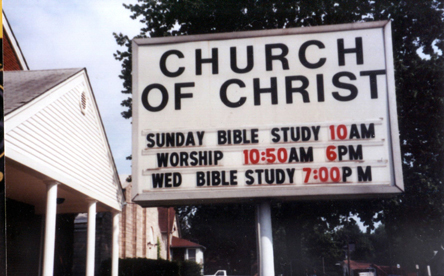
Repent of Our Sin of Division

We’re working our way chapter by chapter through Leroy Garrett’s “What Must the Church of Christ Do to Be Saved?” The book is a compilation of essays he wrote almost twenty years ago, but they remain just as timely and provocative and important today as they were then. The Churches of Christ are declining in numbers of members and congregations at an alarming rate. And Garrett’s essays are concerned with saving our voice, saving our influence, saving our relevance in this increasingly post-modern, post-denominational world. We’ll consider today Garrett’s plea from the third chapter of his book:

Repent of and confess our sin of division.

If we’re going to have any kind of influence for good, if Churches of Christ are going to be taken seriously when it comes to meaningful conversations about eternal matters, we must stop dividing among ourselves. We do violence to the Scriptures and we trample the holy blood of our Lord when we split and divide, bicker and fight, and accuse one another within our own Church of Christ tradition. We’ve made it so that one is not only required to be a “faithful member” of a Church of Christ, it must be the “right” Church of Christ or the “doctrinally sound” Church of Christ. Those are my words. In Garrett’s words we must “repent of and confess our sin of internal bickering, debating, and dividing into sects and sub sects.”

To be saved as a people who can be taken seriously we must show a disdain and an intolerance for our ugly divisions. While it helps, we must do more than preach peace, love, and unity. We must repent of our sins of division and confess that we have been wrong. We would do well to call a convention for the express purpose of confessing our sin of being one of the most divided, sectarian churches in America.

OK, we all know how this works. Just look at any of our “brotherhood” church directories. Most Churches of Christ in our own directories are labeled with little acronymns and funny symbols that stand for our different positions on instruments in worship, Bible classes, premillennialism, non-institutional, and located preachers. There are at least five different symbols that represent the five different ways we observe the communion meal! And we’ll use these symbols as tests of fellowship. You know it and I know it.

I’ve had friends who’ve been asked to appear on Church of Christ TV shows and then been handed a one hundred item questionaire to next judge their “faithfulness” to the Scriptures. (“Do you believe that God created the universe and all that is in it in six literal 24 hour days?” “Do you believe that the church, out of its treasury, can support a home for widows or fatherless children?” “Do you believe it is scriptural to have several house churches under the oversight of one central eldership?” “Must our worship be decent and orderly to be pleasing to God?” “Do you believe that Jesus Christ was raised from the dead?”) I’ve had long, tense, tedious conversations with people in my Church of Christ about what’s wrong with people in other Churches of Christ in which the name of our Lord Jesus was never mentioned. After preaching on unity within our fellowship, I’ve been told to stop preaching unity and start preaching the Gospel.

You know the results of this patternistic type of thinking. This idea that Scripture gives us a concrete blueprint for how a Sunday morning Christian assembly is to be conducted makes it absolutely impossible for us to be unified. It makes it impossible for us to enjoy fellowship with one another. It leads us to believe that we can’t worship together unless we see every single thing exactly alike.

Phooey!

This makes us act like crazy people.

The “mainstream” Oak Grove Church of Christ is within ten miles geographically of the “liberal” Westside Church of Christ and the “conservative” East Side Church of Christ. Oak Grove wants East Side to come to their Fifth Sunday Singing, but East Side can’t fellowship Oak Grove because Oak Grove has a praise team. Westside invites Oak Grove to their weekend seminar, but Oak Grove can’t fellowship Westside because Westside has women deacons. Everybody looks to their right for fellowship, but nobody will look to their left. Nobody wants to be labeled. Nobody wants to be “wrong.” Nobody wants to “compromise the truth.” So, there’s no fellowship. Worse, Westside is forced to find fellowship outside the fellowship, Eastside is then forced to write articles condemning Westside for leaving her “first true love,” and Oak Grove is paralyzed with fear of doing anything that might possibly cause a slippery slide down that great slope toward either of the two “extremes.”

We need to write out a “Proclamation of Repentance” that would say something like, “Whereas, we have sinned against our Lord’s prayer for the unity of all his followers by becoming a factious and divided people; and whereas we have sinned against the mandate of the holy Scriptures and the holy apostles in their plea for unity; and whereas we have sinned against our own heritage as a unity people; we do hereby confess our sin and ask for each other’s forgiveness, the forgiveness of the larger Christian community, and the forgiveness of Almighty God; and we hereby declare that we repudiate our divisive ways, and are resolved to take the following steps to correct the erroneous course taken by our fathers and by ourselves…”

Nothing has to change in regards to our differences. We can have churches that are premillennial and those that are amillennial, along with many that don’t even know what millennialism is about. We can have brethren who support the cooperative radio-TV Herald of Truth program and never watch it and those who are opposed to it but never miss it. We can have Sunday School churches and non-Sunday School churches, as well as those who serve the Supper in ways that differ. We don’t have to be of one mind on all such issues in order to be one in Christ. In fact, we are already one in Christ. That happened when we were baptized into Christ and received the gift of the Holy Spirit which is what makes us one.

It is therefore a matter of realizing our oneness and repudiating our factionalism. It is a matter of loving and accepting each other even as Christ loves and accepts us.

They will know we are disciples of Jesus by our love. They will not know we are disciples of Jesus by our division.

Peace,

Allan

Repent of Sectarianism

Chapter two of Leroy Garrett’s “What Must the Churches of Christ Do to Be Saved?” seems to be a more focused treatise of one of the main issues in his chapter one call to confess that we have been wrong about a few things. In order to “save” our group of churches, in order to preserve our witness as disciples of Jesus in a troubled world that needs us so badly, in order to maintain our effectiveness as a people of God, Garrett says we must:

Repent of our petty, narrow sectarianism.

We claim to be Christians only, but not the only Christians. That’s our heritage and one of our clarion calls for Christian unity. But my personal experience in the Churches of Christ tells me that’s not always the way we behave.

I want our people to think big — ecumenically — when they think of “the church,” for this is the biblical view. I want them to envision the Church of Christ as consisting of all those everywhere, all around the world, who sincerely follow Jesus Christ.

We can never be saved for a meaningful and viable ministry to the world and to the Church at large so long as we think of “the Church of Christ” in terms of those listed under that name in the Yellow Pages. It is typical for our folk to think of “the church” in a city like Denton, Texas to be only those that have “Church of Christ” on the sign out front. Nobody else. And we limit “the Lord’s people” to our own “Church of Christ” folk. The tragedy of this is compounded by the fact that many of our people really believe this. We are the only Christians!

There are a couple of things to consider here. One, we must re-imagine and re-cast the vision of God’s Church as a universal, eternal, catholic Kingdom of the Lord that knows no boundaries of nation or state. Christ has abolished by his death and resurrection all the barriers that separate his people. In Christ, there is neither Jew nor Greek, slave nor free, male nor female. Likewise, there are no Americans, no Mexicans, no Canadians, no Iranians or Africans or Iraqis or Chinese. The table of Jesus includes every nation, every language, every tribe, every tongue. The Kingdom of God never recognizes these earthly distinctions. And it’s high time we, too, abolish them in our ways of thinking and speaking about our Lord’s Church. To say Jesus is Lord is to say Caesar is not; to say I’m a citizen of heaven is to say I’m no longer a citizen of the Empire.

God’s Church is not an American institution! But we can sure talk like and act like it is.

Here at Central our worship center is adorned with an American flag. To our credit, there are eleven other national flags in there, too, representing the countries in which our Continent of Great Cities missionaries are located. We added the flag for Kenya in there less than six months ago to reflect our involvement in mission trips to that African nation. And that’s fine, I suppose. But wouldn’t the statement be stronger and much more effective if our worship center were decorated with the flags of all 196 countries around the globe? What if we had all 196 flags draped from our ceilings and balconies in our worship center? What if we intentionally communicated to our people and to all who would wander in to our building that when we come together as the people of God, we are part of something bigger than us, something greater than our own man-made borders, something huge and eternal and world-wide? There are disciples of our King in every country of the world. We should recognize that and be proud to be a part of that universal family of God.

I’m not sure Garrett had all that in mind with this second chapter. This is just something I think about all the time.

The other thing to consider, and this is more along the lines of Garrett’s particular call, is that we must actively embrace and partner with Christians of other flavors.

We have been sold a bill of goods by well-meaning but misguided leaders of the past who have bamboozled us into believing that if we have any fellowship with a Methodist or a Presbyterian then we endorse or approve of all errors in those religions. If we call on a Baptist minister to address us or lead a prayer in our assembly, then we compromise the truth and approve of all Baptist doctrine!

We don’t ask ourselves, “Then how can we sing ‘Lead, Kindly Light’  in church since it was written by John Henry Newman, a Roman Catholic bishop? In singing that hymn, do we have to approve of all that we associate with Roman Catholicism?” If we can’t have fellowship with folk with whom we differ, then we can’t be in fellowship with anyone, not even our own spouses, for we all differ on some things.

Again, I believe our problems here lie in our misunderstanding and misapplication of God’s grace. I hear quite often that we shouldn’t fellowship or “accept” as brothers and sisters in Christ those in other denominations because they are teaching error; they are wrong about some things. Who among us is right about everything?!? Who among us has every single thing perfectly figured out?!?

If I were to ask people in a Bible class or a congregation to raise their hands if they had every single bit of God’s will completely figured out, with no error, no mis-interpretation, how many would raise their hands? None. Not one person would ever say out loud that they had all the answers and were doing everything exactly right. Nobody. It would be the height of arrogance to suggest even for a minute that I had it all perfect right. We know we don’t. So what covers our shortcomings? How is it that we are still saved? How am I going to get to heaven if I admit I don’t have everything completely together? What saves me if I am guilty of mis-interpretations of Scripture or of misunderstanding a portion of God’s will?

The answer, of course, is God’s grace. We would all readily acknowledge that and be grateful for it. God’s grace covers me, it covers us, it covers the Churches of Christ in our shortcomings and sins (both of comission and omission; sorry, I couldn’t resist).

What kind of arrogance does it take to say that God’s grace covers me in my theological and church practice mistakes but not those in the other denominations? God’s grace covers me, but not the Baptists or the Presbyterians?

Yeah, right. God have mercy on us.

I also hear quite often that we cannot fellowship or accept other denominations because we have to maintain our distinctive identity as Churches of Christ. One, our Lord prayed to his Father that we would all be united as one; maybe we should at least consider his way for once. However, two, I believe there is tremendous value in our God-ordained diversity in Christ’s Body, his Church. There is a need for different and varied expressions of Christianity. It’s Scriptural. I believe Churches of Christ have plenty to offer to God’s people everywhere. We are right on many important things. But the world will not listen to us on those matters if we so offend them with our un-Christ-like exclusivism and sectarianism and mis-application of God’s grace. As my great friend Russ Garrison texted me this morning, “We need to work on the contents of the bottle more than the ‘brand’ on the label.”

We are going to have to be up front, come clean, and proclaim to the world that we have been wrong and we are sorry, and that we don’t believe that way anymore. We are going to have to say it from our pulpits, We have been wrong! and publish it in our journals far and wide. The schools of preaching and the Christian colleges must explain to our youth how we went wrong and that we are making (or have made) a mid-course correction.

It is not enough to do or say nothing, or simply to preach more on grace and about Christ. We must repent. We have a serious sin to confess.

Peace,

Allan

Confess That We Have Been Wrong

We’re hosting a free Acappella Reunion concert here at Central tomorrow night. The current touring group will be joined on stage by Keith Lancaster and some of the originals, including our very own Kevin Schaffer, for what promises to be a high octane, high energy show. I’ve been blessed to enjoy the worship and encouragement led and provided by Acappella many times over the course of my life. In Abilene, in Tulsa, and at various churches over the years, including a really wonderful show two years ago at Legacy. Keith Lancaster, of course, has always blessed us with his gifted song leading and a cappella workshops.

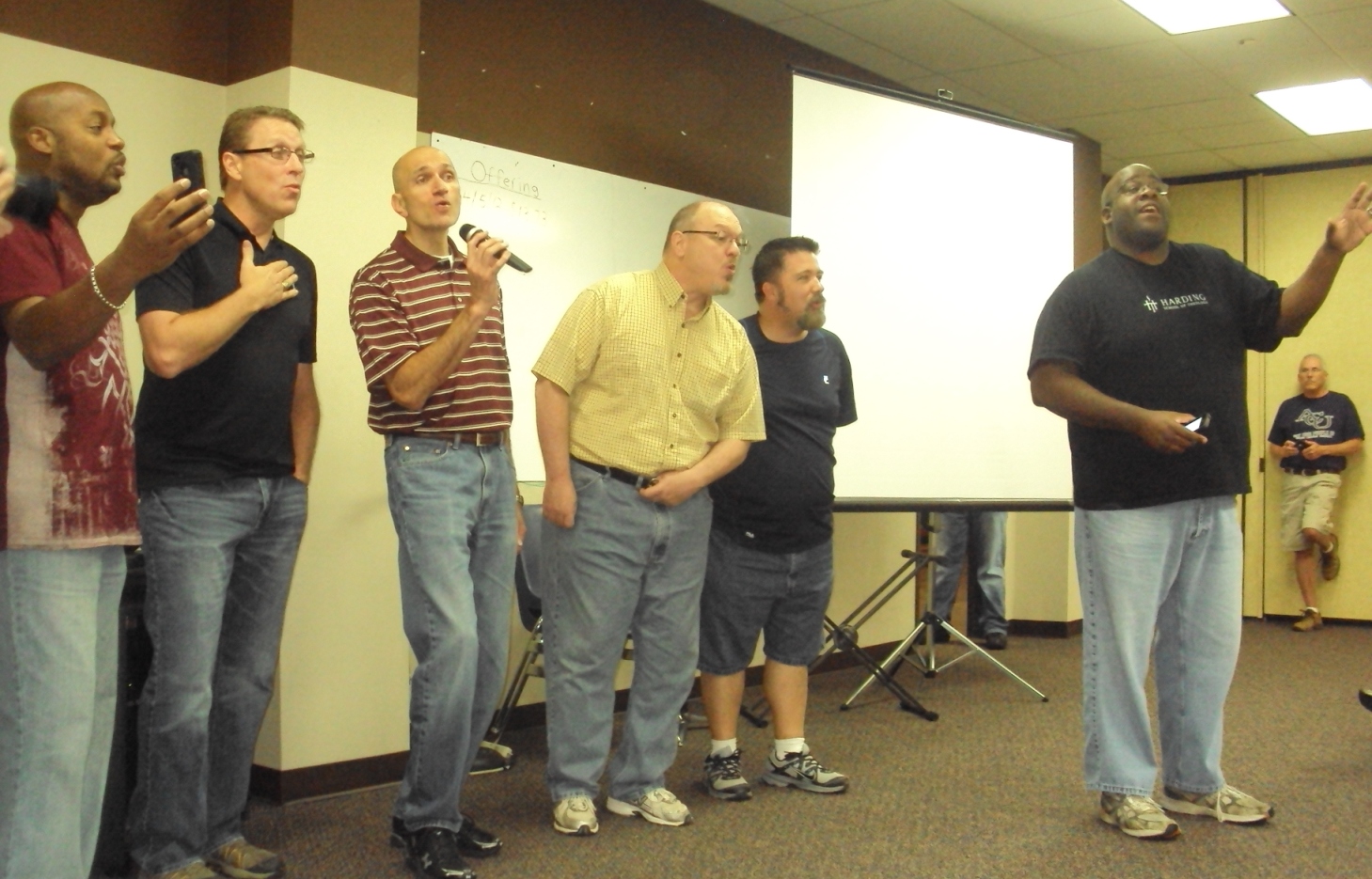
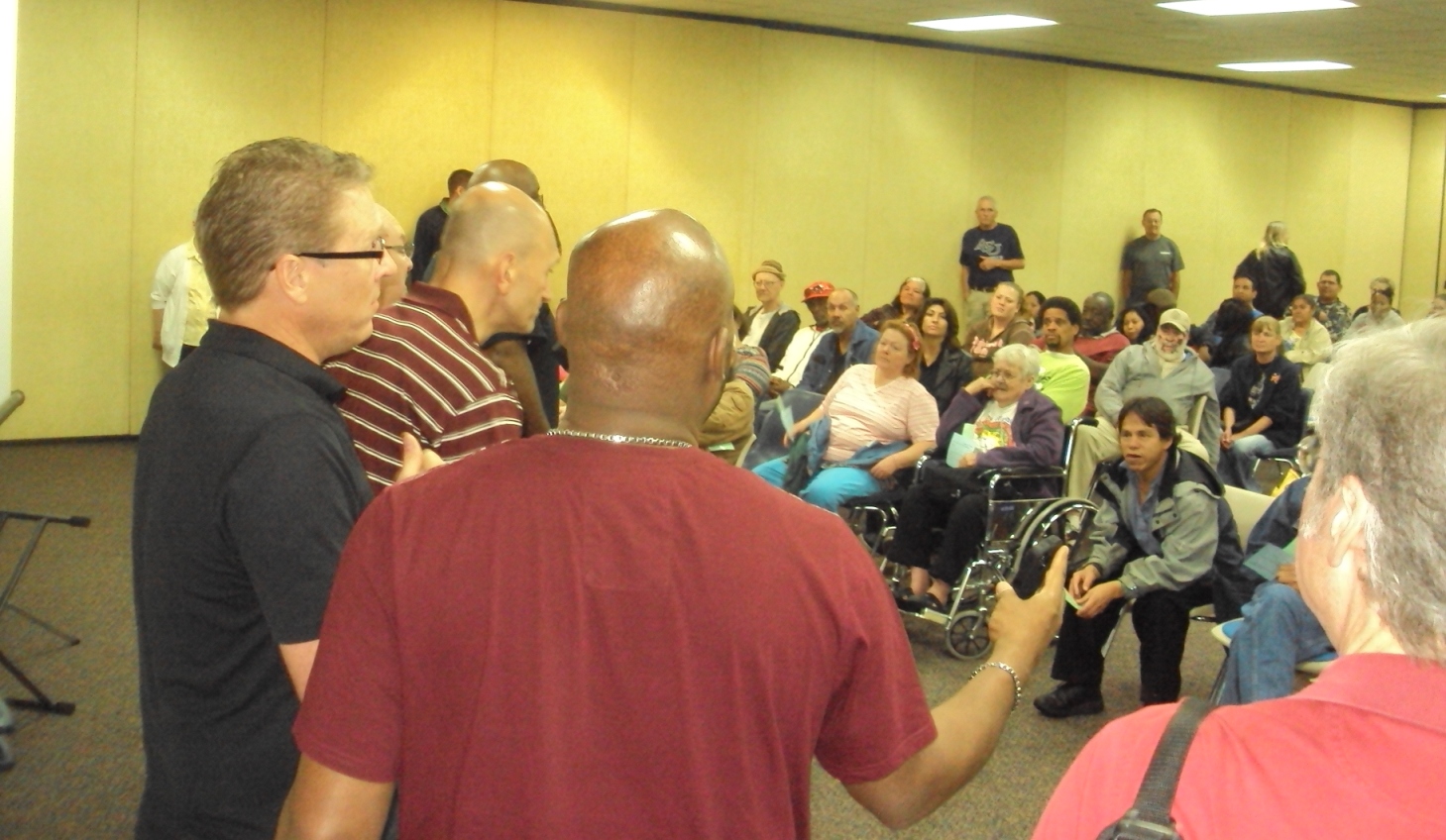
Most of the older guys got into town last night and blessed us this morning with an impromptu performance at our weekly Loaves and Fishes outreach ministry. It was just a couple of songs, but they had about 140 of us snapping our fingers and clapping our hands and really getting excited for tomorrow’s concert. So good to see Keith again. And, man, Kevin is really on Cloud Nine. Big time.

The doors open at 6:00 tomorrow evening here at Central for those who have their free tickets. Doors open for everybody else at 6:45 and the show starts at 7:00.

~~~~~~~~~~~~~

Acknowledging together that we in the Churches of Christ must do something different if we’re going to remain a viable witness to the Christian faith in our rapidly changing world, we’re spending the next several days in this space taking Leroy Garrett’s “What Must the Church of Christ Do to Be Saved?” chapter by chapter.

To paraphrase Garrett, what must we do to escape extinction in the decades ahead, to avoid being regarded as an insignificant Texas-Tennessee sect? What must we do to be loyal to the Scriptures and true to our Stone-Campbell heritage of unity? What’s it going to take for us to, as a movement, advance toward being “truly ecumenical, truly catholic, truly holy, and truly apostolic?”

Here’s Garrett’s first suggestion: We must confess that we have been wrong about some things.

The sin that we must confess is our patent refusal to have anything to do with other churches and Christians. In the old days we attacked other churches from the pulpit and mailed out tracts condemning “denominationalism,” implying of course that we were not a denomination. On the radio we “skinned the sects” and we debated anyone who had the nerve to take us on. We soon gained the reputation of believing that we were the only true church, the only faithful Christians, and the only ones going to heaven. We succeeded in causing other believers to resent us if not hate us. When they showed such resentment our response was that they didn’t really want the truth. In rejecting us they rejected God himself!

You know, I grew up this way, believing and proclaiming that we were the only ones going to heaven. Did you? I vividly recall as a young child telling my good friend and next-door-neighbor, Kevin, that he was going to hell because he didn’t go to church. And I know I told my across-the-street neighbor, Sherry,  just as many times that she, too, was going to hell. Sherry went to church. Every Sunday and Wednesday. She just went to the wrong one.

I cringe when I remember those arrogant positions with which I would so proudly and confidently beat up my friends. I don’t remember exactly when I stopped spouting that nonsense out loud; it probably was during my college years when I heard about God’s grace for the very first time, and actually experienced it first hand. But, even while keeping those thoughts to myself and, perhaps, beginning to mature out of them, I still harbored this sectarian attitude deep inside me. I ran into an old high school football coach at a Tulsa Workshop in 2004 and, while exchanging comments during a powerfully moving congregational song (probably led by Keith Lancaster), I said to him, “Yeah, but I’m still not sure about us trying to get back together with the Christian Churches.”

That was less than ten years ago!

Wrong! Wrong! Wrong! I was wrong. So wrong. God forgive me.

Garrett calls for corporate confession of this sin. Preachers and elders, in the pulpits, on our websites, in our publications, confessing the wrong, expressing remorse, accepting the blame, and vowing to change.

Garrett says even though the “we’re the only ones going to heaven” rhetoric has declined — significantly, thankfully — we’re still very “sectarian  and exclusivistic” in the ways we behave. We don’t talk badly about other churches, but we still don’t have anything to do with them. It’s as if they don’t exist. No joint Thanksgiving or Easter services. No joint community service projects. No cooperative campaigns. We still talk about “the Lord’s church” or “the church” and mean “Church of Christ.”

We can be saved from such sectarian exclusivism without compromising any truth we hold. Our preachers can belong to the ministerial alliance and we can join “the denominations” in a Thanksgiving service without approving of any doctrine we consider false, just as we can read a commentary written by a Methodist (as we do) or sing hymns written by Roman Catholics (as we do) without approving of any error practiced by those churches.

We are supposed to be a people who believe in and work for the unity of all Christians — that is our heritage! — but how can we be a witness for the oneness of all believers when we isolate ourselves from all other believers?

There is only one answer to all this: We must change our ways and confess that we have been wrong. We are wrong when we imply that we are the only true church or that we are the only Christians. We are wrong when we suggest that people have to belong to what we call the “Church of Christ” to be saved and go to heaven. We are grievously wrong when we believe that if people are “not of us” they are going to hell.

I’m thankful that during the Great Communion autumn of 2009, we at Legacy participated in a joint communion service with all the Restoration Movement churches at Compass Christian. In fact, I’d say there were more Legacy people there than Compass people. It was beautiful. But we need to do more. I’m thankful that here at Central our shepherds actively call up elders at other churches in town and meet at their buildings to pray with them. I’m grateful that we’ve already swapped pulpits in the past with preachers in the local Christian churches. I’m so blessed to be encouraged here to meet and pray and plan with the pastors of the other downtown churches here in Amarillo. It’s beautiful. It’s powerful. But we need to do more.

Garrett claims that if we actively confess that we were wrong and enthusiastically begin to embrace other believers as equals by the grace of God, our Church of Christ people would be liberated and encouraged. And our elders and preachers would be shocked to quickly learn that most of our members didn’t really believe that way anyway.

Peace,

Allan

Adventure in the Kingdom

A new cancer diagnosis every minute. More pink slips and foreclosures. Economic uncertainties. Tornados. Divorce. Car wrecks. War. Rumors of wars. These are not settled times in this country. Not at all. But they are — they should be — exciting and adventurous times.

Praise teams. Women’s roles. Church leadership structures. Instruments in worship. Small groups. Ecumenical movements and interdenominational partnerships. These are not settled times in the Churches of Christ. Not at all. But they are — they should be — exciting and adventurous times.

I’m reminded of something Stanley Hauerwas, that great theologian from the Grove, wrote almost twenty years ago:

“God has not promised us safety, but participation in an adventure called the Kingdom. That seems to me to be great news in a world that is literally dying of boredom.”

It’s all out there in front of us. Adventure. Thrills. Daring missions. Risky change. Challenging discussions. Exciting encounters. What are we waiting for? To get all our ducks in a row? To find all the answers first? To make sure everybody in our boat is on board with the exact same theology and uniform practices? No! What’s exciting about that?!?

What’s going to save more people? What’s going to redeem my part of the world for Christ? What’s going to make you and me more like Jesus?

Not worrying or complaining about current politics or health care or the culture. No ma’am. And not arguing and debating about church politics and practices and church culture.

Getting out there in the middle of it, with other Christians, sacrificing and serving, saving and learning, throwing our entire selves into the mission of God with full knowledge and trust that he is going to do something incredibly wonderful with it if we’ll just submit to him and his calling. That’s going to save people! That’s going to reconcile God’s world! That’s going to make us all more like our Risen Lord!

But what about this post-modern, post-Christian society? Nobody wants to listen to anything about Jesus. No, stop it. Everybody you know at work and in your neighborhood and at your Wal-Mart is desperately looking to be a part of something that’s hugely significant and bigger than themselves.

But what about our Church of Christ identity? How is the world going to know that we’re different from other churches? No, stop it. Jesus died on the cross so we would all be one in him, so I’m sure he’d be thrilled if we worked according to his plan for a change.

These are exciting and adventurous times in the Kingdom of God. Of course, as long as your faith is in you and your particular church or congregation instead of in the Almighty Creator of Heaven and Earth, you won’t see them as anything but unsettling and dangerous. Faith in God tells us that we’re surrounded by divine potential. Holy mystery. Heavenly adventure. Eternal excitement. It’s high time we abandon ourselves and jump in with everything we’ve got.

Peace,

Allan

The Slogan

“In essentials, unity; in opinions, liberty; in all things, love.”

Barton Stone didn’t come up with that old Restoration slogan. Neither did Alexander Campbell. Nor Thomas. It’s certainly a Restoration Movement marker. It identifies us. We’ve used it out front and center, rallied around it, preached it in our pulpits and published it in our papers for more than 20 decades. But it’s not exclusively ours.

“In essentials, unity; in opinions, liberty; in all things, love.”

I’ve always believed it was Stone or Campbell who came up with this inspirational motto. I think I’ve always been told we’re the ones who started it. As a unity movement, a restoration revolution that sought to destroy all denominational barriers and bind all believers together in our common Lord, it makes sense that we’re the ones who made this up. But we didn’t.

“In essentials, unity; in opinions, liberty; in all things, love.”

I’ve always loved this slogan. I adopted this slogan from almost the moment I first heard it as a teenager reading a paperback history of our Stone-Campbell heritage. It’s a powerful little statement, full of energy and potential and life. Just look at what it says: 1) We in the Churches of Christ believe that there are only a very few things that are absolutely essential to the faith and those are things we must all hold to and protect; 2) we in the Churches of Christ believe there are countless numbers of things about discipleship to Jesus that don’t really matter that much, there are myriad opinions that go with each of those issues, and we should all be confident to express those thoughts and views with great freedom; and 3) we in the Churches of Christ believe that in all these things with which we certainly agree and might possibly disagree, we love one another with an unconditional acceptance and grace.

That’s what the slogan says. And I’ve always cherished it. I think the slogan has meant so much to me because in most of my Church of Christ upbringing and life, my experiences have been just the opposite of what our slogan stands for. The slogan always represented a Scriptural ideal that my Restoration forefathers aspired to and one that should still compel our religious endeavors. Despite our obvious and intentional obliteration of the slogan’s mandates, I always saw the slogan as something to which we ought to turn back, toward which we ought to strive.

“In essentials, unity; in opinions, liberty; in all things, love.”

This was our slogan and I’ve always been proud of it. I’ve always thought this was something we could point to as a great contribution to the wider Church conversation. We came up with that. We’re not very good at following it. But at one time, we thought these things were really important and, someday, we might again think they are really important. And, if by God’s grace that day ever comes, we might really make a difference in this broken world for Christ!

But it’s not ours.

I was somewhat disappointed to learn at the Arminius conference last week that the slogan has been used by church reformers and restorers, by religious rebels and remonstrants, for more than 400 years. It was first coined by Lutheran theologian Peter Meiderlin in the early 17th century, in a different place, but at the same time as the Arminius-Calvin controversies in the Dutch Church.

It’s Lutheran.

Hans Rollmann has published his own extensive research into the origins and evolutions of the slogan, including its use in the dedication of a Roman Catholic Church in Neuweid, among Bohemian Brethren, Quakers, Puritans, and in our own Restoration history. The most disturbing part of Rollmann’s study is his conclusion that Barton Stone never once personally endorsed the slogan. He didn’t believe in it. He thought it was too reductionist. In fact, Rollmann contends that the slogan was only first used in our Restoration churches during the post-Civil War disputes regarding slavery, instrumental music in worship, and premillinialism. (You can access Rollmann’s report in its entirety by clicking here.)

“In essentials, unity; in opinions, liberty; in all things, love.”

I still like the slogan. I still like the ideals it affirms of one common salvation because of our one common faith in our one common Lord and of an unconditional and godly love for one another that transcends all other things. I still like the slogan and still believe it’s something we can and should strive toward.

It’s just not exclusively ours. It’s much older and it’s much more universally held. And I think today that makes the slogan even better.

Peace,

Allan

« Older posts Newer posts »