Category: Discipleship (Page 19 of 30)

Not Of This World

My King is not like the rulers of this world. His Kingdom is not of this world. He tells us that. And he shows us that his ways and his methods and his forms are nothing like those of this world.

So why do we keep wanting to use the world’s ways and methods and forms?

Why do we think politics is the way to get things done for God’s Kingdom? Why do we think power and force and voting and petitions and boycotts and campaigns and rallies and protests are the way to accomplish our God’s plans for his creation?

All Christians have to vote Republican because Jesus is against the gay marriage position of the Democrats. No, all Christians have to vote Democrat because Jesus is against the war policies of the Republicans. No, the Church has to support the Republican party because of Jesus’ teachings against abortion. No, the Church has to support the Democratic party because of Jesus’ teachings against the gap between the rich and the poor.

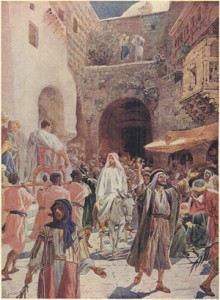
If we’re going to think and talk and act this way, we might as well start waving palm branches like the crowds in Jerusalem who wanted Jesus to overthrow the Roman oppressors and establish an earthly kingdom in Jerusalem. Those people wanted to use Jesus for a political revolt. They wanted national and social and economic revolution in the name of the Messiah. They wanted Roman blood to flow in the streets. Gird your loins and grab your swords! God bless Israel!

If we think and talk and act this way, we’re forcing the children of God to choose and then pledge allegiance to the lesser of worldly evils. Jesus did not come so we could be a part of a refurbished and renewed version of the kingdom of the world. Jesus came so we could be a part of the all-new eternal Kingdom of God!

Jesus will never be President of the U.S.A.

One, because he’s not running. Two, because you wouldn’t vote for him if he were running.

Think about Jesus’ platform. Sell everything you have and give it to the poor! Love your enemies! If Jesus had bumper stickers on the back of the donkey he rode into Jerusalem they would say “Be Last!”

“Vote for Jesus! We’re Going to Die!”

Of course, our King doesn’t come with T-shirts and stickers and buttons and hundred million dollar campaigns. He doesn’t save the world with armies and markets and policies. He saves the world through sacrificial love and suffering and service and grace.

Yes, Jesus came to be King. But instead of being crowned with a gold-plated headdress of jewels, he was crowned with painful and penetrating thorns. He did not bear a warrior’s sword or a royal scepter; he was beaten with a whip and a rod. Instead of sitting on a cusioned throne and ruling, Jesus hung on a tree and died. Jesus willingly, deliberately, goes to his own suffering and death for the sake of the world.

If we follow this King as his subjects — and we do! — then we, too, will follow him into Jerusalem to the place of suffering and sacrifice and death. We will say ‘no’ to status and position and glory and wealth and say ‘yes’ to the giving of our own lives. We will reject power and violence and force and accept God’s will and God’s way even in the midst of terrible personal agony. We will refuse to consider our own needs and, instead, be much more concerned with the needs of those around us.

That’s what it means to follow Jesus. To watch him and imitate him. To determine to be right behind him no matter where he goes.

Peace,

Allan

Who Stands Fast?

“Who stands fast? Only the man whose final standard is not his reason, his principles, his conscience, his freedom, or his virtue, but who is ready to sacrifice all this when he is called to obedient and responsible action in faith and in exclusive allegiance to God — the responsible man, who tries to make his whole life an answer to the question and call of God.” ~Dietrich Bonhoeffer, Christmas Eve 1942

The life of a disciple is active, not reactive. It has nothing to do with just talking about faith or teaching religious principles or believing theological ideas or keeping biblical rules. It has everything to do with living one’s whole life in obedience to God’s call through personal action. It doesn’t just require a mind. It requires a body, too.

Ours is a life given to us by God to be lived not in some kind of rigid, cramped, crowded, small, compromised, legalistic way but in a full, wild, joyful, exuberant, cheerful, celebratory way. A way that apprehends and assimilates and then radiates the freedom we have from God in Christ.

The way I see it, a full grasp of the freedom we have in Christ and the grace and mercy we’ve received from our God will come to mean, eventually,  that we are no longer afraid of sin. We’re not worried about messing up. We don’t hold back because of an anxiety over doing something that might displease our God. At the very least — stay with me here — avoiding sin will not be the main thing that drives us as we follow our Lord.

Our Father wants his beloved children to operate out of joy and freedom to do what is good and right, not out of fear of making a mistake. Isn’t that one of the great lessons in Jesus’ story about the servants and the talents in Matthew 25?

We must be more zealous to please God than to avoid sin. We must act in faith that our God who calls us to live boldly and outrageously for him also promises us that if and when we do mess up in enthusiastic service to our King, he promises forgiveness and consolation and salvation.

The Christian life is an active life. Our God calls us to give our whole selves to him. Brakes off. No looking back. Full speed ahead. He’s not going to punish us when, in pursuit of his will, we might mess up.

~~~~~~~~~~~~~~~~~

Last Sunday’s sermon on Christ’s return from Revelation 21-22 prompted many, many kind comments and encouragements from dozens of my brothers and sisters here at Legacy. Many had never thought about heaven and earth and God’s ultimate mission in the ways Scripture so plainly paints it. Many seemed refreshed at the biblical promises that God’s will is ultimately going to be done on earth just as it is in heaven. That’s why we’re told to pray it, right? And that’s why we join it. The mission. The salvation objective. Those are the things we’re going to be considering together during Missions Month throughout March.

In a related item, Patrick Mead has posted a hilarious re-cap of all the individuals and groups throughout history who have predicted the return of Christ and the end of the world. Of course, mankind has a 100% fail rate in this useless undeavor. But the list is hilarious. I especially like the parenthetical comments in his list. One mentions the possibility that Van Halen may be the anti-Christ which may or may not, combined with Orwells’ vision, have led to the speculation about the year 1984. There’s a group called the Sword of God Brotherhood that is claiming the end of the world will come in 2017. They say that they alone will be spared and tasked to repopulate the earth. Here’s hoping there’s a Sword of God Sisterhood, too.

You can read the complete list by clicking here.

~~~~~~~~~~~~

I’m 24 hours away from my annual camping trip with my Four Horsemen friends. A weekend of encouragement, prayer, meditation, food, bonding, and at least one unforeseen near-catastophic incident to remember forever. These are the guys. These are the ones. They are my closest friends. They keep me going. They keep me accountable. They challenge me and they exhort me. They mature me in our faith. They inspire me to be a better man, a better husband and dad, a better preacher, a better disciple. Even while we’re throwing rocks at raccoons and making fun of Dan’s always-on survival mode, Jason’s tough guy facade (what a fake!), and Kevin’s wardrobe.

I can’t wait.

Peace,

Allan

Forgetting the Point

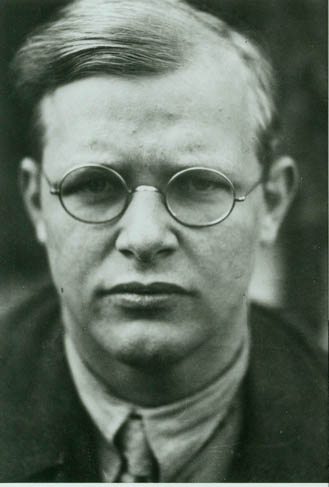
Dietrich Bonhoeffer inspires me. I’ve been fascinated by Bonhoeffer since the day Michael Weed introduced me to the Christian author, theologian, and martyr in a theology class at Austin Grad a little over five years ago. Bonhoeffer moves me. Not just because he wrote about true discipleship to Jesus, not just because he preached against the cheap grace he saw accepted and practiced in the Church, and not just because he talked all the time about the ultimate lordship and reign of Christ. Bonhoeffer moves me because he so truly lived it. He embodied it. He gave his life for it.

So I pay attention to Bonhoeffer. He was real. He put his very life on the line for what he preached and wrote about commitment to Jesus and God’s salvation mission in the world. As Paschal once noted, “I tend to believe the witnesses who get their throats cut.” Me, too.

It’s been almost three weeks since I finished reading Eric Metaxas’ hefty biography, Bonhoeffer: Pastor, Martyr, Prophet, Spy. I’ve spent several hours since going back over the things I’ve highlighted, re-reading the pages I’ve marked up, trying desperately to will the words and the passion of this great man into my very soul.

There’s so much I want to share with you from this book. His writings about the Church sound as if they were penned yesterday. His understanding of the Gospel is as clear as if he were at those resurrection meals with Jesus. His call for true discipleship to our Lord is challenging. Convicting.

Personal.

Allow me to give you a taste.

Bonhoeffer was greatly troubled by the secularization he saw in the Church. The focus, as he saw it, wasn’t as much on the central Christian doctrines of forgiveness and grace, sanctification and discipleship, resurrection and justice as it was on progress and success, relevancy and status. Note how his observations about the big churches in New York City, written when he was at Union Theological Seminary in 1930, ring just as true today.

“In the place of the church as the congregation of believers in Christ there stands the church as a social corporation. Anyone who has seen the weekly program of one of the large New York churches, with their daily, indeed almost hourly events, teas, lectures, concerts, charity events, opportunities for sports, games, bowling, dancing for every age group, anyone who has heard how they try to persuade a new resident to join the church, insisting that you’ll get into society quite differently by doing so, anyone who has become acquainted with the embarrassing nervousness with which the pastor lobbies for membership — that person can well assess the character of such a church. All these things, of course, take place with varying degrees of tactfulness, taste, and seriousness; some churches are basically ‘charitable’ churches; others have primarily a social identity. One cannot avoid the impression, however, that in both cases they have forgotten what the real point is.”

Ah, the point. What is the point? What is God’s mission for his Church? What do we aim for? What do we live for? What’s the goal? What’s the point?

To seek and to save the lost. To bind up the injured and strengthen the weak. To release the captives and set the prisoners free. To proclaim and to live in the truth that God in Christ has defeated the dark forces of sin and death and Satan and is right now making his dwelling place among us, renewing and restoring all of creation, reconciling the world to himself in righteous relationship so that we will be his people and he will eternally be our God.

It’s hard work. It’s dirty work. It’s grimy and messy. It requires muscle and sweat and blood and tears. It takes great sacrifice. It takes every ounce of everything you’ve got.

But that is the point. Let’s not ever forget the point.

~~~~~~~~~~~~~~~~~

Today is my great friend Dan Miller’s 50th birthday. In honor of Dan, let’s all repair our cars with duct tape and twistie ties and order extra cheese. On everything.

Happy birthday, Dan. I love you, brother. You mean the world to me.

Allan

The Choice

The Word of God confronts us with two ways. The Law and the Prophets, the Psalms and Proverbs, the Gospels and Letters all present us with the choice of two ways.

It’s not about where you’re going to live, what career you’re going to pursue, who you’re going to marry, or what you’ll have for lunch.

It’s the way of life or death. The way of blessings or curses. The way of God or the way of the world.

Yes, this one choice certainly impacts all those others. It encompasses and involves all those other decisions you make about where you work and where you live and who you marry. But there’s only one choice in Scripture: the way of life or the way of death.

God says, “Choose life!” ~Deuteronomy 30:15-20

Jesus says, “I am the Way.” ~John 14:5-7

When we choose Jesus, we choose the way of life and the way of blessing and the way of God. We sign up for a life of following Jesus along the way. We commit to walking behind him in his way. Doing things the way he does them. Speaking like he speaks. Thinking the way he thinks. Acting and loving and forgiving and submitting and obeying and serving and suffering and praying the way Jesus does.

It’s a choice we make every day. Every hour. A conscious and constant decision to allow the Holy Spirit of God to empower us and guide us in the Way of Jesus. It’s that first and continual step in asking God to show you what’s NEXT. In submitting to whatever NEXT he has in store for you. In jumping out of your comfort zone and whole heartedly embracing that NEXT that will further transform you into his holy image.

“I am the way and the truth and the life. No one comes to the Father except through me.” ~John 14:6

~~~~~~~~~

Speaking of choices: My annual Tulsa angst has begun. I just received an advance copy of the schedule for this year’s Tulsa Workshop from my friend Terry Rush and I find myself in the same spot I get into every year. How in the world do I choose?

Wednesday’s kick-off evening is easy. No choice. Praise and worship with Kip Long and a keynote address from Randy Harris. Awesome. But the anxiety kicks in early Thursday morning. At 9:00, do I go with the no-brainer, Don McLaughlin, on “Possibility Thinking: Nothing Less Than Winning the World” or Bill Campbell’s “For Church Leaders Only: How to Build a Healthy Congregation?” I could also go hear my friend Josh Ross on “Baptism: Transformed to Join in Jesus’ Mission.” And those are just three of the six possibilities for that hour!

More choices, of course, at 10:00. I’ll probably go with Randy Harris on “Jesus and the Quest for Cool.” But that means saying ‘no’ to Victor Knowles and my friend Dan Bouchelle and three other really interesting speakers and topics.

The 11:00 keynote is easy. No choice. Dusty Rush. No problem. Lunch is easy. I know we’re going to eat at that Mexican restaurant where we always run into Garth Brooks.

But it starts all over again at 2:00. How am I supposed to choose between Al Maxey’s “Breaking the Chains of Rigidity: Frail Hermeneutics” and Terry Rush’s “Adjusting Our Minds to Build Winning Congregations?” Are you kidding?

Same thing at 3:00. Again at 4:00. How does one choose between Marvin Phillips, Edward Fudge, Bobby Valentine, and Randy Harris? How do you choose between “Let the Chains of Spiritual Blinders Fall Away” and “The Unchained Holy Spirit” and “How to Break Free from the Chains of Those Who Won’t Change?”

And that’s just Thursday!

The Tulsa Workshop is one of the spiritual highlights of my every year. Have you never been? You have no idea what you’re missing. I encourage you to make the trip this year. March 23-26. Here’s the website with tons of info. There are special tracks this year for preachers and elders and worship leaders. Programs for the teens. Special stuff for the kids. You’ll be blessed by the worship, the study, the speakers, the fellowship, and the Holy Spirit of God. I really, really, really hope to see you there.

Peace,

Allan

A Tidbit After Bread

Regular readers of this blog will know of my deep respect and admiration for German theologian and Christian martyr, Dietrich Bonhoeffer. No books have had more of an impact on my walk with Christ, my calling as a congregational preacher, and my faith in God than Bonhoeffer’s Cost of Discipleship and Life Together. Costly grace. True discipleship. Christian community. These are all concepts that Bonhoeffer not only wrote about brilliantly, but also lived out genuinely.

So you can imagine my delight at receiving over the Christmas holidays the first Bonhoeffer biography in almost 50 years. Bonhoeffer: Pastor, Martyr, Prophet, Spy by New York author Eric Metaxas. I took a big bite out of this massive 542-page volume last night. And I intend to have it completed by the end of the week. It is excellent.

In the several books on Bonhoeffer I’ve read, I’ve seen his “tidbit” quote about complete commitment to Christ.

“The religion of Christ is not a tidbit after one’s bread; on the contrary, it is the bread or nothing. People should at least understand and concede this if they call themselves Christian.”

I knew the quote was taken from a lecture on the essence of Christianity that Bonhoeffer delivered early on his career. But this new book tells me it was part of a three-lecture series to a group of teenage boys he was mentoring in Barcelona in the winter of 1928. Bonhoeffer was 22-years-old. But he already had a firm grip on what Jesus meant when he said, “Follow me.”

The title of the lecture is “Jesus Christ and the Essence of Christianity.” It was number two in his series, preached to the teens on December 11, 1928. And this new book has published a pretty big chunk of it.

Bonhoeffer begins by talking about the fact that most Christians have actually exiled Christ from their lives. He says, “Of course we build him a temple, but we live in our own houses.” Bonhoeffer points out that we only take Jesus seriously on Sunday mornings. Our religion only has meaning on the first day of the week where one “gladly withdraws for a couple of hours, but only to get back to one’s place of work immediately afterward.”

OK, now here’s the really good stuff about taking Christ and his call seriously:

“One admires Christ according to aesthetic categories as an aesthetic genius, calls him the greatest ethicist; one admires his going to his death as a heroic sacrifice for his ideas. Only one thing one doesn’t do: one doesn’t take him seriously. That is, one doesn’t bring the center of his or her own life into contact with the claim of Christ to speak the revelation of God and to be that revelation. One maintains a distance between himself or herself and the word of Christ, and allows no serious encounter to take place. I can doubtless live with or without Jesus as a religious genius, as an ethicist, as a gentleman — just as, after all, I can also live without Plato and Kant. Should, however, there be something in Christ that claims my life entirely with the full seriousness that here God himself speaks and if the word of God once become present only in Christ, then Christ has not only relative but absolute, urgent significance for me. Understanding Christ means taking Christ seriously. Understanding this claim means taking seriously his absolute claim on our commitment. And it is now of importance for us to clarify the seriousness of this matter and to extricate Christ from the secularization process in which he has been incorporated since the Enlightenment.”

Yes, Christ Jesus is an all-or-nothing proposition. Yes, we have a long way to go in our understanding and our practice.

Peace,

Allan

What’s NEXT?

I’m intrigued this week by these words of Paul:

Not that I have already obtained all this, or have already been made perfect, but I press on… I do not consider myself yet to have taken hold of it. But one thing I do: Forgetting what is behind and straining toward what is ahead, I press on… ~Philippians 3:12-14

Think about everything the apostle Paul had achieved at this point. He had received the best formal education available. He had studied and excelled at the feet of the very best teachers alive. He had been on the fast track, politically and religiously, to the highest positions of power and authority. He had seen the risen Lord. He had spoken with the Christ. He had witnessed and performed many miracles. He had been delivered from danger time and time again by God’s Holy Spirit. He had preached in the most important cities. He had trained the greatest teachers. He had planted the best churches.

Paul’s list of spiritual experiences and religious achievements was long.

But he presses on as if he’s accomplished nothing. He strains ahead as if he’s had no success. He keeps looking for and yearning for what’s next.

And then he writes, “All of us who are mature should take such a view of things” (Phil. 3:15)

I think Peter had the same attitude:

Make every effort to add to your faith goodness; and to goodness, knowledge; and to knowledge, self-control; and to self-control, perseverance; and to perseverance, godliness; and to godliness, brotherly kindness; and to brotherly kindness, love. For if you possess these qualities in increasing measure, they will keep you from being ineffective adn unproductive in your knowledge of our Lord Jesus Christ. ~2 Peter 1:5-8

It seems to me that the older we are, the more Christ-like we should be. It’s the oldest among us, the ones who’ve been at this longer, who display more self-control. Our older brothers and sisters show more kindness and love. The ones who’ve been disciples longer are the ones who are “more good.” More persevering. More like our God than those who are younger.

More like God?

Yeah. Peter says “in increasing measure.”

This means it’s the older among us who would be more forgiving, more patient, more gracious and compassionate, more sacrificing and giving, more tolerant of the shortcomings of others. Adding those Christ-like qualities in increasing quantities every day keeps us from getting stale. It prevents us from getting into a rut and not being any good to God’s Kingdom.

“I will always remind you of these things, even though you know them and are firmly established in the truth you now have.” ~2 Peter 1:12

We older Christians can be prone to crankiness and sour attitudes. We can sometimes be bossy and demanding and impatient. We can occasionally come across to others as unkind or unloving.

It’s just that we have much less of an excuse than the younger ones.

~~~~~~~~~~~~~~~~~~~~~~~~~~~~~~~~

It’s getting harder and harder to root against the Cowboys.

I have always loved Jason Garrett. Garrett is all business. He doesn’t mess around. He knows what it takes to get where they want and he won’t let anybody or anything stop him from getting there. He does it with integrity. And character. He’ll cut slackers and send loafers to the asthma field. He’ll jump up and down and celebrate at the appropriate times. And not a minute sooner.

If Jerry Wayne really is going to give Garrett as much control as he gave Jimmy Johnson, if Jerry really is going to back off on demanding his way in on-the-field matters, if Jerry is going to allow coaches to coach and players to play, then I think I’m going to take a very neutral and un-biased approach to this next season. Providing there is one.

It’s nice to occasionally see the good guys prevail. The ones who do it right, starting from scratch and making it happen with dedication and hard work. Smart guys. People who use their brains and think right. Good for Jason Garrett. And good for these young men who get to play for him.

Peace,

Allan

« Older posts Newer posts »