Category: Allan’s Journey (Page 30 of 31)

On Distractions, A Bloody Nose, and Thursday Night Football

This will forever be known as the day I became a perimeter player. But first…

~~~~~~~~~~~~~~~~~~~~~~~~~~~~~~~~~~~~~~~~~~~~~~~~~~~~~~~~~~~~~~~~~~~~~~~~~~~~~~~~~~~~~~~~

One of my dear friends in Austin — let’s call her Brooke — included in her comments yesterday regarding congregational singing this provocative nugget:

I’m not sure where the idea arose that worship should be “free from distractions.” I haven’t really thought it all the way through, but I think the incarnation implies distractions, even in worship.

I also have not worked all of this out in my own head and heart. But it is something I struggle with mightily. Big time.

As a deacon over worship for two different congregations and a song leader and worship leader for 25 years, I always thought I had a grasp on how worship should be structured and on what’s important and what’s not. And then, a little over two years ago, Thomas G. Long blew the doors off my worship theology at the end of the introduction to his excellent book The Witness of Preaching.

He writes of his childhood church experiences in rural Georgia, particularly of the stray dog that would wander into the sanctuary during hot summer days when the doors and windows to the building had been left open to catch whatever little breeze they could. The dog wasn’t there every Sunday, but almost. Long jokes that the “stray hound of indecipherable lineage” had a better attendance record than some of the church officers.

“The ushers knew better than to try to run him off, the one and only attempt at that having driven him bounding toward the pulpit. So, while we sang hymns, the cur would sniff curiously at the ankles of the worshipers. Deacons would step around him on their way to take up the offering, and during the pastoral prayer the dog would wander aimlessly around the room. He was an endless source of mirth for us children, and he occasionally served as a handy and spontaneous sermon illustration in such references as ‘no more sense of right and wrong than that dog there.’

Looking back on it now, I realize what a trial it must have been for our ministers to attempt to lead worship and to preach on those Sundays when this mongrel was scampering around the building and nuzzling the feet of the congregation. I readily confess that I do not covet similar circumstances for myself, but there was something wonderful about those times as well. Whatever else it may mean, a dog loose in worship unmasks all pretense and undermines false dignity. It was clear to us all that the grace and the joy and the power present in our communion, and these were present in abundance, were not of our own making. We were, after all, people of little worldly standing who could not keep even our most solemn moments free of stray dogs. I want to believe that even our dark-suited, serious-faced ministers were aware of the poetic connection between a congregation of simple farmers and teachers in their Sunday best with a hound absurdly loose in their midst and a gathering of frail human beings astonishingly saved by the grace of God, grace they did not control but could only receive as a gift. If so, then in some deep and silent place within them they were surely taken with rich and cleansing laughter — and if they were, they were better preachers of the Gospel for it.”

I had always held strongly to the belief that worship should come off without a hitch. We should have our very best songleaders leading the songs, our very best readers reading the Scriptures, and the very best speakers and orators praying the prayers. I had always cringed when I had planned a Scripture reading or a song to be read or sung at just exactly the right moment only to have the person responsible for executing my plan mess it up. What will the visitors think? How does this reflect on me? It’s not our best we’re giving to God or each other.

Even though I still struggle and wrestle with this, I see now that kind of thinking is wrong at best and idolatrous at worst.

Long describes the “poetic connection” between simple, frail humans and the astonishing grace of our Lord. Grace that is completely out of our control. It’s a gift that God delights in giving and we gladly and humbly accept.

God views, and we must, too, not the misread passage or the ill-timed song or the confusion that new members sometimes bring to the Lord’s Table, but the people. We should see the people, the church, as an amazing collection of God’s children in all of our weakness and humanness. That speaks more to God’s love and mercy on a Sunday morning than anything we can plan. Instead of looking down when Brother Sam mispronounces “reconciliation,” I should look at the courage God gives him to read the Scriptures in front of the assembly. Instead of rolling my eyes when Brother Neil starts the song on the wrong note, I should roll my attention to the joy of the Lord evident in Neil’s service. And instead of shaking my head when Brother Joe goes down the wrong aisle during communion, I should praise God that Brother Joe is a brother!

It’s not the well-orchestrated, perfectly executed worship service we should strive for. It’s recognizing that God meets us, his Church, his children, in our imperfect songs and in our imperfect prayers and in our imperfect sermons.

There is no perfect sermon or perfect worship service. There is only a perfect God who loves his Church.

~~~~~~~~~~~~~~~~~~~~~~~~~~~~~~~~~~~~~~~~~~~~~~~~~~~~~~~~~~~~~~~~~~~~~~~~~~~~~~~~~~~~~

Thursday is my basketball day at Fort Worth Christian with a bunch of other area ministers and coaches. An hour and a half of wide-open full-court hoops that gives me the exercise and the recreation I need to finish out the week strong. Today I was having an unusually good outing. In fact, I ended the first game by driving through the lane, around and through a couple of defenders, and scoring the winning bucket. As the second game was beginning to start, Eric, one of my teammates, and I were talking about driving to the lane and playing inside. Like Darrell Royal’s mantra that three things happen when you pass and two of them are bad, we both acknowledged to each other that good things happen when you drive the lane, and we vowed to do more of that during the second contest.

I was playing help defense early in that second game when one of the few young flat-bellies who plays with us began to drive to the hole. He had the ball down low. I stepped into the lane to take a swipe and he brought the ball up, nailing me right in the face with an 18-pound sledgehammer! I later found out it was just his elbow. But it felt like a Mack truck. I’m sure it wasn’t delivered with the same force as Kermit Washington’s punch to Rudy T. But it’s one of the first things that went through my mind.

That happened at about 12:30 this afternoon. The bleeding didn’t stop until about 1:30.

You know how a tornado can hit the rough part of town and people jokingly say the storm did about 17-million dollars worth of improvements? I’m hoping that, once the swelling goes down in my lip and my nose, I won’t be horribly disfigured but actually better looking. Right now my nose is crooked as a dog’s hind leg and one nostril is considerably bigger than the other one. My lip is busted. And I’m hoping like crazy that I’m not going to get two black eyes. I’d post a picture. But it would be so graphic that the filter on your computer wouldn’t even allow you to get to this site.

Playing down low is overrated.

I’ll be back. But today I have become a perimeter player.

~~~~~~~~~~~~~~~~~~~~~~~~~~~~~~~~~~~~~~~~~~~~~~~~~~~~~~~~~~~~~~~~~~~~~~~~~~~~~~~~~~~~
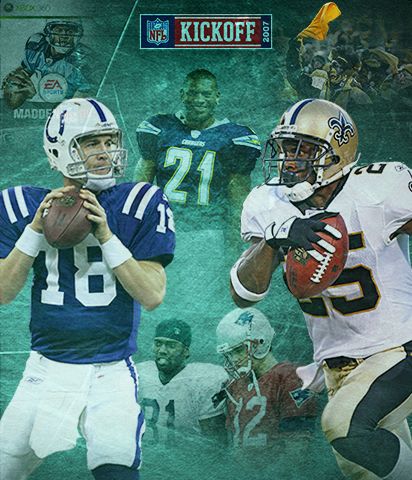
NFL KickoffThe Colts and the Saints kick off the NFL season at 7:30 Texas time tonight and I can’t wait. Just a few more hours. I know they’ve been opening the season on Thursdays now for a while. And I know for a couple of years now they’ve been playing on Thursday nights during the end of the season. And I guess this is the second season for Monday night doubleheaders. I always thought one of the main reasons NFL football became the national sport is because all the games were played at the same time on the same day. You gear up for it all week. You talk about it. You read about it. You get ready for it. And then BOOM Sunday comes and it’s crazy! And you spend all the next week analyzing the outcome and reviewing it play by play and then starting the process all over again for the next Sunday set of games.

 Is there any chance in the world, as popular and as unstoppable as the NFL appears to be, that the league could ever start to suffer from over exposure? Could NFL games on TV four days a week ever hurt professional football? I realize there are some who will move heaven and earth to be in front of the tube for every NFL game. But most of us (right?) can’t do that. We don’t have time for that every other night. And so we’ll miss a bunch of games and highlights. Will that ever cause us to care less? Will that ever plant in our minds the idea that we can live without it?

Probably not.

Go Saints. Love Drew Brees.

Peace,

Allan
Quote from Augustine That I'm Feeling Today

“My own way of expressing myself almost always disappoints me. I am anxious for the best possible, as I feel it in me before I start bringing it into the open in plain words; and when I see that it is less impressive than I had felt it to be, I am saddened that my tongue cannot live up to my heart.”

Legacy Adopts Walker Creek Elementary!

There are so many things to be excited about at the Legacy Church of Christ. There are so many programs and ministries here that our God is using for the Kingdom — the new Worship Center construction, our new focus on small groups, the upcoming Giveaway Day, all that our young people are doing, the camps and mission trips, VBS. But adopting Walker Creek, claiming that campus for Christ, is exactly the kind of thing this body of disciples is called to do by every paragraph of our Scriptures. If we really believe we are the body of Christ then we must be Jesus Christ to our community. And we can’t fulfill even a fraction of what it means to be the body of Christ inside our church building. If we are to be Jesus, we do that outside, face to face, person to person, in relationship, showing love and compassion in our actions to the people with whom we live in community.

Just like Jesus, we bear the burdens of our world. We bear the infirmities and the iniquities of our community. We turn sorrow into joy in the name of our Savior.

Our community is sick. Its families are fractured. Its neighborhoods are diseased. We live in a broken world. And Christ says we are the light.

In his lectures delivered to the University of Berlin in 1933 Dietrich Bonhoeffer presented the church of Jesus as “a sociological category unique unto itself.”

“Unlike other human organizations, the Church is not a vehicle for some other goal but is, in fact, an end in itself, containing within its own proclamation and witness and work the very gifts it promises. Thus, within the Church’s proclamation and sacramental life, that grace which is eschatologically promised in the cross and resurrection of Jesus Christ becomes present to the community and to the individual.”

In other words — although I like his so much better — the Church is Jesus to the community. The love and the grace, the compassion and the benevolence we show to others is actually the love and grace, compassion and benevolence of the risen Lord. The Church reaches out with the mercy of God to the community and becomes the healing touch of God to those persons and circumstances.

We’ve been given an opportunity, a good work prepared in advance by God for us to do, to adopt Walker Creek Elementary School. Our plan is to buy backpacks and school supplies for the nearly 200 economically-disadvantaged, mostly Hispanic students there and volunteer to read to them in their ESL classes and eat lunch with them occasionally. By being committed to doing these little things in the lives of these children, we can positively impact them and their families with the love of God and claim that part of our community for Christ.

Jason tells me a bunch of our teenagers went out and purchased several backpacks last night. At the dinner for the Dodds last night several of us began planning how our classes and small groups could expand the extent of the relationship with Walker Creek even further. The idea has already caught fire. Praise God for the opportunities he gives us to serve his people in the Kingdom!

~~~~~~~~~~~~~~~~~~~~~~~~~~~~~~~~~~~~~~~~~~~~~~~~~~~~~~~~~~~~~~~~~~~~~~~~~~~~~~~~~~~~~~

It was exactly one year ago today, July 30, 2006, that I preached my first sermon at Legacy. I was officially hired a couple of weeks later — the culmination of an amazing process, so strange and so wonderful it could have only been of God. But because of my commitments to school at Austin Grad we couldn’t start here until June. I was able to drive up here and preach at Legacy once a month during that ten month interim. So in a lot of ways, we’ve been a part of the Legacy family for a year now. But in so many other ways, I still feel brand new.

And those same feelings of humility and complete inadequacy in the pulpit and in my work as the preacher at this place won’t go away.

I believe with all my heart that it’s our God who is using me. He inspires me through the week in my study and my prayer and then speaks through me on Sundays. He takes his message and places it right into the hearts of the people here, in exactly the place where and when and how they need it. I’m totally baffled by the way it works. None of it is me. All of it is Him. And a week doesn’t go by that several people talk to me about how the message reached them and touched them, the exactly perfect words were said at exactly the perfect time. The word of grace they needed at just that moment was delivered, perfectly tailored to specifically comfort and encourage them. None of it is me. All of it is Him. And it blows me away.

 People I don’t know that well, people I’ve barely met, will talk to me about their innermost fears and anxieties, their sins and their struggles with faith and hope. And we’ll cry together and we’ll pray together. And I don’t even know these people yet. As they’re talking to me, I can’t help thinking, “Why are they telling me these things? What am I supposed to do? They’re telling me things and confiding in me things they wouldn’t tell their dearest friend. Why?”

It’s because I’m the preacher. I represent God and the Word of God to these people. I represent a deeper relationship to our God to the church. I’m expected to give them spiritual direction and comfort and hope straight from the Lord.

And when I’m finished with those conversations, I feel so small and insignificant. I feel like I haven’t helped at all. I feel like I haven’t said a thing they couldn’t have heard from almost anyone else. I feel so humble. Everytime it happens, I look at my own life. I look at my own sin and selfishness and inclinations to evil. I look at all the things I don’t understand about God and his ways and his will. And he still uses me. And that completely blows me away.

I find myself every day praying the prayer of Terry Rush up in Tulsa: “God, please keep doing that thing you do.”

~~~~~~~~~~~~~~~~~~~~~~~~~~~~~~~~~~~~~~~~~~~~~~~~~~~~~~~~~~~~~~~~~~~~~~~~~~~~~~~~~~~~~~~

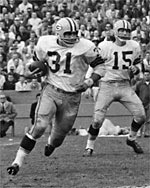
JimTaylor31 days until football season and two more running backs in the countdown. #31 is the great Jim Taylor of those Titletown Packers in the ’60s. As Green Bay’s top pick out of LSU in 1958, Taylor ran for over a thousand yards in five straight seasons, he led the NFL in rushing in 1962 and was the league’s player of the year that season. He was a ferocious runner and a powerful blocker and a member of that original “run to daylight” backfield with the Packers.

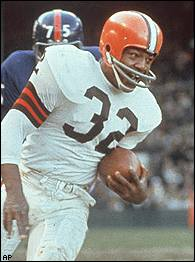
JimBrownYesterday’s #32 is not O. J. Simpson, Franco Harris, or Marcus Allen, although they all three deserve honorable mention for their college and pro careers. Walt Garrison’s a personal favorite at #32 but probably doesn’t fit in the same category as the greatest ever. The best ever #32 is Jim Brown. As an All-America out of Syracuse, he was built like a lineman and punshished defenders when he ran over them. He was the Browns’ top draft pick in 1957 and led the NFL in rushing eight times, winning the league’s MVP award twice. His career lasted only nine seasons. But he racked up 58 100-yard games and a combined 15,459 yards from scrimmage. He still holds 20 NFL records. His career rushing average is 5.2 yards per carry. His career receiving average is 9.5 yards per catch. And he’s appeared in 39 movies.

I don’t care much for his politics or his demeanor. But Jim Brown was the best to ever wear #32.

~~~~~~~~~~~~~~~~~~~~~~~~~~~~~~~~~~~~~~~~~~~~~~~~~~~~~~~~~~~~~~~~~~~~~~~~~~~~~~~~~~~~~~~

Happy Birthday, Rhonda! I love you. Thank you for not letting go.

Peace,

Allan

On Scripture, Butkus, and the Stanglin Sherd

In Eugene Peterson’s Working the Angles: The Shape of Pastoral Integrity the author makes a clear distinction between reading Scripture and hearing the Word of God, between information and revelation as it relates to the Bible. We have to understand that most of the Bible was written many generations after the events they describe. Most of Scripture had a long oral existence before it was written. The words in our Bible were taught and preached and sung and prayed in worshipping communities for years and decades before they were ever written down. They were passed from mouth to ear. None of the words were shelved in libraries or displayed on the coffee table. The words resonated from ear to ear down through all the generations of God’s people.

Here’s Peterson on this second angle of maintaining integrity for preachers, and for all of us in our Christian walks:

“Listening and reading are not the same thing. They involve different senses. In listening we use our ears; in reading we use our eyes. We listen to the sound of a voice; we read marks on paper. These differences are significant and have profound consequences. Listening is an interpersonal act; it involves two or more people in fairly close proximity. Reading involves one person with a book written by someone who can be miles away or centuries dead, or both. The listener is required to be attentive to the speaker and is more or less at the speaker’s mercy. For the reader, it is quite different, since the book is at the reader’s mercy. It may be carried around from place to place, opened or shut at whim, read or not read. When I read a book the book does not know if I am paying attention or not; when I listen to a person the person knows very well whether I am paying attention or not. In listening, another initiates the process; when I read I initiate the process. In reading I open the book and attend to the words. I can read by myself; I cannot listen by myself. In listening the speaker is in charge; in reading the reader is in charge.”

Up until just the past 550 years, with the invention of the printing press, reading was always an oral act and a community event. Every act of reading revoiced the written words, the connection with the living voice behind the words was emphatic. But today, when nearly all reading is silent, the connection with the living voice is remote at best, and usually gone altogether.

In the past two years, I’ve taken to reading my Bible out loud. All of it. During my daily Bible reading in the mornings, while I’m studying and preparing for a Bible class or a sermon, whenever I read the Scriptures I read them out loud. Think about it. You and I can have a theological conversation about salvation or the relationship between faith and works or God’s sovereignty versus man’s free will. And in that conversation, you and I will communicate with inflection and stress on certain words and phrases and varying degrees of volume and urgency and passion. We’re talking and listening, communicating right now, in the presence of each other, hearing the living, breathing voice of the other. But if we were to have the exact same conversation with the exact same words via email…..you know. You’ve been there. It’s just not the same. There’s a lot lost between reading and listening. A lot.

Reading the Bible out loud has changed my life. Anybody who talks to me about reading the Word, anyone who asks me how to improve their study life, I always tell them to read the Bible out loud for two weeks, every day, and then get back with me. They’ve all experienced what I experience, the living, breathing Word of God speaking to them. Listening to the Word of God, hearing the Word, in a way they can’t by simply reading.

That’s why, in our assemblies, I’d much rather not put the words of the Scripture being read on the giant screen. I’d much rather have a good reader, one who’s been reading the passage and praying over the passage and meditating on the passage for a few days, read it out loud to our congregation. I’d much rather the church LISTEN to the Word than READ it. As a preacher, isn’t it my job to make sure that the revelation of God, which always involves personal histories and personal responses, isn’t treated as just information, which usually involves impersonal facts and abstract ideas?

Do me a favor. Read your Scriptures out loud for the next two weeks. And then let me know how it changes your daily devotion and your study of the Word. Let me know how it changes the way you listen to God speaking to you. Do it. Find a time and a place where you can be alone and do it. In two weeks I’ll ask you to comment on this blog and share with our readers your experiences. I’m very much looking forward to it.

~~~~~~~~~~~~~~~~~~~~~~~~~~~~~~~~~~~~~~~~~~~~~~~~~~~~~~~~~~~~~~~~

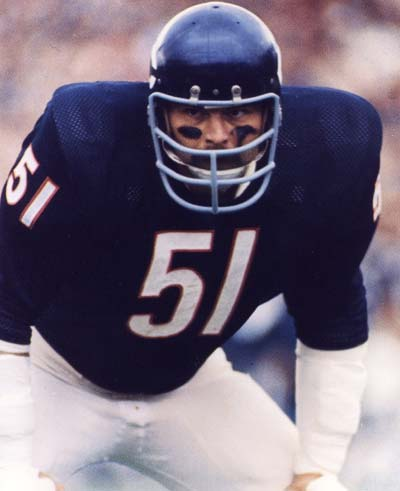
Yes, Bevo, #51 is Dick Butkus. Hands down. No debate. THE middle linebacker that defined the Monsters of the Midway in Chicago from 1965-73. DickButkusButkus was the Bears’ first-round pick out of Illinois where he was a two-time All-America two-way player (he was actually born in Chicago in 1942) and manned the middle of that tenacious Bears D for 14 seasons. He had the deadliest combination of speed, quickness, instinct, and strength. And he was mean. After eight straight Pro Bowls, his brilliant career was cut short by a knee injury. He’s in the college and pro football halls of fame. And he made a few commercials along the way. Old clips of Butkus pulverizing running backs are beautiful to watch. He showed no mercy. What happened to guys like Butkus? *sigh*

~~~~~~~~~~~~~~~~~~~~~~~~~~~~~~~~~~~~~~~~~~~~~~~~~~~~~~~~~~~~~~~~

On my two week trip to Israel back in January, I was fortunate enough to be in the right place at the right time to uncover a tiny piece of history that may prove to be a major link to one of King Solomon’s fortresses in the desert just south of the Dead Sea. We had the privelage of working with the Israel Antiquities Authority at an excavation site in present day Hazevah. For years now Dr. Mark Shipp at Austin Grad and our archaeologist Terrance Christian have been totally convinced that this site, in ancient Tamar, is a 10th Century BC fort that Solomon built. They’ve had tons of circumstantial evidence, not to mention the Old Testament mentions of Solomon building a fort there, but they’ve never been able to officially, by archaelogical standards, date it to the 10th century. And then I uncovered AtTamara broken pottery sherd StanglinSherdat that fortress level that got everybody pretty excited. It’s a painted piece that they knew at the time was Midianite. They also supposed it was tenth century. I jokingly refered to it as the Stanglin Sherd the rest of the trip. I wondered aloud about just how many accolades I would recieve in archaeological journals and how many speaking engagements I’d have to make at the world’s museums. And then I get this email yesterday from Terrance.

I don’t know if Shipp mentioned it to you or not, but your sherd is actually one of the most important pieces we found this season. It is definitely a type of pottery referred to as Midianite Ware or Qurayya Ware (Qurayya is the site in modern Saudi Arabia where it was produced at). What is so special about your piece though, is that the simple dots in a line motif on it has a direct parallel to some of the pottery found at nearby Khirbet en Nahas (in modern Jordan) — which was recently dated to the 10th century BC. We were hoping to establish some kind of connection/interaction between Hazeva & Kh. en Nahas — and your sherd is a key piece of evidence in establishing the link between the two sites! One of the goals of my current research, and for next year’s excavation, is to try and parse out exactly what was happening at Hazeva in the 10th century in order to understand its relationship to the fortress and copper smelting works at Kh. en Nahas. Shipp, Bowman and I will be visiting Jordan after the tour/dig next year to try and answer some of those questions! See the picture I’ve attached of the parallels to your sherd found at Khirbet en Nahas. If you want to see where Kh. en Nahas is in relationship to Hazeva, use Google Earth. Hazeva is at coordinates 30 degrees 48 minutes 32.11 seconds North by 35 degrees 14 minutes 41.33 seconds East — best viewed around 1900 to 2000 feet elevation. Khirbet en Nahas is at 30 degrees 40 minutes 51.65 seconds North by 35 degrees 26 minutes 10.37 seconds East, also best viewed ca. 1900 feet. You’ll notice the square fortress at both sites right off.

How cool is that?!?

I’m hoping we can get a big group of 40-50 people here at Legacy to take a trip to Israel with Terrance here in about three years. He says he’ll be our tour guide and we can take a similar trip to sight-see and actually work three or four days at a dig or just go to see all the sites without the dig. I can’t wait.

Peace,

Allan

A Cry to Preachers

“American preachers are abandoning their posts, left and right, at an alarming rate. They are not leaving their churches and getting other jobs. Congregations still pay their salaries. Their names remain on the church stationery and they continue to appear in pulpits on Sundays. But they are abandoning their posts and their calling. They have gone whoring after other gods. What they do with their time under the guise of pastoral ministry hasn’t the remotest connection with what the church’s preachers have done for most of twenty centuries.”

This is how Eugene Peterson’s Working the Angles begins. I just finished it last night. What a fantastic book. Here’s the second paragraph:

“A few of us are angry about it. We are angry because we have been deserted. It is bitterly disappointing to enter a room full of people whom you have every reason to expect share the quest and commitments of pastoral work and find within ten minutes they most definitely do not. They talk of image and statistics. They drop names. They discuss influence and status. Matters of God and the soul and Scripture are not grist for their mills. The preachers of America have metamorphosed into a company of shopkeepers, and the shops they keep are churches. They are preoccupied with shopkeepers’ concerns—how to keep the customers happy, how to lure customers away from competitors down the street, how to package the goods so that the customers will lay out more money.”

Peterson’s book is a call to preachers to be committed to the three disciplines that shape our relationships with our God and our ministries to him. Those disciplines are prayer, Scripture, and spiritual direction. A minister of the Word is not a preacher, not a pastor in the purest sense, if his life is not defined by continual conversation with the Father, constant immersion in the Scriptures, and a daily practice of giving spiritual direction to others.

The premise is that, while all three of these “angles” are essential, all three of them are extremely private. Our prayer lives as preachers, our reading of the Word, and our conversations with others are not public knowledge. There’s no hoopla or praise or affirmation from others when we commit to these foundational disciplines. And there’s not really anyone in our churches urging us or demanding us to stick with it.

Again, from Working the Angles:

“Besides being basic, these three acts are quiet. They do not call attention to themselves and so are often not attended to. In the clamorous world of pastoral work nobody yells at us to engage in these acts. It is possible to do pastoral work to the satisfaction of the people who judge our competence and pay our salaries without being either diligent or skilled in them. Since almost never does anyone notice whether we do these things or not, and only occasionally does someone ask that we do them, these three acts of ministry suffer widespread neglect.”

The hard part of this is that, because of where we live and the way we live in America, we’re all dominated by a strong sense of self instead of a strong sense of God. Most of the people in our churches and the people we meet in our communities are very concerned about self. And when we, as preachers, deal with them and their primary concerns of self—directing, counseling, instructing, encouraging, doing tasks for them—they give us high praise in our jobs as preachers. And whether we deal with God or not isn’t really considered.

Here’s the last quote: “It is very difficult to do one thing when most of the people around us are asking us to do something quite different, especially when these people are nice, intelligent, treat us with respect, and pay our salaries.”

(Along those lines—paying our salaries—my great friend Jim Gardner has blogged today about the professional preacher versus the prophet. It’s excellent. “We are not professionals!” You have to read it. It’s called “Professional Pressure.” Click here as soon as you are done with mine. It’s good.)

I’ll spend the first three days of next week discussing these three “angles” from Peterson’s book: prayer, Scripture, and spiritual direction. I think it’ll challenge you in the way you walk in your own Christian life. And maybe it’ll help shape the way you view your preacher and his role in your church and in your life.

~~~~~~~~~~~~~~~~~~~~~~~~~~~~~~~~~~~~~~~~~~~~~~~~~~~~~~~~~~~~~~~~

For over four years I played full-court pickup basketball early in the morning three days a week. When we moved to Marble Falls for the two years at Austin Grad, I could only find a game once a week up in Burnet. But for the last year we were there, I didn’t play once. I was doing much more preaching at Marble Falls, I was making monthly trips up here to Legacy, that second year of school demanded much more time and energy than the first year, exit exams, moving plans, on and on it went. I haven’t played in over a year.

Until yesterday. Our Junior High Youth Minister (he’s not in Junior High. He works with our Junior High kids) Lance Parrish plays a weekly game with several of the other area youth ministers and church workers from all over Tarrant County at the gym at Ft. Worth Christian. Super great guys. Very competitive and very friendly. Fairly evenly matched. Exactly what I’ve been looking for.

Except we’re playing inside the gym at Ft. Worth Christian. For a DC boy, that’s kind of weird. I was raised to strongly dislike FWC. We were taught and coached that beating the Cardinals was just about the noblest thing we could ever do in our lives. Just walking into that place yesterday was so very surreal. Because I have been there so many times before. In a different time. Under different circumstances. A completely different world. But it still looked exactly as I remembered it. Everything’s red. The huge cardinal logos on the court and up on the walls and the scoreboard. The red seats where I sat many, many times and cheered on the Chargers in our epic battles with our bitter rivals. I’m certain I yelled some ugly things on occasion toward the Cardinals players and coaches in that very gym. Now, that was a long time ago—well over 20 years ago. But it was still weird.

Everyone I met and played with was very welcoming and I had a great time. I’m looking forward to making it a weekly ritual.

~~~~~~~~~~~~~~~~~~~~~~~~~~~~~~~~~~~~~~~~~~~~~~~~~~~~~~~~~~~~~~~~

Super great meeting last night with the Bible class teachers and Ministry Leaders regarding the new Legacy Church website! Thank you to John West who’s spearheading our efforts to better communicate within the church family and in our broader community. John’s not an official part of the staff. But he’s married to it.

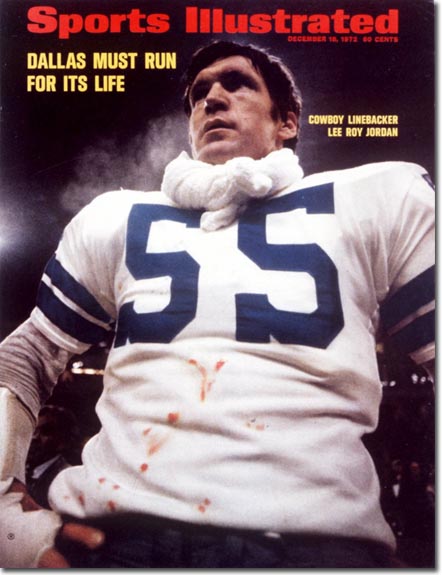
I walked into the meeting just a couple of minutes before it started and as I was walking down the aisle Paul Dennis shouted, “If #55 is not Lee Roy Jordan, I’m never reading your blog again!”

~~~~~~~~~~~~~~~~~~~~~~~~~~~~~~~~~~~~~~~~~~~~~~~~~~~~~~~~~~~~~~~~

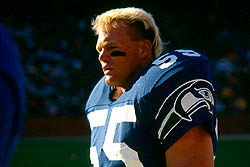
Of course it’s Lee Roy Jordan. Who else could it be, Brian Bosworth?TheBoz

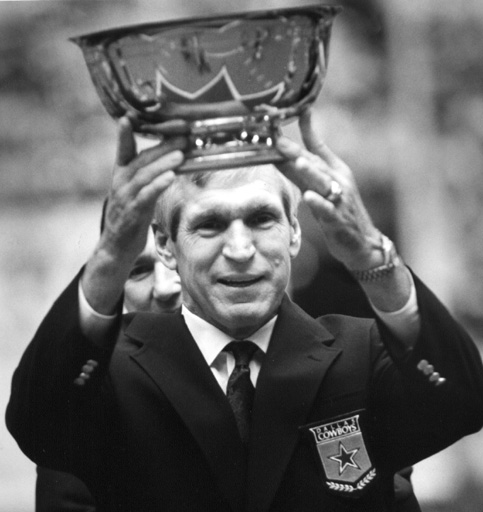
Jordan actually wore the number 54 at Alabama because he played both ways, as a linebacker and an offensive center. But to me, he’s always going to be the #55 he wore as the Dallas Cowboys middle linebacker for 14 seasons. LeeRoyJordanJordan was the Cowboys number one pick in 1963 and “quarterbacked” that Doomsday Defense to three Super Bowls. He was there for every play of those difficult transition from “Next Year’s Champions” to “Super Bowl Champions.” Jordan holds the Cowboys team record for most solo tackles in a career at 743. And he was just passed by Darren Woodson three seasons ago for most total career tackles (1,236 solos & assists combined). Jordan’s solo tackles in a game against the Eagles in 1971 is still a team record.

A contract holdout made things personal between Jordan and Tex Schramm, which kept AboutTimeJordan out of the Ring of Honor until Jerry Wayne bought the team in ’89 and made things right. That was about the only thing, P.R.-wise, Jerry did right in ’89.

Peace,

Allan

Jesus as Our Dictionary & Encyclopedia

Earth’s crammed with heaven.
And every common bush aflame with God.
But only those who see, take off their shoes.
The rest just sit there and pluck blackberries.

                        ~ Elizabeth Barrett Browning

Paul Dennis sent me this quote a few days ago. And it reminded me of the premise of Eugene Peterson’s great book Christ Plays in Ten Thousand Places. In it, Peterson explains that Jesus Christ is at the very center of everything—every single thing that has ever happed, is happening, and will ever happen. Everything that was, is, and is to be is because of the Son of God. Everything that happened before the Incarnation was pointing toward Christ. And everything since that moment is because of Christ. Peterson writes that Christ is “behind and in” all of living creation. And he states that “Jesus is the dictionary in which we look up the meaning of words.” Everything around us exists in and through and because of the power of Christ.

As for recapturing the wonder we used to have about our world and our place in it, nothing works better for me than experiencing it through my daughters. They never cease to be amazed at the things they see and smell and touch and taste at the zoo, at the park, down by the creek, or on the short walk from the driveway to the front porch. I’m assured of at least one excited shriek of delight from one of them every time we’re together. They find the greatest pleasure in the simplest things.

And it helps to remind me that every single thing we experience is given to us by our God. The yellow butterfly that Carley can’t quite catch was sent to our backyard by our Father to make me smile. The chimpanzees that make Valerie laugh were created by the Creator for me. The thunder and lightning that cause Whitney to jump in my lap are gifts from above.

Peterson says we should live this wonderful life with all its experiences and gifts and wonder with Christ. Our lives should not be a performance for Christ, but a life lived with him. And as a minister of the Word of God, I’ve got to try to get people to see the same thing. The Son of God is present in every single breath we take and in everything we see and do. And an increased awareness of that will strengthen our faith and increase our joy as his followers.

~~~~~~~~~~~~~~~~~~~~~~~~~~~~~~~~~~~~~~~~~~~~~~~~~~~~~~~~~~~~~~~

I just started last night reading another Peterson book, Working the Angles, on the three fundamental, inescapable daily practices of the preacher upon which every single thing the preacher is called to do is built: fervent prayer, reading of Scripture, and giving spiritual direction. His premise is that preachers can fake all three of those things and still be respected and regarded and highly paid as great gospel preachers. The introduction and the first 43 pages are gold. I can’t wait to share my thoughts with you on all of this next week.

~~~~~~~~~~~~~~~~~~~~~~~~~~~~~~~~~~~~~~~~~~~~~~~~~~~~~~~~~~~~~~~

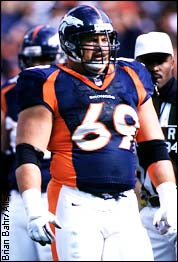
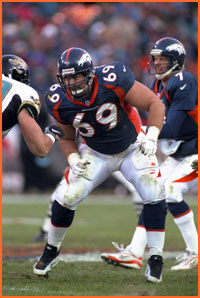
There are 69 days left until football season. And #69 on the all-time jersey number countdown is Denver Broncos great Mark “Stinky” Schlereth. StinkySchlereth won three Super Bowls as an offensive lineman, one with the Redskins and two more with Denver. He was the first ever Alaskan-born player in the NFL. He actually played both ways—on the offensive AND defensive line in college at Idaho. And now he works as a very popular football analyst on ESPN TV and radio. But the thing that distinguishes Schlereth and gets him on my list is his medical record.

28 surgeries plus a kidney stone procedure.

That’s a record.

20 of those surgeries were on his knees—15 on his left knee, five on his right. He’s had surgery on his elbow, back, ankle, and one for a nerve disorder. And they never really slowed him down. He played a Monday night game about six hours after the kidney stone procedure. He lasted 12 seasons and played in 156 games, about twice as much as the average player with no surgeries!Schlereth

But don’t expect me to write about his nickname, “Stinky.” You have to look that up on your own.

Peace,

Allan

« Older posts Newer posts »