Author: Allan (Page 488 of 493)

The Way of Life

“Life is not to be played with; tremendous issues depend on the manner in which it is conducted. Religion is no mere topic of abstract speculation for learned leisure, no empty toy for idle sentiment; it is of vast practical moment, for it deals with the choice of the greatest possible alternatives — life and death.”  ~ W. F. Adeney, 1950

 I was so glad to be invited to teach Jack Roseberry’s Bible class yesterday morning on Jeremiah 21. What a wonderful group of older and wiser Christian brothers and sisters! And what a rich passage of Scripture! 

Jeremiah 21 contains God’s answers to King Zedekiah’s request for information about whether or not God will deliver Judah from the Babylonians the same way he had delivered the Israelites from Egyptian bondage. The connection is unmistakable. The prophet uses the exact same language in the response as is found throughout the Exodus narrative that had forever identified God’s people. Zedekiah asks if God will perform “niplaot,” mighty works, the same word that is used throughout the books of Exodus and Deuteronomy to describe how God delivered his people from slavery. Read Exodus chapters 3-6 and notice how many times God uses “I” in describing the salvation acts — I will, I am, I have, etc., — and see how Jeremiah uses them in his response. What a powerful message that must have been to the people living in Jerusalem, especially to the King and his court, that the very God who delivers his people with mighty works, with an “outstretched hand and a mighty arm,” will use that outstretched hand and mighty arm to perform those mighty works against his people! What a shocking realization! What a complete turning of the tables!

The city is going down. The monarchy is going down. The priests and prophets who had become an abomination before the Lord are going down. But the people don’t have to go down with “this city.” The people are given a choice.

“I am setting before you the way of life and the way of death. Whoever stays in this city will die by the sword, famine, or plague. But whoever goes out and surrenders to the Babylonians who are besieging you will live” (Jeremiah 21:8-9).

The Hebrew word for “goes out” is yatsa, the same word used in the Exodus and Deuteronomy stories for “exodus.” The irony is that instead of going out of the bondage of Egypt to find life in Israel, they must leave the slavery of Israel to find life and freedom in the bondage of Babylon. It’s backwards.

The way of life is always backwards.

Lose your life for my sake and I’ll find it. Throw away your life and I’ll give it to you. Be last and I’ll make you first. Suffer and serve and sacrifice and I’ll give you eternal glory.

God tells his people in Jeremiah 21, just like Moses told the people in Deuteronomy 30 and Jesus told the people in Matthew 7, there are two paths. You can stay in “this city,” this world, with all of its trappings and pleasures and influences, and be led to death. Or you can leave “this city,” this world, this culture, this way of looking at things and this way of believing, and submit completely to God, and be led to eternal life.

The same choice is ours every day. As Moses said, “choose life.”

~~~~~~~~~~~~~~~~~~~~~~~~~~~~~~~~~~~~~~~~~~~~~~~~~~~~~~~~~~~~~~~

It’s a little quieter in the Stanglin house today. Whitney and Valerie are at Three Mountain for a week of summer church camp with Jason and Lance and a whole bunch of Legacy 3rd – 8th graders. So it’s just us and the Bear. Carley, undoubtedly our most sensitive child, was already feeling lonely last night. She gets along with Whitney and Valerie equally well. And she’s already counting down the hours until they return Friday.

~~~~~~~~~~~~~~~~~~~~~~~~~~~~~~~~~~~~~~~~~~~~~~~~~~~~~~~~~~~~~~~

45 days until football season begins. And #45 in our countdown is probably the greatest quarterback in the history of the Southwest Conference: TCU’s Slingin’ Sammy Baugh. SlinginSammyBaughBaugh was THE passing pioneer who truly revolutionized the game. A two-time All-America with the Frogs from 1934-1936, he made passing glamorous. Nobody passed the football until Baugh. Before him, passing was only a last ditch effort on 3rd and 16, down by two scores, in the 4th Quarter. It was never part of a serious gameplan. But Baugh was so good at it and so successful — TCU won the National Championship in 1935 with a 12-1 record (the lone loss was to SMU in the only game Baugh missed that year with injury) — that everyone else in the nation began imitating it.
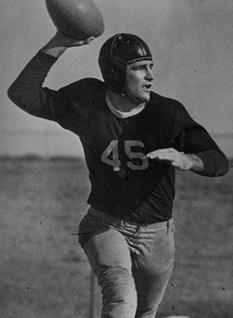
Baugh was the Washington Redskins’ #1 pick in 1937. And when he retired in 1952, he held every single NFL passing record. All of them. Single season. Single game. Career. Every single record. He was, and still is, the best punter in NFL history with a career 45.1 yards per kick average. As a two-way player in 1943, Baugh led the NFL in passing, punting, and interceptions as a defensive back.

Baugh is in the College Football Hall of Fame, the Pro Football Hall of Fame, and the Cotton Bowl Hall of Fame. He was born in Temple, Texas in 1914 and, at 93 years of age, he’s still going strong at his ranch in Rotan.

A couple of years ago I had scheduled a telephone interview with Sammy during a talk show. My producer, Eric Gray, got Sammy on the phone at his house during the commercial break, and when I punched him up on the air, the only thing I could hear was The Who’s “Don’t Get Fooled Again.” I could barely hear Baugh in the background. Barely. We were completely unable to communicate. It was like he was speaking over his own “hold” button. It was definitely on his end. I kept asking him about The Who. And he kept responding with “Who?!?”

It was like a horrible Abbot and Costello routine. And Eric made sure it wound up as the number one moment on my show during our year end top ten moments countdown. I still listen to that segment today, every now and then, and I laugh so hard I cry.

Two-time Heisman Trophy winner Archie Griffen deserves a high honorable mention. But every single quarterback who’s ever had any success in the college and / or pro game owes everything to Slingin’ Sammy Baugh.

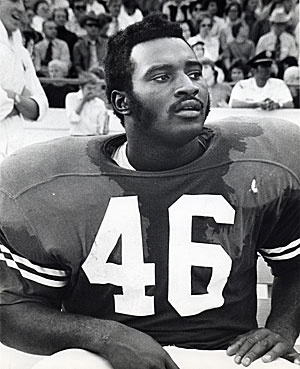
Getting caught up from the weekend, #46 is the very first ever black consensus All-RooseveltLeaksAmerica and the first black superstar at Texas. Roosevelt Leaks finished third in the Heisman voting as a Longhorns running back in 1973, the same year he was the MVP of the SWC. That year Leaks rushed for 342 yards at SMU — a Longhorns road record that still stands — despite fumbling four times! He led UT in all purpose yards his junior and senior seasons. He had two 200 yards games. And he played for nine years in the NFL with the Colts and Bills. Leaks was born in Brenham, Texas. He’s in the UT Hall of Honor and the College Football Hall of Fame. And he currently works in Austin as a home appraiser.
~~~~~~~~~~~~~~~~~~~~~~~~~~~~~~~~~~~~~~~~~~~~~~~~~~~~~~~~~~~~~~~~

One more week of reading your Bible out loud. I’m anxious to hear next week how that’s impacted your study of Scripture and your listening to our God.

Peace,

Allan
The Wrong Question

If preachers today are seen as filling the role of a prophet — speaking a Word from the Lord, on behalf of the Lord, to the Lord’s people — then the preacher’s message has to be counter-cultural. Every Old Testament prophet spoke against the culture of the day and called God’s people to reject the culture and embrace the Lord. The teachings of Jesus and the apostles, all of Paul’s teachings, go completely against culture. And the message is just as relevant today as it was in the first century AD or the third century BC. But can I preach that way every Sunday and still keep the job?

In the prophet Micah’s day, in Judah, God’s people were very well off. They were wealthy. Rich. And their houses and food and bank accounts and their lifestyles dominated what they thought about, talked about, and what they did. Buying more land, building bigger houses, taking longer vacations, putting more money in the bank is what drove God’s people. The next-door-neighbor didn’t matter. The needy family across the street didn’t matter. And the Lord called them on it.

When he confronts them in the opening verses of Micah 6, the people respond in v.8 with a typical, I think, 21st century response: “With what shall I come before the Lord and bow down before the exalted God?”

God’s upset. And their first conclusion was, “How can we improve our worship?” More sacrifices? More oil? Does he want my first born? Should we consider Wednesday nights?

“With what shall I come before the Lord and bow down before the exalted God?”

Let me suggest to you that’s the wrong question. The right question is, how do I live in a relationship with God? How do I love people out of my love for God? God tells them very plainly that if their daily lives don’t reflect justice and mercy and humility and love and service to their fellow man, he doesn’t even want their worship!

I’m afraid we put much more emphasis on the 75-minutes we spend at church on Sunday mornings than we do on the other 6-4/5 days of the week. In fact, I know we do. We devise elaborate worship theologies and, not only bind them on each other, but on other churches. We view others categorically, we judge other people and other churches based on what they do and how they do their 75-minutes.

You can close your eyes during every prayer, you can keep your hands in your lap during every song, you can look up every scripture during the sermon, and you can read Matthew 27 quietly to yourself during communion. None of it matters if you lied to your boss on Friday and plan on lying to him again on Monday. You can clap and raise your hands to contemporary songs led by a praise team, get down literally on your knees during the prayers, and read responsive psalms, it’s not doing you or God any good if you’re cheating your customers or ignoring the poor.

OK. That’s enough. You get the point. This is what I’m preaching during our 75-minutes Sunday — the critical and unmistakable connection between our daily ethics and our worship of our God. It’s been on my mind all week. And now hopefully you’ll chew on it for a couple of days before Sunday.

~~~~~~~~~~~~~~~~~~~~~~~~~~~~~~~~~~~~~~~~~~~~~~~~~~~~~~~~~~~~~~~

I spoke with Bill Podsednik yesterday and he told me that ground will officially be broken by actual construction crews (not by elders & preachers or four-year-olds with plastic spades) either Monday or Tuesday this next week! Before we meet for Bible classes Wednesday evening there will be tractors and dirt movers and dump trucks and orange cones and mud and slop and all kinds of mess all over the west side of our building! Praise God! May we continue to seek his guidance. And may he use our efforts to grow the Kingdom in our part of his world.

~~~~~~~~~~~~~~~~~~~~~~~~~~~~~~~~~~~~~~~~~~~~~~~~~~~~~~~~~~~~~~~

Dell Herod has asked me to remind you that the Fort Worth City Band will play an “Old-Time Band Concert” here at Legacy at 7:00 next Friday night, July 27, to benefit the Legacy Medical Missionary Fund. Dell has the tickets and all the information.

~~~~~~~~~~~~~~~~~~~~~~~~~~~~~~~~~~~~~~~~~~~~~~~~~~~~~~~~~~~~~~~~

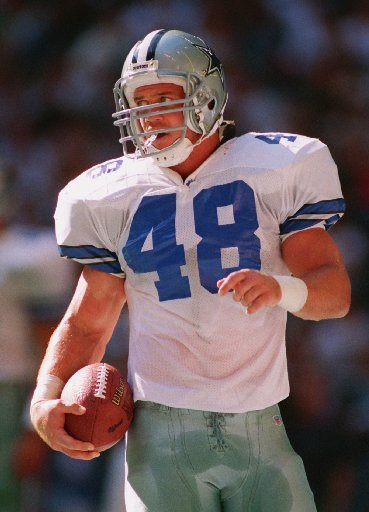
There are 48 more days until football season (only nine more days until VBS, Kipi!) and the best ever #48 is Daryl Johnston. Moose“The Moose” was the Dallas Cowboys #2 pick in 1989 as an All-America fullback out of Syracuse. And he changed the way the position was played in the NFL. Before Johnston played in Dallas, the NFL had never named a fullback to the Pro Bowl. It was kind of a throwaway position, so they just named two starting tailbacks. But Johnston’s value as Emmitt Smith’s lead blocker and Troy Aikman’s pass protector and even a receiver out of the backfield caused the league to change its policy. Johnston was the first ever fullback named to the Pro Bowl in 1993. And he represented the NFC in Hawaii the following year, too.

Johnston helped lead the Cowboys to four NFC title games in the ’90s, and those three Super Bowl titles. He scored 22 TDs in his eleven year career, caught 294 passes, and played in 149 consecutive games. Brandon “Babe” Laufenberg takes credit all the time for giving Johnston his “Moose” nickname. And I’ve never heard anybody deny it. Right now, Johnston is one of the more enjoyable color analysts on NFL TV broadcasts with Dick Stockton on Fox.

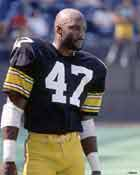
And we’ll get tomorrow’s #47 out of the way since I generally don’t blog on Saturdays. Bald Mel MelBlountBlount, longtime cornerback for the Steelers, (I wanted to choose Dexter Clinkscale, but I just couldn’t justify it) also changed the way his position was played. Blount, out of Southern University in 1970, was the first big, strong, physical corner to really man up and rough up wideouts. He might be the very best bump-and-run cover corner ever. He did have to routinely guard Lynn Swann and John Stallworth in practice. He was the NFL Defensive Player of the Year in 1975 (amazing as a CB), won four Super Bowls, and went to five Pro Bowls. Despite his physical play, Blount was extremely durable, playing in 200 of a possible 201 games during his career.

~~~~~~~~~~~~~~~~~~~~~~~~~~~~~~~~~~~~~~~~~~~~~~~~~~~~~~~~~~~~~~~

Friday13thHappy Friday the 13th.

Go do something crazy today.

Allan

Who's in Charge?

What a culturally stupid question that must have been to ask in the first century Roman Empire. Can you imagine? Who’s in charge? What do you mean who’s in charge?

Put yourself in Ephesus or Pergamum or Smyrna or any of the seven churches to whom John addressed the Revelation. As disciples of Christ, you meet in each other’s homes, huddled up in the back somewhere, whispering your songs, if you sing any at all, and speaking in hushed tones the teachings of Jesus and the apostles. Outide the front door you can clearly hear the footsteps of the Roman soldiers marching down the paved street. Maybe even the sound of chariots as they roll by, pulled by the Emperor’s horses. And you hold your breath until they pass.

On the island of Patmos John watches every single day as the Empire’s trade ships pass by right in front of him, loaded with what the rulers of the world buy and sell—“cargoes of gold, silver, precious stones and pearls; fine linen, purple, silk and scarlet cloth; every sort of citron wood, and articles of every kind made of ivory, costly wood, bronze, iron and marble; cargoes of cinnamon and spice, of incense, myrrh and frankincense, of wine and olive oil, of fine flour and wheat; cattle and sheep; horses and carriages; and bodies and souls of men.”

Who’s in charge? Caesar or Christ? Is it the Emperor or the God of Abraham, Isaac, and Jacob?

What a stupid question. The Roman Empire’s in charge! The Emperor holds the ultimate power. The Empire is all powerful and almighty. It’s everywhere. It controls every facet of everyday life. It cannot be escaped. The Empire owns and runs everything!

That’s the human perspective. And it’s easy to understand why and how that thought would prevail under those conditions at that time. And it’s just as easy, I think, to have that same view today living in America. We’re surrounded by American culture. Who’s in charge? Technology and democracy and entertainment and consumerism and nationalism and marketing and big business; divorce and abuse and murder and rape and burglary and road rage and terrorism and cancer and death; poverty and homosexuality and violence and racism and lying and cheating and selfishness. Who’s in charge? Our culture, which is inescapable? Taking us over? Or our Christ, who sometimes seems oblivious or powerless against the evil in our world, or sometimes even absent?

A culturally stupid question.

The wonderful book of Revelation, the Apocolypse of our Lord Jesus Christ, gives first century Christians living under the tyranny of the Roman Empire and 21st century Christians living under the oppression of American culture the divine perspective on reality. Our human and worldly perspective is blown away by God’s perspective. Revelation gives us an encouraging, faith-building glimpse of the way God sees things, the way they really are. That the Lamb, Jesus the Christ, the Resurrected One rules!

Gary Pence is doing a marvelous job teaching the Revelation in our Wednesday night Bible class. Somehow he manages to teach the entire book every week, and still progress chapter by chapter. And I’m struck every week by the unmistakable message that Jesus is Lord. None of the powers or authorities of this world matter in the big picture. The truth is that the Christ destroys all of it.

“Now have come the salvation and the power and the Kingdom of our God,
     and the authority of his Christ.
For the accuser of our brothers,
     who accuses them before our God day and night,
     has been hurled down.
They overcame him
     by the blood of the Lamb
     and by the word of their testimony;
they did not love their lives so much
     as to shrink from death.
Therefore rejoice you heavens
     and you who dwell in them!
But woe to the earth and the sea,
     because the devil has gone down to you!
He is filled with fury,
     because he knows that his time is short.”    Revelation 12:10-12

~~~~~~~~~~~~~~~~~~~~~~~~~~~~~~~~~~~~~~~~~~~~~~~~~~~~~~~~~~~~~~~

BluebonnetThe sleepy little towns of Johnson City / Stonewall, just 14 miles south of Marble Falls, will be busy for the rest of the week and weekend honoring a Texas legend. Lady Bird Johnson was a Texas icon, the first lady who changed the image of the first lady. She loved her native Texas and gave her life to preserving its natural beauty. Full of grace and kindness, she exemplified everything we want our politicians’ wives to be. It’s difficult, especially if you’ve lived anywhere in Central Texas for any period of time, to look at a beautiful field of Bluebonnets and not think of Lady Bird. There’s a great Dallas Morning News story on her life and legacy right here.

~~~~~~~~~~~~~~~~~~~~~~~~~~~~~~~~~~~~~~~~~~~~~~~~~~~~~~~~~~~~~~~~

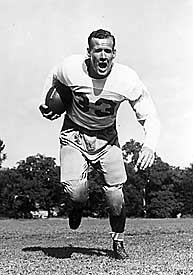
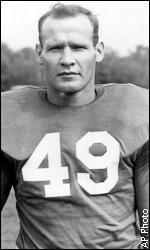
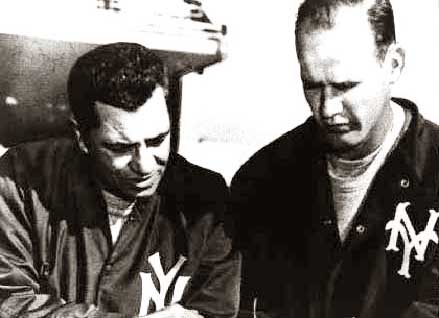
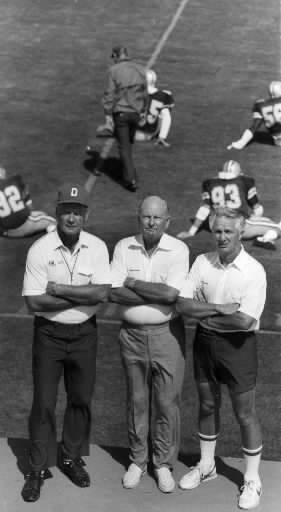
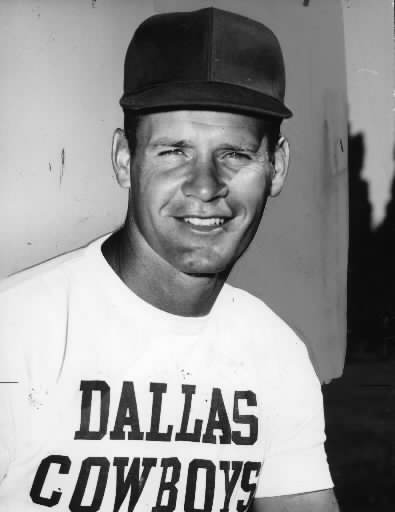
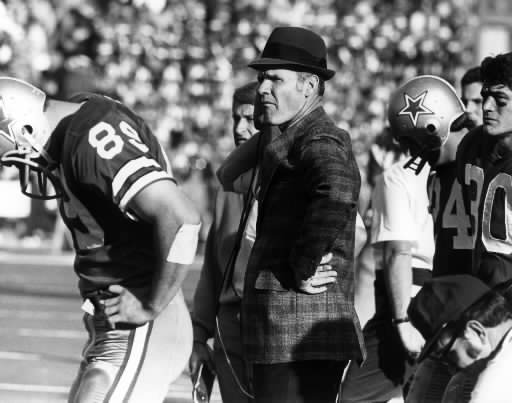
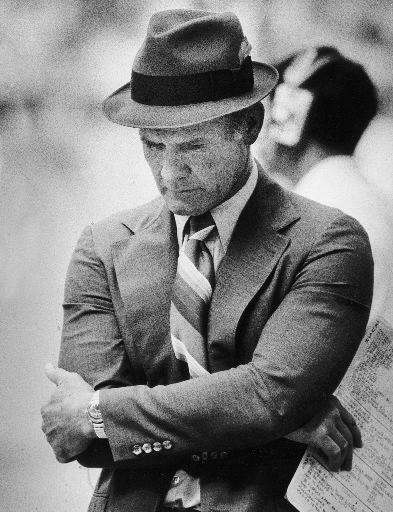
LandryCardThere are only 49 more days until football season. And #49 in the countdown is another Texas icon. The great Tom Landry. Landry wore #33 as the Texas Longhorns team captain in 1947 -48.LandryAtUT But he was #49 with the New York Giants as a defensive back / punter during his short NFL playing career from 1949-55. LandryWGiantsWhen he retired, Landry became the Giants’ defensive coordinator, serving alongside offensive coordinator Vince Lombardi. No wonder nobody can remember that Jim Lee Howell was the head coach during those days. Can you imagine playing for both Landry and Lombardi on the same team? And neither one was the head coach?Landry&Lombardi

It was in New York where Landry invented the Flex Defense, which he took to Dallas when he became the head coach of the expansion Cowboys in 1960. 29 years later “the man in the funny hat,” as Roger Staubach called him, had led Dallas to five Super Bowls, two World Championships, two more NFL championship games, ten NFC championship games, 20-consecutive winning seasons (still an NFL record), and 18 playoff appearances. He’s the third winningest coach in NFL history. And every single coach that’s followed him at Valley Ranch, the six different men Jerry Wayne’s shuffled in and out of there in just 19 years, has paled in comparison to Landry’s success and character.

FirstTriplets   Landry1960   LandrySuperBowlVI   Landry1978   Landry1980s

Landry was inducted into the Pro Football Hall of Fame in August 1990. Carrie-Anne and I had been married for less than a year when we loaded up the ice chest with ham sandwiches and drove the pickup to Canton, Ohio to see the ceremony. We were dirt poor and only ate out one time during that five day trip. It was months before either one of us could eat another ham sandwich. Since we had eloped in Las Vegas and I had to be at work in Pampa the next day, I always tell C-A, jokingly, that the trip to the Hall of Fame eight months later was our honeymoon.

Landry flew 30 missions with the Air Force during World War II. The high school football field in Mission, Texas is named after him. And if Jerry Wayne doesn’t name the new stadium in Arlington after him (he won’t), he’s a fool.

Tom Landry, for a thousand reasons, is the best to ever wear #49.

Peace,

Allan

Being a Spiritual Director

Eugene Peterson’s third and final angle in Working the Angles: The Shape of Pastoral Integrity is spiritual direction—the preacher fulfilling his role as a spiritual director, giving spiritual direction to the people God brings to him every day. Peterson describes it as “teaching people to pray, helping them discern the presence of grace in events and feelings, affirming the presence of God at the very heart of life, sharing a search for light through a dark passage in the pilgrimage, guiding the formation of a self-understanding that is biblically spiritual instead of merely psychological or sociological.”

We preachers probably do it much more than we realize because we don’t really give this part of our ministries a name. But we’d probably do even more of it if we weren’t so tightly scheduled or so intently involved in completing the current project. We would do it more consistently and more skillfully if we realized how much more important it is than anyone ever tells us.

Spiritual direction means “taking seriously, with a disciplined attention and imagination, what others take casually.” Like “pray for me” is usually a fairly casual remark. But a preacher who takes his role as spiritual director seriously gives that remark his full attention. It’s paying serious attention to every single person and every single situation and seeing it all as eternal, not ephemeral. The perspective is that everything that happens is essential, not accidental. Our natural tendency, I think, is to pay very special attention to the big things, the “things that matter.” I’ll spend an entire week working on the sermons and the worship services. Those things, done in front of a thousand people every Sunday, dominate my daily thoughts. I’ll practice it. I’ll pray about it. I’ll study it and worry over it. I’ll give it my full attention. But being a spiritual director means giving that same attention and concentration and intensity to EVERYTHING and EVERYBODY.

Again, Peterson says if we can cultivate an attitude of awe and go into every encounter with every person prepared to marvel at what God is doing in that person’s life, this becomes a very natural thing.

“This face before me, its loveliness scored with stress, is in the image of God. This fidgety and slouching body that I’m looking at is a temple of the Holy Ghost. This awkward, slightly asymmetrical assemblage of legs and arms, ears and mouth, is part of the body of Christ. Am I ready to be amazed at what God hath wrought, or am I industriously absorbed in pigeon-holing my observations? Why is it that the minute a person sits down in front of me…I so quickly abandon my basic orientation and the texts that I have pondered and preached and taught for all these years and take up with half-digested slogans and formulae that I pick out of the air of contemporania?”

I’m trying so hard to see God and God’s work in every single person I meet and in every conversation I have. As I’m visiting with people, I try to focus on the fact that God has been working in this person’s life since he or she was born. And the circumstances this person finds himself in now is, again, God at work. God has plans for this person. God is bringing some purpose long in process to fulfillment right now.

My tendency, when anyone steps into my study, is to try to fill that person’s head with all the stuff in my head. But as a spiritual director, I have to understand that it’s not heads involved here, it’s hearts. It’s lives. My focus should be, “What has God been doing with this person before he or she showed up in my study?” God has been at work with this person since birth. Everything that has taken place in this life has in some way or another taken place in the context of creation and salvation. Everything. All of it. And I have to apply that same urgency and intensity to every situation.

~~~~~~~~~~~~~~~~~~~~~~~~~~~~~~~~~~~~~~~~~~~~~~~~~~~~~~~~~~~~~~~

YoungSitsIf baseball has to award home field advantage in the World Series in some contrived, trumped up publicity stunt, do it with the in-season interleague games, not the All-Star Game. The All-Star Game has very little, if anything, to do with the way a regular season game or a playoff game is managed or played. Very little. How in the world is it that Rangers shortstop Michael Young didn’t even make an appearance in last night’s classic? Has the reigning All-Star Game MVP ever been forced to watch the entire game, all nine innings, from the dugout rail? How does that happen? Evan Grant’s game re-cap in the Star Telegram contains a beautiful line: “if that wasn’t enough, Young had to stand next to — and act like he was listening to — Alex Rodriguez in the game’s final innings. Talk about punishment.”

Ever since Bud Selig began using the outcome of the All Star Game to determine home field advantage in the World Series, it’s been Texas Rangers who’ve played dramatic and critical roles in giving it to the AL. Hank Blalock that first year, Soriano, and Young. But last night, Mike didn’t even get a chance. Still, former Rangers pitchers Chris Young and Francisco Cordero, both on the NL squad, did give up homers to AL hitters last night. So that Rangers streak of All-Star irony continues.

~~~~~~~~~~~~~~~~~~~~~~~~~~~~~~~~~~~~~~~~~~~~~~~~~~~~~~~~~~~~~~~~

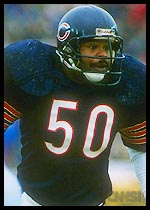
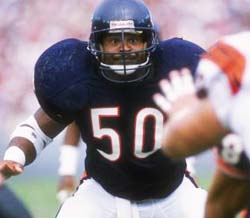
50 days until football season. And like yesterday’s #51, today’s #50 in the countdown is a hands-down no-brainer. Just like yesterday’s, today’s player is a middle-linebacker for the Chicago Bears. But unlike yesterday’s, today’s is a Texan all the way through.MikeSingletary Mike Singletary was born in Houston, played his college football at Baylor (where he wore #63), and then spent his 12 year NFL career with the Bears. What an amazing defense those Bears (Da Bears!) had in the ’80s! And Singletary quarterbacked it.

He was the number one or number two top tackler on the Bears every season he played. He went to ten straight Pro Bowls and was named NFL Defensive Player of the Year twice (’85 & ’88). And you have to remember those eyes!

SingletaryEyesIntense. Wide open. Scanning the entire field and taking in every nuance of the offensive formation, the shifts, the motion, the signals, everything in a matter of three or four seconds. The Bears had the great Walter Payton in those days. But it was the defense that shut down opponents and took them to the franchise’s only Super Bowl victory in 1985. They beat the Cowboys that year 44-0. And Dallas won their division that season.

~~~~~~~~~~~~~~~~~~~~~~~~~~~~~~~~~~~~~~~~~~~~~~~~~~~~~~~~~~~~~~~~

Look at these two sweeties! LittlePrincesses

Camryn Pope invited Carley last night to Cinderella at the Bass Concert Hall in downtown Ft. Worth. They had a ball! And Carley was home before midnight.

Peace,

Allan
On Scripture, Butkus, and the Stanglin Sherd

In Eugene Peterson’s Working the Angles: The Shape of Pastoral Integrity the author makes a clear distinction between reading Scripture and hearing the Word of God, between information and revelation as it relates to the Bible. We have to understand that most of the Bible was written many generations after the events they describe. Most of Scripture had a long oral existence before it was written. The words in our Bible were taught and preached and sung and prayed in worshipping communities for years and decades before they were ever written down. They were passed from mouth to ear. None of the words were shelved in libraries or displayed on the coffee table. The words resonated from ear to ear down through all the generations of God’s people.

Here’s Peterson on this second angle of maintaining integrity for preachers, and for all of us in our Christian walks:

“Listening and reading are not the same thing. They involve different senses. In listening we use our ears; in reading we use our eyes. We listen to the sound of a voice; we read marks on paper. These differences are significant and have profound consequences. Listening is an interpersonal act; it involves two or more people in fairly close proximity. Reading involves one person with a book written by someone who can be miles away or centuries dead, or both. The listener is required to be attentive to the speaker and is more or less at the speaker’s mercy. For the reader, it is quite different, since the book is at the reader’s mercy. It may be carried around from place to place, opened or shut at whim, read or not read. When I read a book the book does not know if I am paying attention or not; when I listen to a person the person knows very well whether I am paying attention or not. In listening, another initiates the process; when I read I initiate the process. In reading I open the book and attend to the words. I can read by myself; I cannot listen by myself. In listening the speaker is in charge; in reading the reader is in charge.”

Up until just the past 550 years, with the invention of the printing press, reading was always an oral act and a community event. Every act of reading revoiced the written words, the connection with the living voice behind the words was emphatic. But today, when nearly all reading is silent, the connection with the living voice is remote at best, and usually gone altogether.

In the past two years, I’ve taken to reading my Bible out loud. All of it. During my daily Bible reading in the mornings, while I’m studying and preparing for a Bible class or a sermon, whenever I read the Scriptures I read them out loud. Think about it. You and I can have a theological conversation about salvation or the relationship between faith and works or God’s sovereignty versus man’s free will. And in that conversation, you and I will communicate with inflection and stress on certain words and phrases and varying degrees of volume and urgency and passion. We’re talking and listening, communicating right now, in the presence of each other, hearing the living, breathing voice of the other. But if we were to have the exact same conversation with the exact same words via email…..you know. You’ve been there. It’s just not the same. There’s a lot lost between reading and listening. A lot.

Reading the Bible out loud has changed my life. Anybody who talks to me about reading the Word, anyone who asks me how to improve their study life, I always tell them to read the Bible out loud for two weeks, every day, and then get back with me. They’ve all experienced what I experience, the living, breathing Word of God speaking to them. Listening to the Word of God, hearing the Word, in a way they can’t by simply reading.

That’s why, in our assemblies, I’d much rather not put the words of the Scripture being read on the giant screen. I’d much rather have a good reader, one who’s been reading the passage and praying over the passage and meditating on the passage for a few days, read it out loud to our congregation. I’d much rather the church LISTEN to the Word than READ it. As a preacher, isn’t it my job to make sure that the revelation of God, which always involves personal histories and personal responses, isn’t treated as just information, which usually involves impersonal facts and abstract ideas?

Do me a favor. Read your Scriptures out loud for the next two weeks. And then let me know how it changes your daily devotion and your study of the Word. Let me know how it changes the way you listen to God speaking to you. Do it. Find a time and a place where you can be alone and do it. In two weeks I’ll ask you to comment on this blog and share with our readers your experiences. I’m very much looking forward to it.

~~~~~~~~~~~~~~~~~~~~~~~~~~~~~~~~~~~~~~~~~~~~~~~~~~~~~~~~~~~~~~~~

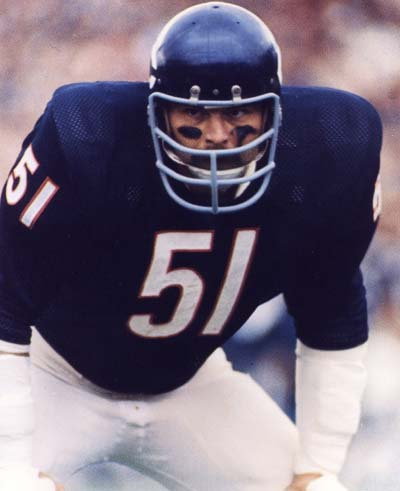
Yes, Bevo, #51 is Dick Butkus. Hands down. No debate. THE middle linebacker that defined the Monsters of the Midway in Chicago from 1965-73. DickButkusButkus was the Bears’ first-round pick out of Illinois where he was a two-time All-America two-way player (he was actually born in Chicago in 1942) and manned the middle of that tenacious Bears D for 14 seasons. He had the deadliest combination of speed, quickness, instinct, and strength. And he was mean. After eight straight Pro Bowls, his brilliant career was cut short by a knee injury. He’s in the college and pro football halls of fame. And he made a few commercials along the way. Old clips of Butkus pulverizing running backs are beautiful to watch. He showed no mercy. What happened to guys like Butkus? *sigh*

~~~~~~~~~~~~~~~~~~~~~~~~~~~~~~~~~~~~~~~~~~~~~~~~~~~~~~~~~~~~~~~~

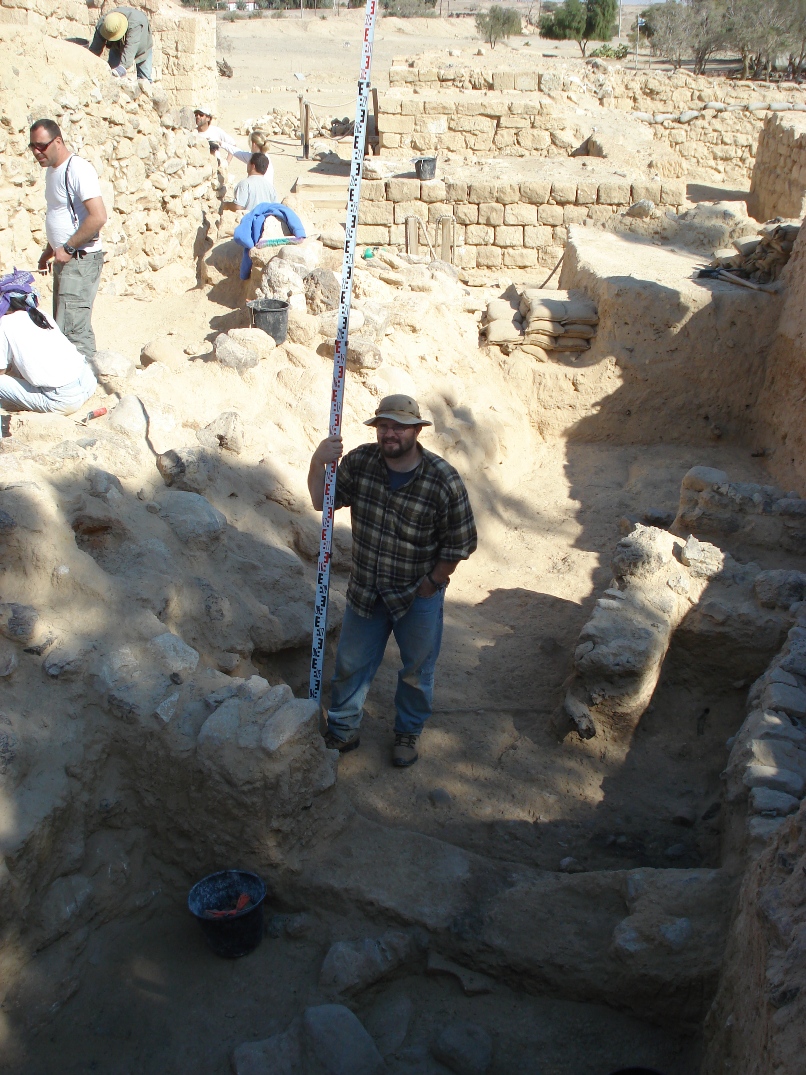
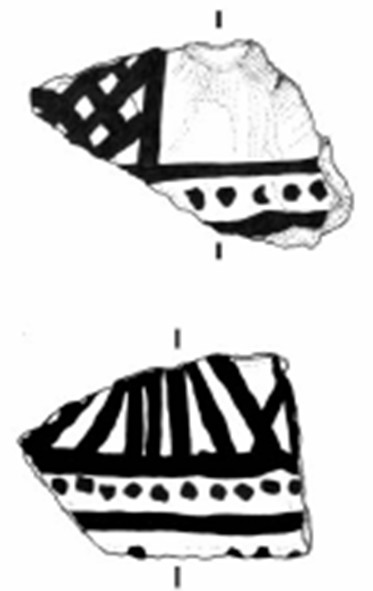
On my two week trip to Israel back in January, I was fortunate enough to be in the right place at the right time to uncover a tiny piece of history that may prove to be a major link to one of King Solomon’s fortresses in the desert just south of the Dead Sea. We had the privelage of working with the Israel Antiquities Authority at an excavation site in present day Hazevah. For years now Dr. Mark Shipp at Austin Grad and our archaeologist Terrance Christian have been totally convinced that this site, in ancient Tamar, is a 10th Century BC fort that Solomon built. They’ve had tons of circumstantial evidence, not to mention the Old Testament mentions of Solomon building a fort there, but they’ve never been able to officially, by archaelogical standards, date it to the 10th century. And then I uncovered AtTamara broken pottery sherd StanglinSherdat that fortress level that got everybody pretty excited. It’s a painted piece that they knew at the time was Midianite. They also supposed it was tenth century. I jokingly refered to it as the Stanglin Sherd the rest of the trip. I wondered aloud about just how many accolades I would recieve in archaeological journals and how many speaking engagements I’d have to make at the world’s museums. And then I get this email yesterday from Terrance.

I don’t know if Shipp mentioned it to you or not, but your sherd is actually one of the most important pieces we found this season. It is definitely a type of pottery referred to as Midianite Ware or Qurayya Ware (Qurayya is the site in modern Saudi Arabia where it was produced at). What is so special about your piece though, is that the simple dots in a line motif on it has a direct parallel to some of the pottery found at nearby Khirbet en Nahas (in modern Jordan) — which was recently dated to the 10th century BC. We were hoping to establish some kind of connection/interaction between Hazeva & Kh. en Nahas — and your sherd is a key piece of evidence in establishing the link between the two sites! One of the goals of my current research, and for next year’s excavation, is to try and parse out exactly what was happening at Hazeva in the 10th century in order to understand its relationship to the fortress and copper smelting works at Kh. en Nahas. Shipp, Bowman and I will be visiting Jordan after the tour/dig next year to try and answer some of those questions! See the picture I’ve attached of the parallels to your sherd found at Khirbet en Nahas. If you want to see where Kh. en Nahas is in relationship to Hazeva, use Google Earth. Hazeva is at coordinates 30 degrees 48 minutes 32.11 seconds North by 35 degrees 14 minutes 41.33 seconds East — best viewed around 1900 to 2000 feet elevation. Khirbet en Nahas is at 30 degrees 40 minutes 51.65 seconds North by 35 degrees 26 minutes 10.37 seconds East, also best viewed ca. 1900 feet. You’ll notice the square fortress at both sites right off.

How cool is that?!?

I’m hoping we can get a big group of 40-50 people here at Legacy to take a trip to Israel with Terrance here in about three years. He says he’ll be our tour guide and we can take a similar trip to sight-see and actually work three or four days at a dig or just go to see all the sites without the dig. I can’t wait.

Peace,

Allan
The Angle of Prayer

Eugene Peterson’s Working the Angles: The Shape of Pastoral Integrity holds up prayer, Scripture, and spiritual direction as the three foundational elements to Christian ministry, specifically for “located preachers.” Without continual daily attention to these three very private acts, the preacher’s ministry is shallow and shadow—of this world, not of Heaven.

On the subject of prayer, Peterson articulates the problem for, not just preachers but, all of us. Busyness. We have too much going on. Too many projects, too many phone calls, too many meetings, too many interruptions, too many school and athletic events, and way too much to do even in our leisure time. It’s endemic to our culture in the United States. As preachers, we live right in the middle of two different sets of demands that seem to cancel each other out: we must respond in love and kindness to the demands of the people around us, demands that “refuse to stay within the confines of regular business hours and always exceed our capacity to meet them all” and at the same time we must respond with reverent prayer to the demands of God for our attention, “to listen to him, to take him seriously in the actual circumstances of this calendar day, at this street address, and not bluff our way through by adopting a professionalized role.”

The only kind of prayer and prayer life that is appropriate as a response to our loving Father is the kind of prayer that is only entered into slowly and deliberately, the kind of prayer that takes time. It’s not prayer-on-the-go or prayer-by-request. It means entering large blocks of quiet time with my God where “wonder and adoration have space to develop.”

Is that even possible for an American preacher today?

It has to be.

You know yourself from teaching and from personal experience that seasons of deep meaningful prayer, communion with your God, sharing and listening and speaking with your Father, are always the times in your life of revival and rejuvenation. Empowerment and encouragement. There is certainly room for those on-the-go prayers. Praying in the truck rolling down Airport Freeway or over your Big Mac at MickeyD’s is honored by God. But without intentional chunks of prayer time each day—set-aside time to bask alone in the presence of the Father—our families and our churches suffer. My wife and my three daughters suffer when I neglect prayer. So does the Legacy Church of Christ.

Prayer acknowledges my faith in God to provide all my needs. It recognizes God as the giver of life. And it’s our demanded response to God. He started the conversation. He’s the one who spoke first. Every single thing we say to God in prayer is our response to his initial speaking in our lives.

For the past two years I’ve been involved in a daily Bible reading schedule that includes a Psalm or two every day. And I find myself praying the Psalms. All the time. Just like God’s people have for all time. The Psalms were the prayer book of Israel; they were the prayer book of Jesus; they are the prayer book of the church. At no time in the Hebrew and Christian centuries (except for maybe ours) have the Psalms not been at the very center of all prayer thought and prayer practice. John Calvin said the Psalms are “an anatomy of all the parts of the soul.” Everything that a person can possibly feel, experience, and say is brought into expression before God in the Psalms.

Read the Psalms. Pray the Psalms. Use the language. Use the word-pictures. Use the thoughts in the Psalms to express yourself to God in prayer.

~~~~~~~~~~~~~~~~~~~~~~~~~~~~~~~~~~~~~~~~~~~~~~~~~~~~~~~~~~~~~~~~

It’s very, very quiet in the office today. Lance has a group of middle school students at a camp in Oklahoma City and Jason is on his way to Mississippi on a mission trip with the high schoolers. Suzanne’s on the Mississippi trip, Kipi’s locked in to VBS mode with just 12 days to go, and Bonny’s still putting her office back together after the “Flood of July 2.” After five straight days, the buzz of the fans and the de-humidifiers in the building are gone. And today’s the 4th straight day without any rain at Stanglin Manor. The yards are still soggy. But I got more work done outside Saturday than I’ve done combined since we moved in. Edging the curb and driveway with a weedeater was like digging a trench with a cereal spoon. I battled it for well over an hour. I think it ended in a draw.

~~~~~~~~~~~~~~~~~~~~~~~~~~~~~~~~~~~~~~~~~~~~~~~~~~~~~~~~~~~~~~~~

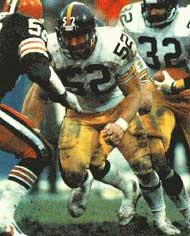
There are 52 days until football season and my #52 is another Steeler from the ’70s, MikeWebstercenter Mike Webster. He was tough. He played in every single game during his first ten seasons, he started in 150 straight games, and missed only four total in his 16 NFL seasons. He won four Super Bowls with the Steelers and ended his career with the Chiefs.

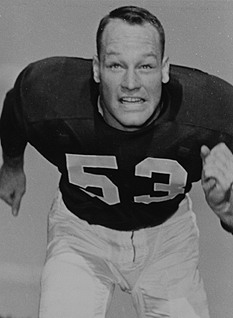
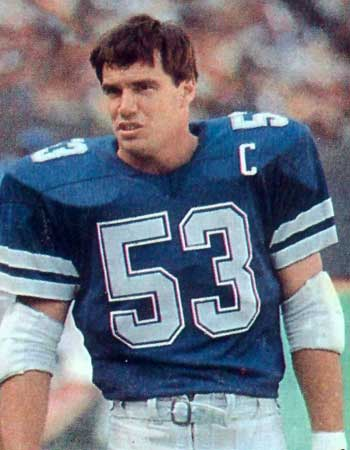
Getting caught up on the countdown from the weekend will be a little more fun. #53 is not Bob Breunig, although he deserves honorable mention. My #53 is a great two-way star for the OU Sooners during the ’50s, linebacker/center Jerry Tubbs. Tubbs never lost a single football game during his three year career at Oklahoma. JerryTubbsHis 31 wins were part of that legendary 47-game winning streak and two national titles from 1954-56. He was an All-America at linebacker, he won the Walter Camp Award, and he actually finished fourth in the Heisman Trophy voting in 1956.

Tubbs was the Chicago Cardinals top pick in the ’57 draft. And he was acquired by the Dallas Cowboys in 1960 during their expansion draft. After he finished playing, Tubbs served as an assistant coach for the Cowboys under Tom Landry for 21 years, an integral part of that run of five Super Bowl appearances in the ’70s. And to top it off, before any of his college and pro success, Tubbs won two Texas State High School Football Championships at Breckenridge.

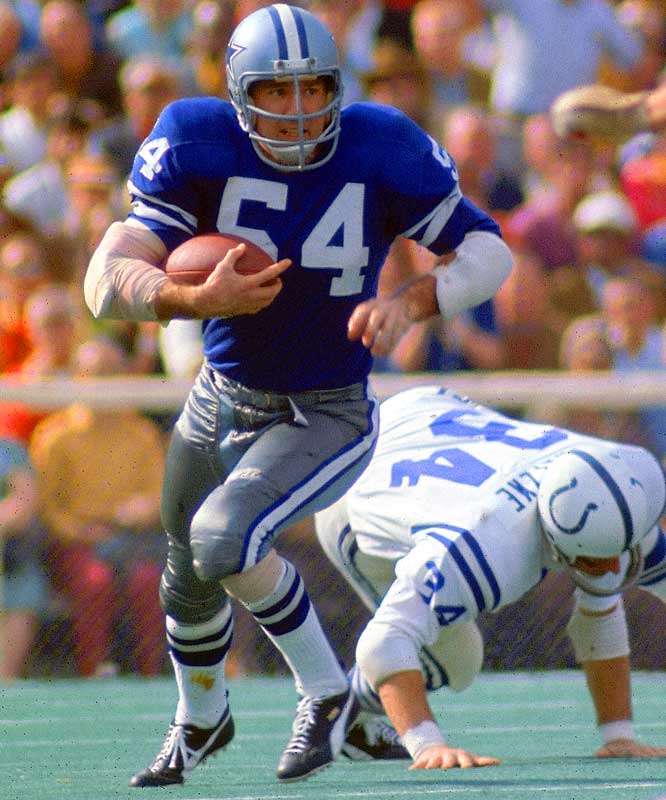
And #54 is also a long-time Dallas Cowboy, linebacker Chuck Howley. He played three seasons for the Bears before coming to Dallas for draft picks in 1961 and played for ChuckHowleyLandry for 13 years. He went to six Pro Bowls and two Super Bowls, losing the heartbreaker in the Blunder Bowl on Jim O’Brien’s field goal and winning big the following year over Miami. Howley was named the MVP of Super Bowl VI, the only MVP ever to be named from the losing team. Landry called Howley “the best linebacker I ever saw.” And that’s good enough for me.

Now, to all you Randy White fans, let me present a technicality. I get the “Manster” and Howley both on my list because Randy White wore the #94 in college at Maryland. One of these days I’m going to list all 99 of the best football players ever on this blog and you’ll see White at #94. We were doing the countdown on 990AM one summer and actually had the equipment manager at Maryland, who was there back when White played, custom make a replica Randy White #94 Terrapin jersey for us. We were doing our show live from some pool hall somewhere in North Dallas and had Randy White there with us live and he gave the jersey away in a drawing.

The other Randy White story involves Carrie-Anne. White was signing autographs at some shoe store or something at a mall in Austin. This was back in 1990 or ’91. We didn’t have kids yet. And White actually stopped C-A and asked her if she wanted his autograph. She replied, “No, not really.” And that floored him. He couldn’t believe it. He asked her two or three more times, “Are you sure you don’t want my autograph?” And she just kept saying, “No, not really, no big deal, no thanks.” It was so funny. It has to be the only time in history a Dallas Cowboys Hall of Famer has ever been rejected like that.

Tomorrow’s #51 requires no explanations. It’s a no-brainer. Automatic. Hands-down. No debate.

Peace,

Allan
« Older posts Newer posts »