Author: Allan (Page 338 of 492)

Reexamine Our Positions on Instruments

We’re continuing our chapter-by-chapter reflection of Leroy Garrett’s “What Must the Church of Christ Do to Be Saved?” with a move toward some very specific issues. I would remind as we get into these issues together that most people who discuss them speak in terms of “salvation issues.” Generally, those arguing for more freedom and more grace and bigger-picture thinking in these areas argue that they are not “salvation issues.” Those who argue for more rules and strict adherence to those rules claim to do so because these are “salvation issues.” Allow me to suggest that they are all “salvation issues.” My understanding of “salvation” has led me to conclude that everything is a “salvation issue.”

We get into discussions about “salvation issues” and we start ranking things in order of importance to God, in terms of what’s going to save us or condemn us. And we’ll talk about baptism and church and the authority of Scripture — sometimes we’ll even talk about worship styles — but we never talk about helping the poor or being kind to our enemies. Scripture maintains that those are actually the weightier matters. God has already spoken and made it very clear that he doesn’t give one rip about what we do in our worship to him if our lives are not consistent with his glory. If our lives are not about grace and forgiveness and acceptance and love and service, then whatever else we do with these so-called “salvation issues” simply doesn’t matter. In God’s book, salvation lies in the attitude of the heart. In God’s book, the motivations are what matter. Therefore, in my book, everything’s a salvation issue.

Where’s your heart? Are you motivated more by the Law or by the Spirit? Are your actions and thoughts Christ-like in that you’re considering the needs of others more important than your own? Do you tend to judge and condemn more than you love and accept? See? Salvation issues.

With that foundation in place, let’s consider Garrett’s eighth suggestion for saving our branch of the Christian faith:

Reexamine our position on instrumental worship.

Instead of writing this chapter of the book himself, Garrett gives us an article by Bob Shaw, a Church of Christ preacher in Alberta, Canada. Shaw preaches at an a cappella church and for 25 years fought bitterly against the use of musical instruments in corporate worship. But now he’s changed his stance. Today he sees the question of organs and guitars and drums as a matter of personal preference and congregational choice. Garrett and Shaw both claim we must all come to the same conclusion if the Churches of Christ are to be saved as a viable voice in the Kingdom.

Shaw lists eight reasons why he changed his position on instrumental music during Christian worship, some of them much better than others:

1. All biblical references to singing are addressed to the individual Christian and not to the assembled church. To be consistent, we’d have to say instrumental worship is as wrong at home and in our cars as it is in the auditorium on a Sunday morning. That’s a position we don’t normally take.

2. God is a just God. He’s not going to condemn millions of people for violating a law that’s not even found in the Bible.

3. If this were an important matter, God could have easily made it clear in the Bible. It would have only taken one line!

4. The psalms would not call on God’s people to do something that is sinful.

5. Good, honest, knowledgeable Christians do not see this issue the way we do. They respect the authority of Scripture just as much as us, yet they come to different conclusions.

6. The Bible does not clearly teach that instrumental music in worship is sinful.

7. God would not command the use of musical instruments in the Old Testament, condemn them in the New Testament, and then approve of them again in heaven (Revelation 15:1-3). A merciful and loving God would not give out instruments in heaven after condemning millions of others for using them.

8. The basic problem in all this is distinguishing between matters of faith and matters of opinion. The same argument that condemns instrumental music condemns Sunday Schools, Vacation Bible Schools, multiple cups for the Lord’s Supper, four-part harmony, and on and on. Until we realize that these are opinions over which we can agree to differ, we will continue to divide.

Again, some of these reasons are decent, some are better than others, and some of them, honestly, just don’t hold much water in a serious theological discussion. Shaw’s eighth reason there carries the most weight with me.

Here’s my personal angle on all this:

I favor the use of a cappella music in our corporate worship assemblies. I believe I will always push for a cappella , I will always teach a cappella, and I will always hold up a cappella as the best way for God’s people to sing praises to our Creator and Savior. I can definitely argue that from a historical position. That’s easy. During at least its first 700-900 years, Christ’s Church did not employ instruments of music in worship. I think I could also make a fairly decent argument theologically. There’s something about the many voices forming the one song; the many gifts, the many parts, becoming one, much like Jesus’ Church itself. Admittedly, however, I cannot make the argument from Scripture. It’s just not there.

In judging others and drawing lines of fellowship around the issue of musical instruments in worship, we have horribly distorted one of our fundamental Stone-Campbell maxims. We speak where the Bible speaks and, where the Bible is silent, we speak even more!

The “salvation issue” is in the way we label and accuse, divide and condemn, over musical instruments. The “salvation issue” is in the way we make up rules and draw inconsistent lines around our practices to protect a doctrine that doesn’t exist. It’s in the ways we interpret Scripture by one method when it suits us and by another method when it suits you. You know, the way we treat this issue communicates something to our people. It absolutely communicates. It communicates to our own people and it communicates to the outside world.

The ways we interpret the Bible and approve our policies sends the message to all who are still listening that Christianity is about following rules and drawing lines and adhering to boundaries. Never mind that the rules and boundaries make no sense. Following Jesus means following rules.

We must stop telling our people that it’s OK to worship in that way over there but not this way in here. We must stop telling our teens that it pleases God to sing that song in that room but singing this song in this room is a sin. We must stop telling one another that there’s nothing wrong with worshiping God in that style on this day but not in this style on that day. We’ve lived so long with and in our vain practices of protecting  our own comfort zones and comfort rules that many of us will insist that weddings and funerals are not worship services. When you tell me that an assembly of Christians in the worship center in which the gathered men, women, and children sing songs of praise and thanksgiving to God, prayers are offered to God in the name of Jesus, Holy Scripture is read, and a sermon is preached from the Bible is not a worship assembly because the family of the deceased brought in a violist to play “Amazing Grace,” it makes no sense! Our kids are not stupid. Neither are the people we claim to be trying to win for Christ. They see right through this stuff. And I don’t blame them.

I agree wholeheartedly with Shaw’s final plea in this eighth chapter:

I would not favor going headlong in adopting instrumental music in a Church of Christ… It is right for us to sing a cappella as a matter of personal conviction. It also preserves unity among us. It is our attitude that we must change. Our neighbors resent our unloving, unaccepting, and condemnatory attitude toward those who differ with us, even when they envy our ability to sing. We must come to see a cappella singing as our tradition, the method that is better for us, and not a matter of faith and salvation for everyone else. Unless we do, honest, truth-seeking, unity-minded brothers and sisters will continue to leave us.

I’m blessed to belong to a church family and to serve with church leaders here in Amarillo who are completely committed to our a cappella heritage. We view it as something of which to be very proud. We love it. And we’re dedicated to it. And not one of us can ever imagine that changing. At the same time, we understand that musical instruments in a sermon video, in an announcement, during a wedding or a funeral or a youth campout, or as accompaniment to some special music even in a Sunday assembly in no way compromises that commitment. In no way. We refuse to condemn those who worship with a band. We accept as brothers and sisters all those who submit to the Lordship of Jesus and are striving to live their lives in ways that bring glory to God.

Afterall, it is a salvation issue, right?

Peace,

Allan

Resurrect the Spirit of McGarvey

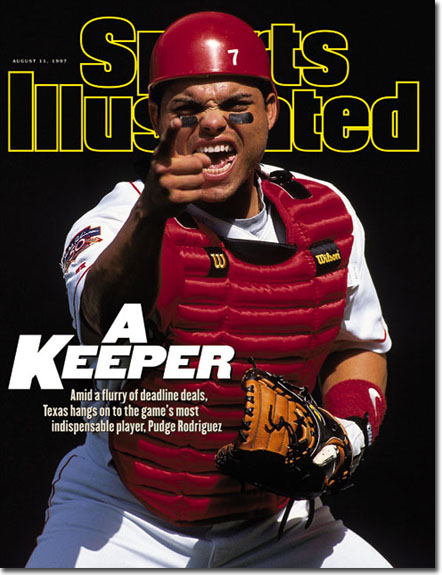
See?!? Pudge did throw out the first pitch from behind home plate!

~~~~~~~~~~~

Today, we jump back into the middle of our chapter-by-chapter review of Leroy Garrett’s “What Must the Church of Christ Do to Be Saved?” I appreciate so much the encouragement you’re giving me via phone, email, text, and quick hits in the church foyer. I really do appreciate it. Again, the ideas and ideals presented in this book are important. The conversations they provoke are critical and must be had if we are to remain a viable voice in the greater Christian community.

Garrett’s seventh suggestion takes us back to the beliefs and practices of one of our early Church of Christ pioneers:

Resurrect the spirit of J. W. McGarvey.

McGarvey (1829-1911) studied at the feet of Alexander Campbell at Bethany College and became one of the best known and most highly regarded preachers in the Stone-Campbell movement. Throughout Kentucky and Tennessee, and beyond, McGarvey’s scholarly credentials were unmatched and unquestioned. He wrote a popular and highly influential commentary on Acts that still impacts a lot of our heritage today. And he vigorously, adamantly, unflinchingly opposed instrumental music in worship.

He fought against organs in our churches for decades. He fought hard. He was the first to argue that instruments in the church was a sin. McGarvey is the one credited with forming our arguments against instruments, including the “argument from silence” (which I once used passionately, even though I knew it didn’t make sense). Yet, while he argued and debated against the instruments in corporate worship, he absolutely refused to divide over the issue. That mindset — we can disagree without dividing; disagreeing is fine, dividing is a sin — is what Garrett says must be resurrected among our people.

[McGarvey] lived in the eye of the storm of the controversy that led to the separation of Churches of Christ, formerly recognized in 1906. It is noteworthy that in spite of his opposition to the organ, he refused to make it a test of fellowship, and when the Churches of Christ finally separated over the organ question, he refused to go along. He believed that the Movement did not have to divide over such differences, that there could be “organ” churches and “non-organ” churches and still maintain fellowship.

Even though he left his old home church when it brought in the organ, he did not break fellowship with that church. He still visited and occasionally preach for them, and that is where his funeral was conducted. In short, McGarvey was not a sectarian or an exclusivist. If the Churches of Christ are to be saved, they must resurrect the spirit of McGarvey. Like him, they can be strong in their convictions, including being non-instrumental, without consigning to hell all those who believe and practice differently. Like McGarvey, the Churches of Christ must not make a cappella singing a test of fellowship. Again, like McGarvey, we can even say that for us instrumental music would be a sin in that it would violate our conscience to use it in worship, but we must not make it a sin for others. We must allow for honest differences on such issues.

Garrett also points out in this chapter that David Lipscomb couldn’t understand that McGarvey was opposed to instruments in worship but also supported missionary societies. He didn’t see how McGarvey could be opposed to multiple cups for communion and, at the same time, teach and preach in favor of cooperative efforts among different denominations.

McGarvey couldn’t be labeled. He couldn’t be pegged. That’s the beauty of his outlook, his theology, his practices. He sounds so “Church of Christ,” but he was actually of the “Disciples of Christ” stream. How he believed and behaved, how he lived his faith, didn’t make sense to those who were looking to accuse and judge. And we should be the same way.

We ought to be able to study and reflect on the Scriptures and church history and our own faith and reach our own conclusions, as individuals and as congregations, without binding them on anybody else. When we believe and practice based on our own understandings of truth and grace (both!), we will inevitably reach conclusions that don’t fit comfortably on anybody’s A-B Line of reasoning. You can at once be for trashing all the computers and PowerPoints and yanking the screens down from the worship center in order to use song books and, at the same time, push for women to be involved in the serving of communion. You can wear a suit and tie and refer to your church family as “brethren” and, at the same time, sing on the praise team and read from The Message. You can sing When I Survey the Wondrous Cross with the band and still schedule Sunday night church and insist on an invitation at the end of every sermon. It won’t make sense to those who want to label and divide. But it’s what’s best for all of us. It’s a proactive way of doing things, not reactive. It’s not a compromised position, it’s the responsible position. Disagree without dividing.

It disturbed Lipscomb that McGarvey would fellowship “brothers in error,” a bromide we have hung on ourselves all these years. McGarvey realized that those were the only ones he had to fellowship, for we are all in error about some things. That is precisely the point of Christian fellowship — that we accept each other as Christ has accepted us (Romans 15:7), and that includes all hang-ups, warts, and errors of all sorts. As Christ accepted us! Were we all free of error and right about everything when Christ in his love and mercy accepted us? How compelling!

[McGarvey] preached for “organ” churches during most of his long ministry, and he insisted that they not defer to his scruples during his visit. This he did because he understood what the fellowship of the Spirit is about. It transcends differences over secondary matters.

Peace,

Allan

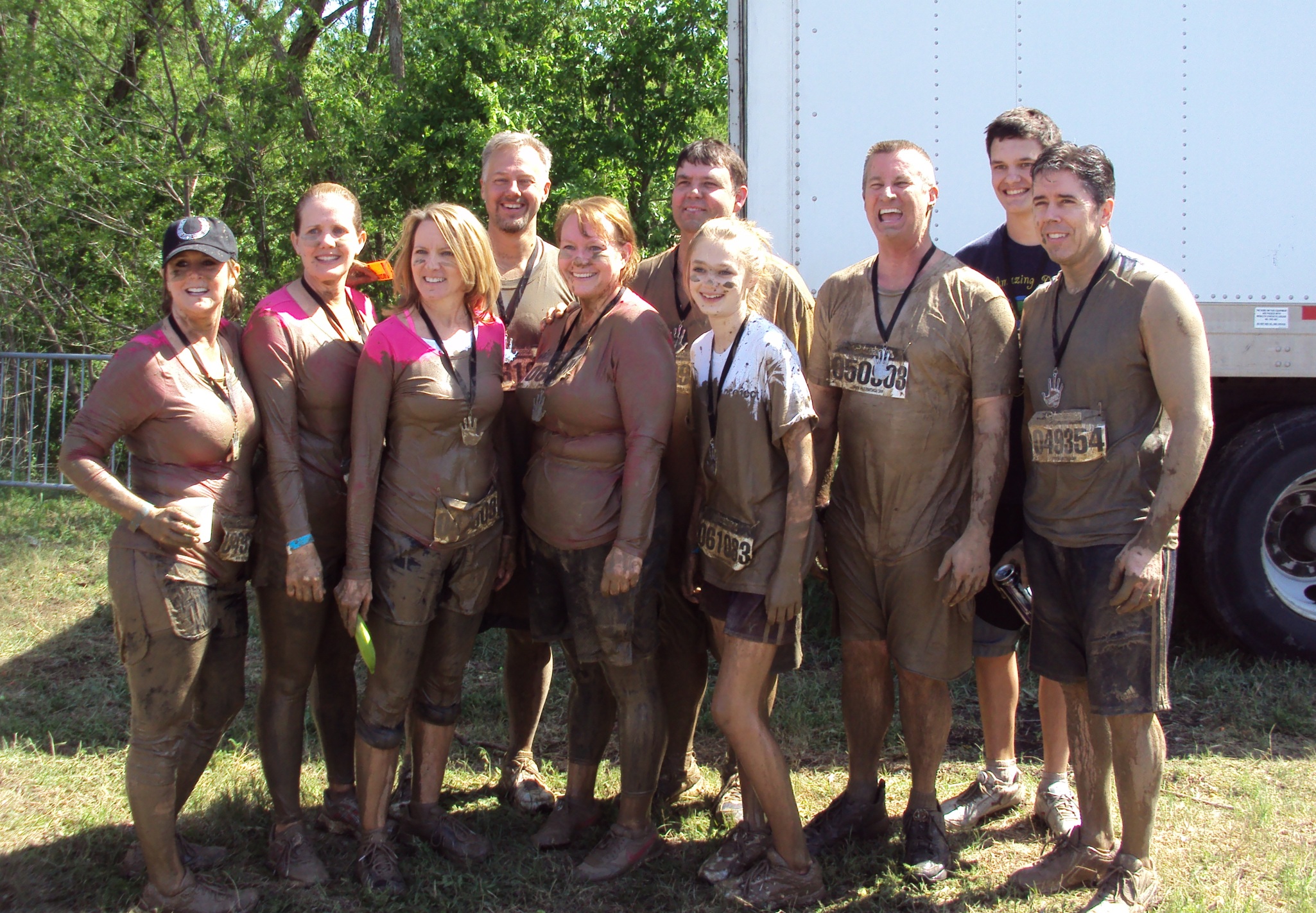
Warrior Dash 2012

My thighs are still burning today with every step, I’ve pulled something in my right shoulder blade area that I’m still feeling with every breath, and I’m still wiping mud out of the corners of my eyes and coughing up dirt balls. But Warrior Dash was an absolute blast. And we can’t wait for next year’s.

It was mainly the same crew from Legacy that ran last year’s event down in Roanoke, a couple of blocks east of the Texas Motor Speedway. Twenty of our dearest friends, ranging in age from 15 to… well… let’s say around 50… and ranging in degrees of fitness from superstar athletes like Hudson and Jordan to out-of-shape desk jockeys and preachers like me. It’s a 5K (a little over three miles), through an obstacle course, in the mud. And, yes, even though this crazy event appeals much more to people half my age and who drink much more than just Diet Dr Pepper, we always have a great day at Warrior Dash. And this year was no different.


Valerie had a couple of buddies her own age show up to run with her this time, although I”m not sure Samantha and Shannon really understood what they were getting into. As race officials were herding us all into the line for our 10:30 am start, Samantha got a first look at the huge video monitor showing highlights from last year’s Warrior Dash and started flipping out. We tried to assure her that, while it may look lethal, she probably wouldn’t die.


We donned our complimentary warrior helmets and took all the obligatory pre-dash pictures and then decided, probably a little too late, we needed to stretch. Yeah, for most of us it was way too late for that. Before we knew what was happening, we were counting down from ten and then running under a couple of fire-belching cannons on top of the starting gate. We were off!

Last year I had tried to keep up with Hudson, which lasted about half a mile. This time I was going to be in a better situation. Steve, Keith, Mike, Tracy, Kevin, and I had planned beforehand to run/jog this thing together. My only concern was besting my time from a year ago (43:42) and finishing without injury. Early on, neither of those goals appeared to be realistic. The recent rains in DFW made the course wetter and slicker and grosser than the year before. Just a little over a hundred yards in, Tracy bit it. Big time. I think he might have been wearing his yard work shoes. You know, the old tennis shoes, grass stains on the toe and the sides, missing that first crucial layer of sole? Tracy went down hard on his right side, almost taking Mike and me down with him. But, thankfully, he popped back up, only to discover he was now carrying about 40-pounds of extra weight in mud caked to his right leg and arm. We were all a little more careful after that.

About halfway through the course our party of six broke up a bit. Kevin and Mike kept running/jogging while Tracy and I found ourselves increasingly jogging/walking. At one point along the course, a huge sign meant to encourage participants screamed at us, “Are You A Warrior?!?” To which Tracy replied out loud, “Do warriors walk?” We were definitely walking in spots. But at least we were ahead of Steve and Keith. (We’d better be; Keith’s still recovering from a hip replacement surgery.)

So we crawled through the pits, scaled the cargo net walls, climbed the rope which had a couple too few knots in it, manuevered under all the barbed wire, walked/swam through the chest-high water/sludge/sewage, slid down the poles, and climbed more hills than I remember from last year. In fact, they put up a huge hill and and that massive Warrior Wall thing to climb back-to-back right before the fire jump. Now, the flames are only about knee high. But as I approached the double fire jump I was thinking, man, my legs are too tired. I’m not sure I can do this.

The final obstacle is the famous mud pit. It’s right at the finish line, right where hundreds and hundreds of spectators gather to cheer and jeer and take pictures, and right where a participant is the most tired and most unwilling to put up with any nonsense. So, of course, that’s the best place to watch.


Nothing like crawling through the mud and the slime, concentrating on staying low so as not to snag the seat of my britches on the barbed wire, and hearing Whitney and Carrie-Anne laughing. And Carl Ball. Thank you. The most impossible part of the whole course was getting out of that mud pit. It was so slippery and gross and I was so tired (and gross) I almost didn’t make it. I think I lost ten seconds clinging with three fingernails to a tiny root of a little dandelion on the side of that hill, praying that I wouldn’t slide backwards back into the gunk.


Tracy finished about ten seconds ahead of me. As usual, Hudson and Jordan had already showered and were prefectly clean and groomed, hair gel and everything, by the time I got out. Jerks. Steve and Keith were a couple of minutes back. Valerie and her crew of girls were another ten minutes or so. And then the ladies entertained us all with their fantastic finish about an hour after we began.


We took all the “after” pictures together, froze half to death in the barely adequate Warrior Wash, rode the shuttles back to the cars, and then gathered at Mooyah Burgers for a late lunch where we could get all our stories straight. Sandy maybe really actually broke a rib on that very first obstacle, the balance beam thing that teeters up and down about ten feet off the ground. I should hear about that before the day’s over. Everybody else though, as far as I know, is suffering mainly from scratches on our knees, sore legs, and a few stretched muscles. I would say, too, we all feel a tremendous sense of accomplishment. And we’re all already making plans to do it again next year. Carley will be old enough to participate next year. And Carrie-Anne’s already said that if Carley does it, she will, too.


While checking my official time in the results tent, I ran into Bradley Bledsoe, one of our good brothers here at Central. We were both very surprised to see each other there; it’s so out of context for both of us. I asked him, “Man, what are you doing here?” He answered, “The same thing you’re doing; trying to act way younger than you really are.”

Allright, who’s going to take the lead and get a Central team up and ready for Warrior Dash 2013? Adam? Olen? Borger? Who’s going to put this thing together?

The time to beat is 43:11!

Peace,

Allan

And When You Go To Church

“Love the Lord your God with all your heart and with all your soul and with all your strength. These commandments that I give you today are to be upon your hearts. Impress them on your children.” ~Deuteronomy 6:5-7

This Sunday is the fourth Sunday of the month. Here at Central, that means we will not be dismissing the youngest of our children from our main assembly for their own worship time in their own room. It means it will be a little louder in our worship center. It means our younger parents and those sitting around them will be a little more distracted. It means a little more crying, a little more fidgeting, a little more talking and giggling.

It means an opportunity to rejoice in the fact that our God has blessed us with five full generations of people within our church family. It means another chance to interact with the most precious and innocent among us. It means another moment to pass on to our children the faith that has been handed to us. It means another reminder that we are not running this race alone.

“Impress them on your children. Talk about them when you sit at home and when you walk along the road, when you lie down and when you get up. And when you go to church.” ~Deuteronomy 6:7

OK, I cheated. I added that last part myself: “…and when you go to church.”

Here at Central we believe very strongly that if our people are always with their own age group, always with their own peers and demographics every single time we come together, it does more harm than good. It’s vital — it’s critical! — to this holy task of passing on the faith that our children regularly worship and read, sing and study, listen and pray, commune and laugh and cry and learn with the entire corporate Body of Christ.

Don’t tell me the children don’t get anything out of it. Of course, they get plenty out of it. If they didn’t, or couldn’t, then why in the world do you read them bedtime stories every night? Why were you singing Jesus Loves Me to them before they could crawl? Why bother kissing them as infants or telling them you love them before they even know what love is? Because it matters. It’s important. They do get something out of it.

And don’t tell me you can’t get anything out of church when you’re wrestling with your kids in the pew. First, it’s not about you and your personal worship experience. It’s about all of God’s people coming together in one place at the same time as a family and the mutual responsibilities with which we’ve been graced by our Father. You get plenty out of it. You’re blessed to be able to view the magnificence of the Christian assembly through the eyes of a child. You’re privileged to partner with God as he draws your child to him and his Kingdom. You’re being shaped and transformed as you actively pursue what God has ordained you as a parent to do.

This coming Sunday I urge you to pay attention to your young children during our assembly. Don’t simply pacify them with an iPad or a plastic tub of Cheerios. Engage them. Interact with them. Sing with them. Read the Bible with them. Explain to them something you hear in a prayer. Talk with them about the bread and the cup. Be as fully present with them as you are at the park and at the dinner table. Don’t abandon your parenting during this most critical time. If anything, step it up!

And if you’re sitting around some of these younger parents with their small children, this goes for you, too. For all of us. Engage. Interact. Teach and encourage. We are all under a tremendous obligation by our God to teach our children and lead them toward him. Let’s approach these fourth Sundays with anticipation and excitement. Let’s also come to these fourth Sundays in reverent fear of our Creator that we would not neglect this great responsibility.

~~~~~~~~~~~~

Carrie-Anne and I were so blessed to participate in the CareNet Pregnancy Center’s annual banquet last night at the Amarillo Civic Center. More than 1,200 wonderful people gathered to praise God and to raise money for this most important of Christian ministries in our town.

I was impressed by author Gary Thomas’ speech. I was inspired by Amy Spears’ song. I was moved by the videos. But I was completely blown away by Candy Gibbs, CareNet’s Executive Director. She speaks like Eugene Peterson writes. Her speech was amazing. She’s careful, very deliberate, with her words. She preached to us, she preached with us last night. And. It. Was. Powerful. (You can read the transcript of Candy’s speech on her blog by clicking here.)

I’m impressed with CareNet because last year 103 pregnant young ladies went there to talk about their planned abortions and 100 of them were moved by prayer and counseling to decide against it. I’m impressed because CareNet counselors in Amarillo made 9,868 client visits last year to encourage and equip, to strengthen and heal. I’m impressed because in 2011, through the efforts of CareNet and by the grace and power of our God, 187 young women and men submitted to the Lordship of our risen King.

But here’s what’s most important about CareNet: they have rejected the ways of the world and embraced the ways of our Lord. This is not an organization that’s out there waving flags and signing petitions and lobbying congress and pressuring law makers and threatening litigation and marching in the streets. No. They’re not pushing for legislation to outlaw abortion. They’re actually telling dozens and dozens of young ladies every month why abortion is against the plans of our Heavenly Father, and making promises to these young ladies to walk with them through their difficult journeys. They mentor these young ladies and their new babies. They counsel with them. They provide education for them. They meet with them and pray with them. They become friends and family with them. They love them with the compassion and grace and mercy of Jesus. They walk with them for years after they’ve made the decision to have these babies. It’s really quite beautiful. And very counter cultural. Very Scriptural. Very like our Christ. They’re doing it differently. And it’s working. Just like Jesus promised us it would.

I can really get behind a deal like this. I’d suggest you look a little more into it, too.

~~~~~~~~~~~~~~~~~~~~~~~~~

Valerie and I are gearing up for the Warrior Dash tomorrow down in Roanoke. It’s a 5K run with thousands of crazy people through an obstacle course in the mud. Of course, events like this are targeted to people half my age who drink a lot more than just Dr Pepper. But we ran it last year with several of our great friends from Legacy and just had an absolute blast. We’ll hook up in the morning with most of the same crowd: John & Suzanne, the Cliftons and Engers, Josh Penn. Tracy and Samantha are running it with us this year and I think Steve & Sandy will also be there.

It’ll be crazy. It looks like a lot of the obstacles are different from last year. There seems to be a couple more water obstacles and the climbing obstacles look to be a little more difficult. But Valerie and I are committed. We’ve signed the waivers that promise we won’t sue anybody even if we suffer horrible injury, we’ve packed our grubby shorts and T-shirts and shoes we don’t mind losing, and our warrior attitudes are primed.

I hope you’re doing something really cool this weekend, too.

Peace,

Allan

Identify the True Enemy

It was disclosed last night that Pudge Rodriguez, arguably the greatest catcher in the history of baseball, is going to sign a one day contract with the Texas Rangers and then officially retire as a Ranger in a ceremony Monday at the Ballpark in Arlington. A 14-time All Star and winner of a record 13 Gold Gloves as a catcher, Pudge was a highly respected and even feared defensive catcher. But he also won six Silver Slugger awards for his offensive prowess. During his twelve full seasons in Arlington, Pudge hit .305 with 215 HRs and 829 RBIs. And from behind the plate he could nail would-be base stealers at second and pick off straying opponents at first and third as effortlessly as you and I sneeze.

Whitney and I were at the Ballpark on a June night in 2009 when Pudge, then playing for the Astros, tied Carlton Fisk for the most starts by a catcher in MLB history. We gave Pudge a standing ovation when he hit a solo shot to cut Texas’ lead to 6-1. I doubt he would have received the same level of love from the crowd if his blast would have meant something for Houston that night. But we always loved Pudge Rodriguez. Anybody who ever watched him play loved Pudge.

He went to the World Series with the Tigers and Marlins, winning his only ring with the Fish in 2003. But he’ll always be a Texas Ranger. That’s where he won his MVP. That’s where he guided the franchise to its first ever division title (three of them to be exact). And that’s where he became the greatest catcher in history. He’s a first ballot Hall of Famer. And he’s a Ranger. The best ever at his position. And he’s a Ranger.

One question: shouldn’t he be catching the ceremonial first pitch before the Yankees game Monday instead of throwing it?

~~~~~~~~~~~

We’re reviewing together in this space Leroy Garrett’s book “What Must the Church of Christ Do to Be Saved?” Again, it’s a collection of essays Garrett penned almost twenty years ago to address our future relevance within the broader scope of Christianity. Our kids are leaving. Our members are checking out. Our congregations are shrinking. We live in an increasingly post-denominational, post-Christian world in which the disciples of Jesus who remain exhibit little if any “brand loyalty.” What are the Churches of Christ to do?

In chapter six Garrett suggests:

Find out who the real enemy is.

One only needs to read our church papers to see that for the most part we are fighting each other. Or if one listens to a lot of our sermons and reads our tracts he may conclude that “the denominations” are the enemy. Of if our argumentative spirit is not satisfied in any other way it is some “straw man” that is the enemy. Then there is the long history of our debates. We started out debating “the sects.” When they would no longer debate us we started debating one another.

I remember reading about the debates and studying the debates as a young boy. I remember the books containing transcripts of the debates and detailed analysis of the debates on the bookshelves in my grandparents’ house. Unfortunately, those are not just awful memories from the past. Debate and accusation and name-calling still take place today within large segments of our Church of Christ heritage. I’ve seen the videos of these Church of Christ conferences that blast away at the authors of recent Christian books and call them heretics and godless rebels. I’ve read the articles. I’ve seen the websites. I’ve heard the speakers at certain lectureships rail with much fanfare against their own brothers and sisters in Christ, denouncing their own as arrogant and adulterous apostates who’ve sold their souls for public attention and worldly status. Within our own stream of the faith we can get so riled up and so passionate and so energetic about ripping those who don’t see everything the same way we see everything to absolute shreds. It’s sick. It’s sinful.

The good news is that it’s not like that everywhere. I pray those kinds of events and websites and articles and publications and conferences are fading. Quickly. Please, Lord, quickly.

The apostle Paul claims that the real enemy is Satan. “Our struggle is not against flesh and blood, but against the rulers, against the authorities, against the powers of this dark world and against the spiritual forces of evil (Ephesians 6:12). Other people are not the enemy. Especially fellow Christians! Why is it that we cannot get as worked up, we can’t get as passionate or spend as much energy fighting the devil who is destroying us?

I believe these fights among ourselves is really a genius destraction sent by the devil to keep us from effectively spreading the Good News of the Kingdom of God. While we’re focused on destroying one another over corporate worship practices and communion details, Satan himself runs roughshod through our families and cities and churches. He’s going unchecked because we’re wasting all our time and energies on checking one another.

Granted, Jesus’ own apostles struggled with the same thing. They ran across some guy casting out demons in Christ’s name and told him to cut it out because he wasn’t doing it exactly like they were taught to do it. Jesus rebuked his disciples for that move. He said, in essence, “Just because they’re not with you doesn’t mean they’re not with me. Whoever is not against us is with us. Leave him alone!” (Mark 9:38-41)

That other guy was doing it differently, he hadn’t been properly vetted by the apostles; he hadn’t filled out the hundred-question survey, his orthodoxy hadn’t been firmly established. But he was fighting Satan. He was driving out demons. He was actively pursuing the mission of Jesus in fixing in the world all the things that were wrong. And Jesus commended him for it and chastised his apostles for bothering him.

There’s a lesson in there for us, right? Can you imagine if we all recognized Satan as our one and only enemy? What would happen, really, if every single member of every single Church of Christ vowed to never say or speak or think one more negative word or thought or deed against another Christian, no matter his stripe or flavor or practice or belief? What would happen if we all instead — every one of us — spent every ounce of energy and creativity and passion and thought on defeating Satan? What would happen? What would happen, seriously, if we identified the enemy as Satan and not other Christians?

Peace,

Allan

Have Our Own Vatican II

In the 1960s, a number of influential leaders in the Roman Catholic Church decided that if they were going to relate to a rapidly changing world they were going to have to make some significant changes. Those changes, outlined in Vatican II in 1965, were sweeping. They were monumental. Dramatic. Shocking, even.

In the fifth chapter of Leroy Garrett’s “What Must the Churches of Christ Do to Be Saved?” he makes the assertion that if the Roman Catholic Church can change its way of thinking and practicing, then certainly the Churches of Christ can, too. “While change comes painfully and with difficulty,” Garrett writes, “people can and will change when they see that they must do so to be saved.”

As we consider together Garrett’s challenging book chapter by chapter, we focus today on his fifth suggestion:

Have our own Vatican II.

Garrett proposes four ideas from one of Vatican II’s primary documents, The Declaration of Religious Liberty. Let’s consider each one in turn.

1. Doctrine does develop; dogma does change.

We may have as much difficulty admitting this as did the fathers of Vatican II who were as steeped in their tradition as ourselves. [It] does not mean, of course, that basic and essential doctrines of the Christian faith change, but that in the general teachings of the church on how to live in a changing world dogma may have to be revised. That the apostles would impose an order or procedure upon the ancient church does not necessarily mean that they would say the same thing to the 21st century church.

The renewal leaders at Vatican II may have first thought it hopeless that the Roman Church would ever conduct mass in English instead of the old Latin. But it was done, to the consternation of many. Could we make some meaningful changes in the way we celebrate the Lord’s supper…? The point is that we must become open to that sort of thing. There is nothing wrong in a church saying, “We once believed that way but we don’t believe that way anymore; we once practiced that but we do so no longer.”

One thing I’ve run into when talking with people about our communion time at the table or about the role of the Law of Moses in our salvation or God’s grace or any number of important doctrinal matters that I see differently now than I did just ten or twelve years ago is the refusal to admit that we might possibly have been wrong about something. About anything. Great godly men have told me to my face on several occasions that if I’m right about the particular topic being discussed, “then that means I’ve been teaching error for the past 45 years!” Why can’t any of us ever admit we were wrong?

We don’t even have to admit to being wrong. Can’t we just admit to growth? I would hope very much that you feel differently about some things now than you did 45 years ago. I would hope you could look back at some of your notes from 20 years ago and cringe at some of the things you taught. Why do we have such a difficult time with admitting that we haven’t always had every single thing figured out?

2. Coercion in matters of conscience is utterly inappropriate.

It may surprise you that Roman Catholic authorities at Vatican II suported this resolution: “Truth cannot impose itself except by virtue of its own truth, as it makes its entrance into the mind at once quietly and with power.”

If you adjudge this as a welcome change for a church that has often through the centuries dominated by coercive means, you must also grant that we in Churches of Christ have also been coercive. If others have been papacy-dominated and church-dominated, we have been elder-dominated, dogma-dominated, tradition-dominated, editor-dominated. If the Roman Church has its written creeds we have our unwritten creeds, and unwritten ones can be even more coercive and domineering than written ones.

We do have a CofC tendency to limit the freedoms of our members. Some of the more open-minded and progressive thinkers among us won’t speak out for fear of being labeled or not being allowed to teach. We identify little buzz words and catch phrases that, as soon as they’re uttered in conversation or debate, completly shut down the dialogue. We claim to be autonomous churches, but the ways we label and attack those who are different from us denies that claim outright. Our freedoms and diversities are God-ordained. But we seem to be threatened by them.

3. We have at times acted “hardly in accord with the spirit of the Gospel and even opposed it.”

If any church on earth needs to declare to the world that it has often been “hardly in accord with the spirit of the Gospel” and has violated the principles of the very Book it claims to honor, it is the Churches of Christ. While the Roman Church has pilloried the schismatics we have skinned the sects. While we claim to believe in unity, we are the one church in the community that is known to have nothing to do with any other Christians. We are widely known as the only ones going to heaven and the only true Christians. The Roman Catholics in 1965 looked at themselves and said they had been wrong.

(Allright, time for some full disclosure here: I hesitated for several months to consider this book in this way on the blog. Garrett is a lightning rod among our Churches of Christ, no doubt. That doesn’t mean he doesn’t have wonderful and prophetic things to say, things that must be said, things that must be heeded. It’s his overly critical and cynical tone in a few particular places in this book that caused the pause. He writes in broad brush strokes that cover a whole lot of our past but not every single part of it, a whole lot of our congregations but not all of them. Yes, I was raised this way; but not everybody was. Your church may be like this today; but mine’s not. I know some of you have purchased Garrett’s book and are following along at home. Please know, I do cringe at some of this. But, overall, the ideas in the book and the dialogue it should provoke are important. Very important.)

4. We extend our hand to all other Christians.

For centuries the Roman Church labeled other Christians as “erring schismatics,” but at Vatican II it went on record as acknowledging all other Christians as true brothers and sisters in Christ… We must regard all other Christians as our equals, beginning right now. We must join with them and with each other in a new spirit of dialogue and mutual respect, a new freshness in perspective and interpretation. We must summons the courage to confront the problems of our own history. We must modernize the Churches of Christ, liberating ourselves from the mentality of the 1940s, and make our religion relevant to our day and time.

OK, we don’t have a Vatican. We don’t have a governing convention or a denominational headquarters. I’m not sure how sweeping changes in thought and practice and philosophy could work across all our Church of Christ congregations. It probably can’t. It happens very slowly with us. Small group by small group. Congregation by congregation. Generation by generation. Region by region. The only thing that could speed it up is if you yourself picked up a torch and passed it on.

Peace,

Allan

« Older posts Newer posts »