Author: Allan (Page 328 of 492)

The Least Important Person

(Commenting on this post automatically enters you into the drawing for the books to be given away in conjunction with this blog’s upcoming 1,000 post. Check out the details a few posts back.)

“My command is this: Love each other as I have loved you.” ~John 15:12
“This is my command: Love each other.” ~John 15:17
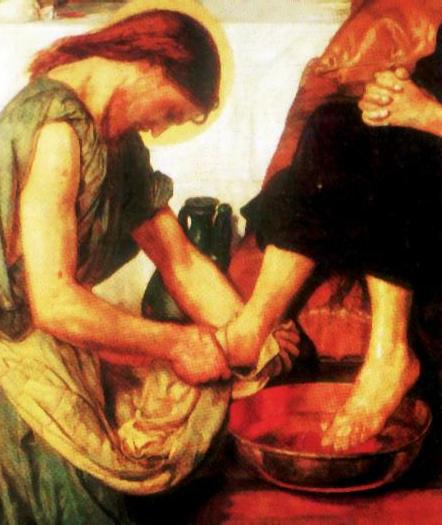
What distinguishes the love of Christ and marks the love of all disciples of Jesus is the willingness — no, the eagerness! — to condescend to meet the needs of others. Those being transformed by the Spirit into the image of our Savior are those who consistently imitate him by considering the needs of others more important than their own. They consider others better than themselves. They seek the interests of others ahead of their own. They are the ones who make themselves less important in order to show compassion to those around them.

Our Lord gave us the illustration for such an attitude. When he washed his followers’ feet around the dinner table on that last night, he provided the perfect example of sacrificial love. He showed them “the full extent of his love” and then commanded them to “do as I have done for you.”

What’s astounding is that Christ Jesus, the Holy One of Israel, the promised Messiah and Savior of the World, stooped down to make himself the least important person in the room.

“You call me ‘Teacher’ and ‘Lord,’ and rightly so, for that is what I am. Now that I, your Lord and Teacher, have washed your feet, you should wash one another’s feet.” ~John13:13-14

There is no job beneath our dignity, there is no task beneath our pay grade, there is no calling that is under our position or status. Would it shock everybody in your office if they saw you taking out the trash? Would it be a huge surprise to your wife if she heard you loading the dishwasher? Would your neighbors gasp in disbelief if you swept up all the gunk in the alleys around everybody’s dumpsters? Would your children faint if you turned off your TV show to play a game with them? In the manner of our Lord, we are commanded to stoop, to condescend, to continually seek new ways to become the least important person in the room.

~~~~~~~~~~~~~~~~~~~

 Now that the NFL lockout of the regular referees is over, we can look back and laugh at the miscues and botched calls, the uncertainties and the chaos that was life with replacements. We can giggle at the punny headlines of the past three days such as “FAIL MARY!” and “The Inaccurate Reception.” The funniest line I heard was on ESPN when on Tuesday one of the studio hosts noted that Russell Wilson was the first quarterback in history to throw a game-winning interception. The lockout provided plenty of fodder for late night talk show hosts and editorial cartoonists.

The greater tragedy during the past three weeks, though, has been overlooked. Something far worse has occured in the NFL that’s been overshadowed by the referee lockout and ignored by the national media. It’s brought untold shame and ridicule to a once proud franchise and threatens to undermine the integrity of the entire league. I’m talking, of course, about Jerry Wayne’s new Papa John’s pizza commercial in which the owner of the Cowboys actually raps!

Words can’s describe the embarrassment I felt for the Cowboys, the NFL, the city of Dallas, and the whole great state of Texas upon seeing this commercial for the first time Monday night. It’s humiliating. Jethro rapping and rhyming and shucking and jiving right there in bold HD, jumping up and down stadium staircases, gesturing awkwardly with his hands, striking hilariously defiant poses, selling pizza and Pepsi. That’s the owner and general manager of the Cowboys.

“Yo! It lights me up like a roman candle! Toppings and flavor almost too good to handle!”

Note to Roger Goodell: now that you’ve got the regular refs back to work, please assess some fines and penalties against Jerry Wayne for actions detrimental to the league.

Peace,

Allan

Our Living God

(Posting a comment on this article automatically enters you into the drawing for the books to be given away in conjunction with this blog’s upcoming 1,000th post. See the details in a couple of posts back.)

“It is a violation of our rationalistic orientation to imagine the living God.” ~Walter Brueggemann, at the ACU Summit

God is forever changing. He is always surprising, always shocking. Always doing what we least expect at the very moment we think we’ve got him figured out. And we don’t like that. I think if we’re honest, we have to admit that, at the very least, we’re not comfortable with it. We like to think we know what God thinks and what he’s going to do in every circumstance. We like to think that if we study the Bible enough and talk about God enough and pray to him enough, we’ll know him. And knowing him, we mean having him figured out.

Good luck with that.

Our God changes his mind. Our God changes himself. Our holy Father repents and recants. He wrestles with his own feelings and emotions and goes back and forth all the time.

No?

Walter Brueggemann reminded us last week in Abilene that our God cut off his covenant people in Hosea (“You are not my people, and I am not your God” Hosea 1:9) and then after declaring all the ways they had sinned and all the ways he was going to abandon them, he changes his mind (“I will say to those called ‘Not my people,’ ‘You are my people’; and they will say, ‘You are my God'” Hosea 2:23).

Following the Golden Calf incident, God promises to destroy his people. He tells Moses he’s going to start all over. He promises. Then, Moses talks him out of it. Moses presents a logical argument — what will the nations say? they’ll call you a weak and/or evil God! — and the Lord says, “Yeah, you’re right.” And he changes his mind. He forgives their sins and renews the covenant.

Over and over again in the prophets, God is said to “repent,” the Hebrew word shuv. He changes his mind. Jeremiah couldn’t be more clear that our God acts and reacts, he promises and then goes back on his promises, in response to current circumstances. He responds to the cries of his people. He’s moved by the plight of his children.

“If at any time I announce that a nation or kingdom is to be uprooted, torn down and destroyed, and if that nation I warned repents of its evil, then I will relent (repent) and not inflict on it the disaster I had planned. And if at another time I announce that a nation or kingdom is to be built up and planted, and if it does evil in my sight and does not obey me, then I will reconsider (repent) the good I had intended to do for it” (Jeremiah 18:7-10).

Our God is a free agent. He is a living, moving, active God with a free will to do as he pleases. And we can’t always figure him out. He doesn’t have to answer to us or our finite ideas about him. There’s no way for us to get a firm handle on him. He says as much to Moses: “I will have mercy on whom I will have mercy, I will have compassion on whom I will have compassion” (Exodus 33:19). Forget about trying to understand it. You can’t.

Thankfully, God has revealed his eternal glory to us, his everlasting nature. He is a kind and compassionate God, slow to anger, abounding in love and faithfulness, forgiving sin… (Exodus 34:6-7) Moses and the prophets all appeal to this creedal statement when they’re attempting to change God’s mind or when they’re seeking comfort and confidence in the middle of horrible circumstances. But the other part of that statement, “Yet he does not leave the guilty unpunished; he punishes the children and their children for the sin of the fathers to the third and fourth generation” (Exodus 34:7) gives us the problem. God’s going to do his thing in his own time. And it’s nearly always a surprise.

I think we need to embrace the hard-to-pin-down characteristics of our Father. I believe we should be shaped by the knowledge that our God is always changing his mind. The idea of a God who never changes will set us up for bitter disappointment when that God allows something to happen or causes something to happen that doesn’t fit with our hard and fast theological suppositions about him. What do we do then? And if God never changes, doesn’t that lead us to believe that we, too, should never change? If God never changes throughout all eternity, that might validate the life of a Christian who never changes. Some Christians never grow. They never change their minds. You know Christians like this; you may be a Christian like this. I’ve heard some Christians actually brag that they’ve never changed their minds about anything in Scripture. It’s all so clear to them — their understanding of God, their knowledge of his will and his ways, their church practices and Christian convictions — that changing their minds about anything has become a sign of weakness or of little faith.

Our God is changing his mind all the time. He’s open to it. He doesn’t apologize for it. We can deny it, we can be afraid of it, or we can embrace it as part of a real and dynamic relationship with a real and dynamic Father in Heaven.

Peace,

Allan

Love Completed

(Posting a comment on this article automatically enters you into the drawing for the books to be given away in conjunction with this blog’s upcoming 1,000th post. See the past couple of posts for details.)

“My command is this: Love each other as I have loved you.” ~John 15:12

Jesus doesn’t say I’ll love you if you treat me right or I’ll love you if you straighten up. Jesus’ love isn’t conditioned by right behavior or a good performance. It’s not based on anybody’s I.Q. or money or skin color or clothes or bloodline or reputation. Jesus’ love says I’ll die for you while you’re my enemy. I’ll serve you while you’re still a sinner. I’ll give my life for you while you only look after yourself.

I’ll do this, Jesus says, because I love you so much. But that’s not where this love of Christ ends.

This love that starts with the Creator of Heaven and Earth flows to his Son, the Holy One of Israel. Jesus then takes that love and showers it on us. And he tells us to receive his divine love in order to show it to one another. This heavenly love is completed, it’s fulfilled, only when we give it to others. God’s love was never, ever intended to be finished in merely saving you.

“Whoever lives in love lives in God, and God in him. In this way, love is made complete among us.” ~1 John 4:16-17

We are the last link in this cosmic chain. This love of God in Christ finishes its course through his people. This is why we sacrifice for one another. We serve each other and consider the needs of others more important than our own. This is the reason we die to ourselves and for one another every day.

God’s love is not finished, it’s not accomplished all, until we take seriously this singular command of our Lord: Love each other. This love of Christ that we receive and selflessly pass on proves that we are children of God. It brings eternal glory to our Father. And it changes the world.

Peace,

Allan

False Vines

(Posting a comment on this article automatically enters you into the drawing for the books to be given away in conjunction with the upcoming historic 1,oooth post. See the previous couple of posts for details.)

“I am the true vine… Remain in me and I will remain in you.” ~John 15:1-8

Jesus calls himself the true vine. He urges us to stay connected to this true vine, to remain in this true vine, in order to produce fruit, to prove their discipleship to the King, and to bring glory to God. Jesus is the true vine. And that tells me there must be some false vines out there to which we sometimes attach ourselves.

We know what these false vines are. We recognize them as counterfeit and temporary. But the people who are connected to these vines all look pretty happy. They all look like they’re doing OK. So off we go…

Chasing after the false vines of money and power. Connecting to the false vines of pleasure and fame. Seeking our identity in the false vines of career and the athletic achievements of our children. Obsessed over and addicted to the false vines of entertainment and technology. Drawing energy and life’s meaning and purpose from the false vines of nationalism, patriotism, and worldly politics.

Like Jeremiah’s wild donkeys in heat, we can’t be restrained. We run after these false gods and connect ourselves to these false vines with barely a second thought. Like the people in Jeremiah, we proclaim, “I love foreign gods, and I must go after them!”

We need to all be reminded that this world’s politics is a false vine. The politics of this world are producing the rotten, stinking fruit of polarization and alienation, threat and insult, fear and hate. This nation’s politics are to the point, and have been for years, that if you disagree with me on just one issue, you are the enemy and you are thoroughly evil from head to toe. If you disagree with me on just one point, I label you and the conversation stops. I don’t listen to you anymore. All hope for community with you is abandoned. I label you and put you in your proper category and I insult you. You and your party and your candidate and your ideas and your intelligence and your character and your mama and your daddy and your greasy granny!

There is nothing remotely Christ-like about any of that.

As disciples of the Messiah, we must quickly come to the realization that in this country there is not one righteous party and one evil party, there is not one right set of candidates and one wrong set of candidates. What we have is one massive corrupt and worldly system that is powered and motivated by the principles of this world and that the Kingdom of God is working right now to overthrow and conquer! It’s a sinful and worldly system that the holy Son of God came to oppose and destroy!

As baptized disciples of Jesus, we are citizens of the eternal Kingdom of God. And God’s Church is very political. We are very committed to political thought and political actions. But our politics are not of this world. We belong to a Kingdom that is not of this world. We pledge allegiance to a King who is not of this world. So we do not do things the way the world does things. We do things the way Jesus does things.

This world will not be saved by power and force. You and your family are not going to be protected by your petitions and votes. Jesus has come to save and protect by sacrifice and submission, by selfless love and service. And I don’t hear any of that in today’s political ads. I don’t see any of that on anybody’s platform.

Our politics are entirely different because our King is unlike any other. Jesus is the true vine. He is not planted in the dirt of this world and thus destined to blow away. He is the true vine who is rooted in the eternity of God. Everything else we might attach ourselves to is a fake. It’s false. And it will suck the life and energy and meaning and purpose right out of you. Jesus is the only source for the life and energy, meaning and purpose we need to live as holy children of God. There are no other sources. And there is no other way.

Peace,

Allan

Orienting for Glory

This coming Sunday marks the first of six straight weeks in which our adult Bible classes here at Central are pairing up with one another in an effort to better live what we preach in intergenerational, multi-cultural relationships. If you’re one of our members at Central, for six straight Sundays you’re going to be in a Bible class with people who are not your age. Their kids won’t be the same age as your kids. Their salaries might not match yours. Some of these people may come from completely different backgrounds, have completely different viewpoints, and sport a completely different skin color than yours. For six weeks a lot of you will listen to teachers you’ve never heard in a classroom you’ve never visited.

It’ll be different.

We’re all going to be pushed out of our comfort zones. We’re all going to experience a little vertigo as we get used to the different people and different styles. We’re all going to have to give a little, to bend a bit, to sacrifice and serve to make this happen.

It’ll be difficult.

But this is not a move to disorient us. It’s actually intended to orient us. This is an effort to orient us to that blessed day when all of God’s children are together around that one table at the eternal wedding feast of the Lamb. Different colors and languages, different ages and styles, different backgrounds and sets of experiences — yet, one people around one table.

That glorious day is coming. God has promised it, Christ Jesus died and was raised for it, and the Holy Spirit is working toward it. And we should live our lives today in great anticipation. We should be leaning into it daily. Looking forward to it, practicing it, getting ready for it.

It’s only an hour on Sunday mornings for just six weeks. But our prayer is that it’ll go a long way in helping us experience and express our Father’s holy will for his Church.

~~~~~~~~~~~~~~~~~~~~~~~

The 1,000th posting on this five-year-old blog is going to happen before the end of October. And I’d like to celebrate that weird little milestone by giving you, the readers, brand new copies of some of the great books that have informed and shaped my thinking and writing and preaching. We’ll hold a drawing on the day of that 1,000th post. The only way to enter the drawing is by posting comments between now and then — see the end of yesterday’s post for details on how you can enter your name up to 14 times. You can enter multiple times, but you can only win one prize.

Grand Prize – all three books in John Mark Hicks’ series on the sacraments of the Church of Christ: Come to the Table, the book that launched my continuing quest to better understand Christ’s meal; Down to the River to Pray, a wonderful call to restore Christian baptism to the center of the life of the Church; and A Gathered People, a beautiful look at the ways God works in our corporate assemblies to transform us into the image of his Son.

First Prize – Resident Aliens, Stanley Hauerwas and William Willimon

Second Prize – Surprised by Hope, N. T. Wright

Third Prize – The Reason for God, Timothy Keller

Fourth Prize – The Screwtape Letters, C. S. Lewis

Fifth Prize – The Jesus Way, Eugene Peterson

Peace,

Allan


Brueggemann’s First Blush

Walter Brueggemann looks and acts like a cartoon character. A tiny little man with white hair and eyeglasses that hang way too close to the end of his nose, this most respected of Old Testament scholars and expert on the ancient prophets, was in Abilene as a guest speaker at this week’s annual ACU Summit. The headliner, so to speak, wowed us with his deep insights and wisdom. He moved effortlessly from difficult text to even more difficult application. He seemed to whisper and shout at the same time, raising his eyebrows, cocking his head to one side, dragging the last words of key sentences for almost half a minute in a whiny, yet authoritative, rasp, and all the while wringing his oversized hands in an exaggerated fashion in front of his face. It would be very easy to imitate Brueggemann’s style. It’s hilarious. And fascinating.

But it would be impossible to duplicate his substance.

The old professor reminded us that our God has a high regard for his people but our God also has a high self-regard for God. Both. Brueggemann pointed out that our therapeutic culture mostly thinks God is only in it for us. He loves us, he forgives us, he restores us, he’s patient with us, he saves us because, afterall, that’s what God does. It’s his job. We would do good, however, to wake up. It would benefit us greatly to become like the child who wakes up one day to discover that her mom has a life of her own. Our God is a free agent. He chooses. He wills. He decides. And he changes his mind. His eternal holiness trumps everything else about him. Therefore, he is both a passionate and punishing God. Both.

I hope to write a little more about Summit, particularly Brueggeman’s brilliant insights, in the following couple of days. (Anybody who can drop cuss words from the pulpit in both ACU’s chapel on the hill and Moody Coliseum merits more than just a couple of paragraphs in this space. We were all shocked when Mark Hamilton prayed before Brueggemann’s afternoon keynote that God would “loosen his tongue.” Had Brother Hamilton not attended any of the earlier sessions?)

But, here’s what I really want to write about today. That was all just an introduction.

I have a tendency, personally, to think and talk about the Churches of Christ in apologetic terms. In my defense, most of the negative things I think and say about my faith heritage are in the past tense: we used to be this, we’re trying to get away from that, we’ve always thought this way, we’re changing the way we do that, etc., But, still, the truth is, when somebody brings up the Church of Christ in a conversation, my gut instinct is to apologize. We used to think we were the only ones going to heaven, but we’re moving away from that. We used to abstain from working with other Christian denominations, but we’re getting better. We’ve traditionally taught and practiced a works-based salvation, but our understanding is much better now. We used to ignore the Holy Spirit, but not anymore.

You know what I mean? Do you do that, too? There’s so much good going on in our particular branch of God’s Kingdom, we have so much to offer the Christian community and the world. And I know that. I talk about it all the time with our own people. I see so much good, I experience so much joy, I hear so many wonderful things. But, still, my default is to apologize first.

After his morning keynote at ACU, Brueggemann was asked by moderator Brady Bryce to share his first impressions of the Church of Christ. And it wasn’t a fair question. Up until the moment he arrived on campus Sunday, I’m not sure Brueggemann had ever seen a Church of Christ member in person. I wouldn’t bet he’d ever heard of the Church of Christ before Brady called him last year. It wasn’t right to ask this Episcopalian and UCC scholar to share his thoughts on our movement in front of all of us. He begged out, but Brady pushed.

And Brueggemann said he was very impressed with the immediacy and the urgency with which we approach Scripture. He said our interpretation of the Bible was simple and fresh. He said our teachings and approach to faith and life in Christ were not complicated. And, again, “fresh.”

Fresh? Did you ever think you would live to hear a world renowned scholar refer to anything related to the Churches of Christ as “fresh?”

Now, to be fair, Brueggemann had spent a couple of days by this time listening to our best speakers and worshiping with our best singers. I know he was paying attention because he referred to and quoted from several of the sermons we had heard since Sunday night. And he specifically cited the immediacy and urgency with which we approach Scripture as fresh.

This outsider who has a keen eye for what’s faithful and good, this alien scholar who thinks so well and only says what he really thinks — this esteemed man of God had a first impression of us. And it was good. It was very good.

When am I, a lifelong CofC insider, going to fully get over the past so I can wholeheartedly embrace the present and the future of our denomination? Our present is exciting and our future is promising. Brueggemann’s first blush reminded me that we are brimming with holy potential for the great cause of our Christ. We are important in the Kingdom of God. We do have a lot to offer. I knew this already, I’ve known it for a long time. But it’s good to hear it from an outsider, to be reminded by someone who’s not nearly as concerned about our past as I am.

As of today, thanks to Walter, I’m done apologizing. I’m through with qualifying the wonderful attributes of our movement with backward glances at our struggles. I’m not ever going to shrink back from my CofC heritage again. And I may even take up hand-wringing during my sermons.

~~~~~~~~~~~~~~~~~~~

I started writing this blog when I began my first full-time congregational preaching with the Legacy Church of Christ in June 2007. Today’s post is #985. I’m thinking that post #1,000 will happen before the end of October. And on that day, I’d like to celebrate by giving away brand new copies of some of the books that have radically shaped my thinking, my preaching, and my writing. Now, this is not going to be like Oprah — I’m not giving away any cars or houses — but I do want to distribute some excellent books.

Everyone who posts a comment on my blog between now and that 1,000th writing will automatically be entered in a drawing for the books. You can only be entered once per post during that time. You can only be entered a maximum of 14 times. You’ll only get credit for one entry per post regardless of how many comments you write per post. But it does start today. I’ll reveal the titles of the books tomorrow. The judge’s decisions (mine) are final. Good luck.

Peace,

Allan

« Older posts Newer posts »