Author: Allan (Page 311 of 492)

Seated With Princes

“He raises the poor from the dust and lifts the needy from the ash heap; he seats them with princes.” ~Psalm 113:7-8

Holy Scripture gives us a pretty clear picture of what our God is doing in this world. From Genesis to Revelation, we the motif of changing places. Switching roles. The rich and powerful being brought down and the poor and weak being raised up. God is turning things upside down.

The way the world is right now — all the power structures, all the people in charge; all the people in the streets, all the oppressed; the people without a care in the world, the people trapped in hopeless cycles of despair — our God is working to totally flip it around. He’s working even now toward a great big ultimate opposite day.

What a joy to partner with our God yesterday and personally participate in his great program of everlasting reversal! When yesterday began, there were 77 orphaned children at our Alara school in Kenya who were not sponsored. Following a call for pledges, which included a threat from me to keep preaching until we had all 77 commitments and a well-timed video from our own Jake Reeves with an emotional “Happy Mother’s Day” at the end, our church family responded in gratitude and with godly grace and love to commit to those 77 children and more.

All four of the sign-up booths were jam packed with people clamoring to register for one of these orphaned students. More than ninety pledges were received! We actually have a waiting list now!

Praise God; to him belongs all the glory. Every single student at our Alara school will now receive adequate food and clothing, supplies and an education, protection and provision because of this mighty demonstration of generosity. Those children now have hope. Because of these monthly gifts, those kids believe they, too, will be lifted from the ashes to sit in places of honor.

Thank you, Central. I really do belong to a pretty great church. You are faithful. You always come through. Always.

Peace,

Allan

We Belong To The Lord

I want to continue our important discussion here regarding the silence of Scripture and its place in our American Restoration Movement history and current beliefs and practices. As it relates to the maddening question of whether biblical silence on a particular issue is prohibitive or permissive, please check out this video clip from a Rick Atchley sermon illustration. I quoted one of my favorite Rick Atchley lines in Monday’s post, and a friend reminded me this morning of Rick’s “chair illustration.” I’ve seen Rick do this at least a couple of times. It’s a beautifully simple and strikingly clear demonstration of the absurdity of our traditional approach to the silence in Scripture. And it inarguably proves that this default approach actually prevents any type of Christian unity among our churches; it actually leads to and fosters ugly and sinful divisions.

When you have more time, you might also check out this recent 26-minute presentation by my brilliant brother, Dr. Keith Stanglin, on the fourth and fifth propositions of Thomas Campbell’s Declaration and Address. Keith argues that Campbell’s document, which most consider as the foundational document for the Restoration Movement and Churches of Christ, fundamentally rejects both the Old Testament and church history as formative and informative for our congregations. Keith makes a compelling case for paying careful attention to all of church history as we prayerfully make decisions for our own churches and denominations today. The lecture is in two parts on YouTube: click here for part one and click here for part two. (Thank you, Keith, for pointing out that the use of unleavened bread for communion is a tenth century innovation of the western church.) After watching Keith, you’ll understand why I always say I got the looks and he got the brains.

While I’ve got you here, I’ll direct you to my great friend Jim Martin’s post, written for Dan Bouchelle’s blog, on why he continues to preach.

~~~~~~~~~~

Paul’s thoughts in Romans 14:1-15:7 are summed up in a couple of places in that passage. In 14:17 he claims that “the Kingdom of God is not a matter of eating and drinking, but of righteousness, peace, and joy in the Holy Spirit.” Later, in 14:22, Paul commands “whatever you believe about these things keep between yourself and God.” The conclusion must be that it’s OK to have strong opinions and beliefs about certain things as they relate to Christ Jesus and his Kingdom, but that those opinions and practices must never be bound on other Christians.

But what about “salvation issues?” Oh, I can hear it now. In fact, I hear it quite often. What about matters of doctrine? What about the important things?

Yeah, that’s where it gets touchy. Because if two Christians are arguing about something and the argument and the feelings are such that it’s dividing them and threatening to divide their church, then, of course, one or both of them believe with all their heart that it’s a doctrinal or salvation issue. But, Paul says, that’s OK, too.

“One man considers one day more sacred than another; another man considers every day alike. Each one should be fully convinced in his own mind. He who regards one day as special, does so to the Lord. He who eats meat, does to the Lord, for he gives thanks to God; and he who abstains does so to the Lord and gives thanks to God. For none of us lives to himself alone and none of us dies to himself alone. If we live, we live to the Lord; and if we die, we die to the Lord. So, whether we live or die, we belong to the Lord.” ~Romans 14:5-8

Each of us should be fully convinced in our minds that what we’re doing is the right thing to do in the eyes of God. Yes. But don’t bind that on another brother who doesn’t feel the same way. If he practices something different, Paul assumes you’re both doing it to the Lord, before the Lord, in the presence of the Lord, to the glory of the Lord, and with a clear conscience. We assume that my sister with a different belief or a different practice is not believing or practicing arbitrarily. She’s doing it with careful study and reflection and prayer. And she’s fully convinced in her mind that she’s doing the right thing. So, everything’s fine.

But, somebody will still say, “What if we’re talking about a salvation issue?”

What in the world is a ‘salvation issue?’ Will somebody please tell me what a ‘salvation issue’ is? We get into discussions about ‘salvation issues’ and we start ranking things in order of importance to God, in terms of what’s going to save us or condemn us. And we’ll talk about baptism and church and the authority of Scripture and worship styles, but we’ll never talk about helping the poor or being kind to your enemy. Scripture says those are actually the heavier issues. They’re all salvation issues! Everything we do is a salvation issue! That’s why the heart is the most important thing. The attitude is the most important matter. For the Kingdom of God is not a matter of eating and drinking…

Paul is calling for unity in spirit, not unity in opinion, not unity in practice, not even unity in belief. And he’s dealing with what at that time in that church were huge issues. Unity comes with where your heart is, what’s your motivation, what drives you, who you are thinking about.

Paul clearly identifies himself as one of the “strong” Christians. But, again, it’s interesting to me that he doesn’t say the “weak” need to change their minds or their opinions or practices. His prayer is not that all the Christians in Rome come to the same opinions on these disputable matters. No. He’s praying that they may possess a unity of spirit that transcends their differences.

Peace,

Allan

The Silence of Scripture

When our Restoration Movement divided between Disciples of Christ and Churches of Christ at the turn of the 20th century, it was largely a result of two different interpretations of silence in Scripture. As we’ve already seen, those opposed to the use of instrumental music during congregational worship reasoned that, since the Bible didn’t specifically authorize it, it was not allowed. There were no New Testament examples, so it couldn’t be practiced. On the other hand, proponents of pianos and organs declared that silence in the Bible permitted the use of instruments — Scripture didn’t specifically prohibit or condemn it. Since there was no biblical command against it, it was OK to practice it.

The same arguments regarding the interpretation of biblical silence were used for and against the Missionary Society, for and against located preachers, for and against open and closed communion. Is scriptural silence on a particular issue prohibitive or permissive? Does silence allow or condemn? I’m afraid we still run into forms of this debate almost every day. And we ought not.

When Alexander Campbell said, “Speak where the Bible speaks and be silent where the Bible is silent,” he didn’t mean that the lack of a clear biblical directive should embolden us to scream and yell and assert our own opinions about that silence and loudly and aggressively and divisively bind those opinions on others. He meant that we could all form our own thoughts and opinions — and they could be very strong opinions and passionately held — and then keep them to ourselves. Being “silent where the Bible is silent” means, in the words of the apostle Paul, “whatever you believe about these things keep between yourself and God” (Romans 14:22).

In my view, a reading of Romans 14:1-15:7 would convict any Christian of binding his opinions on anybody.

Paul says very plainly that we have “strong” Christians and “weak” Christians. His words, not mine. The weak Christians are vegetarians; the strong believers enjoy a good steak. The weak brothers keep all the Jewish holy days; the strong brothers don’t. The weak Christians are developing all kinds of elaborate worship and lifestyle theologies and drawing lines in the sand over what’s right and what’s wrong; the strong Christians don’t have very many lines and they’re not as concerned about which worship and lifestyle practices are right or wrong. The weak are criticizing the strong for being spiritually insensitive; the strong are looking down on the weak for being spiritually immature and inferior. The strong proclaim freedom in Christ; the weak say that doesn’t mean anything goes. The weak tell the strong, “You’re wrong!” The strong tell the weak, “Grow up!”

Paul commands both of these groups of disciples not to look down on anybody. Nobody is to condemn anybody. For God has accepted him. Accepted whom? This brother or sister or this group of brothers and sisters who disagree with you on your church tradition. This other Christian or group of Christians who don’t see eye to eye with you on your disputable matter. You’re not his master, Paul says. Christ Jesus as Lord is his master. Not you. Whether this other guy stands or falls is up to the Lord. Whether he’s right or wrong is up to God, not you.

And then Paul goes ahead and makes the judgment, he makes the call. “He will stand!” Whether he agrees with you or not or whether you’re both on the same page or not, Paul says this guy will stand because he’s in Christ. So, you accept him because Jesus accepts him. Christ died for him, Paul reminds.

Why do we have such a hard time with this? Is it because there might not actually be a “right way” or a “wrong way” to do a lot of the things we do in the name of Jesus, and we can’t stand it? Could it be that if we disagree with someone over a church matter or a biblical interpretation, one of us just has to be right and one of us just has to be wrong? How else would you explain our two thousand year history of dividing and dividing and then dividing even our divisions over trivial matters such as worship practices and leadership structures, days of the week and food and drink, baptism methods and signs on the front of the church? How else would you explain Paul’s clear command to be silent about such disagreements and never to label or divide over them? And our clear disregard and disobedience to that command?

You know, in this same Romans 14 passage, Paul doesn’t tell the weak Christians to change their minds about their immature beliefs. He does not tell them to change their practices which, again, he considers “weak.” In fact, he tells them not to change a thing. Why is that? Is it because, again, there might not actually be a “right way” or a “wrong way” to do a lot of the things we do in the name of Jesus?

“Whatever you believe about these things keep between yourself and God.” ~Romans 14:22

“Speak where the Bible speaks and be silent where the Bible is silent.” ~Alexander Campbell

Peace,

Allan

The Spirit of Larimore

Rick Atchley takes a well known Restoration Movement slogan and updates it to reflect our most recent history: “We speak where the Bible speaks, and where the Bible is silent, we speak even more.” Oh, yeah, the silence of Scripture — is it permissive or prohibitive?  If we’re honest, most of us decide based on the issue of the moment and/or our own comfort zones. Strange, but that never really was a question that concerned anybody in our churches until right after the Civil War when we were looking to divide and punish, to humble others and make ourselves feel better.

The Civil War and the resulting hatred and bitterness that lingered into and through Reconstruction in the South played a critical and undeniable role in the divisions among the Stone – Campbell churches that ultimately led to the official “split” between the Disciples of Christ and the Churches of Christ. To deny this would be to ignore the evidence. Similar splits along North and South lines occurred in the Methodist, Baptist, and Presbyterian denominations at the same times. And, no, we were not immune.

As further proof, Holloway and Foster’s Renewing God’s People offers up the issues of instrumental music in corporate worship and the American Christian Missionary Society.

While the centralized missionary organization had its detractors almost as soon as it was established in 1849, the Missionary Society was not something over which anybody in a Stone-Campbell church would have fought or divided. Until after the Civil War. Following the Society’s pro-Union resolutions and its official support of the United States military, it became the firestorm issue of the Restoration Movement. To demonstrate how the War Between the States had influenced feelings and thoughts, consider that two of the Society’s most outspoken critics were former officers of the organization. Tolbert Fanning served on the board and even addressed its annual meeting in 1859. Benjamin Franklin (no, not that one) served as the Society’s secretary for thirteen years. But after the war they both repeatedly blasted the group as unbiblical in Franklin’s American Christian Review. Their main official objection was based on the “silence of Scripture.”

Since the Bible does not specifically mention anything about multi-church organizations or boards that support a combined effort among different congregations, they argued that the Missionary Society was unscriptural. Of course, those who supported and served the Society claimed that silence in Scripture is what gave them permission to do it.

The same arguments were used in debating the issue of instrumental music in our corporate worship assemblies. While the first recorded instance of an instrument used in worship in a Stone-Campbell church was in Midway, Kentucky in 1859, it really was a post-Civil War issue. The churches that brought in pianos and organs argued that, since the Bible did not prohibit it, they were permitted to use the instruments to help their singing and to appeal to the younger generations. Opposition to this “innovation” came mostly from the South, and mostly from the same “silence of Scripture” argument. The New Testament, they claimed, authorizes congregational singing, but not musical instruments. On the other hand, those who used instruments cited the same Bible verses that gave them authority to use song books and song leaders and church buildings to aid their worship: none.

The one man who might have done the most to hasten the division among the Stone-Campbell churches on these issues is Daniel Sommer who, in 1889, outlined his plan to save the Restoration Movement from “innovations and corruptions.” Unoriginally titled “An Address and Declaration,” Sommer’s paper proclaimed that if leaders and churches would not give up practices such as instrumental music, support of the Missionary Society, located preachers, and others, then “we cannot and will not regard them as brethren.”

On the other end of that attitude was a Stone-Campbell educator and preacher named T. B. Larimore. He was baptized in Kentucky in 1864 and later attended Franklin College near Nashville, studying under Fanning. This loyal son of the South was influenced and taught by some of the strongest opponents of instrumental music and the Missionary Society, but he refused to ever take sides on these issues. He never declared himself publicly. Larimore believed God’s Church should never divide over such trivial matters and, as a preacher of the Gospel, saw his duty as only to proclaim the good news of salvation from God in Christ. Larimore said he would have nothing to do with those questions over which “the wisest and best of men disagreed.”

Larimore was a highly successful and influential preacher. He baptized more than ten thousand people in his lifetime. And he would preach wherever people would listen. He was invited by both Churches of Christ and Disciples of Christ and he honored each invitation. He wrote articles and religious papers for both groups. As his popularity grew he was pressured more and more to take sides on the issues that divided the Movement, but he never did. He only spoke well of people in both camps. In his words:

“I never call Christians or others ‘anti’s,’ ‘digressives,’ ‘mossback,’ ‘tackies,’ or ‘trash.’ I concede to all, and accord to all, the same sincerity and courtesy as the Golden Rule demands.”

I’m not sure what it means to be called a “tackie” — only Doug Foster knows.  But Larimore’s legacy during one of the most contentious times in our history is that he spoke only of matters of first importance. He taught and lived, by word and deed, that the only way for God’s Church to avoid the evils of division and maintain Christ’s vision for unity was to allow freedom in matters of opinion. And he kept on preaching.

Peace,

Allan

Dead Religion


Most people who reject Christianity are not saying “no” to God, they’re saying “no” to the God they see reflected in religious people. They’re not turning their backs on Jesus, they’re turning their backs on the Jesus reflected in a lot of his disciples today. There are many, many people in the world whose only encounter with God is going to be in an encounter with God’s children; their only exposure to Jesus is going to come in an interaction with a Jesus-follower. And a lot of the time those very encounters lead to a rejection of Christianity. When that happens, I have a hard time blaming them.

Eric Metaxas, the truly gifted author of Bonhoeffer, talked about this in his speech at last year’s National Prayer Breakfast in Washington, D.C. His claim — I feel like I’ve been preaching this for years — is that if people really, really, really knew God, there’s no way they’d say “no.” If the world knew God, and not the false ideas about God that his children keep putting out there, the world would break down our church doors and smash through our stained glass windows to get to him. They’d line up around the block!

“God is not some moral code. He is not some energy force. He is alive, he is a person. He knows everything about me. And about you. He knows my story. He knows your story. Every detail. He knows your deepest fears. He knows the terrible selfish things you have done that have hurt others. And he still loves you! And he knows the hurt that others have caused you. He knows us. He is alive. He is not a joy-killing bummer, or some moralistic ‘church lady.’ He is the most wonderful Person — capital P — imaginable! In fact, his name is Wonderful…

Now who would reject that?

Everything I had ever rejected about God was actually not God. It was just dead religion. It was phoniness; it was people who go to church and do not show the love of Jesus. It was people who know the Bible and use it as a weapon. People who don’t practice what they preach. People who are indifferent to the poor and suffering. People who use religion as a way to exclude others from their group. People who use religion as a way to judge others.

I had rejected that. But guess what? Jesus had also rejected that. He had railed against that. And he called people to real life and real faith. Jesus was and is the enemy of dead religion. He railed against the religious leaders of his day because he knew it was all just a front. That in their hearts they were far from God, his Father. When he was tempted in the desert, who was the one throwing Bible verses at him? Satan. That is the perfect picture of dead religion. Using the words of God to do the opposite of what God does. It is grotesque, when you think about it. It is demonic.” 

If people don’t know you as gracious and compassionate, if your friends don’t use words like patient and kind to describe you, if your next-door-neighbor and your insurance agent don’t think you’re abounding in love, then they may not have much of a chance of really knowing our God. If they know you’re a Christian and they also know you as judgmental, bitter, unforgiving, unkind, or untruthful, we can’t really blame them for staying home on Sunday mornings.

~~~~~~~~~~~~~~~~

The Amarillo Bulls swept the Tornado down-state in Frisco last night to advance to the Robertson Cup Finals for the third straight season. I like to think it was the Central Church staff that got the Bulls off on the right foot in the Conference Championship series opener last Thursday. Thanks to Elaine’s connections — oh, yeah, Elaine is truly connected! — we were all there from puck drop to final horn, right up on the glass, in the VIP Party Zone.

It was crazy. Tanner banging on the glass and screaming God’s love to the Tornado goalie. Hannah shouting her phone number to the referee. Gina putting her new knees to the test by dancing wildly to all the ’80s rock anthems. Greg continually threatening to take off his shirt.

Elaine had rigged it so that we were the ones competing on the ice during the intermissions for cheesy little Bulls memorabilia and prizes. Kathryn won the contest in which we had to run barefoot from one end of the ice to the other, collect our scattered shoes, and run back. Of course, being born in Arkansas was an unfair advantage for her. And I think Adam and Corbin won the water balloon toss. Or was it Mean Jean and Becca? I can’t remember. I was completely distracted by the spectacle of Adam in that terribly undersized hockey helmet.

Peace,

Allan

Stone-Campbell and the Civil War

In an effort to raise our “spiritual historical consciousness,” our Sunday morning Bible classes here at Central are studying Doug Foster’s “Renewing God’s People: A Concise History of Churches of Christ.” We’re hoping this study will help us see that so much of what we believe and practice was shaped by outside factors of history and culture. The Christian faith was passed on to each of us by someone, as was our particular brand of Christian church. To acknowledge that it’s always affected by cultural and historical forces is to become more humble and less judgmental of others, to see God’s work and God’s Kingdom in much bigger and broader ways, and to rely more on his mercy and grace that saves us.

This past Sunday, we took a close look at how the Civil War divided the Stone-Campbell unity movement between churches in the North and churches in the South and, eventually, between the Disciples of Christ and the Churches of Christ. For the past hundred years, we’ve largely denied that the War Between the States had anything to do with it. We have very smugly contested that our differences are doctrinal, over right belief and correct practice, about biblical interpretations and church structures. Ah, that kind of thinking and talking is why we need these kinds of studies.

In 1860, there were about 1,200 Stone-Campbell congregations in the north and about 800 in the south. And the closer the nation came to war over the issue of slavery, the more the opinions of church leaders were expressed. Alexander Campbell detailed his position in a series of eight articles in his Millennial Harbinger. He claimed that Scripture regulated slavery, it didn’t abolish it. He wrote that the Bible did not condemn slavery as sinful or immoral. And, perhaps influenced by his fellow Virginian Thomas Jefferson, Campbell conceded that slavery just wasn’t in harmony with the spirit of the age or the advancement of society and so supported plans to end slavery gradually without disrupting business. On the other hand, Barton Stone had freed all of his slaves years earlier and was an active member of the American Colonization Society.

The Stone-Campbell churches didn’t have a national organization or governing board to approve policy and regulate disputes. But they did have the American Christian Missionary Society, headquartered in Cincinnati. Their annual meetings had always drawn church members from all over the country. But when the Civil War began, southerners were no longer able to attend. At the October 1861 meeting, a resolution was introduced calling on all the Stone-Campbell churches to support the Union:

“Resolved, that we deeply sympathize with the loyal and patriotic in our country, in the present efforts to sustain the Government of the United States. And we feel it is our duty as Christians to ask our brethren everywhere to do all in their power to sustain the proper and constitutional authorities of the Union.”
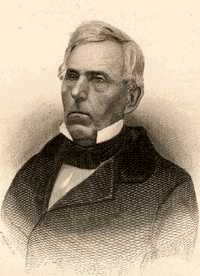
Tolbert Fanning published a strong response to the resolution in the November issue of his Nashville-based Gospel Advocate:

“Should we ever meet them in the flesh, can we fraternize with them as brethren? How can the servants of the Lord in this section ever strike hands with the men who now seek their life’s blood? We do not know how this matter appears to others, but without thorough repentance, and abundant works demonstrating it, we cannot see how we can ever regard preachers who enforce political opinions with the sword, in any other light than monsters in intention, if not in very deed. How can Christian men of the South do otherwise?”

Naturally, as tensions grew and hostilities erupted between the north and south, tensions grew and hostilities erupted between the churches in the north and south. That would just be expected, right? It’s wrong. It’s sinful. But it’s definitely the way things are. It’s the way human beings work.

As would be expected, the feelings of bitterness and anger didn’t subside with the end of the war in 1865. David Lipscomb wrote in a February 1866 Gospel Advocate article that the Missionary Society had spent the past four years “encouraging the work of Christians North robbing and slaughtering Christians South.” He accused the organization of “inducing the followers of the Prince of Peace to become men of war and blood.” With similar sentiment in the same publication the following month, Lipscomb claimed that the society “without evidence of a repentance of the wrong, should not receive the confidence of the Christian brotherhood.”

It is naive at best and dishonest at worst to claim that anyone in America before, during, and after the Civil War could have remained unaffected by it. Foster writes in Renewing God’s People:

The war created two very different moods in the country — one in the North and one in the South — that no one could escape. Northerners had won the war. There was a general sense of victory, progress, and prosperity, mixed with a desire to punish or rehabilitate the South. Southerners had been defeated. To survive, they interpreted their defeat as discipline from God to keep them from becoming like the materialistic North and to preserve their virtues as an example of God’s ideal culture. Thus, it was not just the war but its aftermath, particularly Reconstruction in the South, that broke Christian fellowship. After the war, many churches in the prosperous northern cities became successful in society. They built large buildings with expensive stained glass. They preferred educated ministers. They could even afford expensive organs for their new buildings… By contrast, Southern members faced starvation, disease, and economic ruin… To Southerners, it was inconceivable that their fellow Christians in the North could spend money on buildings and organs while their brothers and sisters in the South were struggling just to stay alive.”

Yeah, it was real.

In 1906, the official U. S. census date of the split, two-thirds of the Disciples of Christ churches were in the North and two-thirds of the Churches of Christ congregations were in the South.

Doctrinal issues are usually not just doctrinal issues. Stone-Campbell church leaders had refused to allow any differences in theology or church structure or worship practice to divide them. Though some disagreed with the need for a missionary society and some adamantly opposed it, it was never allowed to divide the churches. Until the Civil War.

The ways we think and behave, what we believe and how we practice, is passed on to us in a specific culture during a particular point in history. We’re affected by it. It shapes how we view our churches and how we view others. Can we at least acknowledge that? Then, by acknowledging it and trying to better understand it, won’t we be more humble? Won’t we be less judgmental? Won’t we be more patient and accepting, more kind and forgiving?

Peace,

Allan

« Older posts Newer posts »