Author: Allan (Page 303 of 492)

Singing Out Loud

“Glorify the Lord with me; let us exalt his name together!” ~Psalm 34:3

One of the many blessings I enjoy as a preacher is the introduction of new authors and ideas to me by members of our church. At least a couple of times a week someone will email me a link to an article that has touched them in a particular way or recommend a book they believe I might really enjoy. I love it. These kinds of things work to broaden my own vision and horizons, they usually give me good things to think about (or “borrow” for a sermon or Bible class), and they always give me another glimpse into the heart and soul of the brother or sister doing the recommending.

Recently, I was directed by a fellow Central-ite to the blog of Jennifer Gerhardt, a preacher’s wife who lives in Round Rock. I was linked specifically to a post titled “One Reason You Should Sing Out at Church.” My great love of congregational singing compelled me to click on the link immediately. My passion for deep Christian community compelled me to pass it on to you.

Here’s the link. But don’t click it yet.

Gerhardt describes an outdoor screening of the Wizard of Oz in which her family and the crowd joined together to sing “We’re off to see the wizard…” to illustrate what happens when we all sing together in worship:

“When people, different in color and taste, personality and position, sing together on a Sunday morning, when they sing-speak the same words in the same second, lifting high the name of the same Savior, they agree and affirm and commingle. When I sing and you sing, we’re saying to one another, in small part, ‘I’m with you.’

When we sing together in worship, we belong.”

Gerhardt goes on to observe that approximately 5,400 species of animals sing: humpback whales, dolphins, gibbons, bats, tree frogs, and all the birds. But of all the animals that sing, apparently not one of them lives on the ground. Every single animal that sings live in the trees or in the ocean. Researchers are convinced that the reason lies in the fact that singing requires security. Singing makes an animal’s presence known both to friends and foes. Tree canopies and ocean depths tend to be more secure than the firm surface of the ground. Animals who live in trees or under water feel safe enough to sing.

There’s only one exception in nature to this rule. Humans.

“Most of us don’t sing in front of strangers. We sing with people we love. People who won’t insult us or embarrass us or stare at us or surreptitiously film us and put the footage on youTube. Singing with others is an act of trust.

When we don’t sing, it often springs from an unwillingness to be vulnerable. That’s what excuses like ‘I’m not good at it’ and ‘I don’t feel comfortable’ boil down to.”

The interesting thing is that being vulnerable is the risk one has to take in order to make any kind of connection with anybody. You’re not going to connect with a person or a group if you don’t open yourself up. It just won’t work. It’s ironic, really, that a lot of us won’t sing because we don’t want to stick out and be separated from the group. But playing it safe like this actually works against us: we wind up not connecting, not belonging. If you want to connect, one of the best things you can do is open up your mouth and let it fly with some serious out-loud singing!

Lots of people don’t sing at church. Maybe you don’t. Man, you’re missing out on a whole lot more than you think. Thank you, Jennifer, for reminding us how vital congregational singing is to unity and connection in the Lord’s Body. And thank you, Suzanne, for the link.

You can click it now.

Peace,

Allan
 

Never Individual

The prayer requests come in every day, almost every hour. By email and phone, by text and twitter, face-to-face in the church parking lot and here in my study. We receive prayers of praise and thanksgiving, petitions born of sorrow and pain, requests for us to do battle on their behalf with the principalities and powers. I’m reminded today as I update my own personal prayer list that every time we pray, we do it together.

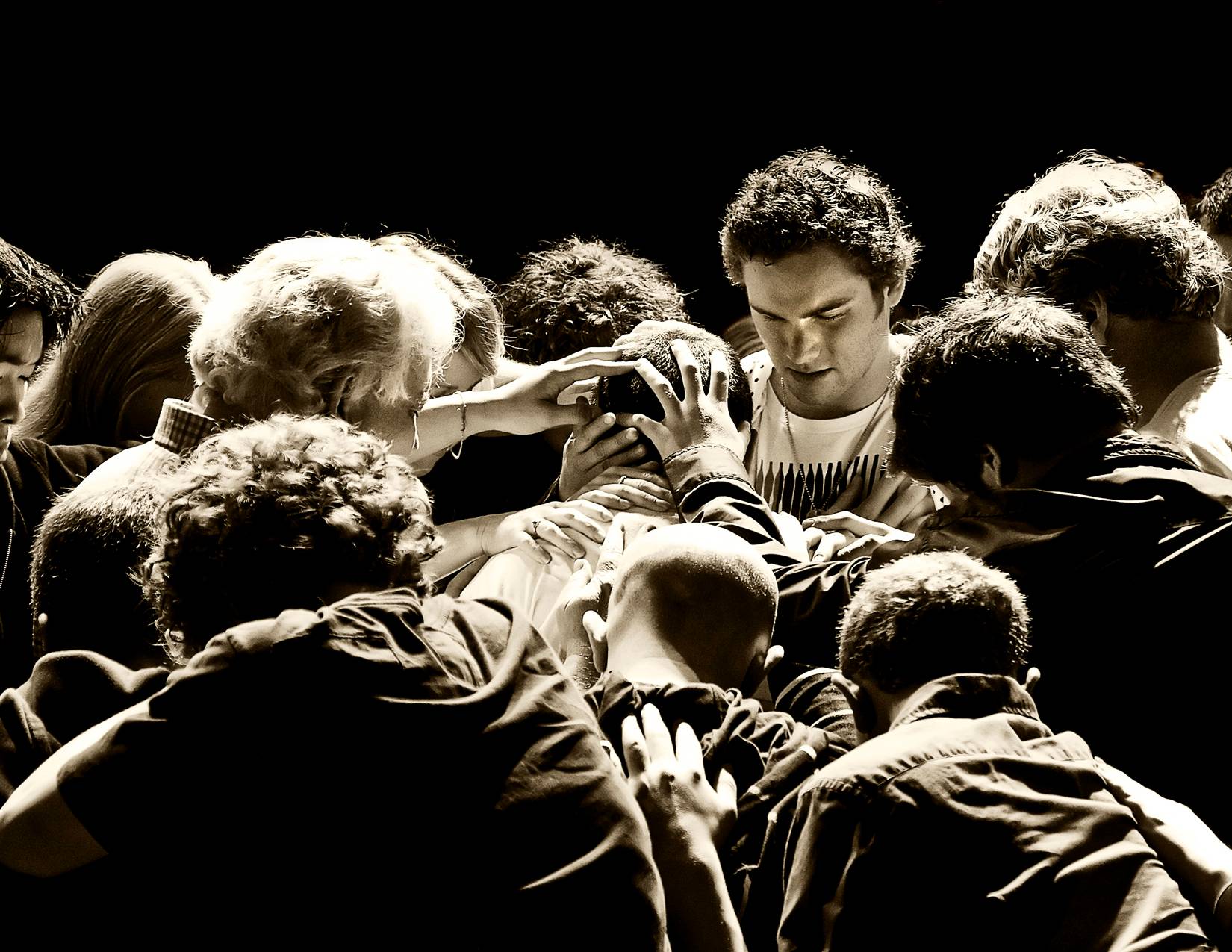
Prayer is always personal. But it is never individual.

When we pray, we are part of a great congregation whether we see them or feel them or hear them or not. We are not alone when we pray, even when there is no one else in the room. We pray for others who do not know we are praying for them. Others are praying for us, although we don’t know it.

Yes, prayer is a deeply personal language. But it is also inherently inter-relational. It is the language of God’s Church.

Peace,

Allan

Around the Table: Part 4

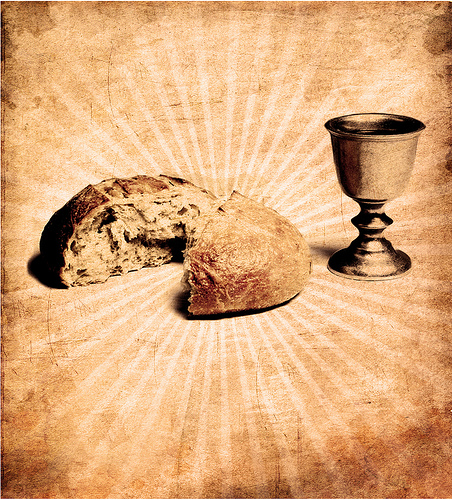
Have you ever wondered how the Church’s practice of the Lord’s Supper actually began? There’s no right or wrong answer to the question; the Scriptures don’t give us a time and a place or a lined-out history of communion practice among members of the early Church. But think about that just for a second. I believe the New Testament is full of communion references. I think we see Lord’s Supper practices both assumed and described in lots of places other than the obvious ones in 1 Corinthians and Acts. But how did it begin? Who organized the orchestrated the first official Lord’s Supper?

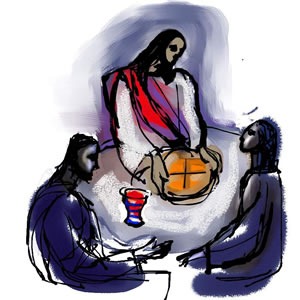
Consider that on Resurrection Day — Easter Sunday, the actual day of Christ’s coming back to life and walking out of that garden tomb — Jesus appears to his disciples and eats a meal with them. It’s the first time they see the risen Lord. At dinner time. Sunday night. And he joins them and eats with them. At dinner time. On Resurrection Day. Sunday night.

On Resurrection Day, Jesus sees his disciples for the first time and eats with them: “Jesus appeared to the Eleven as they were eating” (Mark 16:14), “They gave him a piece of broiled fish, and he took it and ate it in their presence” (Luke 24:41-43), and “On the evening of that first day of the week, when the disciples were together…” (John 20:19)

These disciples experienced the real presence of the resurrected Christ at meal time on Sunday: “Jesus appeared to the Eleven as they were eating” (Mark 16:14), “Jesus himself stood among them” (Luke 24:36), “Jesus came and stood among them” (John 20:19).

These disciples experienced the realities of the risen Lord at this Sunday evening supper; their eyes were opened and they understood. In Mark’s account, Jesus rebukes his disciples for not believing he’s been raised. But he speaks to them at the meal, he commands and commissions them to preach the good news, and they are empowered to preach “everywhere.” Luke tells us that the disciples look at the wounds in Jesus’ hands and feet during this dinner, they touch the Lord and eat with him, and they confirm that he is indeed not a spirit or a ghost. “Then he opened their minds so they could understand…” (Luke 24:45). Jesus teaches them at the table, commands and commissions them, empowers and reassures them. In the fourth Gospel, after seeing his hands and his side, the disciples “were overjoyed when they saw the Lord” (John 20:20). A very similar Resurrection Day meal experience occurred with the two disciples on the road to Emmaus (Luke24:13-35).

Remember, too, that Thomas was not there for that first post-resurrection meal with the Lord. He missed small groups that night. But he heard about what had happened (John 20:24) and made sure he was present for that next Sunday night (John 20:26). Thomas was there early for that next Sunday gathering. The Cowboys were down by four with six minutes to play, but Thomas still got there early. He pulled up to the driveway at 5:45, ready to go. And, sure enough, as the disciples were eating their meal on that second Sunday, the Lord showed up (John 20:26) and revealed himself to Thomas in the same ways he had opened the eyes of the other disciples the Sunday night before.

So, my question is this: What do you think happened on that third Sunday?

Again, there’s no right or wrong answer. There’s nothing in the Scriptures to tell us what happened on that next Sunday night. But my assumption is that the disciples got together for a meal, expecting to see Jesus. Again. Expecting to eat with Jesus. Again. Anticipating another wonderful dinner with their risen Lord with all the food and drink, fellowship and communion, teachings and commissionings that go with it. And it only makes sense that these dinners would continue every Sunday night with the hope of seeing the Christ. It makes sense that, early on, most disciples had heard the amazing stories about that Resurrection Day meals; they each knew somebody or knew of somebody who had eaten with Jesus on a Sunday after his resurrection. So those Sunday dinners became a very natural way to remember the Lord, to anticipate the Lord’s coming, to celebrate the resurrection of Jesus.

If this is true — nobody has been able to convince me otherwise; in fact, nobody’s even tried — this makes the Lord’s Supper of the early Church a resurrection meal, not a funeral meal. It’s a meal that remembers his resurrection, not his death. It’s a meal that celebrates eternal life, not one that memorializes a temporary demise. Most scholars agree:

“It appears likely that the idea of the Resurrection of Christ was associated, in the minds of the disciples, with the recollection of one or more meals taken with their Master during the period from Easter to Pentecost. And when later these same disciples met to eat together, the recollection of the other meals during which the Risen One appeared to them for the first time must naturally have been very vivid to them. We can now understand why the Christian community in the Apostolic Age celebrated its meals ‘with joy.’ The certainty of the resurrection was the essential religious motive of the primitive Lord’s Supper.” ~Oscar Cullmann, Essays on the Lord’s Supper, 1958.

“The first day of the week, as resurrection day and as the day that Jesus ate with his disciples, became designated as the day when disciples would gather weekly to break bread together.” ~John Mark Hicks, Come to the Table, 2002.

“By eating and drinking with the disciples between Easter and the Ascension, Jesus demonstrates at least three things: he has been raised bodily; he resumes full communion with people who have forsaken him and despaired of the salvation they hoped he would bring; and he equips them to be trustworthy witnesses to his resurrection and to new life, to the life that he has brought to sinners such as they are.” ~Markus Barth, Rediscovering the Lord’s Supper, 1988.

“The promise of Luke 22:16, 18 is fulfilled: Jesus is risen; he is alive and now abides with his people. Therefore, we come to the table in joy, because Jesus is risen. Nowhere is this joy celebrated more appropriately than when believers have fellowship at a meal. Throughout Luke and Acts, meals function as an expression of the joy of the Kingdom of God, where the Lordship of Jesus shines forth in clarity.” ~Allan McNicol, Preparing for the Lord’s Supper, 2007.

We share the Lord’s Supper on Sundays, not Fridays. At the table, our risen Lord joins us and eats with us as we celebrate his resurrection, not his death. We eat and drink with one another and with the Christ with gladness and joy, not sadness and grief. Sunday is resurrection day and the Lord’s Supper is a resurrection meal.

Now, how do we better practice this?

Peace,

Allan

Raised with Christ

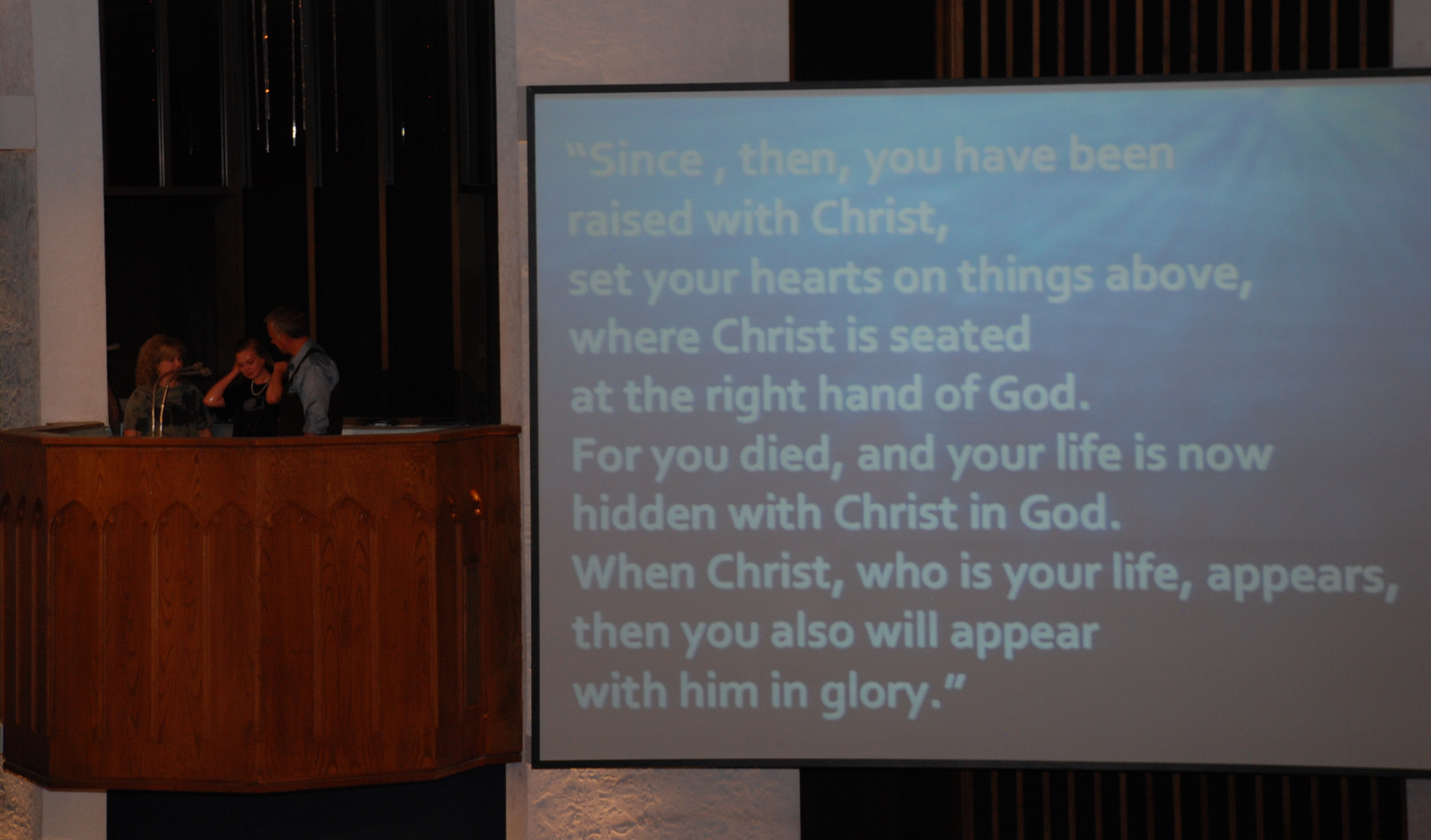
“Since, then, you have been raised with Christ, set your hearts on things above, where Christ is seated at the right hand of God. For you died, and your life is now hidden with Christ in God. When Christ, who is your life, appears, then you also will appear with him in glory.” ~Colossians 3:1-4

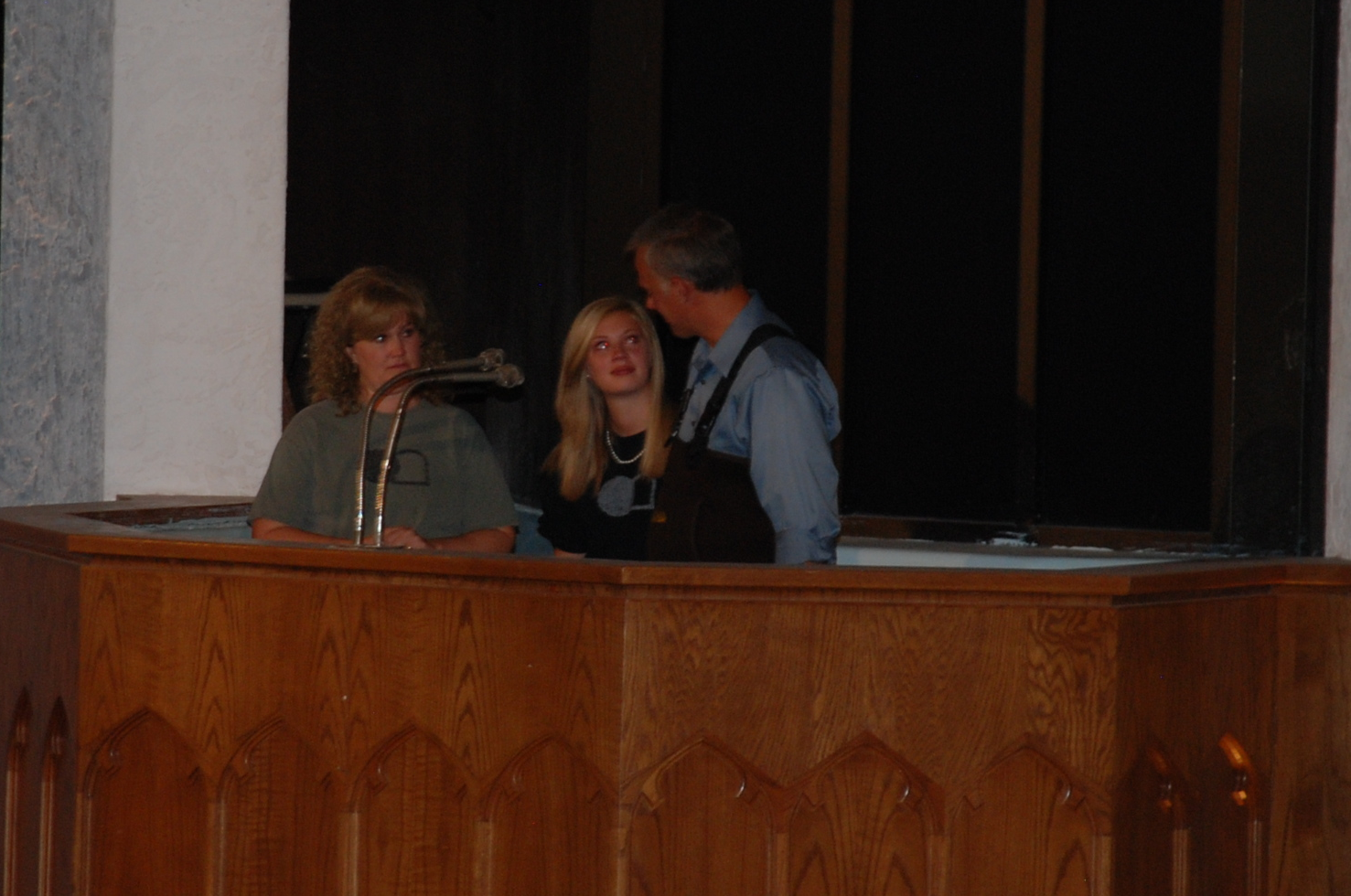
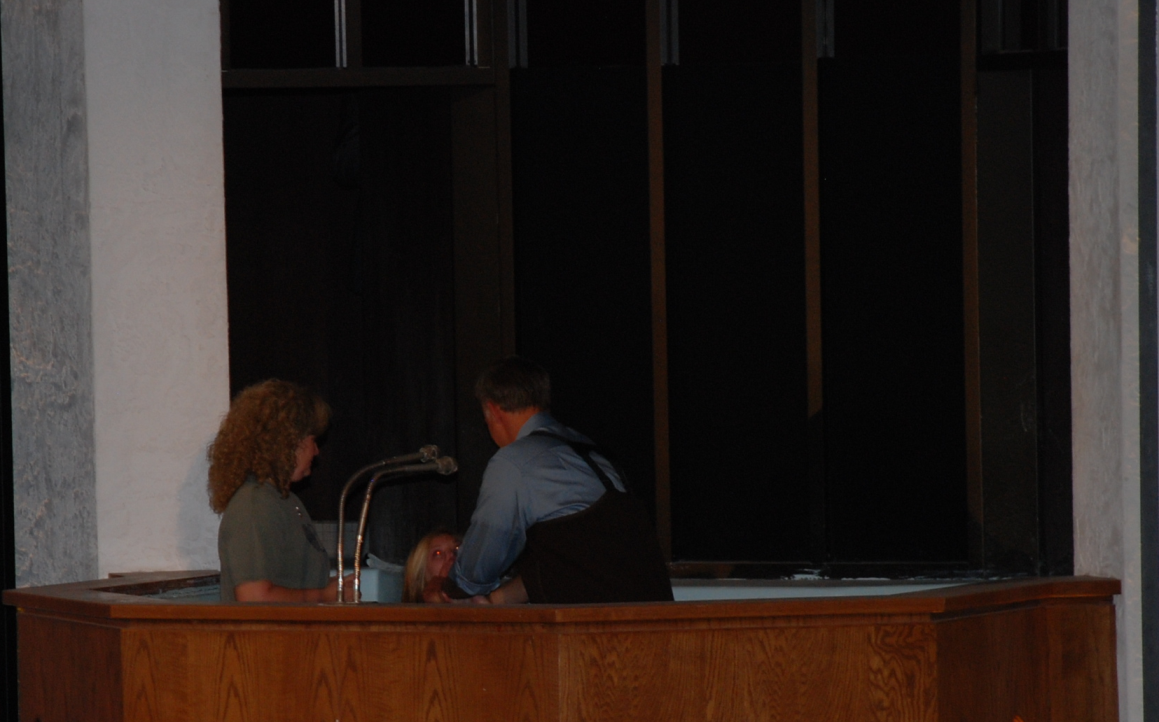
Our youngest daughter, Carley, was baptized into Christ Jesus on Sunday. She publicly renounced the ways of the world and confessed the ultimate lordship of Jesus and her commitment to him. She was buried with him — symbolically, sacramentally; she was raised with Christ — symbolically, sacramentally — to walk in newness of eternal life with our King. She has been forgiven by God of every sin she’s ever committed and will ever commit against his great holiness. She is now indwelled by God himself in the form of his Spirit — symbolized by the first huge breath she took after coming up out of the watery grave. And she belongs exclusively to our heavenly Father. She is his and he is hers. Forever. Amen.

As we talked and prayed with Carley this past week, she asked me almost every night, “Who’s going to do the ‘Since then…?'”

The “Since then…” is the congregational reading of Colossians 3:1-4. It’s a baptismal tradition/liturgy at the Legacy church we initiated with the opening of the new worship center there in 2008. As soon as the newly baptized follower came up out of the water, the congregation would recite those words of blessing and challenge, of affirmation and commission. It was — and still is — a powerful way for the church to participate in the baptism and for the wet Christian to feel the strength of belonging now to a baptized community.

Well, we don’t do that here at Central.

Yes, we clap and cheer and sometimes even stand and shout when someone is baptized. Several people are usually waiting backstage to pray with the newly baptized brother or sister afterward . For teenagers, as many as thirty or forty people will crowd back there to offer congratulations and prayers. But our worship center is built and our baptistry positioned in such a way that congregational participation in a baptism event itself is all but impossible. Our baptistry is some 25-feet up in the air, far removed from the church itself. People on the very front pews are still 75-feet away from the water and are forced to watch the baptisms on the giant screens. Folks scattered around the giant room are even farther away and have no choice but to watch it on the screens. I was dismayed Sunday to walk out into the water in front of our church with my wife and our youngest daughter, and look out into our loving congregation to see 99-percent of them not looking at us, but watching on the screens. And we’re in the same room! Our building has turned baptisms into a spectator event.

But I asked our brothers and sisters to read the “Since then…” to Carley when she came up out of the water. We put the words on the screen. And they did it. It was beautiful. It was powerful. It honored us as a family. And it meant the world to Carley.


Thank you, Central Church of Christ, for loving our daughter and our whole family the way you do. Not a day goes by that we don’t recognize how blessed we are to be with you. Thank you to our small group and Carley’s middle school Muddle families who blessed us so wonderfully at our home Sunday night. You poured truth into our daughter. You affirmed her; you challenged her; you read God’s Holy Word to her and promised to always love her. Thank you. Thank you to the Popes and the Marshalls who drove thirteen hours round trip from Legacy to rejoice with us this weekend. Your friendship is a testament to the faithfulness of our God. And thank you to Carrie-Anne’s mom and my parents who sacrificed a lot to be here this past weekend. You received the Christian faith from your parents, you passed it on to your children, and you are blessing us as we pass it on together to your grandchildren. Thank you.

Carley, you now belong to our God. Paul told the Christians in Galatia that you are a daughter of God by faith when you clothe yourself with Christ by baptism (Galatians 3:26-27). When you were baptized Sunday, you put to death the old Carley. You killed that girl; you buried her. And when you came up out of the water, you were a brand new creature. God has created something brand new inside you Carley, so that by his Spirit you will experience all of life in a brand new way. Death has nothing on you now, precious daughter. And neither does sin.

Our prayer for you, Carley, is that our God will bless you richly with his grace and peace, his protection and provision. Our great desire is to see you become more and more like our Lord. Our eternal hope is that you walk with him faithfully, all the way to the end.

We love you. And we are so proud of you. And we know your life in Christ is going to result in praise and glory to God. May his holy will be done in you and through you, Carley, just as it is in heaven.

Love, like you just can’t believe,

Dad

« Older posts Newer posts »