Author: Allan (Page 304 of 492)

Following Through

The Church is not perfect. Maybe you’ve noticed.

God’s Church is made up of imperfect people living in an imperfect world and acting in imperfect ways. We’re not perfect.

But we are faithful. You, my friend, are faithful.

Somebody reading this post has had to forgive a spouse in the past few days. At some point this week or last, you’ve had to forgive your spouse for some imperfect word or deed. Maybe you struggled to do that. Maybe you still don’t feel really good about what your husband or wife did or said that required your forgiveness. Maybe it’s been really difficult. But you made the decision to remain faithful to that spouse. You made the choice. You did what was right. You acted to honor the covenant.

Most of you reading this article today have had to make a tough choice (or two) already this week on personal fidelity to Christ. You had to make a decision to be faithful to God in worship. Faithful in service. Faithful in sacrifice. Faithful in relationship. Faithful to our Lord in word and deed. Not because it felt so good at the time, perhaps. Not because it necessarily was the popular thing to do. But because it was the right thing to do. You acted to honor the covenant.

God’s faithfulness to us knows no limits. He is faithful to his promises to us even when we are faithless toward him. He goes all the way to the cross to prove that fidelity to his holy Word. And in order for us to reflect that facet of his eternal glory, we are to be faithful in our commitments, faithful to our word, faithful to one another. Nothing should come between us and following through on the things we’ve started. Even when it’s hard. Even when we don’t feel like it.

That’s the mind of Christ. That’s “Christ formed in you.” That’s the “hope of glory.”

Peace,

Allan

Around the Table: Part 3

Good morning, Lon.

Alert all the local and regional safety agencies. Sound the alarm and post the warnings. The state of Texas has granted Valerie a driver license. On Friday morning, our Little Middle parallel parked like a champ and then aced the driving test, nailing it with a 96. So, consider carefully this advice: be extra cautious around the southwest part of town and, in the early evenings. between here and Canyon.

Congratulations, Valerie. Now, can you run to the store and get some bread and more Diet Dr Pepper?

~~~~~~~~~~~~~~~~~~~~~
After two weeks of intense Old Testament study concerning the covenant between God and man, the history and nature of covenant meals, the fellowship sacrifices and meals, the presence of God at those meals, and the great joy commanded and experienced around those tables, our Wednesday night Bible class in Sneed Hall has crossed the threshold into the New Testament and the ministry meals of our Lord Jesus. It’s a class on the Lord’s Supper, yet I think most everyone is surprised at how much we explored before we ever got to the Gospels. Well, we had to.

God comes to us in the person of Jesus as a fulfillment of the covenant: “I will make my dwelling place with you; you will be my people and I will be your God.” Emmanuel means “God with us.” And that’s just what/who Jesus is: God with us. God in Christ comes here to dwell among us (“The Word became flesh and made his dwelling among us…” John 1:14). He came to earth to reveal himself to us in Jesus (“Anyone who has seen me has seen the Father.” John 14:9). And God put on our flesh and came to this planet in order to eat and drink with us, to commune with us, around a table.

“I confer on you a Kingdom, just as my Father conferred one on me, so that you may eat and drink at my table in my Kingdom.” ~Luke 22:29-30

“Many will come from the east and the west and will take their places at the feast with Abraham, Isaac, and Jacob in the Kingdom of Heaven.” ~Matthew 8:11

“The Kingdom of Heaven is like a king who prepared a wedding banquet…” ~Matthew 22:2

You don’t have to read too far in the Gospels and you don’t have to pay too close attention to see that meals, eating and drinking with people, are the focal point of Jesus’ ministry. Jesus eats with his disciples and with his enemies, with the “righteous” and the “sinners,” with crowds of Jews and crowds of Gentiles, with tax collectors and prostitutes, with Mary and Martha and teachers of the Law. Jesus ate and drank with everybody. He was eating and drinking all the time, so much so that he was accused on several occasions of being a drunkard and a glutton.

And in all these Jesus stories, the meals are critically important. They reveal great truths about what God is doing through Jesus in the world. The meals teach lessons about what it means to live as citizens in God’s Kingdom. They express forgiveness and healing, they celebrate restoration and fellowship.

Jesus is eating with Levi and the other tax collectors, showing us in visible ways that the invitation to enjoy fellowship with God is open to all. He’s criticized for his choice in dinner companions and answers by proclaiming that “It is not the healthy who need a doctor, but the sick. I have not come to call the righteous, but sinners!” (Luke 5:31) You get the same thing with Zacchaeus. “The Son of Man came to seek and to save what was lost.” (Luke 19:10)

Jesus forgives the sins of the prostitute at the dinner at the Pharisee’s house in Luke 7. He teaches on hypocrisy and taking care of the poor during the meal with the Pharisees and teachers in Luke 11. At the supper with the Pharisee in Luke 14, our Lord declares again that he’s here to eat with everybody: “Bring in the poor, the crippled, the blind, and the lame!” (Luke 14:21)

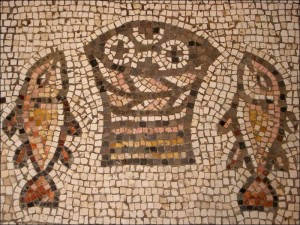
Aside from the last dinner with his disciples and the post-resurrection meals, the most important meals during Jesus’ ministry came at the feeding of the multitudes. All four Gospels go to great lengths to report on the miraculous feedings of the five thousand Jews and the four thousand Gentiles. The imagery is unmistakably Messianic. Here’s this great prophet of God providing food for God’s people in the desert. They eat until they are full. Baskets of leftovers are collected. This fulfills Moses. This fulfills prophesy. This is the Anointed One, the Christ!
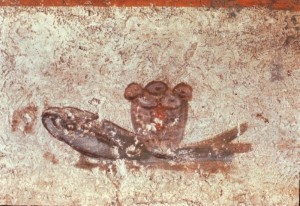
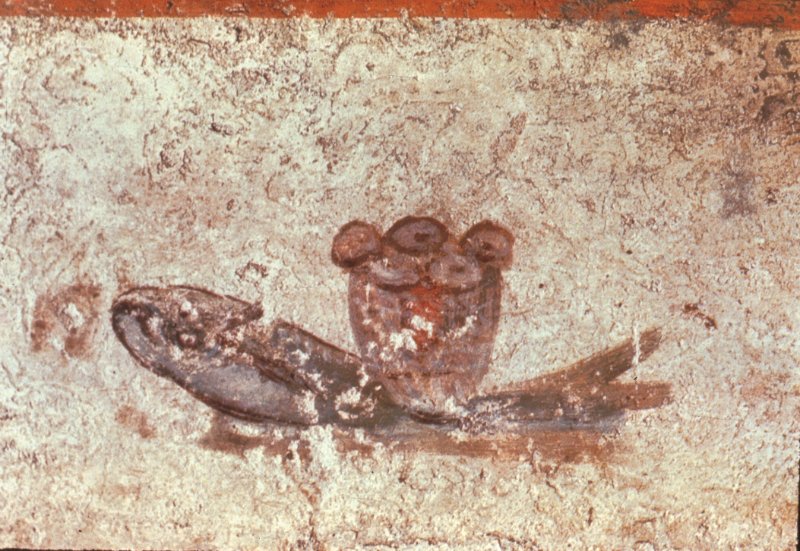
The early church made a pretty big deal about the feeding of the multitudes. The first churches ate their communion meals in the context of these feedings and the truths those stories revealed. It’s why the earliest communion art we have contains images of fish with the bread and the wine. The connections were made not just by the common themes and the prophesies, but by the deliberate wording the New Testament writers used to relate these important meals. They tied the church’s meals to the last supper, the post-resurrection dinners, and the feedings of the crowds with the four-fold liturgy of “take, bless, break, and give.”

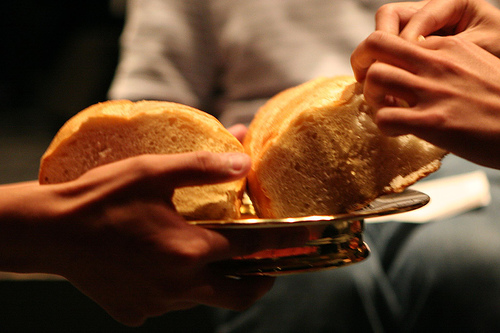
In every account of these miraculous feedings, Jesus is said to “take” the bread, “bless” it, “break” it, and then “give” it to the disciples. Look it up; it’s in every passage (Luke 9:16, Matthew 14:19, Mark 6:41, Mark 8:6, Matthew 15:36). The same language is even used for the fish in John 6:11. Interestingly, the exact same formula is used in the Last Supper accounts. Jesus takes, breaks, blesses, and gives (Luke 22:19, Mark 14:22, Matthew 26:26). The same four words are used in the same order in the stories of Jesus’ post-resurrection meals, too, tying together all the meals Jesus ate during his ministry to the meals the church was sharing together at the time the stories were recorded. Everything that was going on in those meals — the teachings, the revealed truths, the fellowship and thanksgiving, the invitation and celebration, the anticipation of the final heavenly feast — is also going on today in our church’s meals.

They are all Kingdom meals. The feedings of the crowds, the last dinner, the post-resurrection suppers — they are all Kingdom meals, eaten in community, in the presence of the Lord, with great joy. They each anticipate the fullness of the Messianic banquet in the new heaven and new earth. They’re each characterized by joyful celebration and an abundance of food. To eat with Jesus (God) is to experience and celebrate redemption and acceptance. All the meals proclaim that the Day of great joy for all the people has dawned.

With this understanding, how in the world would the first Christians eat the “Lord’s Supper” in a quiet, somber, individualistic way? How would they imitate or recreate the Lord’s meal with little crumbs of cracker and tiny sips of juice?

Of course, they didn’t.  But, we’re getting ahead of ourselves a bit.

Peace,

Allan

Around the Table: Part 2

We’re seeing right now with the Rangers the exact same thing we saw at this point last season. They’ve smashed into the wall. They can’t hit, they can’t field, they can’t pitch. They’re flat. They’re done. And Oakland’s on a tear. The same thing happened last year at this exact same time. And we’re running out of options for turning things around. You can’t hold a players-only meeting every week. You can only call a special team meeting with the manager a couple of times a year. Now what? I wore my 1996 AL West Championship T-shirt to bed last night, trying to channel some of that magic from the first ever playoff year for the Rangers. We could use some of that Johnny Oates mojo, some of that Pudge Rodriguez intensity, some of that Will Clark leadership. We need something. This is the do-or-die weekend for Texas. If they don’t take at least two out of three from the A’s, beginning tomorrow, we’ll play Taps for the team here on Monday. Yuk.

~~~~~~~~~~

“They ate and drank with great joy in the presence of the Lord.” ~1 Chronicles 29:22

If put on the spot, most of us would not be able to quote anything out of Leviticus. Most of us have never participated in or even seen an animal sacrifice. And a decreasingly fewer number of us have ever slaughtered an animal to eat. Anything having to do with the sacrifices prescribed by God and practiced by his people in the Hebrew Scriptures is mostly ignored by us. That was Old Testament, we like to say. That was the Law of Moses. Those are complicated rules and regulations, outdated and ineffective means of obtaining forgiveness from which New Testament Christians have been freed. We don’t know much about these sacrifices because we don’t study them. Those sacrifices are not important for us today. They’re certainly not binding.

Not so fast.

When Paul is writing to the Corinthians about what is actually happening around the Lord’s Supper, he asks them to first understand what’s happening at the Israelites’ sacrifices.

Consider the people of Israel: Do not those who eat the sacrifices participate in the altar?” ~1 Corinthians 10:18

Eat the sacrifices??? Most Christians today don’t realize that God’s people always ate the sacrifices. They made a community meal out of the meat. And Paul says this is significant for understanding the function of the Lord’s Supper. Paul doesn’t just talk about the Passover sacrifice and meal as informative, he mentions the entire sacrificial system. Paul reflects on the meaning of eating the sacrifice to help Christians better comprehend what’s happening at Christ’s table.

The fellowship offering was ordered to go alongside all sin offerings and burnt offerings. You can’t find a place in Scripture where God’s people didn’t offer the fellowship sacrifice in the course of observing the others. The word translated “fellowship,” or “peace” in some English versions, is actually shelem, from the shalom root that means “peace.” Shalom means peace, while shelem communicates a relationship of peace, a communion or fellowship between two parties. And fellowship sacrifices were always eaten together by the people.

You find God’s people offering fellowship sacrifices at the ratification of the Mosaic covenant, at the inauguration of the priesthood, and as a part of every major festival, including Passover, Pentecost, and Tabernacles. Fellowship offerings and meals were required at the end of a Nazarite vow. Fellowship offerings were the climactic moments at the inaugurations of Israel’s kings, at covenant renewal ceremonies at Shechem and Jerusalem, at the dedication of the temple, and as part of the regular corporate worship of God. You have to read most of Leviticus and Deuteronomy to get it, but sacrifice and fellowship and communion meals were a normal part of life with God and with one another in this community of faith.

The way it worked was that the fat of the animals was left on the fire to burn, while the people ate the meat together as a community. It happened at the same time. God was consuming the fat on the fire, the people were consuming the meat on their plates. God and his people were sharing a meal together, eating at the same time, around the same table. Fellowship, shelem, with God and with one another. These fellowship meals always followed the sacrifice. And they were consistently characterized by two things: the presence of God and great joy.

Exodus 18:12 – Moses, Jethro, and Aaron eat the sacrifice “in the presence of God” to celebrate their salvation from Egypt.

Exodus 24:8-11 – “they saw God, and they ate and drank.”

Deuteronomy 12:4-7 – “Eat and rejoice in the presence of the Lord your God.”

Deuteronomy 12:17-18 – “Eat them before the presence of the Lord… rejoice before the Lord.”

Deuteronomy 14:23 – eat the grain and livestock offerings “in the presence of the Lord.”

Deuteronomy 14:26 – “Eat there in the presence of the Lord your God and rejoice.”

Deuteronomy 15:20 – regarding the first born animals of the flocks: “eat them in the presence of the Lord.”

1 Chronicles 29:21-22 – the people ate and drank with great joy in the presence of the Lord

Deuteronomy 27:7 – at the covenant renewal in Shechem; the people ate the fellowship offerings “rejoicing in the presence of the Lord.”

2 Chronicles 7:10 – at the building of the temple; people eating the fellowship offerings were “joyful and glad in heart.”

Ezra 6:13-22 – at the re-building of the temple; the people “celebrated with joy” because the Lord had “filled them with joy.”

Nehemiah 8:1-18 – at the re-building of the city walls; “do not mourn or weep… enjoy choice food and sweet drinks… the joy of the Lord… celebrate with great joy.”

Numbers 10:10 – “at your times of rejoicing, your appointed feasts.”

I could fill up your screen with many more references. The point is that the covenant meals were always, without exception, eaten by and with the entire community, always in the presence of God, and always with great joy. The fellowship meal is a joy-filled celebration of the righteous relationship — the peace, the communion — with God that resulted from the sacrifice at the altar. You can’t find a community meal anywhere in the Old Testament in which joy was not the mood and celebration not the command. In fact, in the one place in which Israel was weeping during the meal, God rebuked them and corrected them, commanding them to “celebrate with great joy.”

Fellowship meals in the Old Testament were never intended to be moments of solemn silence or private introspection. Communion meals were not in any way individualistic. They were interactive, participatory meals in which the entire community actively engaged with one another and with God. The meals were joyful and grateful celebrations of the blessings of God. This is the understanding and the practice of Jesus himself, his disciples, and all the New Testament writers. Not just them, but their grandfathers and great-great-great-great grandfathers before them.

Paul says if you understand this, you can better understand the Lord’s Supper. As an expression of peace and communion between God and his people. As a communal act shared among the people of God. As a salvation celebration characterized by great joy and thanksgiving. Do our Lord’s Supper practices and experiences today reflect this understanding?

Someone in our class last night asked, “Why don’t we do the Lord’s Supper this way? Why do we look at the floor and get so quiet during the Lord’s Supper?”

Good question.

Shalom,

Allan

Strong in the Lord

“Be strong in the Lord and in his mighty power. Put on the full armor of God so that you can take your stand against the devil’s schemes.” ~Ephesians 6:1

Sometimes it feels like we’re not gaining any ground, much less posting any outright victories. At the end of most days, we look back and can’t really see that the weapons of righteousness, peace, faith, salvation, the Word of God, and prayer are making any difference at all. Sometimes it can seem that way for months. For years. And we might lose patience.

We might be tempted to take up a weapon or two that might work better. Politics, for instance, seems to get results a lot quicker than truth or the Word of God. Money makes things happen far more effectively than righteousness or salvation ever do. Technology communicates much better and faster than loyal love. Threat and force can make things change right before our eyes while peace and faith just seem like fantasy words and wishful thinking.

We don’t always experience the victories. So, we’re tempted to do things in our own ways, by our own powers.

We live in a world dominated by defeat and death. Defeat and death get all the headlines in our world. The death of society. The death of marriage. The death of careers. The death of the family. Death by war, death by starvation, death by murder, death by accident. Death by lethal injection, death by abortion, death by chemicals. The death of the church, the death of the faith, the death of hope.

Our vision for victory in Christ is not some vague wish. Our hope for victory in Jesus is a deliberate, Holy Spirit empowered way of life in a world that’s obsessed with death and defeat.

We see God’s victory together in our born-again baptisms. We experience Gods’ victory together at our Lord’s table. We hear God’s victory together in the reading of our Scriptures. We practice it together in our prayers. We live it together by refusing to let the powers of the world tell us what to do or how to think! We boldly confess and forgive. We courageously welcome the stranger and outcast. We faithfully work for peace and justice. We never stop healing and feeding. We never stop singing and preaching. We never stop giving and giving and giving and giving because we see what God sees.

Be strong in the Lord and in his mighty power, not yours! His mighty power! And the world will know that there is a God in Amarillo!

Peace,

Allan

Happy Birthday Carley Sue!

It just seems like seven or eight years ago; certainly not fourteen! I realize that speaks more to my own rapidly advancing age than anything else. But how in the world are you — our baby, our youngest daughter, our last one — already fourteen?

You are a study in extreme contrasts, Little Bear. You were born screaming at the top of your lungs that Friday afternoon in Wichita Falls and you haven’t stopped screaming since. Good grief, you’re loud, girl. Always have been. I have no idea where you got that. But at the same time, you’ve always exhibited a really quiet and reflective side. I’ve watched you spend hours and hours curled up in a book, writing in your journal, drawing another puppy dog or little girl with big eyes.

You can be so demanding — bottle now! polka-dotted blanket, now! Cheerios, now! mint-chocolate-chip ice cream, now! And, yet, you can be so incredibly selfless and sacrificial — making and giving gifts to family and friends, deferring the choice of TV show or restaurant or souvenir T-shirt to others.

You’re the one, way beyond your sisters, who wants to wrestle and fight, slap box and spar. I never know when you’re going to jump on my back as I’m innocently passing through the living room. When are you going to punch me in the gut next? How many times this week am I going to have to fend off another fake — and pathetic — karate kick or chop to the throat? But at the same time, you’re the one, far and above your sisters, who delights in the cuddles and hugs. Your “burrowing” at night and your insistence on the back scratches, still to this day, are precious to me.

The contrasts in styles and personality, pleasures and peeves, seem much more pronounced during these your middle school years. And I thoroughly enjoy trying to figure them out. You bring me great joy, daughter. I love being with you.

I love that you have Beatles posters on your wall, that you know John Cougar and John Mellencamp are the same guy, and that you recognize within a few notes the difference between a song by the Rolling Stones and one by The Who. I love that you make fun of girls who like Justin Bieber and One Direction. I love that you quote lines from Indiana Jones and It’s a Wonderful Life and that you remember funny stories I’ve shared about my own childhood. I love that you have perfect eyebrows and a sarcastic and sharp sense of humor. I love that you used to have seven thousand Beanie Babies and still get weird and weepy over a particularly cute stuffed animal in a toy store display. I love that you still want to eat lunch with me on your birthday.

More than those wonderful things, I love that you love our God. I love your knowledge and hunger for his Word. I love the way you finish my sentences when I’m quoting Scripture. I love that you want to follow Jesus, to imitate him, to be more like him. I love that you want to help other people in his manner, to worship God in his name, and serve him to his glory. I love listening to you sing. And pray.

You, Carley, are a gift to me straight from heaven. God gave you to us. And we are beyond delighted.

Happy Birthday, Bear.

I love you,

Dad

About Last Night

When it comes to the Cowboys, if I can’t say anything ugly I don’t say anything at all. And I don’t mean for this post to be overly ugly or overly critical of last night’s escape over the Giants at the Death Star (the only Ticket Schtick you’ll ever see me use). But after a full day of exulting in the season-opening division win, overly-optimistic Cowboys fans who believe this team is capable of finishing over .500 need to be reminded today of what really happened last night.

Allow me to re-cap in the form of a few questions:

~How in the world, six minutes into the first quarter, do the Giants have three turnovers and the Cowboys only have three points? And zero first downs?

~How in the world do the Giants turn the ball over six times, yet at the two-minute-warning are poised at mid-field, with the ball, trailing by one score?

~How does Romo give up a 91-yard interception return that only results in three points for New York?

~How does Eli Manning throw for 450 yards and four touchdowns and still lose?

~How does the Dallas offense only score two touchdowns and still win?

~How does the Dallas defense give up more yards than all but two teams on the NFL’s opening weekend and still win?

It boggles the mind. So many things had to break just right for Dallas to squeak out that win last night. Believe it or not, it’s the first time in team history that Jason Witten has caught two TD passes from Romo in the same game. I mean, that kind of weird had to go down for the Cowboys to win. But I wouldn’t see it as a changing of fortunes. I wouldn’t view what happened last night as the new rule. I wouldn’t predict anything about the next 15 games based on last night. It was just a case of pure, dumb luck.

Don’t tell me a team causes its own luck. It’s not that I don’t believe it; I know teams cause their own luck. The very best teams are always the luckiest teams, and that’s not a coincidence. But that’s not what we saw last night. Everything about what happened last night goes against NFL logic, against football wisdom, against gridiron history, against NFL numbers and stats. What happened last night was an aberration.

Most of you Cowboys fans already figured next week’s Chiefs game to be an automatic “W.” My word, they were even worse last year than their 2-14 record would indicate. But, another thing that happened yesterday, of all the opening weekend games, was Kansas City posting the largest margin of victory.

What makes you think the Cowboys won’t keep winning a couple of games they should lose and losing a couple of games they should win? Isn’t that what .500 teams do?

Peace,

Allan

« Older posts Newer posts »