Author: Allan (Page 203 of 492)

Here’s Looking at You

My kids tell me I’ve ripped this off from the movie “27 Dresses” which, as God is my witness, I’ve never seen. But when I’m at a wedding and the bride makes her appearance at the back of the church and begins to walk down that center aisle, I do turn my attention to the groom. I want to watch the groom as he sees his beautiful bride. Because the way that groom looks at the bride is the way our God looks at his Church.

Scripture tells us that God wants to be much more to us than just a mighty king with loyal subjects. He wants to be the groom to the bride. He wants a relationship of intimate love with us as profound and eternal as that between a husband and a wife. God calls himself the groom throughout the Old Testament.

“‘They broke my covenant, though I was a husband to them,’ declares the Lord.” ~Jeremiah 31:32

Jesus calls himself the groom in the Gospels and compares the Kingdom of God to a massive wedding feast.

“How can the guests of the groom fast while he is with them?” ~Mark 2:19

“The Kingdom of heaven is like a king who prepared a wedding banquet for his son… All things are ready! Come to the wedding banquet!” ~Matthew 22:1-4

And at the end of time, when everything is finally made right and all of our Father’s plans have culminated in the new heavens and new earth and perfectly righteous relationships with him and one another, there’s going to be a wedding feast to end all wedding feasts!

“I saw the Holy City, the new Jerusalem, coming down out of heaven from God, prepared as a bride beautifully dressed for her husband.” ~Revelation 21:2

“Blessed are those who are invited to the wedding supper of the Lamb!” ~Revelation 19:9

This coming feast celebrates finally the intimate and permanent union of God and his people. This is how history ends. This is what God is doing.

When God uses a metaphor to help us see him better, it also helps us better understand how he sees us. God calls us his Father, he calls us his children, and then Jesus says, “If you know how to give good gifts to your children, how much more…?”

If God is our groom, then he must really love us. He must truly delight in us.

What does the bride look like when she walks down that aisle? How does her groom see her? Have you ever watched the groom?

When the groom sees her, he’s absolutely delighted. You can see the love in his eyes. You can almost feel the commitment in his heart. You can sense the complete devotion to her in the deepest part of his soul. He’ll do anything for her for the rest of his life, he’ll stop at nothing to protect her and provide for her and please her, he’ll dedicate his whole existence to loving her forever — you can see it in the way he looks at her!

How dare our Lord use a metaphor like that! How dare the Scriptures tap into this really powerful image and its accompanying emotions!

Could it be that he really loves us like that? That he really loves you that much? That God is that committed to you?

How different would your life be if you lived every day — hour by hour, moment by moment — in the awareness of God’s great love for you? He’s looking at you right now. He thinks you’re beautiful. He’s proud of you. And he loves you more than our words can describe.

Peace,

Allan

A Special Night at First Baptist

A Baptist church suffered a terrible fire. The congregation immediately launched a campaign to raise money to build a new building. One especially enthusiastic fund raiser called the Church of Christ preacher across town and asked if he’d be willing to donate a hundred dollars to the cause. After a thoughtful pause, the Church of Christ preacher replied, “Friend, you know I can’t give you a hundred dollars to build a new Baptist church in this town. But I can give you a thousand dollars to help you tear down the old one.”

I am so thankful to belong to a group of churches in downtown Amarillo — elders and board members, pastors and ministers, and more than three thousand Christians — that are committed to loving one another, supporting one another, praying for one another, and moving heaven and earth to help one another. I am grateful to God to be in the middle of a group of Christ-followers who are so willing and eager to put our denominational differences in their proper perspective and lock arms and hearts to worship together and serve this city together in the name and manner of Jesus. Every single thing our four churches do together serves as a powerful testimony and an undeniable witness to Amarillo and beyond that our God really is who he says he is and he’s really doing everything he promises he’s going to do.

The “4 Amarillo” churches — First Presbyterian, Polk Street United Methodist, First Baptist, and Central — came together for our fifth annual Thanksgiving Service last night. Our four churches’ praise teams and choirs combined for a hundred-member ensemble that opened the evening with a bouncy “This Is the Day the Lord Has Made” and closed it with a soaring rendition of “By Our Love.” The room was packed — more than a thousand — the energy was up, the spirit was one of enthusiasm and encouragement. Congregationally we sang “When We All Get to Heaven,” “Count Your Blessings,” “Give Thanks,” “How Great is Our God,” and “How Great Thou Art.” Howard Griffin led us in a powerful responsive reading from Psalm 136. Howie Batson’s benediction inspired. And I was privileged to deliver the evening’s message from John 13:34-35, “Love One Another. Period.”

Privileged is the right word. Blessed. Honored by our Lord to be in the middle of something only God could do. It’s hard for me to put into words the significance of what we do together as “4 Amarillo.” I know there must be other places in Texas and certainly around this country where churches from different denominations worship and work in true partnership and fellowship together. There have to be; I just don’t know of any.

I feel especially blessed to experience so regularly here this heaven on earth. Our Lord went to the cross to eradicate the barriers between us and God and between all of God’s people. Jesus’ prayer on earth was that all of his followers would be united, that we would all be one just as he and the Father are one. And we know that on that last day of glory, all of God’s people for all time will be gathered together around his table, to eat and drink in his presence, at the eternal wedding feast of the Lamb. And, by God’s grace, we are doing that right here in downtown Amarillo! Who would have ever guessed? God be praised!

“The time is now: come, Church, arise!
Love with his hands, see with his eyes.
Bind it around you, let it never leave you,
and they will know us by our love!”

Peace,

Allan

God at Work: With Us

“We are the temple of the living God. As God has said: ‘I will live with them and walk among them, and I will be their God and they will be my people.'” ~2 Corinthians 6:16
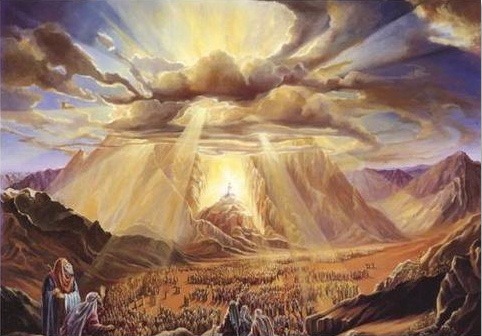
In Exodus 24, God has come down to his people on a mountain. He comes to be  near them, to be with them. He’s keeping his covenant promise to live with us, to dwell among us. And you see all three of the Church sacraments in this passage. The people have assembled together in God’s presence. It’s the Day of Assembly. And the people are worshiping. They hear the Word of the Lord and they respond, “Everything the Lord has said, we will do!” They’re making burnt offerings, fellowship offerings, and sacrifices to God. The people are being washed by blood. Paul says in 1 Corinthians these people were all baptized when they passed through the Red Sea. But they are certainly being cleansed.

“Moses took the blood, sprinkled it on the people, and said, ‘This is the blood of the covenant that the Lord has made with you…’ Moses and Aaron, Nadab and Abihu, and the seventy elders of Israel went up and saw the God of Israel… They saw God and they ate and drank.” ~Exodus 24:8-11

God comes to his people, he cleanses us, he makes us righteous and whole, and he eats and drinks with us. We see God at the table.

But that’s not enough for our God. It’s not close enough to us. So he makes his dwelling place in the tabernacle in the desert and, later, inside the temple in Jerusalem. But that’s not close enough to us for our Father. So he comes here himself in the physical flesh and blood of Jesus. The Word became flesh and made his dwelling among us. He tabernacle with us as one of us.
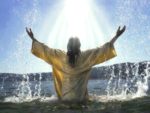
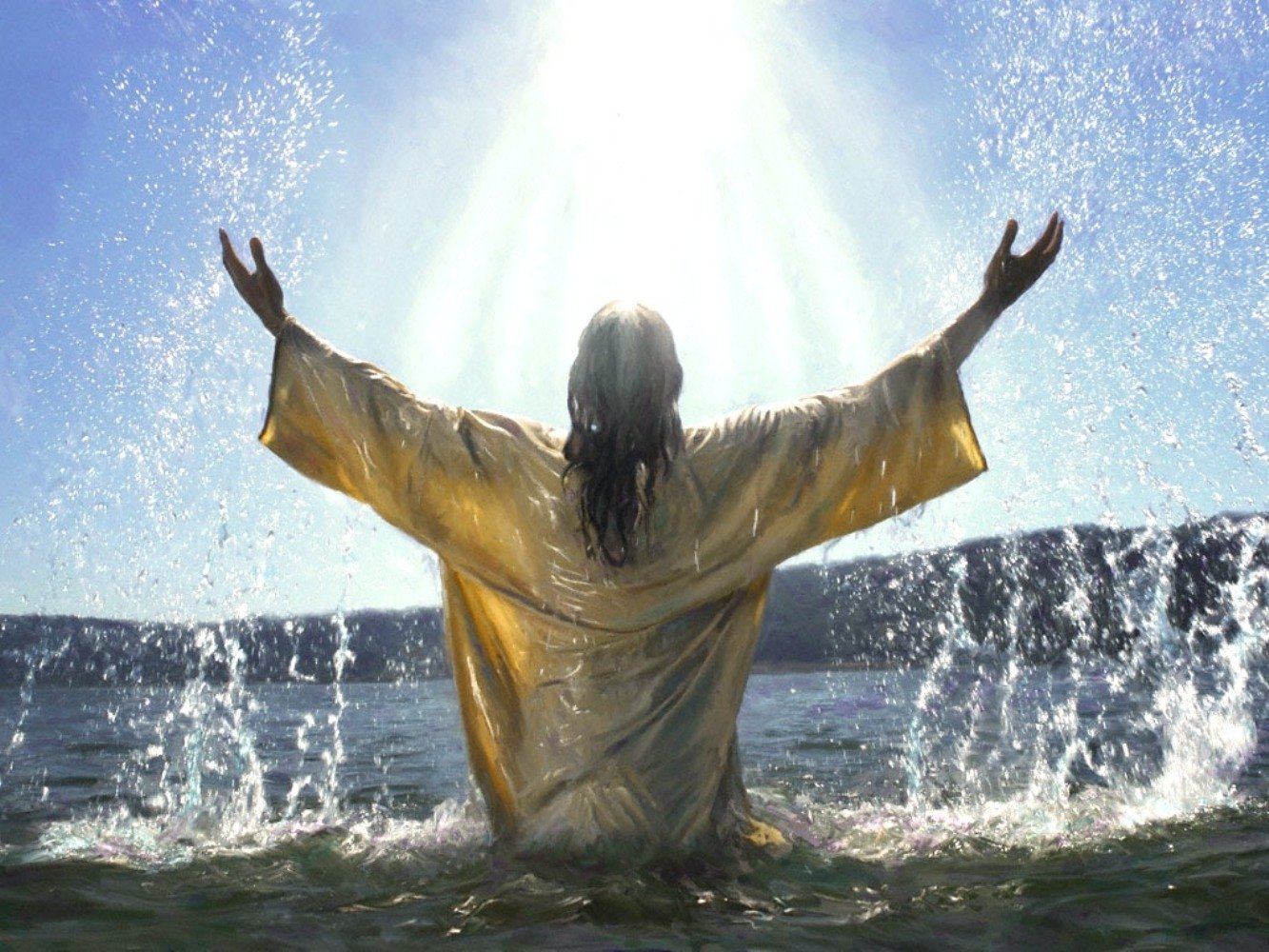
When Jesus was baptized, Luke tells us “all the people were being baptized.” Matthew says the people came “from Jerusalem and all Judea and the whole region of the Jordan” to be baptized. And Jesus joins us in the water. He meets us there in our cleansing. God’s presence is there. The dove, the Holy Spirit, the voice of God affirming and commissioning: “You are my child, I am proud of you.”

And Jesus meets us in worship. The Gospels say he went to the synagogue regularly, as was his custom. He went to the temple, faithfully, for the corporate assemblies and festivals. He never missed. And he ate and drank with everybody — rich and poor, men and women, Jews and Gentiles, slave and free, sinners and saints.  He ate with Mary and Martha and tax collectors in their own houses. He set up a picnic with 4,000 Gentiles out in the wilderness. He got in trouble because he refused to discriminate. He ate with all of us!

That last night with his closest disciples, around the table, he’s eating with us. “This is my blood of the covenant,” our Lord says.

“I will not eat it again until it finds fulfillment in the Kingdom of God… I will not drink again of the fruit of the vine until the Kingdom of God comes.” ~Luke 22:15-18

And then on the day of his resurrection, Jesus can’t wait to eat with his disciples. He makes lunch plans with two of them on the road to Emmaus and when Jesus breaks the bread, they “see” him. That evening he shows up where the apostles are, right in the middle of dinner. They’re not sure it’s him — maybe this is a ghost. So Jesus asks for a piece of fish and eats it “in their presence.” Later, when people ask Peter how he knows Jesus is alive, he replies, “Because we ate and drank with him after he was raised from the dead!”

But that’s not enough for our God. He wants to be even closer. He doesn’t want his presence with us to be limited by physical space. So he pours out his Holy Spirit on everybody. By his Spirit, God Almighty takes up residence, he tabernacles, he makes his dwelling place, inside each of us and all of us.

We see all these sacraments on the Day of Pentecost in Acts 2.

“Repent and be baptized, every one of you, into the name of Jesus Christ for the forgiveness of your sins. And you will receive the gift of the Holy Spirit. The promise is for you and your children and for all who are far off — for all whom the Lord our God will call… Those who accepted his message were baptized, and about three thousand were added to their number that day… They devoted themselves to the apostles’ teaching and to the fellowship, to the breaking of bread and to prayer… Every day they continued to meet together in the temple courts. They broke bread in their homes and ate together with glad and sincere hearts, praising God and enjoying the favor of all the people.” ~Acts 2:38-47

Look, baptism doesn’t work because we believe all the right things and we say all the right words. Baptism saves us because God is there. God meets us in the water. He forgives us, he cleanses us, he unites with us in baptism. He connects us to the salvation death, burial, and resurrection of our Lord so he can live with us.

And Jesus doesn’t meet us at the table to shame us. It’s not, “Look what I had to do for you — remember it!” It’s his gift to us, this sacred time with him and with one another where God accepts us and affirms us, where he nourishes us and sustains our lives. It’s not, “I had to die for you — be grateful!” It’s, “I love you; I want to eat with you.” It’s an invitation.

And worship doesn’t work because we’ve got it figured out and we’re good at it. Worship works because God is with us and he’s working. His presence is with us. God is speaking to us by his Word. Christ Jesus is eating with us and nurturing us at the table. And the Spirit is interceding for us with words we can’t begin to describe.

Our actions don’t move God to grace; God’s grace moves him to action. These sacraments, these ordinances, are gifts of God’s grace to us. He initiated these things we do together. In baptism and at the table, together with God’s people in holy assembly, God says to us, “We can meet each other here.” That’s his promise: I will meet you here.

He left heaven to give these gifts to us. He came to us and suffered and died for us in order to be close to you. He wants to be near you. He wants to change you and make you whole. He loves you. He wants to eat with you. It’s an invitation.

In baptism and at the table and during the assembly, God promises, “I’m here. You may not see me every time, you may not feel it every time, but I’m here. You may feel far from me, but I am present with you in these special times and places. I am near you. I am cleansing you and nourishing you and changing you.”

This is God’s work in transforming encounter, in the sacraments. Even if you don’t see it or feel it, you can trust it.

Peace,

Allan
God at Work: Sacrament

Sacrament: A physical symbol that acts as a means of God’s grace by which we participate in a spiritual reality.

This Sunday at Central we’re beginning a 13-weeks Bible class series on the sacraments of baptism, communion, and the Christian assembly. Our intent is to move more toward viewing these special moments together as places and times when our God is redemptively present and seriously at work. We want to learn how to focus more on what God is doing and less on what we are doing in these practices. And the word “sacrament” is significant for our understanding and growth.

The definition above is my own version of how the Church has understood the term for centuries. Let’s explain it using each of the divine ordinances.

Baptism – The physical symbol is the water. The water is real, it’s tangible. You can see it, you can feel it, you can experience it. It’ll ruin your phone, it’ll go up your nose — it’s real. But the water also represents a reality beyond itself. It points to something bigger. The water symbolizes the death, burial, and resurrection of Jesus. What makes baptism a sacrament is that, by God’s Spirit, we actually participate in the reality it symbolizes. In baptism, we are buried and raised with Christ Jesus. Baptism connects us to Christ’s death and resurrection.

“Don’t you know that all of us who were baptized into Christ Jesus were baptized into his death? We were therefore buried with him through baptism into death in order that, just as Christ was raised from the dead through the glory of the Father, we too may live a new life. If we have been united with him like this in his death, we will certainly also be united with him in his resurrection.” ~Romans 6:3-5

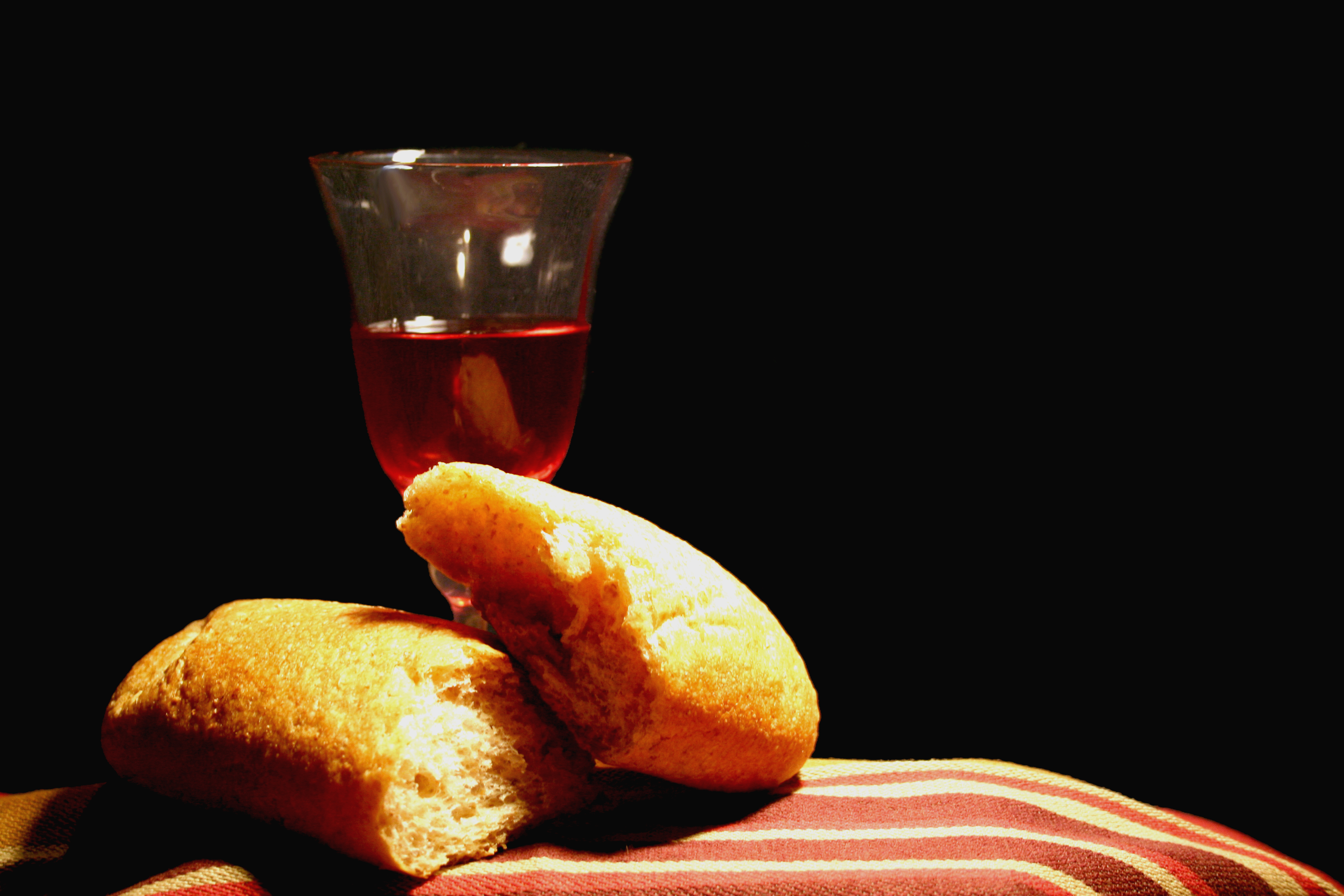
Lord’s Supper – The physical symbol is the bread and the cup, the cracker and the juice. Those are concrete, real things, physical things. You can smell the juice, you can crunch the cracker; it gets stuck in your teeth, it can stain your slacks — it’s real. But the meal represents Jesus eating and drinking with his disciples. What makes the communion meal a sacrament is that, by God’s Holy Spirit, we actually are participating in the thing it represents. We are literally eating with the Lord. Somehow, mysteriously, yes, he meets us at the table and eats with us.

“Is not the cup of thanksgiving for which we give thanks a participation in the blood of Christ? And is not the bread that we break a participation in the body of Christ?” ~1 Corinthians 10:16

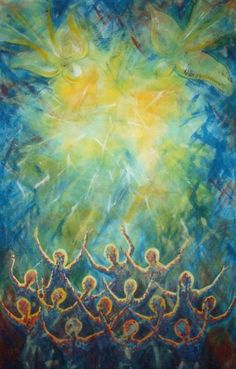
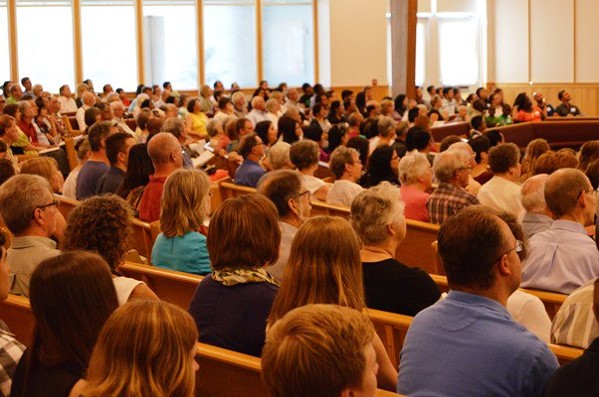
Christian Assembly – The physical symbol is the people in the room. It’s us. Real men, women, and children, wearing clothes, laughing, singing, whispering, chewing gum, praying; babies crying and people sneezing — it’s real. And it symbolizes something bigger. It represents the heavenly assembly around the throne of God. By God’s Spirit, we join that heavenly chorus — we are actually participating in what we can’t see yet. We are singing and praying with all the saints of all time in heaven, in the eternal presence of God. That’s what makes the Sunday morning worship gathering a sacrament.

“You have come to Mount Zion, to the heavenly Jerusalem, the city of the living God. You have come to thousands upon thousands of angels in joyful assembly, to the Church of the firstborn, whose names are written in heaven. You have come to God, the judge of all people, to the spirits of righteous men and women made perfect, to Jesus, the mediator of a new covenant…” ~Hebrews 12:22-24

God is present with us, saving us, nourishing us, changing us. When we view these three ordinances as merely commands to obey, we’ll focus on what we are doing. When we understand them as sacraments, we’re better able to focus on what God is doing.

Peace,

Allan

God at Work: Ordinance

I was eleven-years-old when I was baptized on a Sunday morning in the fall of 1977 at the Pleasant Grove Church of Christ. As soon as the sermon was over and the congregation began singing “Trust and Obey,” I stepped out into the aisle from the third row where my family always sat and made my way to the front. It was a short walk — like four steps. After the song was over, my dad told the church how proud he was of me and he took my confession.

“Allan, do you believe that Jesus Christ is the Son of God?”

“Yes, I do.”

We both walked behind the stage into a dressing room where I put on a weird little nightgown thing, my dad shoved me into the water, and I was baptized into the name of the Father, the Son, and the Holy Spirit.

When I came up out of the water, the church began singing “Happy, Happy, Happy.” We didn’t clap after baptisms back then, our congregation always sang this awful song. It’s a horrible song — I hope you don’t know it. As my dad and I were walking up the steps out of the water, he looked at me and asked, “How do you feel?”

I replied, “I feel perfect.”

And I did.

The following Sunday I took my first communion. And I felt like everybody was watching me. My mom and dad, my sisters and my grandmother on that third pew, my uncle and aunt and cousins behind us — it was a big deal. And when that tray came down the row, I pinched off the tiniest little bit of cracker that was humanly possible — I didn’t want anybody to think I didn’t know what I was doing — and I drank that little sip of grape juice. I kept my head down, didn’t make eye contact with anybody and thought about Jesus. Shhhhhhh. We’re thinking about Jesus.

And I felt like a Christian. I felt like I belonged. The Lord’s Supper is what you do when you’re a Christian. Every single Sunday. That’s why you go to church even when you’re out of town on vacation: so you can take communion. That’s why if you have to leave church early for work or a special event, you only leave after communion. In fact, communion is such a big deal, if you miss Sunday morning, we’ve left it prepared for you in a little side-room on Sunday night where you and four or five others can sit down and eat it while three deacons stand there and watch you.

But we never missed worship. Every time the doors were open — that was us. We were right there on that third pew worshiping. All five acts of worship: singing, praying, preaching, Lord’s Supper… and… announcements? I can’t remember. Do not forsake the assembly. It doesn’t matter if the Cowboys are in the Super Bowl or if CBS is showing Santa Claus is Coming to Town and Rudolph the Red Nosed Reindeer back to back, we’re going to church.

Because that’s what Christians do. Those are the ordinances, the commands. Especially those big three: baptism, communion, and the worship assembly. We do those things. And we go to great lengths to make sure we do those things in the right way at the proper time using the correct words. And it didn’t take long for me to learn how to do exactly what we do.

But I’m not sure I ever seriously considered what God is doing when we are doing what he wants us to do. Where is God? How is he involved? What is God doing?

Oh, I suppose if you had asked me back then I would have come up with an answer.

What was God doing when you were baptized? Well, he was watching from above. And when I came up out of the water, he forgave all my sins and wrote my name into his book of life. He saved me. He checked the box next to my name. My obedience pleases God.

What’s God doing when you eat the Lord’s Supper? Well, he’s with us, he’s present in a vague and spiritual way. And he’s watching me. He’s happy that I’m thinking about his Son. My sincerity pleases God.

What about during worship? When Christians get together to sing and pray and read the Bible, where’s God then? Well, he’s listening to our praise, he’s soaking up the songs. He’s the audience of one. My performance pleases him.

We probably think individually about these three things: baptism, communion, and the assembly. I think that’s our tendency. This is about God and me. It’s personal. But they are all three actually communal in nature. They have more to do with the community. We also think and talk about these things primarily as commands we obey, ordinances we are obligated to fulfill. But they are all three more fundamentally about what God is doing. These are all communal moments, these all happen when we’re together. But, more than that, these are moments when God meets us, when he is especially present with us and works on us, changing us more into the image of Christ.

This Sunday our adult Bible classes at Central are launching into a thirteen-week series on these divine ordinances. What we’re trying to do as a church is move more toward viewing these three areas as encounters with God and less as things we’re just commanded to do. We want to participate in these things and experience these things more and more as means of grace, or avenues by which God meets us and blesses us with spiritual gifts. The theological term is sacrament or sacramental.

Now, the word “sacrament” can mess some of us up if we don’t slow down and talk about it. The word “sacrament” carries some baggage with some of us. We think it’s a Roman Catholic thing or it’s about magic words or secret powers. It doesn’t mean any of those things. But the term is vitally significant for our understanding of what’s happening during baptism, communion, and the assembly.

Because “ordinance” means we do something. “Sacrament” means God does something. “Sacrament” means God is at work.

We’ll define “sacrament” and flesh out the practical implications for us in this space tomorrow. Stay with me.

Peace,

Allan

« Older posts Newer posts »