Author: Allan (Page 197 of 492)

Church Habits

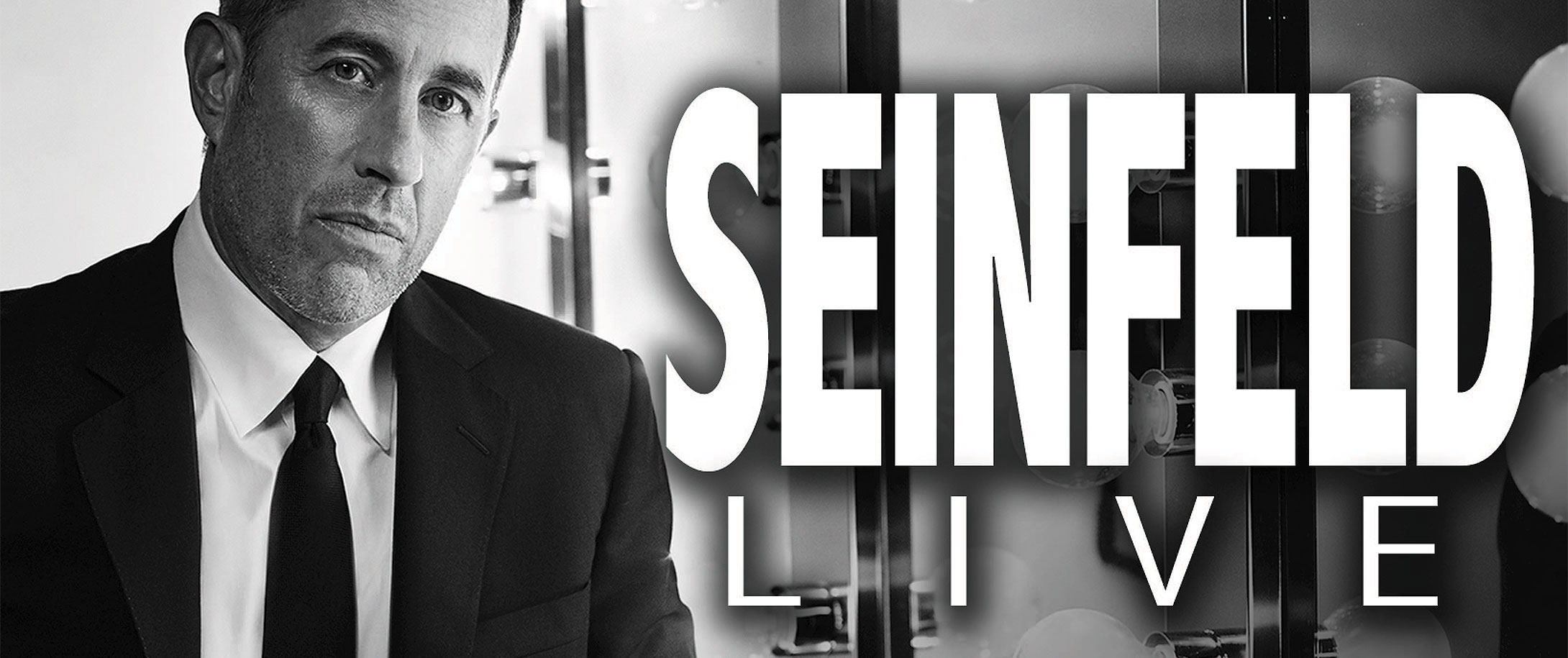
I have no idea why Jerry Seinfeld is playing in Midland, Texas tonight, but I do know Carrie-Anne and I will be on the floor of the Wagner-Noel Performing Arts Center in our seats in the middle of Row 12! It’s a Christmas present from my super-cool wife and I’m excited beyond description. I’d drive to Midland to watch Seinfeld read a phone book.

~~~~~~~~~~~~~~~~~~~~~~~~~~~~~~~~~~~~~~~~~
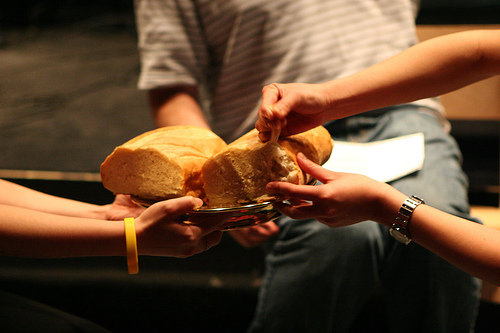
Once a month our covenant group gets up early and serves breakfast to the folks staying at the League House. We hang out for a couple of hours and pray with people from out of town who have relatives in the hospitals here. A couple of weeks ago we met a guy named Jeff (not his real name) who’s from the Austin area. He and his wife and three kids had come up to be with Jeff’s brother who was in serious condition after suffering a terrible brain aneurysm.  As we’re talking with Jeff and hearing his story, he mentions that his wife is from Vietnam. Then, later in the conversation, Aleisha asked him, “How did you meet your wife?” And he told us a fascinating story.

The company he works for in Austin is headquartered in the D.C./Virginia area and they regularly send a woman from there to train the employees in Austin. This woman’s originally from Vietnam. So Jeff and this woman get to know each other in a friendly, working relationship kind of way. And one day she calls Jeff from Virginia, from completely out of the blue, and says her family is looking for someone to marry her sister so she can come to the states.

“What?”
“Yeah, my sister can come to the U.S. if she has an American husband. So, if you know anybody who might be interested in helping us out…”
“I don’t know anybody who’d actually want to get married.”
“No, they don’t have to stay married. Only for a year or two. Then they can get divorced and she can stay in the U.S.”
“No, sorry, I don’t know anybody.”
“We’d pay him money.”
(short pause)
“Um… How much money?”
“We’d pay him $30,000.”
“Well, I think I might could get interested in that!”

So, Jeff agrees to do it. He’ll marry this lady from Vietnam, pocket the $30K, and they’ll split up later.

Now, here’s the catch. Jeff had to take three or four trips to Vietnam to sell everybody over there that it was legit. The family paid for the trips, but Jeff had to go to Vietnam to spend time with her. They had to go on dates together, eat dinner together, spend time with her family. They had to take a lot of pictures together and post them on social media. And the most important thing: when he’s in Austin, he had to write her letters. He had to call her and facetime her and send her gifts. He had to act like he was in love with her. He had to do things a guy in love would do.

And in the middle of all that, Jeff fell in love with her. For real.

He never would have thought himself into loving this young lady. He never could have studied himself into loving her. But he acted himself into it and he didn’t even know it was happening. He was forced by the circumstances into some habits that actually changed his feelings and his thinking. Doing what people in love do shaped him into a guy in love. They were married 14-years ago, they have three children, and he never took the $30,000.

Why do we go to church? We go to church because it makes us more like Jesus. Church is one of the main habits, one of the critical spiritual practices that shapes us into the people of God.

It’s hard to think yourself into loving others. It’s difficult to study yourself into considering the needs of others more important than your own. Being together around Word and Table puts us in the circumstances and into the habits that will, by God’s grace and the power of his Holy Spirit, actually change our feelings and thinking. Doing what Jesus does shapes us into the image of Jesus.

So many of us grew up going to church. It’s a habit of our lives that started before we can remember and possibly one that we sometimes see as very ordinary. Maybe even humdrum and boring. We can do church with our eyes closed, and sometimes do.

But what if we understood our church gatherings as sacramental encounters with our Lord? What if we believed God’s Spirit was powerfully at work during our songs and prayers, during the Scriptures and the meals, to transform us into the image of Christ? What if we allowed ourselves to be swept up into the habits of the church as formation practices through which our Lord meets us and moves us into better fitness for eternal life? What if we were filled with awe at the possibilities in front of us? What if we were filled with awe in the face of a vision of how we can be and how the world will be in the future? And what if that awe increases as the power of God’s Spirit heals us and transforms our lives?

Peace,

Allan

Rules of Worship

The Bible does care about what we can and cannot do in church. The guy who wrote half the New Testament did lay down a few rules about our worship assemblies. I’ll suggest those rules are about attitude and heart, not about methods and forms.

The apostle Paul knows that what we do when we’re together shapes us. Our habits in our worship gatherings are molding us into a particular kind of people. So, Paul’s main concern is that our worship assemblies reflect the Gospel. Our Christian assemblies have to reflect the character of Christ. When he writes to churches, he expresses his deep desire that Christ be formed in them. He asks them to imitate Christ Jesus who, in his own words, said he came not to be served, but to serve and to give his life for others. Paul says being united with Christ, having the same attitude as that of Jesus, means considering others better than yourselves, looking to the needs of others.

So, yeah, he spills a lot of ink in 1 Corinthians to fix what they’re doing wrong.

“I have no praise for you, for your meetings do more harm than good.” ~1 Corinthians 11:17

That’s harsh. Brutal. Can you imagine? Your church is so bad, your people would be better off if they slept in!

Paul goes on to explain that the church is divided. They’ve got little cliques and groups among them and he sees it when they’re around the table.

“When you come together, it’s not the Lord’s Supper you eat; you’re eating your own supper! You’re not waiting for others, you’re not sharing your food with others. People are going hungry, people are being humiliated. The rich folks are getting stuffed and drunk while the poor people are starving and being singled out as not fitting in. What am I supposed to say to you? Nothing good!”

Then he reminds them that when we eat and drink together, we’re proclaiming and practicing all the salvation things that Jesus died for. Our meal proclaims everything that was accomplished at the cross: acceptance, fellowship, unity, love, forgiveness, peace. Jesus is alive and he’s coming back. And until he comes, Paul says, we proclaim his salvation in our church meals. So, then, my brothers and sisters, when you come together to eat, wait for each other. Consider the needs of others. Treat each other as equals.

That’s Paul’s constant instruction when it comes to doing church: consider others. Pay attention to others. Put yourself last.

These Corinthians Christians were showing off their spiritual gifts. They were clamoring for the spotlight in their assemblies and judging others according to giftedness. In 1 Corinthians 12, Paul says the gifts of the Spirit are given for the common good. They’re supposed to benefit everybody, not just you. In fact, in chapter 14, he says since you’re so eager to have spiritual gifts, try to excel in gifts that build up the church!

What does Paul say about speaking in tongues? Well, sometimes there’s no interpreter, nobody knows what you’re saying, and it’s not doing anybody any good but yourself. And sometimes y’all are talking over each other, trying to upstage each other and it’s a mess. You’re not thinking about others. So, brothers and sisters, stop thinking like children! Take turns. Speak one at a time. And if you don’t have an interpreter, sigato (Greek). Don’t speak until it’s appropriate.

Same thing with prophesy. Take turns, just speak one at a time. Why? What’s the point? So that everyone may be instructed and encouraged. And if you’re speaking and someone else has something to add, the one speaking should sigato. Stop speaking until it’s your turn again.

Same thing with women. Some women were apparently disrupting the gatherings. They, too, were speaking out of turn. So Paul uses the same word, sigato. Be quiet until it’s appropriate to speak. Put yourself last. Consider others more important than yourself.

There’s a big picture principle at work here.

Paul didn’t say stop eating or do away with the meals, he said WHEN you eat be nice to others, treat everyone as equals. He didn’t say stop speaking in tongues, he said WHEN you speak in tongues be considerate of others. He didn’t say stop prophesying, he said WHEN you prophesy take turns, be polite. He didn’t tell women to stop praying and prophesying, Paul didn’t say they couldn’t. He said WHEN you pray and prophesy, women, do it like this. Don’t offend people. Don’t elevate yourself.

We worry about our Sunday mornings. We’re anxious to do everything just right. Instead of worrying about whether a worship practice is prescribed or legal, we should be asking if what we do fosters community and equips us for mission. Applying the Gospel to our assemblies is much more important than trying to do it right.

Do we value all people? Do we treat everyone the same? Do we make sure everyone belongs? Are we serving and loving others during our time together? Are all voices heard? Is everybody sharing? Is everybody made to feel welcome? Does everybody get a say? These are the questions we ought to be asking about our worship assemblies.

None of the New Testament gives us a set of legally specified timeless rules for conducting a Christian worship assembly. The New Testament gives us Jesus and the Gospel embodied by a community gathered by the Holy Spirit around word and table.

Peace,

Allan

Word and Table

“They devoted themselves to the apostles’ teaching and to the fellowship, to the breaking of bread and to prayer.” ~Acts 2:42

The Greek word koinonea means fellowship. Communion. Sharing. Having things in common. Luke describes it in the above verse as eating together and praying together. That’s what makes a Christian assembly, those are the worship habits: Teaching and Fellowship. Scripture and Communion. Word and Table. That’s the time and place where everybody ministers together, everybody participates, everybody’s heard, everybody shares. God meets us, Jesus is present with us, and the Holy Spirit shapes us in our regular gatherings around Word and Table.

That two-thousand-year-old pattern, I believe, is based on the habits of Jesus during his ministry.

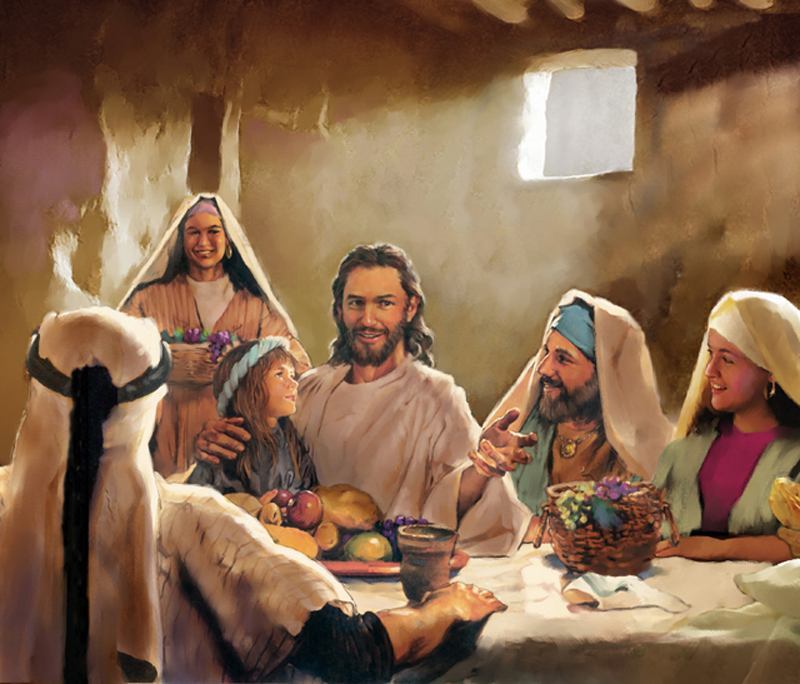
When Jesus taught, he generally did it in the context of a meal. He opened up the Scriptures and ministered to others around a common table. The Word is proclaimed and then the reality of the Word is practiced and experienced around the meal.

In Luke 14, Jesus is eating a Sabbath meal at the home of a prominent Pharisee and, as we would expect, he starts teaching: “When you give a luncheon or dinner, do not invite your friends, your brothers or relatives, or your rich neighbors; if you do, they may invite you back and so you will be repaid. But when you give a banquet, invite the poor, the crippled, the lame, the blind, and you will be blessed. Although they cannot repay you, you will be repaid at the resurrection of the righteous.”

At the banquet at Levi’s house, Jesus gives us the Word: “I have come to call not the righteous, but sinners to repentance.” And he’s sitting around a table with tax collectors and prostitutes. The Table is the tangible experience of the Word.

With five-thousand hungry people in the wilderness, Jesus tells his apostles, “You give them something to eat. You engage the mission. You participate in serving others.” And then he empowers them to do just that. Then they all ate together, as much as they wanted.

At Zacchaeus’ house, the Word, the teaching: “The Son of Man came to seek and save the lost!” And around the meal, the hospitality and community of the Table: “Salvation has come to this house! This man is a son of Abraham!”

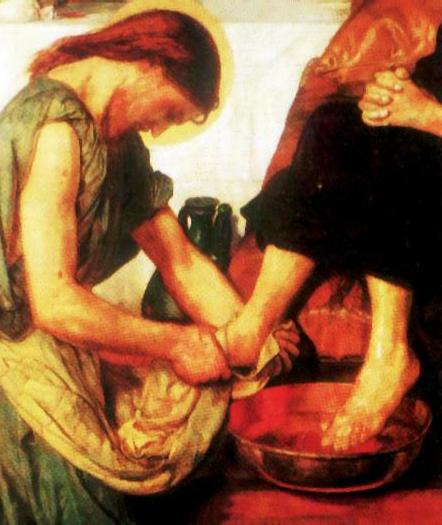
In John 13, on that last night before he was crucified, Jesus shared a meal with his disciples. And some teaching. The evening meal was being served, the Bible says, and Jesus got up and washed everyone’s feet. A tremendous act of humble service. Jesus made himself the least important person in the room in order to serve others.

“Do you understand what I have done for you? You call me ‘Teacher’ and ‘Lord,’ and rightly so for that is what I am. Now that I, your Lord and Teacher, have washed your feet, you also should wash one another’s feet. I have set you an example that you should do as I have done for you.”

Our habits together around Word and Table shape how we think and act. It shapes us into a people who think and act like our Lord. Jesus gets up from the table during the meal to say to each of his followers to say, “I am your servant.” And he tells us to do the same for each other.

Some of us view our worship gatherings as a legal duty and everything has to be done exactly right. Some of us see our worship assemblies as an experience; it’s all about how it makes me feel, so there aren’t really any rules to follow. Some of us have grown up with no real understanding about community worship, so we don’t really think about it at all.

Our worship assemblies are the time and place where our living God meets us, where we all meet in the presence of God together. We are gathered by God’s Spirit around the Word. The Word of God reminds us who God is and what he’s doing and who we are and to whom we belong. The Word has to the power to teach us, train us, and transform us to continue the Kingdom work Jesus has already begun. The Word reorients us away from the shadows of this world’s fading kingdoms and toward the eternal realities of the Kingdom that has come and is coming.

And we experience those realities around the Table. The Holy Spirit brings us together around a meal where we actually experience God’s mercy, acceptance, wholeness, equality, compassion, and peace.

But we can get so wrapped up and bogged down in the details of our worship practices and the finer points of our traditions and our methods, that we don’t give much thought at all to the main point of our assemblies. We worry about how we do church and what we can and cannot do in church, forgetting this a Holy Spirit endeavor. All of this takes place in and by the Spirit.

We worship God in Spirit. It’s the Holy Spirit who mediates God’s grace and the presence of Christ to us around Word and Table. God gathers us together. God initiates and enables our praise. God eats with us, the Holy Spirit prays with us and for us with groans we can never comprehend, Jesus intercedes for us. God gives us the words to say in our worship. God speaks to us through his Word and then places that Word into each heart in exactly the way he wants it to go. We are brought together in the presence of God and he’s the One doing everything!

We should relax about our rules and stop worrying about our methods and submit to what God’s Spirit wants to do. Instead of fretting about how we do church or how somebody else does church, we should pay more attention to how God does church.

Peace,

Allan


Giants Win!

Well, Eli Manning and Odell Beckham won the contest of commercials during last night’s Super Bowl, a significant contribution to what was a good weekend for the NFC East. The Eagles won the championship by knocking off the heavily-favored Patriots in a delicious upset. The Redskins made headlines by seriously upgrading their QB position with Alex Smith.

And, on a national scale, the Cowboys continue to be irrelevant.

Does Jeffrey Lurie raising the Lombardi Trophy on national TV do anything for Jerry Jones? This is your division, Jerry Wayne. And you’re not even in the conversation.

Peace,

Allan

Faith and Water

Since the mid-1500s, as a result of the Reformation, an increased focus on individual interpretation and the freedom to split up and start our own churches, Christians are all over the map on baptism. The specific beliefs and practices concerning baptism are diverse. Some Christians immerse in water, some Christians pour the water, and some merely sprinkle. Some Christians only baptize confessing adults and other Christians baptize babies and children. Some are baptized for the forgiveness of sin and others are considered saved first and baptized later. Some of us baptize for more reasons than we can count.

Regardless of method or belief regarding the conversion model, baptism is the common denominator in every Christian tradition throughout the history of God’s Church. It’s the one thing that unifies all disciples of our Lord Jesus. We are brothers and sisters in Christ with all who are baptized into his name.

In Peter’s sermon on Pentecost, he’s proclaiming the total deliverance and restoration of God’s people to a transformed Holy Spirit relationship with God and with one another. The question “What shall we do?” was not primarily focused on a personal decision. Peter was preaching about the whole world being turned upside down. He called those at the feast to more than individual salvation, he called them to the Kingdom rule of God, to a transformed relationship with the Father, Son, and Holy Spirit. And about three-thousand that day took the plunge.

Some Christians, though, obsess about baptism so much they’ve turned away from the essential transforming truths of the sacrament to questions about technicalities and methods. They turn to condemning diatribes against Christians who don’t believe or practice baptism in the same ways they do.

We uphold what we are convinced are the Scriptural and historical beliefs and practices. But we all agree that all Christians are also doing what they sincerely, and in faith, believe is right. The reason we have misunderstandings and differences is not because anybody’s stubborn or willfully rejecting Scripture. Not everybody who believes or practices baptism different than you is living in rebellion against God.

All Christians agree that baptism is a vital part of the Christian faith. The disagreements are about methods and about the specific role baptism plays in the conversion process. Those are hermeneutical issues, not heart issues. It’s about interpretation. The tensions we feel are the result of centuries of tradition and debates over particular Scriptures. We all have to approach these conversations with humility. We have to recognize we, too, are also influenced by our traditions and debates. We’re all open to criticism.

People ask me: How do we treat Christians who don’t share our exact understanding of conversion? They affirm baptism, but they do it differently? Or the believe differently about what happens at baptism? Do we treat them as genuine or as false brothers and sisters?

Well, let me ask you: How should they treat us? Especially if they see our views as legalistic and sectarian?

The question is: How do we all treat each other?

Salvation is not just about forgiveness of sins. That’s not the goal, it’s not the end game. The goal is transformation to the image of God, the end is a holy relationship with God in Christ and with his people. When baptism becomes a legal technical line in the sand, we’ve turned it into something God never intended. We reduce his transforming work into a legal detail, like a person’s eternal destiny hangs or falls on perfectly understanding and obeying this one command exactly right. We exalt the means over the end. We misconstrue the heart of God. We make God into a judge of legal technicalities instead of a God who transforms us through love and grace. God is our Father who lovingly pursues us and is gracious with our mistakes.

We do well to remember it’s always heart over ritual. It’s Hezekiah’s Passover in 2 Chronicles 30. Unclean people are eating the Passover in the temple. They hadn’t been properly consecrated. This was a clear violation of God’s Law. But Hezekiah appealed to the grace and mercy of our loving God:

“‘May the Lord, who is good, pardon everyone who sets his heart on seeking God — the Lord, the God of his fathers — even if he is not clean according to the rules of the sanctuary.’ And the Lord heard Hezekiah and healed the people.” ~2 Chronicles 30:18-20

It’s David and his men eating the bread in the tabernacle because they were hungry. It’s Jesus and his disciples picking grain on the Sabbath. The Pharisees call them out: Hey, you’re not doing that right! Technically, this goes against the religious codes. But Jesus points them back to David and his men eating the consecrated bread. Jesus rebukes the Pharisees for even needing the example he gave them. If you know what God’s all about, Jesus says, you wouldn’t have even questioned us. “I desire mercy, not sacrifice.”

Sacrifice and Sabbath are essential and necessary. They’re not unimportant, they’re not optional. But they’re both subordinate to the big picture principle of mercy and grace. The ritual is not the most important thing. The Sabbath was made for people, not people for the Sabbath. Rituals serve the ends, the goals, for which God designed them. They were not given to deny mercy to the heart that is seeking him.

What are the greatest commands? Love God and love others. That’s more important than ritual. That’s more important than sacrifice and Sabbath and, yes, even the technicalities of one’s baptism. We have to put things in the proper order — the big picture, Story of God order — or we exalt the details of baptism over the love of God.

We do not draw lines around God’s grace. We do not box in God’s mercy. And we don’t put limits on God’s eternal love and faithfulness.

We are brothers and sisters in Christ with all who have been baptized into his name.

Peace,

Allan

« Older posts Newer posts »