Category: Worship (Page 27 of 28)

Sacred Space Part Two

I don’t want to throw Jason under the bus but…..

Just kidding. Your comments on the question of sacred space are all wonderful and they all represent deep thought and experience and reflection. Even mom chimed in. Excellent.

Let’s keep going.

I made the assumption in yesterday’s post that we all agree that disciples of Christ can meet anywhere at anytime and be in the holy presence of our God. Your comments all speak clearly to that. Wherever God’s people gather in the name of Jesus, God is there and it is sacred time and space. As my mother so perfectly and directly put it, there are holy places. But they’re made holy by the presence of God and the attitudes of those gathered. And that can happen at any place at any time. Agreed.

But there is something of a tension in most of your comments that reflects the tension I feel: where we meet our God as a church body every week is just a place; at the same time, it’s certainly not just a place.

Let’s keep in mind that no space, no place, no nothing, is neutral. Everything communicates something to everybody. A kitchen table communicates something. A tent in the woods communicates something different. A park bench, a construction site, a convenience store, an art gallery, and a library are all different. A gymnasium, a European cathedral, a shopping mall, and a school cafeteria each communicates something and facilitates a distinct set of feelings and emotions and even expectations in, I would say, almost 100% of everybody. If we go back through our lives, as Jason did, and recall several different worship settings we’ve experienced, I think we’d find, not surprisingly, that the setting did have at least a little bit to do with what happened there.

And, as Jeff points out, that setting should encourage and facilitate worship. Chris uses TicketLingo — that demon can come out only by prayer — to correctly observe that the setting gets us in the right frame of mind to do what God has called us to that setting to do.

So it’s not just a space.

Married couples are told all the time by professionals not to argue in the bedroom. If you’re arguing or fighting about something, never do it while you’re in bed. Go argue out in the garage or somewhere else. The bedroom is for intimacy and nurturing and love and feelings of security and unconditional acceptance and complete surrender to each other. To argue in the bedroom is to destroy the sanctity of the setting. The dynamic of the room is changed. The signals are mixed. The message of the space is conflicted. And we all try to adhere to that advice because it’s true. (I’ve joked a couple of times that it’s difficult to read the Word and pray with the church staff in the conference room on Monday mornings after a three hour elders meeting in there the day before.)

So what do we do with that space where we come together every Lord’s Day as followers of Christ to give worship to our God? And how important is it to make sure it’s set apart, separated, made holy, declared sacred? Does it matter? Jason talks about the magnificent cathedrals in Europe. There are several in Israel, built during the Middle Ages, that completely take my breath away. A group of about 30 of us stood right in the center of St. Anne’s cathedral at the Pool of Bethesda in January and sang “How Great Thou Art” and then marveled the rest of the day about the goosebumps. But most of those cathedrals have one thing in common today. They’re all empty.

When I was a teenager I worked for a roofing contractor who was also one of our deacons at Pleasant Grove. And we spent a couple of weeks one summer replacing stained ceiling tiles in the auditorium. We had moved out all of the pews and had forty foot scaffolding erected from front to back. Drop cloths everywhere. Dirt and debris everywhere. Loud construction workers with loud tools everywhere. And one morning after Ladies Bible Class, one of the women in the church yelled at me because I had placed my Gatorade bottle on the Communion Table. She was visibly upset with me and chastised me for not showing respect to God or the people of the church.

I never understood that. In fact I was angry about that. And up until just a couple of years ago I was arrogant about that. This poor old lady is whacked! She doesn’t have a clue! Where has she been? It’s just a table!

Or is it?

Does the furniture and the art (or the lack thereof) and the architecture and the arrangement of the chairs and the style of the doors and the height of the ceiling have anything to do with our moods and our mindset and our view of our God and each other and what we’re doing and why we’re doing it when we worship?

You know it does.

Walk a seven year old boy into Carr Chapel. And then walk him into the McDonald’s down the street.

I remember back in 1996 my broadcasting partner and I drove to Abilene to watch the Six-Man Football State Championship Game. We weren’t calling the game. We were just there to watch. The press box was arranged so that we had to go through the stands to get to our seats inside. I was visiting with folks down on the field before the game and found myself walking through the bleachers, up towards the press box, during the singing of the National Anthem. About halfway up, I felt someone grab my arm and a voice behind me said, “Freeze!” An older gentleman — a complete stranger, I’d never seen this guy before in my life — looked at me and then pointed to the flag above the scoreboard in the south end zone. I stood there until the song was finished and then told the man I was sorry. My bad. He winked at me and said it was OK.

We all stand at attention for the Star Spangled Banner. Or at least we used to. And yet I can’t read a passage from the Holy Word of God during a call to worship without dozens of people walking around and talking. If I stood there and waited for everyone to be still and attentive to the Word of our God before I started reading, it would never get read. Is that a byproduct of our space? Is it a big part of the problem or a small part? Does it matter or does it not matter that two or three hours after we’ve used our screens to project the sacred words of sacred Scripture and sacred songs that speak to the love and sacrifice of our Holy God we use that exact same screen to project an NFL football game with all of its worldly images that exalt and glorify sex and violence and and money and greed and power? Isn’t that like a man and wife arguing in the bedroom? I think it matters.

Mason Scott made us sit in silence for a full minute before he led us in prayer Sunday night. And I think it went a LONG way toward helping us, as a body, prepare for that prayer. I know it’s not just the space.

There are other factors, cultural and environmental factors, that have led to all the eating and drinking and texting and walking around during worship. But our worship space does play a role.

“Lex orandi, lex credendi.” The way we worship is the way we believe.

One last thing regarding my good friend Paul’s comments and then I’m done. For now. And I’m extremely interested in your continuing thoughts on this. 

In our faith tradition — and maybe in others, I don’t know — there have always been concerns about the amounts of money and time devoted to just one particular space and place that’s only going to be used once a week. And so, in our tradition especially, our worship spaces are characterized by “bare walls, bare pews, and a picture of the Jordan River over the baptistry” as Dr. Allan McNicol puts it. I, for one, don’t share those concerns. Paul, you see the idea of sacred sanctuaries and devoted space as a man-made tradition. I look at the Holy of Holies and see that our God commanded his people to spend amazing amounts of money and time and energy to build the most elaborately decorated and beautiful room to house a luxurious throne to represent his presence among his people. And that room was only used once a year. And it was only used by one person on that one day. Millions of God’s people never stepped foot inside that room. But it represented something powerful to that community and to the rest of the world.

As for worshiping in spirit and truth, isn’t a vital part of that recognizing that the space in which we worship either helps us or hinders us and doing what we can to make it right? There’s a vital relationship between the internal and the external, a relationship honored by the very act of God’s Incarnation. Christian worship is the internal experience of salvation in Jesus being expressed externally. “Spirit” isn’t just our insides. It’s all of us. That’s how you define “spirit.” Jesus Christ is Lord over all. And he demands our all. He claims everything. The apostle Paul makes that clear in Romans 12: the spiritual part of worship involves our bodies, it involves our all. It involves our heads and our hearts, our insides and our outsides, our bodies and our buildings.

~~~~~~~~~~~~~~~~~~~~~~~~~~~~~~~~~~~~~~~~~~~~~~~~~~~~~~~~~~~~~~~~~~~~~~~~~~~~~~~~~~~~~~~
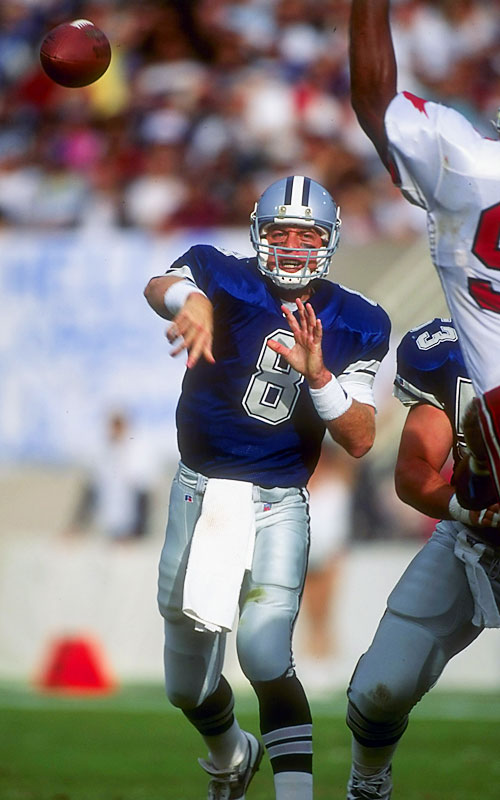
TroyAikmanEight more days. Troy Aikman. Left UCLA as third highest rated QB in NCAA history with a 20-4 record. #1 pick of Cowboys in ’89. 0-11 as a starter his rookie season. 12 year career, all in Dallas. 3-time Super Bowl champ. MVP of Super Bowl XXVII. Six NFC East titles. Six Pro Bowls. Winningest QB of any decade in NFL history with 90 wins in the ’90s. Obviously received a personality transplant upon his retirement as evidenced by his excellent analysis on Fox. Henrietta Hen in high school. Ray Guy and Steve Young are honorable mention.

Peace,

Allan
The Question of Sacred Space

This may be a long one.

This blog contains another Legacy Worship Center Construction Update with new, never-before-seen photos; a Mark Teixeira reference; and the number nine. Hang with me.

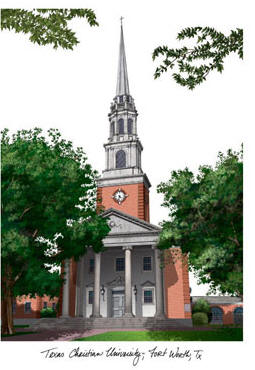
My family and I had the pleasure of attending the Celese Courtney – Randall Roseberry wedding at TCU’s Robert Carr Chapel Saturday. (It’s always seemed to me that everybody here at Legacy was related to somebody else at Legacy. And that wedding made it official. Now we are all truly a church family.) Yes, the girls love attending weddings. And Carrie-Anne and I always try to use opportunities like that to teach them about marriage and commitment and love, even though sometimes it seems they’re only interested in the wedding mints and throwing birdseed.

CarrChapelBut I was struck by a couple of things at that wedding that I’ve been wrestling with since Saturday. And it may take a full week of blogging and your comments and suggestions to work them through.

The chapel, built in 1953 on the TCU campus, is gorgeous. Simple, but elegant. And it just feels holy. It just feels sacred. As soon as you walk into the place, you know without a doubt you are in a house of worship. You feel like you’re in the presence of God and people who belong to God. It looks and feels like a church. Not like a gym or a performance hall. You know what I mean?

The Carr Chapel is sacred space. It is holy. It is set apart. And it’s done intentionally.

Because it is designated, holy, set apart space, they’re very picky about what happens and what doesn’t happen at the Carr Chapel. And how it happens. Check out some of their rules and regulations for those using the chapel for wedding services:

“Chapel furniture, including the communion table, the kneeling bench, and the cross may not be moved or have decorations placed on them. A floral arrangement may be placed in front of the cross if it doesn’t exceed 40-inches in height.”

“All weddings held in Robert Carr Chapel are religious services and as such certain protocol is expected.”

“Professional photography and video may only be conducted from the balcony. Guests are not allowed to take pictures from the sanctuary during the ceremony.”

“Only music that is of a religious or sacred nature may be used in the chapel. The mention of God or Jesus does not necessarily make a song religious. Love songs are not appropriate.”

“Electronic amplifiers, recorded music, and electronic keyboards are prohibited.”

I think we in the Church of Christ have rightly taught that the Church is not the building, it’s the people. We rightly hold that we worship in spirit the One who is Spirit and that wherever two or three are gathered in his Name, the Lord is present. We teach and believe — again, rightly so — that God is no more present with me in a Christian assembly of a thousand disciples on a Sunday morning than he is with me in my closet at home.

But I’m afraid we’ve taught that and held that and pushed that to the extent that we’ve lost the Biblical concept of sacred space.

Bethel. Mount Sinai. The burning bush. The Ark of the Covenant. The Holy of Holies. Shechem. All holy. All sacred places set apart from the other places because that’s where God meets with his people. Can you imagine the Israelites ever holding a garage sale inside the Temple? Can you imagine Carr Chapel bringing in a big screen and showing the Super Bowl?

Robert E. Webber, in a chapter on the environmental setting of worship in his book Worship Old and New, says that our worship space is the “stage on which the redemption of the world is acted out.” And that truth is expressed in the signs of redemption all around the worship area such as the table, the pulpit, the baptistry, and the arrangement of the chairs for the congregants who also enact the Gospel. According to Webber, this tells us that all material things belong to God and can be used to communicate truth about God. The repeated emphasis in our Scriptures that God dwells in the tabernacle or the temple also shows us that we can symbolically communicate the presence of God in the Church and in the world. And the dozens of references to “God’s glory” filling the space acknowledges God’s real presence in that space with his people. Webber points to Solomon’s dedication of the temple as providing the model for consecration of sacred space, “not to be regarded as an exercise associated with magic, but as an act that sets apart a particular place for the community to publicly meet God. The Christian church has continued to use the practice of consecration and recognized that the place where people gather to worship is special.”

Again, I think you can get carried away with that.

But I’m afraid we sometimes plan worship space and use worship space in theological error and, worse, with theological indifference. We don’t think about these things. Or we think these things don’t matter.

I think we’re hurt here at Legacy by being forced to assemble together for the expressed purpose of meeting God and worshiping God in a place that’s also used as a basketball gym and a dining hall and a variety of other activities that have very little, if anything, to do with the holy presence of our holy God. Our gym / fellowship hall doesn’t have a look or a feel that’s any different from a recreation center or cafeteria or exercise space or school auditorium you could find in any part of our city. I may be overstating this, but I’m not sure there’s an overwhelming sense of a separation between the sacred and the profane in our current setup. And that certainly creeps into our view of worship, our view of God, and our view of what’s really happening on Sundays: God’s holy people meeting with their holy God.

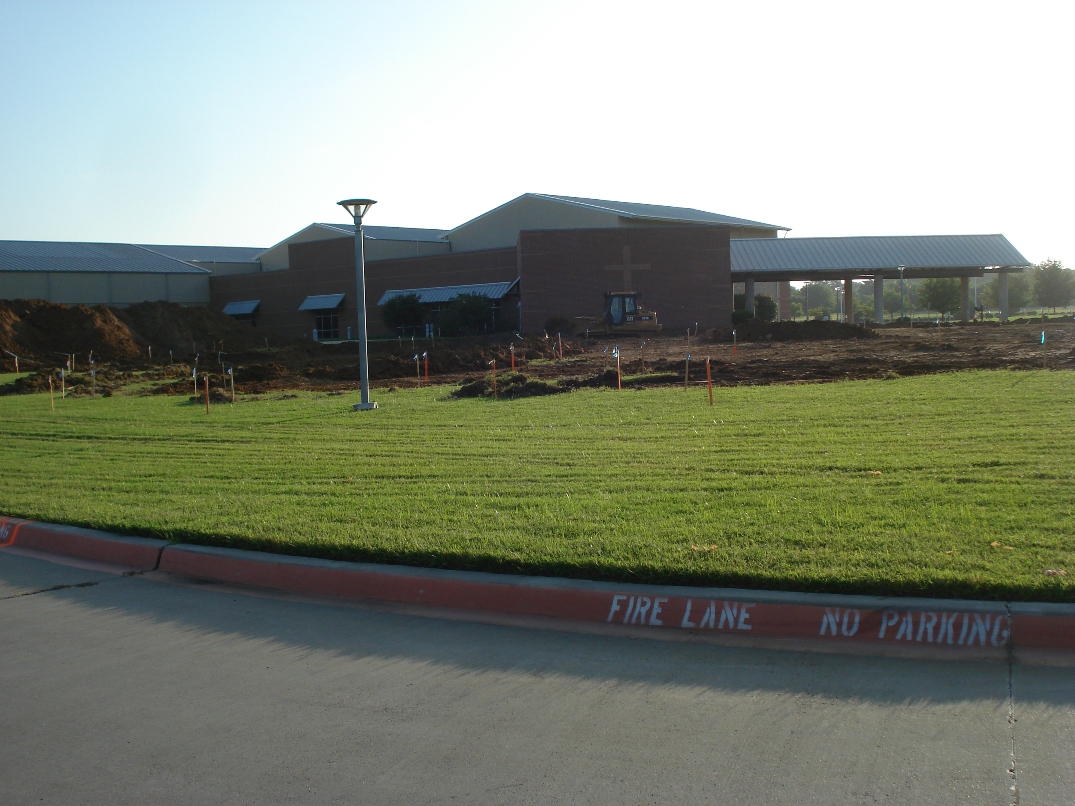
Having said that, I’m so excited about our new Worship Center, currently in the beginning stages of construction here at Legacy. I’m thrilled for this body of believers to have a space set apart, a sacred space, a holy place, where we can meet our God. And I’m interested in your thoughts and your experiences as they relate to this question of sacred space.

~~~~~~~~~~~~~~~~~~~~~~~~~~~~~~~~~~~~~~~~~~~~~~~~~~~~~~~~~~~~~~~~~~~~~~~~~~~~~~~~~~~~~~~

Legacy Worship Center Construction Update

ParkingSpaces  MoreParking  Youth  WorshipCenter

The mountains are gone. They’ve either been smoothed out, hauled out, or a whole lot of both. It’s very clear now where the additional parking spaces are going to be. And the ground where the new Worship Center and the Youth and Benevolent Centers are going to be is smooth and flat.

~~~~~~~~~~~~~~~~~~~~~~~~~~~~~~~~~~~~~~~~~~~~~~~~~~~~~~~~~~~~~~~~~~~~~~~~~~~~~~~~~~~~~~~

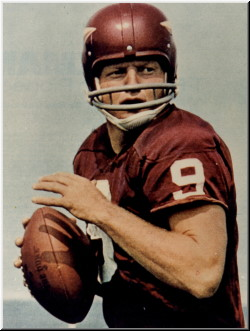
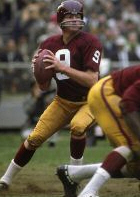
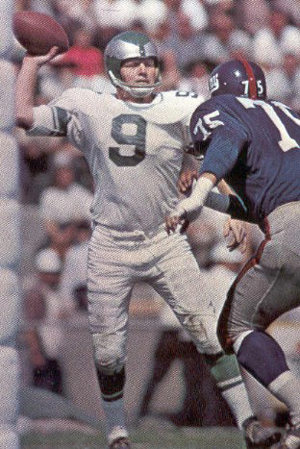
SonnyJurgensenOnly nine more days until football season. And the all-time greatest #9 is old Redskins quarterback Sonny Jurgensen. He started with the Eagles as a fourth round pick out of Duke University in 1957 and peaked with them in 1962 with 32 touchdown passes. But he went to Washington in 1964 in a trade for Norm Snead and went on to lead the NFL in passing three times over the next ten seasons.

As a Redskin, Jurgensen threw for over 3,000 yards five times, he had 25 games with over 300 SonnyJyards passing, and five more games with at least 400 yards. He went to five Pro Bowls and finished his 18 year NFL career with a QB rating of 82.63 and as the 9th all-time leader in passing TDs. Jurgensen was inducted into the Pro Football Hall of Fame in 1983. Don’t give me Tony Romo. Sonny Jurgensen was the best to ever wear #9.

~~~~~~~~~~~~~~~~~~~~~~~~~~~~~~~~~~~~~~~~~~~~~~~~~~~~~~~~~~~~~~~~~~~~~~~~~~~~~~~~~~~~~~

What else would you expect from a superstar traded away from the Texas Rangers? He’s killing! Mark Teixeira hit two more homeruns yesterday, giving him nine HRs and 25 RBIs in his 18 games with the Atlanta Braves. They’re still five games behind the Mets in the NL East. But he’s killing! Good for him.

Peace,

Allan
Is A Popular God…? Part Three

I appreciate so much the thoughts and the comments I’ve received regarding the blog this week, especially as it pertains to our current discussion on worship.

If you haven’t been to the comments page the past couple of days you can check them out here and here. One particularly revealing comment came from our brother Jason sometime last night:

I agree that we’ve got to be real in our worship in both style and substance but I think we have to be aware that the things that we are used to don’t create pseudo Church like barriers to seekers that don’t make sense to the rank and file (let alone seekers). What I mean is Church favorite hymns that reference things that don’t mean much in our current day vocabulary like Ebeneezer, Canaan, and Zion. These words from old hymns might be part of the lyrics of the beloved favorites, but they don’t hold much for the seekers or the rank and file members (like me). I’d rather have newer songs with relevant lyrics that mean more in today’s language. Just my 2 cents. Not trying to start a riot.

It’s not a riot. It’s just the back and forth of an emotional conversation about worship.

And I don’t want to throw Jason under the bus. I know his heart is pure and his love for our Lord is real. And he knows I know that. But his comments reflect a broad current of thought today in God’s church. And I think it needs to be addressed.

Those words to which he refers are not just part of the lyrics of the beloved favorites. The words “Canaan” and “Zion” and the images those words evoke are the very words and images handed to us by God and his prophets. Those words serve to evoke the very promises of our God—promises of eternal life with him, promises of protection and provision, promises of leaving this place to be with him and each other in a much better place. Our faith and our beliefs and our practices all hinge on words like “Canaan” and “Zion.” They come straight out of our Bible. And they’re not obscure words in a couple of hidden passages. They’re foundational, basic words that are consistently found throughout our Scriptures, from Genesis through Revelation. They’ve been used by God and his people in our articulation of and passing on of the faith for thousands of years. The words and ideas they convey were used by Moses and the Prophets, Jesus and the Apostles, and all Christians since.

I would say the words “salvation” and “repentance” and “sanctification” and “reconciliation” are just as biblical and just as foundational. But I imagine, to most “seekers” and most “rank and file members” today, they are just as irrelevant and make just as little sense as “Canaan” and “Zion.” That is not a reflection on the songs we sing as much as it is a sad commentary on the state of our teaching in the Church, the level of private Bible study and careful theological reflection in our personal lives and in our homes, and maybe our lack of an overall vision that, as disciples of Christ, we do not live in this world. God’s Church lives in another dimension. But if our songs or sermons or prayers reflect that other dimension too much, we balk.

But we can’t discard those words and images. We explore them and teach them and learn them and embrace them and live them and we grow in the faith together through them. The chemistry teacher doesn’t change or throw out the vocabulary because his students don’t understand it. He teaches it. And his students learn to use it, and even love it, so they can communicate with each other and with those who’ve gone before, with those who’ve studied and taught and experimented and learned chemistry hundreds of years ago.

Let’s teach the lasting words of our faith. Let’s don’t throw them away.

~~~~~~~~~~~~~~~~~~~~~~~~~~~~~~~~~~~~~~~~~~~~~~~~~~~~~~~~~~~~~~~~~~~~~~~~~~~~~~~~~~~~~~~

The Cowboys pre-season begins tonight at Texas Stadium against the Colts. I’m sure that Aaron and Jennifer Green have had their Payton Manning jerseys washed and ironed and laid out for a couple of days now. And I suppose it’ll be good for the Cowboys fans to watch their starters for six or seven plays.

I’m not ready yet to give my prediction on the Cowboys season. Give me a couple of weeks.

~~~~~~~~~~~~~~~~~~~~~~~~~~~~~~~~~~~~~~~~~~~~~~~~~~~~~~~~~~~~~~~~~~~~~~~~~~~~~~~~~~~~~

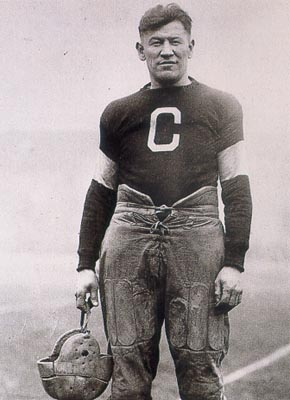
JimThorpeSpeaking of the football season, there are 21 days left until the games actually mean something. And the best player to ever wear the #21 is the great pioneer of American football, the one and only Jim Thorpe. An All-America halfback at Carlisle from 1907-1912, Thorpe won an Olympic gold medal in the decathalon in the 1912 games. But it was as a member of the original Canton Bulldogs in Ohio and the very first president of the American Professional Football Association in 1920 that we honor him today. He wowed fans with his speed and toughness and ability to dominate both sides of the ball in the very earliest stages of the development of the game. He played for the Bulldogs, the Cleveland Indians, the Oorang Indians, the Rock Island Independents, the New York Giants, and the Chicago Cardinals. He’s in the College Football Hall of Fame. And he’s a charter member of the Pro Football Hall of Fame.

Thorpe wore #21 for the Giants and Cardinals. Barry Sanders wore #21 at OSU and receives honorable mention. I suppose Deion Sanders deserve mention, although I’m not sure how honorable. But Jim Thorpe is the greatest ever #21.

~~~~~~~~~~~~~~~~~~~~~~~~~~~~~~~~~~~~~~~~~~~~~~~~~~~~~~~~~~~~~~~~~~~~~~~~~~~~~~~~~~~~~

I shouldn’t be, but I am continually surprised at all the ways our sports teams keep finding to sell corporate sponsorships and advertising for actual in-game events. At the Rangers game Tuesday night, it was a little disturbing to hear the legendary voice of Chuck Morgan announce the Samsung Call to the Bullpen during a Rangers pitching change and the Jiffy Lube Pitching Change when the A’s made a similar adjustment. It’s not just a first down anymore, it’s a Radio Shack First Down. Doesn’t this, in some ways less subtle than others, work to undermine the dignity of the teams and the games?

Jerry Wayne’s computer-edited dancing in the Cowboys lockerroom during the Papa John’s Pizza commercial nauseates me. It proclaims without shame — even with pride — that I’m more than willing to do anything anybody asks me to do anywhere anytime if they’ll give me money. Never mind the dignity of the game or the teams or the people who’ve gone before us and from whose sacrifice and vision we benefit. Give me your money and I’ll sell off anything. And Jerry Wayne started all this.

I was amused and horrified at the same time when, a couple of weeks ago, I was watching a Mike Doocey interview with Jerry Wayne on Channel 4. Doocey asked Jones if there were even a remote chance that the new football stadium wouldn’t be named in exchange for dollars. Is there any way that you might name it simply Cowboys Stadium or Tom Landry Stadium? Jerry just smiled and told Dooce, “The Cowboys are America’s Team. And part of being America’s Team is the relationship and the connection we have with America’s corporations.”

And he said it with a straight face.

And, good for him, trying to mask his laughter, Doocey followed up with, “Are you saying that it’s your relationship with America’s corporations and their advertising dollars that make the Cowboys America’s Team?”

And Jerry Wayne replied, “I’m saying it’s the money from America’s corporations that pay for our players that America cheers for.”

I’m sure Tom Landry rolled over in his grave. But maybe Tex Schramm smiled.

Peace,

Allan

Is A Popular God….? Part Two. No Asterisk.

Today’s blog post contains a heavy amount of sports and sports analogies. But it is not tainted! It’s not! It’s not tainted!

~~~~~~~~~~~~~~~~~~~~~~~~~~~~~~~~~~~~~~~~~~~~~~~~~~~~~~~~~~~~~~~~~~~~~~~~~~~~~~~~~~~~~

Continuing the thoughts from yesterday on “seeker-friendly” worship services, let me insert a comment from Cynthia that maybe some of you missed.

Thanks for saying so well what troubles my heart so often. We speak of making the church more attractive to seekers, but why do we assume that they are seeking more of what they already have in the world? If the life Christians live in Christ is different than the life lived in the world, shouldn’t the homage and adoration of our worship experience differ from the adulation given to cultural celebrities.

More and more, I am convinced that private worship (the assembly of the church) should not be attractional. Rather, it is in our public worship (Christ living in us as we move about in the world) where we should seek to attract the unbeliever.

I took the girls to the Rangers game last night and enjoyed a fairly well played, exciting at times, sporting event. Whitney and I spent a great deal of time talking strategy — hitting behind runners, playing at double-play depth, and running out grounders — using baseball-specific terminology such as RBIs, bullpen, full-count, hitter’s eye, foul ball, off-speed, check swing, ERA, and dugout. That communication during the game enhanced our enjoyment of the game, our appreciation of the game, and our relationship with each other in connection with the game.

 Now imagine that, instead of Whitney, I was sitting next to someone who had never in his life seen a baseball game — a guy from another country, who’d never been to a baseball stadium or held a bat or seen a game on TV. There’s no way in the world that guy can attain the same level of understanding and appreciation for the game after watching it for those three hours that you and I have after watching it for 40 years. How long would it take him? Even if I tried to explain every single nuance of every single play and every single word in the baseball language, how long would it take?

Then why do we think we can convert a person who knows nothing about Jesus during a one-hour worship service? Why do we try? Won’t that person have to come to our services over and over again, for weeks and months, before he gets a sense of what we’re doing and why we’re doing it?

Maybe this is a better analogy. Suppose you’re the football coach of a playoff team in the championship game. Everything’s on the line. You’re in the lockerroom just ten minutes before kickoff, going over last minute details and instructions that will be critical to your team’s success. These are things that your team needs to hear and remember and immediately apply if they’re to win the battle.

“Charlie, remember that if the tackle moves into that three-gap he’s stunting inside. Make sure you release into the flat as a safety valve”

“Dan, don’t forget they’re going to cover-two deep but they’ll disguise it every time with a 4-3 blitz look just before the snap.”

“Kevin, we’ve been working on the deep fly to the Z back all week, but we’re changing our protection. Sid’s going to stay in the box and pick up the corner.”

“Watch the weak-side double. Remember to read the tight end’s stance. Don’t get suckered in on the draw…..”

And in the middle of all that — you giving your troops these critical instructions that mean success or failure in the fight — the team owner walks into the middle of your lockerroom and says, “Coach, I’ve brought in these seven guys from Kenya who’ve never seen a football game before. They only know soccer. They’re going to watch the game with me in my box. Can you explain to them everything you’re saying to your team right now? Help them understand what you’re saying.”

Right there in the middle of your pre-game speech, right there in the middle of your lockerroom. How do you do that?

Why do we try?

Origen said that if someone wanders into our church building off the streets while we’re praying, he should sense a “double church,” one that is seen, which may not always be attractive, and another that is unseen. Visitors should expect a little vertigo when they worship with us, a little disorientation. Allan McNicol says Christian worship done well communicates to outsiders that it’s not on a mundane dimension, it involves another world. Paul writes in 1 Corinthians 14:25 that the unbeliever who comes into our midst will be so moved by the other-worldly nature of our worship that “he will fall down and worship God, exclaiming, ‘God is really among you!'”

The greatest gift our worship can confer to a believer and to an outsider is a glimpse, however fleeting, of another city, another scene, another dimension.

~~~~~~~~~~~~~~~~~~~~~~~~~~~~~~~~~~~~~~~~~~~~~~~~~~~~~~~~~~~~~~~~~~~~~~~~~~~~~~~~~~~~~~~

Back to last night’s ballgame and Barry Bonds* and Michael Irvin right after this……

~~~~~~~~~~~~~~~~~~~~~~~~~~~~~~~~~~~~~~~~~~~~~~~~~~~~~~~~~~~~~~~~~~~~~~~~~~~~~~~~~~~~~~~

Legacy Worship Center Construction Update

LegacyMountains   DirtPiles   BigDirt

The massive piles of dirt have now been dubbed the “Legacy Mountains.” I’m looking forward to watching several impromptu games of King of the Hill tonight after Bible classes. In fact, I’d be disappointed in the young people of today if I didn’t see any of that this evening.

~~~~~~~~~~~~~~~~~~~~~~~~~~~~~~~~~~~~~~~~~~~~~~~~~~~~~~~~~~~~~~~~~~~~~~~~~~~~~~~~~~~~~~~

I always love going to the Rangers games. Valerie and Carley only care about the intrusive music between innings and pitches and the cotton candy while Whitney hangs on every pitch and every play just like her dad. There wasn’t a pitching change made or a defensive replacement brought in or a pinch runner added that she didn’t look up his bio and stats in the program. What a great gal!

Last night we got to watch a rising fan favorite in Marlon Byrd hit a go-ahead three-run homer, some clutch pitching from C. J. Wilson, and some nice defensive plays from Mike Young. It got a little uncomfortable when the A’s started pounding Frankie Francisco and mounted a bit of a comeback. But Texas held on and got the “W” and we all went home happy. I couldn’t help thinking though, from the first pitch to the final out, it sure would be nice if this meant something, if it really mattered at all. The victory keeps the Rangers 17-1/2 games out of first place.

CottonCandy     TotallyIntoTheGame     ClownNosePromotion

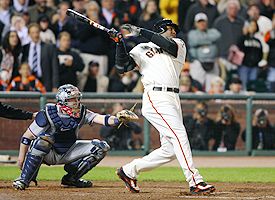
BondsBombI don’t know what to say about Barry Bonds* that hasn’t already been said, over and over and over again, for the past five or six years. It’s nauseating. What a great contrast between him and Hank Aaron on both personal and professional levels. I suppose if we didn’t have the bad guys, we wouldn’t truly appreciate the good ones. The same kind of contrast was on brilliant display in Canton Saturday evening. Michael Irvin sharing the same stage and accolades as Bruce Matthews and Roger Wehrli and Charlie Sanders brought back memories of the old Sesame Street bit: one of these things is not like the other, one of these things just doesn’t belong.

~~~~~~~~~~~~~~~~~~~~~~~~~~~~~~~~~~~~~~~~~~~~~~~~~~~~~~~~~~~~~~~~~~~~~~~~~~~~~~~~~~~~~~~

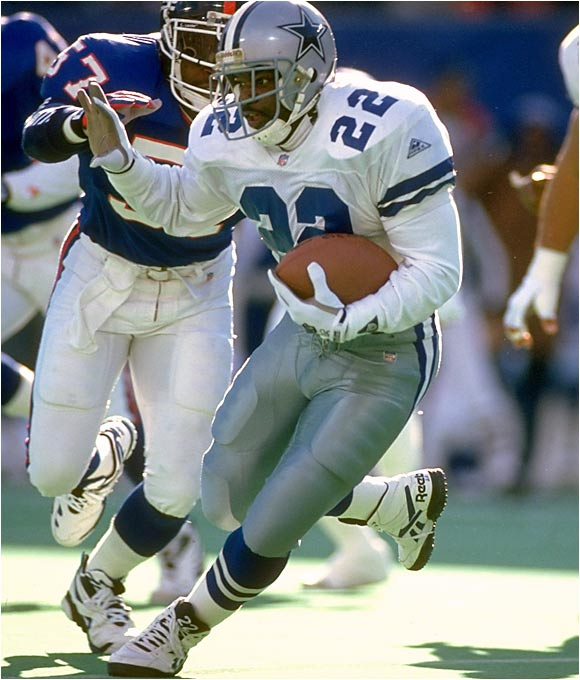
Just 22 more days until football season and Bobby Layne is the second greatest player to ever wear the #22. The top honor, of Emmittcourse (come on!), goes to the all-time leading rusher in NFL history, Emmitt Smith. 13 records at Florida. Three Super Bowl victories with the Cowboys. He led the NFL in rushing four times. He was the league MVP in 1993, the Super Bowl XXVII MVP in ’92. He went to eight Pro Bowls. He set the NFL record for rushing TDs with 155. And his 17,418 career rushing yards are the most ever.

As great as he was, he’s routinely left out of most of the debates about best running back ever. And I have no clue as to why. He barely makes the top ten of most national lists. I don’t see how he’s not an automatic top three in every single all-time running backs list that’s compiled by anybody, anywhere. The only argument should be whether he’s the all-time greatest or number two or three. That’s it. First downs. Touchdowns. Durability. Leadership. Determination. Strength. Speed. He had it all.

Don’t say Barry Sanders could have had the record if he didn’t quit. He did quit. And he didn’t get the record. To me, there’s no comparison.

My word, that’s more than enough to chew on for one day.

Peace,

Allan

Is A Popular God Really God At All?

What if the decisions we make regarding our worship practices and our worship services were made mainly with the visitors in mind? What if we shaped our services so that “seekers” would feel welcome and unoffended? What if we planned the order of worship, the presentation of the Lord’s Supper, which songs we sing and which ones we dump, and carefully watched the clock with mainly the visitors in mind?

We would assume that our visitors — seekers, unchurched, whatever — would like things to be upbeat and simple. Silent prayer and expressions of confession and / or lament would be out the window. We would only sing up tempo songs that have been written in the last 20 years, preferably ones our culture hears on their radios. To appeal to our visitors, we would spend much less time on sin and judgment and holy living and much more time on personal growth and self-realization.

In an article by Cornelius Plantinga, Jr. in Perspectives in 1993, the author speaks of the movement in our churches to bring in celebrity speakers such as Tommy Lasorda to speak during worship about how “the great Dodger in the sky” has helped him win games and lose weight.

“And on it goes, in various combinations of novelty, some of them mild and some very aggressive indeed. At the most advanced level of popular worship, imagine a High Five for Jesus replacing the Apostles’ Creed, and imagine praise time beginning when somebody shouts, “Gimme a G! Gimme an O!…”

That was written in May, 1993. And today, just 14 years later, our kids are led during worship to shout “Gimme a J! You got yo’ J, you got yo’ J, you got yo’ J! Gimme an E! You got yo’ E…..” to spell out the name of our Lord and Savior who suffered and died for my rebellion and sins.

And I cringe.

Here’s the question: what if some of this stuff does not reflect the Christian faith or worship very well? What’s the point of doing it? Why bother with it?

Again, from Plantinga: “What if by offering popularized religion as an appetizer for unbelievers we should accidentally spoil their appetite for the real thing? Suppose your ten-year-old does not like your heart-healthy dinner menu, so you arrange a seeker meal for him in which you offer some non-threatening Pringles. You do this in order to set up his taste buds for baked potatoes. I wonder how often that would work.

Suppose a seeker came away from a service of the kind I’ve been describing and said to herself, Now I understand what the Christian faith is all about: it’s not about lament, or repentance, or humbling oneself before God. It’s got nothing to do with a lot of boring doctrines. It’s not about the hard, disciplined work of mortifying our old nature and learning to make God’s purposes our own. It’s not about the inevitable failures in this project, and the terrible grace of Jesus Christ that comes so that we may begin again. Not at all! I had it all wrong! The Christian faith is mainly about celebration and fun and personal growth and five ways to boost my self-esteem!

How do you prevent that conclusion? Or, to put the question very generally: How likely is it that a popular God is really God? How likely is it that a user-friendly God will rebuke sin? Or save people with transcendent and unexpected force? Or have to suffer to do it? Or call us to suffering and discipline as well as to joy and freedom?”

~~~~~~~~~~~~~~~~~~~~~~~~~~~~~~~~~~~~~~~~~~~~~~~~~~~~~~~~~~~~~~~~~~~~~~~~~~~~~~~~~~~~~~~

Legacy Worship Center Construction Update

DirtMoves  WorshipCenter  DirtPiles

Dirt has moved and is being moved with teriffic force and accuracy!

~~~~~~~~~~~~~~~~~~~~~~~~~~~~~~~~~~~~~~~~~~~~~~~~~~~~~~~~~~~~~~~~~~~~~~~~~~~~~~~~~~~~~~~

Number23There are 23 days left until football season officially begins with the first real college football games. Real games that matter. Not preseason scrimmages.

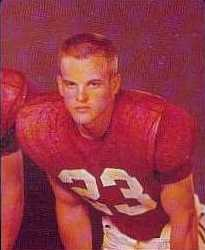
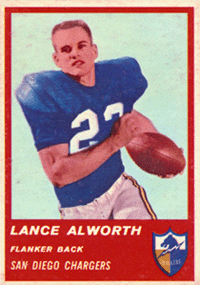
And the greatest football player to ever wear #23 is Lance Alworth. Nicknamed “Bambi” because of his LanceAlwortheffortless glide and elegant grace in the open field and his elusive escapability in a crowd, Alworth wore the #23 as an All-America wideout / halfback / punter for the Arkansas Razorbacks. (Shout out to Gardner!) He spent nine years of his pro career as a seven-time All-AFL star for the San Diego Chargers, leading that league in receving three times and, at one point, catching passes in 96 straight games.

Alworth finished his football with the Dallas Cowboys, scoring the very first touchdown in Super Bowl VI. Born in Houston, he was the very first AFL player to be inducted into the Pro Football Hall of Fame. He did wear his Razorback #23 for his first two seasons in San Diego, as you can see from this 1963 football card. And, I’m not sure why he switched. The AFL, to my knowledge, never had the strict number rules the NFL has now. His #19 throwback powder-blue Chargers jersey, the one he wore for seven seasons, is a top three Alworth1963Cardseller every year. But Lance Alworth is the greatest player to ever wear #23.

~~~~~~~~~~~~~~~~~~~~~~~~~~~~~~~~~~~~~~~~~~~~~~~~~~~~~~~~~~~~~~~~~~~~~~~~~~~~~~~~~~~~~~~

Taking the girls to the Rangers game tonight. Hopefully they won’t be down 6-0 before we get to our seats.

Peace,

Allan

The Wrong Question

If preachers today are seen as filling the role of a prophet — speaking a Word from the Lord, on behalf of the Lord, to the Lord’s people — then the preacher’s message has to be counter-cultural. Every Old Testament prophet spoke against the culture of the day and called God’s people to reject the culture and embrace the Lord. The teachings of Jesus and the apostles, all of Paul’s teachings, go completely against culture. And the message is just as relevant today as it was in the first century AD or the third century BC. But can I preach that way every Sunday and still keep the job?

In the prophet Micah’s day, in Judah, God’s people were very well off. They were wealthy. Rich. And their houses and food and bank accounts and their lifestyles dominated what they thought about, talked about, and what they did. Buying more land, building bigger houses, taking longer vacations, putting more money in the bank is what drove God’s people. The next-door-neighbor didn’t matter. The needy family across the street didn’t matter. And the Lord called them on it.

When he confronts them in the opening verses of Micah 6, the people respond in v.8 with a typical, I think, 21st century response: “With what shall I come before the Lord and bow down before the exalted God?”

God’s upset. And their first conclusion was, “How can we improve our worship?” More sacrifices? More oil? Does he want my first born? Should we consider Wednesday nights?

“With what shall I come before the Lord and bow down before the exalted God?”

Let me suggest to you that’s the wrong question. The right question is, how do I live in a relationship with God? How do I love people out of my love for God? God tells them very plainly that if their daily lives don’t reflect justice and mercy and humility and love and service to their fellow man, he doesn’t even want their worship!

I’m afraid we put much more emphasis on the 75-minutes we spend at church on Sunday mornings than we do on the other 6-4/5 days of the week. In fact, I know we do. We devise elaborate worship theologies and, not only bind them on each other, but on other churches. We view others categorically, we judge other people and other churches based on what they do and how they do their 75-minutes.

You can close your eyes during every prayer, you can keep your hands in your lap during every song, you can look up every scripture during the sermon, and you can read Matthew 27 quietly to yourself during communion. None of it matters if you lied to your boss on Friday and plan on lying to him again on Monday. You can clap and raise your hands to contemporary songs led by a praise team, get down literally on your knees during the prayers, and read responsive psalms, it’s not doing you or God any good if you’re cheating your customers or ignoring the poor.

OK. That’s enough. You get the point. This is what I’m preaching during our 75-minutes Sunday — the critical and unmistakable connection between our daily ethics and our worship of our God. It’s been on my mind all week. And now hopefully you’ll chew on it for a couple of days before Sunday.

~~~~~~~~~~~~~~~~~~~~~~~~~~~~~~~~~~~~~~~~~~~~~~~~~~~~~~~~~~~~~~~

I spoke with Bill Podsednik yesterday and he told me that ground will officially be broken by actual construction crews (not by elders & preachers or four-year-olds with plastic spades) either Monday or Tuesday this next week! Before we meet for Bible classes Wednesday evening there will be tractors and dirt movers and dump trucks and orange cones and mud and slop and all kinds of mess all over the west side of our building! Praise God! May we continue to seek his guidance. And may he use our efforts to grow the Kingdom in our part of his world.

~~~~~~~~~~~~~~~~~~~~~~~~~~~~~~~~~~~~~~~~~~~~~~~~~~~~~~~~~~~~~~~

Dell Herod has asked me to remind you that the Fort Worth City Band will play an “Old-Time Band Concert” here at Legacy at 7:00 next Friday night, July 27, to benefit the Legacy Medical Missionary Fund. Dell has the tickets and all the information.

~~~~~~~~~~~~~~~~~~~~~~~~~~~~~~~~~~~~~~~~~~~~~~~~~~~~~~~~~~~~~~~~

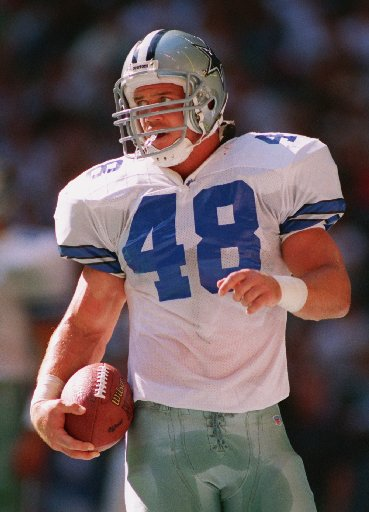
There are 48 more days until football season (only nine more days until VBS, Kipi!) and the best ever #48 is Daryl Johnston. Moose“The Moose” was the Dallas Cowboys #2 pick in 1989 as an All-America fullback out of Syracuse. And he changed the way the position was played in the NFL. Before Johnston played in Dallas, the NFL had never named a fullback to the Pro Bowl. It was kind of a throwaway position, so they just named two starting tailbacks. But Johnston’s value as Emmitt Smith’s lead blocker and Troy Aikman’s pass protector and even a receiver out of the backfield caused the league to change its policy. Johnston was the first ever fullback named to the Pro Bowl in 1993. And he represented the NFC in Hawaii the following year, too.

Johnston helped lead the Cowboys to four NFC title games in the ’90s, and those three Super Bowl titles. He scored 22 TDs in his eleven year career, caught 294 passes, and played in 149 consecutive games. Brandon “Babe” Laufenberg takes credit all the time for giving Johnston his “Moose” nickname. And I’ve never heard anybody deny it. Right now, Johnston is one of the more enjoyable color analysts on NFL TV broadcasts with Dick Stockton on Fox.

And we’ll get tomorrow’s #47 out of the way since I generally don’t blog on Saturdays. Bald Mel MelBlountBlount, longtime cornerback for the Steelers, (I wanted to choose Dexter Clinkscale, but I just couldn’t justify it) also changed the way his position was played. Blount, out of Southern University in 1970, was the first big, strong, physical corner to really man up and rough up wideouts. He might be the very best bump-and-run cover corner ever. He did have to routinely guard Lynn Swann and John Stallworth in practice. He was the NFL Defensive Player of the Year in 1975 (amazing as a CB), won four Super Bowls, and went to five Pro Bowls. Despite his physical play, Blount was extremely durable, playing in 200 of a possible 201 games during his career.

~~~~~~~~~~~~~~~~~~~~~~~~~~~~~~~~~~~~~~~~~~~~~~~~~~~~~~~~~~~~~~~

Friday13thHappy Friday the 13th.

Go do something crazy today.

Allan

« Older posts Newer posts »