Category: Matthew (Page 22 of 24)

Deciding Not To Jump

Deciding Not To Jump“Then the devil took him to the holy city and had him stand on the highest point of the temple. ‘If you are the Son of God,’ he said, ‘throw yourself down.'” ~Matthew 4:5-6

Most people believe Jesus is standing at the peak of the roof of the Royal Porch at the top of the southeast corner of the temple. 460 feet above the cliffs overlooking the Kidron Valley. Josephus wrote that when he was looking down from up there one day it made him dizzy. The south side of the temple contains the Huldah gates, the main entrance, and huge courtyards and those massive steps. A wide-open plaza, really. The busiest area of the temple grounds. During festival weeks, pilgrims to Jerusalem camped out in the Kidron Valley. They couldn’t leave the precincts of the holy city, so this is where they slept. If there were any place at the temple where you could most be seen by the largest numbers of people, this was it.

And this is where Satan took our Lord. And told him to jump.

 You’re the Son of God! Do it! Throw yourself down! Jump! It’ll be amazing! It’ll be spectacular! Perform a miracle! Do something incredible! Give everybody something to talk about! Something they’ll never forget! It’ll change their lives! For years they’ll tell their children and grandchildren about that day the angels rescued Jesus! It’ll be so cool!

Jesus, you jump off the temple today and tomorrow they’ll pack that little synagogue up in Capernaum where you teach! Do it! They’ll love it! You’ll be the most popular rabbi in all of Israel! The guy who jumped off the temple and lived! Think of the crowds! Think of all the people you can touch! You’ll be a celebrity! You’ll be a rock star! You’ll have the biggest following! It’ll prove you’re anointed by God! It’ll prove God’s favor rests on you! Do it!

I think the devil is tempting Jesus to do something big. Something important. Something that could win him great applause. I think he wants Jesus to seek the praise of men and to desire prominence or status in the community.

(Ouch)

I have a desire to be important. I have a desire for everybody to like me. I have a desire to dazzle people. And I’m not sure those desires are always holy.

I want every single sermon I preach to the best one anybody’s ever heard. I want to come up with illustrations that everybody will be talking about for months. I want to be popular with the teenagers. I want the older people to love me. I want to meet the needs of every single person in our church.

I’m afraid, if I’m honest, I spend a great deal of my time and energy every week trying to do something big and important. And while I’m certain that not all of that is bad, I assure you not all of it is holy. Or Christ-like. If it were, I wouldn’t feel the way I feel when I fail. So often.

I’m a long way from my Lord.

Jesus absolutely refuses to be a stunt man. He won’t do it. He did not come to this earth to prove himself. He did not come to walk on hot coals or swallow fire or stick his head in a lion’s mouth to prove he had something to say.

What is this thinking that I have to do something big? Where do I get that I have to do something important?

Jesus finds his worth, he finds his value, in the fact that he is loved by God and approved by God and empowered by God’s Holy Spirit to join him in a mission to redeem the world. God had already told him this. Jesus had already heard the voice. He knew this. God doesn’t have to prove anything.

And neither do I.

We don’t test God. We trust God.

And we find our value, our worth, our importance in the truth that we are chosen by God, we are loved by God, we’re approved by God, we’re being saved by God, and we’re on a mission with God to redeem the world.

Peace,

Allan

Reversing Fortunes

Reversal of Fortunes“Remember that in your lifetime you received good things, while Lazarus received bad things, but now he is comforted here and you are in agony.” ~Luke 16:25

Jesus tells his story about the rich man and Lazarus to illustrate several points, among them that the things God considers of value are not recorded with numbers and dollar signs. But I’m particularly interested in the reversal of fortunes theme that appears to be synonymous with the coming of the Kingdom of God.

“The blind receive sight, the lame walk, those who have leprosy are cured, the deaf hear, the dead are raised, and the good news is preached to the poor.” ~Matthew 11:5

The roles of the rich man and Lazarus are reversed.

The rich man is very wealthy. He lives in a home with a gate and wears purple, an outward sign of great luxury. He dresses in fine linen, a description of his fancy underwear. Lazarus, by contrast, has nothing. He lies at the gate, begging, full of sores, unclean, and starving. His situation is as tragic as the rich man’s is sumptuous.

But now their fortunes are reversed. And it’s a permanent situation.

Isn’t this exactly what God through Christ has done for us? He has turned our lives completely around. He has totally reversed our fortunes. Permanently.

“As for you, you were dead in your transgressions and sins…But because of his great love for us, God, who is rich in mercy, made us alive with Christ even when we were dead in transgression — it is by grace you have been saved.” ~Ephesians 2:1-5

Peace,

Allan

Where Are The Kids?

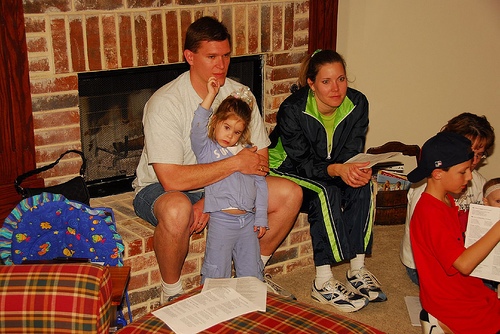
Where are the kids?Where are the kids? The local TV stations used to ask us at 10:00 every night. It’s the question I ask Carrie-Anne when I come home after work. Thirty minutes after church when I’m ready to get in the car. In a crowded mall. At the park. When it’s especially quiet in the house. When the bikes are left on the lawn. Where are the kids?

If we ask that question as we’re reading Scripture—where are the kids?—the answer always comes back, “right in the big middle of everything.” Right where God put ’em. Right where God wants ’em.

Matthew 21 – Jesus enters the temple in the last week of his life. The children are there shouting “Hosanna to the Son of CaddellsDavid!” The religious leaders in the temple are indignant. Maybe the kids were clapping, I don’t know. Maybe just the fact that the kids were in the middle of the temple being loud was enough to upset these teachers and priests. Jesus answers their indignation by quoting Scripture. “From the lips of children and infants you have ordained praise.”

Exodus 10 – Before the plague of locusts, God tells Moses he’s doing this “that you may tell your children and grandchildren…”

Exodus 12 – God insitutes the formational Passover Supper with everyone’s kids right there around the table. “When your children ask you…then tell them.”

WrightsExodus 13 – God explains the dedication of the first-born. “On that day, tell your son, ‘I do this because of what the Lord did for me.'” Also, “when your son asks you…,” tell him the great story.

Deuteronomy 4 – God’s giving the Law to his people. “Teach them to your children and to their children after them.”

Deuteronomy 6 – Same thing. “Impress them on your children. Talk about them when you sit at home and when you walk along the road, when you lie down and when you get up.” And again, when your son asks you, tell him the stories.

Joshua 4 – Setting up the stones to mark the spot where they crossed the Jordan River. When your children ask you, tell them.

Matthew 18 & 19, Mark 10, Luke 18 – Parents bring their children to Jesus. And he welcomed them gladly. They brought their kids to Jesus so he could touch them and bless them and teach them. And he did. Jesus took little kids in his arms, he placed his hands on their heads, he prayed for them. He warns us not to ignore them or neglect them or discourage them in any way because the Kingdom of Heaven belongs to our little children and he’s not willing that any of them should be lost.

In our Scriptures, the kids are always right in the big middle of everything. Exactly where God put ’em. In our Bibles, the Matt&Elizabethchildren are never on the edges, they’re not peripheral participants in the community of faith. They’re not sent to the other room. They don’t eat at a different table. They’re not placed in an “age-appropriate educational environment.” They are critical components. They are integral to God’s plan for his people. They are the centerpiece to our sacred conversations and the core of our holy gatherings.

Where are the kids?

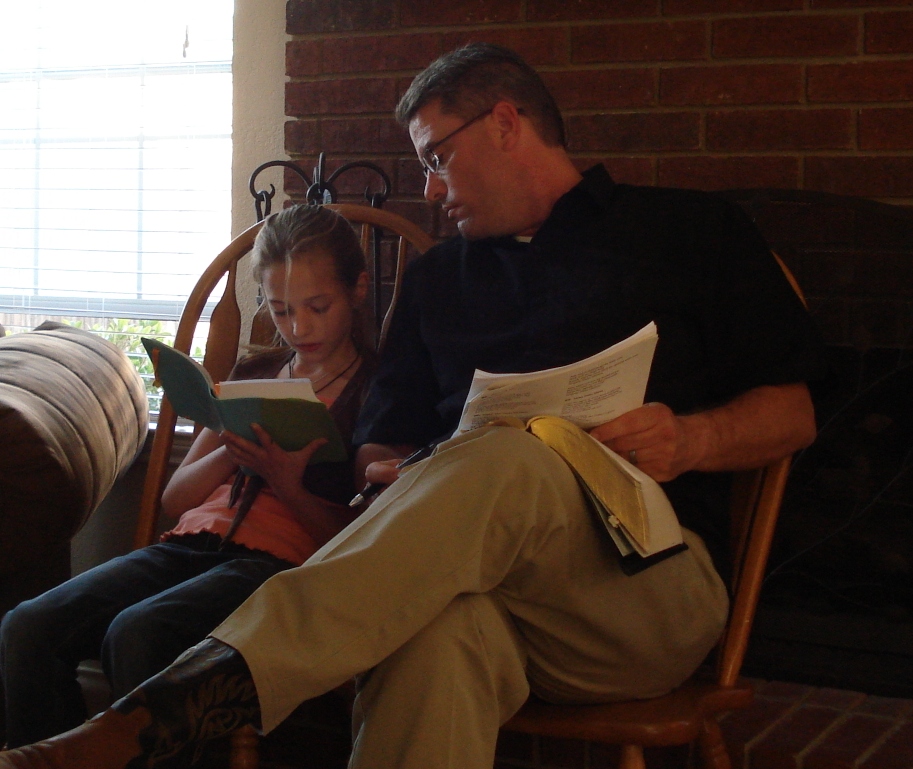
When you’re praying. When you’re reading the Word. When you’re singing praises to God. When you’re at the common table with your brothers and sisters in Christ. When you’re talking about our Savior and the Gospel’s impact on your life.

Where are the kids?

First, Be Reconciled

“I plead with Euodia and I plead with Syntyche to agree with each other in the Lord.” ~Philippians 4:2

First, be reconciledThe apostle Paul believes Christian unity is huge. It’s critical. It’s paramount to the successful advance of the Gospel and it’s necessary for the continuing growth, or sanctification, of the Church. And not just in idealistic or imaginary ways. Paul means unity on every pew, in every relationship.

Jesus taught the same thing. In fact, I’d say this is where Paul gets it. The Holy Son of God says our relationships with one another are much more important than anything we do in our worship assemblies. But we always want to worry about our worship assemblies. We write about our worship practices, we discuss our worship trends, we fret over worship changes or lack of changes, we spend a lot of ink and time and energy and effort on what we do in a big room together for 75-minutes every week. Jesus says if you’re not reconciled to your own brother, forget it.

“If you are offering your gift at the altar and there remember that your brother has something against you, leave your gift there in front of the altar. First go and be reconciled to your brother; then come and offer your gift.” ~Matthew 5:23-24

If you’re fighting with your sister, if you’re arguing with your brother, if you’re not on speaking terms with somebody in your congregation right now, if there’s ill will between you and somebody in your church, Jesus’ instructions would be to make things right before you offer a song, before you offer a prayer, certainly before you come to the table.

You might say, “It’s none of your business. This is a private matter between us.”

Paul would say, “Oh, no. Your disagreement, your arguing is everybody’s business. The unity and sanctity of God’s Church is too important.”

First, be reconciled. Then, come worship.

Whether it was something that happened between you two last week or you two are nursing a grudge that was born twenty years ago. Make that phone call. Go to her house. Invite him out for coffee. Agree with each other in the Lord. It could be the most important New Year’s resolution you make. It would be just the kind of “starting over” a God of reconciliation who gives his people the ministry of reconciliation would be expecting.

First, be reconciled. Then, come worship.

It’s important.

Which Is Lawful?

Which Is Lawful?“Some of them were looking for a reason to accuse Jesus, so they watched him closely.” ~Mark 3:2
“(They) were looking for a reason to accuse Jesus, so they watched him closely.” ~Luke 6:7
“…looking for a reason to accuse Jesus…” ~Matthew 12:10
“…he was being carefully watched.” ~Luke 14:1

The Pharisees and Teachers of the Law, these self-appointed Sheriffs of the Synagogue, were watching Jesus closely so they could pounce on him the second he broke one of their rules. In Luke 13, Jesus heals the woman who’d been crippled for 18 years. In the synagogue. On the Sabbath. In Mark 3, it’s this man with the withered hand. In the synagogue. On the Sabbath. And the Sheriffs didn’t like it. They were indignant. They plotted to kill him.

And Jesus challenges these religious leaders with his question in Mark 3:4 > “Which is lawful on the Sabbath: to do good or to do evil, to save life or to kill?”

Jesus presents to the synagogue rulers—and to you and me—two ways of doing the religious rules and regulations. He doesn’t throw them away. He says there are two ways of keeping them. One way is good and one way is bad. One way gives life to people and one way takes life away from people. One way frees people from burdens and one way places more burdens on people. One way liberates people from their chains and one way locks people up in prisons.

Jesus gives us two ways of doing religion. Two incompatible outlooks. Two opposite and conflicting views about our God and his Law and his intentions for his Law. And he presents it as a choice between the two. You have to choose. You can’t have it both ways.

“Which is lawful?” he says. For hungry people to eat or for them to remain hungry in order to protect your rules? (Mark 2:23-27) Which is lawful? For this man with the debilitating injury that singles him out as less than whole to be healed and to made whole or to remain withered and less than what he’s meant to be in order to keep your traditions? (Mark 3:1-6) Which is lawful? For this woman who’s been bent over for as long as she can remember, burdened by the weight of the world and her own sins, to be delivered from these burdens and made to walk again or to remain stooped over and burdened even more in order to keep your order? (Luke 13:10-17) Which is lawful?

God’s Law is not about the rules. It’s about people.
God’s Church is not about the institution. It’s about people.

And if we’re partnering with God and with his plan to redeem the world, we take care of people, not rules. So why, sometimes, do we act like Sheriffs of the Synagogue? I’m afraid, sometimes, we get together with God’s people on God’s holy day, the day set aside for us to celebrate salvation from God in the resurrection and reign of Christ, and we’re watching closely. Looking for a reason to accuse.

“Did you see what he’s wearing? Did you hear what she said? He’s raising his hands. She’s closing her eyes. He’s clapping. She’s kneeling. He won’t stand. She won’t sing.

And Jesus asks, “Which is lawful?” To do good or evil? To watch for those who might stray from my tradition and call them on it? Or to praise God with them in the understanding that we’re both redeemed by the blood of the Lamb? Which is lawful? To save life or to kill? To watch closely for someone who might violate my regulation and talk to them about it? Or to encourage them and be thankful that you both share salvation from God in Christ? Which is lawful? To remove the barriers and burdens and hurdles from my brothers and sisters or to weigh them down with my rules and regulations that act as chains and prison bars to those we’ve told have been set free?

Jesus says there are two ways. One way cares about people. One way doesn’t. The synagogue ruler in Luke 13 actually addresses the people after Jesus heals the crippled woman. “Hey! he says. “If you’re looking for freedom, if you’re looking for healing, if you’re looking for relief and rescue, if you’re looking to be delivered from the things that are weighing you down, come back some other day. You’ve got six other days to do stuff like that. Come back tomorrow. We have our rules, you know.”

Nobody—and I don’t care if they’ve been members of the congregation for 45 years or if they’re completely unknown strangers off the street—nobody should ever come into our church buildings to sit with us, worship with us, sing and pray with us, and study the Scriptures with us and feel like somebody’s watching him closely. Or looking for a reason to accuse.

That situation says a whole lot more about the watcher than it does the watch-ee or the rules. Jesus called it hardness of heart.

Aren’t we glad we serve a King who’s much more about mercy than ritual?
Aren’t we glad our God deals with us compassionately with patience and grace instead of Law?
As God’s children and subjects of the King, aren’t we compelled to treat others the same way?

Peace,

Allan

Reality in Jesus

Matthew’s account of Jesus healing the Centurion’s servant gives us a beautiful portrait of the reality in Christ as the Son of God. The reality is that our King is almighty. He is all powerful. He alone has the authority and the desire to heal and forgive and provide and protect. That’s the reality.

But sometimes we don’t see the reality because we’re surrounded by all the temporary unreality. Sickness and sin and death and hunger and poverty and crime and job stress and family struggles are all around. And we have a very human tendency to be weighed down by all that. We’re burdened by it. We carry it around with us until we’re bent over, beaten, on the verge of being defeated.

“I HAVE MADE YOU AND I WILL CARRY YOU;

I WILL SUSTAIN YOU AND I WILL RESCUE YOU.”

~ISAIAH 46:4

God, through Jesus, has already vanquished all these enemies. Sin and sickness and death have no power over us. And great faith takes its eyes off the temporary circumstances, no matter how disconcerting they are, and fixes its eyes on the Lord. It’s not living by sight. It’s living by faith in the realities in Jesus as the Son of God.

~~~~~~~~~~~~~~~~~~~~~~~~~~~~~~~~~~~~~~~~~~~~~~~~~~~~~~~~~~~~~~~~~~~~~~~~~~~~~~~~~~~~~~

Stephen Jones: “Uh, dad, we’ve got a guy we can sign to take Roy Williams’ place at safety. Guy named Daren Stone.”

Jerry Wayne: “Daren Stone? What do we know about Daren Stone? Never heard of him.”

Stephen: “He’s a sixth-round draft pick out of Maine two years ago.”JerryWayne

Jerry Wayne: “Why would we sign him? What’s he got?”

Stephen: “Well, he made ten total tackles for the Falcons in 12 games last year.”

Jerry Wayne: “That’s nothing. I could go out there right now and do that myself. Are we really gonna spend my money on this guy? What’s he done so far this year?”

Stephen: “Actually Atlanta cut him at the end of training camp. He hasn’t played any football since a couple of preseason games in August.”

Jerry Wayne: “Look, boy. I’m not spending any money on some washed-up never-was who can’t contribute to this team right away. We’re in a crisis here, boy. We’re in trouble. Have you watched any of the past four games? Don’t you know what’s going on here?

Stephen: “I think we need to sign him, dad.”

Jerry Wayne: “Why, boy? Why do we need to sign this Daren Stone? How does Daren Stone fit in with what we’re trying to do as the Dallas Cowboys? How does he contribute? How does he match up with the message we’re trying to send within our organization and to all our ticket-buying and stadium-subsidizing fans? What is it about Daren Stone that makes sense for us?”

Stephen: “He was arrested in downtown Atlanta over the summer and charged with driving under the influence.”

Jerry Wayne (grinning broadly): “Sign him.”

« Older posts Newer posts »