
Category: John (Page 13 of 30)

Incarnation Revelation

JesusBirthThe Incarnation is a remarkable and powerful thing: God chose to come into this world the same way all of us come into the world — through the pain and water and blood of human birth. Just like you and me, God was born. God came here as a baby. The Gospel of John says the Word — the creative Word of God, the creation power of God — became flesh and made his dwelling among us.

God with us. Immanuel. He came to us. God came here to live with and to bless his creation. And it’s not just a beautiful idea or an abstract theological truth. It really happened on that clear starry night in Bethlehem.

But what do we do with this? We rejoice and we express thanksgiving, yes. We join heaven and earth in praise and worship, absolutely. But we don’t really understand it. God Almighty, the Creator of Heaven and Earth, coming to this world as a helpless baby — that blows our minds. We don’t really have a category for that.

So, usually, we kind of chop Jesus up. Fully human and fully God, we don’t know what that means. So we say everything in the Bible about Jesus’ weakness and pain and suffering points to his humanity, and everything in Scripture about his wisdom and power and authority points to his divinity. But if that’s the case, the coming of Jesus doesn’t really tell us anything new. It’s nothing to sing about. We don’t need Jesus to tell us that God is big and powerful and strong and that human beings are little and weak and powerless. We already know that. We already believe the relationship between God and humans is about above and below, about superior to inferior, about master to servant. We already believe that.

Well, that’s not what the baby Jesus is about. Immanuel, God with us, is about the shocking reversal of everything we believe about heaven and earth. It’s not about big God and little humans. It’s not about the Creator asserting his divine greatness and power in contrast to human weakness. This is about God becoming weak and powerless so that humans can become affirmed and exalted. It’s about God lowering himself so his creation can be lifted up.

Irenaeus, in the second century, wrote: “Jesus Christ in his infinite love has become what we are in order that he may make us entirely what he is.”

Jesus prays to his Father the night before his death, “I have given them the same glory that you gave me!”

JesusBabyAdorationGod did not create heaven and earth to get joy or to receive love. He created in order to share his joy and love. Yes, all of creation is an explosion of God’ glory. All of heaven and nature point us to God’s goodness and beauty, his power and love. But he didn’t do it so we would believe in him. He doesn’t do it for our inspiration or spirituality. He does it because he wants to share his joy and love.

So he comes to us in Jesus. He joins us as a baby. He shows us in the birth of the Christ that his Kingdom is not founded on bloodlines or race or nationality or money. His nature is not about power or strength or violence or war. God’s character, what he’s all about, is grace. He and his Kingdom come to us as a gift of his amazing grace.

“He came to that which was his own… To all who received him, to those who believed in his name, he gave the right to become children of God — children born not of natural descent, nor of human decision, or a husband’s will, but born of God.” ~John 1:11-13

We’re not born into the Kingdom like we have some special birthright or like we’re entitled in some way. We’re adopted into the Kingdom. We are given our eternal rights and blessings by grace. It’s a gift. Jesus was the Son of Mary by faith, yes, and by water and blood. But first, he was her son by divine grace.

“The Word became flesh and made his dwelling among us. We have seen his glory, the glory of the One and Only, who came from the Father, full of grace and truth.” ~John 1:14

The King of the World has come. And he’s not like any king this world has ever seen. What sets him apart from other kings and what sets his subjects apart from other people is not his strength, but his weakness like us; not his majestic power, but his suffering with us; not his eternal authority and rule, but his obedience and suffering for us.

Joy to the world, the Lord is come! Let earth receive her King! Let every heart prepare him room, and heaven and nature sing!

Peace,

Allan
Forgiveness is the Only Way

SinfulWomanForgiven3There are more than 50 words in the Bible for sin: debt, evil, wickedness, trespass, unrighteousness, guilt, transgression, disobedience, rebellion, etc., But exposing the sin and naming the sin is not what matters. Keeping score is not the Gospel. Witch-hunting is not the Gospel. Shaming people is not the Gospel. Forgiving sin — that’s the Gospel. Because it’s the only thing that works.

Our Lord teaches us to pray: “Forgive us our sins as we forgive those who sin against us.”

We are faced with lots of sin, sin everywhere — personal sin, family sin, institutional sin. But Jesus doesn’t tell us to get a mop and a bucket and a brush so he can show us how to scrub the sin from our lives and the lives of our children and spouses and neighbors. He doesn’t tell us how to hook up a power hose so we can blast away all the corruption in government, all the sacrilege in our churches, and all the unbelief in our schools. Jesus tells us to pray: “Forgive us as we forgive.”

Our God deals with sin. He deals with sin decisively. Head-on. Effectively. It’s not like getting rid of a germ: “Here’s a shot, take these two pills, and call me in the morning.” It’s not like getting rid of mice in the attic: “Set out these traps, put out this poison, then Whack! Whack! Whack! All the sin is gone!” And God doesn’t deal with sin by amputation, like it’s gangrene on a diseased leg: “We’re going to chop it off. It’s really going to hurt. You’re going to have a severe limp the rest of your life. But, hey, there’s no sin!”

God deals with sin by forgiving us.

If something’s going to be done about sin, it’s not going to be with laws and commands and rules. Do we think what’s wrong with this world is something we can fix on our own? We can’t. Do we think there are judicial or governmental or educational or psychological ways to deal with sin? There aren’t.

Forgiveness is the only way.

“As God’s chosen people, holy and dearly loved, clothe yourselves with compassion, kindness, humility, gentleness, and patience. Bear with each other and forgive whatever grievances you may have against one another. Forgive as the Lord forgave you.” ~Colossians 3:12-13

Forgiveness is the only way to deal with sin. It does not settle all the questions of blame and fairness. In fact, it purposefully avoids those questions. What forgiveness does is allow a relationship to start over. Forgiveness brings people back together. It begins a good thing anew.

But a lot of us live in a logjam between forgiveness and justice. When somebody does me wrong, I can think of a million reasons not to forgive. He needs to learn a lesson. I don’t want to encourage her irresponsible behavior. She needs to learn that actions have consequences. I was the one wronged – he needs to make the first move. How can I forgive if she’s not even sorry?

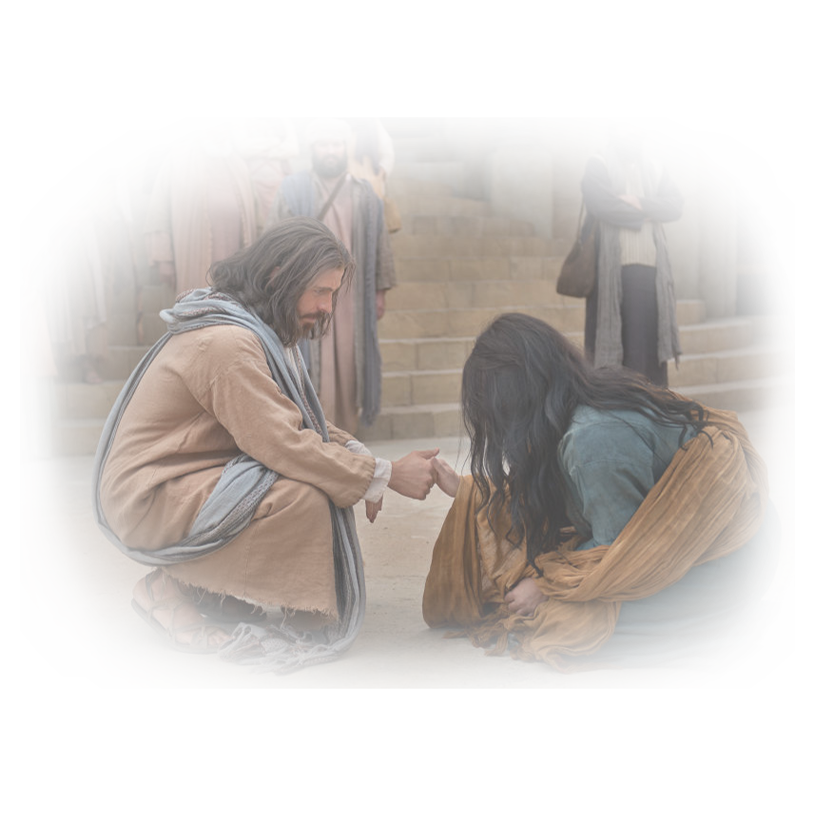
Remember the woman in John 8 who was caught in the act of adultery? They bring her to Jesus and throw her down at his feet. The Law says she should be stoned. But Jesus says, “Hey, whoever has never sinned can throw the first rock at her.” The young look to the old. The old look to their hearts. And they drop their rocks and walk away.

Jesus and the woman are left alone. The Lord stands up and looks around.

“Where is everybody? Has no one judged you guilty?”

“No one, sir,” she answers.

“I also don’t judge you guilty.”

If you ever wonder how God reacts when you fail, take those words and frame them. Hang them on your wall. Read those words of the Christ. Drink from them. Take them into your soul. “I don’t judge you guilty.”

When we sin against God, that creates a barrier. But forgives us and removes that barrier. God gives up his holy right to get even. Instead, he bears the cost of our sin in his own body. The sin is gone, the price is paid, and the relationship is restored. God made him who had no sin to be sin for us. You can’t get any more plain than that.

Justice is not the best or last word. In all matters of wrongdoing, in all matters of sin, in all that is wrong with the world and with us, in all that is wrong with our enemies and our friends, forgiveness is the best and last word. And forgiveness must be our first response to every person who hurts us or sins against us. We’ve got plenty of police officers and judges and juries and prosecuting attorneys to say, “You’re guilty!” Who’s going to say, “Father, forgive them?” If it’s not Christians, who’s going to say, “I don’t judge you guilty?” If not us, who’s going to say, “Your sins are forgiven?”

However important justice is — and it is very important — forgiveness is more important. Not soft sentimentality, but hard-edged Gospel. Not an apathetic shrug of the shoulders, but the white-hot flame of resurrection love forged in the furnace of the cross. Assuming that the criminal crucified next to Jesus was receiving a just sentence — he admitted it himself — forgiveness trumped justice that day. It always does.

Peace,

Allan

Nouns and Verbs

“Peace be with you! As the Father has sent me, I am sending you.” And with that he breathed on them and said, “Receive the Holy Spirit.” ~John 20:21-22

CrossRoadsThe Father sent the Son here on a mission. God perfected Jesus through his obedience, he protected Jesus and provided for him, he confirmed him and filled him with the Holy Spirit. And he promised ridicule and rejection and even death. But God sent the Son here to serve and to bless the world. Now the Christ tells us, “I’m sending you to do the same things in the same way.” And he empowers us. He breathes on us and gives us his Spirit.

What are we afraid of? Why do we hesitate or hold back?

Mission is not one of the Church’s programs. As followers of the King, mission is who we are. All of us are sent by God in Christ to be a blessing. To serve. To rescue and heal and love and bless just like Jesus who says the student should be like his teacher and the servant should be like her master.

Student and teacher. Servant and master.

You know, it’s a lot easier to just be a fan of God. I can be a great fan of God. Jesus is the mascot. Weekly worship and a Bible study now and then is the show. The church is the audience. And I can get my religious fix when I want it.

Or I can be an admirer of Jesus. I can read a lot of books about Jesus, I can learn a lot of Scriptural language and I can quote Jesus and become a real Jesus expert. He’s so great!

Or I can be a believer in Jesus. I can memorize all the doctrines and recite all the theological truths and win a lot of arguments.

No. The student should be like his teacher. The servant should be like his master.

Here’s where I get into trouble. See if this is true for you. When I read the Scriptures, my tendency is to pay more attention to the nouns than the verbs. When we put the nouns first, when we concentrate on the nouns, we spend all our time translating and defining and exegeting and interpreting. And we go back and forth with different contexts. The culture was like this. The name of the mountain means that. This word in the original language implied something else. And we don’t have to land anywhere or do anything. Nouns in the Bible are tough. And if we emphasize the nouns, they can actually separate us from the Story. They can create distance between us and the script.

Verbs, though… verbs are every day and easy. Verbs are cross-cultural. They’re timeless. You don’t need a translation. There’s no distance. We share the verbs with all peoples for all time. We share the verbs with Jesus. The fastest way to make a script out of Scripture is to emphasize the verbs.

God tells Abram to go. He tells Moses to speak. God tells Joshua to lead. He tells Isaiah to prophesy. Mary, give birth to the Savior of the World. Paul, take Christ to the Gentiles.

God has put his Church on a mission. He’s put you — you forgiven and saved and Holy Spirit-indwelled Christ-follower — he’s put you on a mission. We’re in a position right now, you’re in a place right now, to do more for the Kingdom of our Father and to proclaim the Good News of salvation in Christ Jesus than has ever been done in your community before! That’s the call. And that’s our Lord’s expectation.

Pick your favorite Bible story this weekend — I don’t care which one, just pick one. Now read it out loud and pay special attention to the verbs. Maybe try employing a couple of those verbs into your prayers this weekend. Become more like the student, more like the servant our Lord is calling you to be. You’ve got his Spirit inside you. What’s holding you back?

Peace,

Allan

Packing the Pews with Pistols

“My Kingdom is not of this world. If it were, my servants would fight to prevent my arrest by the Jews. But now my Kingdom is from another place.” ~Jesus

GunsInChurchI don’t know how many guns there are inside our church building on Sunday mornings. I don’t want to know. I’m guessing around fifty but, again, I’m not sure and I seriously don’t want to know. We operate mainly on a don’t-ask-don’t-tell policy on that around here. In light of the recent mass shootings — asking “Which one?” is a legitimate question and a terrible commentary on our sick society — I’m afraid more and more disciples of Jesus are bringing their firearms to our public worship assemblies. And using the Bible to justify it.

A recent front page column in the Church of Christ publication The Christian Chronicle quoted a dozen ministers from a dozen different congregations in several states who believe and, apparently, teach that carrying a gun and being prepared to use it against another human being is a good thing to do.

Some of the comments spoke to the realities of guns in the church building and Christians’ readiness to use them to protect themselves against an invader. A minister in Florida said “walking in with the intent to harm our congregation would be like walking in to harm someone at an NRA rally or gun show.” A minister of another church in Florida told the Chronicle that lots of people in his congregation are packing and “someone would be sorry to try anything here.” A Mississippi CofC minister said of his church’s strategy, “We remain vigilant, and we have selected brethren who have a tactical background and are armed amidst our assembly. Unfortunately, we can’t ultimately eliminate the threat, but we can definitely minimize the impact it could possibly have on our beloved.”

Some of the preachers interviewed even attempted to say shooting a criminal inside the church building is the “Christian” thing to do. In describing a scene in which an active shooter begins opening fire in a worship assembly, one minister from the Houston area said, “There is a world of difference in being ready to die for your faith than to die at the hands of a crazy man simply because he’s crazy. I believe that God would permit me to protect myself and my family in cases such as that.”

A minister in Kentucky went so far as to claim that Christians are required to shoot when he said, “We believe theologically we have an obligation to protect and defend our church membership, especially children, against a stranger or angry member who was to come in and begin shooting.”

A preacher in Alabama who admits to bringing his own Ruger .380 to the church building on Sundays invoked the name of Jesus in justifying the use of deadly force by a Christian: “I do not believe that Jesus — or even the old law — taught members to cower in the face of danger. It was Jesus who told his apostles to take a sword in Luke 22.”

OK. Stop right there.

Two things.

One, you cannot use the name of our Lord to justify the killing of anyone under any circumstances. Ever. Yes, Jesus would protect those under attack, not by killing the attacker but by stepping in front of the bullet. And he would forgive the attacker and pray for him while he was dying. I’m always surprised to hear Christians say, “Jesus would not allow himself to be a victim.” Actually, our Lord willingly left his home in glory, put all of his trust in the One who judges justly, and purposefully submitted to being the worst kind of victim. He blessed those who attacked him, he loved those who hated him, he forgave those who killed him. I’ve heard other Christians acknowledge that truth about our Lord and then reply, “Well, Jesus wouldn’t shoot anybody, but I would.” That actually makes you, by definition, not a Christian.

Two, Jesus’ words in Luke 22 do not authorize the use of gun violence in any way. Jesus is telling his disciples that things have changed. The first time they went out, they were all welcomed with goodwill and hospitality. But now, when they are scattered, they are going to face opposition. They’re going to be ridiculed, rejected, and maybe even killed. Now, Jesus says, you’re on your own out there. Don’t count on other people to help you. You’re going to need a purse, a bag, a sword, whatever. He’s speaking figuratively. He doesn’t discount in this moment every word out of his mouth for the past three-plus years against violence. He’s not saying the opposite now of his every teaching against violence. He’s speaking symbolically. How do we know? Because when the disciples reply, “Look, Lord, we’ve got two swords right here,” Jesus rebukes them, “Enough, already! Stop!”

Yes, you’re going to face an intense opposition to me and my message, your very lives are going to be endangered. But you don’t respond with self-defense and violence. Enough! You’re missing the point! Jesus will have nothing to do with swords, even for defense. How do we know? Because later on in this same chapter, in the very next scene when Jesus is being arrested, one of the disciples asks him, “Lord, should we strike with our swords?” And Jesus says emphatically, “No!”

One of the Christ-followers uses his sword to cut off the ear of the high priest’s slave. And Jesus sharply rebukes him. “No more of this! Stop!” And he heals the injured attacker. In Luke 22, literal armed resistance is exposed as a foolish misunderstanding of Jesus’ message.

Could the Scriptures be any more plain? The question is asked, “Should we strike with our swords when we’re being attacked?” and the direct answer from our Lord is “No!” I’m not sure why we even have these arguments.

Of all the ministers quoted in the Christian Chronicle article, only one expressed a theological and scriptural objection to the use of gun violence by Christians in self defense: Tyler Jarvis, the student and family minister for the Oak Ridge Church of Christ in Willow Park, Texas. “I think that the church should trust in the protection and mercy of God, even if it means not being able to defend against an attacker or intruder. The church ought to be able to extend love and forgiveness to those who wish to harm them, even if it costs them their lives in the process.”

The author of the story introduces Jarvis’ quote by saying the Willow Park minister “wrestles with the gun question.” It doesn’t sound like he’s struggling to me.

There are many reasons Christians in the U.S. believe it’s OK to kill people in self-defense. Culture plays a role, society has something to do with it, fear informs our understandings, and there appears to be a general unwillingness to carefully think things through and reflect. It doesn’t help when Christian publications present such a lopsided view of the issue. This article normalizes gun violence as if there’s no choice. It accepts the culture’s position and approves it for God’s Church. There’s no theological challenge, just an out-of-context proof text. If you must present both sides — I think you must! — at least present them equally.

Since when is showing unconditional mercy and love and grace and forgiveness in the face of danger and death labeled as cowardly? Since when is praying for our enemies and refusing to repay evil for evil and sacrificing self preservation for the sake of the sinner viewed as “cower[ing] in the face of danger?” Our Lord was not cowardly in the Garden of Gethsemane that night. And he didn’t cower in the face of danger when he willingly submitted to the cruelty of the cross. Neither are Christians who reject the use of violence to get their way. They are courageous and brave, faithful and true.

Christians, leave your guns at home this Sunday. Practice prayer. Practice forgiveness and mercy. Practice discipleship and obedience to the Way. Pray to God that nobody with violent intent ever attacks your church family in the sanctuary. But also pray to God for the strength, should it ever happen, to respond in ways that will honor our Lord, the Prince of Peace.

Peace,

Allan

Holy Spirit Witnesses

“That which was from the beginning, which we have heard, which we have seen with our eyes, which we have looked at and our hands have touched — this we proclaim concerning the Word of Life. The life appeared; we have seen it and testify to it, and we proclaim to you the eternal life, which was with the Father and has appeared to us. We proclaim to you what we have seen and heard, so that you also may have fellowship with us. And our fellowship is with the Father and with his Son, Jesus Christ.” ~1 John 1:1-3

HolySpiritCircleBut I haven’t heard Jesus with my own ears. I didn’t see Jesus with my own eyes or touch his resurrected body with my own hands. Those apostles, those first Christians in the New Testament, had lots of advantages over me. They were real witnesses. I’m not really a witness at all. How can I be expected to proclaim the same ways they did?

As we established in this space yesterday, you have Holy Spirit power. You have the Spirit of God, the personal Spirit of the Christ, living inside you. I don’t know how that works. I promise you right now I don’t know how to explain it. But I believe it. And I trust it.

The Gospels tell us there is a continuity of personal experience with Jesus for all generations of disciples, not just the first generation. In John 14, Jesus promises he’ll never leave his followers as orphans: “I will come to you,” he says.

“If anyone loves me, he will obey my teaching. My Father will love him, and we will come to him and make our home with him.” ~John 14:23

Scripture says that Jesus ascending to his throne at the right hand of God in heaven does not mean the end of his presence with his followers. Jesus lives inside you.

“Those who obey his commands live in him, and he in them. And this is how we know that he lives in us: We know it by the Spirit he gave us.” ~1 John 3:24

“We know that we live in him and he in us, because he has given us of his Spirit. And we have seen and testify that the Father has sent his Son to be the Savior of the World. If anyone acknowledges that Jesus is the Son of God, God lives in him and he in God.” ~1 John 4:13-15

The power of God’s Spirit belongs to you. It belongs to all disciples of the Christ. The Spirit inside you gives you an ongoing personal experience with our Lord. You know him. And you testify to that by the things you say and the way you live.

Peace,

Allan

He Gave

JesusCrossDark“He who did not spare his own Son, but gave him up for us all — how will he not also, along with him, graciously give us all things?” ~Romans 8:32

Scripture says God gave the land to Abraham. The Lord gave success to Joseph. God gave his children manna in the desert. The Bible tells us our God gave his people deliverers when they were in trouble. Through Christ, God gave us the right to become his children.

“God so loved the world that he gave his only Son…” ~John 3:16

In the Gospels, Jesus says I give you eternal life. I give you my peace. I give you the Spirit. This is my body given for you. The Kingdom of God is given to you. I give you victory. Paul says God has freely given us of his glorious grace.

God created in order to give. Jesus came to earth in order to give. He lived and died and rose again and reigns at the right hand of the Father in heaven so he can give.

“Life a life of love, just as Christ loved us and gave himself up for us.” ~Ephesians 5:2

That’s the Good News. God gave. Now I give. Freely you have received, freely give. God through Christ gave. Everything. To me. Now I give. Everything. To him. That’s the Gospel. Nothing more. Nothing less.

Peace,

Allan

« Older posts Newer posts »