Category: Jesus (Page 19 of 61)

Love Changes Everything

You’ve heard it said that past behavior is the best indicator of future behavior. You want to know how a guy is going to act in the future, you just look at how he’s acted in the past. That notion goes largely unchallenged. We accept it, we don’t question it. Why? Because of our own experiences.

Maybe you’ve dated a person who does something you just can’t tolerate — some behavior, some character trait, a bad habit — and you break up. Sometimes that person will promise to change: “Take me back! I’ll change!” After a period of time — six months, maybe six minutes — you take that person back. But before you can blink that person is back to doing the exact same stuff as before.

Past behavior is the best predictor of future behavior. Your brother-in-law is never going to pay back the money he borrowed, that department store is not going to have the advertised item, and the Cowboys are going to rip your guts out in December. How do you know? Past behavior is the best indicator. You know what’s going to happen.

Or do you?

This seeming certainty of the formula seems to change when the love of God in Christ Jesus is involved.

Look at the woman in the well in John 4. She’s the town sleaze. She’s had five husbands, she’s shacking up with a sixth guy, and nobody will talk to her. We know her future, right? She’s going to run right through this guy number six and guy number seven and number eight, maybe a dozen of them, and she’s going to keep drawing water in the heat of the sun until the day she dies all alone in her guilt and shame.

But then Jesus goes out of his way to love her. He doesn’t just feel love for her, he shows it to her. He does something. He rearranges his travel schedule to get to her. He sits down and honors her with his time and full attention and conversation. He teaches her right there at the well and the town sleaze becomes a Gospel preacher! Her whole village believes in Jesus, the Savior of the World!

What about the woman caught in adultery in John 8? She’s about to be killed. And that might be the best thing for her. That’s what the Law says. If she’s not stoned to death, she’ll keep cheating, she’ll keep lying, she’ll keep hiding, she’ll keep sinning. We know this. Past behavior is the best indicator, right? But Jesus stands up for her against the authorities. He shows her his love by defending her, by believing in her. And she leaves her life of sin. She’s given the gift of new life by the love of God in Christ.

Zacchaeus is going to keep cheating people on their taxes, he’s going to continue lining his own pockets, and padding his profits and looking out for number one. But Jesus pulls him out of a tree, he eats dinner with him at his house, and he looks him in the eye and calls him a son of Abraham. And now Zacchaeus is giving half of everything he owns to the poor! He’s going back through his books and making things right, blessing others, realizing deep inside that it’s better to give than to receive.

The demon-possessed guy in the Gerasenes in Mark 5. His community has banished him to live in the cemetery. He’s not in his right mind. He’s got no name, no family, no clothes, no peace. The devil and his demons have successfully stolen from this man everything it means to be made in the image of God. What’s going to change? They’ve tried everything with this guy. He’s going to keep being scary and keep suffering and he’s going to die in his chains.

But Jesus gets in a boat and braves a terrible storm in the middle of the night to get to this guy. Our Lord goes to him and shows him his love and his power to change everything. He lets this man know that he matters to God. And that divine love of God drives those demons to the bottom of the sea and the next thing you know this guy is clothed, he’s in his right mind, he’s got a family, and he’s got a purpose. He’s preaching in the Decapolis, proclaiming the Good News all over the Ten Cities. And all the people are astonished.

Peter is a God-cursing, Christ-denying, lying scoundrel until Jesus shows him unconditional love and gives him unlimited forgiveness and changes him into a cornerstone of his eternal Church. John is a violent, volatile hothead — “Call fire down from heaven! Blow ’em all up! But the love of Jesus immerses him and changes him. And John winds up writing the most beautiful words we have in the Bible on love.

Past behavior is not the best indicator of future behavior. The love of God in Christ means the life you’ve lived to this point today is not the only life that’s possible for you. Or for your neighbor. Or your enemy.

Your church is filled with courageous people who used to be all kinds of unholy until the love of God in Christ changed everything. Our lives have been eternally changed by the love of God, so we have faith that the love of God can change all lives. Showing that love of God to others in faith is the whole point. Galatians 5 says the only thing that matters is faith expressing itself in love. Seeing the potential for God’s love to change everybody around you, to change our city, to change the whole world — that’s the invigorating challenge.

As John would say, we love because he first loved us.

Peace,

Allan

God Has Spoken

“In the past God spoke to our forefathers through the prophets at many times and in various ways, but in these last days he has spoken to us by his Son.” ~Hebrews 1:1-2

We live in a confused world. Our culture is bowing down to the relativism of postmodernism. There is no ultimate truth. Whatever works for you is great for you. Discover your own truth. Whatever is working for them or for that part of the world is fine for them. There can’t be just one truth.

Christians are buying into this, too. It’s everywhere. Truth is whatever you need it to be, depending on when it is and where you are and what’s going on. We’re more bewildered and unsure and trapped than we’ve ever been. And the answer to all that chaos and uncertainty is this:

God has spoken!

He has spoken through the exalted Jesus. Jesus is the only one who can purify us from our sins. He is the only way to draw near to God. Only Jesus can give us help in our time of need. He alone can deliver us from death and lead us to ultimate glory. Only Christ Jesus! He who has ears, let him hear!

But we are so tied to the practical. We want pragmatic. We want real and immediate benefits from our Bibles and our faith. If the Bible study doesn’t address “real life” issues, we’re bored. If the devotional time doesn’t have immediate implications, we neglect it. If the sermon doesn’t help me with a problem I’m having right now, we ignore it.

Listen, God is speaking to us! God is revealing himself and speaking to us in Jesus! That’s the most exciting thing that’s ever staggered the human imagination! It’s everything!

In Jesus, God’s only Son, we have the ultimate solution to all the world’s problems. God has acted and spoken once for all in Jesus. And it changes everything. Without Jesus, yes, we should all sleep in on Sundays. But with Jesus, we never miss a gathering of his holy people. Without Jesus, yes, we should despair. But with Jesus, we persevere. We keep going. We keep running. Because God has spoken to us by his Son.

That’s why I preach. That’s the reason I pray all week and I read and I study and I prepare so hard. That’s the reason I climb those four steps every Sunday morning and read the Word of God out loud in the Central worship center and proclaim the words of God to all those ears — I really believe those words can change lives. I really believe the words of God have transformative power. They can change your life. They can change our city. And they can change the whole world. That’s why I preach. I believe it.

God has spoken to us by his Son. Jesus Christ is not just the first word and the final word; he’s also every word in between — and the dictionary that defines all the words! He is the ultimate Word of God. And nowhere does the Word say this is easy or painless. Nowhere does the Word tell us this is going to be socially acceptable or quick. But everywhere the Word tells us this is real and it is true and it is certain.

Peace,

Allan

Seeing the Risen Christ

There’s a lot to see at the empty tomb. There’s a lot to see and experience there. The soldiers saw the angel and experienced great fear. The women saw the stone rolled away and experienced great confusion. Peter and the apostles saw the burial cloths and came away with a lot of questions. There’s a lot to see at the empty tomb. But nobody saw Jesus there.

Jesus isn’t there.

I want to see Jesus. I want to experience Jesus. I want to touch Jesus and know Jesus and be in his presence and hear his voice.

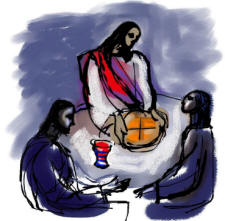
You know where that happens? At the table. The disciples do not see or experience Jesus in his resurrection fullness and glory until later that Easter Sunday when they are sharing a meal together. Jesus revealed himself during the meal. He appeared to his followers and spoke to them at the table. That’s where we see our risen Lord.

When we are around the table together with the risen Messiah as our host we experience forgiveness and belonging, unity and sharing, acceptance and fellowship. We see Jesus in the changed lives of the people with us around the table. We Jesus in that there are no walls, no barriers between us and God and us and each other; nothing separates us at the table. We Jesus when we remember that we have forgiven those around the table with us and have been forgiven multiple times by those same people. We see Jesus in the joy reflected in the faces around the table. We experience Christ in relationship with others.

Our salvation from God is not a system. It’s not a theory. And it’s certainly not a five-step plan.

It’s a sacrifice and a meal.

Peace be with you,

Allan

What Jesus Did

For the past two thousand years we’ve developed dozens of intricate theories as to why Jesus HAD to suffer and die on the cross to forgive our sins. The ransom theory says Jesus had to die to pay our debt of sin. The substitution theory says I belonged on the cross but Jesus took my place. Propitiation says God’s wrath had to be satisfied so Jesus took the punishment instead of us. The apostle Paul uses legal language and sacrificial imagery and military terms and financial lingo to explain WHY Jesus HAD to die on the cross.

But in the Gospels, in the story itself, it’s not about what Jesus HAD to do; it’s about what Jesus DID.

He died for us.

He died a terrible death.

For us.

What kind of love does our Lord have for us — knowing our sin, knowing our failure, knowing our past and future betrayals — to still willingly die for us?

Remember, Jesus the Christ is God. This is God, the Creator of Heaven and Earth. So, God doesn’t inflict pain on someone else to appease his wrath. God is on the cross, absorbing all the pain and violence and evil of the world into himself. He becoming our sin for us. Our God is nothing like the pagan deities who demand the blood of humans for their anger to be satisfied. No, our God becomes human and offers his own blood.

This is how he saves you. This is how he loves you, to the point of absurdity. He loves you all the way to the cross — purposefully, willfully, stubbornly, dying on the cross.

Peace,

Allan

Jesus Did Nothing

Tony Romo finishes his Mavericks career with a losing record and missing the playoffs. He’s still got it.

The lines between what is real and what is fake get blurrier every day. What an insult to every Mavericks player. And what a testimony to how low the bar is now for Cowboys quarterbacks. You don’t have to win a Super Bowl. Shoot, you don’t even have to win a divisional playoff game! Ever! You’re a hero!

Romo was speaking for all of us yesterday when he kept saying he was embarrassed.

~~~~~~~~~~~~~~~~~~~~~~~~~~~~~~~~~~~~~~

How do we move so quickly from praising our Lord to denying him? How do we go so fast from vowing to die for Christ to betraying him? The Gospels tell us that all his followers — those huge crowds that welcomed him with palm branches and shouts of loyalty — abandoned him. They went from shouting “Hosanna!” to shouting “Crucify him!” They went from showering Jesus with praise to driving nails through his hands and feet. From big, green, leafy palm branches to an old wooden cross. The apostles promised their undying allegiance to Jesus at dinner and, then, within an hour or two, maybe less, they abandoned him completely. How does that happen?

Remember the frenzy of Palm Sunday?

At last, God’s anointed King has come! The teacher and miracle-worker from Nazareth is God’s promised Messiah! Jesus will defeat the pagan rulers from Rome! He will establish the true Kingdom of God right here in our land! We’re going to regain our power! We’re going to be in control! Jesus is the Christ and he’s going to take away all our problems and he’s going to make all of us winners! Hosanna!

And there’s shouting and singing and celebration and anticipation. Huge crowds of followers surrounding Jesus on all sides, hailing him as their new king. Jesus rides through the eastern gate into the Holy City, right into the temple precincts, and he does…

…nothing.

He doesn’t do anything.

“Jesus entered Jerusalem and went to the temple. He looked around at everything, but since it was already late, he went out to Bethany with the Twelve.” ~Mark 11:11

Jesus doesn’t do anything. He doesn’t lead the mob against the Roman garrison. He doesn’t physically confront the powers and authorities that are oppressing the people. He doesn’t even take the steps of the temple to deliver a stirring speech. He looks around for a little bit and then goes back to Bethany. For dinner, I guess.

What a disappointment! What kind of Messiah is this? What sort of Savior?

Yeah, the next day Jesus preaches a sermon in the temple and overturns a few tables to illustrate his point. But he doesn’t raise a finger against the Romans. He doesn’t even raise his voice. In fact, the next day, he tells everybody, “Give to Caesar what is Caesar’s.”

What?

By Friday, enough of the crowds were disappointed and disenchanted with Jesus, that the priests and teachers of the law were easily able to turn them against him. The apostles — the insiders, the personally-chosen followers of Jesus — promised to never betray him, to never leave his side, to die first. But they’re gone, too.

If you look honestly at that picture, if you pay close attention to the story, you will see yourself. You will see your sin. And it will break your heart.

Jesus doesn’t always meet our expectations. His lordship doesn’t always provide for us what we think it should provide.

Maybe there’s something broken in your marriage that Jesus hasn’t fixed. Maybe there’s a deep wound in your soul that Jesus hasn’t healed. Maybe there’s something going on in your family, a situation at work, a physical illness or disease, an addiction. Maybe. And being a Christian hasn’t really helped.

Maybe you’re all alone and Jesus hasn’t given you any friends. Maybe it feels like nothing is going right. Jesus doesn’t always provide for us what we think he should.

So, you abandon what Christ teaches, you give up on the way of the Lord, and you do things your own way. In order to gain some control, you leave Jesus, you turn your back, you drift away, or maybe you flat-out deny him.

When you see that, when you see your sin, it’ll break your heart.

I know it can feel like Jesus is doing nothing. And somebody has to do something! Jesus can’t just look around at everything, he can’t just look at my life and my struggles and my problems, and shrug his shoulders and go back to Bethany. For dinner, I guess.

Well, Jesus did do something. He did something that only he could do. He did something to finally and completely and ultimately destroy the effects of sin and death in your life and for the whole world forever.

He died. He died on a cross. On purpose.

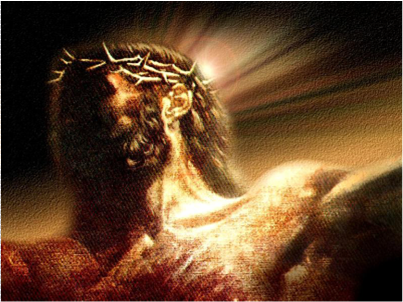
Jesus resolutely set his face toward Jerusalem and walked to the cross. He allowed himself to be beaten and tortured. He allowed them to nail his hands and feet to the blood-soaked wood of that cross. He died willingly. He sacrificed himself. He could have called ten thousand angels. But he died alone. For you and me. That’s what Jesus came to do. The Lamb of God who dies to take away the sin of the world.

Peace,

Allan

Surely Not I

I love the Gospel of Mark because Mark shoots straight with us about the disciples of Jesus. He doesn’t try to cover anything up, he doesn’t try to make the followers of Jesus into something they’re not. Mark tells us straight up: The apostles are shallow, selfish, hard-headed, and, at times, very weak in faith. I don’t know about you, but that gives a guy like me great hope.

When you read Mark from start to finish, you’re never really sure about these guys. They’re constantly teetering between belief and un-belief. Jesus is always on them: You don’t see; you don’t understand; you don’t have any faith; what’s wrong with you?

Will the disciples remain faithful? I don’t know, man, they’re all over the map.

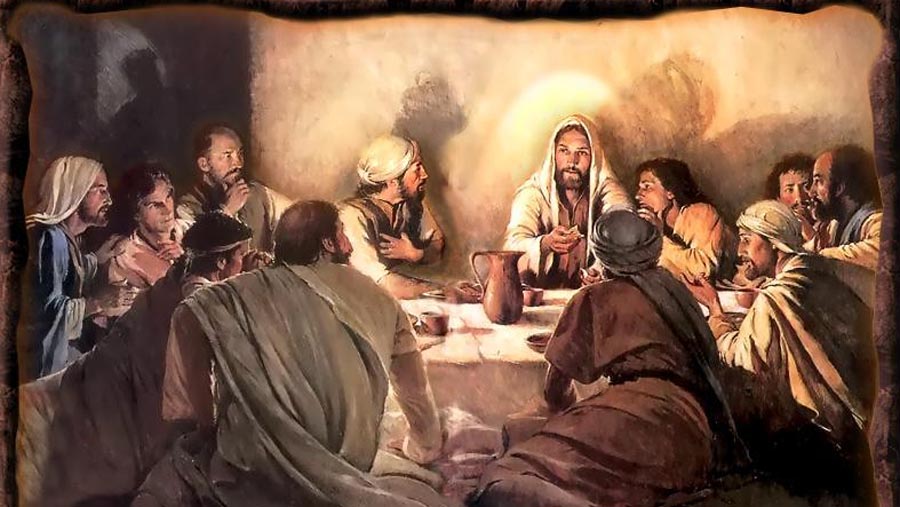
The tension in the Gospel reaches a boiling point at the Last Supper. They all sit down to eat for one of the traditional Passover meals and the very first words out of Jesus’ mouth are: “I tell you the truth, one of you will betray me — one who is eating with me.”

That’s the first thing he says! They haven’t even started on their salads yet!

“One of you will betray me — one who is eating with me.”

They’re all eating together around this common table. It’s like a Corino’s where everybody’s dipping bread into a common dish of oil and herbs. Eating together like this is a sign of solidarity and unity. This is about loyalty and fellowship.

So the disciples are shocked. And one-by-one they say to Jesus, “Surely not I?” Eating and drinking with our Lord and with one another, they look Jesus in the eye and say, “Surely not I?”

The focus is not on Judas here. Judas is not even mentioned. This is not about Judas. This is about all the disciples. This is about us. “Surely not I?”

Every time we come to the table, that should be our questions. We come to the table to receive the benefits of Christ’s death, to experience and share in his forgiveness and his acceptance and our righteous relationship with God in Christ. At the table, eating and drinking with our Lord and with one another, we are expressing our loyalty, our fellowship with Jesus and his followers. At the table, we re-commit to Christ’s way of life.

The question for today and for the rest of the week is: Will we remain faithful? Will we betray Jesus?

Now, we are not perfect. Nobody is but our Lord Jesus. No matter our best intentions, we will occasionally fail. And Jesus knows this. He tells them, “You will all fall away.” But with that word of judgment comes a word of grace. “After I have risen, I will go ahead of you.”

We humbly seek the power to live more faithfully for Christ. We need more strength and resolve to demonstrate Christ-likeness in everything we do and say and think. We recommit this week. We renew our vows to the Lord.

Peace,

Allan

« Older posts Newer posts »