Category: Incarnation (Page 3 of 11)

Both Advents in Titus

There are several Bible passages that mention both the first appearing of Christ Jesus on this earth and his promised second coming, our Lord’s first and last advent, in the same context. One of those passages is Titus 2:11-14.

“For the grace of God that brings salvation has appeared to all people. It teaches us to say ‘No’ to ungodliness and worldly passions, and to live self-controlled, upright, and godly lives in this present age, while we wait for the blessed hope — the glorious appearing of our great God and Savior, Jesus Christ, who gave himself for us to redeem us from all wickedness and to purify for himself a people that are his very own, eager to do what is good.”

Christ’s  1st Coming Saves Us – The grace of God that brings salvation has appeared to all people. God so loved the world that he gave his one and only Son, not to condemn the world, but to save the world, the whole world, all people. Our God comes to us in the person of his son Jesus, God himself appears to us, he appears with us, in order to save us. When Jesus raised the widow’s dead son back to life in the town of Nain, they all said, “God has come to help his people.” When Jesus goes to Sychar and preaches and heals there for two days, the townspeople called him the Savior of the world.

Now Paul says our great God and Savior Jesus Christ gave himself for us to redeem us from all wickedness. We are forgiven of all our sins, we are washed completely clean by his saving blood, and we are purified for God as a people who belong to him, who are his very own. Through the first coming of Jesus and his sacrificial death and his glorious resurrection, we are restored into a righteous relationship with God the Father forever. Christ’s coming brings to completion all the ancient promises that first gave birth to God’s people and ultimately brings his salvation to every part of the world.

Christ’s 2nd Coming Trains Us – While we wait for the blessed hope – the glorious appearing of Jesus. This waiting teaches us. It trains us to live a certain way in this present age. Notice how waiting for the glorious future and living in the not-always-so-glorious present are connected. It’s not that we should focus on his second coming so much that it doesn’t matter how we’re living right now. In the past, one of the criticisms of the Church was that we are too heavenly minded to be of any earthly good. Now, I’m afraid we could be rightly criticized for being too earthly minded to be of any heavenly good. Paul says here, the way we live on earth in this present age, while we wait, is shaped by the reality of what we’re waiting for.

If you’re babysitting for somebody at their house, the reality is that they are coming back. They may tell you they’re not coming back, but they are kidding. They will return to their home. And it’s a good idea to make sure you feed their kids, help put the toys away, get the children to bed on time, and clean up your own dirty dishes before they inevitably arrive. Your behavior in the present is trained by the reality of the future.

Jesus told stories like this all the time. You know the landowner is returning. While you wait for him, don’t just sit on the couch and scroll through Facebook. Put your gifts and abilities to work for the cause. The ten bridesmaids know the groom is going to show up. While you’re waiting, make sure your lights are shining.

The Advent Season is about both: knowing that Christ Jesus has come and he is coming again. Something happened that changed your life and redirected your destiny and altered all of history forever. And it will happen.

Peace,

Allan
To All People

“The grace of God that brings salvation has appeared to all people!” ~Titus 2:11

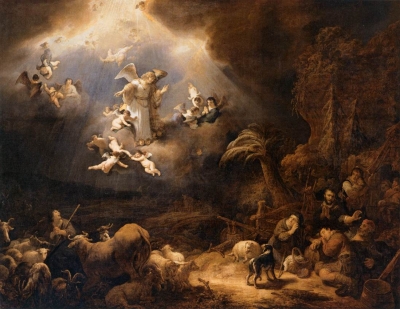
This grace of God, this coming of Jesus, his flesh-and-blood birth as a human baby in Bethlehem — it has been made manifest to all people. This is what the angels told the shepherds the night Jesus was born: This is good news of great joy that is for all the people.

When Jesus is just 2-1/2 months old, Joseph and Mary take him to the temple in Jerusalem where they run into an old man named Simeon. The Gospel says Simeon is righteous and devout and he is waiting. Waiting for the consolation of Israel. Waiting for deliverance, waiting for rescue, waiting for God’s salvation. And the minute he lays eyes on Jesus, he takes the baby in his arms and he praises God.

“Sovereign Lord, as you have promised… my eyes have seen your salvation, which you have prepared in the sight of all people!” ~Luke 2:29-31

Christ has appeared to all people. Simeon is holding a baby, but he sees the saving grace of God.

Anna is there that day, too. She’s an old widow lady, a prophetess, the Gospel says. And Luke tells us she never left the temple. She worshiped there night and day, fasting and praying around the clock. Anna was at church every time the doors were opened. And as soon as the baby Jesus appeared to her

“…she gave thanks to God and spoke about the child to all who were looking forward to the redemption.” ~Luke 2:38

Anna is looking forward, anticipating. Simeon is waiting, waiting, waiting. And they both finally see it in the arrival of Jesus. They see the glorious fulfillment of all God’s promises. Israel was being brought back together as God’s united people because of Jesus. The powerful were being brought down and the lowly were being lifted because of Jesus. Evil would be defeated and the captives would be set free because of Jesus.

God had always promised to comfort and console his people, to protect and provide for his people. God had always promised to rescue and restore his people. Simeon and Anna see it finally coming true in Jesus. And not just for Israel, but for all people. Not just for them, but also for you.

Peace,

Allan

Something Greater to Come

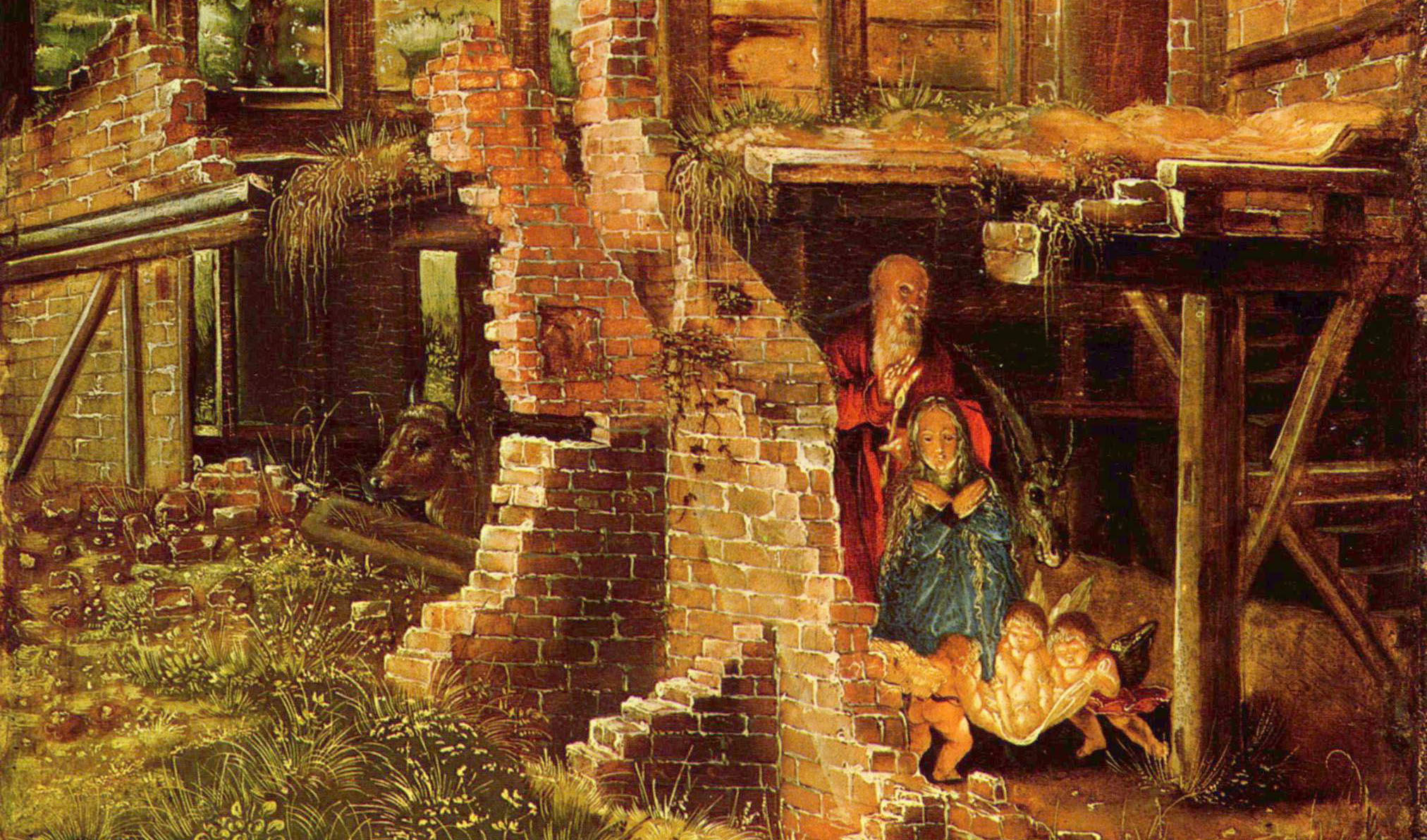
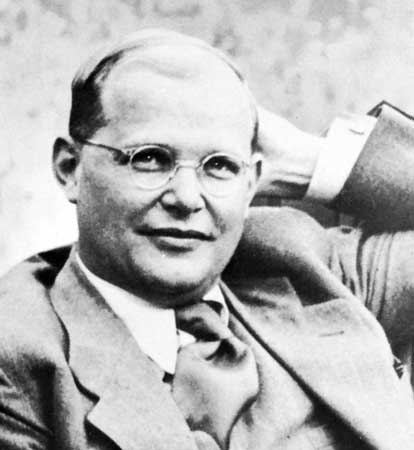
On Advent Sunday, November 28, 1943, Dietrich Bonhoeffer sent a card to his parents from the Tegel Prison in Berlin. He had been arrested by the Gestapo and taken into custody eight months earlier, charged with denouncing Adolph Hitler and the Nazis, for repudiating the German Christians and German churches who were supporting Hitler, for running an illegal underground seminary at Finkenwalde, and for preaching, teaching, and writing for the Confessing Church movement. The front of the card pictured this nativity scene painted by Albrecht Altdorfer in 1511.

In the card, Bonhoeffer describes this painting as his favorite depiction of the nativity.

“One sees the holy family huddled around the manger amidst the rubble of a collapsed house. This is really contemporary.”

I imagine this 450-year-old painting reminded Bonhoeffer of the destruction throughout his home country, the bombed-out buildings in his old neighborhood. This scene could have been painted almost anywhere in Europe in the middle of World War 2. And what Bonhoeffer wrote about it on Advent Sunday 1943 could have been written on Advent Sunday 2020.

“One sees the holy family huddled around the manger amidst the rubble of a collapsed house. This is really contemporary. For the celebration of Advent is only possible to those troubled in soul, who know themselves to be poor and imperfect, and who look forward to something greater to come. We can and should celebrate Christmas despite the ruins around us. In fact, we must do this even more intensely now.”

May our God bless us as we faithfully wait and prepare and anticipate the coming of our Lord Jesus Christ.

Peace,

Allan

Thankful for His Coming

On November 21, 1943, Dietrich Bonhoeffer wrote a letter from Tegel Prison: Life in a prison cell reminds me a great deal of Advent — one waits and hopes and potters about, but in the end what we do is of little consequence, for the door is shut, and it can only be opened from the outside.”

Christ is coming to rescue us from the dark prisons of our own existence. He is coming to deliver us from anxiety, from guilt, from sin, and from loneliness. To be ready for this rescue, we first have to recognize how fully we are enslaved. And, then, how thankful we are for his coming.

Peace,

Allan

Body of Christ: Last Part

I love words. I’m in the business of words. I love to write and I love to speak. I believe words are so very important. I think the world of words. But Jesus was not crucified because of his words. His words are not what changed the lives of broken people, his words are not what united fractured groups, his words are not what turned the world upside down. It was his presence. It was the physical things he did in the body. It was the healing and feeding, the forgiving and praying, the eating and sharing — that’s what got him killed. That’s what altered the course of history forever: his flesh-and-blood presence in the world.

Not words. Words are never enough. That’s why the Word became flesh and lived among us. Words are not enough. So Jesus came here and got dirty with us. He has a body, you know.

The things we say in the safety of our sanctuaries aren’t going to change the world. Abstract truth doesn’t stir anybody’s heart. Theological concepts don’t compel faith or love, even when they’re true. But when that truth becomes embodied, when it’s up close and personal, flesh-and-blood truth, cup of cold water truth, that’s when truth gets interesting. That’s when we know for sure the Kingdom of God is near.

In Luke 3, huge crowds of people are coming to be baptized in the Jordan River to prepare the way for the Lord, so all can see God’s salvation. And the folks being baptized ask John: What shall we do?

John answers: If you have two coats, give one of them to somebody who doesn’t have a coat. If you’ve got food, give it to somebody who doesn’t have any.

Tax collectors are coming to be baptized. What shall we do? John says: Stop stealing from people, stop taking advantage of the weak, treat everybody equally.

Some soldiers are being baptized. What should we do? John answers: Stop using force and threat to get your way, stop accusing people and lying about people.

People are being baptized for the forgiveness of their sins, they’re going into the water for a salvation relationship with God, and the instructions they’re given are not about saying the right words or believing the right things or thinking the right way. The instructions are about doing. The expectation is for real, physical, tangible, concrete, flesh-and-blood actions toward the poor and oppressed; how we act toward the outcast and marginalized, the exploited and weak. Not the words we say in the comfort and safety of our buildings, but the actions we take out there. The real, physical, flesh-and-blood actions in the interests of others — all others! Bold, courageous, Christ-like actions that go against the grain of the world and will cost us our reputations, our relationships, and our resources.

We boldly turn the other cheek and go the extra mile. We faithfully love our enemies and pray for those who persecute us so people can see Jesus. We don’t just act on behalf of people who live inside the womb and might be harmed; we courageously act on behalf of all people living outside the womb who might be harmed so people can meet Jesus. We forgive those who sin against us, we lay down our rights for the sake of others, we stand firmly with the oppressed so the world will know the Kingdom of God is here!

The broken world is sick and tired of the Church’s words, words, words! This lost and dying world desperately needs the real, concrete, physical, flesh-and-blood actions of the Body of Christ, the saving and life-giving presence of our Lord Jesus!

This world will not see Jesus, people will not experience the truth of our Savior, just because we love Jesus or because we admire Jesus or because we believe all the right things about Jesus. The world will see it, they’ll know, when we are the Body of Christ. When we follow him, when we give our lives to him, when we do the things he did in the ways he did them for the sake of all others.

Jesus had a body, you know. And he still does.

Peace,

Allan

« Older posts Newer posts »