Category: Christ & Culture (Page 23 of 45)

Instrument of God’s Peace

Mom70We spent all weekend behind the Pine Curtain in Liberty City celebrating my mother’s 70th birthday. As our children get older and our schedules become less predictable, getting the entire family together is becoming more and more difficult. But it’s always worth it. Dad grilled burgers in the rain, we played football and Frisbee and board games, we ate a ton, laughed a lot, and worshiped together as a big family yesterday morning at the Chandler Street Church of Christ in Kilgore.

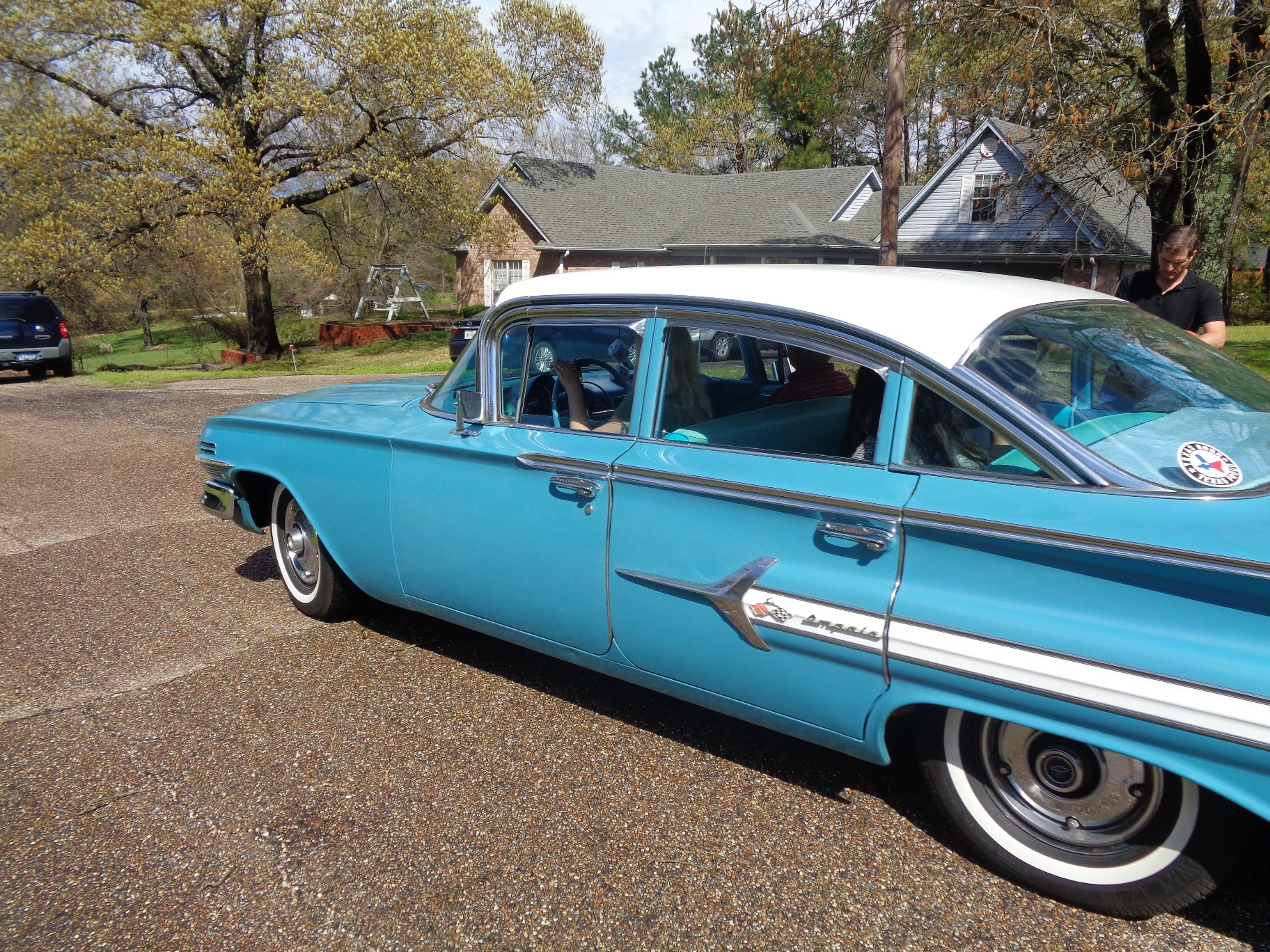
The highlight for Carley was probably getting to drive the Impala. My dad owns a fully restored 1960 Chevrolet Impala that belonged to my grandfather. It’s a beautiful turquoise head-turner: huge fins on the back, wide whitewall tires, rocket-style tail lights, wrap-around windshield, add-on AC, and plenty of chrome. The younger kids all wanted to go for a ride and, somehow, they returned to the house with Carley behind the wheel. I’m not sure how she talked her grandpa into letting her drive, but it was pretty cool.

1960Impala1960Impala2


~~~~~~~~~~~~~~~~~~~~~~~

I received an email from Jerry Taylor last week. Totally out of the blue. Completely unexpected. No context. No explanation. Just a couple of short sentences from a great man of God whom I respect and admire.

“One person has said about the current political season that this is a time of moral reckoning for every American citizen. It can better be said that this is a time of moral reckoning for every Christian in America.”

That was it. Nothing else. Short. Simple. Yet penetrating. And provocative.

ShoutingI wonder about those in the United States who declare themselves to be Christians and, at the same time, are personally and emotionally invested in the race for president. As the shouting grows louder, as the insults become more pointed, as the fear tactics reach ridiculous levels, how do Christians participate in the process without personally joining and even contributing to the rancor of the political campaigns? I’m sure it’s possible; I just wonder how. It seems to me it would be maddeningly difficult.

Is there even one political YouTube video you can recommend that only builds others up without tearing anybody down? Is there even one political email you can forward that only encourages people without insulting or disparaging others? If you put a candidate’s name on the back of your car, are you telling everybody that you agree with that candidate’s position on everything and that you stand by his or her tactics? It must be really difficult for a Christian to engage this thing and still hold true to our calling as ambassadors for Christ.

I’ve been thinking about the opening lines of an ancient prayer that’s been attributed to St. Francis. The prayer petitions God to empower the one praying to be an instrument in the world of God’s peace. The one praying is asking God to work through him to show the world a different way

Lord, make me an instrument of thy peace;
where there is hatred, let me sow love;
where there is injury, pardon;
where there is error, the truth;
where there is doubt, the faith;
where there is despair, hope;
where there is darkness, light;
and where there is sadness, joy.

I’m sure I’m not the only one who’s getting the forwarded videos and emails, who’s thrust into the conversations at meal times, who’s bombarded with the rhetoric while waiting in line at Wal-Mart or while I’m getting my oil changed. How do you answer that hateful email? How do you reply to the mean-spirited video? How do you respond to the insults that disparage entire groups of people?

What it requires is discipline. Diligence. A refusal to join the rage. A commitment to combat the evil with love and grace. A constant awareness. A continuing asking of the question: Am I acting as an instrument of God’s peace?

Christians have to be intentional about sowing love where there is hatred. We must carefully choose words that build up, never injure; we must speak to forgive, never to hurt. We have to look through the lens of Christian hope in the face of so much despair. We must be full of joy when so many around us are filled with hate. And it’s not going to happen accidentally. We have to do this on purpose.

Peace,

Allan

The Counter Cultural Way

JesusPraysInPainThe Word of God confronts us with two ways. The Law and the Prophets, the Psalms and Proverbs, the Gospels and Letters all present us with the choice of two ways. It’s not where you’re going to live or what career you’re going to pursue or who you’re going to marry or where you’re going to eat. The choice given us in Scripture certainly encompasses and impacts all the daily choices we make while we live in those places with the people we marry and in the work we do and while we’re eating lunch. But there’s only one choice in the Bible: the way of life of the way of death; the way of blessing or the way of curses; the way of God or the way of the devil.

Jesus says, “I am the Way.” I am the Way to God and I’m also the way God comes to you. I’m a two-way Way. And so we choose Jesus. And when we choose Jesus, what is it specifically that we’ve chosen? What are we signing up for when we say “Yes” to Jesus?

Well, the Gospels tell us plainly that Jesus’ Way is counter cultural. Popularity and power mean just about everything in our society, but popularity and power mean absolutely nothing to our Lord. In the Gospels, it looks like Herod has the power. The governing officials in the Roman Empire have all the power. So the Roman soldiers. The religious leaders have a lot of power. The chief priests and teachers of the Law and the Sanhedrin wield plenty of power. And all of these people and groups seem to have their way with Jesus. Jesus is the lowly servant who’s despised and rejected, beaten and crucified. Cursed by God and man.

But remember the centurion clearly sees the truth when he sees how Jesus dies: “Surely this man was the Son of God.”

Jesus’ way is upside down. It’s counter cultural. Our default, though, is the pursue the ways of the world. As disciples of Jesus individually and as churches of God collectively, we’re not very careful with this. Without even thinking about it, we embrace and adopt the ways of the culture. We imitate the ways used by powerful people who run large companies and corporations, high profile people who lead political parties and nations. By threat and force and power; with money and might; by out-yelling and out-insulting others; by demonizing those who disagree with us; by walling ourselves off from anyone who may do us harm. And we don’t even consider that those ways are totally at odds with the way of Jesus.

We see accomplished men who’ve achieved great success by using these worldly methods and we make them elders of the church. We make these guys preachers of the Word. Whatever the culture decides is exciting and successful and influential, whatever gets things done, whatever will gather a crowd.

We usually have to take four or five different looks at guys whose main character traits are gentleness and humility before we consider them for leadership roles — if we even look at those kinds of guys at all. Shouldn’t the man who lives only to serve others be moved to the top of the list? Shouldn’t the guys who consider the needs of others more important than their own, the guys who refuse to advance their own agenda, the guys who you’ve never heard say one bad thing about anybody else, shouldn’t they be the frontrunners for leadership positions in our congregations? Shouldn’t they be the ones to set the tone in our churches?

Peace,

Allan

Saying “No” to the Good Ol’ Days

Demolition update from the west parking lot at Central Church of Christ: two buildings down, one to go.

MadisonApts4MadisonApts5MadisonApts6
MadisonApts7


VotePinAs the Super Tuesday voting frenzy continues — on the streets of Amarillo, along the crawl at the bottom of my laptop screen, on the TVs at the Chinese food restaurant — I’d like to consider aloud a question posed by Philip Yancey in his 1999 work The Bible Jesus Read:

“Is it possible that God permitted the entire tragic experiment of Israel’s nationhood in order to prove a point about the visible kingdom — any visible kingdom? Solomon, with every advantage of wisdom, power, and wealth — all good gifts from God — led his nation to destruction. Did God grant Solomon those advantages in order to put to death illusions and thus prepare the way for a new kingdom?”

David had every blessing of God’s strength. He possessed great military might and strategic power. He conquered foreign lands and expanded Israel’s territory. Every enemy Israel ever had surrendered to David’s kingdom. Solomon after him had every blessing of God’s wisdom and peace. Great building programs. Wonderful economy. Peace. And it all failed. It collapsed. It was destroyed.

All kingdoms of this world are built on strength and power, on wealth and force, violence and intelligence. Yet even at their very best, they all fail. History has proven this over and over again.

Yancey continues:

“A later king — one greater than Solomon, he claimed — established his rule instead among the lame and poor and oppressed and ritually unclean. He belittled Solomon’s glory by comparing it to that of a common day lily. He offered no rewards other than the prospect of an executioner’s cross.”

Consider that the Jews in Jesus’ time were clamoring for a return to the good ol’ days. They wanted a Davidic King who would restore the nation back to the days when they were in charge, when they submitted to no one, when their enemies bowed to them, when the differences between them and everybody else was clear. They were hungry for a return of their nation to Solomon’s splendor, when peace was protected by the world’s biggest army, when religion reigned in fancy robes under the magnificent national temple, when everybody had plenty of what they wanted.

Jesus said “No” to that. Clearly.

Even after he was brought out of the tomb by God’s Holy Spirit, the disciples were still asking, “Are you going to restore the kingdom now?”

I hear Christians today clamoring for some return for the United States to some long ago glory days when followers of Jesus were in charge. Christians made the rules, I hear. Christians set the tone, they say. Christians had the respect, the power, the influence. Our churches were full and the laws of the land reflected our Christian will. That’s what they say. And, apparently, that’s why they vote. For the good ol’ days of Bush. Or Reagan. Or Solomon.

The good ol’ days were never ever ever better than David’s and Solomon’s. Those were the very best of anybody’s good ol’ days. And Jesus said “No.”

The kings of Israel who followed Solomon did not learn. The disciples who followed Jesus did not learn. What about us?

Peace,

Allan

Seeing God’s Plan at the Cross

“When the Centurion who stood there in front of Jesus, heard his cry and saw how he died, he said, ‘Surely this man was the Son of God!'” ~Mark 15:39

JesusCrossShadowsWhen we see how Jesus dies, we see very clearly the way God is going to save the world. We see how God is going to transform the world and win the victory.

Politicians are not going to save the world. Platforms and promises are not going to change your country. This country and this world are not going to be won by votes or armies or power or partisanship. Only our God in Christ can save the world — God alone!

And his way is the way of death. His way is the way of suffering and sacrifice and service. His will is to change people and save people, not by force or through threats, not out of anger or with an attitude, but with humility and love and forgiveness and grace. And peace.

This world will change, not when more Christians vote, but when more Christians serve. This country will change, not when Christians get their man or woman in the White House, but when Christian men and women get suffering and sacrifice in their hearts. This world will change, not when the Church is in power, but when the Church is persecuted for righteousness’ sake and suffers for doing good. This country will be changed, not when our enemies are shot and bombed and destroyed, but when our enemies are forgiven and prayed for and loved.

We see clearly only through the lens of the cross.

Jesus blessed those who cursed him; he taught those who ridiculed him; he did not resist those who told lies about him and beat him; he loved those who spit on him; he forgave those who killed him. That’s the “way.” That’s what’s going to save the world.

Peace,

Allan

Evangelicalism or Christianism?

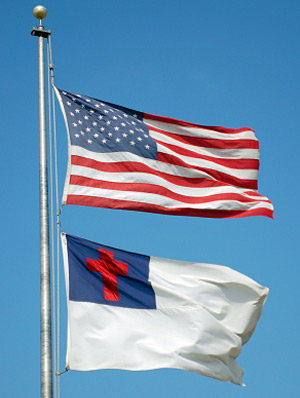
FlagsI shudder whenever I hear someone I know use the word “evangelical” to describe themselves or their church. The word has been used to describe the Churches of Christ, it’s been used to describe Central, and it’s been used to describe the partnership between the four downtown churches here in Amarillo.

But it’s not a religious term anymore. It’s not even a Christian term anymore. It hasn’t been for a while. It’s been misused and re-defined and hijacked by the politicians and the media in the United States for so long now that it’s become a purely secular word. I refuse to use the term to describe myself or any branch of God’s Church. Last week I regrettably took a phone call from a pollster who promised a three minute questionnaire who badgered me into labeling Central either “evangelical” or “mainstream.” I told him over and over that we reject both labels.

For the past several years it’s been clear to me that the word “evangelical” actually means Christians who want to use the cause of Christ to validate their own un-Christ-like methods to win elections and change laws and force their values and beliefs on others. Using the term “evangelical” ties you and me and your church to the politics of the groups who use fear and force and ugly language to get their way.

I’ve had a difficult time articulating this in a concise way (those of you who read or listen to me regularly might say that particular problem is not limited to this topic). But last week a good friend of mine forwarded me an article written by Skye Jethani that does it very well.

Skye reminds us that in 1989 David Bebbington identified four characteristics that defined evangelicalism:

Biblicalism: a high regard for the Bible
Crucicentrism: a focus on the atonement of Christ through the cross
Conversionism: a commitment to proclaiming the gospel
Activism: a belief that the gospel should change one’s life and the world

That sounds right. That sounds like me. It sounds like my church and probably you and your church, too. But, wait. A majority of African Americans are “evangelicals.” They believe and practice everything that represents the true definition. But because African Americans vote heavily for Democratic candidates, the media will not refer to them as “evangelicals.” The term is purely political now. “Evangelical” means Republican. “Evangelical” means guns and lower taxes and immigration reform and repealing Obamacare.

There are lots of reasons this matters so much. But one of the reasons summarized by Jethani — this reason is discussed at length in every “unchristian” and “You Lost Me” type of book that’s been written in the past fifteen years — is that our young people now identify traditional Christianity with right wing American politics. Young people are not leaving the Church because they reject Christ Jesus as Lord, they’re leaving the Church because they reject the angry politics that seem to go along with it. Jethani rightly notes that “those raised in the evangelical tradition under the age of 40 have no experience of Christianity apart from conservative Republican politics.” Millennials, a couple of generations younger than me, now associate “evangelical” with Donald Trump, Ted Cruz, Sarah Palin, and the NRA.

A dozen years ago, Andrew Sullivan attempted to coin a new word to describe this: Christianism.

“I have a new term for those on the fringes of the religious right who have used the Gospels to perpetuate their own aspirations for power, control and oppression: Christianists. They are as anathema to true Christians as the Islamists are to true Islam.”

What Sullivan saw as a fringe minority then has sadly become almost mainstream today. That Christians can show such foam-mouthed enthusiasm for somebody like Donald Trump is flabbergasting. To quote Jethani:

“There is almost nothing in Mr. Trump’s character, story, agenda, or candidacy that finds alignment with Scripture, the cross, the gospel, or personal / social transformation (Bebbington’s evangelical markers in simpler terms). However, his ‘Make America Great Again’ slogan, along with his maligning of women, immigrants, and all ‘losers’ while triumphantly holding up a Bible, fits Christianism perfectly. Trump, unlike the increasingly unpopular voices of orthodox evangelicalism, is giving the people what they want — a gun wielding, aggressive, capitalist Jesus who builds walls and kills terrorists.”

It’s a good article. I wish you would read it.

And, look, you know my position on all this. Every Christian who votes in these national elections are voting for the lesser of all the evils. Most Christian voters will admit it. We’re not looking at one good party and one bad party. It’s not one party is righteous and one party is evil. It’s one big evil worldly system. The whole system is opposed to the name and manner of Jesus. The whole system is coming down when our true King returns to reign in all his power and glory. So, vote if you must, but don’t act like your campaigning and voting for these politicians is some act of holy righteousness or will of God. In his last speech last night, Ted Cruz told his supporters at a rally in Iowa to “caucus tomorrow for righteousness!”

Yuk.

The United States is not going to be changed by votes or parties. It’s not going to be saved by force of numbers or force of rhetoric. It’s going to be saved by Christ Jesus along with the rest of the world. And his way is about love and forgiveness, sacrifice and service. And peace. Let your Christianity be defined by those things. Let your congregation be characterized by those things. “Evangelical” and “Christian” are not the same thing anymore.

Peace,

Allan

Bad Investment

TacoBueno

There’s an old Taco Bueno at Bell Street and I-40 here in Amarillo, just a couple of miles from my house. And it’s got death written all over it. The paint is peeling and the window blinds don’t work. They don’t replace the light bulbs on the inside or the outside. I’ve been there twice when they’ve told me they’ve run out of taco meat. There’s never anybody in the drive thru. When we eat inside, there’s usually only one other person or couple in there eating with us.

There used to be three Taco Buenos in Amarillo, but now there’s only one. With the Fuzzy’s Taco and now the third Rosa’s location and the unexplainable local obsession with Taco Villa, this last remaining Taco Bueno is in trouble. The first one closed about five years ago, the second one about two years ago, and this last one closest to my house just feels doomed. It’s right on the interstate, it’s in the busy southwest part of town, and it’s got a big parking lot. But it just feels like it’s not going to make it.

I wouldn’t invest anything in this Taco Bueno. I pull in from time to time to grab a couple of beef Muchacos on the way to a meeting. It’s a nice place to stop on the way home when we don’t feel like cooking. But I wouldn’t put any of my money or energy into that place looking for some kind of long term return. It’s not going to last. It’s dying. It’s a bad investment.

StripMall

I’ve seen strip malls that have death written all over them. One nail salon, one computer repair store, and a dozen empty windows and store fronts. Weeds in the alley, broken glass on the sidewalk, one car in the parking lot. Would you invest in that strip mall? No. It’s not going to last. It’s dying. It’s a bad investment.

Why are you investing so much in the upcoming presidential election? Why are you expending so much of your energy into it? Why does it seem your very identity is wrapped up in who wins and who loses? Why are you pouring your money into it? Why are you giving so much of yourself to this campaign season and election? Your thoughts, your emotions, your feelings, your very heart and soul — why are you investing so much of yourself into the government of this country and the people who run it?

It’s not going to last. It’s dying. It’s a bad investment.

Politicians are not going to save this country. Policies and laws, platforms and promises are not going to change this world. Political power and parties and polls are not going to change a thing. This country and this world will not be won by votes or armies, by policies or partisanship, by sound strategies or brutal violence. Our Lord Jesus, our risen and coming King, is the only One who will save anything. He alone can change the world.

His politics are love and humility. His policies are service and sacrifice. His way is about mercy and grace and forgiveness and peace.

Christ Jesus is right now today overtaking and overthrowing all the world’s governments, including that of the United States. His reign will ultimately prevail. His rule will eventually win the day. All the governments of this world, including that of the United States, are not going to last. They’re dying. It’s a bad investment.

Why not invest your money and your time and energy into the politics of our King, which are completely opposite of and opposed to the politics of this world? Instead of wrapping your identity in the cloak of a donkey or an elephant, instead of hanging your hopes on a party or a politician, why not give yourself wholly to our Lord and his policies of love and peace? It’s the difference between a bad investment and a good investment.

Peace,

Allan

« Older posts Newer posts »