Category: Christ & Culture (Page 17 of 45)

People Are Not Seeking God

We know what we believe about God’s salvation work in Jesus. We ask for an increased faith to believe even more what we know is right and true about our Lord’s mission to save the world. But some of us have stopped talking about it. We haven’t stopped believing, we’ve just stopped talking. and in the Bible, believing is talking!

I wonder if there are things we need to stop believing. Are there things we hear every day and believe and pass on to others as truth that really are not true at all? And can those things we believe act in our heads and our hearts to shut down our Christian witness?

There are at least five things that a lot of Christians take for true these days that simply aren’t. We’ve already looked this week at The Church Is In Decline and The Church Is Irrelevant. Today, let’s consider the statement “People in our culture are not seeking God.”

It’s not true.

Yes, we do live in a pluralistic, post-modern, post-Christian society now and there’s no going back. Denominational loyalties are dissolving, Christianity is no longer viewed as the exclusive way to God, and truth is no longer an eternal reality as much as it is something each person determines for himself. There are more skeptics and agnostics and atheists in this country than there ever have been before. But that doesn’t mean they’re not searching. They’re all searching! Everybody’s seeking! And there’s tremendous potential here for God’s Church.

The research is beginning to show that we’re on the front edge of a backlash against all the pluralism and individualism in the U.S. We’re discovering, as a people, that living in a world without universal truth is a terrible way to live. We’re learning that addiction to our screens and ear buds isn’t healthy — it’s doing real damage to our relationships and communities. And people are looking for something else.

They’re searching for a meaning outside themselves. They’re seeking a purpose higher than their own careers and entertainment, they’re looking for something more important and longer lasting than their own posts and tweets. People today are starting to recognize the noise and the clutter for what it is and they’re looking for something real. They’re seeing the failures of our politicians and institutions and they’re looking for something genuine. Something they can trust. People are open to it. People are seeking. And that gives the Church an exciting opportunity.

What if we’re not on the wrong path? What if we’re just a little bit tired? What if we’re on the right track, we’re just a bit weary? What if the message of the Gospel — I’m stretching out on a limb here — and even the heart of our restoration ideals are actually gaining steam in this country?

Simple worship instead of a concert. Lots of local ministry in our own community. More frequent Lord’s Supper. Baptism by immersion. A return to the Bible. A depth of discipleship. You know, all of that is actually appealing now to folks who are burned out by all the pluralism and technology. An emphasis on the weightier matters of mercy and love, justice and forgiveness and grace — these are the very things that can inspire the world!

We must believe that people in our culture today are certainly seeking God. And, even if they weren’t, we know for a fact that our God is seeking them.

Peace,

Allan

The Church is Irrelevant

This week I’m posting a list of five things we Christians need to stop believing in order to be more effective Gospel proclaimers in our communities. These are things we hear all the time from seemingly endless sources and pass them along as truth among ourselves. I’m of the conviction that believing these falsehoods is damaging to our Christian witness. Believing these things that just aren’t true has the potential to shut us down.

Yesterday we looked at The Church is in Decline.

We also need to stop believing The Church is Irrelevant.

We hear that the Church doesn’t know what’s going on in the world, that the Church doesn’t have an impact on anything that’s happening outside its own walls. Wrong answer! Don’t believe it!

The churches right now today are rebuilding Houston. God’s Church is rebuilding all the areas of South Texas that were devastated by Hurricane Harvey. Not the government, not the Red Cross, not the insurance companies — they all left a long time ago! The churches are rebuilding the homes and restoring hope to those families God’s Church was first on the scene and God’s people will be the last ones to leave.

Disciples of Jesus provide free health care to the poor. God’s Church provides shelter for the homeless. Followers of Christ feed the hungry kids and furnish the transitional houses and train the unwed mothers. God’s Church builds the schools in Kenya and operates the clinics in Guatemala.

Christians understand the physical, incarnational aspects of salvation and they always have. In the early days of the Church, the apostles healed the blind and the crippled and fed the poor. In the first 150 years of American history, God’s Church established 90-percent of the colleges and built 100-percent of the hospitals.

Living in the middle of a world, in the middle of a culture, that resists Christ and his Church, living in a society that rejects salvation from God in Jesus, we need to believe the Good News. We have to believe that God lives in us and his Son is our Lord. And we must believe that God is powerfully at work through his people to heal the sick, to restore the broken, to feed the hungry, to clothe the poor, the comfort the hurting. We must believe that, like he always has, God continues to work today in and through his Church to take care of the most basic and fundamental needs of a broken world.

Remember, the Romans during the second and third century plagues and pandemics marveled at how the Christians took care of, not only their own, but all of their community’s sick and dying. Roman historians wrote about it — at great personal risk, disciples of Christ ministered to the sickest and poorest among them. That hasn’t changed.

God’s Church is irrelevant? I don’t think so.

Peace,

Allan

Stop Believing!

We know what we believe about God’s salvation work in Jesus. We believe our Lord Jesus is raised from the dead and is reigning today at the right hand of the Father in heaven. We believe that God’s salvation comes to us by no other name. We’re very clear on the things we believe. We ask for an increased faith to believe even more what we know is right and true about our Lord’s mission to save the world. But some of us have stopped talking.

We haven’t stopped believing, we’ve just stopped talking.

I wonder if there are things we need to stop believing in order to start talking again.

Are there things in our heads and our hearts that we believe to be true that really aren’t? And do those false things we believe contribute to a church culture where we don’t talk about Jesus with others the way we used to? The things we hear and the things we pass on that aren’t true — we start to believe those things the more we hear them — have the potential to compromise or completely shut down our witness. What are the things we need to stop believing so we can be more effective proclaimers in our communities?

I’ve come up with five things I believe faithful Christians need to stop believing. We’ll take one every day this week.

The first non-truth we have a tendency to believe is that God’s Church is in decline and it’s getting smaller and weaker.

We hear it, we read about it,  and we repeat it. But it’s simply not true. Yes, the church in America is declining in membership and attendance. The Churches of Christ in this country are losing numbers at an alarming rate. It’s undeniable. But I wouldn’t call it smaller and weaker; I’d call it smarter and stronger.

Think about this. The culture in this country has changed. Fifty years ago you had to be a regular church-going Christian to be viewed as a good citizen. Being a Christian and being an active member of a church helped you in business, it helped you develop contacts, it raised your statue in the community and improved your reputation. Church is where you met people and built relationships that were beneficial to you. The American society propped up the church. Gas stations and retail stores were all closed on Sundays. Teachers never assigned homework on Wednesday nights. And there weren’t any school functions or practices or games on the first day of the week. The culture encouraged church. If you didn’t go to church fifty years ago it was weird, it raised questions: Why doesn’t he go to church? So most everybody did.

Maybe you’ve noticed. That has changed.

Our culture today doesn’t care if anybody goes to church or not. It doesn’t matter anymore in our society. It doesn’t hurt your business, it doesn’t impact your social standing, it doesn’t bother anybody if you don’t go to church. In fact, we’ve moved so far the other way, it’s kinda weird if you do regularly go to church: I think that guy’s kind of a fanatic.

The result of this is, yes, fewer people are going to church. But here’s the way I see it: The nominal Christians, the barely Christians, the ones who were only in church because the society pushed it — they’ve left. But the truly committed Christians, the all-in followers of Jesus, are more committed to Christ and his cause than ever before. As the numbers go down, the dedicated disciples of Jesus are gearing up. They’re giving more, they’re volunteering and serving more. The church is not getting smaller and weaker, the church is getting leaner and meaner, smarter and stronger, better equipped and prepared to what we are ordained by our God to do.

Look at our situation here at Central in Amarillo. This is a 110-year-old church and our weekly attendance is smaller right now than it’s been in 60-70 years. We’re half the size we were just 40 years ago. And we notice it. We walk into our worship center on Sunday mornings and we feel it. We wring our hands and exchange worried looks with other members: What’s happening? What’s wrong? What’s going on?

Well, here’s what’s going on at Central: This church is regularly today giving more money to the causes of Christ than it’s ever given before in its history; by God’s grace we’re doing more Gospel ministry in the city of Amarillo and more Christian mission all around the world than we’ve ever done in Central’s history. Ever! How is this happening? The culture has shifted. The take-it-or-leave-it Christians are leaving it and the truly dedicated disciples are doubling down. That’s the only way to explain it. And I think it’s actually pretty exciting.

It’s especially thrilling when we remember that this is historically God’s preferred method.

Gideon brought 32-thousand men into the presence of God and said, “We’re ready to fight the Midianites!” Our God wouldn’t even give Gideon the battle plans until he had whittled that number down to 300.

It was young shepherd boy David, not super tall King Saul who took down Goliath.

God told his kings not to count the numbers of people, not to measure the size of the armies. When the kings counted heads, they got in trouble with God.

God’s preferred method is to use five little rolls and a couple of fish to feed five thousand. He likes to use a tiny mustard seed to provide shelter for all the birds of the air. When God’s Church is exploding onto the scene in Acts, the leaders of the faith are described as “unschooled and ordinary men.”

The Church is not in decline. God is weeding us, he’s sifting us, he’s pruning us, he’s getting us ready for something truly spectacular in his Kingdom. We’re not getting smaller, we’re getting leaner and meaner for the mission.

Peace,

Allan

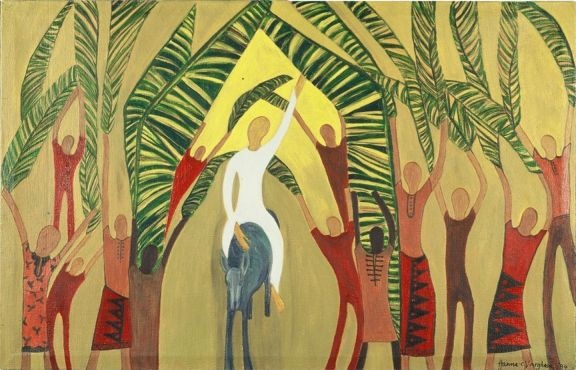
On a Donkey

“See, your King comes to you, gentle and riding on a donkey.” ~Matthew 19:5

In some ways, and maybe in ways we don’t fully understand, we act like Jesus is going to serve our national or political or economic hopes and dreams. We wave our palm branches and behave like Jesus has come to establish a really great worldly kingdom that reflects all my beliefs and convictions.

Several years ago a gay lobbyist in the Presbyterian church  was fighting for the ordination of gay priests. And this was his main argument: Jesus loved everyone and today he would stand with the gay community, affirming its rights in society and the church; anyone who does not stand with us stands against Jesus.

My blood boils when I hear stuff like that: the use of a political movement or a political agenda to judge another’s discipleship to Jesus. Now, it’s really easy to use that illustration and condemn it as a sinful misuse of the name of our Lord and the Kingdom of God. But can we consider for just a minute how we might do the same things?

All Christians have to vote Republican because Jesus is against the gay marriage position of the Democrats.
All Christians have to vote Democrat because Jesus is against the war policies of the Republicans.
No, the Church has to support Republicans because of Jesus’ teachings on the abortion issue.
No, the Church has to support Democrats because of Jesus’ teachings on the gap between the rich and poor.

If we’re going to think and talk like this, we may as well pull the palm branches out and start waving them. This kind of thinking and acting and talking forces God’s people to choose between the lesser of two worldly evils. Jesus did not come so we could create a better version of the kingdom of the world, he came so we could be part of an entirely new and eternal Kingdom of God. Jesus is not a way for us to get our way nationally or politically or socially or economically. He won’t be used that way.

The Holy One who comes to Jerusalem comes as the King of the entire world and he suffers and dies for all people. His people are not tied to any one nation. His love and salvation reaches beyond all borders of nation and language, culture and race.

Jesus is not going to be President of the USA. One, he’s not running. Two, you wouldn’t vote for him if he did.

Think about Jesus’ platform. Sell all that you have and give to the poor. Love your enemies. If Jesus had bumper stickers on the back of his donkey, they would say, “Be Last!” “Vote for Me and Die!”

Jesus doesn’t come with T-shirts and stickers and buttons and a hundred million dollar campaign. He doesn’t save the world with armies and markets and policies. He saves the world through sacrificial love and suffering and service and grace.

He rules with a towel, not a sword.

And when we finally decide to follow him, we find ourselves descending to greatness. It’s a Kingdom of downward mobility, where those who give up their lives find them. Where the last are first. Where those who die, live forever.

Peace,

Allan

Baptism: Identity in Christ

Ephesians 2 tells us who we used to be and, now that we’ve been baptized into Christ, who we are.

This is what you were: dead; this is what you are now: alive with Christ!

This is what you were: following the ways of the world; this is what you are now: raised up with Christ and seated with Christ at the right hand of God!

This is what you were: objects of divine wrath; this is what you are now: saved!

1 Corinthians 9 affirms that we are cleansed and made pure from our many sins, we are set apart and dedicated to the holy God as belonging to him, and we are declared righteous in God’s eyes “in the name of the Lord Jesus Christ.”

“Jesus is Lord.” Romans 10 tells us that’s the Christian confession. “Jesus is Lord.” 1 Corinthians 12 says that’s how we worship. Philippians 2 says on that last day every tongue in heaven and on earth will declare “Jesus is Lord!”

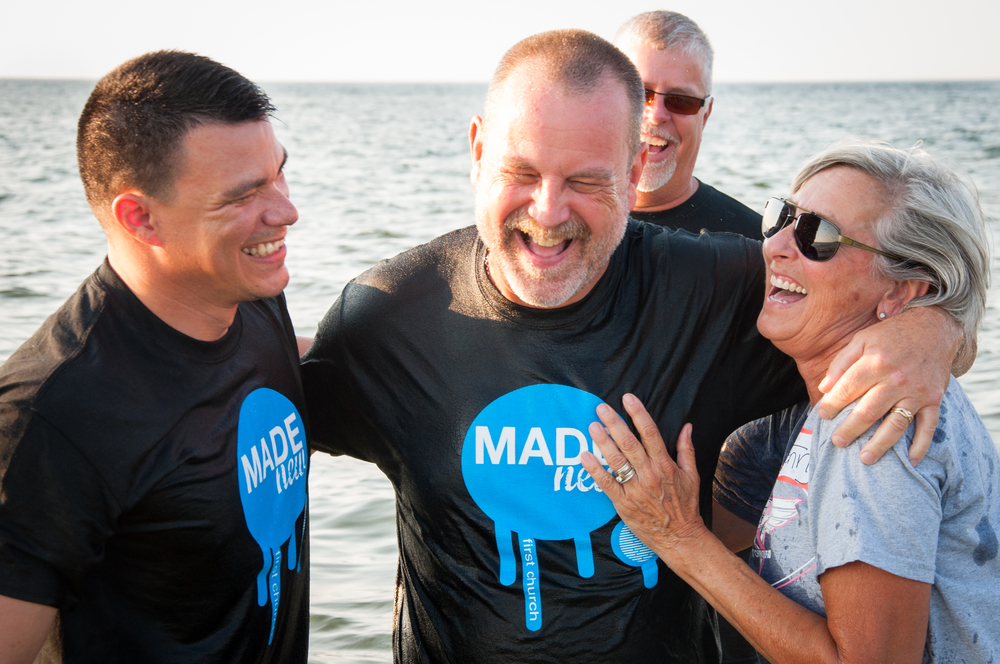
But we first say “Jesus is Lord” at our baptisms. And to say Jesus is Lord is to say Caesar is not. To say Jesus is Lord is to accept a brand new identity as his servant and to affirm that the shape and direction of my life now lays wholly within his power. I belong to him. I no longer live. The Lord Jesus lives in me and through me. Baptism is that moment of transfer. By faith, the waters of baptism move you from sin and separation from God to forgiveness and communion with God. By his love and grace, baptism transfers you from an outsider to the Kingdom of God to an insider with all the privileges and benefits. It’s a brand new way of life.

“He has rescued us from the dominion of darkness and brought us into the kingdom of the Son he loves, in whom we have redemption, the forgiveness of sins.” ~Colossians 1:13-14

A few verses later, Paul says all of you who have been baptized into Christ have clothed yourselves with Christ. In baptism, there is an exclusive devotion to Christ Jesus as Lord. Our loyalties are not to the fading kingdoms of this world but to the eternal Kingdom of our Lord. Our priorities are not in the interests of this world’s structures and institutions but to the missions and goals of our God.

Our very identity is rooted in what God has done for us in Christ. And we’re given that new identity in baptism. But our increasingly fractured and polarized culture is exposing our primary identities. It seems that we identify with our nation and national politics, race and socio-economic groups first and then our Christian beliefs and practices are filtered through those identities instead of the other way around. We struggle to identify first with our Lord and his ways and then filter our national and political and race and group beliefs and practices through that.

Whatever the issue — immigration, race relations, tax reform, gun control, war, abortion, social security, gay rights, Obamacare, the environment, the construction on the bridge at I-40 and Bell — my first instinct is to view it and talk about it through the lens of my political affiliation or my race or gender. How should a Republican feel about that? How would a Democrat talk about that? How might a patriotic American deal with this? How does a white guy, how would a black woman, how does a conservative say this? How does a liberal view this?

Our priorities are out of whack. Our identities are compromised. We think first as Republicans or Democrats, as Texas Tech of OU, and not first as baptized disciples of Jesus. Our positions are solidified and our decisions are made through the lenses or our race or zip code or voter registration card and not first and foremost by our identity as baptized followers of the crucified and risen Christ.

“You have been given fullness in Christ, who is the head over every power and authority… having been buried with him in baptism and raised with him through your faith in the power of God, who raised him from the dead… God made you alive with Christ. He forgave us all our sins… And having disarmed the powers and authorities, he made a public spectacle of them, triumphing over them by the cross… Since you died with Christ to the basic principles of this world, why, as though you still belonged to it, do you submit to its rules?” ~Colossians 2

Now, I think all Christians in America have dealt with this for 242 years — we’re no different. Our divided and polarized society is just exposing it in more obvious and disappointing ways. I do know our Christian impulses are good and holy. It’s deep inside us, it’s in our DNA to serve others, to sacrifice for the sake of others, to view the needs of others as more important than our own, to do things the Jesus way and not the world’s way. The impulse is there. So is the desire. But the follow-through is becoming more difficult because our culture is telling us to do the opposite.

“Since, then, you have been raised with Christ, set your hearts on things above, where Christ is seated at the right hand of God. Set your minds on things above, not on earthly things.” ~Colossians 3:1-2

Remember your baptism, the Bible says. Remember where you were. Remember who was there. Remember how you felt when you came up out of the water. Remember the spiritual experience and claim all the spiritual resources you received that day.

“For you died, and your life is now hidden with Christ in God. When Christ, who is your life, appears, then you also will appear with him in glory.” ~Colossians 3:3-4

Baptism is a touchstone moment for followers of Christ Jesus. It’s an event that embodies the faith and participates in the Gospel. But it’s also a definitive moment in time that we can reflect on for strength. Dying and rising with Christ. Putting off and putting on. Living this life under his exclusive lordship. Putting off and putting on. Every day. Dying and rising. Romans 13 says clothe yourselves with Christ and stop making room for sin.

We have a new identity. We have a different worldview. We see things differently. We see people differently. We know God’s work is not complete in me or the world, but we know it’s begun. If anyone is in Christ: new creation! The old has gone, the new has come! Baptism doesn’t just symbolize new life, it actually gives us a new identity. It doesn’t just symbolize our washing, it actually empowers a new way of living by the Holy Spirit. It not only symbolizes a break with the fallen world of sin and death, it delivers us into a brand new creation and a new world view.

If you’ve been baptized, God wants you to see yourself as one with Christ and united with all his people. God wants you to consider yourself as under the lordship of Jesus with new priorities, new goals, new methods and practices, new Holy Spirit power to live for his Kingdom.

If you’ve never been baptized, let me ask you: Why not?

Peace,

Allan

Silence Is Not Approval

I’ve been in more than a couple of conversations lately with Christian brothers and sisters who claim that Confederate flags and statues were never a problem for anybody until the national media began inflaming emotions and generally riling folks up. African-Americans didn’t care about the statues until only lately, black people weren’t bothered by the flags until recently.

How do they know?

Because they never heard anything different. Nobody ever said anything about it. Nobody complained. Nobody made any noise.

My response to that line of reasoning, that black people were not / are not bothered by the Confederate symbols because they did not/ do not complain, has been to attempt to persuade my brother or sister to see the situation from the viewpoint of the African-American.

How do we know unless we’ve been in their shoes? How do we really know?

What if a middle-aged black man walks past the Confederate statue in Elwood Park here in Amarillo every evening on his way home from a lousy job? Maybe his great-great grandfather was a slave in the South. Maybe his grandfather and his father spent their lives in and out of work, on and off welfare. Maybe none of them graduated high school, much less went to college. Maybe he feels the structures and systems in this country keep pushing him down. Maybe he feels oppressed by a government and by a society that has never given people like him a fair shot. He sees this statue every day, his kids attend Robert E. Lee Elementary School in their mostly black neighborhood, there are Confederate flags flying out the backs of pickups from Pullman Road to Soncy.

What are his options? Who’s he going to complain to? What’s this man’s recourse?

Just because he’s silent doesn’t mean he’s OK with everything.

Last week Justin Fairfax, the Lieutenant Governor of Virginia, quietly protested as his State Senate publicly and officially honored Confederate General “Stonewall” Jackson. Fairfax is the Senate’s presiding officer, but he temporarily handed off his duties so he wouldn’t be officially participating in the ceremony. His gesture, though, was so subtle, not very many people even realized it happened.

Isaac Bailey is a member of the Charlotte Observer’s editorial board. He wrote a column last week praising Fairfax’s stand and pointing out the irony and frustration most African-Americans experience in these situations:

“It’s long been a dilemma for black people in the South. If you protest and let your anger be known, you risk being called purveyors of hate or ‘outside agitators,’ and being accused of hardening racial divisions and stirring the pot. If you swallow your anger to get along with white counterparts who revere ancestors who raped and beat and enslaved your ancestors, you risk being accused of not really caring about symbols such as the Confederate flag and Confederate monuments. Your silence is used to suggest you are OK with how things are.”

That’s precisely how I’ve experienced it lately.

“I’ve lived here my whole life and black people have never had an issue with this statue. I know lots of African-Americans in this city and nobody’s ever complained about the name of that school.”

Minorities — by the very definition of the word in conjunction with the broken ways of our world — generally speaking, do not experience a status anywhere near the same level as others. In this country, because of the past history and the current structures and a thousand other very complicated factors, African-Americans do not have the same chances. The playing field is not level. In our city, African-Americans make up less than six-percent of the population. They are marginalized.

Where is the Church in all this? Where are the followers of Jesus?

In the past four or five months, I’ve heard Christians say things to my face, into my ears, about Charlottesville and statues and flags and minority peoples that are decidedly unChristian. Where are we?

I don’t have any advice for the school board or the city council on this. But I do have something to say to my brothers and sisters in Christ. Slippery slope arguments about erasing history and heritage are completely missing the point. The question for Christians is, will you identify with the city that’s fading away or with the enduring city that’s coming? Will you love your neighbor more than you love a flag or a statue? Will you love the African-American men and women of your city more than you love the history and heritage of the South?

My question for Christians who display that flag is this: if you know how African-Americans read that flag, if you know how that flag makes them feel vulnerable and oppressed, why would you continue flying it? Why would you insist? Why would you actually fight with your words and your good name for a statue that you know causes deep pain?

Scripture says be careful to do what is right in the eyes of everybody. Romans 12. In this same context, live in harmony with one another. Do not be proud, but be willing to associate with people of low position, people who don’t enjoy the same status or success. These are the very people chosen by Christ, remember? Not influential, not of noble birth, weak people, despised people, vulnerable and oppressed people. Have we forgotten who we are? That’s us!

Peace,

Allan

« Older posts Newer posts »