Category: Allan’s Journey (Page 23 of 31)

How Would Jesus Do My Job?

If Jesus were the preacher at Legacy…This is the question Jim Martin hit us with yesterday during our afternoon session of the Waco Alliance. If Jesus were the preacher at Legacy, how would he go about his day? What would his week look like? What would he do that you do? What would he never do that you find yourself doing every day?

Weird question.

Weird, because I can’t imagine Jesus as a preacher at a church. Not a church in the way we do church today.

I look at Jesus in the Gospels and, yes, I definitely see a preacher. “Repent!” he preaches. “The Kingdom of God is near!” Oh, yeah, Jesus was certainly a preacher. And he ministered to people. All kinds of people. He taught Nicodemus. He consoled Mary and Martha. He healed the crippled and blind. He encouraged the outcast. He ate with the sinner. Jesus was a pastor/shepherd. On the road. In the desert. At the lake. In people’s homes. In the temple. At the market place. Jews and Gentiles. Sinners and saints. He preached and ministered. He did all the things I long to do. He is all the things I long to be.

But how would he be the preacher at Legacy?

The preacher at Legacy has an office. Four walls. Book shelves with lots of books. A desk. The preacher at Legacy is expected to be in this place, this preacher space, every day. An office. With a phone. And a computer. A lamp. Paper clips and staples and a printer. Emails and messages and blogs. Writing sermons. Practicing sermons. Re-writing sermons. Pens and paper. Budgets and meetings and meetings about budgets. Lunch at the drive-thru and then back in my space.

I imagine Jesus would not keep regular office hours. He might not have an office at all.

And I sometimes find myself living in this office. Living here.

How would Jesus do my job?

I wrote three more paragraphs here and then, after re-reading them a couple of times, deleted them. I’ve got some soul-searching to do. I’ve got some serious questions to answer. I have to be a disciple of Christ first and a church “preacher” second. The lines are blurred more often than not. I’ve got to figure out if that’s good or bad.

Peace,

 Allan
Can Anything Good Come Out of Pleasant Grove?

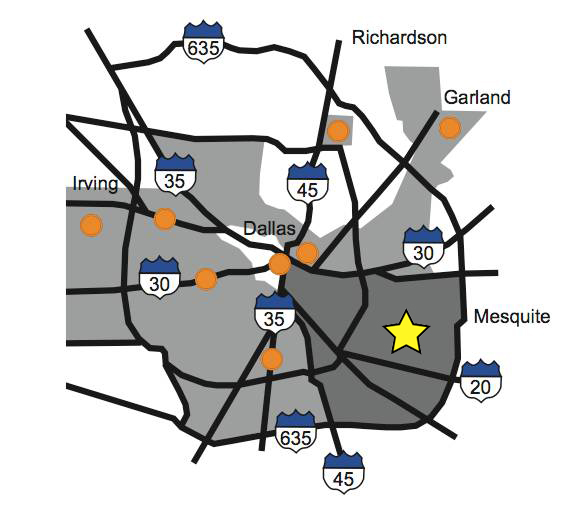
Pleasant Grove

It was never really cool to be from P-Grove.

Until now.

As a kid growing up in Pleasant Grove, a once proud community in the southeast corner of Dallas — I’ve always assumed it was proud at one time, long before I was on the scene —I always knew we weren’t as well off as most everybody else in Dallas. I don’t think I ever lacked for a thing. But it was obvious, especially since my siblings and I went to private Dallas Christian about 15-minutes north, that the cool people lived somewhere else.

I distinctly remember a school-sponsored overnight trip to Camp Deer Run when we were kids. It was pouring down rain and blowing really hard and lightning and thundering and our teachers and counselors gathered us in the dining hall. They told us that a tornado had been reported in Dallas but “it’s OK, there’s no need to worry, the tornado was reported in Pleasant Grove.” Welcome to PGrove

Pleasant Grove has been the butt of the Dallas jokes for at least 35-40 years now, maybe longer. People who live in P-Grove are called Grove Rats. It seems that 90-percent of the shootings reported on the evening news occur in Pleasant Grove. When I’ve driven my kids through the Grove to see my boyhood home, they’ve always reacted with horror. Carrie-Anne clicks the car doors locked as soon as we take the Scyene Road exit.

Can anything good come out of Pleasant Grove?

The Bruton IV theater just west of Bruton Road and Prarie Creek is where I experienced Star Wars, Close Encounters of the Third Kind, and Raiders of the Lost Ark. The Pleasant Grove branch of the Dallas public library, on South Buckner Boulevard, is where I checked out all of Beverly Cleary’s books about Henry Huggins and Ralph, the motorcycle-riding mouse. The Pleasant Oaks recreation center, just about two miles down Jennie Lee Lane, is where we played ping-pong and basketball. That’s where dad pushed us so fast around the merry-go-round we thought we would either die laughing or choking on puke. It’s where I played three sets of tennis in that record 113-degree heat of a summer day in 1980. In my blue jeans. The 7-11 at the corner of Prarie Creek and Bruton is where I spent hours playing Asteroids and slurping Slurpees. The Pleasant Grove Church of Christ, on Conner Drive, is where I was baptized into Christ. Our three-bedroom house on Terra Alta Circle is where I learned how to be a family. The old Gibson’s store where I made my first major purchase: an $89 ten-speed bike, with lawnmowing money. Craving the ninety-nine cent hamburgers at Griff’s. Pulling the levers on the cigarette machines at Dairy Queen where my grandmother worked. The Circle Grill at Buckner and I-30. Doorknocking the apartments off Lake June Road. Learning to drive on Military Parkway. Twilight Time skating rink. (Oops. Sorry. I was only going to list positive memories in this paragraph.)

Jim Martin came out of P-Grove. That’s pretty cool. When he and I get together for our monthly meetings in Waco or run into one another in Austin or Abilene, our conversation inevitably turns to something only Rats like us could appreciate. And when Jim told me a couple of months ago that Stanley Hauerwas, the great American theologian and one of my favorite authors, was born and raised in the Grove, I was skeptical.

But here’s the proof. Today’s Dallas Morning News carries a front-page story (below the fold) about Hauerwas’ roots in Pleasant Grove. He’s just released a memoir, Hannah’s Child, that details a lot of his childhood experiences as the only son of a Pleasant Grove bricklayer, faithful members of the Pleasant Mound Methodist Church. From there, Hauerwas has gone on to lecture and write and teach and preach. Yale Divinity School. Notre Dame. Duke Divinity School. He’s one of the great theological thinkers of our time.

My favorite work of his is Resident Aliens. Living as Christians in a pagan land. The Church as a colony of outsiders in the middle of hostile territory. Read it. It’s challenging. Convicting. You won’t be the same after you’ve digested Resident Aliens. You won’t view God’s Church or God’s mission for his Church the same way. His writings have certainly had a profound impact on shaping my theology. Hauerwas is a genius.

And he’s from the Grove.

Samuell HSThe Dallas Morning News article mentions that Hauerwas graduated from Samuell High School in 1958. My dad was a Samuell Spartan, class of 1960! Is there any chance? Could they have known each other? Is it even possible? I took my driver’s education at Samuell. But does my dad know Hauerwas?

He doesn’t. I just called. My dad doesn’t even have a 1958 Samuell year book, only a ’59 and ’60.

That’s allright. Today, it’s a little bit cooler to be from the Grove.

~~~~~~~~~~~~~~~~~~~~~~~~

Rangers magic number is 26!The magic number is 26. Any combination of 26 wins by the Rangers and losses by the A’s gives our baseball team their first division title since 1999. Do you realize that there are only 32 games remaining? If the Rangers go 16-16 the rest of the way — no chance since Cruz comes back tonight and Kinsler’s scheduled to be in the lineup by this weekend — Oakland would have to go 25-8 to win the A.L.West.

I remember well those Red Octobers from the late ’90s. Whitney doesn’t. This is fun.

Peace,

Allan

Lukewarm Disciples Part Two

“Lukewarm people say they love Jesus, and he is, indeed, a part of their lives. But only a part. They give him a section of their time, their money, their thoughts, but he isn’t allowed to control their lives.” ~Francis Chan, Crazy Love, p.72

None of self, all of thee!As I consider my own discipleship to Christ, my own calling to deny myself and take up my cross and follow my Lord, I don’t want to be mediocre about any of it. I don’t want to hold anything back. I want to give him and “it” — my discipleship — my all.

And if I’m not careful, it’s easy for me to feel like I’m doing that simply because I’m a preacher.

Hey, look at everything I gave up. Look at all of my sacrifice. Look at the tremendous risks I took. I left my radio career. I sold the house and moved to Austin to get theological training, trusting God to provide. And now I’m preaching the Gospel. I’m teaching Bible classes. I’m ministering to people. I’m promoting church programs. I’ve given it all to God.

The honest truth is that I’m not sure I’ve really given up anything. It’s not really risky or hard, it’s not really a sacrifice to preach at Legacy. It’s a huge upper-middle class church in a suburb just minutes away from our families and stomping grounds in a wonderful part of Texas in the wealthiest country in world history. I get paid tons of money, I have a massive house with a pool, two nice cars, health insurance, a savings account, and an air-conditioned office with a big desk and a swivel chair.

I look at Manuel and Yvina Calderon and the work God is doing through them at Siempre Familia in the Rosemont area of Fort Worth and I see sacrifice. I see front-line Christian ministry. I see people being impacted, lives being eternally changed, by the Gospel. I look at David and Olivia Nelson in Kharkov, Ukraine and I see real risk and hard-core faith for Christ. I see them leaving everything behind to take Jesus to people who’ve never heard.

When I look at myself, I’m sometimes afraid that my discipleship doesn’t add up.

I’m not comparing myself to these missionaries. I don’t think that’s right. And I don’t feel guilty about the house and the cars. I use those to God’s glory and to bless other people in Christ’s name. I just don’t want to become complacent. I don’t want to settle. Yes, that’s what I’m trying to say: I don’t want to settle.

Because it’s easy to settle.

It’s easy for us preachers, I think, to slip into a very un-Christ-like mentality and pattern. Eugene Peterson describes it in Working the Angles (I think, I don’t have time to look it up) as church chaplains, holding the hands of the saved. Just kind of babysitting the faithful. Making life comfortable for the saints. Working to help the Christians feel better about themselves and their church. Religious shopkeeping.

That’s a pretty comfortable life for a preacher, too.

I don’t want that. I want all of my life — every moment, every action, every reaction, every interaction — to be lived not from a sense of self but from a sense of God. I want to hold myself to the high standard of my calling as a disciple of my risen Lord. I don’t want to compromise. When I’m writing a sermon, when people come to me for advice, when I’m teaching a class, when I’m counseling a friend, I want to give it my all from a deep sense of the God who lives in us and whose Spirit is working to transform us from the inside out. If my primary orientation is of my God, then I must be committed enough that when people ask me to do or say something that will not lead them into a more mature participation in Christ I refuse. I don’t compromise.

But it’s so easy to settle.

Not everybody I talk to wants to jump all the way in. Not everybody in our church is willing to go all the way. Chan says I have to “sprint up the down escalator, putting up with perturbed looks from everyone else who is gradually moving downward.” Peterson says it’s hard because the people who would rather we just settle into a nice, comfortable Christianity and Christian ministry are all “nice, intelligent, treat us with respect, and pay our salaries.”

I . Don’t . Want . To . Settle .

But it’s so easy to settle.

Allan

Deep Church

Resurrection LifeI’m in the middle of Eugene Peterson’s Practice Resurrection. It’s the fifth and final book in his series of “conversations in spiritual theology.” It just came out. I’m devouring it. It centers on Paul’s letter to the Ephesians, especially the line in Ephesians 4:13 about “attaining to the whole measure of the fullness of Christ.” What does it mean to grow in Christ? What does spiritual maturity look like? How do we measure it? Why doesn’t spiritual growth, development of the mind of Christ, seem to be as high a priority in our churches as it does in our Scriptures?

See, it’s really easy to put down the Church. It’s easy to dismiss the Church as ineffective. Irrelevant. It’s easy to be condescending toward the Church because the Church appears to be in such a mess. It seems that the Church has had little impact, if any, in making any headway toward peace and good will on earth. Nobody’s clamoring to get inside. Nobody’s breaking down our doors to get closer to God. The world is coming out of the bloodiest and most violent century in history. And this current century appears to be determined to pass it. What good is the Church?

Well, Peterson’s point is that maybe we’ve got the purposes of the Church all wrong. Maybe the expectations we have of Church are wrong. At the very least, they’re not big enough.

Peterson points to a term coined by C. S. Lewis way back in 1952: deep church. It helps convey the ocean fathoms of all that God is doing in and with and through his Church. Things seen and unseen, things from eternity past to eternity future, things here and there, things God started long ago that are being finished today, things that are being started by God today that won’t be fulfilled in our lifetimes. Deep church. Practice Resurrection

“It takes both sustained effort and a determined imagination to understand and embrace church in its entirety. Casual and superficial experience with church often leaves us with an impression of bloody fights, acrimonious arguments, and warring factions. These are more than regrettable; they are scandalous. But they don’t define church. There are deep continuities that sustain church at all times and everywhere as primarily and fundamentally God’s work, however Christians and others may desecrate and abuse it.

Church is an appointed gathering of named people in particular places who practice a life of resurrection in a world in which death gets the biggest headlines: death of nations, death of civilization, death of marriage, death of careers, obituaries without end. Death by war, death by murder, death by accident, death by starvation. Death by electric chair, lethal injection, and hanging. The practice of resurrection is an intentional, deliberate decision to believe and participate in resurrection life, life out of death, life that trumps death, life that is the last word, Jesus life. This practice is not a vague wish upwards but comprises a number of discrete but interlocking acts that maintain a credible and faithful way of life, Real Life, in a world preoccupied with death and the devil.

These practices include the worship of God in all the operations of the Trinity; the acceptance of a resurrection, born-from-above identity in baptism; the embrace of resurrection formation by eating and drinking Christ’s resurrection body and blood at the Lord’s Table; attentive reading of and obedience to the revelation of God in the Scriptures; prayer that cultivates an intimacy with realities that are inaccessible to our senses; confession and forgiveness of sins; welcoming the stranger and outcast; working and speaking for justice, healing, and truth, sanctity and beauty; care for all the stuff of creation. The practice of resurrection encourages improvisation on the basic resurrection story as given in our Scriptures and revealed in Jesus. Thousands of derivative unanticipated resurrection details proliferate across the landscape. The company of people who practice resurrection replicates the way of Jesus on the highways and byways named and numbered on all the maps of the world.

This is the Church.”

Massive. Eternal. Rich. Huge. Deep.

~~~~~~~~~~~~~~~~~~~~~~~~~~~~~~~~~~~~~~~~~~

I am honored to be invited by Rick Ross to speak tonight at the Decatur Church of Christ. Rick was our preaching minister at Mesquite when Carrie-Anne and I were there from 2000-2003. And I believe Rick is the first preacher I ever seriously listened to. Really. Of course, I’ve been listening to preaching since the day I was born. But Rick is the first preacher I ever really paid attention to. Not just his sermons, which were powerful and bold, but his life.

Rick carried himself in a godly way. Patient. Gentle. Encouraging. Cheerful. Determined. Strong. His preaching came out of that life. His sermons were born out of his own walk with our God. He was Thomas Long’s Witness of Preaching before I had ever heard of Thomas Long or read his book. It moved me, the way Rick lived and preached, preached and lived. Yes, there were other things going on in my life then. I was growing in Christ, I was maturing in my faith, I was thinking differently about eternal matters and God’s purposes for me. But Rick was all over that. God was working in him and through him to teach me.

Rick and Beverly treated me with great patience and understanding even as I acted selfishly and foolishly in church settings and congregational matters. They embraced my family. They showed me grace. They taught me grace.

Watching Rick and learning from him helped motivate me to answer God’s call to preach his Word. I’m so thankful for the ways God used Rick to shape me during those short years in Mesquite. I’m grateful for the rock solid example of faithfulness and trust in God that Rick has been to me and everyone who knows him since February. And I’m honored to speak to his church tonight in Decatur.

Peace,

Allan

Real Brothers and Sisters

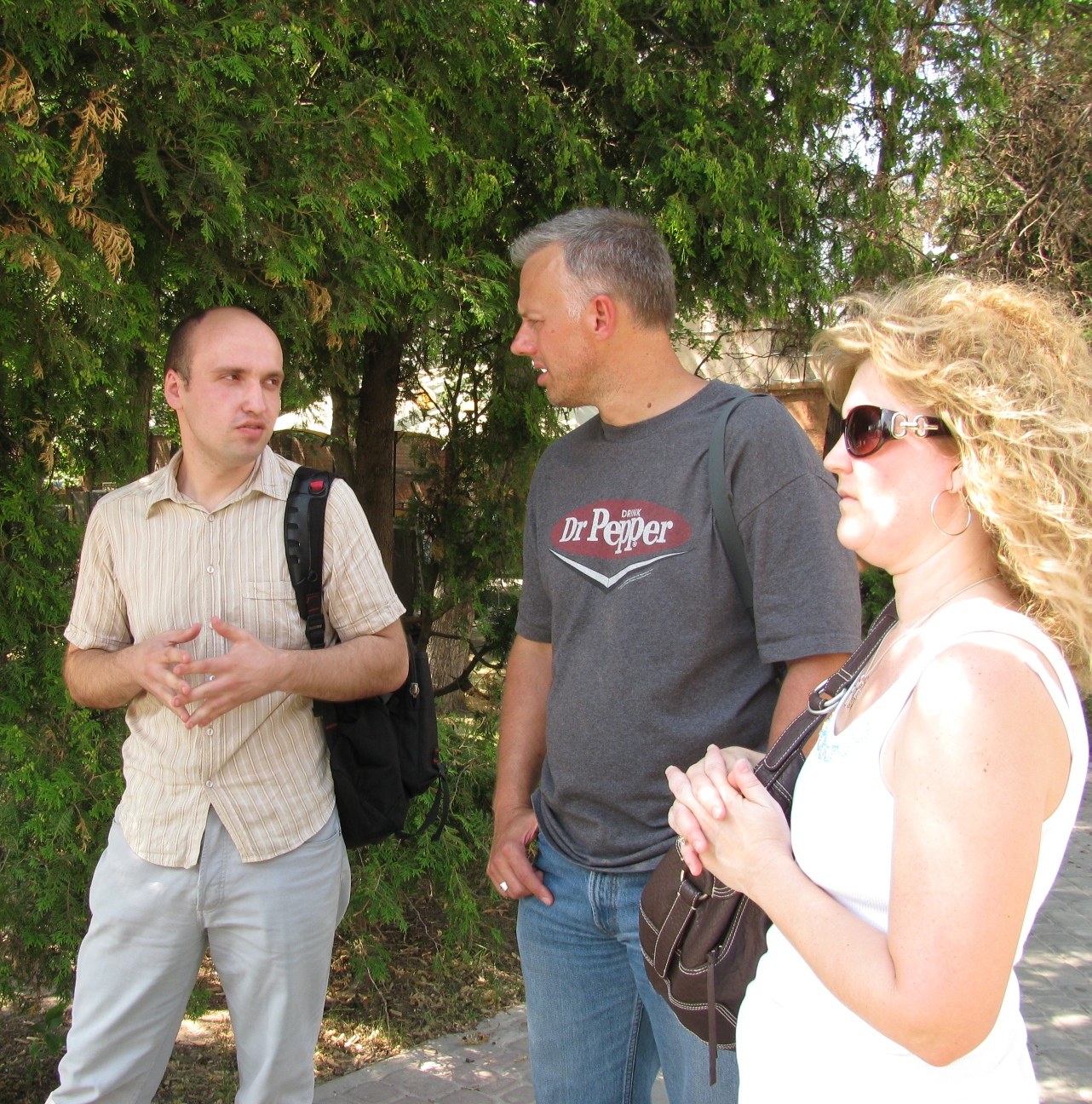
Like many of you, I receive a two-page email from David and Olivia Nelson every Monday afternoon. The Nelsons are Legacy’s missionaries to Kharkov, Ukraine, the ones Carrie-Anne and I traveled to see a couple of weeks ago. The weekly email is a prayer request list. Two pages of names and circumstances that David and Olivia would like for us to lift up to our Father in intercessory prayer.

Confession: I have always just skimmed the email.

I’ve always just looked for the highlights. I look for two or three big things — by my definition of big, right? — and I pray about those. And then I print the email and stick it in the Legacy Morning Prayers folder for the other ministers and elders until the next list comes the following Monday.

The email came yesterday, right on schedule. And I must have spent 45-minutes on it.

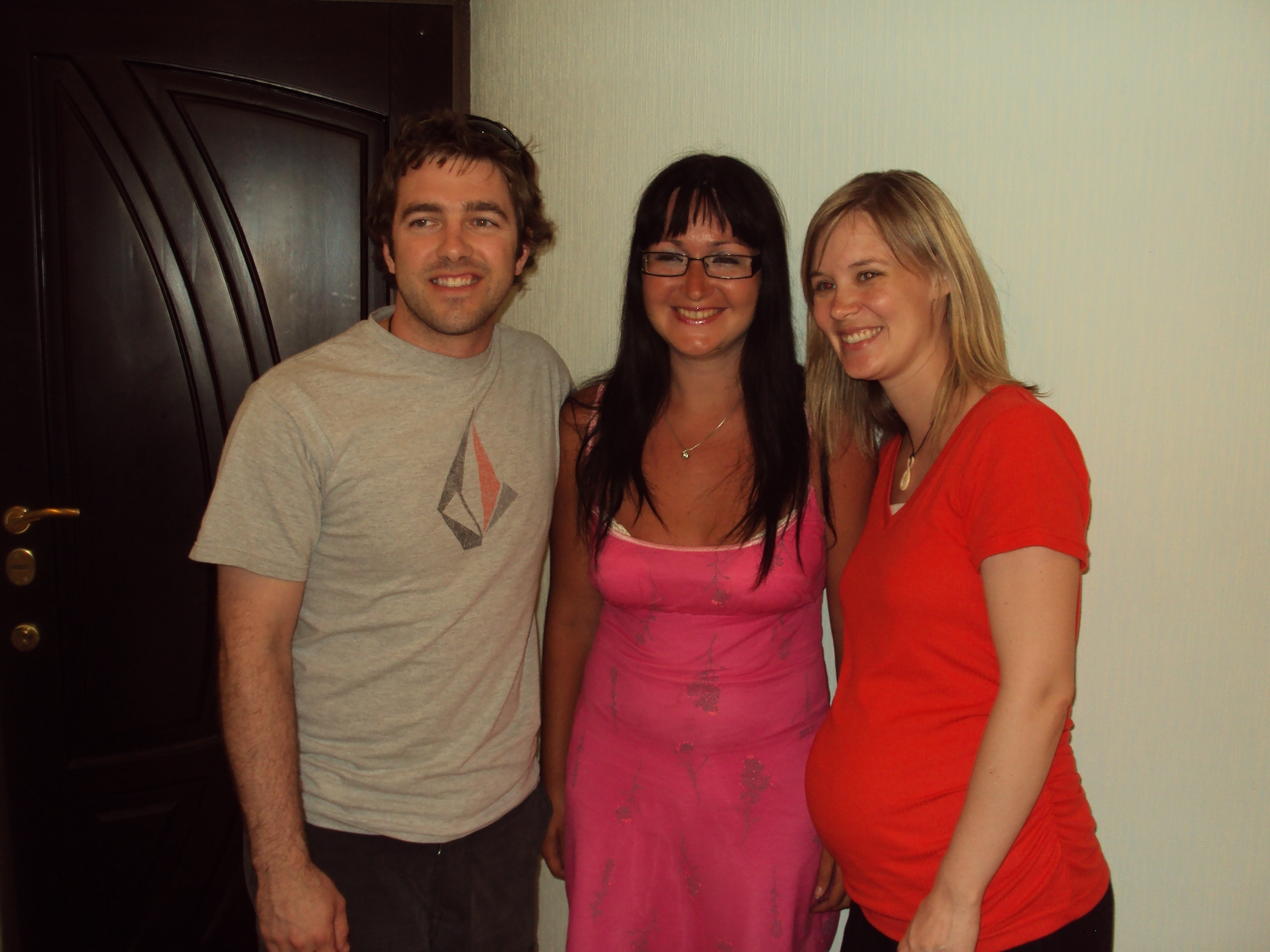
After spending eleven days in Ukraine with these brothers and sisters in Christ, they’re real to me. After spending a week-and-a-half over there with these people David and Olivia know, these folks with whom they’re sharing the great news of salvation from God in Christ Jesus, they’re real to me. This weekly prayer request list from six-thousand miles away in Kharkov is no longer a black-and-white ledger of names. It’s a techni-color, HD, 3-D, surround-sound, IMAX presentation of the power of God in his people. These names have faces now. And families. And stories. And dreams. These people have history and heartache and hope. They laugh and they cry and they work and they worry. They have funny accents and peculiar habits and quirky customs.

And God is doing something with them. With all of them.

AndreiI look at this two-page list of emailed prayer requests and I see Andrei’s name. But it’s not Andrei’s name anymore, it’s Andrei. I see him. He’s the funny little guy who looks like Billy Crystal but thinks and speaks like he just stepped out of the Lincoln-Douglas debates. He was baptized in the McDougle’s bathtub on a Lord’s Day last fall. He took off work to personally walk me through Liberty Square. He showed me the 500-year-old cathedrals. He got me into the second-largest Jewish synagogue in Europe. He beat my back almost bloody with some kind of a ceremonial branch in a Ukrainian sauna. We talked together about leadership in the Church. He’s pushing their group to get involved with a local orphanage. Andrei. I love Andrei. Not a name. A great man whom God is saving.

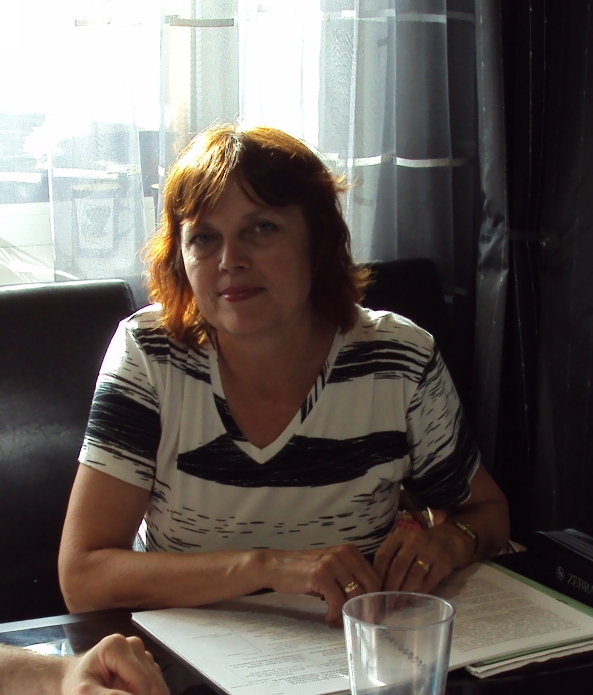
There’s Victoria’s name again. But it’s not just a name anymore. I know Victoria. I’ve shared wonderful meals with VictoriaVictoria. Of course, she just stared at the walls and didn’t say more than two words the times we were together. She asked me about Texas and then quickly looked away while I told her about 12-lane highways and 900-member churches and sprawling metropolitan cities and suburbs. Victoria. Shy. Bashful. An intelligent teacher of elementary school children. David and Olivia are studying the Old Testament with her. God is working on her.

ValerieValerie. As Costanza would say, Valerie is a “well-proportioned young man.” He looks like he could walk on and play ball right now for your alma mater. Red hair. Big dreams. He says he wants to preach. I’ve seen that he already does. His English is as good as his Russian. He translates for preachers and teachers all over Ukraine. He works with disadvantaged children. He translated for me as I preached upstairs in the Hindman’s apartment last Sunday night. I waited while he figured how to communicate my American-isms like “wrapped around her finger” and “jump for joy.” He talked with me afterward about how he had no Russian word that spoke to Christ’s love that “compels” us. We also talked about his long-ago marital problems and separation from his wife Julia. And about how God brought them back together. Restoration. Reconciliation. Gospel. God’s preparing Valerie to do something huge for the Kingdom.

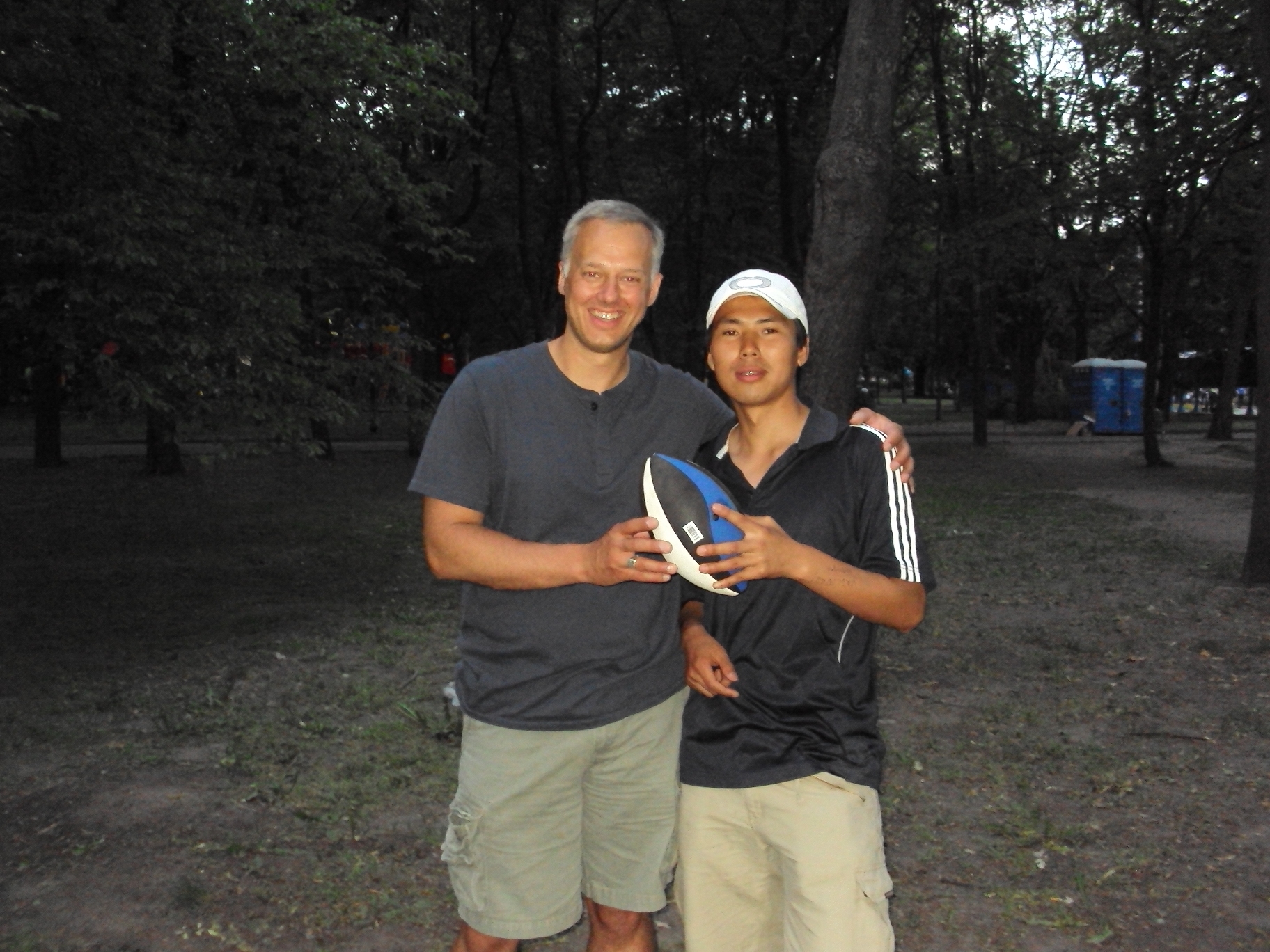
KevinKevin. I travel halfway around the world to Ukraine to meet a guy from Japan with an American name. Kevin’s in Kharkov getting his Master’s degree in sports management. I taught him how to throw an American football in an American spiral. He calls me coach. He leaves to go back to Japan in three months. I’ll probably never see him again. And I have no clue what God is going to do with him.

Alexander. He’s a dentist and an oral surgeon. He told me in front of everybody that drinking diet soda was bad for my teeth. He’s very deliberate in word and deed. He knows the Bible. He speaks pretty good English except when he uses the word “naked.” When we were reading Genesis 3, he kept saying “nak-d.” One syllable. He never made fun of me when I mispronounced “Ochin Priatna” (nice to meet you). So I never laughed when he said “nak-d.”

Yelena. David and Olivia’s Russian language teacher. Faked being impressed by the six words I knew. Taught me how to say “love” (lublu). Laughed with Carrie-Anne and me as we learned about “choot-choot.”

Vlad. Huge smile. Super quiet. Unless he’s singing. Very loud and wonderful when he’s singing.

Dr. Valeria Robert and Vlad Vlad Yelena

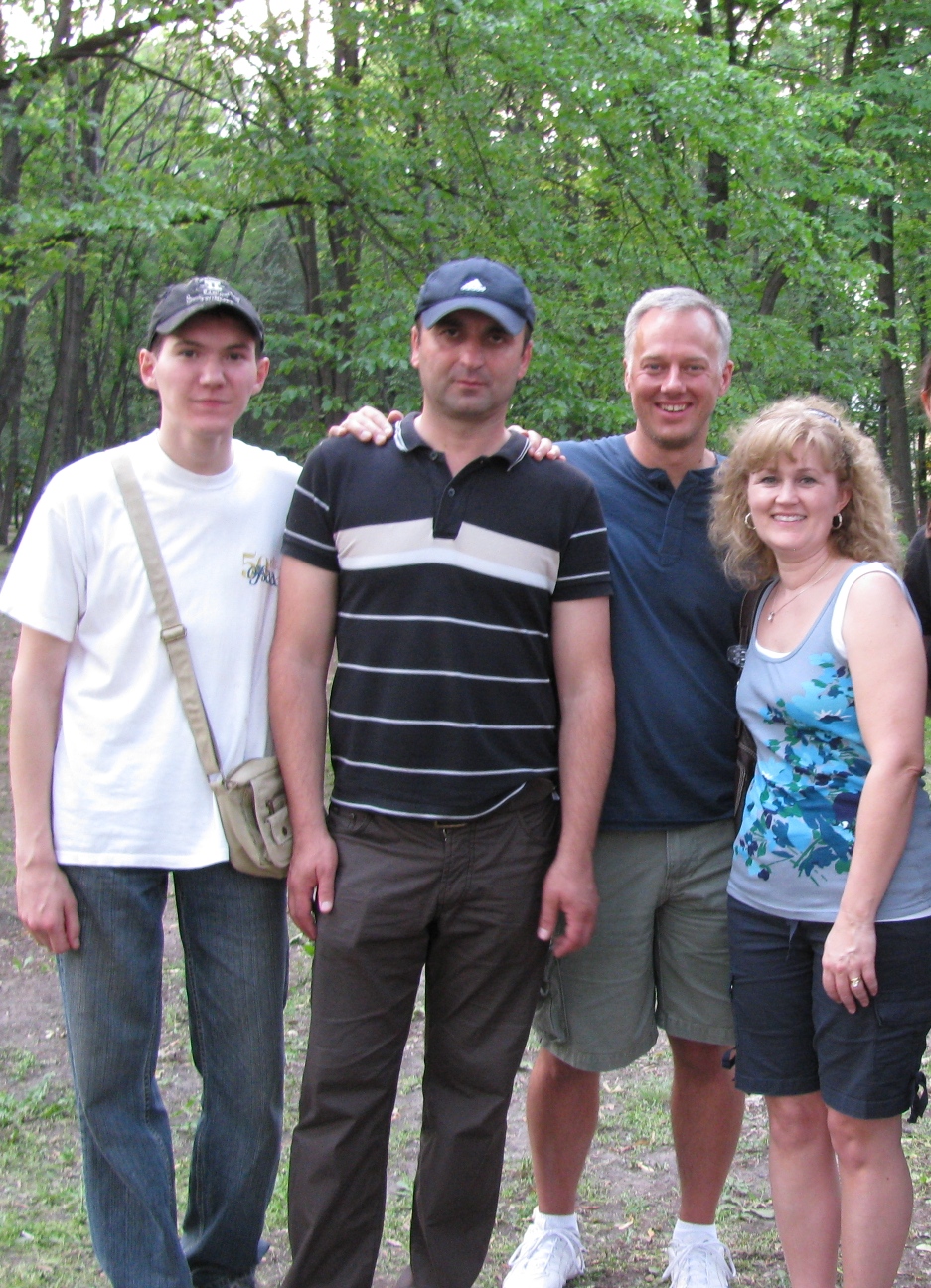
Sergei’s churchRobert seemed to understand every single thing I was preaching that night. Gene knows all the differences between our English NIVs and his Russian text of the Scriptures. Katia is a tireless servant. Masha is an energetic fire-ball. Sasha looks Asian, talks like a California valley girl, volunteers with the Peace Corps, and can’t manage the Kharkov trains system. Valeria, Olivia’s doctor, is a generous and compassionate care-giver in any setting. Sergei, who once served hard time in a Ukrainian prison, is now preaching the Gospel in the northeast part of Kharkov with a ten-year-old congregation of about nine souls. He shook my hand and said, “Please tell the brothers and sisters at Legacy ‘hi’ for us and that we are praying for them.”

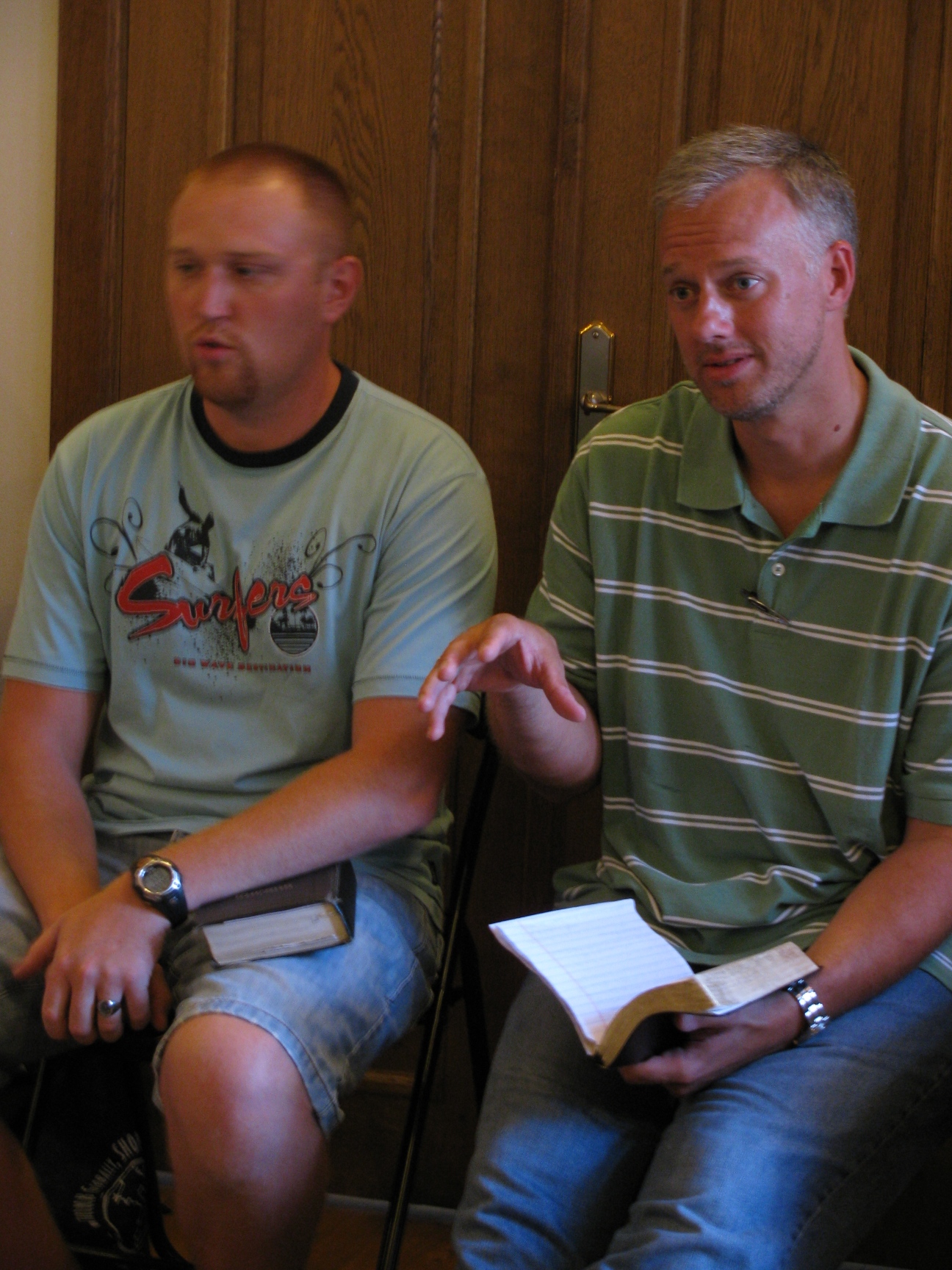
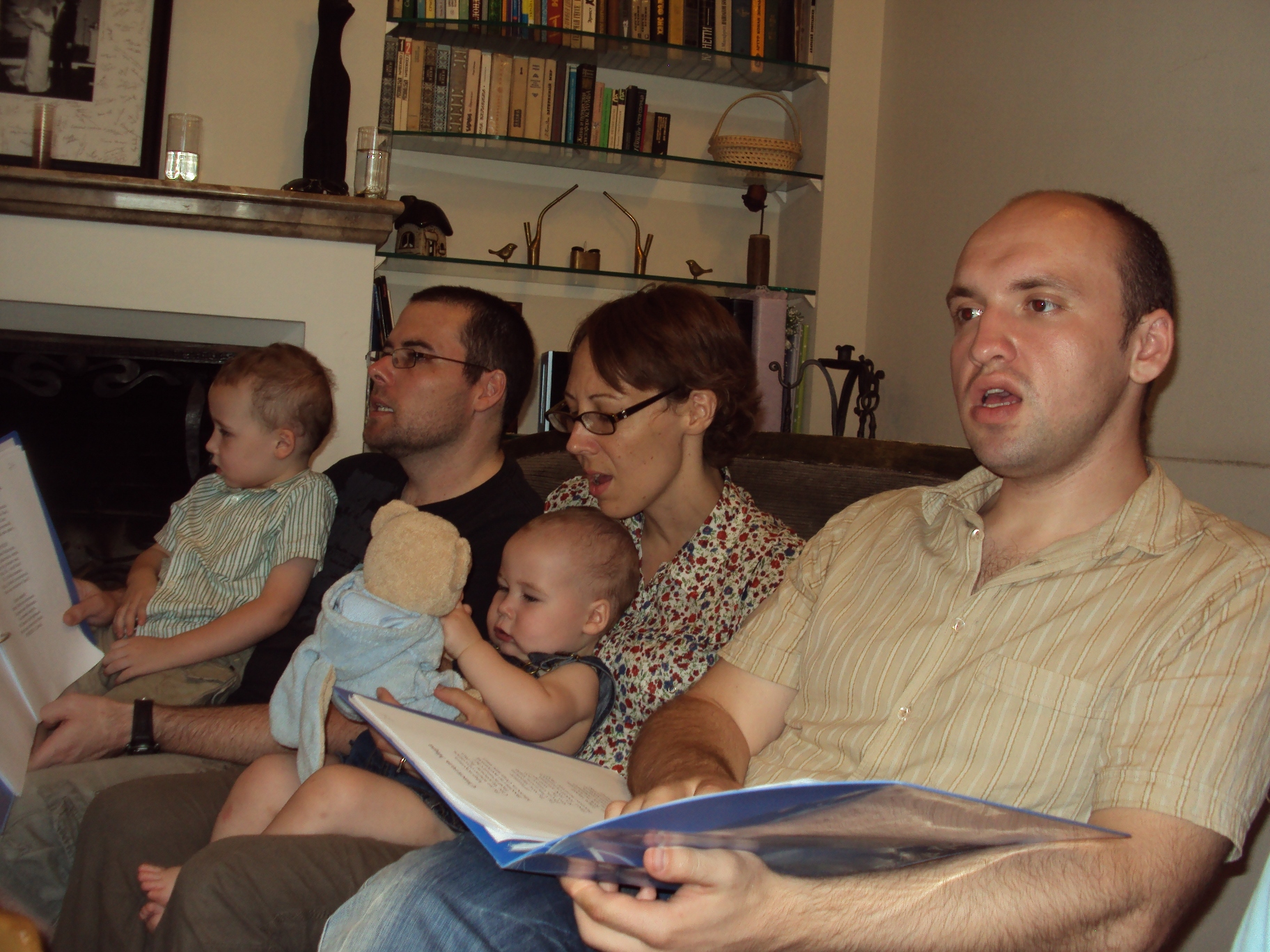
Kharkov WorshipThese are real brothers and sisters. These are real flesh and blood children of God. I have worshiped our Father with them. I went there to encourage them. But, instead, they encouraged me. They moved me by singing “Nearer My God to Thee” and “Lamb of God” in Russian. They honored me by sharing with me the bread and the wine. They thanked our Lord that we were there and prayed for our safe travels. They opened up their homes and their hearts to us.

That burden of the church I feel just got heavier. I care about these people. I worry about these people. I love this little growing group, this little community of faith, God is constructing six-thousand miles away. And now I need much, much more time with David and Olivia’s weekly prayer requests.

Peace,

Allan

Who Do You Say I Am?

“But what about you?” he asked. “Who do you say I am?” ~Matthew 16:15

Who Do You Say I Am?Peter answers his Lord by confessing Jesus as the Christ, the Son of the Living God. In similar circumstances — we could argue we live 24 hours a day in that circumstance — we would all make that Christian confession.

And Jesus would respond, “Blessed are you, Allan. Blessed are you, Joe. Blessed are you, Jane. Blessed are you (insert your own name).

And we’d just sit there, together, basking in the quiet moment, reflecting on the eternal implications of that confession.

And then what if you broke that silence by turning the question back on Jesus? What if you asked Jesus, “Who do you say I am?” You ever thought about that? What would Jesus say if you asked him who he says you are? You know he has an opinion. He knows you. He knows everything about you. What you say. What you do. The ways you think. He knows. And you ask him…

“…Who do you say I am?”

Well, what does he say?

I think Jesus would say, “Allan, you are a faithful proclaimer of the Gospel. You are a compassionate minister in the Kingdom.”

See, Jesus would always go to the positives first. That’s the way he operates. Our tendencies are to see the negatives first. Even in our self-evaluations, we look at the negatives and blow them out of proportion. But Jesus would initially attend to the good things about us. It’s called grace.

And then, I’m afraid my Lord would say, “Allan, you have a real lack of trust in me. Your faith isn’t nearly as strong as it should be by now. And you have a real problem with looking at things from a worldly perspective. Even things in my Church. You make judgments and decisions based on worldly principles.”

He would say other things about areas in my life I’m needing to change. But he would probably keep coming back to my lack of faith.

If you were to ask Jesus, “Who do you say I am?” what would he say?

Seriously.

He has an opinion.

~~~~~~~~~~~~~~~~~~~~~~~

last day to contribute!The cops are coming to get me at noon today. No Thursday hoops. I’ll be in jail in Bedford trying to raise the rest of the $1,480 bail money needed for MDA. As of this writing, we’ve raised $950. Thank you, thank you, thank you! If you’d like to contribute to the cause, please click here. Again, thank you.

Peace,

Allan

« Older posts Newer posts »