Author: Allan (Page 322 of 492)

It’s a Wonderful Church!

I’m a sucker for Frank Capra’s 1946 movie, “It’s a Wonderful Life!” Jimmy Stewart and Donna Reed, Bert and Ernie — what’s not to love? My family and I find ourselves quoting from the movie often. “You call this a happy family? Why’d we have to have all these kids?” “Another red letter day for the Baileys!” “Here’s your hat, what’s your hurry?” When one of the girls feels sick, I put my palm all the way across her face to check for fever the way Stewart does with Zu Zu. When the issue of money comes up in family discussions, one of us will inevitably borrow George Bailey’s response when his guardian angel, Clarence, says they don’t need money where he comes from: “Yeah, well it sure comes in handy down here, bub!”

The question in that movie is: What if George Bailey had never lived?
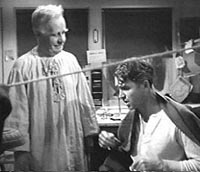
Stewart’s character is about to go to prison because of something his incompetent uncle messed up. And he’s standing there on the bridge, in the snow, in the dark, contemplating suicide. Most of you know the story. He winds up face to face with Clarence (“you look like the kind of angel I’d get!”) and eventually admits that things would not be better if he were dead. Instead, he declares, “I suppose everybody would be better off if I’d never lived!” And the angel grants his wish. George Bailey gets to see Bedford Falls as if he’d never been born. And it’s awful.

There’s death and violence, depression and drunkenness, disputes and greed and lust — all kinds of evil has taken over the whole town. George Bailey had never been born to make the beautiful difference in that town, to have the fabulous impact on the people that had resulted in so much harmony and peace and good will.

Allow me to put a little twist on this excellent story. Instead of asking “What if George Bailey had never lived,” what if we asked “What if George Bailey had lived but had just made different choices?”

What if George had hesitated and thought of the great risk to himself as his brother slipped through the ice that morning? What if George had decided Mr. Gower’s problems were none of his business? What if George had taken off for Tahiti to chase his own lifelong dreams of fortune and glory instead of sacrificing those dreams to stay in that “crummy little town” to help others realize their own dreams? The answer is, the results would have been the same as if George had never been born.

Now, if God’s Church makes decisions and acts in ways that are only concerned with us, it’s as if the church were never born. It’s as if the Church doesn’t even exist. The results for the world are the same.

God has established his Church to be a Kingdom of priests, a holy priesthood, to live like Christ in a way that completely contrasts with the way the world lives. We are to show the world an alternative way to think and to act, an entirely different way to live. In the movie, the world deems war heroes and business tycoons as wonderful successes. But in God’s eyes, living life for the sake of others is what’s truly wonderful. Staying behind and giving up one’s own pleasures for the sake of others — a way of life ridiculed by the world — is what’s really wonderful. And it’s the same way for the Church. The world judges churches on attendance and money and buildings and membership demographics. God judges a church based on his heavenly directive to live holy and sacrificially important lives in a world that desperately needs his salvation.

You see, it really is a wonderful church. When we remember that it’s about serving, about being last, about sacrifice; when we remember that it’s not about us, it’s about everybody else; when we remember the way of our Lord and then live like him more every day, it really is a wonderful church.

Peace,

Allan

Through Water to Salvation

“…this water symbolizes baptism that now saves you.” ~1 Peter 3:21

In recalling to his readers how Noah and his family were “saved through water,” the apostle Peter points us to Christian baptism that, in the same way, saves us. Peter’s clear, succint statement is astounding. For a lot of people, it’s scandalous. Peter tells us that baptism has a salvation function.

Paul draws the same conclusion as he looks back on the one foundational and identifying event for Israel: the exodus and the crossing of the Red Sea (1 Corinthians 10:1-4). He sees what happened in Exodus 14 as a baptism “into Moses” and compares it to our baptisms “into Christ” (Romans 6:3, Galatians 3:27). Paul wants us to understand our baptisms as a comparable moment of deliverance and redemption.

Baptism, just like the flood and the Red Sea crossing, is a saving event. Just as God saved Noah through cleansing the old world with water, so God saves us from our old lives through baptism. Just as God delivered Israel by using water to destroy their enemies, Pharaoh and his army, he delivers us by using water to eradicate our enemies of sin and death. Noah and Israel both pass through the waters into a new world, a new creation. Christians pass through the waters of baptism into a new world, eternal life with the Father through the death and resurrection of the Son.

It’s a divine gift. It’s a sacrament of God’s grace. It’s a salvation experience. In baptism our God redeems us, gives us a new identity, and frees us from slavery to sin and death. And it shapes who we are and how think and act as a people of God.

“We were therefore buried with him through baptism into death in order that, just as Christ was raised from the dead through the glory of the Father, we too may live a new life.” ~Romans 6:4

~~~~~~~~~~

What a marvelous joy to welcome into our home overnight Friday our great friends David and Olivia Nelson and their sons, Caleb and Seth. The Nelsons timed their furlough in the States from their missionary lives in Ukraine to coincide with the birth of Seth last month in Lubbock. David and Olivia figured one boy born in Kharkov in Hospital 17 was enough. So we were very blessed that they took a long, winding route from Lubbock to Fort Worth, through Amarillo, to spend almost 24 hours with us last weekend.

After answering several questions Friday night from servers and other customers at Blue Sky about David’s accent, we stayed up way too late passing Seth around, drinking egg nog and Dr Pepper (no kafir, David)  and playing our favorite, Phase 10. Caleb entertained us the next morning by splashing through his pancake breakfast. And then we spent a good long while with our Father in prayer, thanking him for the awesome privilege of serving him in his Kingdom together on opposite ends of his world.

The Nelsons are in Fort Worth now for another month, reconnecting with the church family at Legacy, stocking up on picante sauce and Jello-O and other stuff they can’t get in Ukraine, and being reminded of how much they are truly love and appreciated and admired by everyone who knows them.

I praise our God for the ways he works through and with David and Olivia. I thank him for our rich friendship and partnership in the Gospel. And I acknowledge gratefully that I’m a much better Christian, a more faithful follower of our King, because I know them.

Peace,

Allan

Dead on the Shore

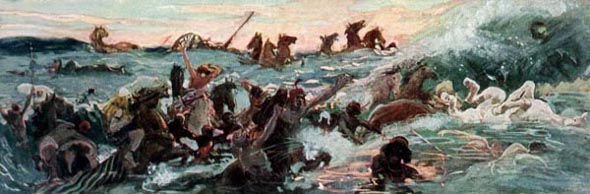
“That day the Lord saved Israel from the hands of the Egyptians, and Israel saw the Egyptians lying dead on the shore.” ~Exodus 14:30

God’s people were trapped. This rag tag band of slaves was cornered. The sea on one side and the desert mountains on the other and the mighty power of the Egyptian army thundering over the sand ridges right toward them. They watched in horror as their violent doom descended on them. It was over. They were as good as dead and they all knew it.

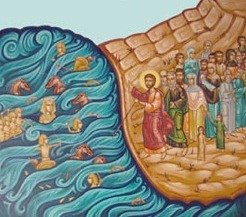
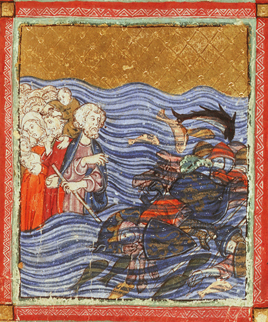
But then our God showed his power and sovereignty over nature and history by splitting the sea right down the middle so every last one of these rescued slaves could escape the enemy on dry ground. God caused the waters to spill back over the Egyptians — all their chariots, their horsemen, their archers. Scripture says “not one of them survived.”

“And Israel saw the Egyptians lying dead on the shore.”

Their enemies were powerless now to ever do them any harm. Ever. The escape was complete. The rescue was final. Their salvation was secure. They saw it. They saw their enemies dead now and strewn lifelessly about on the shore like washed-up seaweed. They saw it. And they feared the Lord and put their trust in him.

I believe God caused his people to see their dead enemies for a reason. He wanted them to see it. He wanted there to be no doubt that they were truly saved. They were totally secure. All threats had been erased. All evil against them had been eradicated. They really were free and in the faithful and loving arms of their all-powerful God. This visible and indisputable evidence gave God’s people the courage they needed to move from Egypt to Israel. God was taking them through the waters of salvation to a brand new place and they all needed to know that it was OK to press on in faith. He was taking them from one country to another. He was changing their story. They are no longer slaves; they are now the children of God. “The water flowed back,” Scripture says, cutting off thier connections to Egypt and their old way of life, their old story. They would only press ahead now, into the brand new story of freedom in YHWH, of salvation in the Lord.

As Moses and Miriam are leading the people in songs of praise to God for his mighty and final deliverance from their enemies and from their old horrible lives of slavery, it would have been impossible to imagine that within just a few weeks those same people would be begging to go back to Egypt. When things got difficult, their first instinct was to go back to Egypt. Their old lives were miserable; but they wanted to go back. Their old stories were terrible; but they longed to jump back. It was awful; but I suppose it was comfortable. Maybe. I’m not sure what made them want to return to Egypt back then. I’m not sure what makes us want to keep going back today.

Some of us are living the wrong story. We’re all on the other side of the Exodus. We’ve all crossed over from slavery to sin and death to a brand new life as God’s eternal people in complete subjection to him. In Christ, we’ve moved out of one country and into another. But some of us are determined to pass through those waters back to Egypt. Some of us are working for things and chasing dreams that the world says are important. And we’re not satisfied. We’re restless. Some of us are depressed or despondant because we don’t have the status or the security that our world says is so valuable. We’re unhappy. Some of us are living the story the world says is our story instead of the brand new story we’ve all been given by our God.

The enemies are dead on the shore! Do you see them? Our Father wants us to see those dead, lifeless, completely conquered enemies! In Christ, he has totally destroyed sin and death and Satan and all the things that might separate us from him. The pain, the past, the failure, the anxiety — all of it is helpless against our God. He’s already drowned it out in the salvation waters of our baptisms. It’s over! Whatever had so messed up our stories is gone now. In the promised Messiah, God has given us an eternal victory even more decisive than what the Israelites saw on the shore.

That’s our story. Our story is about the power of our God who acts in mercy and grace through his Son to deliver us from our enemies and bring us into a brand new life as his brand new people. Our identity is completely changed. Our values are totally different. Our story is radically transformed. Because the Kingdom we serve is not of this world. And neither is the King we worship!

May we be a people of the correct story — the story of salvation from God, not the story of fate and chance that comes from the world. And may that salvation story shape us by God’s grace into the holy people he has called us and saved us to be.

Peace,

Allan

Salvation Belongs to Our God

The Red Sea crossing in Exodus 14 is the ultimate foundational event that creates and identifies the people of God. And we always refer to it as the Exodus. But you may be interested to know that the word “exodus” never occurs one time in the actual narrative. The Hebrew words used in the book of Exodus to refer to the creation and redemption of God’s people are these:

ga’al – to protect or preserve the integrity of the family or clan

padah – to pay the purchase price to free a captive or a slave

ha’aleh – to cause to go up

hevi – to cause to bring in

hotsi – to cause to go out

As Israel is delivered from Egyptian bondage and saved through the waters of the sea, the focus of the activity is on God and what he’s doing. God is doing all of it. Israel is completely helpless and powerless to contribute one thing to the salvation process. It’s all on God. Israel’s job is to trust God, to “stand firm,” to “be still,” and to “see.” God is the one who brings them out and delivers them and saves them with his strong arm and outstretched hand.

Just as the Israelites passed through the waters of the sea, we pass through the waters of baptism into a new life in the Father through Christ Jesus. And, again, our God is the one redeeming and saving. We bring nothing to the table except our willingness to trust him and submit to him and his salvation purposes.

“Once you were not a people, but now you are the people of God.” ~1 Peter 2:10

Peace,

Allan

The Second Tablet

When God is reminding his people of the covenant promises in Deuteronomy, he vows that if they worship idols they will lose their land. If they commit idolatry/adultery with the foreign gods, if they worship these other dieties, God will send them into exile. He made those promises over and over again in Deuteronomy.

And the people worshiped idols.

Almost immediately upon entering the Promised Land, God’s people began worshiping the foreign gods. They built high places and shrines, they offered sacrifices and song, they worshiped idols. Off and on for more than 700 years, God’s people worshiped these false gods. For over seven centuries, our Lord showed tremendous patience with his people. He exhibited great restraint in not following through on his promises to strip them of their land for these atrocious acts of rebellion. They turned their backs on YHWH. They disrespected his name. They ignored him and sometimes cursed him. But our Father was long suffering with his chosen people.

In Amos, we see for the very first time in Scripture a distinction among God’s holy people between the rich and the poor. Our God speaks through the prophet and points out that the rich were getting richer at the expense of the poor. The orphan, the widow, and the stranger in the gate were not just being ignored, they were being exploited by the wealthy, for the benefit of the elite. 

“They sell the righteous for silver, and the needy for a pair of sandals.
They trample on the heads of the poor as upon the dust of the ground and deny justice to the oppressed.
Father and son use the same girl and so profane my holy name.
They lie down beside every altar on garments taken in pledge.
In the house of their god they drink wine taken as fines.”
~Amos 2:6-8

“You hate the one who reproves in court and despise him who tells the truth.
You trample on the poor and force him to give you grain…
You oppress the righteous and take bribes
and you deprive the poor of justice in the courts.
~Amos 5:10-12

God points out the injustice against the poor, the systemic oppression against those most defenseless in society, the exploitation of those who are unable to help themselves, the widening gap between the rich and the poor, and he condemns it. This is completely contrary to God’s eternal plan for his people, this is exactly the opposite of what he’s wanting to do through his children for the sake of the rest of the world. So he condemns them and he takes away their land.

In less than 25 years.

It’s almost immediate. In less than one generation, God sends the Assyrians into his chosen nation and, in a divine act of punishment, demolishes them for their sins against the poor.

That’s astonishing, isn’t it?

It appears in Amos that repeated breaking of the “first tablet” of the Law — the commandments dealing with love and God and respect for his holy name — isn’t nearly as offensive to God as the breaking of the “second tablet” which deals with love of neighbor and respect for our own brothers and sisters. Jesus and all the rabbis before him taught that love of God was the most important command and love of neighbor the second. I believe that is still true. But it seems that God shows much more patience when we sin directly against him than when we sin against the poor and the weak. It looks like God’s wrath is quickly aroused when we sin against the marginalized and the defenseless. He won’t tolerate us abusing or ignoring the “least of these.”

There are at least two lessons here: One, we must pay careful attention to our attitudes and our actions regarding the weak and the poor. The comments we make, the jokes we tell, the thoughts we think, the deeds we do or don’t do, the decisions we make — so many of these things impact the defenseless people around us. We should be careful to honor them. We should be diligent to help them. And, two, in the manner of our Lord, we should be much more offended when someone treats another harshly and much less offended when we ourselves are treated harshly. We should show more patience and more understanding when we are neglected or harmed. We should be quick to speak up and act out when the least among us are similarly neglected or harmed.

Amos teaches us that God takes our behavior seriously. Our worship is meaningless to us and to our world, and an offense to our Lord, if it doesn’t compel us to serve others in his name and in his manner every day.

Peace,

Allan


In Shipp Shape

It’s a tricky thing to bring a highly respected biblical scholar / professor into a church setting to teach a Bible class or preach a sermon. Some of these guys can be a little stuffy. They can use too many big words. They can have a difficult time relating to and communicating with the average guy or gal in the pews. At best, a lot of these scholars are just awkward in front of a bunch of people in church; at worst, some of them can be downright narcissistic and rude.

We brought Dr. Mark Shipp from Austin Graduate School of Theology up to Central this past weekend with no worries.

For four hours on Saturday morning, Mark presented his class notes on the Minor Prophets to 25 of our adult Bible class teachers. And for another hour yesterday, he spoke to 550 of us in a combined Bible class, kicking off our ten weeks congregational series on the Book of the Twelve. And the Shipp who inspired me while sitting at his feet for 22 months at Austin Grad also inspired our church. Shipp’s passion for the Word of God that captured me in his graduate courses also captured our church. His knowledge of the Scriptures and the application he always made to my life was appreciated by the congregation as they realized the application in their own individual and church settings. And it was really quite neat.

The passion I have for the Old Testament comes, in large part, from Dr. Shipp. The ways I interpret the Hebrew Scriptures, the ways I see God revealed, the ways I see our Christ predicted, all come from Shipp. When I use words like mishpat and hesed and tsedaqa, they have come from Shipp. My confidence that every word of the Old Testament is relevant for God’s children today is a gift from Dr. Shipp.

When Madison, our sweet sixteen-year-old sister here at Central died almost a year ago, I wouldn’t have thought to go first to Habakkuk for comfort and grace and understanding for our congregation, except for Dr. Shipp.

I had so much fun this weekend sitting at Dr. Shipp’s feet again. I learned so much. Again. I enjoyed talking to him about raising teenaged daughters. I was blessed to introduce him as my teacher and my friend. I was honored that he expressed so much admiration for our church. We talked together about reading and writing, teaching and preaching. We talked about God’s people. I learned much more about Dr. Shipp’s story, his family, his history. Shipp had fun talking Longhorns football with us at Blue Sky on Saturday, holding back a bit (only a bit) when he discovered that Tim’s not that opposed to replacing Mack Brown, and falling just short of admitting that the cheeseburger and vanilla shake had indeed changed his life . I think he also had fun critiquing my sermon yesterday (Yes, I know the noise and terror at Sinai was intended for God’s people, not the nations! I know!).

We’re better off as a church family for Dr. Shipp having spent the weekend with us. Our teachers are more confident. They’re armed and equipped and maybe even a little dangerous. And I’m thankful. He relates to us and he inspires us. And I’m thankful. I can’t wait to dive in to the Minor Prophets in our Bible classes together this next Sunday, knowing how ready we truly are.

Peace,

Allan

« Older posts Newer posts »