Author: Allan (Page 321 of 492)

Heart of a Disciple: A Question

(This is the first of a short, four-part series.)

Peter, Andrew, James, and John leave their boats and their nets and they follow Jesus. He calls, they jump. Matthew left his tax booth, left everything, Luke says, to follow Jesus. Philip and Nathaniel. All twelve of them drop everything, they radically reverse their lives, and begin to follow Jesus.

And these twelve apostles are true talmidim. Disciples. Real disciples. They don’t just want to know what their teacher knew. They aren’t in it to please their parents or fulfill the expectations of their society. No, this is for real. They have a passionate desire to be exactly like their rabbi. They are driven to do and think and speak and act exactly like their teacher. That’s the Twelve. In all their immaturity and stubborness, selfishness and pride, self-deceit and sin, they want nothing more than to be exactly like Jesus. What he says, they do; where he goes, they go.

It didn’t work that way with everybody.

The Son of God tells the young man in Matthew 19, “Come, follow me.” But the man refused. Instead, he went away sad. In Matthew 8, “Follow me!” and another refusal. Luke 9: “Follow me. Follow me. Follow me.” Three times. Three different people. Three more refusals. Several of Jesus’ disciples bail in John 6.

Jesus preached to the multitudes. He fed the large crowds. He taught in the synagogues. He was a well-known and well-respected rabbi. He was called “rabbi” by Pharisees and Saducees, Romans and Phoenecians. Why didn’t everybody become a disciple? Why did some keep asking for signs even after witnessing miraculous healings and spectacular feedings? If Philip and Nathaniel can take the Law and the Prophets, put two and two together, and recognize Jesus for who he is, why couldn’t the educated Scribes and dedicated teachers? All these potential students, all these potential disciples. What is it about the Twelve that made them different? These twelve young men, whose names we know, the fathers of our faith, the foundation stones of God’s Church, the ones our children sing about — what is it about them that sets them apart from all the rest?

What is it about you? What makes you such a faithful disciple of Jesus? What sets you apart from those who aren’t following our rabbi? What about the most faithful disciples of Jesus you know? What makes them different from everybody else? Whatever it is, it seems you’d want to cultivate that, right?

Peace,

Allan
 

For These Brothers of Mine

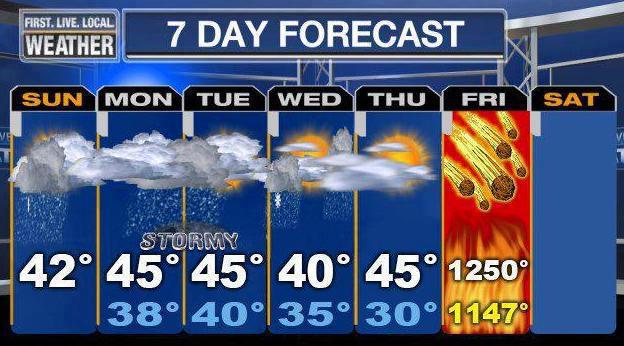
You’ve read Matthew 25, right? It’s the separation of the sheep and goats, the familiar vision Jesus gives all of us of that last day of judgment and glory. We wonder about that last day, don’t we? I was certain that last Friday, December 21, was not going to be the last day. (Of course, when I got my copy of Aerosmith’s new album last week and discovered that Steven Tyler had done a duet with Carrie Underwood — on an Aerosmith album!! — I began to worry. I can’t think of a more disturbing sign of the end times tribulation than that.) But we do know that last day is coming. And we do know Christ Jesus, our King, is going to judge us. He’s going to separate those who denied him as Lord from those who faithfully submitted to his Lordship. That’s what he says in Matthew 25:

“When the Son of Man comes in his glory, and all the angels with him, he will sit on his throne in heavenly glory. All the nations will be gathered before him, and he will separate the people one from another as a shepherd separates the sheep from the goats. He will put the sheep on his right and the goats on his left. Then the King will say to those on his right, ‘Come, you who are blessed by my Father; take your inheritance, the Kingdom prepared for you since the creation of the world. For I needed songs, and you sang them to me acappella; I needed a communion meal, and you ate it every Sunday; I needed a church, and you built a huge building with the right name on the sign; I needed correct doctrine, and you preached harshly worded sermons and wrote scathing articles; I needed distinctions, and you drew rigid lines of fellowship; I needed strict obedience to laws which never came out of my mouth, and you vigorously kept them and enforced them on others.'”

No! God forbid!

As Joe Malone used to exclaim, “Shades of reason, neighbor!” That’s not what it says. Praise God, that’s not what it says!

“For I was hungry, and you gave me something to eat; I was thirsty, and you gave me something to drink; I was a stranger, and you invited me in; I needed clothes, and you clothed me; I was sick, and you looked after me; I was in prison, and you came to visit me.”

The ones who are blessed by the Father, the ones who will receive the inheritance, the ones for whom the Kingdom is prepared are those of us who reflect the glory of God. Those of us who show grace and compassion, love and faithfulness, patience and mercy and forgiveness.

Our Lord pulls no punches when he declares with divine authority that justice and mercy and faithfulness are more at the heart of what it means to belong to God than tithing. He does not apologize one bit when he condemns the religious elite for saying all their prayers correctly, but then foreclosing on the widow’s house. Our King desires mercy, not sacrifice. It’s always been that way.

Your practices don’t matter if you don’t show grace and compassion. It doesn’t matter how often or how seldom you take communion if you’re not demonstrating love and faithfulness and forgiveness in your dealings with people. You can sing the songs and say the prayers perfectly right, but if your attitude is not Christ-like, if you’re heart is not being transformed more into the shape of Jesus’ heart, if you’re not reflecting God’s eternal qualities in the ways you interact with people, it’s meaningless.

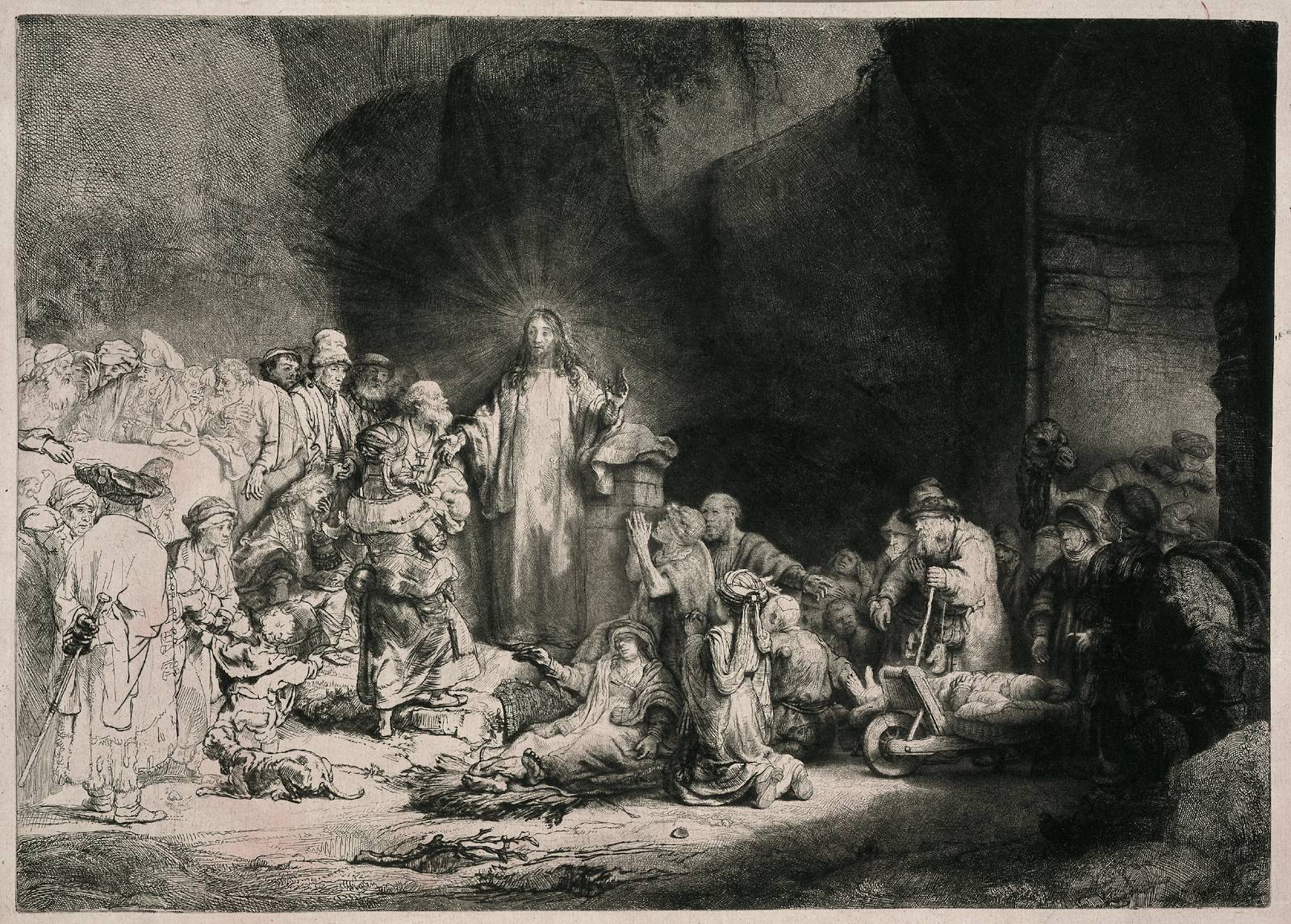
“The King will reply, ‘I tell you the truth, whatever you did for one of the least of these brothers of mine, you did for me.'”

Our God has revealed himself to us. He’s told us who he is in beautiful words and in mighty deeds. Our God is compassionate beyond measure. His grace is given freely and abundantly. His patience means he will never give up. His love is limitless, no boundaries; his faithfulness is uncompromising, it’s forever. His forgiveness is complete. Total. It’s done.

We are blessed. So very blessed. Praise him. And may our lives increasingly reflect his glory.

Peace,

Allan

A Light Has Dawned

“The people walking in darkness have seen a great light;
on those living in the land of the shadow of death
a light has dawned.”
~Isaiah 9:2

The Christ Prophesy in Isaiah 9 begins with people walking in darkness. People living in the land of the shadow of death. People under a heavy burden. People under the weight of a terrible yoke. Isaiah was describing their world.

And ours.

The world needs good news. This world of darkness needs the light of Christ. Even today — especially today! — we see it all around us: the wreckage and carnage, the twisted bodies and warped minds, the moral and institutional vileness. It surrounds us. Greed and violence and lust, slavery and war, disease and divorce and death. Yes, we live in a dark world.

As followers and imitators of the God who saves us, we are charged with proclaiming the light. To preach it, to live it, to embody it, to share it. God through Christ has defeated the Evil Empire and we shout that from the rooftops. “God with us” is good news of great joy that shall be for all the people! As recipients of God’s amazing grace, as beneficiaries of his great power, we celebrate that great light today.

The light that was promised to the great patriarchs. The light the prophets proclaimed. The light the angels saw. The light King Herod tried in vain to destroy. The true light that gives life to every man. The eternal light of the world, our Lord and Savior Jesus Christ!

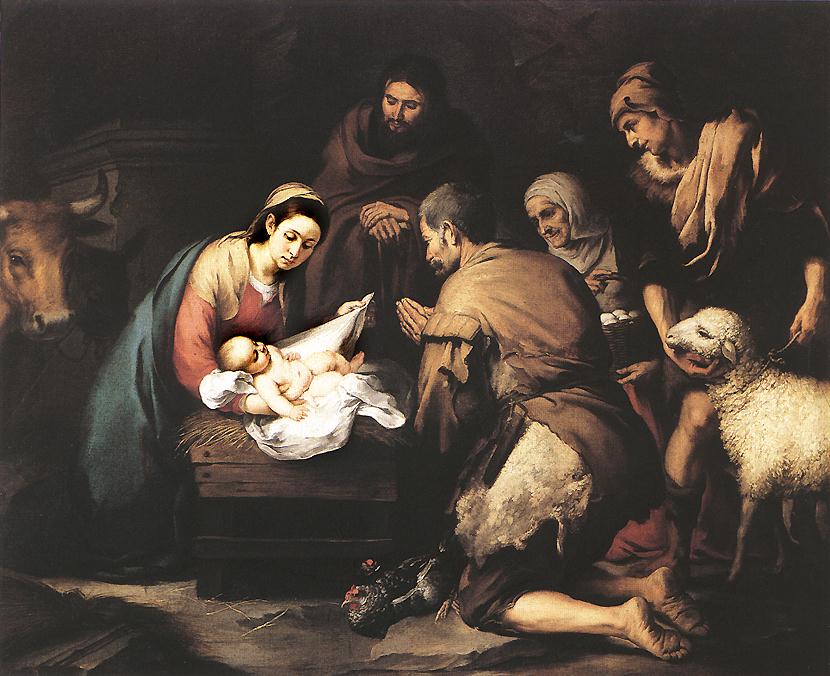
We join the angels in heavenly chorus, the heavenly hosts who rejoice at the coming of our King. We join the shepherds and the wise men, the lowing cattle and the bleating sheep, in praising God for sending his Son to dwell among us. We join all men and women throughout the ages, the saints of all time, who have celebrated the greatest miracle in the history of the universe.

“You have increased their joy;
they rejoice before you as people rejoice at the harvest,
as men rejoice when dividing the plunder.
You have shattered the yoke that burdens them,
the bar across their shoulders,
the rod of the oppressor.
Every warrior’s boot used in battle
and every garment rolled in blood
will be destined for burning,
will be fuel for the fire.
For to us a child is born,
to us a son is given.”
~Isaiah 9:3:6

Peace,

Allan

The End is Near

People and communities of people have been predicting the end of the world almost since the day the world began. Tomorrow’s Mayan Doomsday is merely the latest in a long, long line of interesting predictions about the demise of the planet and the return of our Lord.

500  – According to his calculations regarding the Bible’s mythical “6,000 Year Rule,” Hippolytus predicted the world would end this year. It didn’t. But that didn’t stop others from figuring their own dates with numbers from Scripture.

989  – Halley’s Comet always brings impending doom. Always.

1874  – The Jehovah’s Witnesses begin a long and lucrative career of predicting Armageddon, starting with this year. By the way, it didn’t happen.

1878 – It didn’t happen this year, either.

1881 – No, really. The Jehovah’s Witnesses were on a roll.

1910 – Again? Well, if the Jehovah’s Witnesses say so.

1914 – People are beginning to wonder about Jehovah’s Witnesses.

1918 – We like the four-year cycle, but could the Jehovah’s Witnesses maybe split it up into a summer apocalypse and a winter apocalypse?

1925 – About this time, people may be forgiven for hoping the world ends just to shut the Jehovah’s Witnesses up about it.

1975 – They gave us a 50-year break (which included World War II, which was full of its own apocalyptic signs), but the Jehovah’s Witnesses think now they’re on to something.

1984 – George Orwell buffs and Jehovah’s Witnesses alike considered this to be a significant year for the end of the world. Unless Van Halen is the anti-Christ (and that’s not completely unproven), they were wrong.

1994 – Nostradamus tries posthumously to beat the Jehovah’s Witnesses record for most failed predictions. Luckily for him, he’s much more vague and obscure, so he’s never really wrong…

1997 – No, really, the Christ is now here according to Share International. He’s already come.

2000 – The change of the millennium makes a great date for the end of time. Turns out to be merely the beginning of survivor-type trade shows and reality programming.

2008 – The Lord’s Witnesses (not Jehovah’s Witnesses!) are pretty sure it’s over this year. Or in 2009 or 2010. It’s one of these years, they’re 100% certain.

2012 – This is a very popular choice. It will remain a fairly popular choice until probably Friday night or Saturday morning.

2014 – This one comes from a Pope, so it must be true. In 1514, Leo IX gave us 500 more years. You’d think that would be long enough to get our act together. Apparently not.

2017 – The “Sword of God Brotherhood” say they will be the only ones to survive this year and they will be tasked with repopulating the planet. Hopefully, there’s a “Sword of God Sisterhood” too.

2240 – The Talmud says the world as we know it will only last about 6,000 years, starting with the creation of Adam. A computer-assisted numerical analysis says this is the year.

2280 – The Qur’an gives us 40 more years than the Talmud. Same kind of analysis of the text. We’ll see.

3797 – This one comes from Nostradamus, but so have quite a few other dates. Just in case this was the year he really meant, clear your schedule.

The Church says, “Lord, come quickly!” And Jesus replies with, “I am coming soon!” And he says this to encourage us, to comfort us, and to empower us. He tells “I am coming soon” to motivate us and keep us going. This “coming soon” assures us that our time of trial is not indefinite. According to God’s plan, our time of suffering and tribulation has a limit. We don’t know when it will end; but we are promised by Jesus it will end.

And that gives us hope. By hope — I want to be very clear on this — I mean knowing that what our God has started, he will finish. Our faithful God is bringing this thing to completion. Our hope is not about wishing this is true, it’s knowing how it turns out. It’s like the cartoons and we’re the Roadrunner: we’ve got an arrangement with the writer! It’s like seeing the Indiana Jones movie for the 40th time: I know without a doubt he’s going to escape!

I don’t know when it’s going to happen. Nobody does. Jesus says it’s happening soon. And in faith, the church says, “Lord, come quickly.”

Peace,

Allan

Win Them By Our Life

“Let us astound them by our way of life. For this is the main battle, the unanswerable argument, the argument from actions. For though we give ten thousand precepts of philosophy in words, if we do not exhibit a better life than theirs, the gain is nothing. For it is not what is said that draws their attention, but their inquiry is always what we do. Let us win them therefore by our life.”

~John Chrysostom, Homily on 1 Corinthians, 4th century AD

Why do we still mostly understand Church not as an every day, every hour Kingdom of Priests to the world, but in terms of what we do together inside our church buildings on Sunday mornings? We judge the faithfulness or worth of a congregation in terms of its structures. What’s the organization of the church? What’s the name of the church? How do they worship? The structures are almost always our starting point. So when we attempt to reform or revive or rejuvenate a church, what we normally do is go to the Bible to try to get the structures right.

I don’t know if getting the structures right is what God has in mind for his treasured possession. Is that God’s mission in the world?

I mean, what happens when all the structures are perfectly right but there’s no serious engagement with one another or with the world? If doing worship correctly or organizing the leadership chain properly takes the place of living justly, loving mercy, and walking humbly with God, are we honoring our Father who calls us his priests to the world?

When the church becomes more a set of structures and less a way of life in the world, our focus can become obsessively inward. We think of church life as an end in itself rather than something to be lived and given for the sake of others. We like our church, we’re comfortable in our church, we don’t want anybody to mess up our church or change it in any way. We can be very easily distracted by our own church life.

“Now a church came up to Jesus and asked, ‘Teacher, what good thing must I do to get eternal life?’
‘Why do you ask me about what is good?’ Jesus replied. ‘There is only One who is good. If you want to enter life, obey the commandments.”
‘Which ones?’ the man inquired.
Jesus replied, ‘Do not murder, do not commit adultery, do not steal, do not give false testimony, honor your father and mother, and love your neighbor as yourself.’
‘All these I have kept,’ the church said. ‘What do I still lack?’
Jesus answered, ‘If you want to be complete, go, sell your possessions and give to the poor. Then come, follow me.’
When the church heard this, it went away sad, because it had great wealth.”

Is it possible for a church to do all the right things and still lack the one thing it needs? Is it possible for the church to be so consumed with its own life that it fails to care for the world around it? Is it possible for a church to retreat so deeply into its own righteousness that it can’t hear the cries of a lost world?

The call to follow our King requires a giving up of our own lives. Jesus did not die for his Church so we could preserve our lives and cater to our own needs. Never! God forbid! In the name and manner of Jesus we are to spend our lives for the sake of the world. The Church, just exactly like its Lord, is being sent into the world not to be served, but to serve and to give its life for the sake of others.

Peace,

Allan

Creation and Salvation in Connecticut

I was preparing to write today’s post about Josh Hamilton and the Rangers. It wasn’t going to be a very long post. My main concerns with the team are not with losing Hamilton. Or Michael Young. Or Mike Napoli. My main question is: Why don’t big-name, free-agents want to play in Arlington? I’ll write more about it later. Maybe.

While I was heading to the Dallas Morning News website a few moments ago to get some stats I wanted for the post, I learned about the elementary school shooting in Newtown, Connecticut. And everything has changed for me now. I can’t write about baseball. Baseball is insignificant. It’s meaningless. ~~~~~~~~~~~~

We Americans live in a decidely violent culture in an increasingly violent country. We’re eaten up with violence. We watch it in the movie theaters and on our TVs. We sing about it along with the radio. We joke about it with our friends.We cheer war. Our kids (and adults) use violence in their video games. And it shows up more and more and more in our local and national newscasts. A movie theater in Colorado. A shopping mall in Oregon. A football stadium in Kansas City. A downtown bar in Amarillo. An elementary school in Connecticut. It’ll be something else tomorrow or the next day. Just another bloody shooting on another screen?

God help us.

We’re surrounded by violence at this church. Talk to Patty who was baptized into Christ last week. Or Amanda or Melinda who put on Jesus as Lord last month. Talk to any of the people at Prayer Breakfast or Loaves and Fishes around here. There is a severe shortage of respect for human life. We are confronted every day — usually through news outlets but, sometimes, face to face — with senseless violence by and against children of our God who are created in his holy image. And it sickens me.

This is the kind of thing that makes us cry out to our God, “How much longer, Lord?”

It’s also the kind of thing that turns a lot of Christians against God’s creation. A lot of Jesus followers believe that our salvation is a divine rescue from the evils of the world. Salvation from God, a lot of Christians believe, is salvation from the flesh, from being human, from living in a world of skin and bone, free will and choice, people and things. There are a lot of disciples who don’t seem to care much about the world. “It’s all going to be burned up anyway!” they say. “Heaven holds all to me,” they sing. So much so, I’m afraid, that they separate salvation from creation. To many Christians, the world and whatever is of the world or in the world is evil and worthless and sad. We don’t care about the world. We’re being delivered from the world.

But the Incarnation of God drastically counters that viewpoint.

The birth of our Lord Jesus, instead of separating creation and salvation, actually connects creation and salvation. It joins the realities of heaven with the ordinary and sometimes terrible affairs of life on earth. By becoming one of us, God reaffirms the original goodness and purpose of his great creation. Our human condition — even with all our flaws and weaknesses, shortcomings and sins, violence and greed — is not so evil and worthless and sad that God himself is above becoming flesh! In fact, it is Jesus taking on our everyday human condition that is the means for our salvation. God reclaims us and our world as his own by becoming one of us.

You know, not everything that happens is God’s will. In the Gospels, God intervenes to rescue Jesus from Herod. But at the same time, the little boys of an entire village are still slaughtered. That part was not God’s will. It wasn’t providential. And we struggle with the concept of God’s sovereignty and man’s free will all the time. God as all-knowing and all-powerful together with man’s ability to do whatever he pleases is troublesome. It’s complex. God’s people have been debating it since the beginning of time and, I suppose, we always will.

But looking at the birth stories of Christ helps clear it up a little for me. You have this perfectly seamless union of the human and the divine. It’s a story of collaboration. Both elements working together so perfectly — and so mysteriously — we’ll never figure it out. But the Incarnation gives us a sense of the big picture. God is indeed sovereign. He does have plans for his world. And he has the authority and the power to intervene and control things any time he pleases. But there’s no reason to create us and seek a relationship with us if our lives are already programmed  and scripted.

What we see in the birth of Jesus is not God controlling or manipuating the situation. We see God joining us in a partnership. Some people, like Mary and Joseph, cooperate beautifully. Others, like Herod, don’t. God allows and he honors both sets of choices. And he works through both sets of circumstances. He is God with us, not God instead of us.

Yes, all of creation is groaning. We read about this latest school shooting in Connecticut and we realize we live in a sinful place in a fallen world. Today, especially, again, we are groaning as in the pains of childbirth to become what we were truly created to be.  And it seems impossible for this horrible stuff to be redeemed. How can it be salvaged? Where is the good? Just come quickly, Lord, and take us all away from here.

No.

He created our “here.” And he’s working to fix it.

Our merciful Father is at work today in Newtown, Connecticut. He’s joining creation and salvation today in mighty acts of grace and love, service and sacrifice. He’s redeeming that entire situation and the hundreds of people there who are mourning intense and personal loss.

We’ll become more like our Christ when our hearts ache at the loss of human life like our God’s heart does. We hurt when his creation hurts, we groan with all of creation today. And we look for his gracious acts of forgiveness and reconciliation. We look for signs of the salvation he is most assuredly bringing.

Peace,

Allan

« Older posts Newer posts »