Author: Allan (Page 249 of 492)

Heaven and Nature Sing

“Praise the Lord from the heavens… praise the Lord from the earth.” ~Psalm 148
JesusBirthAngels2

Scripture tells us clearly that our God is one and that God created with his Word everything that is and he calls it good. God loves his creation. He delights in nature. And in response to that love and delight, all of creation sings praise to God. Heaven and nature sing.

Psalm 148 — the title to the song is “Praise the Lord” — is the most obvious example of this. The psalm is divided into two parts. The first half begins with “Praise the Lord from the heavens” and mentions heavenly bodies and creatures that worship God in song: angels, heavenly hosts, sun, moon, and stars. The second half of the psalm begins “Praise the Lord from the earth” and lists the things of nature that sing to God: great sea creatures, lightning, hail, snow, clouds, winds, mountains, hills, fruit trees, cedars, wild animals, cattle, small creatures, flying birds, kings, all nations, princes, young men, maidens, old men, and children.

Psalm 65 says the meadows and valleys shout for joy and sing. Psalm 98 tells us the rivers clap their hands and the mountains sing together for joy. Isaiah writes that the mountains burst into song, the forests and the trees sing for joy, the hills sing, and the trees of the field clap their hands.

“Let the heavens rejoice, the earth be glad; let the sea resound, and all that is in it; let the fields be jubilant, and everything in them. The trees of the forest sing for joy; they sing before the Lord, for he comes.” ~Psalm 96:11-13

All of creation recognizes the Creator and responds with joyful praise and worship. In other words, heaven and nature sing. So when we praise and worship God, we join all of creation in praising and worshiping God together.

The foundational first act of the Story of God is that the Father created the world and everything in it. He loves his creation. God blesses his creation. And at the very center of the Story is the Incarnation. This is our bedrock Christian belief: God so loves the world that he becomes part of it. God Almighty puts on our flesh and blood and comes to his world to bless the world and redeem the world. Incarnation is a confirmation of the world. God comes to this earth in the form of a human baby. And that says something important about the sacredness of creation, how important the world is to God, how valuable to God is the human life into which he came. God is not too good to join us right here. He is not too high and mighty, God is not too holy or proud to come to us on our level and to participate in this earthly human life.

And it really happened.

In this baby Jesus we have God With Us. Immanuel. He came to us. God came here to his creation. And it’s not just a beautiful idea or an abstract theological truth. When we consider God coming to us in the baby Jesus, we’re not talking about a “feeling” of God’s presence or something in our hearts. It really happened. It’s history.

We’re talking about a particular time. The Gospels say it happened in the days of Herod, when he was the king of Judea. When Quirinius was governor of Syria. We’re talking about real geography: in Bethlehem, in Palestine. We’re talking about real politics: a census was being taken, there was the threat of revolution in the air. We’re talking about real economics: his family was poor, Jesus was born in a barn. It really happened.

And when it happened…

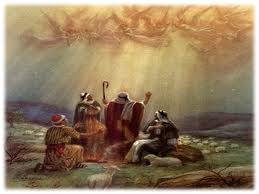
“A great company of the heavenly host appeared with the angel, praising God and saying, “Glory to God in the highest, and on earth peace to all people!” ~Luke 2:13-14

And…

“The shepherds returned, glorifying and praising God for all the things they had seen and heard.” ~Luke 2:20

God comes to his creation, he comes here to bless his creation and to live among and redeem his creation. And both heaven and nature sing. Both mighty angels and lowly shepherds sing.

Joy to the world, the Lord is come, let earth receive her King.
Let every heart prepare him room, and heaven and nature sing!

Peace,

Allan
Incarnation Revelation

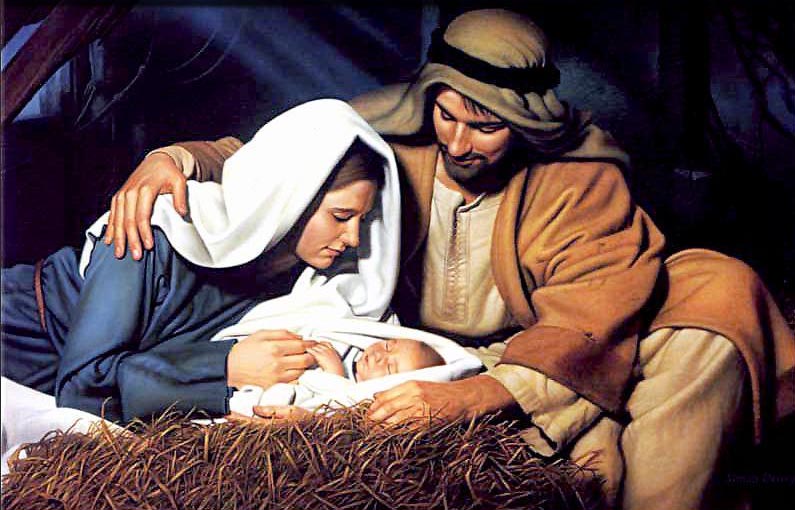
JesusBirthThe Incarnation is a remarkable and powerful thing: God chose to come into this world the same way all of us come into the world — through the pain and water and blood of human birth. Just like you and me, God was born. God came here as a baby. The Gospel of John says the Word — the creative Word of God, the creation power of God — became flesh and made his dwelling among us.

God with us. Immanuel. He came to us. God came here to live with and to bless his creation. And it’s not just a beautiful idea or an abstract theological truth. It really happened on that clear starry night in Bethlehem.

But what do we do with this? We rejoice and we express thanksgiving, yes. We join heaven and earth in praise and worship, absolutely. But we don’t really understand it. God Almighty, the Creator of Heaven and Earth, coming to this world as a helpless baby — that blows our minds. We don’t really have a category for that.

So, usually, we kind of chop Jesus up. Fully human and fully God, we don’t know what that means. So we say everything in the Bible about Jesus’ weakness and pain and suffering points to his humanity, and everything in Scripture about his wisdom and power and authority points to his divinity. But if that’s the case, the coming of Jesus doesn’t really tell us anything new. It’s nothing to sing about. We don’t need Jesus to tell us that God is big and powerful and strong and that human beings are little and weak and powerless. We already know that. We already believe the relationship between God and humans is about above and below, about superior to inferior, about master to servant. We already believe that.

Well, that’s not what the baby Jesus is about. Immanuel, God with us, is about the shocking reversal of everything we believe about heaven and earth. It’s not about big God and little humans. It’s not about the Creator asserting his divine greatness and power in contrast to human weakness. This is about God becoming weak and powerless so that humans can become affirmed and exalted. It’s about God lowering himself so his creation can be lifted up.

Irenaeus, in the second century, wrote: “Jesus Christ in his infinite love has become what we are in order that he may make us entirely what he is.”

Jesus prays to his Father the night before his death, “I have given them the same glory that you gave me!”

JesusBabyAdorationGod did not create heaven and earth to get joy or to receive love. He created in order to share his joy and love. Yes, all of creation is an explosion of God’ glory. All of heaven and nature point us to God’s goodness and beauty, his power and love. But he didn’t do it so we would believe in him. He doesn’t do it for our inspiration or spirituality. He does it because he wants to share his joy and love.

So he comes to us in Jesus. He joins us as a baby. He shows us in the birth of the Christ that his Kingdom is not founded on bloodlines or race or nationality or money. His nature is not about power or strength or violence or war. God’s character, what he’s all about, is grace. He and his Kingdom come to us as a gift of his amazing grace.

“He came to that which was his own… To all who received him, to those who believed in his name, he gave the right to become children of God — children born not of natural descent, nor of human decision, or a husband’s will, but born of God.” ~John 1:11-13

We’re not born into the Kingdom like we have some special birthright or like we’re entitled in some way. We’re adopted into the Kingdom. We are given our eternal rights and blessings by grace. It’s a gift. Jesus was the Son of Mary by faith, yes, and by water and blood. But first, he was her son by divine grace.

“The Word became flesh and made his dwelling among us. We have seen his glory, the glory of the One and Only, who came from the Father, full of grace and truth.” ~John 1:14

The King of the World has come. And he’s not like any king this world has ever seen. What sets him apart from other kings and what sets his subjects apart from other people is not his strength, but his weakness like us; not his majestic power, but his suffering with us; not his eternal authority and rule, but his obedience and suffering for us.

Joy to the world, the Lord is come! Let earth receive her King! Let every heart prepare him room, and heaven and nature sing!

Peace,

Allan
Forgiveness is the Only Way

SinfulWomanForgiven3There are more than 50 words in the Bible for sin: debt, evil, wickedness, trespass, unrighteousness, guilt, transgression, disobedience, rebellion, etc., But exposing the sin and naming the sin is not what matters. Keeping score is not the Gospel. Witch-hunting is not the Gospel. Shaming people is not the Gospel. Forgiving sin — that’s the Gospel. Because it’s the only thing that works.

Our Lord teaches us to pray: “Forgive us our sins as we forgive those who sin against us.”

We are faced with lots of sin, sin everywhere — personal sin, family sin, institutional sin. But Jesus doesn’t tell us to get a mop and a bucket and a brush so he can show us how to scrub the sin from our lives and the lives of our children and spouses and neighbors. He doesn’t tell us how to hook up a power hose so we can blast away all the corruption in government, all the sacrilege in our churches, and all the unbelief in our schools. Jesus tells us to pray: “Forgive us as we forgive.”

Our God deals with sin. He deals with sin decisively. Head-on. Effectively. It’s not like getting rid of a germ: “Here’s a shot, take these two pills, and call me in the morning.” It’s not like getting rid of mice in the attic: “Set out these traps, put out this poison, then Whack! Whack! Whack! All the sin is gone!” And God doesn’t deal with sin by amputation, like it’s gangrene on a diseased leg: “We’re going to chop it off. It’s really going to hurt. You’re going to have a severe limp the rest of your life. But, hey, there’s no sin!”

God deals with sin by forgiving us.

If something’s going to be done about sin, it’s not going to be with laws and commands and rules. Do we think what’s wrong with this world is something we can fix on our own? We can’t. Do we think there are judicial or governmental or educational or psychological ways to deal with sin? There aren’t.

Forgiveness is the only way.

“As God’s chosen people, holy and dearly loved, clothe yourselves with compassion, kindness, humility, gentleness, and patience. Bear with each other and forgive whatever grievances you may have against one another. Forgive as the Lord forgave you.” ~Colossians 3:12-13

Forgiveness is the only way to deal with sin. It does not settle all the questions of blame and fairness. In fact, it purposefully avoids those questions. What forgiveness does is allow a relationship to start over. Forgiveness brings people back together. It begins a good thing anew.

But a lot of us live in a logjam between forgiveness and justice. When somebody does me wrong, I can think of a million reasons not to forgive. He needs to learn a lesson. I don’t want to encourage her irresponsible behavior. She needs to learn that actions have consequences. I was the one wronged – he needs to make the first move. How can I forgive if she’s not even sorry?

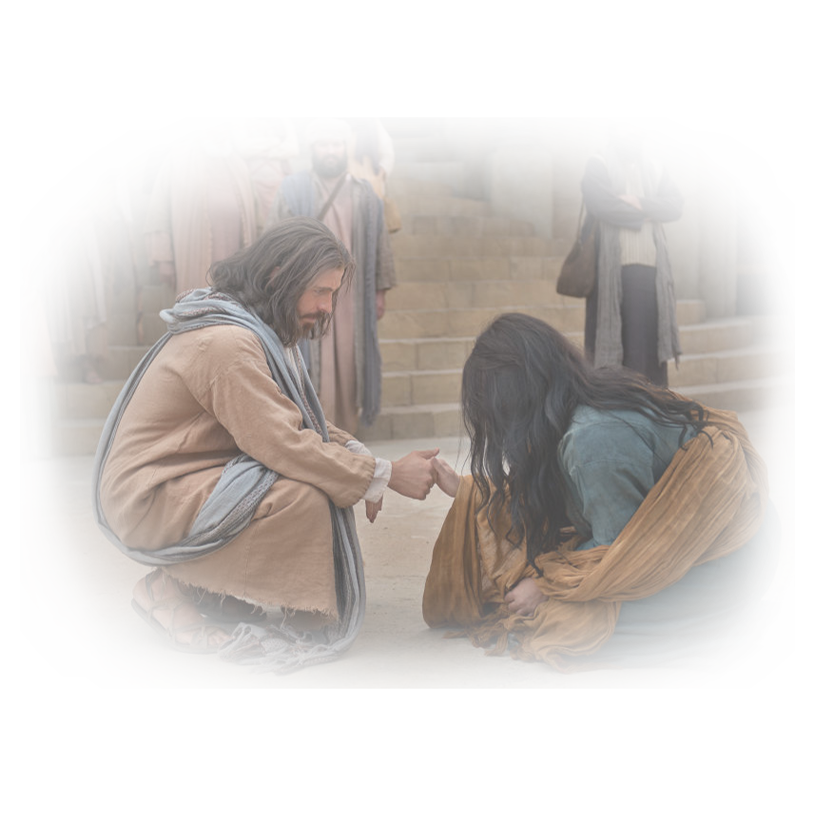
Remember the woman in John 8 who was caught in the act of adultery? They bring her to Jesus and throw her down at his feet. The Law says she should be stoned. But Jesus says, “Hey, whoever has never sinned can throw the first rock at her.” The young look to the old. The old look to their hearts. And they drop their rocks and walk away.

Jesus and the woman are left alone. The Lord stands up and looks around.

“Where is everybody? Has no one judged you guilty?”

“No one, sir,” she answers.

“I also don’t judge you guilty.”

If you ever wonder how God reacts when you fail, take those words and frame them. Hang them on your wall. Read those words of the Christ. Drink from them. Take them into your soul. “I don’t judge you guilty.”

When we sin against God, that creates a barrier. But forgives us and removes that barrier. God gives up his holy right to get even. Instead, he bears the cost of our sin in his own body. The sin is gone, the price is paid, and the relationship is restored. God made him who had no sin to be sin for us. You can’t get any more plain than that.

Justice is not the best or last word. In all matters of wrongdoing, in all matters of sin, in all that is wrong with the world and with us, in all that is wrong with our enemies and our friends, forgiveness is the best and last word. And forgiveness must be our first response to every person who hurts us or sins against us. We’ve got plenty of police officers and judges and juries and prosecuting attorneys to say, “You’re guilty!” Who’s going to say, “Father, forgive them?” If it’s not Christians, who’s going to say, “I don’t judge you guilty?” If not us, who’s going to say, “Your sins are forgiven?”

However important justice is — and it is very important — forgiveness is more important. Not soft sentimentality, but hard-edged Gospel. Not an apathetic shrug of the shoulders, but the white-hot flame of resurrection love forged in the furnace of the cross. Assuming that the criminal crucified next to Jesus was receiving a just sentence — he admitted it himself — forgiveness trumped justice that day. It always does.

Peace,

Allan

Forgiveness Honors God

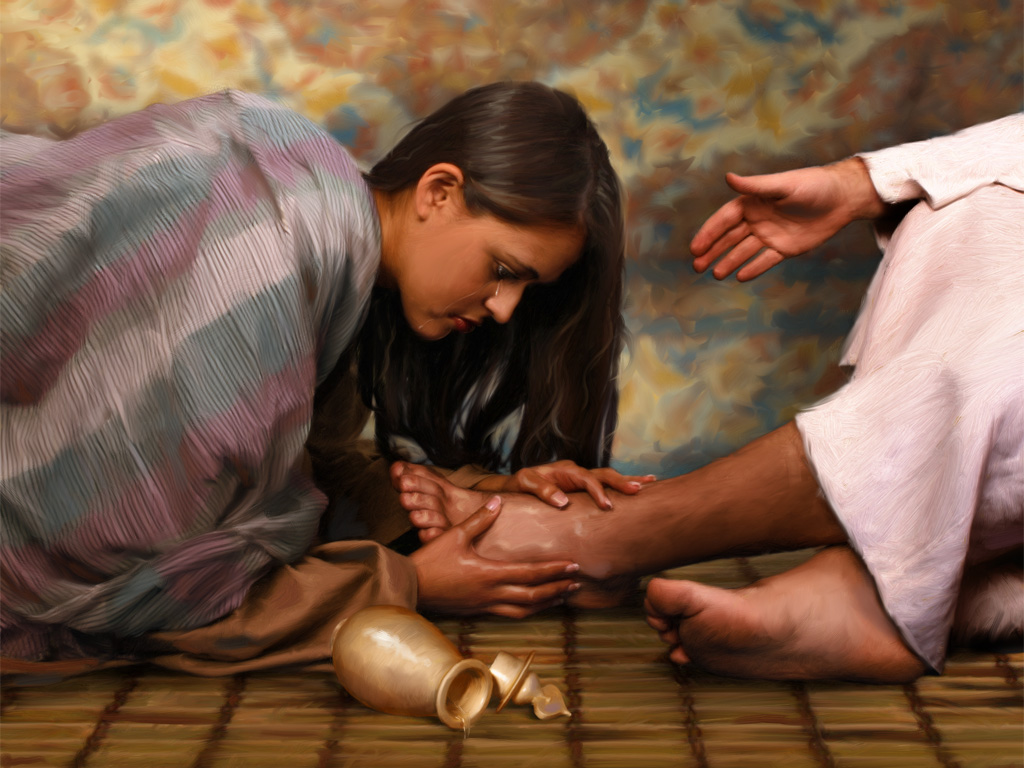
SinfulWomanWashingFeetWhen Jesus tells us to forgive, one of the main reasons he gives is because this is what God is like. In the Sermon on the Mount, our Lord commands, “Love your enemies and pray for those who persecute you that you may be children of your Father in heaven” (Matthew 5:45).

Real forgiveness honors God.

All people, all men and women, are created by God and made in the image of God. Every single person on this planet is a being of supreme value to God. That’s why in Genesis 9, God says anybody who takes the life of a human being is going to be held accountable. Even when an animal kills a human, God says he’s going to hold that animal accountable. Why? “For in the image of God has God made mankind” (Genesis 9:6). Every human life is sacred. Every human being has dignity.

Because all people bear the image of God, because all men and women are so valuable to God, we are not only forbidden to kill people, we are forbidden to curse people or talk bad about people. Any people. Scripture tells us we cannot “curse men and women who have been made in God’s likeness” (James 3:9). All human beings have this. Not just the “good” human beings — all human beings. Regardless of their track record, regardless of their character, God made them and God loves them. So we do, too.

Timothy Keller illustrates this by imagining a foreigner who visits Mount Vernon in Virginia. He doesn’t know anything about American history, he’s never been here before, and he’s surprised that Mount Vernon is a national monument. He might be confused. There are lots of old Virginia plantation houses that are bigger and fancier and more beautiful than Mount Vernon. Lots of those houses have more architectural merit than Mount Vernon. What makes Mount Vernon so worthy of all this honor and respect?

You’d say to this foreigner, this is George Washington’s house. George Washington is the father of this country. And that would explain it. You wouldn’t have to say anything else. The merits and quality of the house itself are irrelevant. Because we treasure the owner, we honor his house. Because it was so precious to him and we revere him, it’s precious to us and we take care of it. So we treasure every single human being on earth as a way of showing respect for their maker and owner.

Forgiveness also honors God because it’s an act of faith in God. By forgiving someone, I’m trusting that God is better at justice than I am. By forgiving, I give up my rights to seek fairness and to get even; I leave it all for God to work out. He will. I trust that he will. So I forgive.

Peace,

Allan

Forgiveness Imitates Jesus

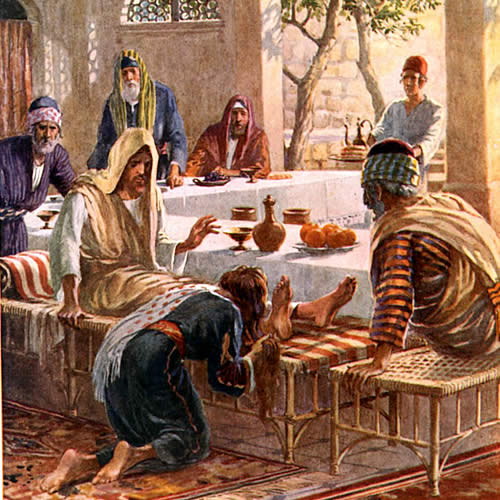
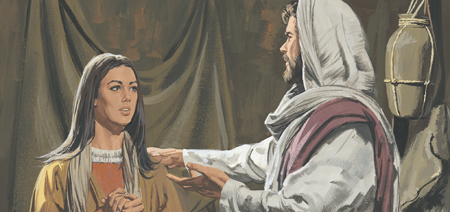
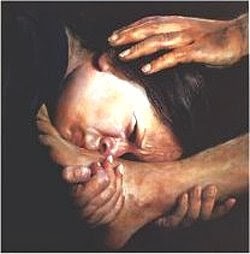
SinfulWomanFeetJesus is eating dinner with a bunch of religious leaders at Simon’s house when a well-known prostitute walks in and begins showing Jesus a lot of attention (Luke 7:36-50). She causes quite a scene when she begins weeping and pouring perfume on Jesus and wiping his feet with her hair. Simon makes judgments against the woman and against the rabbi, Jesus, who doesn’t seem to know how awful she truly is. But Jesus looks this woman right in the eyes and says, “Your sins are forgiven.”

Now, I don’t know all this lady’s sins. I don’t know everything she’d ever done. I don’t know about all her poor decisions and terrible situations. I don’t know the details of all the hurt she had caused. But Jesus knew. He knew all of it. And he looked right at her and said, “Your sins are forgiven.”

Maybe the four most powerful words anybody can ever hear.

Maybe the four most difficult words anybody can ever say.

Forgiveness is hard. It’s not air freshener that we just spray from a can (psssht-phssht!) and “Ah, doesn’t that make everything better?” It’s not, “Oh, you really hurt me, you really sinned horribly against God and me, but (psssht-psssht!) I forgive you and now everything’s great!” No, it’s not like that at all. Forgiveness is hard. It’s achingly difficult. And, actually, fairly unnatural.

Elizabeth O’Connor wrote, “Despite a hundred sermons on forgiveness, we do not forgive easily nor find ourselves easily forgiven. Forgiveness, we discover, is always harder than the sermons make it out to be.” SinfulWomanForgiven

“Your sins are forgiven.” You need to hear that. You need to say it.

But, I know, it’s not easy. I struggle with some of this. We’ve all got questions, right? Even in this magnificent story of divine forgiveness in Luke, we’ve got questions: Did this woman even ask for forgiveness? Did Jesus tell her to “sin no more?” What about all the homes she had wrecked, what about those other wives and kids? Do they have any say? Where’s the truth in this story? Where’s the justice?

Real forgiveness is hard. But it imitates Jesus.

Notice that Simon, the religious expert, has one way of dealing with people who sin and Jesus, the Son of God, has another way. Simon wants to be right, he wants to be religiously and socially correct. So he separates himself from people who sin. He keeps this woman at a distance. He wants it very clear that he does not endorse this lady’s lifestyle. Jesus is, of course, anti-sin. He clearly teaches and preaches against every kind of sin. But he does not isolate himself from sinners. He understands that if the light is going to shine in the darkness, the light has to engage the darkness. Simon is distant and critical. Jesus is up close and personal.

Because Jesus sees the potential. There’s real possibility here. That’s why Jesus pursues and relates to sinners. Simon focuses on the woman’s past sins, Jesus is zeroed in on her future potential. That’s why he points out all the positive things she’s doing. Look, Simon, do you see this woman? Do you see her kindness and generosity, her goodness?

SinfulWomanCloseUpWhat do we see? That’s one of the hard questions this story raises. Do we see sinners for who they are or for what God can do with them? If the Church really believes it has something eternal to offer in Christ Jesus, then we’ve got to relate to sinners the way Jesus did. God’s number one way of changing people is by offering them grace and forgiveness. Lots of people want to start all over again, they’re just not sure it’s possible. Jesus shows us here that no hole is too deep for the reach of God’s compassionate and delivering hand.

So when we meet people whose lives are totally out of touch with God, we’ve got to be very patient and very kind. And we must forgive. Because nothing’s going to happen without God anyway. That sinner is not going to change without God. No chance.

See, that’s one of the places I struggle. Sometimes I want to put the cart before the horse. I want to see people clean up their act first, get everything in order, prove to me you’ve changed. Then I’ll forgive and have a relationship with you.

Jesus always makes the first move. Always. Jesus first extends his mercy and forgiveness. Jesus first establishes the relationship.

“Your sins are forgiven.” Have you said that to anybody lately? You need to. It’s a powerful way to imitate our Lord.

Peace,

Allan

Bringing the World to a Halt

“I was hungry and you gave me something to eat, I was thirsty and you gave me something to drink, I was a stranger and you invited me in, I needed clothes and you clothed me, I was sick and you looked after me, I was in prison and you came to visit me… I tell you the truth, whatever you did for one of the least of these, you did for me.” ~Matthew 25:35-40

CupColdWaterYou can stop the world with these acts of mercy in the name of Jesus. You can bring the whole world to a screeching halt when you do these little things to bless others with the grace of our God that maybe they’ve never experienced.

You’re not going to stamp out illiteracy, but you can read books once a week at the elementary school in your neighborhood. You’re not going to solve the problem of world hunger, but you can buy a hot meal for those two guys down at the corner. You can’t stop all sex trafficking, but what if you threw a birthday party for a prostitute?

Seriously. What if your Bible class or your small group threw a birthday party for a prostitute? Can you imagine? That would interrupt the world. That would make the world pause and take notice and pay attention. Those kinds of things give the world a sign that there’s another reality here.

You can’t say anything to this world with an act of power. Big, loud acts of power and numbers and strength don’t say much. Jesus Christ stopped the whole world when he died. On a cross. The kinds of things that make a real difference have to come out of our weakness and submission, out of forgiveness and sacrifice and service.

A cup of cold water doesn’t sound like much. Apparently, it means a whole lot to Jesus. It’s not what you do, it’s what God does with it.

Peace,

Allan

« Older posts Newer posts »