
 There are a lot of people who only go to church on Easter and Christmas. Those people in Amarillo were surely confused when they woke up this morning.
Peace,
Allan
AllanStanglin.com
There are a lot of people who only go to church on Easter and Christmas. Those people in Amarillo were surely confused when they woke up this morning.
Peace,
Allan
 Today is Maundy Thursday, the day Christians all over the world remember the events of the night our Lord Jesus was betrayed by his disciples. Yeah, remember, it wasn’t just Judas who betrayed Jesus; he was just the only one who got paid. They all fled that night when things got hairy. They all abandoned Jesus (Well, the guys did. According to the Gospels, the women were the only ones who did not flee the scene. They stood by their man, as it were, through the trials, the suffering, the crucifixion, and the burial).
The word “Maundy” is from a Latin word that means “commands.” That word has been used by Christians to describe that last night for centuries because Jesus gave his followers several commands during that last meal:
“Now that I, your Lord and Teacher, have washed your feet, you also should wash one another’s feet. I have set you an example that you should do as I have done for you.” ~John 13:14-15
“A new command I give you: Love one another. As I have loved you, so you must love one another.” ~John 13:34
“My command is this: Love each other as I have loved you.” ~John 15:12
Today is a day of solemn remembrance. Easter Sunday — I can’t wait for Easter, I love Easter, Resurrection! — is a day for exuberant celebration. But Maundy Thursday is for individual and corporate reflection. Inspection. Introspection. How have I betrayed my Lord? Am I keeping his commands? In what ways do I continually deny my Savior?
He told his disciples that night around the table to remain in his love, to obey his commands. At a meal together, he asked them to obey his commands just as he had obeyed the commands of the Father. And then he says it: My command is that you love each other as I have loved you. You’re my friends, he says, if you do what I command (John 15:9-14).
Are we obeying his primary command to love each other? Are we showing Christ Jesus’ sacrificial, servant-hearted, selfless love to other followers? Or do we betray our Lord and disobey his command by judging other disciples and withdrawing from other followers? Are we loving and serving all Christians as Jesus commanded, as he prayed to our Father on that dark night we would, or do we only love and serve Christians who think and behave exactly like we do? Do we reject Jesus’ command by criticizing other churches, even condemning them, because we have different understandings or different practices?
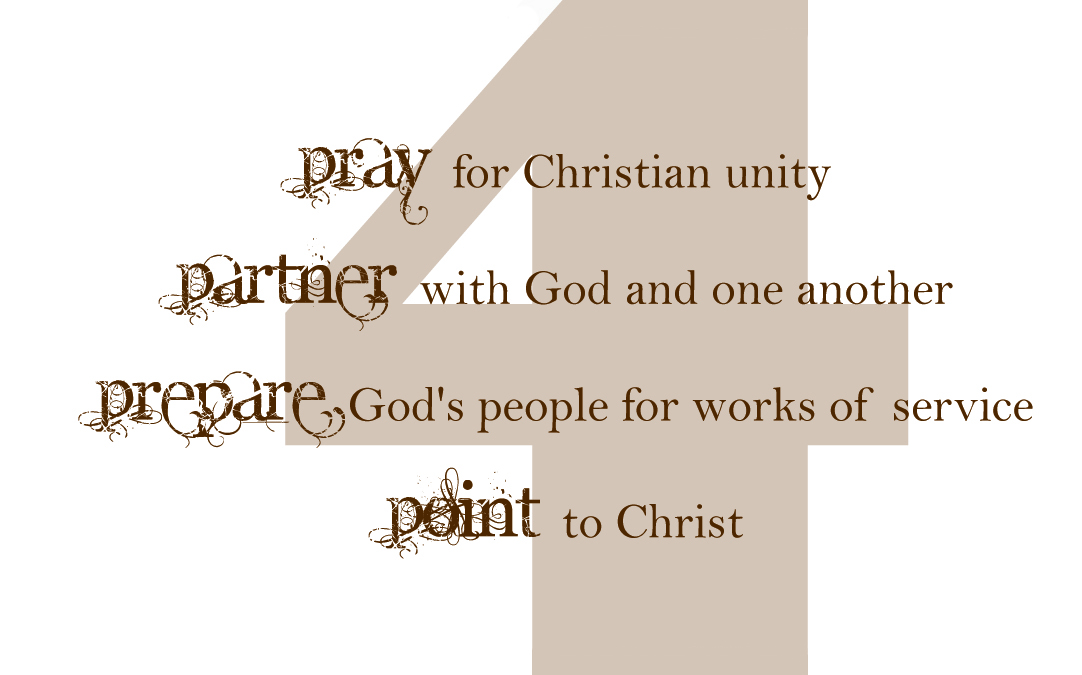
Here at Central, we’re trying to love all Christians in Amarillo the way Jesus showed us during that last meal on that Thursday night. We’re trying to be sacrificial. We’re trying to be servants. We’re trying to come closer together with other Christians. We’re trying to erase the man-made lines of distinction and focus on the many, many things we all have in common in our Lord Jesus. No judgments. No criticisms. More grace. More forgiveness. More service. More love. We’re not perfect at this yet; nobody’s arrived. But we’re trying.
Tonight, our church family joins with our brothers and sisters at First Baptist, First Presbyterian, and Polk Street Methodist for a time of worship and communion with each other and with our risen and coming Lord. We’re going to reflect together. We’re going to inspect our lives together. We’re going to eat and drink together. And we’re going to commit to the Maundy Thursday spirit of paying attention to Jesus’ commands. And obeying them.
Peace,
Allan
“The Word became flesh and blood and moved into the neighborhood.” ~John 1:14 (MSG)

God doesn’t wave a magic wand and cast a spell on the earth to restore it to its original condition. He doesn’t judge the world as beyond salvation and destroy everything. God comes to us. That’s his answer. That’s our God’s strategy. He enters our humanity with us, he puts on our skin and bones and blood, and participates in our problems. Immanuel. God with us. Jesus joins our mess.
This is how God works in the world. He takes on our humanness. He became one of us. The Son of God not only died for our sins as a human, he lived here as a human, too! He got hungry and tired with us. He laughed and cried with us. He bled. He sweated. He experienced joy and pain with us. He got surprised and he got frustrated. He was tempted. He struggled. He was betrayed by his best friends. He had to make hard decisions. He lost loved ones. He became one of us with us. This is God’s strategy.
Entering. Sharing. Engaging. Participating. All in.
That’s very, very different from Hinduism, Buddhism, and Islam. All the other world’s religions worship a god who stays in the heavens, who has removed himself from creation and demands that his people come to him. People are required to find secret knowledge and spiritual codes and work and strive and struggle to get to these gods. But our God comes to us. He comes here to us.
 It’s important for us to know that Jesus is both 100% God and 100% man. I can’t explain it all, I certainly don’t understand it all. But the Scriptures declare it, the Apostles’ Creed affirms it, and Jesus’ life on earth proves it. He is both God and man. And this is critical to our Christian faith.
If Jesus wasn’t a man, then he didn’t really enter our mess. He came here, yes, but he remained above all the dirt. He didn’t really enter or share or participate in the ugliness of what is our situation. He wasn’t human, he was God! It was easy!
And if Jesus wasn’t God, then he didn’t really sacrifice anything to come to us. He didn’t risk anything. He didn’t really put anything on the line. And it didn’t really make an eternal difference. It didn’t matter in the long run. He wasn’t God, he was human! He was born here, he didn’t have a choice. And then he died. It was unfortunate, that’s all.
No.
Jesus the Messiah, the Alpha and the Omega, the Creator and Lord of Heaven and Earth, equal with God the Father from before the beginning of time, left his home in glory and put on our skin and bones in order to enter our mess. He entered your mess. He did. Jesus Christ entered your situation, he shared in your experiences, he carried all your burdens, he participated in your problems. He got very intimately involved in your situation at a tremendous personal cost. That’s the Gospel! Praise God!
Christ Jesus put on our flesh and lived with us. He entered the fray. And so we disciples of Christ today enter the fray with our money and time and resources and energy and talents and houses and everything we’ve got. By the power of the Holy Spirit, Christians shine light into darkness, we bring life out of death. We join in the problems. We jump into the ugliness. That’s why so many hospitals are named Methodist and Presbyterian and Baptist-St. Anthony’s — because Christians have been entering the mess and sharing and carrying and engaging and participating since that very first Easter Sunday.
It’s obvious that this is the way of our Lord. God’s Church is not called to just hang on until the uncleanness is destroyed. We’re not called to just pray about the mess so God can take care of it. And we surely don’t lock ourselves up in a gated monastery and ignore the problems. We enter it. We engage it. Heaven and earth, God and humans, present together in the redemption and restoration of the world.
Peace,
Allan
 We spent all weekend behind the Pine Curtain in Liberty City celebrating my mother’s 70th birthday. As our children get older and our schedules become less predictable, getting the entire family together is becoming more and more difficult. But it’s always worth it. Dad grilled burgers in the rain, we played football and Frisbee and board games, we ate a ton, laughed a lot, and worshiped together as a big family yesterday morning at the Chandler Street Church of Christ in Kilgore.
The highlight for Carley was probably getting to drive the Impala. My dad owns a fully restored 1960 Chevrolet Impala that belonged to my grandfather. It’s a beautiful turquoise head-turner: huge fins on the back, wide whitewall tires, rocket-style tail lights, wrap-around windshield, add-on AC, and plenty of chrome. The younger kids all wanted to go for a ride and, somehow, they returned to the house with Carley behind the wheel. I’m not sure how she talked her grandpa into letting her drive, but it was pretty cool.


~~~~~~~~~~~~~~~~~~~~~~~
I received an email from Jerry Taylor last week. Totally out of the blue. Completely unexpected. No context. No explanation. Just a couple of short sentences from a great man of God whom I respect and admire.
“One person has said about the current political season that this is a time of moral reckoning for every American citizen. It can better be said that this is a time of moral reckoning for every Christian in America.”
That was it. Nothing else. Short. Simple. Yet penetrating. And provocative.
 I wonder about those in the United States who declare themselves to be Christians and, at the same time, are personally and emotionally invested in the race for president. As the shouting grows louder, as the insults become more pointed, as the fear tactics reach ridiculous levels, how do Christians participate in the process without personally joining and even contributing to the rancor of the political campaigns? I’m sure it’s possible; I just wonder how. It seems to me it would be maddeningly difficult.
Is there even one political YouTube video you can recommend that only builds others up without tearing anybody down? Is there even one political email you can forward that only encourages people without insulting or disparaging others? If you put a candidate’s name on the back of your car, are you telling everybody that you agree with that candidate’s position on everything and that you stand by his or her tactics? It must be really difficult for a Christian to engage this thing and still hold true to our calling as ambassadors for Christ.
I’ve been thinking about the opening lines of an ancient prayer that’s been attributed to St. Francis. The prayer petitions God to empower the one praying to be an instrument in the world of God’s peace. The one praying is asking God to work through him to show the world a different way
Lord, make me an instrument of thy peace;
where there is hatred, let me sow love;
where there is injury, pardon;
where there is error, the truth;
where there is doubt, the faith;
where there is despair, hope;
where there is darkness, light;
and where there is sadness, joy.
I’m sure I’m not the only one who’s getting the forwarded videos and emails, who’s thrust into the conversations at meal times, who’s bombarded with the rhetoric while waiting in line at Wal-Mart or while I’m getting my oil changed. How do you answer that hateful email? How do you reply to the mean-spirited video? How do you respond to the insults that disparage entire groups of people?
What it requires is discipline. Diligence. A refusal to join the rage. A commitment to combat the evil with love and grace. A constant awareness. A continuing asking of the question: Am I acting as an instrument of God’s peace?
Christians have to be intentional about sowing love where there is hatred. We must carefully choose words that build up, never injure; we must speak to forgive, never to hurt. We have to look through the lens of Christian hope in the face of so much despair. We must be full of joy when so many around us are filled with hate. And it’s not going to happen accidentally. We have to do this on purpose.
Peace,
Allan
 The Word of God confronts us with two ways. The Law and the Prophets, the Psalms and Proverbs, the Gospels and Letters all present us with the choice of two ways. It’s not where you’re going to live or what career you’re going to pursue or who you’re going to marry or where you’re going to eat. The choice given us in Scripture certainly encompasses and impacts all the daily choices we make while we live in those places with the people we marry and in the work we do and while we’re eating lunch. But there’s only one choice in the Bible: the way of life of the way of death; the way of blessing or the way of curses; the way of God or the way of the devil.
Jesus says, “I am the Way.” I am the Way to God and I’m also the way God comes to you. I’m a two-way Way. And so we choose Jesus. And when we choose Jesus, what is it specifically that we’ve chosen? What are we signing up for when we say “Yes” to Jesus?
Well, the Gospels tell us plainly that Jesus’ Way is counter cultural. Popularity and power mean just about everything in our society, but popularity and power mean absolutely nothing to our Lord. In the Gospels, it looks like Herod has the power. The governing officials in the Roman Empire have all the power. So the Roman soldiers. The religious leaders have a lot of power. The chief priests and teachers of the Law and the Sanhedrin wield plenty of power. And all of these people and groups seem to have their way with Jesus. Jesus is the lowly servant who’s despised and rejected, beaten and crucified. Cursed by God and man.
But remember the centurion clearly sees the truth when he sees how Jesus dies: “Surely this man was the Son of God.”
Jesus’ way is upside down. It’s counter cultural. Our default, though, is the pursue the ways of the world. As disciples of Jesus individually and as churches of God collectively, we’re not very careful with this. Without even thinking about it, we embrace and adopt the ways of the culture. We imitate the ways used by powerful people who run large companies and corporations, high profile people who lead political parties and nations. By threat and force and power; with money and might; by out-yelling and out-insulting others; by demonizing those who disagree with us; by walling ourselves off from anyone who may do us harm. And we don’t even consider that those ways are totally at odds with the way of Jesus.
We see accomplished men who’ve achieved great success by using these worldly methods and we make them elders of the church. We make these guys preachers of the Word. Whatever the culture decides is exciting and successful and influential, whatever gets things done, whatever will gather a crowd.
We usually have to take four or five different looks at guys whose main character traits are gentleness and humility before we consider them for leadership roles — if we even look at those kinds of guys at all. Shouldn’t the man who lives only to serve others be moved to the top of the list? Shouldn’t the guys who consider the needs of others more important than their own, the guys who refuse to advance their own agenda, the guys who you’ve never heard say one bad thing about anybody else, shouldn’t they be the frontrunners for leadership positions in our congregations? Shouldn’t they be the ones to set the tone in our churches?
Peace,
Allan
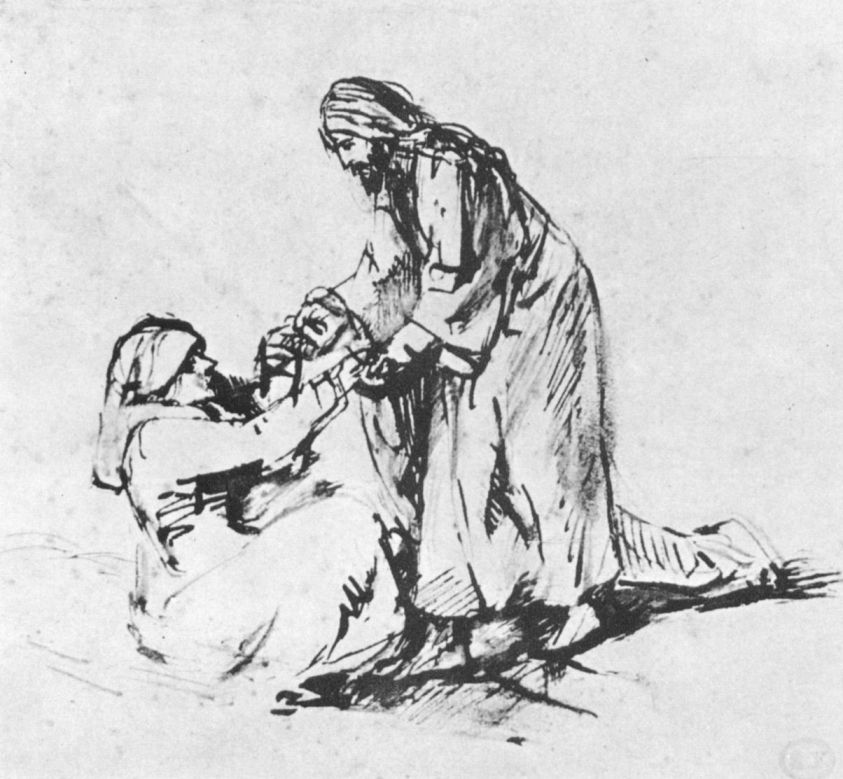 People matter to Jesus. Individual people — men, women, and children; young and old; rich and poor; educated and ignorant — mean a whole lot to Jesus. We find Jesus in the gospels calling crowds and feeding multitudes. But the main image is of Jesus with individuals. He heals individuals. He comforts and encourages individuals. Nothing’s abstract with our Lord. It’s not theory. It’s not impersonal. The Jesus Way is clearly a very personal way to be.
We’re carefully considering the Gospel of Mark here at Central. And I’m impressed by this picture Mark paints of a very personal Jesus.
On the opening page he presents Jesus as taking Peter’s mother-in-law by the hand and helping her up. He touches the man with leprosy. He calls Levi and then eats dinner with him at Levi’s house. The bleeding woman touches him and he calls her “daughter.” He takes the dead girl by the hand, it says, with her mom and dad there in the room with him. “Little girl,” Jesus says. On and on Jesus is touching people, hugging people, eating with people, meeting with people. Jesus’ Way is personal.
And we don’t always think about it. We write checks. We build buildings. We create programs. We serve on committees. And those are all really great things. Praise God for those wonderful things! But I feel like there are fewer and fewer visits in one another’s homes. I think there are fewer and fewer face-to-face conversations. Fewer touches and hugs. Fewer confessions. Fewer prayers lifted up together through streams of tears. Fewer and fewer deep, close, personal relationships.
 In the gospels, Jesus doesn’t stand on the edges of the scene. He never waits for something to happen. He grabs people, he walks toward situations. He makes things happen.
The way of Jesus is in bearing the burdens of others. Carrying the pains of others. Sharing their hurts. Not avoiding it. Not shielding yourself from it.
You can never go wrong showing up at somebody’s house to pray. That is always the right thing to do. You can never go wrong showing up at a funeral to cry. That is always the right thing to do. You can never go wrong showing up at a hospital to sit with somebody. That is always the right thing to do. And you’ll take it home with you. You won’t be able to shake it. It’ll keep you up at night. It’s heavy and it’s hard. It will burden you. It’ll impact you.
But it’s so like our Lord.
It’s so like Jesus who did not one time shy away from entering your mess and carrying your burdens. He walked toward you and your mess, he never walked away from you. He came to us and waded right into the middle of the tragedy of our lives to love and heal and restore. And it cost him. It cost him his life.
Peace,
Allan
© 2026 The Kingdom, The Kids, & The Cowboys
Theme by Anders Noren — Up ↑
Recent Comments