Author: Allan (Page 156 of 492)

Bucket List Opportunity

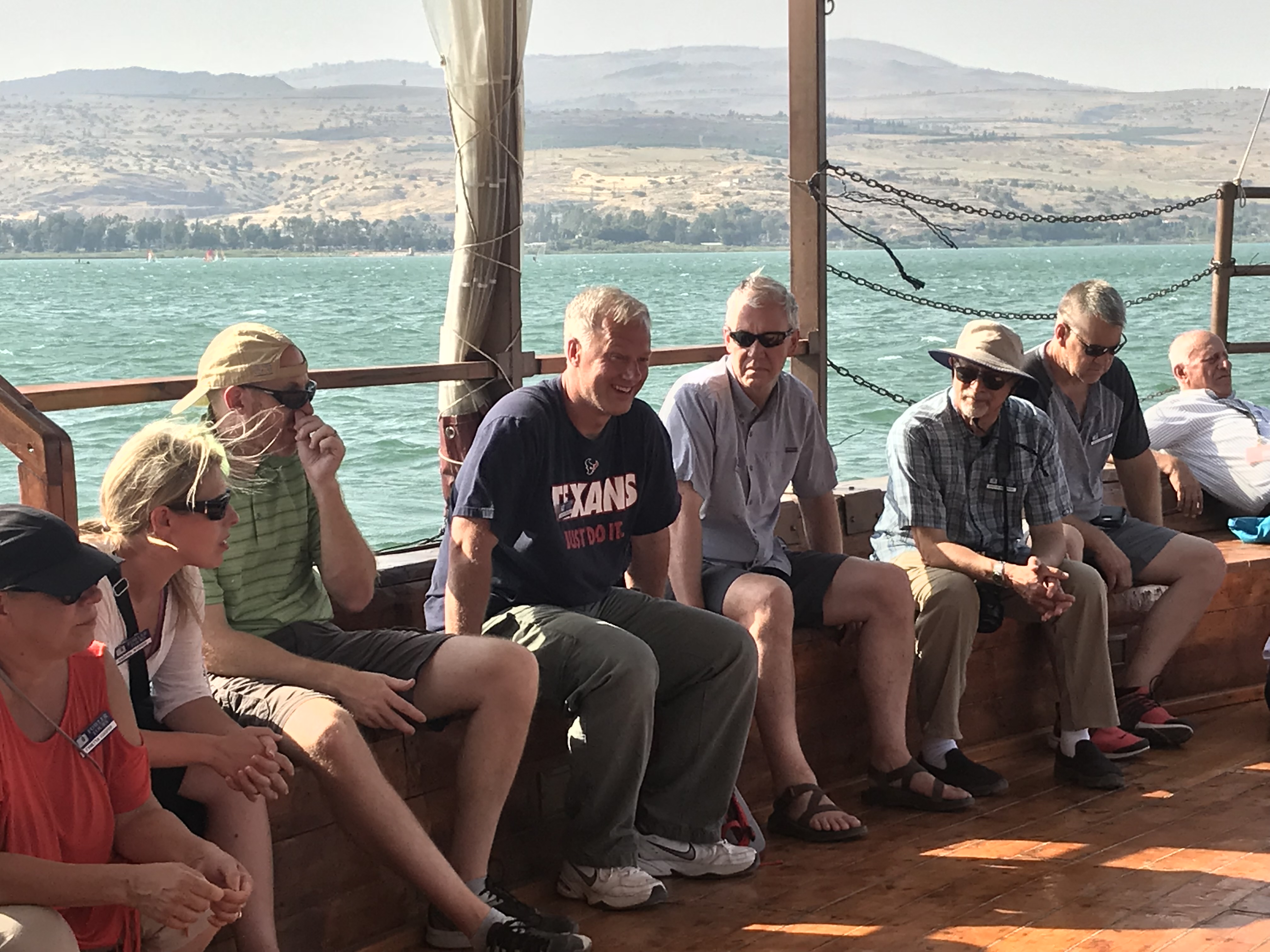
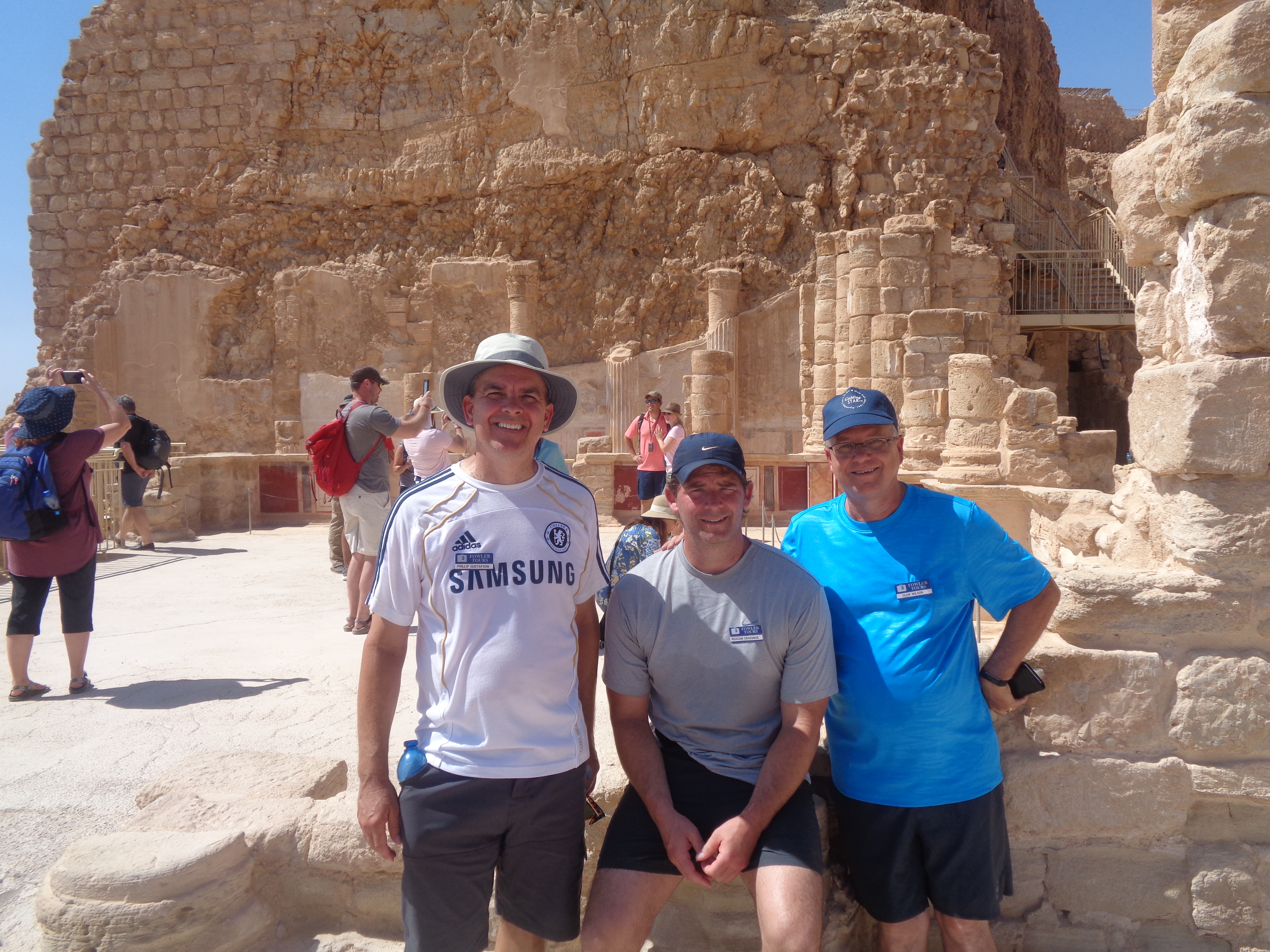
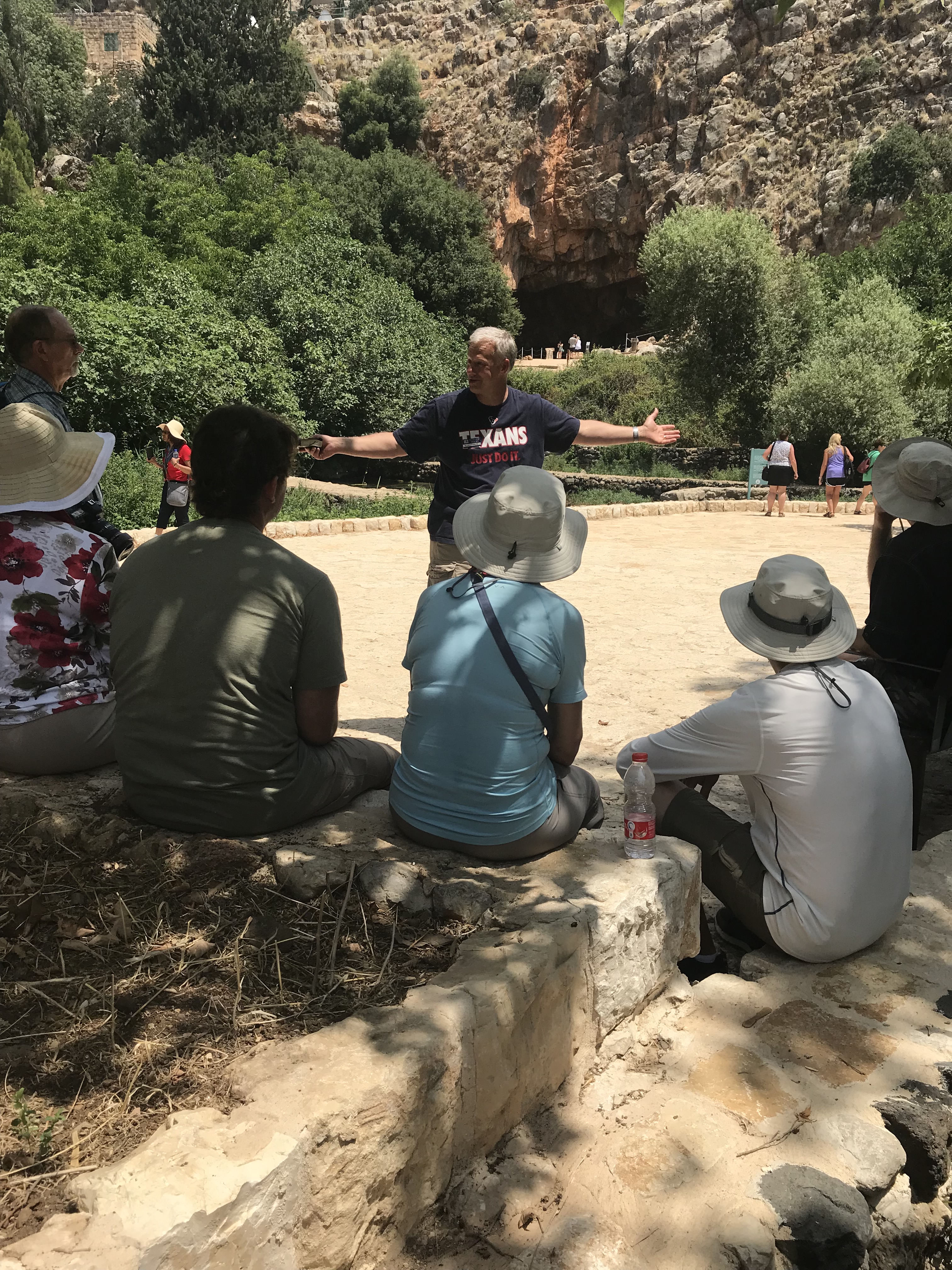
I have room for eight to ten more folks on our sightseeing trip to Israel May 28 – June 7 this year. This summer’s tour will be my fourth to lead and my fifth trip overall to the Holy Lands. If it’s on your bucket list, I’d encourage you to jump in with us.

We spend all of the ten-day tour in Israel, which allows us to visit all the sites literally from Dan to Beersheba at a leisurely and low-stress pace; we’ll take in once-in-a-lifetime experiences such as wading through the 2,700-year-old Hezekiah’s Tunnel, sharing a picnic on the banks of the Jordan River, floating on the Dead Sea, sailing on the Sea of Galilee, and praying in the Garden of Gethsemane; we’ll spend our evenings together in worship and reflection, processing what we’ve experienced that day and preparing for the next day’s agenda; and our tour is limited to 30-people, allowing us to enjoy guided tours and restaurants together and giving us more room to spread out on the air-conditioned bus.

Every paragraph of Holy Scripture contains geography, landscape, architecture, people, food, customs, dress, animals, agriculture, and rituals that serve to communicate the history and fact of God and his activity in our world. As we explore first-hand the sights, sounds, smells, and tastes of Israel on our trip, the story of our God’s faithful love will expand and deepen to penetrate your heart and soul like no other experience can. You’ll never read the Bible in the same way again.


Click here 2020Brochure to download the brochure with all the information and details. And holler at me if you have any questions.

Shalom!

Allan

Sheer Mercy

I waited tables at a Red Lobster one summer when I was in college. This was back in the 1980s when the restaurant offered an all-you-can-eat popcorn shrimp dinner on Tuesdays. One Tuesday evening a man sat down in my section and placed four five-dollar bills on the edge of the table. He said to me, “I want the all-you-can-eat popcorn shrimp with double fries and an iced tea. This twenty dollars is your tip. Every time I have to ask for more shrimp or more tea, I’m putting one of these five-dollar bills back in my pocket.”

I was both shocked and thrilled by this man’s great generosity and my great opportunity. I thought, “This doesn’t happen in real life! This only happens in the movies! This guy must have won the lottery or something!”

Over the next hour or so, I made sure this man’s glass was never below half-full and that he never had to wait in between bits of popcorn shrimp. I got that twenty dollars. And I felt like I earned it. We had an arrangement. I met my end of the bargain and he met his.

Grace is not like that at all. Mercy is not an arrangement that obligates two parties. And that’s what makes it so hard to receive.

God’s mercy doesn’t fit our paradigm. It’s not how we operate. We function according to merit. Our world and all its systems are based on merit. We work for what we get and we mostly get what we deserve. In school, we get good grades or bad grades and, most of the time, it reflects what we’ve put in. We get promotions and pay raises for the work we do. If we make an investment or render a service, we expect to get paid.

To receive mercy is to accept that you are powerless. It’s to place yourself in debt. It’s to understand that you are incapable of taking care of yourself or of saving yourself. It’s to admit that you are broken, you’re helpless, you’re unable and weak. And we are not very good at that at all.

It might seem like a little thing, but we have changed the word in the ancient hymn, “Alas, and Did My Savior Bleed?” I’m not sure when it happened, but the line in the newer hymnals reads, “Would he devote that sacred head for such a one as I?” Why?

Because I’m not a worm! I’m not unworthy! I’m not weak or incapable or hopeless!

That’s what makes it so hard to receive mercy. But if you can humble yourself to receive the mercy of God, if you can see your hands as empty and yourself as having nothing to offer, it’ll change everything.

That same summer at Red Lobster, a young couple sat down in my section on a Friday night. The place was packed, I was running like crazy between my four tables, and I messed things up with this couple very early in our relationship. I got their salad dressings wrong and the guy had to flag me down for some more tea. They had to wait forever for their food. I was so busy with my other tables, I let their dinner sit in the pickup window too long. And when I delivered their plates, I could tell I was not going to get a tip.

So, I quit on them.

I dropped off the check and didn’t talk to them again. It was already decided, I didn’t have a chance. So, I didn’t refill their drinks, I didn’t check back with them, I completely ignored them the rest of the meal, and I was relieved when they finally got up and left. And they left me a twenty-dollar tip.

It felt different than the way it did with the popcorn shrimp guy. It changed me. I didn’t deserve this tip, I didn’t do anything to earn it. I had no idea why they did that for me. It didn’t make sense. It didn’t fit the framework. It was sheer mercy. And it transformed me. For the rest of that summer, I saw people differently. I treated people differently. I saw myself and my responsibilities as a waiter differently. Mercy will do that.

God’s mercy is a free gift. It’s free for you with all your baggage and all your mess. It’s free for you and all your powerlessness and helplessness. That’s what makes it so transforming. You can’t earn it. Salvation is an entirely unmerited gift, so it blesses you with the freedom and the power to change. The problem comes when we try to earn it, when we want to feel like we’ve done enough. We try to get ourselves over the minimum number of good deeds required by God to be worth of his love and grace, but it doesn’t work that way.

Against all odds and against all circumstances, God in Christ takes care of all your needs. In shocking and thrilling fashion, Jesus becomes your sin and carries it to the cross. We’ve got so much guilt, we’ve got so much shame. All of us. We’ve got regrets. And our sin, my goodness — none of us has a chance. Except for the sheer mercy of Jesus. At the cross, Jesus settles all your business, he pays all your debts, he heals your disease, and he finishes your work. Just humble yourself to receive it.

Trust him with everything. Give him your doubts. Give him your fears. Admit all that up front: “Lord, I’m a mess!” It’s OK. Our God is big enough and strong enough to handle whatever you can throw at him. And he will receive you and accept you, not for anything you’re done or might probably do in the future, but because of what Jesus has done and promises to do for you forever.

Peace,

Allan
About Last Night

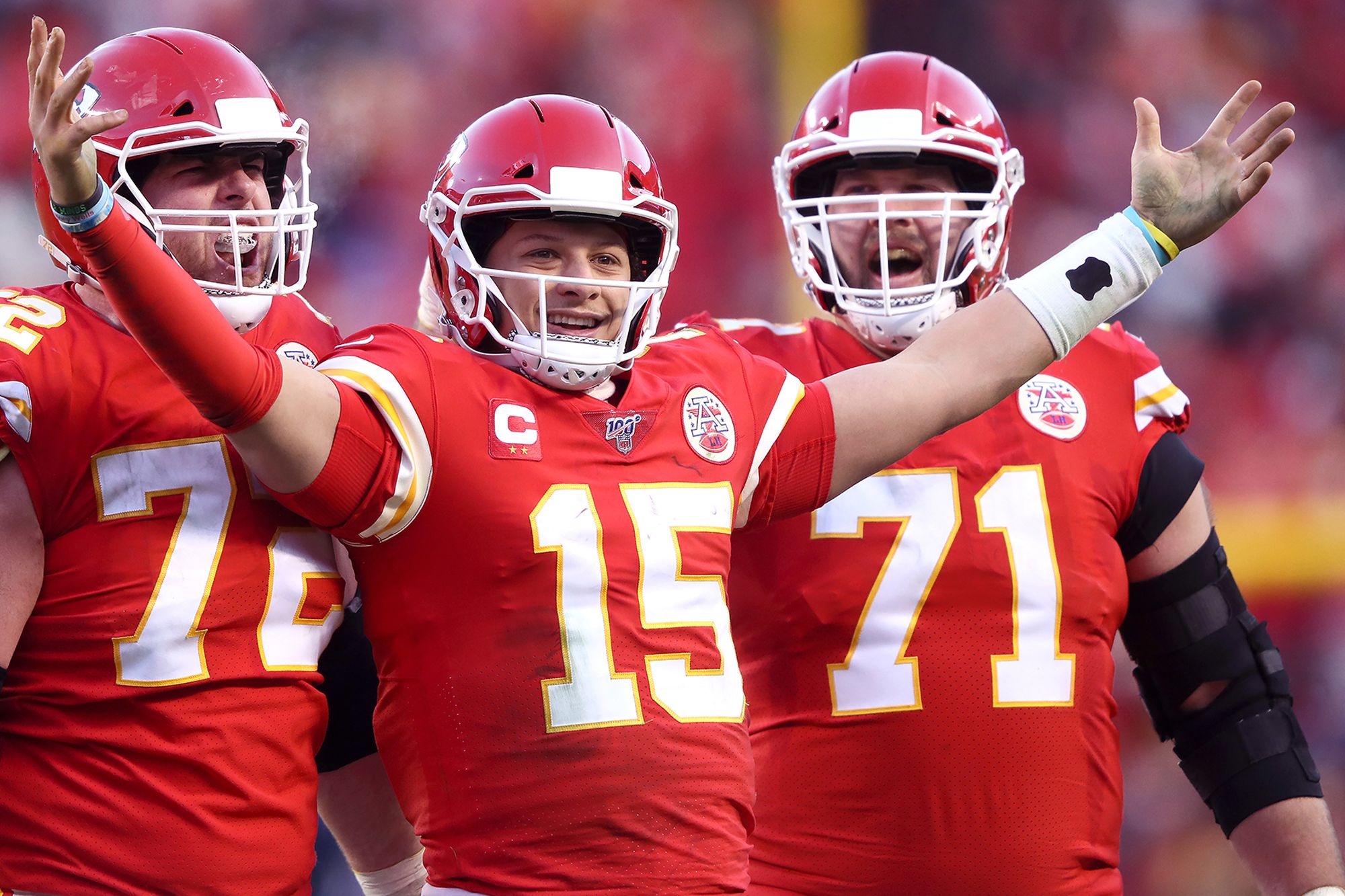
Contrary to what it feels like today in Amarillo and the entire panhandle, Texas Tech DID NOT win the Super Bowl last night. That was a professional football team from Kansas City, Missouri.

Patrick Mahomes played his worst game as an NFL quarterback last night and still won the Super Bowl and was named the game’s MVP. That doesn’t give the rest of the AFC much hope for the next ten years.

Peace,

Allan

Something New March 1-2

The four downtown Amarillo churches are bringing together four remarkable preachers for the first “4Amarillo Preachers Conference for Everybody” March 1-2. We’re calling the conference “Easter’s Coming. So What?” And it’s open to all preachers, all church leaders, all church members, and anyone eager to reawaken within themselves and their congregations the deep urgency and immense joy in the Resurrection of Jesus.

This is a free two-day event for everyone. Four of the best communicators in our fellowships are joining us for worship, to preach their favorite Easter sermons, and to share their own insights and experiences in proclaiming the Good News.

On Sunday morning March 1, each of the four preachers will preach at his or her host congregation in downtown Amarillo. Chris Seidman, the lead minister at The Branch Church in Dallas, will be preaching with us at Central. The world-famous Joel Gregory will be at First Baptist, Alyce McKenzie will preach at Polk Street United Methodist, and Ron Scates will be at First Presbyterian.

Then Sunday evening all four of our churches will gather at First Baptist for an hour of ecumenical worship with our combined choirs and all four speakers in a panel discussion answering the “So what?” of Easter. What does the truth of Easter mean to a broken world? Why should our city, this country, the world give a flip about the resurrection of Jesus? How does the resurrection make a hill of beans of difference to anybody? Everyone’s invited for the inspiring music, the ecumenical fellowship, and the important conversation.

Then, Monday, for the main event at Polk Street, each of our four preachers will have one hour to preach their all-time best or favorite Easter sermon and then to say anything they want to say about preaching: exegesis, hermeneutics, study, presentation, prayer, formatting a sermon, helpful hints, how not to preach, why preaching is important, personal stories, encouragement, whatever. It’ll start at 8:30 Monday morning, March 2, and we’ll have everybody out of there by 2:00pm. Breakfast and lunch are provided for everyone who attends.

Please click here to check the schedule, to see the speakers and sermon topics, links to the four churches, and to register. It’s free, but we’d like to get a ballpark number on a head-count so we know how much food to prepare. If you know someone who would like to attend, please forward this blog post or the link to him or her and help us spread the word.

If you have any questions or suggestions, I’d love to hear from you.

May our God be praised by the bold and unceasing proclamation of the Good News. And may our Christian unity point the world to our powerful and loving Savior Jesus Christ.

Peace,

Allan

This Week Only

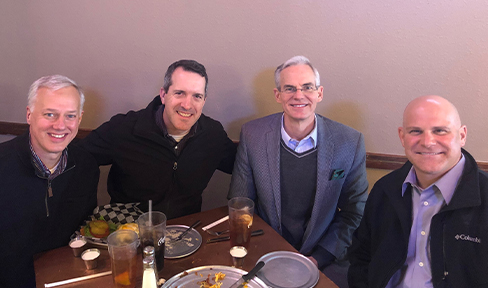
Denver Seminary’s podcast this week features a 40-minute conversation with the pastors of the “4Amarillo” partnership of churches in downtown Amarillo, Texas. We were all so honored and blessed by Don Payne, who came to Amarillo  between Thanksgiving and Christmas to record the podcast. And we had a blast doing it.

I would encourage you to check it out. It’s only going to be on the Denver Seminary podcast page for the rest of this week. Even if you don’t have the 40-minutes to listen to it right now, at least download it, save it, and listen to it later.

On this podcast we talk about how our four friendships began (cheese enchiladas!) and then quickly evolved into our four churches committing to worship and serve together on an-going basis. We discuss the origin of the 4Amarillo logo and our first prayer meeting together. We tackle the issues that typically divide Christians and denominations and talk about how our churches and church leaders navigate those things. We’ve very specific about the things we do together: how we plan service projects and worship assemblies, why we swap pulpits and share resources. We talk about how good it is to serve together in the community, how important that is to our Christian witness, but how actually worshiping together in each other’s buildings is like a million times more effective. We also acknowledge the things we learn from each other’s churches and we emphasize, as always, that all we do is intended to point to our Lord Jesus who, as the Prince of Peace, is so much bigger than anything that might possibly divide us.

We’re also asked at the end to suggest a favorite Amarillo restaurant for anyone who might be visiting our city in the future. I am embarrassed by Howie’s suggestion. I am deeply appalled by Mark’s.

As for me being described on the Denver Seminary website and introduced on the podcast as “Reverend,” let me explain. When you hang out with three guys who have “Doctor” at the front of their names and then you’re publicly introduced by another guy who feels like he has to put something in front of your name, you wind up with “Reverend.” They feel sorry for me, I think.

I hope the podcast encourages you and inspires you to imagine and pray for the ecumenical possibilities in your own context. And then to boldly act upon them “so the world may know.” I would also love to hear your comments and any feedback on the interview.

Peace,

Allan

How ‘Bout That Coach!

It’s a shame the Pro Football Hall of Fame waited so long to include two-time Super Bowl champion coach Jimmy Johnson among the immortals in Canton. It’s backwards that he’s going in after so many of his players were inducted first and so long after they won those two championships. And it’s sad that he’s being inducted on some special “centennial” ballot. But it’s right that he’s in.

Jimmy Johnson was an incredible force for five years in Dallas, the architect of a dynasty who took the Cowboys from 3-13 to Super Bowl champions in four years, a team that dominated the NFL for much of the 1990s. Johnson was the genius who orchestrated the Herschel Walker trade, the originator of the three-inch headline, the founder of the asthma field, and the haircut known around the world.

Jimmy is the one who first and most famously declared “How ’bout them Cowboys!” after the team’s 1992 NFC Championship victory over the 49ers at Candlestick Park. The Cowboys were on their way to their first Super Bowl in 14 years — at the time, this was the team’s longest ever championship drought — and the cherub-faced Jimster was at his best exalting in a glorious title. The final line of his locker room speech has become an iconic catchphrase for all Cowboys fans ever since. Even the ones who haven’t seen their favorite team win a divisional playoff game in 24 years. You’ll love watching the video below. Check out Troy Aikman’s Logo Athletics gear. And take special notice of Jerry Wayne in the bottom right hand corner, raising his hand in the middle of Jimmy’s speech, wanting to say something, trying to steal some of the thunder. Priceless.

Jimmy made national news almost exactly one-year later when he was driving from Valley Ranch after practice and heard Randy Galloway on WBAP arguing with Dan Reeves about who was going to win the 1993 NFC Championship game that coming Sunday. Reeves believed Dallas would win and Galloway disagreed. So Jimmy called into the “Sports at Six” hotline, producer David Hatchett put him through, and Jimmy proceeded to declare almost giddily that “We will win the ballgame; you can put it in three-inch headlines!” And they did. Easily.

Johnson calls ’em like he sees ’em and doesn’t have much use for a filter. I’m reminded that on Thanksgiving Day 1989, following a shutout loss to the Eagles, Jimmy told reporters that Philly coach Buddy Ryan had put $200 bounties on Troy Aikman and Cowboys kicker Luis Zendejas. He said I “would have said something to Buddy but he wouldn’t stay on the field long enough; he took his big, fat rear end to the dressing room.”

In his first mini-camp as Cowboys coach in that dreadful ’89 season, Johnson called out a rookie kicker who wasn’t participating fully in the running drills. When the kicker explained that he had asthma, Jimmy exploded. “Asthma! The asthma field is over there!” and he pointed to the main parking lot. And cut the kicker the next morning.

Here’s what I remember about Jimmy Johnson as the head coach of the Cowboys. He was fully involved in every single aspect of every single practice. He was in every huddle. He was running around yelling, jumping, encouraging, teaching, and coaching every minute of every practice. He was in the defensive backfield helping explain coverages. He was with the offensive linemen talking technique. Constant energy. Continuous presence. I remember covering those early training camps at St. Ed’s in Austin. I would step out of my truck in the university parking lot, a quarter mile from the practice fields, and I could hear Jimmy coaching. You could hear the chatter, you could feel the energy. It was a completely different story once Barry Switzer was brought in. I’d be standing on the sidelines with other reporters during a training camp practice and one of us would say, “Where’s Barry?” And it would take all of us several seconds to spot the Cowboys head coach. Typically he was in a golf cart signing autographs for young ladies or hobnobbing with corporate executives behind the kickers. You always knew where Jimmy was during practice. Right in the middle of it. You were drawn to his presence. You never had to guess. You always knew. By contrast, you could never find Switzer. I don’t know what Jerry was paying Barry to do, but it wasn’t to coach.

This video is typical of a Jimmy Johnson practice. It’s awful video, it’s like fourth generation lifted from a bad VCR tape on a 90-year-old TV. But this perfectly depicts what I’m talking about.

The day Jerry Wayne fired Jimmy Johnson and brought in Barry Switzer was the day I began rooting against my favorite team. I couldn’t handle it then and I still can’t handle it now. While searching for the videos in this post, I came across this ABC World News Tonight footage of their coverage of that day. Reporter Armen Keteyian was a prophet when he said, “The aftershocks of today’s action may rattle the club for years to come.” (7:59 mark)

Ha. How about 24 years now and counting?

Congratulations to Jimmy Johnson on his inclusion into the Pro Football Hall of Fame. The Cowboys Ring of Honor at AT&T Stadium is a joke until Jerry Wayne puts Johnson’s name up there next to Tom Landry’s.

Peace,

Allan

« Older posts Newer posts »