Category: Unity (Page 1 of 10)

Connected

Right now, our nation feels so fractured. Politics. Economics. Social issues. Just turn on the news for about four seconds. Any channel. Any network.

In our own community here in Midland, we’ll choose sides and draw lines and fight about anything. Everything. City and county government. The school district. Construction. Budgets. Just glance at your Facebook and your feeds.

Our own families and neighbors seem awkwardly distant.

The whole world is focused on the distinctions and differences between us and it’s using our digital devices to highlight those differences to divide us.

Right now it feels like that if you don’t live where I do for as long as I have, we can’t be on the same team. If you don’t look like I do or speak the same language as I do or vote like I do or worship like I do or if you and I are different races or different nationalities, then we can’t be on the same side. We can’t be for each other. If we don’t have those things in common, then we must not have anything in common. We can’t.

That is decidedly NOT what Christians believe.
We believe that all of us are inseparably bound together. We belong to each other. We are connected to one another deeply. Thoroughly. We are connected by much bigger things, much more important things, eternal things–the things that truly matter. We believe all Christians are connected by the grace of God and the blood of Jesus and the power of the Holy Spirit. We all need and receive and rely on the grace of God. We are all saved by and continuously cleansed by the blood of Christ. We are all given gifts by and daily nourished by the Spirit. And we’re all called and sent by God on the same mission of the Church, to partner with God as he redeems and restores and reconciles all people and all things together in his Son Jesus Christ.


We don’t all vote the same. We don’t all have the same income levels or education levels. We weren’t all born in Midland; we come from everywhere. We are different ages and different generations. We weren’t all raised the same way. We don’t all have the same experiences and backgrounds that have shaped how we think and talk and act. We don’t all see eye-to-eye on some church issues like women’s roles and musical instruments. We don’t all have the same interpretations of Revelation or Genesis 1-11.

God’s grace is bigger than all those things. The blood of Jesus is more important than all those things. The power of the Holy Spirit is deeper than all those things. And all of us share those eternal things in common.

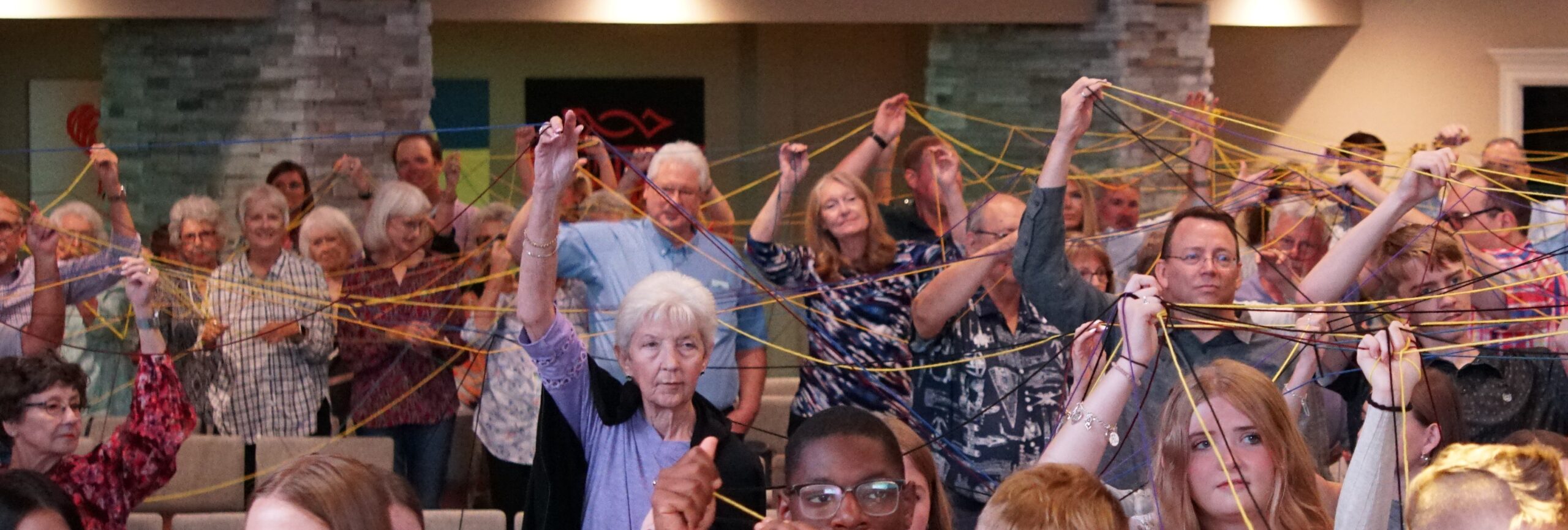
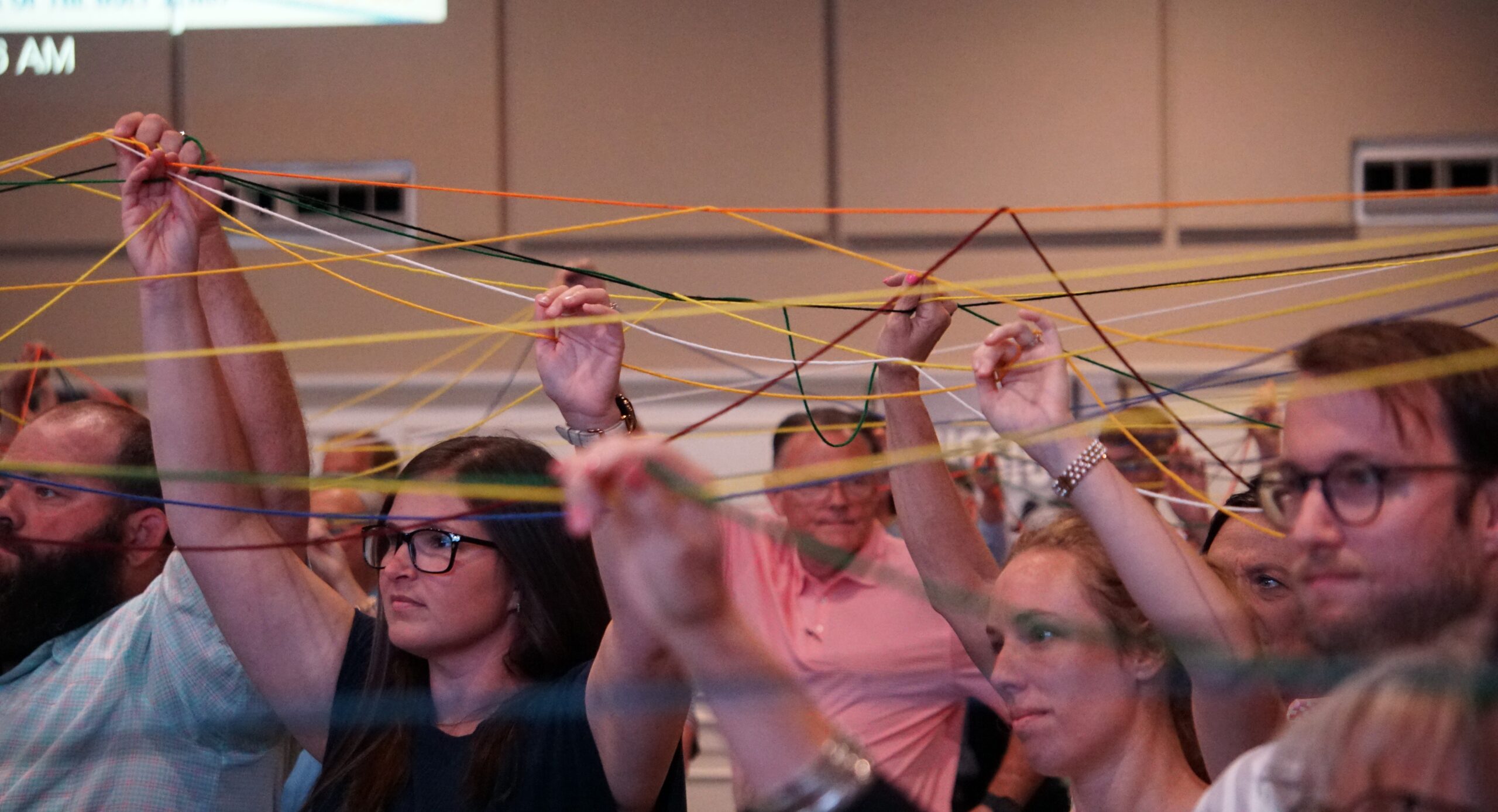
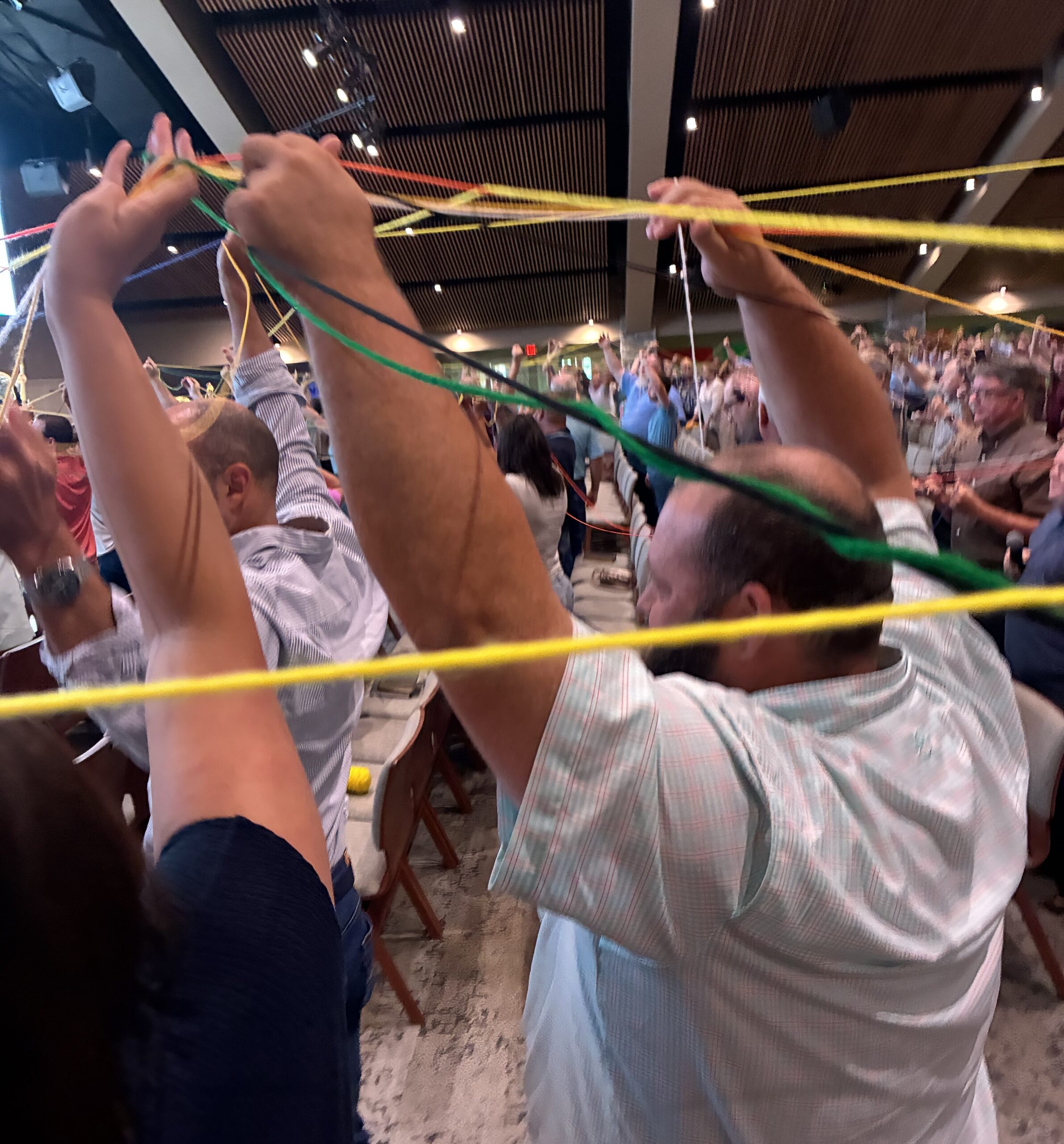
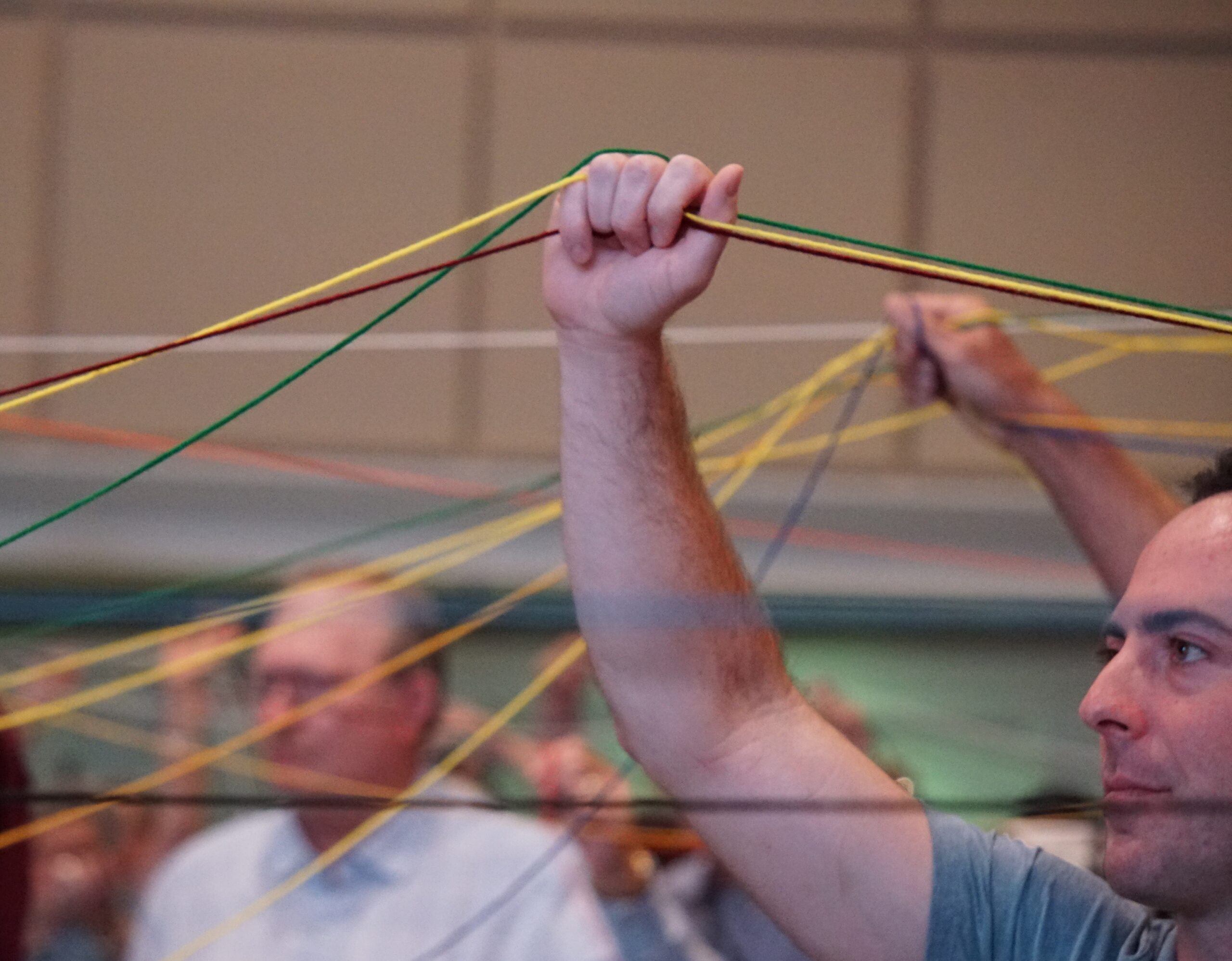
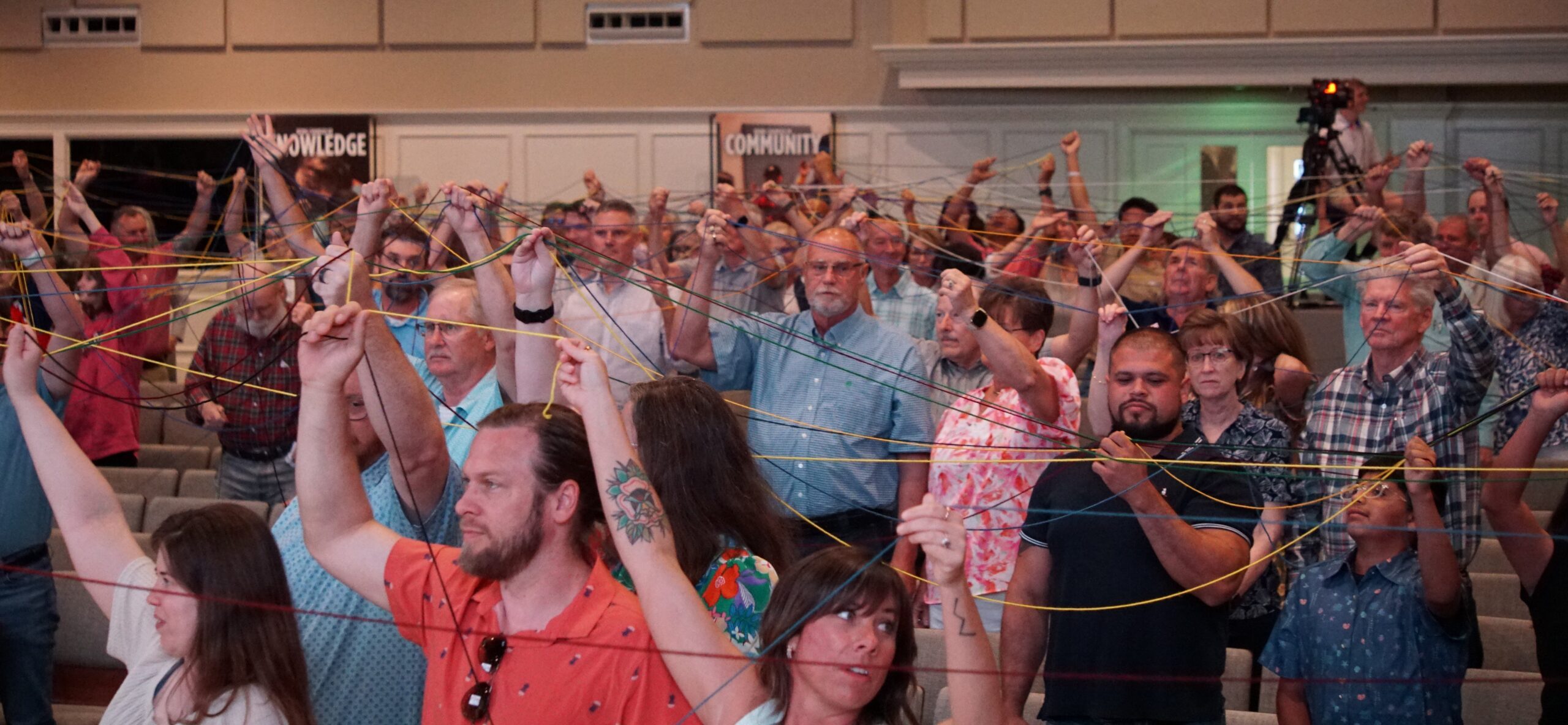
Yesterday at GCR, we talked about our connections to one another in Christ. And we did our own version of the old youth group thing in which our connections are made visible by yarn. Yeah, we threw yarn at each other across our Worship Center in the middle of the sermon!

We used 20 spools of yarn in ten different colors to represent all the things that connect us together. The yellow yarn was the grace of God. The red yarn was the blood of Jesus. The blue yarn was the power of the Holy Spirit. We had different colors representing God’s love, God’s promises, the forgiveness of sin, and the mission of the Church. Some of the yarn stood for the truth of the Gospel, the life, death, and resurrection of Jesus, and the gifts of the Holy Spirit. Ten non-negotiables. Ten eternal truths to which we all hold and share in common.
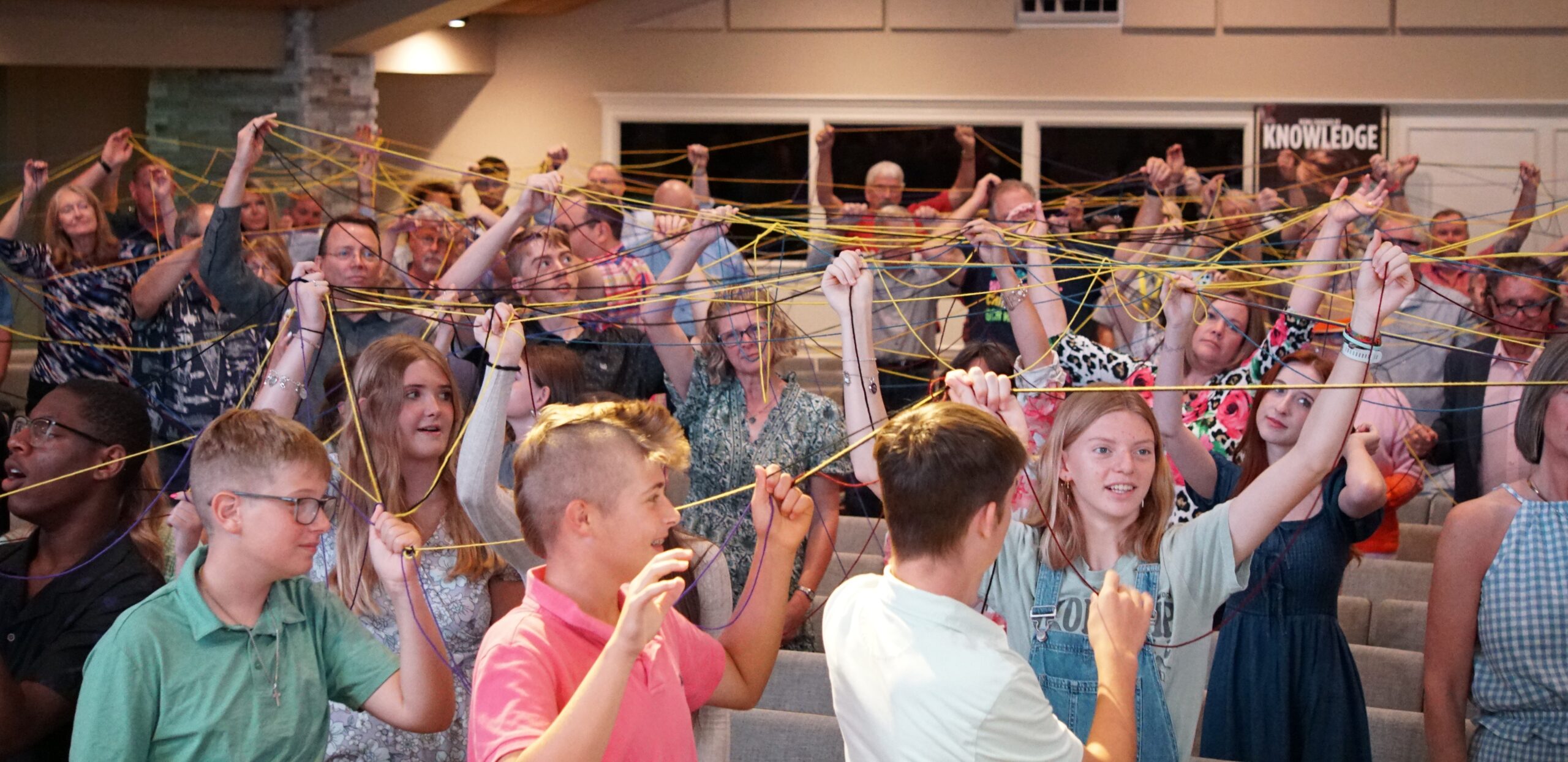
Once we overcame our apprehension, once enough of us got hit in the head with a spool of yarn, once we all relaxed a bit and gave ourselves to the exercise, it was glorious! By the end of the game, each of us in that Worship Center were holding onto at least three or four strands of yarn that represented the Gospel truths that save us and connect us from one end of our church to the other.

I told GCR, “The things in our lives that matter most, the biggest things, the most important things, the eternal things, the things that truly matter–the things I know YOU hold most dear–are the very things that connect all of us in this church together. We all have these things in common.”

But this is the line I really hope everyone remembers: “There’s nothing outside of these eternal bonds and beliefs that should ever distract us or divide us from the Gospel truth of our connections.”
The everlasting truth of God’s amazing grace is that he so loved the world that he came here to us. He redeems us by his blood and restores us by his love and he connects all of us together in himself. All of us. One body, one Spirit, one hope, one Lord, one faith, one baptism, one God and Father of us all, who is over all, and through all, and in us all.

We are all eternally connected. Let those who hear, understand. Let those who understand, commit to living in a manner worthy of the Gospel of Jesus.

Peace,
Allan
Unity Begins with Me

I’ve read an excellent article this week that I want to share with you today. The piece is written by Jeanie Shaw, affiliated somehow with the Common Grounds Unity group in California, a Restoration Movement organization working for increased harmony between our three Stone-Campbell branches. It’s a quick two-page read about how our historical Church of Christ hermeneutic has shaped us to be divisive and fractured, instead of together and unified.

Here’s an excerpt:

“I grew up reading the Bible too often as a rulebook, a blueprint that promised clarity and safety if I interpreted it correctly. Like many from my Restoration heritage, I was taught that unity came from agreement–agreement produced by correct interpretation. Without realizing it, that belief formed a judgmental lens. I believed I was being faithful, when in reality I was often rigid, narrow, and inwardly critical of perspectives that differed from my own.”

Shaw tells the story of how her hermeneutic shifted and how that impacted her relationships with her three older sisters. When she began to understand the Bible as a revelation of the heart of God, she began to see that her unity problems within her church and among her sisters started with her.

“I began to understand that Jesus was not calling us to uniformity, but to relational love rooted in the very life of the Trinity. I began to see that the glory Jesus speaks of in John 17, his glory he has given to us, is the glory of humility, self-giving love, and making room for the other, not the glory of being doctrinally precise. This shift in hermeneutic reshaped my soul. It softened me. It unsettled my certainty. It humbled me in ways I didn’t know I needed. It taught me that Scripture is not a weapon for judgment, but a window into mercy. And in that softened place, I noticed my sisters and others differently.” 

Oh, it’s a good article. Here’s the link. 

I talk to preachers and congregational leaders all over the great state of Texas and it is clear to me that the same issues of tribalism and division, suspicion and conspiracy, that are plaguing American society are also infecting our Lord’s Church. The same impulses and (mis)understandings that are ripping our culture apart are also doing severe damage to the Body of Christ. And we in the Churches of Christ might be more susceptible to it because of our historically awful constitutional reading of Scripture.

At the very least, this article could give you some insights and language for conversations you might be having in your own church. In some cases, it might even be something you could forward to a brother or sister who might be open to reflecting on their own roles and responsibilities with the issues they’re having in your congregation. Or, maybe you need to be introspective about the part you’re playing in whatever divisions might be forming in your church. After all, as Shaw writes, unity is not guaranteed by perfect agreement; unity is formed in the heart. Unity begins with me.

Peace,
Allan


Transforming Moments

The latest episode of the new-ish GCR podcast with Jadyn and Jim, Transforming Moments, just dropped today and, in case you’re not following it yet where you get your podcasts, here it is. Right here.

In this installment, Jim and Jadyn interview me about our GCR partnership with the 4Midland churches. We talk about the origins of our alliance, the theological basis for our public demonstrations of unity, and our plans for the future. But mainly the conversation is about spiritual formation. How does worshiping and serving with Christians from other denominations shape us more into the image of Jesus? How does being with different kinds of people in their spaces contribute to the “mind of Christ” among us? And does this have bigger Kingdom of God implications beyond our four churches?

The conversation is laid-back, personal, and includes a reference to Blaine Nye. I recommend it.

Peace,
Allan

The Only Place

“To the younger Christians who don’t have much denominational loyalty and who don’t fully appreciate or understand the history and depth of our denominational differences, do our unity efforts with the ‘4 Midland’ churches mean anything?”

I asked this question out loud at our GCR Church staff meeting Monday morning, less than 14-hours after the conclusion of our second annual “4 Midland” Thanksgiving Service. I asked it again during a de-briefing and wrap-up of the service on our GCR Podcast.

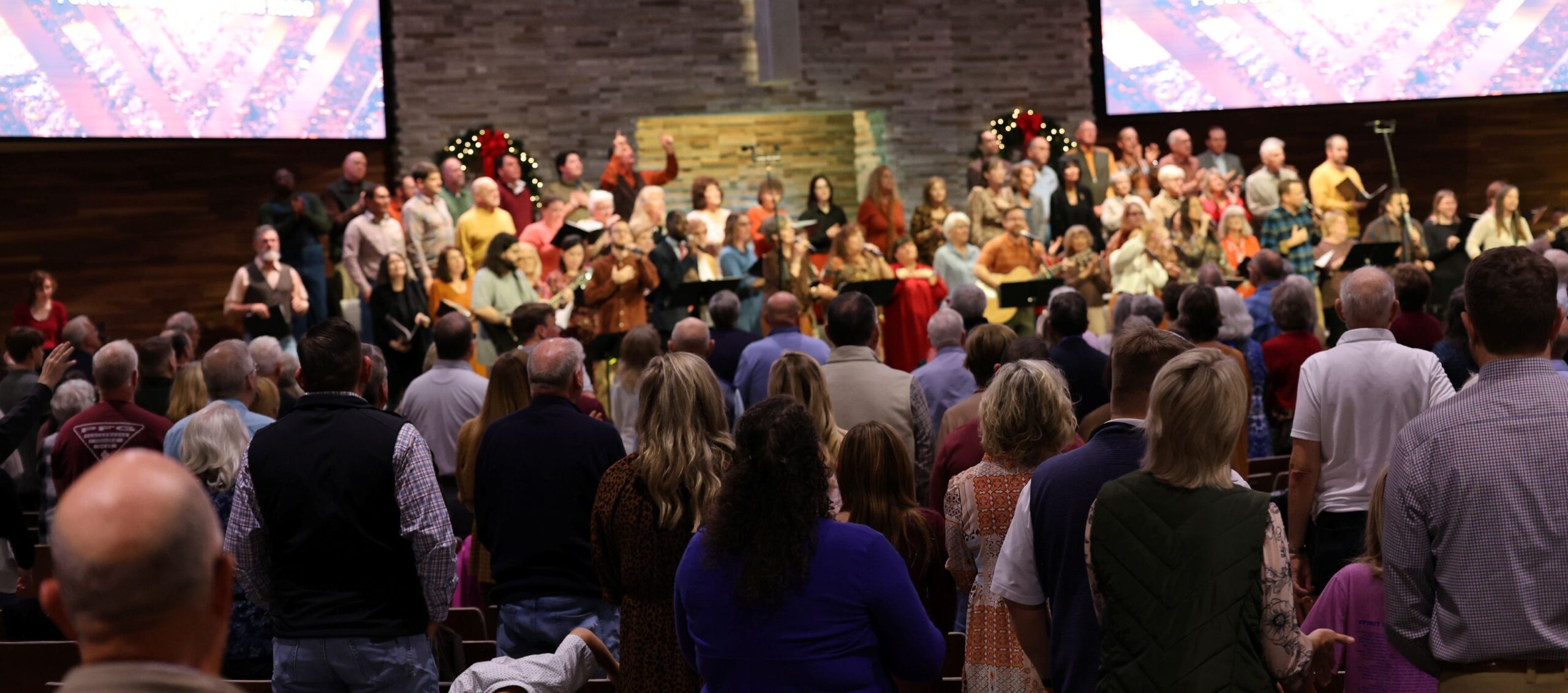
Of the more than 700 people in attendance at Sunday’s combined assembly, it seemed that many more of them were in their 50s and older. There weren’t too many families there with school-aged children. Not too many folks in their 30s and 40s. The energy in the room was beautiful. The singing was inspirational. The fellowship was welcoming and warm. Steve Brooks’ message was powerful. For people my age and older, it is unquestionably a BIG DEAL when First Baptist, First Methodist, First Presbyterian, and the Church of Christ get together to do anything. But when we lay aside our denominational and doctrinal differences to experience and express the visible and physical unity we share in Christ by worshiping together in each other’s spaces, it’s HUGE!

But does it matter to people younger than me?

Does it matter that four congregations of Christians representing four distinct denominations with four different views and practices in important areas like baptism and communion and ordination and church polity are setting those differences aside to worship God with one heart and one voice? Does it matter that these four churches are making a public stand for the unity of all who call on the name of the Lord over their own denominational traditions? Does it matter that these churches are choosing love and grace over opinion and position in very public ways?

Yes, it matters. Of course, it matters. We know it matters. But does it matter to people younger than me?

I believe it does. You’re not surprised by that. But let me explain.

Our society and all the world’s powers are singularly focused on dividing us–all of us. Our culture is bent on pointing out our differences, accentuating them, and demanding that we divide over them. Everything in the world points to that. Thrives on that. Makes money off that. Division is what drives our country’s politics, it’s what fuels the planet’s largest digital technology companies. it’s what makes the whole world roll. Our world demands that you take an immediate position on every single issue and never waver. Plant your flag immediately and loudly, draw your line, dig in, and never give in. Compromise is a dirty word in our culture.

Where else on this globe are people ever going to experience a coming together in mutual love and respect of folks with different viewpoints and opinions? Where else in this world will people ever see modeled a laying down of individual rights and group practices for the sake of dignity and charity and grace for people with differing backgrounds and beliefs?

There is only one place. The Church is the only place.

That’s why it matters. If nothing else, the younger among us who are disgusted by all the arguing and fighting need to know that this kind of division is the default in our society now. Separating into our individual bubbles of belief to throw rocks at everybody who is not inside our bubbles is how things are now. And God’s Church must be the model for a different way. The Church is the only place, the only people, the only system of beliefs and values, that can practice unity and love across political, racial, economic, gender, and geographical lines.

The only place.

That’s why it matters. To everybody.

That’s why it must be guarded fiercely, practiced frequently, and celebrated always. It can’t be blown off or taken for granted; it can’t be ignored or dismissed because, in our culture today, it wouldn’t take much to blow it up. It wouldn’t take much to lose it.

And then there would be no place.

That’s why it matters. To everybody.

Peace,
Allan


Presbyterian Blood

Presbyterian pastor Thomas Campbell got himself in trouble in 1809 for preaching fiery sermons about Christian unity. His continuing call to discard denominational labels for unity with all who call on the name of the Lord got him censured by his presbytery and then fired by his synod in western Pennsylvania. At about the same time, another Presbyterian preacher in Kentucky named Barton Stone dissolved his presbytery to unite with everyone who would simply be known as Christians.

Stone and Campbell had met each other earlier at the Cane Ridge Revival, a Presbyterian communion meeting in Kentucky. Then, in September of 1809, Campbell wrote the Declaration and Address of the Christian Association of Washington County, Pennsylvania. It was a call to Christian unity based on Jesus’ prayer in John 17 and the whole of Scripture that presents complete unity among all disciples of Christ as the holy will of God. Here is an excerpt from the opening lines:

The Church of Christ upon earth is essentially, intentionally, and constitutionally one, consisting of all those in every place that profess their faith in Christ and obedience to him in all things according to the Scriptures… All that are enabled, thro’ grace, to make the Christian confession, and to manifest the reality of it in their tempers and conduct, should consider each other as the precious saints of God, should love each other as brethren, children of the same family and Father, temples of the same Spirit, members of the same Body, subjects of the same grace, objects of the same divine love, bought with the same price, and joint heirs of the same inheritance. Whom God hath thus joined together no man should dare to put asunder.

Towards the end of that great document, Campbell wrote, “What? Shall we pray for a thing and not strive to obtain it?”

The Declaration and Address became a founding document for the American Restoration Movement, a Christian unity movement that produced the Churches of Christ. See, everybody in the Churches of Christ have a little Presbyterian blood in us. We all owe a debt of gratitude to the good Presbyterians who refused to let denominational differences separate them from other followers of Jesus.

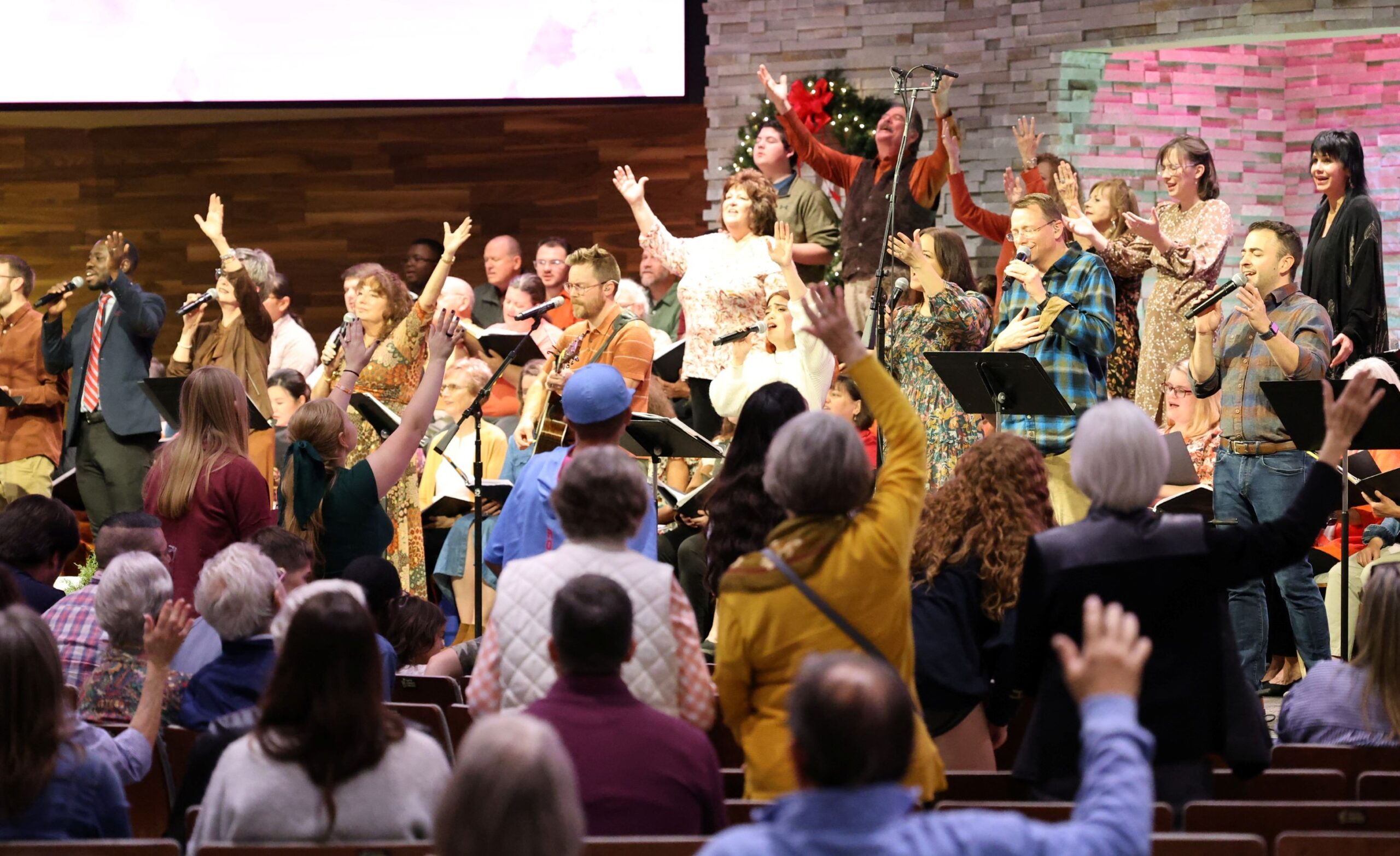
It is in that spirit of unity and fellowship with all disciples of Christ that the 4 Midland churches come together on this Sunday before Thanksgiving.

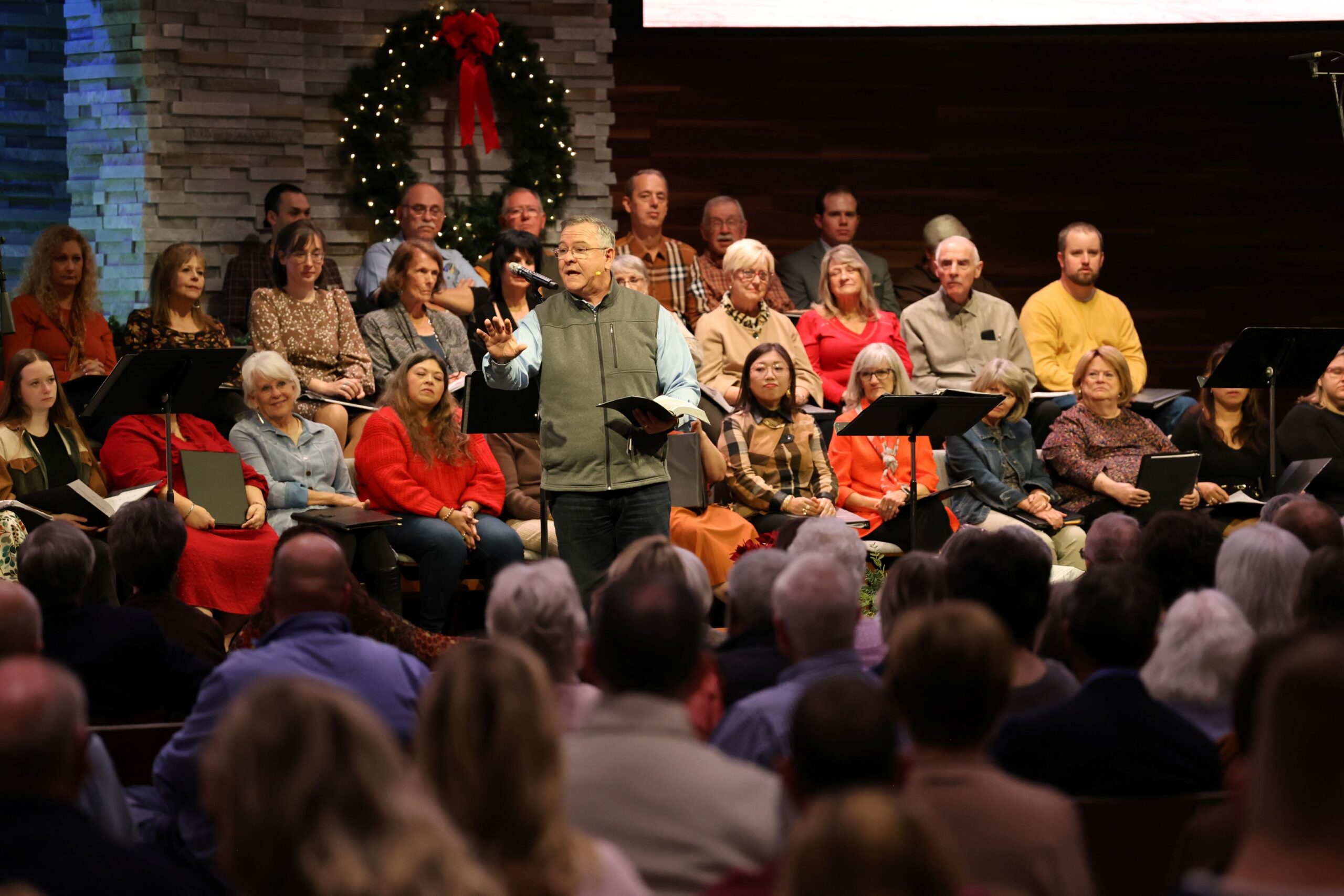
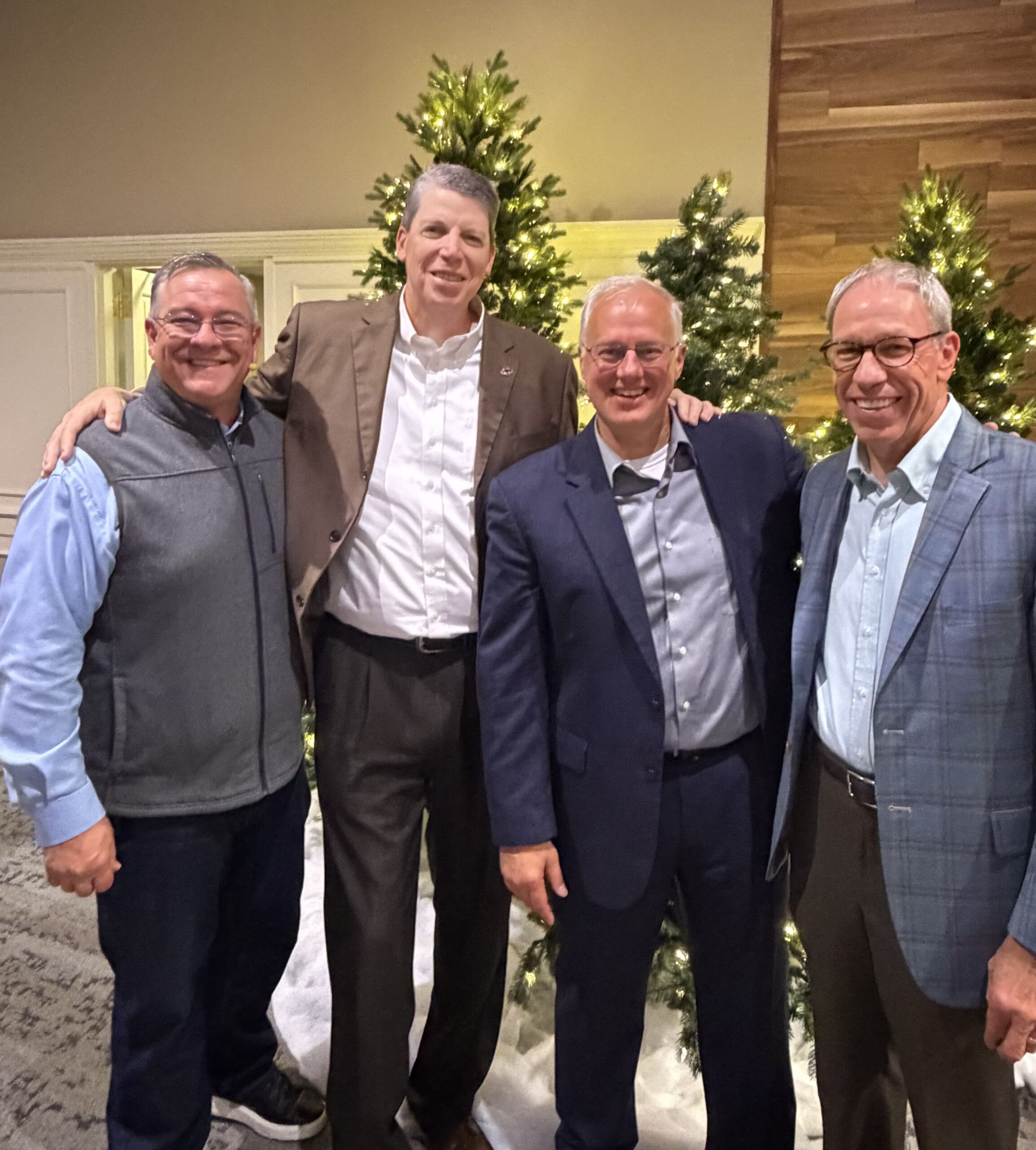
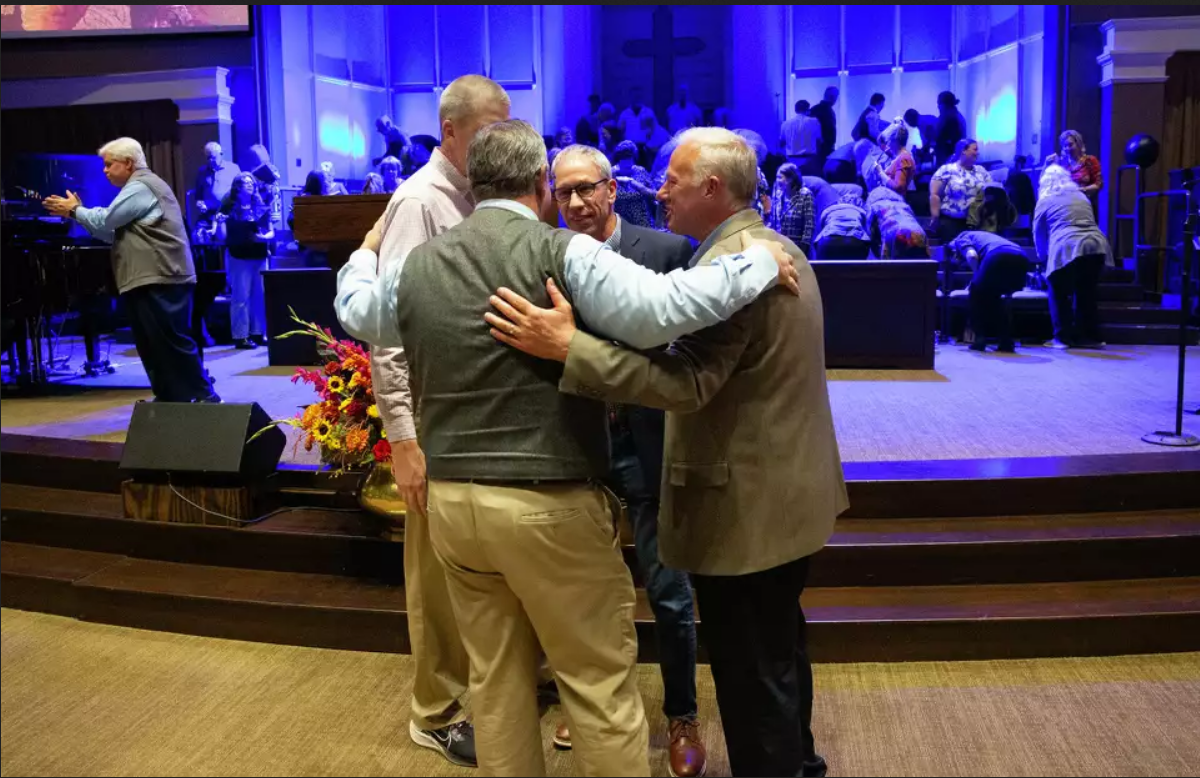
I am preaching at First Presbyterian Church in Midland this morning while my brother and friend Steve Schorr, the pastor at First Presbyterian, is preaching at GCR. Steve Brooks, the preacher at First Methodist, and Darin Wood, the pastor at First Baptist, are also swapping pulpits as part of our annual 4 Midland Sunday. Then this evening, we are hosting our annual Thanksgiving service at GCR. Cory is leading a combined choir made up of singers from all four churches, Steve Brooks is bringing the message, and we’re all going to sing and pray and hear the Word together in the presence of our God who calls us to be one. Christian unity is God’s will, it is Christ’s prayer, and it is the reconciling work of the Holy Spirit. And our four churches are leaning in.

I feel so very honored and privileged and blessed by God for our friendships and partnerships in the Gospel. And exceedingly thankful. Thankful to the Lord, thankful to my colleagues in these other three churches, and thankful for the people in our congregations who are committed to closer fellowship and deeper unity in Christ. And exceedingly thankful for those good Presbyterians who more than 200 years ago committed to Christian unity with all who call on the name of our Lord and gave us the tradition that first instilled the faith in me.

Peace,
Allan

Tozer’s Tuning Fork

Our unity with all Christians, our deep and inseparable connection with all who call on the name of the Lord, comes when we commit ourselves to Christ. When our hearts are focused on Christ. When our lives are centered on Jesus.

I have posted this quote from the author and preacher A.W. Tozer before. It’s worth reflecting on his words again today:

“Has it ever occurred to you that one thousand pianos all tuned to the same fork are automatically tuned to each other? They are of one accord by being tuned, not to each other, but to another standard to which each one must individually bow. So one thousand worshipers meeting together, each one looking to Christ, are in heart nearer to each other than they could possibly be, were they to become unity-conscious and turn their eyes away from Jesus to strive for closer fellowship.”

Our togetherness within our own Christian churches and our increased unity with all congregations of our brothers and sisters in Christ from every denominational stripe brings glory to God. Christian unity is our God’s will, our Lord’s prayer, and the reconciling work of the Holy Spirit. It points to Jesus and it results in praise to God.

Peace,
Allan

« Older posts