Category: Spiritual Formation (Page 1 of 6)

Body of Christ: Transformation

My bracket is set and I’m ready to start defending my Stanglin Family March Madness Bracket Racket title. I’ve got Texas, Texas A&M, and Texas Tech winning only one game each. I’ve picked Houston, again, to win the national championship. My Final Four is Houston, Duke (gag), Arizona, and Iowa State. The winner gets a celebratory dinner at his/her place of choice and his/her bracket proudly displayed on the refrigerator for a full year.

~~~~~~~~~~~~

We’ve been hammering home the point this week that if anybody is going to meet Jesus today, they’re going to meet him through the Church, the Body of Christ. That’s how our Lord designed it. We are his eyes and mouth and ears, we are his hands and feet, his physical presence in this world. We live our lives as individual disciples and together as his followers in imitation of him so people around us can experience Jesus, so they can see him for who he really is.

Except…

I know the Church. I know the Church and all its weaknesses. I am one of the Church’s weaknesses. I sometimes can be a reason people don’t see Jesus. To some extent, all of us are capable of behaving in ways that might hide the Body of Christ from others or, at worst, behaving in ways that are the opposite of Jesus’ ways.

Because of that, not everybody has a great experience with church. Some people have been hurt by the Church. Some people have been rejected by the Church, God help us. Some people don’t feel supported by the church or encouraged, they don’t feel like they’re a part. Instead of meeting Jesus at church, instead of finding God’s love and forgiveness and acceptance and his fellowship, they experience loneliness at church. Or rejection. Or pain.

As a result, there are people who believe in Jesus and love Jesus and want to follow Jesus, but they don’t want any part of Church. They see the Church or they experience the Church and there’s no way they can believe such a sorry collection of sinners can be related to Jesus.

The Church can be boring. It can be self-centered and self-righteous. It can be hypocritical. It can be worldly. Very worldly. I could go on. The Church has a lot of weaknesses, yes. But the Bible says we’re seeing things right now through a dark glass. We only see a poor reflection of the reality, like looking at a cracked and clouded mirror. The Bible says we’re hoping for what we don’t see yet. And, you know, for all its brokenness and failures, the Church still looks pretty good when she’s all dressed up to worship God on Sunday. Or when she’s fist-bumping elementary students outside their school on Monday. Or feeding homeless people at Family Promise on Tuesday.

The point is that, despite all the problems, based on the words of Jesus in the Bible and our own experiences for over two-thousand years, the poor old Church knows, for better or for worse, this is the form by which the risen Christ has chosen to be present in the world. We are the Body of Christ.

So, if you’re going to have a real relationship with Jesus, you must be connected to his Body. You don’t discover Jesus by escaping his community, but by joining it. You don’t grow closer to God by seeking him by yourself, but by entering the life of his Church, by leaning into and embracing the ordinary patterns of worship, repentance, prayer, knowledge, community, Christian practice, and mission that have formed God’s people for centuries.

We do not meet Christ as isolated individuals. We meet him as devoted members of his Body. We are saved together, we are healed together, we are restored and strengthened and shaped together. When you read the earliest Christian writers, you notice that when they wrote about knowing Christ personally, it was about being united to his Body, standing shoulder to shoulder with the community he founded and submitting to the shared Scriptures and sacraments and saints. The early Christians did not describe salvation as “Me and Jesus,” but as “Us in Christ.” Baptism did not place you in a private booth with God, it plunged you into a people. The communion meal did not evoke private internal feelings about Jesus, it joined your life to the lives of all the other believers at the table.

If you’re looking for a personal relationship with Jesus, you must be where he is. If you’re looking for more in your relationship with Christ, you must be where Jesus always promised to be. In the Scriptures. In the prayers. In the supper. In the worship. In the communion of saints. In the life of his Body. And, as every member of his Body has always discovered, the closer we draw to the Church, the closer Christ draws to us.

Peace,
Allan

Body of Christ: Imitation

As the Body of Christ, God’s Church is the physical, flesh-and-blood presence of Jesus in the world. By our baptismal participation in his life, death, and resurrection, we are commissioned by Christ to do the things he did in the ways he did them for the sake of others. Why? So people will see Jesus. So people will experience Jesus. If anybody’s going to meet Jesus in this world, they’re going to do it through the Church.

Words are never enough. Not even God’s words. That’s why his Word became flesh and made his dwelling among us. That’s Incarnation. Jesus was not crucified because of his words. His words are not what changed the lives of broken people, his words are not what united fractured groups, his words are not what turned the whole world upside down. It was his presence. It was the physical things Jesus did while he was in the body. It was the healing and feeding, the forgiving and praying, the eating and sharing with all the wrong people, the refusal to recognize man-made boundaries, the lavish love, the liberal grace–that’s what got him killed. That’s what altered forever the course of history. That’s Incarnation.

Our words are never enough. The things we say in the safety of our sanctuaries aren’t going to change the world. Abstract truth doesn’t stir anybody’s heart. Theological concepts don’t compel faith and love, even when they’re true. But when that truth becomes embodied, when it’s up close and personal truth, real flesh-and-blood truth, that’s when truth gets interesting. That’s imitation. If we are to be the Body of Christ, the Church must be in the business of imitating our Lord.

The apostle Paul says he always carries around in his body the death of Jesus so the life of Jesus may be revealed, so Jesus’ life may be revealed in our (plural) mortal body (singular).

So, as the Body of Christ, we always side with the oppressed, never with the oppressors. We always stand with the minorities, we always take care of the refugees, we always protect the weak. We never discriminate, we never divide, and we never use violence or force. We always give, always forgive, and we always show love. That’s how people see Jesus, how people experience Jesus. We do the same things Jesus did in the ways he did them for the sake of others. If anybody’s going to meet Jesus today, they’re going to meet him through the Church, the Body of Christ.

Luke 3 tells us that huge crowds of people were coming to the Jordan River to be baptized by John. And the people being baptized asked John, “What shall we do?” John answered, “If you have two coats, give one of them to somebody who doesn’t have one. If you’ve got food, give it to somebody who doesn’t have any.”

Tax collectors were being baptized, and they asked, “What should we do?” John replied, “Stop stealing from people, stop taking advantage of the weak, treat everyone equally.”

Some soldiers were being baptized, and they asked, “What are we supposed to do?” John said, “Stop using threats and force to get your way, stop accusing people and lying about people.”

People are being baptized for the forgiveness of their sins, they’re going into the water for a salvation relationship with God, and the instructions are not about saying the right words or believing the right things or thinking the right way. The instructions are about doing. The expectation is for real, physical actions toward the poor; tangible concrete actions for the oppressed; flesh-and-blood actions for the outcast, the marginalized, and the exploited and the weak. Not the words we say in the safety and comfort of our church buildings, but the real actions we take in our communities; the real, physical skin-and-bones actions in the interests of others–all others!–bold, courageous, Christ-like actions that go against the grain of the culture and will cost us our reputations, our relationships, and our resources. That’s the imitation of Christ that makes the Church his body.

Our Lord Jesus is the One who brings life where it feels like death is in charge. He breaks down walls, he reconciles enemies, he forgives sinners, and he welcomes prodigals home. He brings light to darkness, he provides hope where there is despair. That’s our Lord Jesus! He is still saving people right now today! He is still forgiving and reconciling and redeeming today! That world says that’s not possible. They say Christ’s power alone isn’t enough for all the crises we’re facing, and they are wrong! The same Holy Spirit who raised Jesus from the grave and ignited the first Church is working right now, awakening hearts, renewing minds, and empowering us as the Body of Christ!

So, we faithfully love our enemies and pray for those who persecute us. Why? So people will see Jesus.

We don’t just act on behalf of all people living inside the womb who might be harmed, we also act courageously on behalf of all people living outside the womb who might be harmed. Why? So people can meet Jesus.

We forgive those who sin against us, we lay down our rights for the sake of others, we stand firmly with the oppressed. Why? So the world will know the Kingdom of God is here!

This broken world is sick and tired of the Church’s words–words–words–words–words. They’re all sick of it. This lost world desperately needs the real, concrete, physical, flesh-and-blood actions of the Body of Christ.

Peace,
Allan

Why Did You Spill the Coffee?

I’ve been reminded over the past few weeks of an old story about a monk who was teaching his class. He asked his students this question: “If you are holding a cup of coffee when somebody bumps into you and you spill the coffee–why did you spill the coffee?”

The students answered that the coffee was spilled because someone bumped into them. The monk told them that was not the correct answer. The class pushed back. The students insisted that the person who bumped into them was at fault for spilling the coffee. The monk replied with a stern “No.”

Then he explained:

You spilled the coffee because there was coffee in your cup. That is what you were carrying. If there was tea in your cup, you would have spilled tea. If there was water in your cup, you would have spilled water. You spill what you are carrying.”

When you are bumped, when life gets difficult, when things go foul, you will spill whatever you are carrying inside you.

If you are carrying hatred, anger, or fear, and you are bumped, you will spill out hatred, anger, or fear. If you are carrying kindness, love, goodness, or compassion, and you are bumped, you will spill out kindness, love, goodness, or compassion.

So, the question is: “What am I carrying inside of me?”

Peace,
Allan


Leaning into Liturgy

The 4Midland churches are gathering at First Baptist this evening for our annual Ash Wednesday service. This marks the fifth Ash Wednesday service we at GCR have shared with a local congregation of another denomination, and the fourth we’ve co-led as 4Midland. For some of us, this 1,400-year-old Christian tradition is still new. According to Lifeway research, only 25% of Americans observe the season of Lent–that number has stayed the same for over a decade. The Barna Group reports that Churches of Christ are among the “least aware” of traditional Christian liturgical practices.

For me, personally, by God’s grace, tonight’s will be my 13th Ash Wednesday service. Ash Wednesday and this season of Lent have become a vital part of my walk with Christ, an indispensable move in the rhythms that guide my Christian discipleship. If you live in the Permian Basin, I invite you to join us at 6:30pm at First Baptist in Midland. If you live outside the Basin, I urge you to find an Ash Wednesday service today and lean into it.

Ash Wednesday meets us in our desperate need for repentance. It reminds us of the Gospel need to mourn sin and grieve its terrible consequences. Ash Wednesday takes our sin and suffering seriously. It’s a sober kickoff to 40-days of fasting and prayer, confession and repentance, reflection and transformation.

Right now, the American church is struggling with unity while we’re wrapped up in our country’s bitterly divided politics. American Christians are fighting for contentment and joy while we live in a culture obsessed with consumption. We’re wanting to point our minds to Christ while the world around us is drowning in social media and other digital distractions.

Our spiritual needs are tied directly to the unstable ways of the world.

Leaning into the ancient church calendar is a helpful way to anchor yourself and your church in Gospel rhythms that counter whatever might be happening in the world or in the news cycle; remembering that the story of God is bigger than the story of your state or your career or your nation or your church; orienting yourself toward the larger story of God and his people, God and his creation, God and his salvation mission through Christ Jesus–we participate in a stable pattern of faith and faithfulness in contrast to all the things right in front of us we can’t control. The natural disasters are real. So are the political problems and the racial injustice and our complicated relationships. The Church calendar reminds us of God’s providence in the chaos, of his calm and faithful presence in the raging storm.

And we do it together. Practicing these ancient liturgies is done in community with the global Church, it connects us to all Christians everywhere for all time. It helps to counter-program the uniquely American individualism that erodes our dependence on God and one another. It trains us to think and behave and relate in common unity with other followers.

Ash Wednesday reminds us that we need to repent, both individually and corporately, and it gives us the venue and the tools to do it together with other sinners turned saints by the life-giving blood of Jesus.

If you’ve never been to one, I encourage you to find an Ash Wednesday service today and give yourself to it. Ask God to speak to you, to show you something you need to see, to transform you. Then lean into it. Surrender to the service and the readings and the songs and the prayers. Participate fully, expecting that God will do something in you and through you for his glory.

It’s never too late to try a 1,400-year-old tradition.

Peace,
Allan

Being Changed on Mission

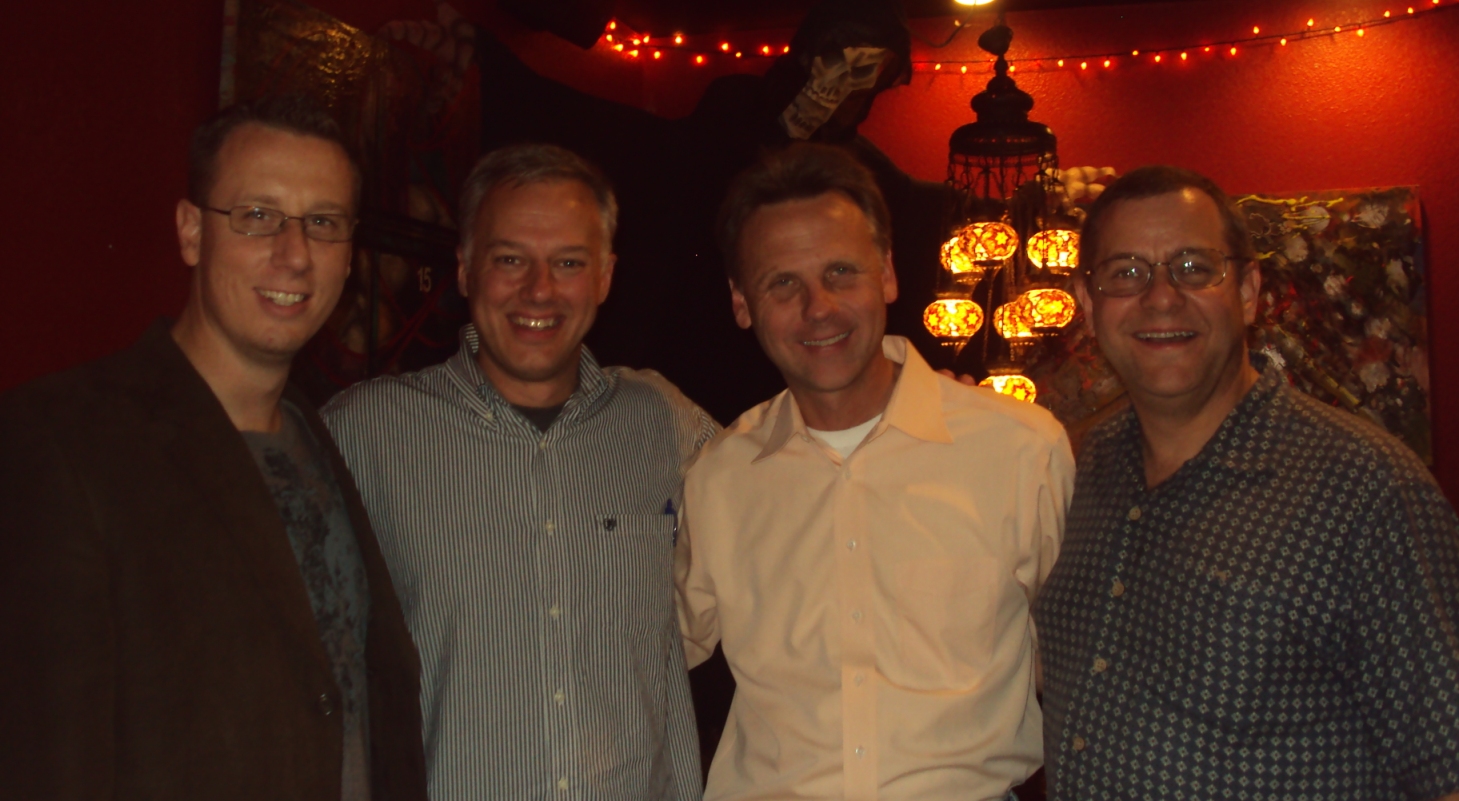
A couple of weeks ago, I told our GCR church a story about my three Horsemen friends and I attempting to feed the homeless in downtown Dallas. This was in the summer of 2001, before I was preaching. Jason, Dan, Kevin, and I had never done anything like this; we had no idea how to do it, or where. But we had made some recent commitments together to stop griping about our church and stop complaining about our own needs and start serving other people. So, we made plans to feed the homeless.

We scrambled together $200 on a Tuesday afternoon, purchased 200 sandwiches off the dollar menu at the McDonald’s next to the downtown Greyhound bus station, and drove to an empty parking lot across the street from the downtown Dallas library. And within about four minutes, we had 13-million homeless people surrounding our minivan and grabbing for food.

That’s what it felt like.

We apologized for not having enough food, we got everyone to line up single file, we prayed over every cheeseburger and McChicken sandwich, and we did the best we could. We were uneasy at first; it was a little tense. And, yeah, we ran out of food fairly quickly. And everybody was… cool. Gracious. Thankful. Very thankful.

We wound up having a lot of conversations. We prayed with probably 20 people. And some of them prayed for us. We laughed together about the food shortage and how we didn’t know what we were doing. I was in a place I had never been with people I had never engaged. We heard a lot of stories. We talked about God. And we stayed there until almost dark.

Almost dark.

I’m telling you, that three hours changed me. It profoundly changed me. We did that once a month for a couple of years and it transformed me. It’s a big part of the things that led to me transitioning out of radio and into preaching. It helped set me on that path.

Actually doing some ministry, having a mission–not just talking about it or studying it or agreeing that it’s good–changes you. When you risk going to new places, meeting new people, and trying new activities, the uneasiness creates some space for change. New experiences challenge your beliefs and assumptions. Ministry when you’re in over your head forces you to face your fears and surprises you with resources and strength from God you didn’t know you had. Hearing the stories first-hand, seeing the places and the people, makes the needs in our world and the opportunities to serve more urgent and real. The Scriptures become more alive and more “right now” when you connect them to real ministry. It pushes us out of the comfort of theory and rhetoric and into the places where God really is changing the world.

To empty yourself for the mission of God like that feels good. You know it feels good, because you’ve experienced it, too. The reason it feels so good is because it’s our God-created and God-ordained purpose. He made us to put other people first. When we do that, we are being Christ-like. That’s why it’s so powerful. When we serve others, when we live in the mission zone, we live better. We worship better. We pray better. We love better. Everything’s better.

And you’ll be changed.

Peace,
Allan

Baby Blessing, Mission, and Derrell

We were in Tulsa this weekend for the Baby Blessing ceremony at the Jenks Church where our daughter Valerie and her family worship and serve. Elliott and Samuel are six-months-old, the perfect age to steal the show at a baby blessing. And they did. We were listening as the parents of all the babies born in that congregation over the past year made vows to raise their children in the nurture and admonition of our Lord, we affirmed our own promises to help these parents raise their children in Christ, but everybody was distracted by the cuteness of our twin grandsons.

Or was that just me?

I don’t know, man, they’re super cute.


David’s parents and his sister, Claire, were there from Virginia to really add to the fun of the long weekend together. There was a massive yard work project, big meals, football watching, and packing up the tubs of clothes the boys have already outgrown. But mainly we spent our time holding and playing with and loving Elliott and Sam. Elliott is taking steps now in his walker. Kinda. They’re both eating really well from jars now, and beginning to experiment with drinking from cups. They laugh and shriek at each other and are figuring out how to get their way. Elliott didn’t mind the lemon slice I had him try at Hideaway Pizza. Sammy hated it. We thought Elliott said “ma-ma” one time. He didn’t. But it was close.


I don’t think I’ll ever grow tired of looking at those boys from way across a crowded room and watching them light up with recognition through those big eyes and wide-open smiles. How can I describe something like that? It’s crazy.

If you don’t have any, you should get some grandkids. It’s really awesome.

~~~~~~~~~~~~~~~~~~~~~~~~~

The fastest way to get out of a spiritual rut is to dive head-first into a mission.

Having  the mind of Christ, being transformed into the image of Jesus with ever-increasing glory, means increasingly doing for others. It means sacrificing and serving others. Philippians 2 says your attitude should be the same as that of Christ Jesus, and describes that attitude as considering others better than yourself and looking not only to your own interests, but also to the interests of others. 1 Corinthians 10 tells us to seek the good of many. Romans 15 instructs us to please our neighbors for their good, to build them up.

Actually doing some ministry like that–not just talking about it or studying it or agreeing that it’s good–changes us.

When we risk going to new places, meeting new people, trying new activities, the uneasiness creates some space for change. New experiences challenge our beliefs and assumptions. Ministry when you’re in over your head forces you to face your fears and surprises you with resources and strength from God that you didn’t know you had. Hearing the stories first-hand, seeing the places and meeting the people, makes the needs and the opportunities more urgent and real. The Scriptures become more alive when you connect them to real ministry. It pushes you out of the comfort and theory of rhetoric and into the places where God is changing the world. To empty yourself for God’s mission like that feels good.

You know it feels good. Because you’ve done it before. And the reason it feels so good and refreshing and real is because it is your God-ordained purpose. He made you to put others first. When you do that, you are being more Christ-like. That’s why it’s so powerful. When we serve others, we live better, we worship better, we pray better, we love better–everything’s better!

Living your life on mission means more people in our world will be blessed. And more of us will be changed.

~~~~~~~~~~

Derrell Havins, a gentle man of deep faith and a dear friend in Amarillo, finished his race this afternoon. And he ran well. Very well.

I love Derrell because he first loved me. I count Derrell among the greatest sources of encouragement I had during our ten years of ministry at the Central Church of Christ. He’d start all of our conversations with a smart-aleck comment about my tie or my hair or something I had said in a sermon, and then move immediately into an encouraging word. He told me on multiple occasions to never stop preaching. He told me to never let up. He told me to keep speaking the truth, even when it was difficult. And sometimes it was.

He and his loving wife, Nola, took us out for burgers at Buns Over Texas and catfish at that all-you-can-eat place in Umbarger. They were a fixture at Central’s annual Family Camp. And his smile–I never saw Derrell frown, unless he was faking something.

I love Derrell because he loved our daughters. He and Nola doted on our girls constantly, telling them how pretty they are, how talented they are, how important they are.  They hugged all three of our girls every Sunday. Valerie and Carley always referred to Nola and Derrell as “our favorite old people.” Derrell stood on the stage in that old Central chapel in the summer of 2020 as I walked Valerie down the aisle at her wedding. He’s the one who asked who was giving away this beautiful young lady in marriage. Valerie was blown away. Astonished. She had no idea Derrell would be up there. I remember when the doors opened and she took one step into the aisle and saw Derrell, she turned to me and said, “Oh, my word! It’s Derrell!” And started crying.

I’m typing through tears as I’m writing this right now. Remembering what Derrell would say every time we ate lunch together at the Burger Bar on Polk Street. He would order the Monte Cristo. Every time. And he would say, “Don’t tell Nola.” Every time.

After Nola died suddenly in March 2015, Derrell’s encouragement to me became a one-track stuck record. He ordered me to tell Carrie-Anne how much I love her. Every time we spoke, and at least a couple of times every Sunday, Derrell would insist. “Promise me,” he would say, “that tonight you’ll tell her. Tell Carrie-Anne you love her. Again.”

So, tonight, in honor of Derrell and Nola and their 57 years of marriage that truly reflect the glory of God and serve as a powerful testimony to our Lord’s love for his people, tell your wife tonight how much you love her and how much she blesses your life. Tell your husband how much he means to you and how you can’t imagine living without him.

God bless all the Havins and Vaughans in Amarillo tonight, and all the people who love Derrell so much. Rest in peace, Derrell. May our faithful God receive you into his loving arms.

Peace,
Allan

« Older posts