Category: Mark (Page 13 of 15)

Not Far From The Kingdom Of God

You Are Not Far From The Kingdom Of God

Mark 12 – Jesus is debating with the chief priests, the teachers of the Law, and the elders. They’re walking through the temple courts. I imagine they’re somewhere on the South side of the temple, probably on the huge steps that led up to the Huldah gates and the temple’s main entrance. If not, they were probably somewhere in the maze of courtyards below, the busiest and most crowded area of the temple grounds. They’re going back and forth on all kinds of things: Jesus’ authority, the rejection of the Messiah, politics and taxes, marriage and the resurrection.

Then one of the teachers engages our Savior in a topic that really matters. This question counts. “Of all the commandments, which is the most important?”

Jesus answers with what he always said perfectly summed up every word of the Law and the Prophets: Love God and love neighbor. “There is no commandment greater than these.”

The teacher of the Law agrees. In a humorous way, only because we know Jesus’ true identity as the holy Son of God, he actually commends Jesus for his wise and true answer. “Well said, teacher. You are right.” (Duh! Jesus was there when the commands were given!) But he takes it a step farther. In fact, this teacher of the Law, a comrade of those who were questioning Jesus and attempting to trick him and trap him and get him out of the picture, takes it one huge, giant, leap forward. He makes the bold claim, to Jesus and in front of all his cohorts, that loving God and loving neighbor is “more important than all burnt offerings and sacrifices.”

I imagine this teacher actually pointing to and gesturing toward the people and the animals and the altars, the priests and the books and the chants, that surrounded them in this scene. Loving God and loving neighbor trumps all of this, he says to Jesus. Loving God and loving neighbor means more, it is more, than anything that happens in here!

And our Lord — does he smile? Does he wink? Does his face break out in a massive ear-to-ear grin? — looks this teacher right in the eye and says, “You are not far from the Kingdom of God.”

I often wonder what Jesus was thinking at this point. “This man gets it! Here’s a guy who really understands! He’s in the middle of all the trappings of the religious establishment, he’s being blocked and detoured and slowed down and held back by all the rules and regulations and rituals and ceremonies, but he understands it’s not about any of these things! He gets it!”

“You are not far from the Kingdom of God.”

When people asked Jesus about the Kingdom of God, not once did he ever say, “It’s that group over there that meets on Sundays for worship and Bible class.” When Jesus explained the Kingdom of God, he never once said, “It’s identified by those who take communion once a week on the Lord’s Day and sing acappella.” Jesus never told a story about the Kingdom of God and interpreted it by claiming, “You’ll know the Kingdom when you see two songs and a prayer and announcements either at the beginning or the end. Or sometimes both.”

No.

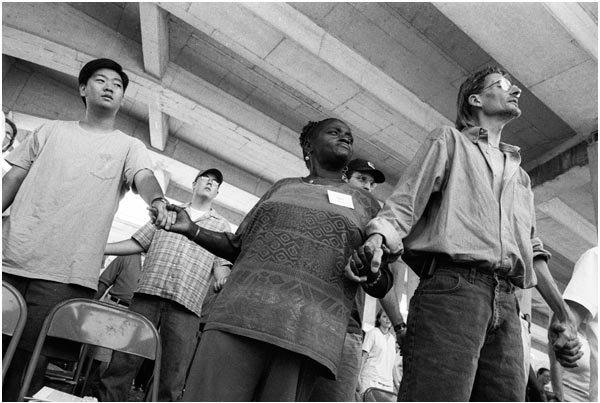
Jesus always says the Kingdom is about hurting people being comforted. It’s distressed people being encouraged. It’s cold people being warmed. It’s the outcasts being brought in and made a part of the family. It’s God using his people to help other people.

The true marks of the Kingdom have very little, if anything, to do with what happens inside your church building between announcements and prayers. Instead, the Kingdom of God is grounded firmly in the weightier matters of justice and mercy and love and faithfulness. The requirements of living in the Kingdom are not keeping the rules as much as they are about acting justly, loving mercy, and walking humbly before God.

Maintaining our institutional status quo is not necessarily the same as being faithful to Jesus and his mission. Being a member in good standing or a middle-of-the-road church is not necessarily the same as living under the reign of God.

Our King came into this world to sacrifice and to serve and to save. And that is the business of his subjects, too. When we get it through our heads that this calling trumps every other calling we think we might have as children of God and followers of the Son, then we are not far from the Kingdom of God.

~~~~~~~~~~~~~~~~~~~~~~~~~~~~~~~~~~~~~~~~~~~~~~~~~~~~~~~~~~~~~~~~~~~~~~~~~~~~~~~~~~~

Carley’s 10! 

Carley’s ten. Or at least she will be Thursday. We had her party at the house Saturday. A whole bunch of silly 4th grade girls. Kate won the limbo contest. Elizabeth took the hula hoop prize (although Carrie-Anne beat her later in a head-to-head). And then Whitney and I beat it for the new Cowboys Stadium in Arlington and the OU-BYU football game.

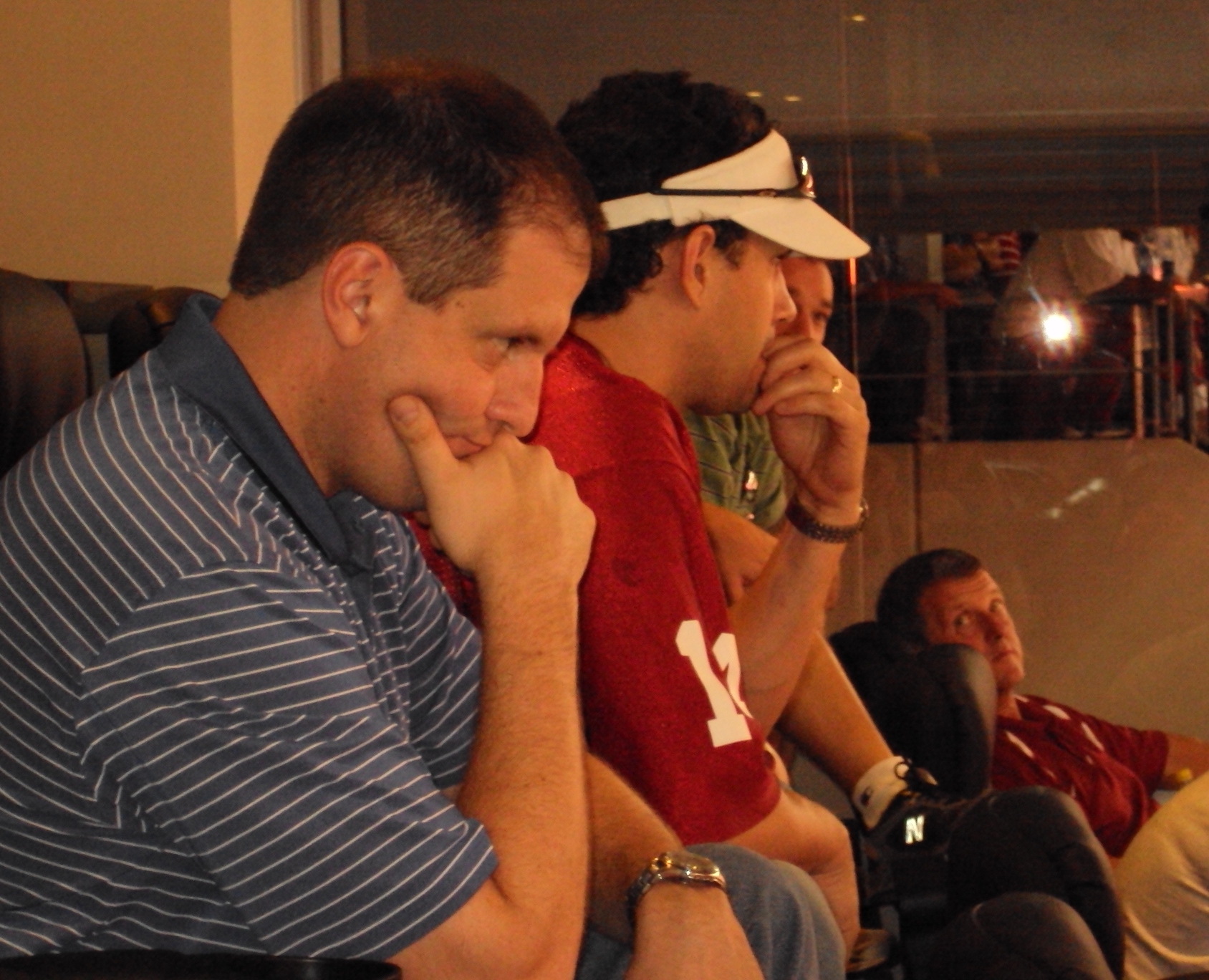
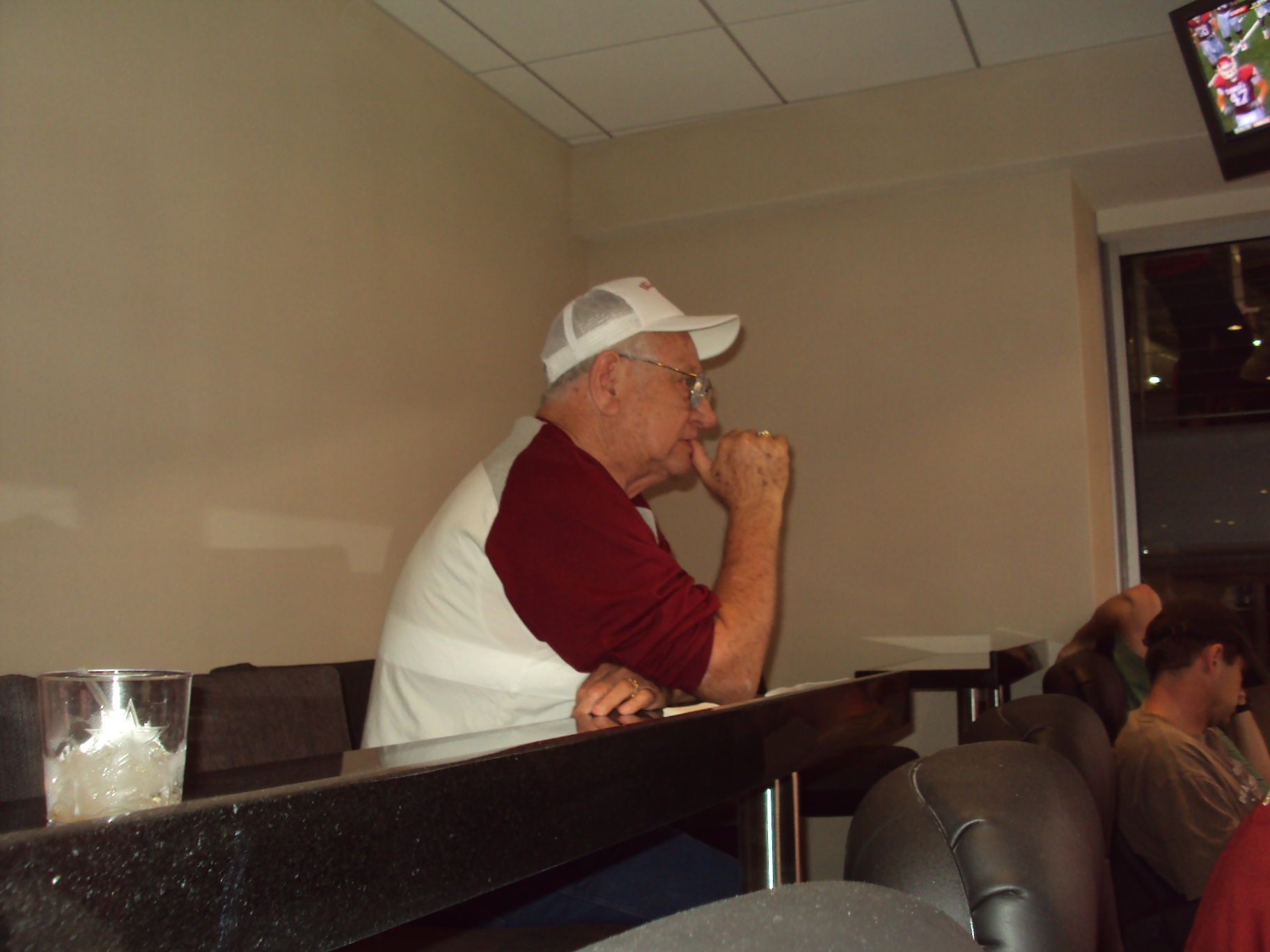
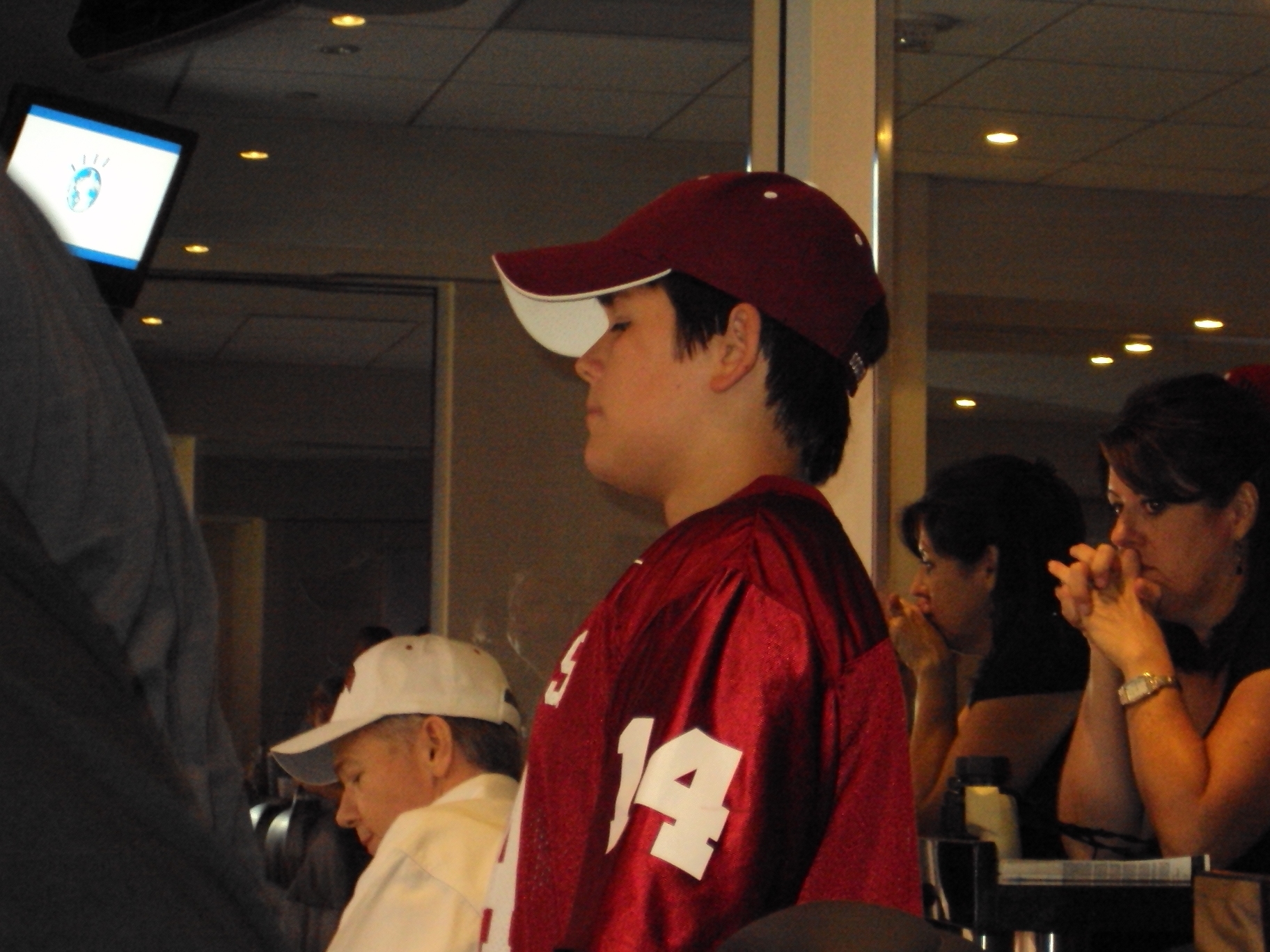
At BYU-OUOur great friend Glenn Branscum set up a bunch of guys from Legacy with seats in his suite for the game. And when I say seats in his suite, I mean huge, fat, oversized, reclining leather seats with armrests and cupholders. Most every one in the room was a big Sooners fan. That’s why they were invited. Of course, most every one of the 80,000 in the stadium were Sooners fans. And everything Norman Southwas great.

Until about halfway through the second quarter when it became obvious that OU has some serious offensive line problems and some major gaps in the secondary. It got really quiet in there when Sooners quarterback Sam Bradford went down with his injury near the end of the first half. Whitney was excited (“Darling, you can’t cheer an injury. He’s a real person” “But, dad, this is good for BYU!”), but most of the rest of our crew spent the last two hours of the evening in a dark, dark, depression. Brandon didn’t say anything or look at anybody. Paul chewed off all his fingernails and then started working on the coasters. Dillon was in a catatonic trance. Ken and Ada prayed the whole second half (I’m sorry, God is NOT an OU fan). And I spent those last two quarters trying to keep Whitney from rubbing it in.

Words can’t describe this stadium. I have a lot to say about it. Maybe nothing you haven’t already read somewhere else. But I’ll save it for later. My sincere thanks to Glenn and Karen and the Branscum family for setting us up with a fantastic evening together. Thank you, thank you, thank you!

~~~~~~~~~~~~~~~~~~~~~~~~~~~~~~~~~~~~~~~~~~~~~~~~~~~~~~~~~~~~~~~~~~~~~~~~~~~~~~~~~~
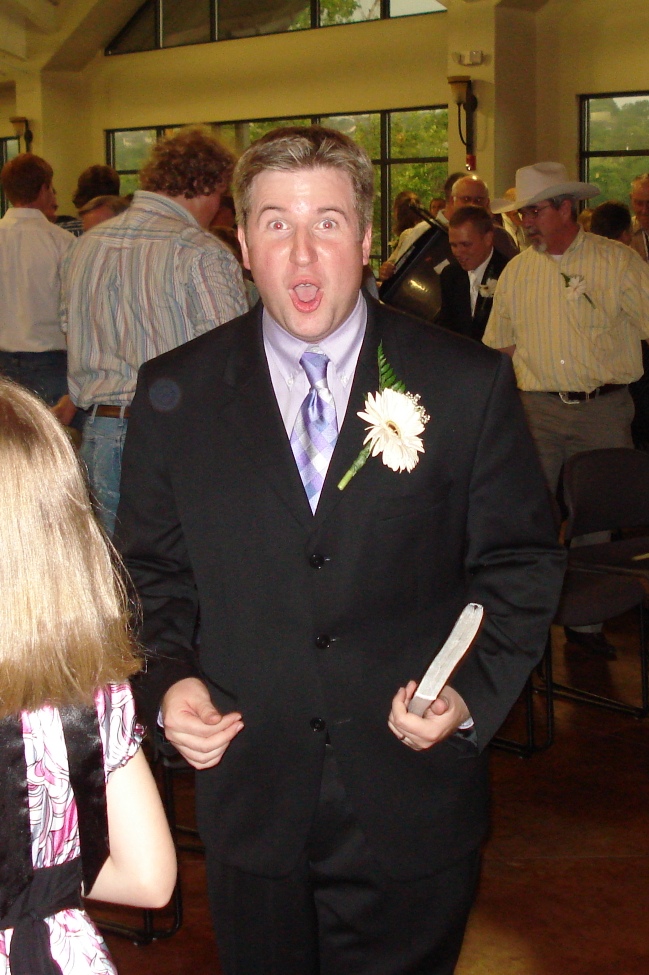
Jimmy Shay MitchellAlways a blessing to see great friend Jimmy Mitchell. He and his youth group and sponsors from the Northside Church in Benton, Arkansas worshiped with us at Legacy yesterday after a weekend at Six Flags. “Hi” to Elizabeth and Jenniva. We wish we could have seen y’all, too.  And update your blog, Jimmy!

~~~~~~~~~~~~~~~~~~~~~~~~~~~~~~~~~~~~~~~~~~~~~~~~~~~~~~~~~~~~~~~~~~~~~~~~~~~~~~~~~~~
Tim SederJust six more days until the Cowboys kick off their season against the Tampa Bay Buccaneers. And the second-best player in Cowboys history to ever wear #6 is Tim Seder. He was a kicker from Ashland who played two seasons in Dallas (2000-2001). He converted 72% of his field goals (36/50) during his tenure here and never missed a PAT (39/39). The interesting thing about Seder, though, is that he scored rushing touchdowns on fake field goals twice, once in each of his two years. I don’t have time to look them up. Who cares?

Yesterday’s #7 is quarterback Chad Hutchinson. Sorry, I just can’t go with Randall Cunningham, just like I couldn’t give Red Ribbon Review #7the nod to Harold Carmichael a couple of weeks ago. Hutchinson entered the picture during Jerry Wayne’s brief period of fascination with baseball-playing quarterbacks. He preceded Michigan’s Drew Henson in Dallas by a season.
Hutchinson had played the 2001 season as a reliever for the St. Louis Cardinals where he appeared in three games, allowing 16 baserunners on nine hits and six walks and a hit batter in a total of four innings of work. He gave up eleven earned runs and completed his MLB career with a 24.75 ERA.
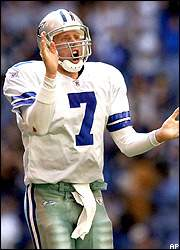
Chad HutchinsonAnd he didn’t fare much better with the Cowboys. Following a four-interception performance in a loss to Arizona, Jerry pulled Quincy Carter and handed his team to Hutchinson, promising that this pitcher from Stanford was the future. However, his first ever start, at Texas Stadium against the Seahawks on October 27, was overshadowed by Emmitt Smith’s historic breaking of Walter Payton’s all-time rushing mark. The Cowboys, as you recall, lost that day. And Hutchinson went 2-7 in his nine starts that year, completing 51% of his passes for seven TDs and eight interceptions. The second-best #7 in Cowboys history is just another mediocre quarterback in a revolving door of them since Troy Aikman stepped down nine long years ago.

Peace,

Allan
The Kingdom Of God Is Here!

Jesus preaches the Kingdom. “Repent!” he says, “The Kingdom of God is near!” And then what does he do? He frees the prisoner, heals the blind and lame, rescues the oppressed.

Those are the signs of the Kingdom.

John the Baptist sends to find out if Jesus is the Messiah and Jesus says, look, you know what the signs are. “…the blind receive sight, the lame walk, those who have leprosy are cured, the deaf hear, the dead are raised, and the good news is preached to the poor.”

That’s the Kingdom.

Distressed people being encouraged. Cold people being warmed. Hurting people being comforted. The outcasts being brought in and made family.

The Kingdom of God.

When we talk about the Kingdom strictly in terms of church and the institution and the rules and the order — when that’s our whole idea of Kingdom — we quickly lose sight of the very things that the Kingdom of God what it is. Centuries of church development and decision-making and rule-making can cloud our vision. When we see the Kingdom exclusively as church, we tend to focus only on the features and characteristics of the church.

Our challenge is to insure that our identifying characteristics genuinely correspond to those of the Kingdom Jesus was preaching. Maintaining our institutional status quo is not necessarily the same as being faithful to Jesus and his mission. Being a member in good standing or being a middle-of-the-road church isn’t necessarily the same as living under the reign of God.

Our King came into this world in order to serve and to save. And that is the business of his subjects, as well. May our Lord bless us as we serve and rescue and save in his name.

~~~~~~~~~~~~~~~~~~~~~~~~~~~~~~~~~~~~~~~~~~~~~~~~~~~~~~~~~~~~~~~~~~~~~~~~~~~~~~~~~~~~

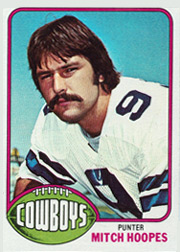
Only nine days until the Cowboys kick off their 50th regular NFL season. One week from Sunday, they’ll tee it up against the Bucs down in Tampa Bay. And we’re counting down the days with what we’ve been calling the Red Ribbon Review. These are the second-best players in Cowboys history according to jersey number. The almosts. The also-rans. The not-quites.

Mitch HoopesToday’s #9 is Super Bowl punter Mitch Hoopes. (Doesn’t his picture just scream “Mid-70s”?) He was part of that historic Dirty Dozen draft of 1975, taken by Tom Landry in the eighth round out of Arizona. One of the few, if only, times the Cowboys have ever drafted a kicker. Hoopes was the punter as a rookie that year, posting a pedestrian 39.4 yards per kick average. Dallas made a shocking run to Super Bowl X, a heart-breaking loss to the Steelers in Miami, and then promptly brought in Danny White during the offseason to back up Roger Staubach.

And to punt.

Hoopes was released. And White became, in Staubach’s own words, “America’s Punter.”

Tomorrow’s #8 in the countdown is the only other player in Cowboys history to wear #8 besides the obvious Hall of Famer. Buzz Sawyer. His real name is Robert Meade Sawyer, according to pro football reference guides. But the Cowboys list him as Buzz. He was born in Waxahachie, punted for Texas A&M and Baylor, and wound up playing for the Cowboys scab team during the 1987 players strike. Three games. 16 total punts. 39.9 yards per kick average. And the only exclusively-scabs player to make the Red Ribbon Review.

Peace,

Allan

You Are God and I Am Not

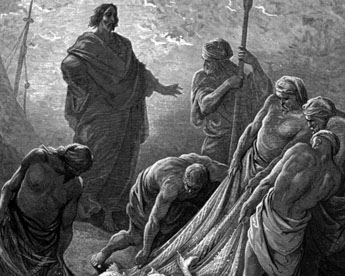
Go away from me, Lord. I am a sinful man!Peter looks at the miraculous catch of fish and falls down at Jesus’ feet and says, “Go away from me, Lord. I am a sinful man!”

Peter finds himself in the presence of the holy Almighty God and he’s astonished. He and his companions are seized with amazement as they recognize clearly their place next to the Creator of the universe. Because of his sin, Peter doesn’t deserve the blessings of Christ. Because of his unworthiness, Peter doesn’t belong in the same boat with Jesus.

You see, the closer you get to God the more clear your own sinfulness becomes. Your own unworthiness before the Lord comes into sharp focus.

The same light that knocks the apostle Paul down the ground on the way to Damascus. The same Lord who caused Job to say, “I despise myself.” The same God who caused Isaiah to exclaim, “Woe to me, I am ruined!” The same Almighty who prompted Abraham to declare, “I am nothing but dust and ashes!” The same Son of Man who caused John to fall at his feet as though he were dead. Jesus Christ, the Holy One of Israel, calls us to acknowledge our own sinfulness and our own unworthiness.

And until we do, I don’t think we get it.

Until we see ourselves as sinners in the presence of a holy and righteous God, I think we probably cheapen or devalue his amazing grace. Our tendency is to think, “Yes, of course God loves me; that’s his job!”

No, ma’am, that’s not his job. It is an unimaginable, unexpected, unfathomable, unnecessary wonder of the universe! It’s mind-blowing and earth-altering and history-changing. And, to the eternal praise of God, it’s not impossible! God has found a way — amazing as it is — to satisfy both his holiness and his love.

My Father reminds me all the time that he is God and I most certainly am not. And that continually fills me with a deep sense of gratitude. And awe.

“How great is the love the Father has lavished on us that we should be called children of God. And that is what we are!”

~~~~~~~~~~~~~~~~~~~~~~~~~~~~~~~~~~~~~~~~~~~~~~~~~~~~~~~~~~~~~~~~~~~~~~~~~~~~~~~~~~~

Red Ribbon ReviewThere are 67 days left until the Dallas Cowboys open up their 50th football season. And the Red Ribbon Review is counting down the days with a look at the second-best players in Cowboys history according to jersey number. #67 turns up some very interesting characters and stories.

Pat Toomay wore the number 67 in Dallas. A backup defensive end from Vandy, Toomay barely tolerated Tom Landry and the Flex Defense for five seasons before bouncing from Tampa Bay to Oakland then to retirement as an acclaimed author. Toomay has written two novels about football classified as non-fiction. The Crunch got him in trouble with the Cowboys. On Any Given Sunday got him a movie deal.

Irvin & McIverEverett McIver was also a #67. He’s the guy who was unfortunate enough to be in the chair and in the middle of a haircut at Cowboys training camp in Wichita Falls when Michael Irvin decided it was his turn. During the ensuing argument, Irvin stabbed McIver in the neck with a pair of scissors, coming within an inch or so of killing him. There were reports in the Dallas Morning News later that summer that Jerry Wayne had brokered a deal for Irvin to pay McIver a six-figure sum to keep quiet. All parties denied it. Charges were never filed.

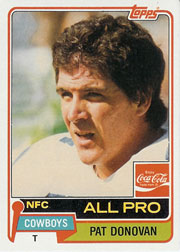
PatDonovanAs for on the field football stuff, though, the second-best Dallas Cowboy to ever wear #67 is offensive lineman Pat Donovan. Donovan was part of that Dirty Dozen draft class of 1975 that helped lead the Cowboys to Super Bowl X. He took over for the retiring Ralph Neely at left tackle and played nine years in Dallas, never missing a game. Donovan played in 20 playoff games for the Cowboys, including six NFC Pat Donovan CardChampionship Games and three Super Bowls, earning a title ring in Super Bowl XII against Denver. He made the Pro Bowl in four straight seasons from ’79-’82, one of only four tackles in team history to make at least that many trips to Hawaii. Following the ’83 season, Donovan required surgery on both shoulders and decided to retire. Donovan was certainly not as colorful as Toomay or John Gesek, another Cowboys #67, but he is clearly the second-best #67 in team history.

Peace,

Allan

In The Garden

“He took Peter, James, and John along with him, and he began to be deeply distressed and troubled.” ~Mark 14:33

GethsemaneWhat happened that night in the olive grove at Gethsemane? What transpired there? Jesus is meeting a tremendous trial, he’s facing a gruesome horror, he’s fighting intense temptation. And he does not do it stoically. He does it biblically. Loudly. With tears and sweat. And honest lament. He lays his body and soul before God in complete honesty and trust and says, “Father, everything is possible for you. Take this cup from me.”

Jesus is facing the most severe test of his life. God is handing him the cup and demanding he drink it. Jesus’ physical and spiritual self — his mind and his body, his heart and his soul — none of him wants to do this. He shudders in horror at the Ceiling of Cave at Gethsemanemission before him. He dreads all of it. The pain. The torture. The death. Jesus is facing the terrible prospect of crucifixion. His Father is in the process of making him who had no sin to be sin for the world. Jesus is walking through the valley of the shadow of death. And he’s in turmoil.

Jesus wants another way. And he asks for it.

This is a horrible scene.

Jesus crying out to his Father — “Deliver Me!!” — and no dove descends, no voice from heaven says this is my Son. God has already spoken. And the Son must obey.

And he does.

“Not my will, but yours be done.”

OliveGardenAtGethsemanePerfect honesty. Total truthfulness. Complete trust. And a beautiful, matchless example of devotion and commitment and obedience to God. The perfect example of understanding God’s will, wrestling with the difficulty of carrying it out, demonstrating to us that asking God about it, even asking him to change it, is not inappropriate. It’s honorable. But through it all, we clearly see Jesus’ commitment to obey.

Jesus overcomes the silence. He fights off the temptation to do what he wants. And through open and honest prayer, he obeys the Father. At Gethsemane, we see both Jesus’ agony and his determination to do God’s will, even if it means his horrible death.

Praise God for the Savior’s love. And for his obedience to our Father’s will.

~~~~~~~~~~~~~~~~~~~~~~~~~~~~~~~~~~~~~~~~~~~~~~~~~~~~~~~~~~~~~~~~~~~~~~~~~~~~~~~~~~~~

Early Saturday evening, while moving a water sprinkler in the back yard, I noticed a huge glob of bees congregated on the northeast corner of our house. The blob of bees was about two feet in length and 18-inches wide, probably 20-thousand bees according to the beekeeper I was forced to call.

He told me he would charge me $200 to remove the bees, $300 if they had actually gotten into the walls of the house, and $400 if I spray them or attempt to remove them myself first.

Needless to say, we had bees on the brains at Stanglin Manor Saturday night. So when a June bug flew into the kitchen and buzzed Valerie’s head toward the end of dinner, the terrified screams, I’m sure, set off car alarms in Haltom City.

Bees CloseUp  Beekeeper   

The beekeeper showed up at 7:30 yesterday morning. It was cold outside so the bees weren’t moving much. They had actually all clumped on top of each other instead of being all spread out the way they were in the evening. He put on his bee suit and used a tricked-out vacuum cleaner to suck them them all quickly and painlessly into a big white box. 15 minutes. Two-hundred dollars.

He says he does about 400 calls a year.

Valerie did the math. Now she wants to be a beekeeper.

~~~~~~~~~~~~~~~~~~~~~~~~~~~~~~~~~~~~~~~~~~~~~~~~~~~~~~~~~~~~~~~~~~~~~~~~~~~~~~~~~~~~~~

Legacy’s 24 Hours of Prayer is set for September 18-19What a fantastic morning Saturday at the Eastridge Church in Rockwall. The Four Horsemen met at 7:00 for an hour of prayer in their beautiful worship center (having Mason, Jason’s oldest son, there to pray with us was an unexpected treat!). Seeing Dan on 24 hours of prayer and zero hours of sleep was interesting (actually, it’s not that different from seeing Dan any other time). And, for the first time ever, over-dressing at an event Kevin helped sponsor was a bit unsettling.

Jason and I had the great privilege of sharing breakfast with and then speaking to the men of Eastridge who had just completed a 24-hour period of continuous prayer. What a blessing! I love listening to these men recount the experiences of praying with one another for an hour or more over the needs of the congregation and the community. The unexpected tears. The overwhelming nature of the requests. The burden-bearing. The responsibility. The fellowship. The pouring out of hearts and souls to God. The bonding.

The same thing happened when we did this here at Legacy. And in Marble Falls. And in Mesquite. In fact, the 24 Hours of Prayer was one of the very first things we did as the Four Horsemen following that monumental breakfast at our house in 2001. We pledged to one another that morning to do more for Christ and for his Kingdom. We pledged to do more for the Mesquite congregation and the Mesquite community. We vowed to stop asking the elders for permission, to just start doing the things we knew needed to be done that would shape us all more into the image of Christ. The Second Saturday Servants. Feeding the homeless and hungry in downtown Dallas. The Men’s Advance. We didn’t ask for permission to do any of that. We just organized it and got the whole church to do it.

On Saturday, as we reflected with those men at Eastridge on that life-changing, earth-altering year for us, a year that saw a series of events that facilitated tremendous spiritual growth, Jason pointed out that now he and I both have to ask our elders permission before we do anything.

Funny.

~~~~~~~~~~~~~~~~~~~~~~~~~~~~~~~~~~~~~~~~~~~~~~~~~~~~~~~~~~~~~~~~~~~~~~~~~~~~~~~~~~~~~

Parity has entered the world of NCAA tournament brackets at Stanglin Central. And it’s not pretty. Whitney unseated me as undefeated bracket champion in a tie-breaker following the final game last year. This year, Carrie-Anne has unceremoniously taken the crown even before the on-court title is decided. She finished with 72 points. Valerie was next wtih 71. Carley and I tied with 70. Whitney went from first to worst with 63. None of us has Carolina or Michigan State winning the whole thing. So we’re done. Congratulations, C-A.

There’s always next year. RangersLogo

Speaking of next year………Go Rangers!

Allan

Where Are The Kids?

Where are the kids?Where are the kids? The local TV stations used to ask us at 10:00 every night. It’s the question I ask Carrie-Anne when I come home after work. Thirty minutes after church when I’m ready to get in the car. In a crowded mall. At the park. When it’s especially quiet in the house. When the bikes are left on the lawn. Where are the kids?

If we ask that question as we’re reading Scripture—where are the kids?—the answer always comes back, “right in the big middle of everything.” Right where God put ’em. Right where God wants ’em.

Matthew 21 – Jesus enters the temple in the last week of his life. The children are there shouting “Hosanna to the Son of CaddellsDavid!” The religious leaders in the temple are indignant. Maybe the kids were clapping, I don’t know. Maybe just the fact that the kids were in the middle of the temple being loud was enough to upset these teachers and priests. Jesus answers their indignation by quoting Scripture. “From the lips of children and infants you have ordained praise.”

Exodus 10 – Before the plague of locusts, God tells Moses he’s doing this “that you may tell your children and grandchildren…”

Exodus 12 – God insitutes the formational Passover Supper with everyone’s kids right there around the table. “When your children ask you…then tell them.”

WrightsExodus 13 – God explains the dedication of the first-born. “On that day, tell your son, ‘I do this because of what the Lord did for me.'” Also, “when your son asks you…,” tell him the great story.

Deuteronomy 4 – God’s giving the Law to his people. “Teach them to your children and to their children after them.”

Deuteronomy 6 – Same thing. “Impress them on your children. Talk about them when you sit at home and when you walk along the road, when you lie down and when you get up.” And again, when your son asks you, tell him the stories.

Joshua 4 – Setting up the stones to mark the spot where they crossed the Jordan River. When your children ask you, tell them.

Matthew 18 & 19, Mark 10, Luke 18 – Parents bring their children to Jesus. And he welcomed them gladly. They brought their kids to Jesus so he could touch them and bless them and teach them. And he did. Jesus took little kids in his arms, he placed his hands on their heads, he prayed for them. He warns us not to ignore them or neglect them or discourage them in any way because the Kingdom of Heaven belongs to our little children and he’s not willing that any of them should be lost.

In our Scriptures, the kids are always right in the big middle of everything. Exactly where God put ’em. In our Bibles, the Matt&Elizabethchildren are never on the edges, they’re not peripheral participants in the community of faith. They’re not sent to the other room. They don’t eat at a different table. They’re not placed in an “age-appropriate educational environment.” They are critical components. They are integral to God’s plan for his people. They are the centerpiece to our sacred conversations and the core of our holy gatherings.

Where are the kids?

When you’re praying. When you’re reading the Word. When you’re singing praises to God. When you’re at the common table with your brothers and sisters in Christ. When you’re talking about our Savior and the Gospel’s impact on your life.

Where are the kids?

Which Is Lawful?

Which Is Lawful?“Some of them were looking for a reason to accuse Jesus, so they watched him closely.” ~Mark 3:2
“(They) were looking for a reason to accuse Jesus, so they watched him closely.” ~Luke 6:7
“…looking for a reason to accuse Jesus…” ~Matthew 12:10
“…he was being carefully watched.” ~Luke 14:1

The Pharisees and Teachers of the Law, these self-appointed Sheriffs of the Synagogue, were watching Jesus closely so they could pounce on him the second he broke one of their rules. In Luke 13, Jesus heals the woman who’d been crippled for 18 years. In the synagogue. On the Sabbath. In Mark 3, it’s this man with the withered hand. In the synagogue. On the Sabbath. And the Sheriffs didn’t like it. They were indignant. They plotted to kill him.

And Jesus challenges these religious leaders with his question in Mark 3:4 > “Which is lawful on the Sabbath: to do good or to do evil, to save life or to kill?”

Jesus presents to the synagogue rulers—and to you and me—two ways of doing the religious rules and regulations. He doesn’t throw them away. He says there are two ways of keeping them. One way is good and one way is bad. One way gives life to people and one way takes life away from people. One way frees people from burdens and one way places more burdens on people. One way liberates people from their chains and one way locks people up in prisons.

Jesus gives us two ways of doing religion. Two incompatible outlooks. Two opposite and conflicting views about our God and his Law and his intentions for his Law. And he presents it as a choice between the two. You have to choose. You can’t have it both ways.

“Which is lawful?” he says. For hungry people to eat or for them to remain hungry in order to protect your rules? (Mark 2:23-27) Which is lawful? For this man with the debilitating injury that singles him out as less than whole to be healed and to made whole or to remain withered and less than what he’s meant to be in order to keep your traditions? (Mark 3:1-6) Which is lawful? For this woman who’s been bent over for as long as she can remember, burdened by the weight of the world and her own sins, to be delivered from these burdens and made to walk again or to remain stooped over and burdened even more in order to keep your order? (Luke 13:10-17) Which is lawful?

God’s Law is not about the rules. It’s about people.
God’s Church is not about the institution. It’s about people.

And if we’re partnering with God and with his plan to redeem the world, we take care of people, not rules. So why, sometimes, do we act like Sheriffs of the Synagogue? I’m afraid, sometimes, we get together with God’s people on God’s holy day, the day set aside for us to celebrate salvation from God in the resurrection and reign of Christ, and we’re watching closely. Looking for a reason to accuse.

“Did you see what he’s wearing? Did you hear what she said? He’s raising his hands. She’s closing her eyes. He’s clapping. She’s kneeling. He won’t stand. She won’t sing.

And Jesus asks, “Which is lawful?” To do good or evil? To watch for those who might stray from my tradition and call them on it? Or to praise God with them in the understanding that we’re both redeemed by the blood of the Lamb? Which is lawful? To save life or to kill? To watch closely for someone who might violate my regulation and talk to them about it? Or to encourage them and be thankful that you both share salvation from God in Christ? Which is lawful? To remove the barriers and burdens and hurdles from my brothers and sisters or to weigh them down with my rules and regulations that act as chains and prison bars to those we’ve told have been set free?

Jesus says there are two ways. One way cares about people. One way doesn’t. The synagogue ruler in Luke 13 actually addresses the people after Jesus heals the crippled woman. “Hey! he says. “If you’re looking for freedom, if you’re looking for healing, if you’re looking for relief and rescue, if you’re looking to be delivered from the things that are weighing you down, come back some other day. You’ve got six other days to do stuff like that. Come back tomorrow. We have our rules, you know.”

Nobody—and I don’t care if they’ve been members of the congregation for 45 years or if they’re completely unknown strangers off the street—nobody should ever come into our church buildings to sit with us, worship with us, sing and pray with us, and study the Scriptures with us and feel like somebody’s watching him closely. Or looking for a reason to accuse.

That situation says a whole lot more about the watcher than it does the watch-ee or the rules. Jesus called it hardness of heart.

Aren’t we glad we serve a King who’s much more about mercy than ritual?
Aren’t we glad our God deals with us compassionately with patience and grace instead of Law?
As God’s children and subjects of the King, aren’t we compelled to treat others the same way?

Peace,

Allan

« Older posts Newer posts »