Author: Allan (Page 247 of 492)

Ending Racism – Good Luck

Mom&DadHappy Birthday to my dear mother, Beverly Ann Stanglin, who probably celebrated this morning with a free breakfast at Denny’s in Kilgore. Classy, dad!  She’s seventy today. Seventy. Mom, you’re officially, legally, undeniably old now. Seventy is old. That’s you. And you’re doing it very well. I love you.

~~~~~~~~~~~~~~~~~~~~~~~~~


Racism is alive and well in the United States and, sadly, throughout the entire world. No one can deny it. We have passed anti-racism legislation and outlawed racist practices. We have marched and preached, promised and reformed. We have boycotted, protested, and rioted. Yet racism is seemingly just as much a local and global problem right now as it was a hundred years ago, if not worse.

Obviously, racism has not been ended, nor will it be ended in our lifetimes. And that’s a terrible thing to believe. It’s a horrible thing to be true. But it probably shouldn’t lead to despair for followers of Jesus.

Racism, just like all sin, is the result of something good gone bad. Mark Galli, in a recent column for Christianity Today, reminds us that racism is an evil distortion of affection for loved ones. Affection for loved ones makes family pride possible. It allows us to feel and display pride in our community. And that’s healthy. But just like healthy sexual attraction is prone to turn into lust and healthy self-esteem might turn into pride, healthy loyalty to one’s own people can easily turn into racism.

Galli’s point is this: given our sinful nature and the fallen condition of the world, we will never get rid of racism in this age any more than we will get rid of lust or pride.

RacismCT

But just because we can’t completely wipe out racism doesn’t mean we have to give in to its nasty and sinful expressions. And isn’t this where God’s Church comes in?

Like with lust, our societies create social norms and laws to keep it in check. We expect men to refrain from making lewd comments to women and we prosecute employers who sexually exploit their employees. Christ’s Body can lead the way in similar fashion as it relates to racism. If we acknowledge the terrible reality, if we can admit that there’s no way human beings are ever going to eradicate sin, we can turn our eyes and our hopes toward the only One who can. We can confess honestly, we can forgive faithfully, and we can work together toward various gospel expressions of reconciliation.

It requires accountability. It takes patience and long-suffering, love and kindness, goodness, gentleness, and self control. These are the characteristics of the Spirit of our God who lives inside us. This isn’t about disposing of all tensions, it’s about creating space where people can commit to reconciliation and can treat each other with grace and mercy through the tensions.

It’s the only way.

In the meantime, we wait in hope together. We wait for the great day of true and eternal reconciliation between the races when that “great multitude… from every nation, tribe, people, and language” worships our God together.

Peace,

Allan
The Creed & Christian Formation

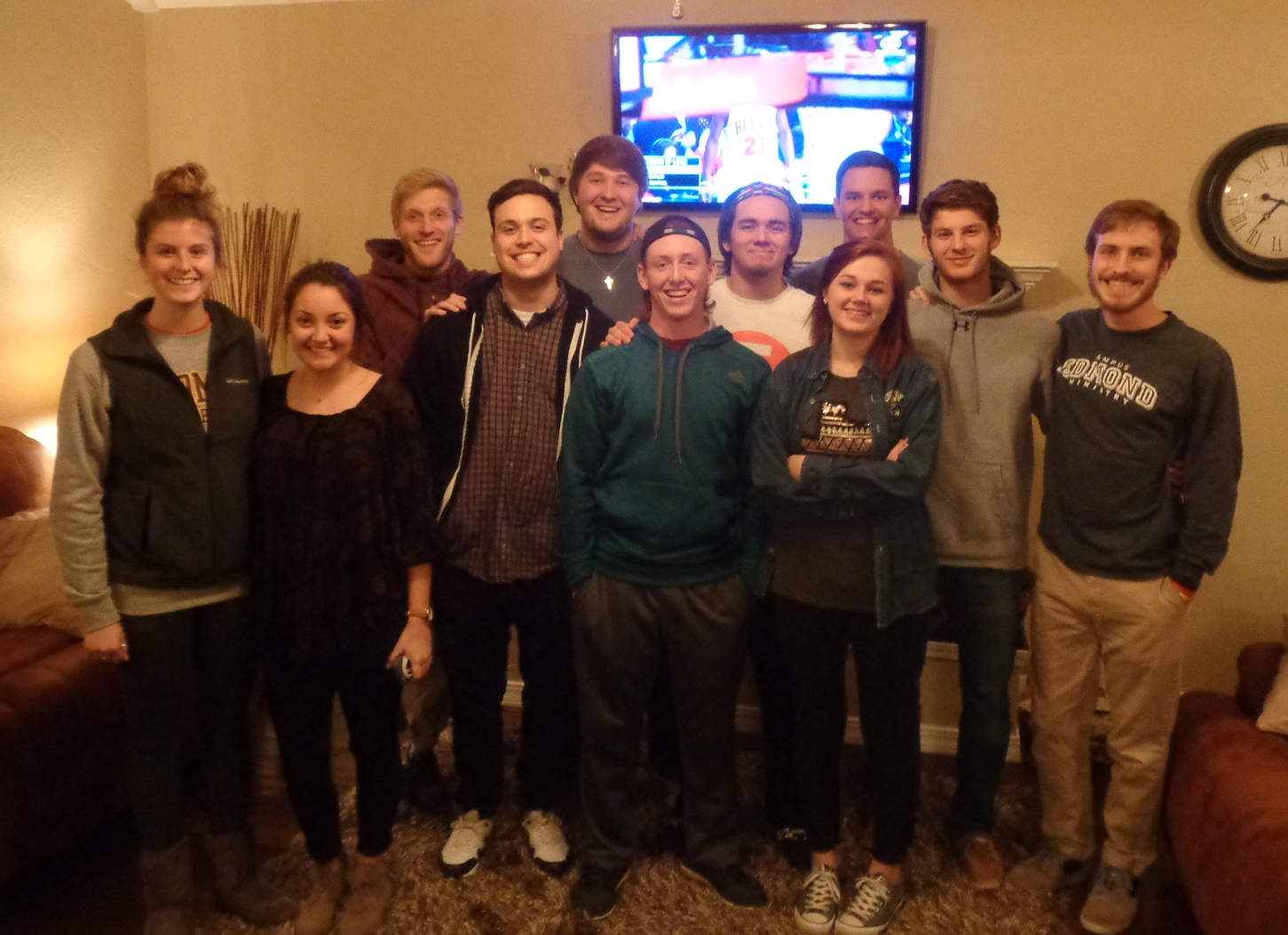
SkiTrip2016A group of ten college kids (nine from OC, 1 from ACU) showed up at our house Friday night and left with Valerie for a weekend ski trip to Angel Fire. Four of the young men grew up at the Legacy Church of Christ and were in the youth group when we were there from 2006 – 2011. Colten Pace is standing on Valerie’s right in the picture. Behind Colten and Val is Dillon Byrnes, the son of David and Shanna. We were in small group with the precious Byrnes family for three year and still count them as great friends. Hudson Enger is behind Dillon’s left shoulder and Trevor Jones is standing behind Dillon’s right shoulder. It was so great to see them now in such a different context. They’re college kids now, out on their own, growing and learning and experiencing life together in new ways. And so full of God’s joy. The other six kids — I have no idea who they are. I know a couple of them are in Delta and at least one of them is a Bible major. Good enough!

~~~~~~~~~~~~~~~~~~~~~

CrossElderLinkWe’re memorizing and reciting the ancient Apostles’ Creed as a church family here at Central because we believe it can help cultivate Christian formation. We believe God is in the business of changing us. He’s making us more and more into the image of his Son. That’s what God is doing in us. So church is more like school than a show. It’s more like boot camp than a country club. We’re all in and have committed to the difficult process of being changed. And we think the Apostles’ Creed will help facilitate that. To order your life around these timeless statements about God and Christ will shape a person.

If you believe that Jesus Christ will return to judge the living and the dead, that will have an impact on how you live. Think about that. He’s coming back to judge. What a great guard against sin. What a great tool for the counsel we give each other. What a great pause that gives us as we make decisions every day between right and wrong. It’ll affect the way we live.

If you believe in the forgiveness of sins, that’ll change the way you view yourself and it’ll affect how you act toward one another. We’ve all sinned this past week. All of us. In some way you haven’t loved the Lord. You said a mean thing to your spouse or a hurtful thing to your children. You’ve been dishonest with a co-worker or a friend. Maybe it’s a little sin you just can’t shake. Or maybe you’ve done something horribly out of character this week. We’ve all betrayed our Lord in some way this week. But if you believe in the forgiveness of sins, you don’t run away from the forgiver. You run to him. If we believe in the forgiveness of sins, then our church becomes a place of forgiveness and when you betray God you run to the church, not away from it.

And you will forgive others. Has anybody sinned against you this week? Has anybody lied to you or hurt you or let you down in some way this past week? Do you believe in the forgiveness of sins? It’ll change you.

Peace,

Allan

The Creed & Biblical Identity

CommunityPeople“The Lord is our God, the Lord alone.” Deuteronomy 6:4

This “creed” in Deuteronomy is about the corporate identity of Israel as the people of the one true and living God. This is who we are. This is in your heart. Impress this on your kids. Talk about this all the time. This is who we are.

In Corinth, the church was really struggling with their identity. “The church leader I follow is more important and more respected than the church leader you follow.” “I have more and better spiritual gifts than you do.” “I pledge my loyalty to Christ, but I don’t want to give up the prestigious civic luncheons at the pagan temple.” “Pool people can belong to our church, but the culture says they can’t eat the meal with me at my table.”

Paul answers all of that by reminding them of who they are and to whom they belong. In correcting their behavior, he reminds them of the story to which they now belong:

“I want to remind you of the Gospel I preached to you, which you have received and on which you have taken your stand. By this Gospel you are saved, if you hold firmly to the Word I preached to you… For what I received I passed on to you as of first importance: that Christ died for our sins according to the Scriptures, that he was buried, that he was raised on the third day according to the Scriptures, and that he appeared to Peter, and then to the Twelve.” ~ 1 Corinthians 15:1-5

This is who we are. Summaries of the core beliefs remind us. There’s a difference between the non-negotiables of the Christian faith and the disputable matters that aren’t that important. Likewise, the Apostles’ Creed reminds us: these are the mountains we die on. And becoming more familiar with the mountains keeps us from sticking our flags in the molehills, from getting our knickers in a wad over silly stuff.

This is who we are. This is what we believe.

And today, as Christianity falls farther out of favor with our culture, as the world becomes more secular and more hostile to our faith, we’re going to be less and less identified by the secondary things. The primary things will move more and more to the center of who we are. The Apostles’ Creed is primary. Things of first importance.

Peace,

Allan

The Creed & Historical Community

Barrett&OCI had a great day at Oklahoma Christian University yesterday, catching up with some really old friends and maintaining connections with some more recent ones. It’s fascinating to walk into Hardeman auditorium and see Sheldon Adkins as a respected university counselor and Jeff McMillon as a respected Bible professor. Randy Roper — pardon me, Doctor Randy Roper — my play-by-play partner for all those Eagles basketball games, is the dynamic preacher for the Edmond Church of Christ. I know my own life has changed in so many wonderful ways since we were terrorizing the faculty and administration at OC back in the ’80s. Our God has faithfully shaped me and used me in ways I never could have imagined back then. To know he has done and is doing the exact same surprisingly wondrous things in others is a true blessing to my heart. We picked up with our conversation and connection like we had never left off, getting the scoop on mutual friends, re-telling the crazy stories that nobody would believe unless they had been there, laughing at the same things we laughed about twenty-five years ago. But there was added joy in the knowledge that our God saved us from ourselves and is using us to his glory and praise.

It was great to see Dillon Byrnes and Chandler Trader from the youth group back at Legacy. It was a true blessing to have Barrett Packard from our youth group here at Central introduce me to the OC chapel crowd and pray with me before I spoke. And the lunch at Alfredo’s with Adair, Randy, Barrett, and Dillon was a blast: old Delta guys in their late 40s with a couple of current Delta guys in their early 20s. And Randy.

Speaking at chapel at OC is nerve-wracking. I dread it. Tough room. Tough crowd. Impossibly high demands. I get the sense that 95% of the kids in the room don’t want to be there. I feel like none of them are listening (I know, I used to be one of those kids). Yesterday, though, seemed different from the other times I’ve spoken there. It seemed like they were paying attention yesterday, actually listening to the words of encouragement from the end of Romans 8 regarding God’s unconditional love for each of us. I wonder sometimes if the entire OC faculty and board of directors has to meet and vote first before I’m invited back to speak at chapel. I wonder if they call Terry Johnson or Richard Mock first, just to be sure they haven’t missed some kind of lifetime ban I’m under for some infraction committed in 1988. Regardless, I’m always grateful for the opportunity. And always blessed.

~~~~~~~~~~~~~~~~~~~~~~

“There is one body and one Spirit — just as you were called to one hope when you were called — one Lord, one faith, one baptism; one God and Father of all, who is over all and through all and in all.” ~Ephesians 4:4-6

CommunityJesusChurchWe’re in the beginning stages of exploring together the Apostles’ Creed here at Central. We just introduced it to our congregation last Sunday and we’re jumping into the first line together this Sunday, returning to each of the different lines in order once a month through the end of the year. I’ve received much encouragement this week since that introductory sermon in the form of emails and texts and even pictures. Some of you have placed the creed on your refrigerators, some of your children are drawing and painting the lines of the creed and hanging them up in their rooms, lots of you are wondering why you’ve never heard of the Apostles’ Creed before. Your excitement and energy about this is giving me much energy and excitement. Thank you.

In the last post here I wrote about using the Apostles’ Creed as a way to maintain theological balance. Today, let me suggest that memorizing and saying the creed together also reminds us that we belong to the historical community of all disciples of Jesus for all time. We are a part of the one body. We belong to the one called people. We confess the one faith and we are all children of the one God.

When we stand up and say this creed together, it connects us to all the Christians who stood up and said this creed together. Through the ages. The group of fifteen Christians in Asia Minor who gathered at the river and said the Apostles’ Creed as their neighbor was baptized in 265 AD. The two dozen Christians in Ephesus who said the creed together around the Lord’s Meal in one of their homes on a Sunday night in 310 AD. The hundreds of Christians in Rome who said the creed together in a brand new church building in 526 AD. The Christians in the European cathedrals in the 14th century. The Christians in the mission fields in the 19th century. All the Christians around the world who say the creed together every Sunday today. We are part of a people — think about how big this is! — thousand and thousands and hundreds of millions of people for the past 1,800 years all over the world who confess the basis beliefs of the Christian faith with these same words. It’s huge. It’s beautiful. It connects us to the people who’ve gone before us even now as the faith has been passed on to us and it’s our turn to run the race and boldly proclaim the truth about our God and his holy Son.

You say the pledge of allegiance or you sing the U.S. national anthem and it connects you to a people that were founded 240 years ago. We say the Apostles’ Creed and it joins us to an eternal people who were founded and shaped by the death, burial, and resurrection of Jesus Christ.

Peace,

Allan

The Creed & Theological Balance

“My purpose is that they may be encouraged in heart and united in love, so that they may have the FULL riches of COMPLETE understanding, in order that they may know the mystery of God, namely, Christ, in whom are hidden ALL the treasures of wisdom and knowledge.” ~Colossians 2:2-3

LegDayMaybe you’ve seen the guy at the gym who looks like an upside down pear. His upper body is strong. He’s concentrating on his arms and his biceps and triceps and lats and pecs — this guy is stacked! He’s good up top. Really good. But he’s got these tiny little shriveled up pencil legs. Little toothpicks. And it makes all of him seem ridiculous. It’s a joke. If he got into a fight with you, all you’d have to do is give him a little shove and he’d topple right over. He’s got no legs. He’s got no core. No symmetry. He’s way out of balance. He’s paying attention to building up part of his body and ignoring other equally important parts.

Theologically, we need balance. We need symmetry in our faith. And I believe that memorizing and reciting the Apostles’ Creed can be a big help with that.

You may have a robust understanding of Jesus Christ as your Savior and Lord. He has paid for your sins. He is your Savior. There are some demands that come with following him. He is your Lord. That’s good. You need to believe that and own that. But you also need to know that you belong to the holy, universal Church. You are in a responsible and accountable community of faith. You belong to a communion of saints that’s bigger than just you and God.

Maybe you’re a great admirer of Jesus. You love everything about God’s Son. You memorize his words, you imitate his actions. You love the way he gently reached out to the poor, the way he mercifully healed the sick, the way he boldly ripped the Pharisees. You love all that. And that’s good. But you need to be reminded that Jesus is alive today and reigning at the right hand of God. He’s not on the cross anymore. He’s not alive only in the pages of the Gospels. He is for real reigning on his throne in all power and glory right now today.

Memorizing the creed, saying the creed in your church assemblies and in your small groups and Bible classes and with your family will help keep you balanced.

~~~~~~~~~~~~~~~~~~~~~~~~~~~~

I’m heading to OKC this afternoon to watch my two super stud nephews dominate the basketball court in a key non-district game for Oklahoma Christian Academy tonight. And then tomorrow I’m speaking at chapel at Oklahoma Christian University. I will not be wearing my old Delta football jersey; but I’ll be thinking about it.

Peace,

Allan

Apostles’ Creed

We-Believe-Logo“This is eternal life: that they may know you, the only true God, and Jesus Christ, whom you have sent.” ~John 17:3

In today’s postmodern world in which the accepted truth is that there is no truth at all, we can’t take for granted anymore the articles of the Christian faith. Biblical literacy is low. Doctrinal literacy is low. There is a tremendous need for the Church to refocus the center of our faith, to get a better grip on our true identity as Christ-followers. We’ve got to get clear on our core. It occurs to me that the best way to keep from being blown by every wind of doctrine is to have a doctrine.

So, yesterday here at Central, we began a year-long exploration of the ancient Apostles’ Creed.

I know, I know; I know what you’re thinking. We don’t do creeds in the Church of Christ. In our faith tradition it’s always been, “No creed but Christ!” That, ironically, is one of our better known creeds. We have traditionally rejected human creeds because “We call Bible things by Bible names and do Bible things in Bible ways.” Again, that’s one of our hardest held creeds. Funny, huh?

All individuals and communities function from a center of belief and practice. These core beliefs that inform and guide a group’s values and behavior can usually be summed up in a short statement: a creed. A statement of belief. Whether they’re written down or not, everybody’s got them. Democrats and Republicans have their creeds. So do Cowboys fans and Hindus, labor unions and college sororities, civic clubs and sovereign nations. Christians aren’t the only ones with creeds — everyone’s got creeds.

And I think Christians wanting to summarize and write down and memorize the specifics of the faith can be clearly seen in the Scriptures. The apostle Paul is very particular about what Christians need to believe and how they need to believe it.
“If you confess with your mouth, ‘Jesus is Lord,’ and believe in your heart that God raised him from the dead, you will be saved.” ~Romans 10:9

Several places in 1 John make it clear that being a Christian doesn’t just mean believing in Jesus, but believing certain things about Jesus. If you deny that Jesus is the prophesied Jewish Messiah, then you’re denying God. You’re a heretic or, as the passage says, an anti-Christ (1 John 2:22). You have to believe that Jesus came to earth in the flesh and blood of a human being or you don’t have God; you don’t have his Spirit (1 John 4:2-3). There are summaries of the faith throughout the pages of the Bible in Deuteronomy 6, Ephesians 4, 1 Corinthians 15, and 1 Timothy 6 to name a few. These statements clarify the truth and sweep away any false beliefs. Believing the right things in right ways is important. Scripture is very serious about rebuking false teachings and holding to the “pattern of sound teaching.”

The Apostles’ Creed is one of these ancient summaries. Outside of the Bible, it’s the earliest known version of a summary statement of the Christian faith. It goes all the way back to the late second century when candidates for baptism were asked to publically confess their core beliefs on the way into the water. Hippolytus writes the words down in 215 AD as if the Church has been reciting them for years. So, it’s old: really, really old. Technically, it’s older than the New Testament canon. Yes, the New Testament gospels and letters had already been written when the Church adopted the Apostles’ Creed. But the ink was still wet. In fact, the church councils used the Apostles’ Creed to help guide them as they were deciding which books belonged in the New Testament and which ones didn’t. After all, the creed had been faithfully recited by the Church for more than a hundred years at that point. So it played a major role in the canonical process.

Now, I’m not actually preaching the Apostles’ Creed. We’re using the creed as a guide while we preach the Bible. The Apostles’ Creed is not the authority. It has no authority in and of itself. It’s like the moon. The moon is awesome to look at. The moon is beautiful and inspiring, we write songs and poems about the moon. The moon doesn’t have any light in and of itself. But it tells me there’s a light out there.

The Apostles’ Creed reflects the light of the Word of God: the written Word, the Scriptures, and the incarnate Word, Jesus Christ.

It’s ancient. It’s good. And it’s strong. It affirms the unshakable beliefs of the Christian faith: only one God, the divinity of Jesus, the birth, death, and resurrection of Christ, the coming judgment, the Holy Spirit, the one Church, the forgiveness of sins, and eternal life. It’s timeless. It’s withstood all the tests. We’re memorizing it and reciting it in our families and in our assemblies. And it’s going to be good for us.

Peace,

Allan

« Older posts Newer posts »