Author: Allan (Page 180 of 492)

Underdog

During Bible times in the Ancient Near East, where and when the Scriptures were penned, the oldest son inherited all the wealth. That was the culture. The practice ensured the family would keep its status and place in society. The second and third sons got very little, if anything at all. The first-born male got everything.

Yet, all through the Bible, when God chooses to work through somebody, he chooses the younger sibling. Abel over Cain. Isaac over Ishmael. Jacob over Esau. David over all eleven! God doesn’t choose the oldest, the one the world expects to get the glory. It’s never the one from Jerusalem, always the one from Nazareth.

Back then, women who had lots of kids were considered heroic. Very valuable. Highly prized. A good wife. Lots of children ensured economic success for the family business and military security and success for the village. It also carried on the family name. Women who had no children were shunned. Shamed. Yet, God continuously chooses to work his salvation through barren women, females who were despised by the culture. Sarah. Rebecca. Hannah. Elizabeth. God always works through the men and women nobody values.

OK, great. God loves the underdog. So what? It’s like a Disney movie. It’s like ALL Disney movies.

No! The point is that God himself — transcendent, immortal, holy, righteous — became an underdog. God came to earth and became weak and vulnerable and despised. For us. He did it for us.

This is what makes Christianity different from every other religion in the history of the world. Every other religion says if you want to find God, if you want to improve yourself, if you want to achieve a higher consciousness, if you want to connect with the divine, you have to DO something. You have to gather up your strength, you have to keep the rules, you have to free your mind and then fill it again, you have to strive to be above average. Every human religion says if you want to live the right life and make the world a better place, summon up all your strength and reason and make it happen.

Christianity says just the opposite. Christianity says you CAN’T do any of those things. God came to earth and has done all those things for you. Those things are already done in and by Christ Jesus. Every other religion says they have all the answers to the big questions. Christianity says Jesus himself IS the answer to all the questions!

It’s not: If you’re strong and hard-working enough this religion will save you. Christianity is not just for the strong and smart. It’s for everyone, especially for people who admit that, where it really counts, they’re weak. It’s for people who admit they’re broken and incapable of fixing themselves.

The genius of Christianity is that it’s not: Hey, here’s what you have to do to find God!” Christianity is: “Hey, God came here in the form of Jesus to find you!” That’s the unique and radical truth of Christianity. That’s what Christianity has contributed to the world. All the world’s ideas about caring for the weak and needy, living for love and service instead of power and success, loving our enemies, sacrificing for others — all of that flows directly from the Gospel of Jesus Christ.

Peace,

Allan
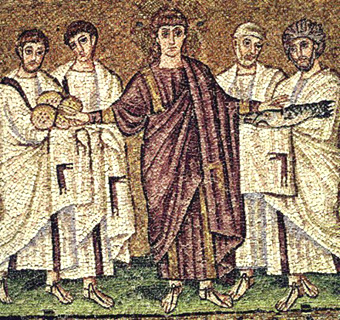
For the Eye-Rollers

“Nazareth? Can anything good come from there?” ~John 1:46

Nathanael thinks there’s no way the Messiah comes from Nazareth. The all-time religious headquarters were in Jerusalem, home of the temple, the priests, and the Ark of the Covenant. Rabbis came from the south; that’s where they were born and raised and educated. Rabbis don’t come from the fishing villages in Galilee. And neither does the promised Christ. Nathanael’s rolling his eyes. Whatever.

Some people see Christianity that way. Nathanael rolls his eyes at Jesus. Lots of people today roll their eyes at Christianity. We talk about Jesus — who he is, what he’s done for us, submitting our lives to him — and some people say, “Oh, yeah, Christianity. Been there, done that, got the cross-shaped necklace and the Jesus fish for my car. But that was a long time ago. I grew up in church but I’m not into that anymore. I’ve grown up. I’ve moved past that. I’m too smart for that.”

See, Jesus is still from Nazareth.

But people who dismiss Christianity are cutting themselves off from the very source of a lot of their core beliefs. Their values can probably be traced back to Christianity.

The idea of living in a peaceful civilization, of reaching out in kindness to your enemies instead of killing them, came from Jesus. Nobody thought like that before Christianity.

The concept that every single human being has value and dignity, that every person should be treated with respect — that came from the Bible. It stems from the Christian belief that all men and women, regardless of talent or wealth or race or gender, are made in the holy image of God.

Taking care of the poor is a Christian thing to do. In pre-Christian Europe, all the elites of society thought it was crazy to love your enemies or take care of the poor. They said society would fall apart because that’s not the way the world works. The strong and talented are born to prevail. Winner takes all. The poor are born to suffer. That’s just how things are. Christianity comes along and stresses love for all, including enemies, and taking care of the poor and the orphaned.

You’ll run into some people, though, who say, “I can believe those things and practice those things without Christianity. I don’t have to believe all the Son of God stuff and resurrection stories to hold these values and practice these good works.”

Well, that’s possibly true at one level. Possibly. But it seems really shortsighted.

Why would you accept and embrace some parts of Christianity and take them into the core  of who you are, but reject all the parts that make sense of the parts you like? If you concede that the source of a lot of your strongest convictions is actually Christ Jesus, why would you reject the parts of the story that explain those concepts and make it all coherent?

Don’t be like Nathanael. Don’t let a conviction that Christianity is outdated or intellectually unsophisticated blind you to what it offers. Watch out for pride and prejudice. Be aware of contempt and being dismissive. Those kinds of attitudes are poisonous in all aspects of life, but especially where you’re asking life’s biggest, most important questions.

Everybody’s looking for the answers to life’s biggest questions. And nobody’s overly satisfied with the answers given by the culture or the universities or the world’s philosophies.

Wrestle with Christianity. Consider it again. Look at its claims with fresh sensitivities. And stop rolling your eyes.

Peace,

Allan

Glimpses and Tastes

Using the glorious Faith Ring of Honor in Hebrews 11, we’ve defined “faith” as bold action in response to the promise of God regarding an unseen future.

Most of the heroes in Hebrews 11 never received the fulfillment of the promise until after they had died. The Scriptures tell us “They saw the promises and welcomed them from a distance” and “None of them received what had been promised.” They all died first. A lot of them died horribly.

I don’t know why some of God’s faithful children are delivered and rescued and made whole in this life and other children of God, just as faithful, are made to suffer and die. I don’t know. I do know that while none of these faith exemplars received what had been promised until after they died, they were given glimpses. They were all given little peeks of the ultimate fulfillment of God’s Word. A taste. Abraham was given a son. Joseph was told about the exodus. Moses saw the Promised Land.

And we get those same glimpses. Every time a person comes up out of that water, full of God’s Holy Spirit, forgiven and redeemed and restored — that’s a glimpse. Church potlucks and congregational meals are a holy preview of heaven where Isaiah says the Lord Almighty will prepare a feast of rich foods and the finest of wines, where death is defeated and all the nations are eating and drinking together. Those little glimpses sustain us. They empower us. They fill us with confidence that, yes, our God is alive and, yes, he is faithful to his word and, yes, his promises will all be fulfilled!

Faith is our bold action in response to those holy promises regarding the unseen future.

By faith, eighteen years ago, the Central Church chose to stay in downtown Amarillo and minister to the immediate neighborhood because God says he wants all men and women to come to him, he’s not willing that any should be lost, but that all will be saved.

By faith, in 2013, Central gave more money to foreign missions and committed to sending more missionaries because God’s Word says someday every knee will bow and every tongue confess that Jesus Christ is Lord to the glory of God the Father.

By the faith, the Central Church partners in worship and service with First Baptist, First Presbyterian, and Polk Street United Methodist Churches because our Lord Jesus says if we are united together in him, if we’ll tear down the walls between us, the whole world will know.

See, when we live in the verbs of our faith, we treat the future as the present and we treat the invisible like the seen.

By faith, Doug and Mandi Richardson and Shane and Robin Self lead the Senior Huddle.
By faith, Bret McCasland preaches the Gospel in India.
By faith, Scott McNutt teaches the women at Gratitude House how to check tire pressure and oil levels in their cars.
By faith, Becky Nordyke cooks and serves the grieving, whether she knows them or not.
By faith, Ira Purdy shepherds.
By faith, Aleisha Malone prays with Middle School girls.
By faith, Todd Walker passes out candy every Wednesday night.
By faith, Hannah McNeill smiles and serves at Loaves and Fishes.
By faith, Peggy Blanton goes out of her way to complement and encourage everybody.
By faith, Etta Peters invites her friends to church.
By faith, Roger Kyzar and Pam Pearson praise God. Still.

“So do not throw away your confidence; it will be richly rewarded. You need to persevere so that when you have done the will of God, you will receive what he has promised.” ~Hebrews 10:35-36

Peace,

Allan

United by the Cross

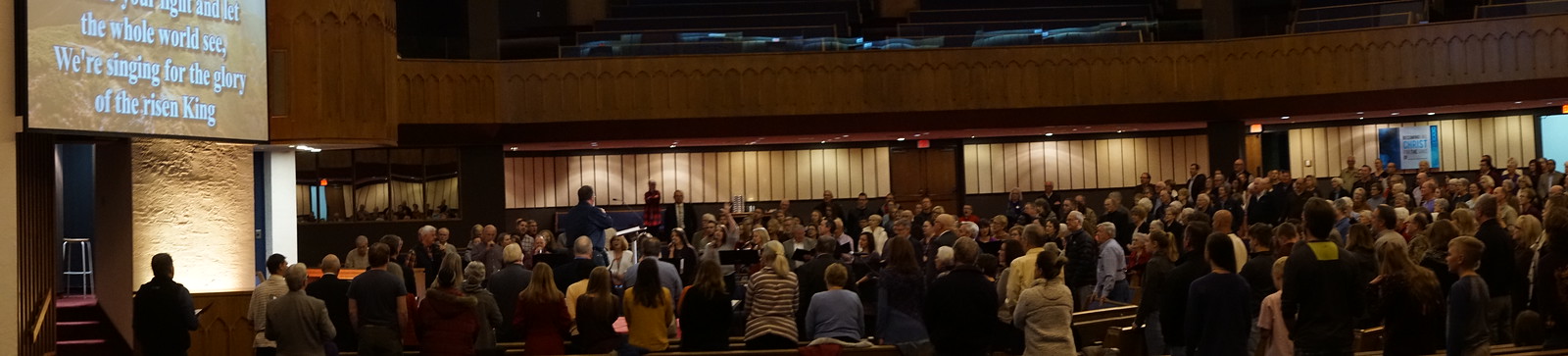
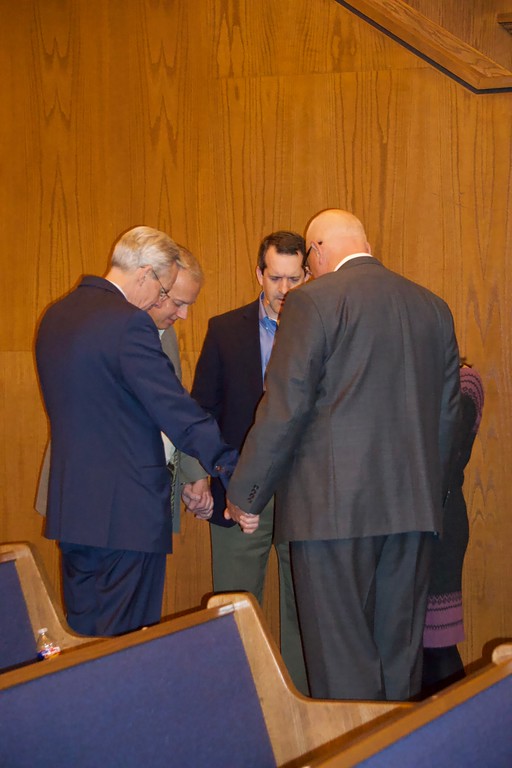
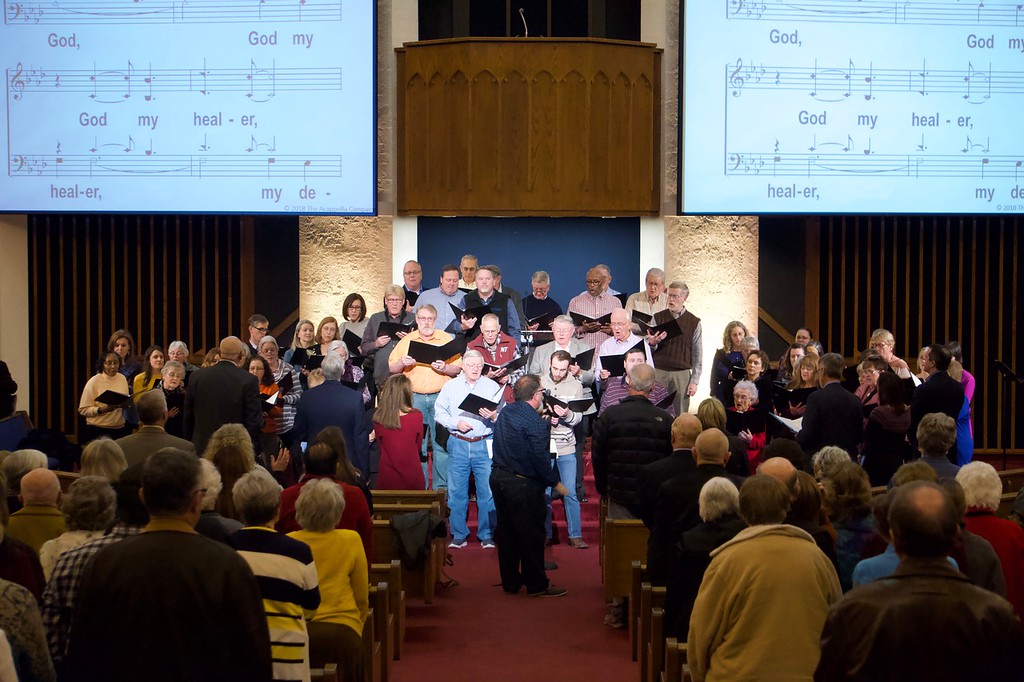
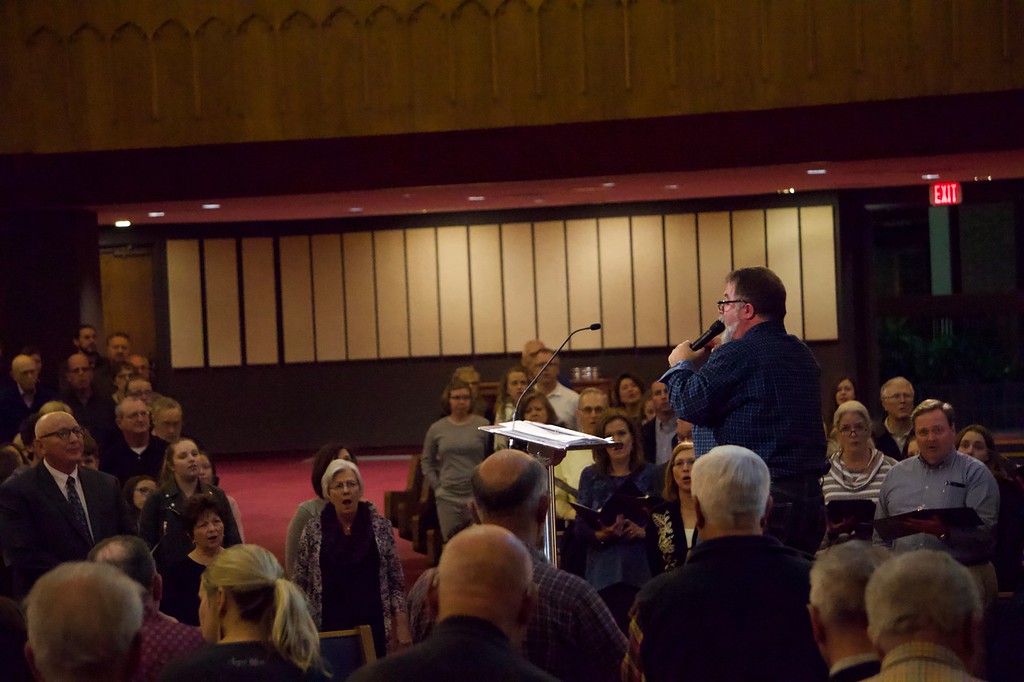
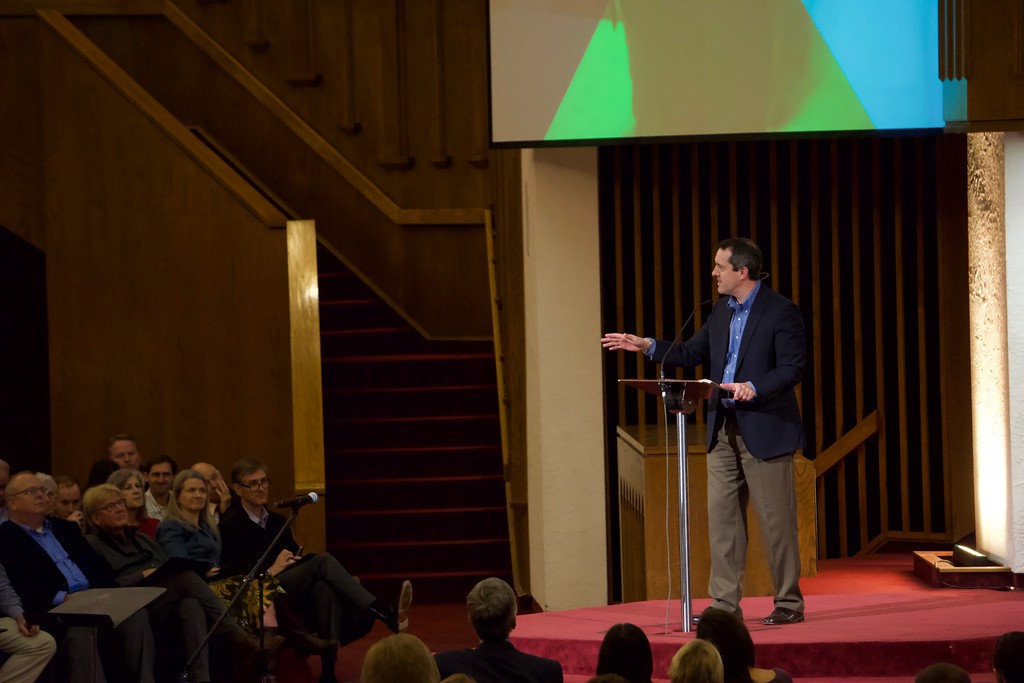
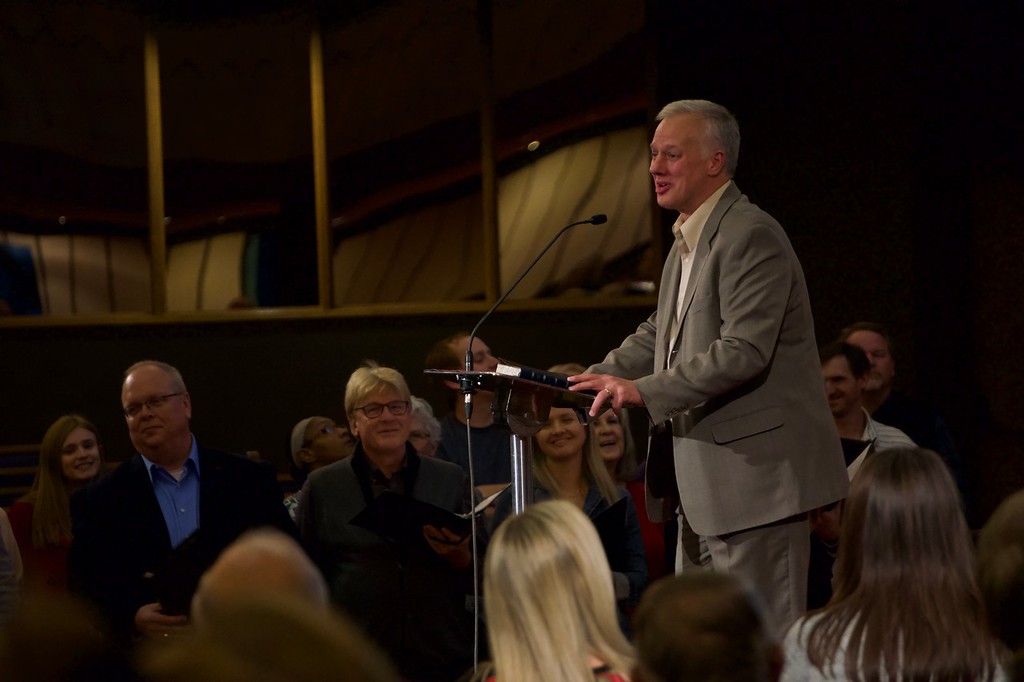
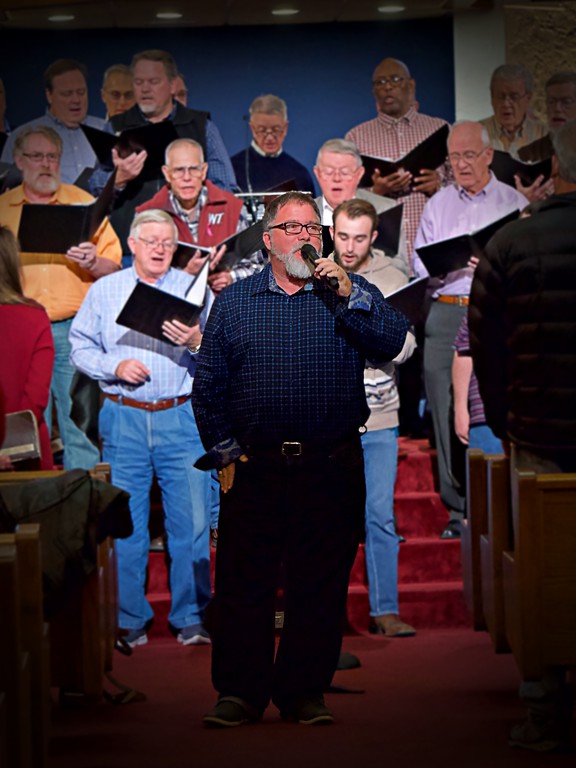
We were blessed last night to host the 6th annual 4 Amarillo Thanksgiving Service at Central. Our brothers and sisters at First Baptist, First Presbyterian, and Polk Street United Methodist Churches joined us for an inspiring evening of combined choirs, ecumenical worship, sweet fellowship, and a powerful message on unity from my neighbor and partner in the Gospel, Howard Griffin from First Pres.

Our 4 Amarillo partnership  in worship and service is intended to remind one another that we are all united by the common blessings we share together in our Lord Jesus Christ. We also gather to proclaim to the city of Amarillo and to the world that our Lord Jesus really is the Prince of Peace and we gratefully join him in tearing down the walls that separate the children of God and divide his eternal Church.


Howie Batson, the “Amarillo Pope” from First Baptist, opened us up with a call to worship reminding us that we all live by the same Christian confession: Jesus is Lord. I was privileged to lead us in a robust recitation of the ancient Apostles’ Creed, the tried-and-true litany of the non-negotiable elements of our common faith. Howard brought a stirring word from the opening lines of 1 Corinthians, pointing to the message of the cross as the truth that unites us. And before we closed with a congregational rendition of “The Lord Bless You and Keep You,” Polk Street’s Terry Tamplen blessed the assembly with Paul’s prayer from Ephesians 3, encouraging us to live in and through the power of our Lord Jesus Christ.


I am deeply thankful to belong to a church that is so committed to breaking down the denominational walls that divide Christians. I praise God that my family gets to experience this regular glimpse of heaven. And I continue to pray that 4 Amarillo proclaims the truth and faithfully lives into the holy will of our eternal Father for the sake of our city and the whole world.


Peace,

Allan

Faith IS Action

We’ve defined faith according to the stories and examples in Hebrews 11 as bold action in response to the promise of God regarding an unseen future. That’s the thing the people and the stories in this Faith Ring of Honor have in common. These people demonstrated their faith by living into and through some powerful verbs.

In each one of these familiar stories, the hero of faith was facing overwhelming odds. They were each huge underdogs. From a human standpoint, they had little or not chance to come out on top. But, by faith, they each took their eyes off the obvious, they turned their eyes away from the physical things they could see, and they did something.

Noah refused to focus on the clear skies and sunshine. He took God at his word and focused on the promise. Abraham refused to look at the 100 candles on his birthday cake and the fact his wife had been reading AARP Magazine for 45 years and by faith looked instead to God’s promise. Moses was not deceived by the glitter of the Egyptian palace or the security in his royal position; he acted boldly, motivated only by God’s promise to love him and reward him in the future.

God’s people ignored the archers and warriors perched on the Jericho walls, Daniel walked into a den of lions, the Hebrew exiles stepped into a fiery furnace — not based on what made sense, not based on what seemed smart, not based on anything they could see. They were motivated solely by the greatest reality of all: we serve a faithful God, a God who makes promises and keeps them, a God who is forever faithful to his Word and forever faithful to his people. And for the most part, that ultimate reality is unseen. But people of faith, God’s people of faith, understand — we know — just because we can’t see something doesn’t mean it’s not real. We fix our eyes not on what is seen but on what is unseen; for what is seen is temporary, but what is unseen is eternal.

But the seen things — that seen reality — can be so overwhelming.

I could name a dozen people I know who’ve lost their jobs this year or are afraid of losing their jobs in the next few weeks. They see the numbers and they see the savings account dwindle and they see the dead-end job listings.

I know a dozen people who are battling life-threatening diseases with everything they’ve got. And they’ve tried everything. But every day is more painful than the day before. And less sure. They see the test results and the doctors’ reports and there’s not any good news.

Your family’s a mess. Maybe your marriage. You see the hateful emails and dirty looks and empty chairs.

Maybe you’re in a spiritual desert right now. The Bible’s not speaking to you. Your prayers aren’t getting through. You feel lost. Maybe you’re caught up in sin. You feel a long way from God. You feel abandoned.

Like Abraham: one man and as good as dead. You’re outnumbered, out-muscled, out-smarted, and out of options. Out of luck. You’re staring into the teeth of lions, you’re tiny compared to the giant walls that are blocking you out, you’re feeling the heat of the furnace — all those things.

This is exactly the time for your faith to show itself in some verbs.

See, faith is not belief. It’s not even strong belief. Faith is never: Yes, I agree with those theological points, I believe these spiritual suppositions, these sets of religious principles make sense to me. That’s not faith. Faith is action. Faith is proven by verbs.

“Faith by itself, if it is not accompanied by action, is dead… I will show you my faith by what I do.” ~James 2:17-18

Peace,

Allan

« Older posts Newer posts »