Category: Matthew (Page 13 of 24)

Central has 750 Ministers

We swore in almost 750 men, women, and children yesterday as ministers at the Central Church of Christ. Borrowing from the Gospel accounts of the feeding of the multitudes in which the disciples asked Jesus for a way to solve the problem and Jesus responded by telling his followers, “You give them something to eat,” we declared that everybody in our Lord’s Kingdom is a Christian minister. We are all priests, saved and sanctified by God to serve as powerful mediators between him and humanity.

As priests, we reflect the holiness of God. We are holy because God is holy. And that holiness will not be compromised or conditioned. We are set apart. We are ordained by God for his purposes and to his eternal praise.

As priests, we offer spiritual sacrifices to God. We give our bodies to God. We give our money to God. We submit our very lives to God so that everything we do and say and think is offered to him.

We intercede like priests. We grab our brothers and sisters and we take them to God in prayer. We bring them into God’s presence and intercede for their healing and forgiveness and blessings and peace.

And, as priests, we represent God before others. We bless people. We take what God has given us and we, in turn, give it to others. We graciously share his love and mercy, his comfort and forgiveness, to everyone we meet with his power and authority as his holy priests.

A lot of us, though, are paralyzed. We’re stuck. We see things that need to be done, but we wait on somebody else to do them. We know something’s wrong, but we count on somebody else to fix it. We hear that somebody’s hurting, but we wonder if it’s any of our business. We’re especially susceptible to this in a big church. We recognize a hole that needs to be plugged or a problem that needs to be solved or a brother who needs a visit, and we don’t do anything. And then we wonder why it didn’t get done.

We are all powerful priests in God’s sight. Nobody in God’s Church has more power or authority or more permission than anyone else. We’re all the same. We have different gifts, certainly. But we’re all called to serve. Nobody’s exempt. We’re all authorized to pray and teach. We’re all authorized to comfort and minister, to encourage and bless. We all have the same permission.

To drive the point home, we passed out 750 little sheriff’s badge stickers at the conclusion of our lesson, pinned them on one another, and we swore everybody in as ministers in God’s Church. We all stood and raised our right hands and recited these vows together out loud:

“I do solemnly swear as a faithful member of God’s royal priesthood to act like a priest. I promise to henceforth and forever more regard myself as a minister in God’s Church. I promise to honor and respect and love and cherish my fellow brothers and sisters in Christ. I promise to encourage and not tear down, to bless and not curse, to submit and to serve in compassion and kindness until Christ Jesus returns. As a minister and a priest in God’s Kingdom, this is my pledge as surely as the Lord shall live. Amen.”

With those gold stars pinned to our chests, we all looked like we belonged in a saloon scene in a corny old western movie. But when the words began coming out of our mouths, and the weight of our promises began to take hold, the worship center was transformed into a sacred place where we acknowledged the wisdom and power of our God who would dare to partner with us in his work of redeeming the world.

Peace,

Allan

 

Brought to Jesus

You probably are aware that high school seniors today don’t just take the year book photo alone. Oh, no. That’s not nearly enough. They have to go out to exotic locations with their own commissioned photographer and half a dozen changes of clothes and take a hundred different portraits to capture the singular beauty and unique personality of each candidate for graduation.

Hannah McNeill is our family photographer. And she has done a remarkable job with our “Little Middle.” Of course, it would be tough to mess up pictures of Valerie. But Hannah is just the best at what she does with our kids. You can check out a bunch of Hannah’s work by clicking here. But her most important work lately can be seen in these thumbnails.


~~~~~~~~~~~~~~~~~~~

“People brought to him all who were ill with various diseases…” ~Matthew 4:24

“Some men brought to him a paralytic, lying on a mat.” ~Matthew 9:2

“A man who was demon-possessed and could not talk was brought to Jesus.” ~Matthew 9:32

“They brought him a demon-possessed man who was blind and mute.” ~Matthew 12:22

“Then little children were brought to Jesus…” ~Matthew 19:13

These people Jesus healed and saved, these people who felt the compassionate touch of the Father through the Holy Son were brought to Jesus. They were brought to him by somebody else.

It’s not “build it and they will come.” Praise the Lord, sometimes that actually works. But that’s not the deal. It’s really “if you bring them they will see.”

We go get them and bring them to Jesus. As his followers, as his loyal subjects, that’s our mission. It’s our charge as his disciples. We don’t sit around and wait for people to come to Jesus. We go out and get them and bring them into his presence.

You know, you can do that just by inviting people to church.

Now, let me be clear. I’m not talking about bringing people to church just so we can count them. Inviting people to church is not about filling up your worship center. It’s about inviting people to a place where they can encounter Jesus. Our Christian assemblies are still the widest on-ramp into your community of faith. A worship service is still the main entry point, the biggest front door, to someone encountering a group of people who represent and embody our Lord and Savior. What better place to see Jesus? What better venue for experiencing his love and acceptance, his mercy and grace, his peace and joy?

I’ve seen and heard in three different places this year that if you invite anywhere from five to seven people to your church, one of them will say “yes” and come. One out of every six (or so) people you invite to worship with your church on Sunday will say “yes” and do it. The question is: Is anybody inviting anybody?!?

There are so many people in our community — countless numbers; you’ll interact with several of them over the next 24 hours — who have never experienced anything like the merciful love and saving grace of Jesus. And it’s because nobody’s ever brought them into the presence of Jesus. You can do that, you know, just by inviting them to your worship assembly this Sunday.

Peace,

Allan

The Same Love

“This is my prayer: that your love may abound more and more in knowledge and depth of insight, so that you may be able to discern what is best and may be pure and blameless until the day of Christ.” ~Philippians 1:9

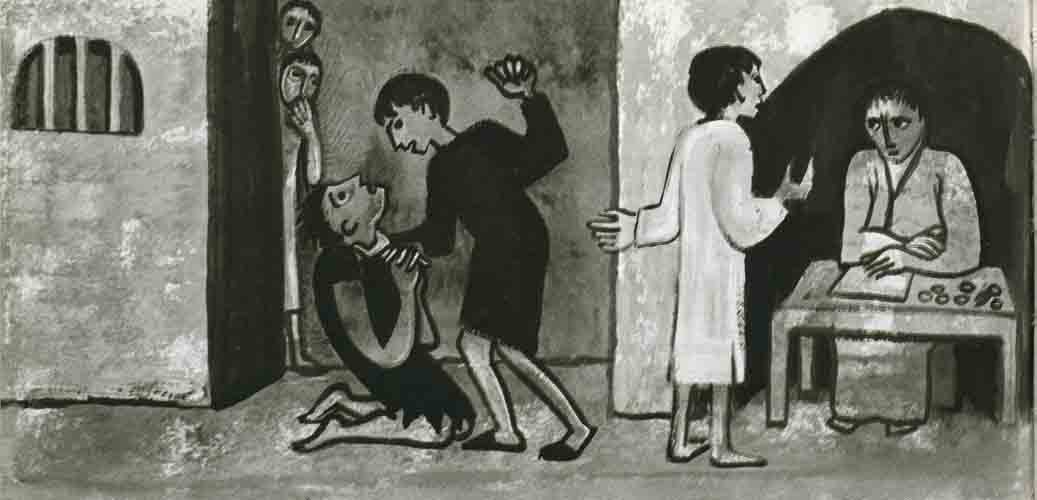
The King wanted to settle accounts with his servants. As he began the settlement, they brought before him Allan, a man who owed ten million dollars. Since Allan was not able to pay, the Master ordered that he and his wife and his three daughters and all that he owned be sold to repay the debt. Allan fell on his knees before the King. “Be patient with me,” he begged, “and I will pay back everything.” Allan’s Master took pity on him. And he canceled the debt. And set him free.

But when Allan went out, he found one of his fellow servants who owed him ten bucks. Allan grabbed him and began to choke him. “Pay me what you owe me!” he demanded.

How can Christ’s love for me not be the same love we have for each other?

I always forgive you because Christ always forgives me. I make sacrifices for you because Christ gave the ultimate sacrifice for me. I serve you because Jesus served me. I give in to you, I submit to you, I defer to you, because Jesus went to the cross for me. He died for me while I was his enemy. He buried my sins at the bottom of the ocean floor. He’s removed them from me as far as the East is from the West.

My friend, you don’t owe me anything. You owe me nothing. And I will never, ever demand anything from you. I can’t.

How can Christ’s love for me not be the same love we have for each other?

If it is — when it is — then we’re able to discern what is best for our congregations and for our relationships within our congregations. There’s not a situation or circumstance or problem that can possibly come up that can’t be navigated correctly  when everybody abounds in love. When decisions do need to be made and lines do need to be drawn, we always err on the side of love and grace. We err in the way of sacrifice and service. We err in the name of Christian love.

Peace,

Allan

Are You Bringing It?

Jesus prays to our Father, “Your Kingdom come, your will be done on earth as it is in heaven.” Jesus preaches the Kingdom of God. Jesus declares the Kingdom of God. He prays it. And he proclaims it: “It is at hand!” “It is here!” Jesus points it out: “The Kingdom! Yes! Look at it!”

But, more than that, Jesus brings the Kingdom of God to earth. He brings it. Jesus does God’s will on earth just as it is in heaven.

Jesus casts out demons because there are no demons in heaven.
Jesus heals because there is no sickness in heaven.
Jesus feeds because there is no hunger in heaven.
Jesus raises the dead because there is no death in heaven.

“Your will be done on earth as it is in heaven.”

Are you praying this prayer? Jesus said it was a good idea to pray this prayer, to ask God to please do his will here on earth just like it’s done in heaven. More importantly, are you bringing it? Are you bringing the Kingdom of God to your part of the earth? Are you obeying his will just like the rocks and the trees and the oceans and the animals obey his will?

There is no revenge in heaven. There is no hate in heaven. There are no arguments in heaven. There are no disagreements in heaven. No suspicion. No politics. No war. No division of any kind. No power-grabbing. No violence, verbal or physical. No mistrust. No complaining. You won’t find any of those things in heaven.

Do you find any of those things in your church? In your elders’ meetings? In your congregational committees? Are you bringing the Kingdom of God into your part of the world or some other, very different things? Into your marriage? Into your family around the dinner table at night? Are you bringing the Kingdom of God to your workplace? To your school? To the Little League team you’re coaching or the civic club to which you belong?

If God has completely eradicated selfish behavior and gamesmanship and competition in heaven, if that is his holy will, why would you tolerate it in your church? Or in your house? Why in the world would you actually insist on bringing it into your congregation? Or putting up with it?

The rivers and the trees and the squirrels and the fish all obey God’s will on earth just as it is in heaven. What’s wrong with us?

Peace,

Allan

Delight in the Law of the Lord

“Blessed is the man who does not walk in the counsel of the wicked
or stand in the way of sinners
or sit in the seat of mockers.
But his delight is in the law of the Lord,
and on his law he meditates day and night…
For the Lord watches over the way of the righteous,
but the way of the wicked will perish.”
~Psalm 1

The first psalm asserts that how one responds to Scripture, how a person responds to the revelation of God in Torah, will determine that person’s ultimate destiny. When it comes to the Law of the Lord there are two choices, two paths. Moses gives us two paths in his farewell sermon on the mountain and says, “Choose life.” Jesus gives us two paths in his sermon on the mountain and says, “Choose the straight and narrow.” And the psalmist does a similar thing.

By using both positive and negative examples, the psalm encourages us to adopt the fruitful and satisfying life that’s characterized by complete immersion in God and his Word. So immersed in the Word of God, so focuses on the Law of the Lord, that it shapes and dominates your worldview. This is the way of the righteous. And God watches those who walk in that way. By contrast, the one who does not delight in the Law of the Lord is shaped by the counsel of the wicked. He is formed in the way of sinners. Those who walk in this way will perish.

It’s a choice.

God speaks. God reveals. He calls. God makes his holy character and perfect will known through Torah, and what we do with that word is everything. It’s the difference between growing as a fruitful tree and fading away as useless chaff. It’s the difference between well-watered and well-nourished stability and dry, dusty, windblown impermanence. Two choices: the way of the righteous that God oversees and the way of wickedness that leads to destruction. It’s the wise man and the foolish man building their houses in Matthew 7. The only difference between the two men is attention to and obedience to the teachings of Jesus, hearing the Word of the Lord and putting it into practice.

Our God does not reveal himself to be catalogued and studied; he reveals himself to be followed. Our God does not speak to be heard; he speaks to be obeyed.

You ask your daughter to fold the clean towels and put them away in the cabinet (this is purely a hypothetical situation). You come back in twenty minutes and the towels are still in a wad on the couch and the same daughter is sitting in the same spot watching the same TV, only now she’s eating a Pop Tart. And you say to your daughter, “Did you hear me?!?” By that, you don’t mean, “Did the sound waves caused by the vibrations in my tongue and throat penetrate your ear canals to be carried to your brain where they are deciphered into understandable language?” When you say, “Did you hear me?” you’re actually saying, “Why didn’t you obey me?”

To delight in the Law of the Lord, to meditate on it day and night, is to do it. Hearing is doing. Faith is acting.

The Word of God is powerful. It changes lives. It alters destinies. In 1 Thessalonians, Paul acknowledges the Word of God that “is at work in you.” In 2 Timothy, he claims that Scripture equips a man for every good work. Not doctrinal perfection. Not knowledge about facts and patterns. Paul says it leads to action. Hearing is doing. The righteous one delights in the Law of the Lord and meditates on it day and night not to know more. To become more. We don’t learn or study Scripture as much as we ingest it. We assimilate it. We take it into our lives in such a way that it becomes a part of us and it metabolizes into this fruit: acts of love, cups of cold water, prison and hospital visits, cakes baked, groceries delivered, comfort and encouragement, evangelism and justice.

When Samuel was confronted with God’s voice, he replied, “Speak, for your servant is listening.” James says to not just hear the Word, but to do it.

“I desire to do your will, O my God; your law is within my heart.” ~Psalm 40:8

Peace,

Allan

Speaking Community

With great power the apostles continued to testify to the Resurrection of the Lord Jesus!” ~Acts 4:33

In Matthew 28, Jesus meets the women outside the empty tomb and says, “Go and tell my brothers!” Scripture says the women “ran to tell the disciples.” In Mark 16, the angel inside the tomb says, “Go and tell!” The risen Lord eats with his disciples that night and says, “Go into all the world and preach the good news to all creation!” Verse 20 says, “The disciples went out and preached everywhere, and the Lord worked with them.” Same thing in Luke 24. “When they came back from the tomb, they told all these things to the Eleven and to all the others.” When the two disciples met Jesus on the road to Emmaus, “they told what had happened.” While Jesus shares a meal with his followers that night he says, “The Christ will suffer and rise from the dead on the third day, and repentance and forgiveness of sins will be preached in his name to all nations.”

Sure enough, the resurrection community can’t keep their mouths shut. In the earliest days of the Church, according to Acts, everybody was talking. Peter and John get thrown in jail for talking about the resurrection and protest to the authorities, “We cannot help speaking about what we have seen and heard!”

When we are truly raised with Christ to walk in newness of eternal life, when we are formed and shaped by the Resurrection of Jesus, how are we not going to talk about it? The Resurrection community proclaims the good news of the resurrection and reign and return of our Lord. We can’t help it.

I would add that followers of Jesus are all about life, not death; we’re a people of hope, not despair; we’re a community of light, not darkness. And when we speak, our words should give resurrection life to others. Our speech should breathe new life into others.

In Colossians, Paul is talking about formation by resurrection when he says, “Let your conversation be always full of grace.” We’re told in Ephesians 4 to speak the truth in love. In Acts 20, we’re told that everywhere Paul went he spoke words of encouragement.

All the words that come out of our mouths should be words that restore and renew, never words that tear down or destroy. When we speak, our words should point others to the resurrection life that’s forming us.

Peace,

Allan

« Older posts Newer posts »